


 PLATFORM UPDATE:


Antioxidant and neuromodulatory effect of gallic acid prevents anxiety-like symptoms of omeprazole
 cd
Ali
Irfan
*g
and
cd
Ali
Irfan
*g
and
Abstract
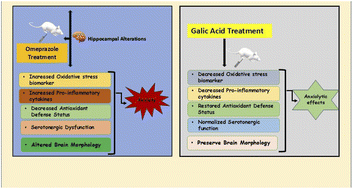
This research focuses on the protective impacts of gallic acid (GAL) on OMP-instigated anxiety. In this experiment, 48 male Sprague-Dawley rats were grouped into 6 (n = 8): (I) VEH + VEH (1 mL kg−1), (II) VEH + GAL [low dose; (50 mg kg−1)] (III) VEH + GAL [high dose; (100 mg kg−1)] (IV) VEH + OMP (20 mg kg−1), (V) GAL (low dose) + OMP V) GAL (high dose) + OMP. The animals were administered their corresponding drugs intraperitoneally (IP) for four weeks, once daily. Subsequently, during the treatment period, behavioral tests were performed, including open field activity (OFA) and home cage activity (HCA) to assess locomotion and elevated plus maze (EPM), and light-dark activity (LDA) for anxious-like symptoms, respectively. Following behavioral assessments, the rats were decapitated, and their hippocampus was removed. The hippocampus was utilized for biochemical, neurochemical, and histopathological examinations. The results revealed that OMP produced hypolocomotion, anxiety-like behavior, elevated oxidative-stress biomarkers and inflammatory-cytokines, and reduced the activity of antioxidant enzymes and serotonin metabolism. Administration of GAL (both doses) increased (p < 0.05) locomotor activity, reduced (p < 0.05) anxiety, decreased (p < 0.05) oxido-neuroinflammation, and normalized (p < 0.05) 5-HT metabolism and histopathological alteration, followed by OMP. 5-HT1A receptor analysis exhibited OMP-administration sensitized relative expression of 5-HT1A receptors, while GAL at both doses (p < 0.05) decreased 5-HT1A receptor expression in VEH and OMP-administered rats. It is proposed that GAL, as an antioxidant and neuromodulator, can be used for reducing OMP-induced hypolocomotion, anxiety, and associated neurological problems.
 Please wait while we load your content...


