Microfluidic single-cell culture represents a versatile approach for tumor stem cell expansion and tumor organoid generation

Jueming Chen a, Xiaogang Wang ab, Weijie Ye abd, Hui Kang a, Siyan Xiao e, Jiayu Li e, Lihui Wang *e, Dongguo Lin *acd and Dayu Liu *ac
aDepartment of Laboratory Medicine, School of Medicine, The Second Affiliated Hospital South China University of Technology (Guangzhou First People's Hospital), Guangzhou 510180, China. E-mail: eylindg@scut.edu.cn; eydyliu@scut.edu.cn
bDepartment of Laboratory Medicine, Guangzhou First People's Hospital, Guangzhou 510180, China
cGuangdong Engineering Technology Research Center of Microfluidic Chip Medical Diagnosis, Guangzhou 510180, China
dInstitute of Clinical Medicine, Guangzhou First People's Hospital, Guangzhou 510180, China
eDepartment of Pathology, School of Medicine, Jinan University, Guangzhou 510632, China. E-mail: wanglh@jnu.edu.cn

Received 25th October 2025 , Accepted 15th January 2026

First published on 23rd January 2026


Abstract

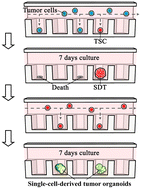
Tumor stem cells (TSCs) play a pivotal role in the development of tumor organoids. Consequently, the development of effective methods for the isolation and differential induction of TSCs is essential for the establishment of tumor organoids. In this study, we demonstrate a microfluidic single-cell culture technique that facilitates the selective expansion of TSCs and the subsequent generation of tumor organoids. Our findings demonstrate that microfluidic single-cell culture enables the generation of single-cell-derived tumorspheres (SDTs) across a variety of tumor cell lines of various tissue origins. The SDT cells exhibited definitive stem cell characteristics, as confirmed by the expression of stemness markers and functional cellular assays. Furthermore, the differential induction of individual TSCs resulted in the formation of single-cell-derived tumor organoids (STOs). The suitability of a microfluidic single-cell culture approach for patient-derived tumor specimens was also evaluated. Specifically, TSCs were successfully expanded from 16/26 primary colorectal cancer specimens, with SDT formation rates ranging from 0.02% to 17.77%. Differential induction culture of individual TSCs yielded enhanced STO formation efficiencies (25.02% to 65.30%). Collectively, these results establish microfluidic single-cell culture as a robust and adaptable methodology for TSC expansion and tumor organoid generation, offering a valuable platform to advance the field of tumor organoid engineering.

1. Introduction

Organoids are three-dimensional (3D) structures derived from tissue or stem cells cultured in vitro that faithfully replicate the architecture and functional characteristics of their tissue or organ of origin. These 3D models demonstrate a high degree of fidelity in terms of tissue organization, cellular composition, and functional properties—attributes that make them a robust tool for biological research.1,2 As an emerging technology, organoids have shown considerable promise across a range of applications. To date, organoid technology has been extensively employed in the development of disease models, drug screening, precision medicine, regenerative therapies, and gene editing.3,4 A specific subset, tumor organoids, consists of cell clusters derived from tumor stem cells (TSCs) or tissues containing TSCs cultured in three dimensions, closely recapitulating the structural and functional properties of tumors in vivo. Through the refinement of culture conditions, a diverse array of tumor organoids has been successfully established.5–10 These models not only provide a visual representation of tumor growth but also capture the patient-specific heterogeneity characteristic of tumors, thereby offering a reliable, efficient, and ethically favorable alternative to traditional tumor models.11,12 Compared to conventional tumor research models, tumor organoids are better suited for investigating tumor biology and therapeutic responses in vitro, representing a valuable tool for cancer research and personalized medicine.13

TSCs possess critical properties including self-renewal capacity, resistance to apoptosis, and the ability to differentiate into multiple lineages. These properties are fundamental to tumor initiation, progression, metastasis, and therapeutic resistance, thereby positioning TSCs as the “root cells” of tumors.14,15 The pivotal role of TSCs in tumor organoid formation has been substantiated by recent investigations involving single-cell-derived tumor organoids (STOs).16–19 Notably, Hans Clevers et al.20 demonstrated that individual LGR5(+) colorectal stem cells are capable of proliferating and differentiating to generate crypt–villus architectures, thereby establishing the conceptual basis of STO technology. The formation of STOs is driven by the proliferative and differentiation potential of TSCs, as only cells exhibiting anti-apoptotic properties and multi-lineage differentiation capacity can survive and develop under single-cell culture conditions. STOs are genetically well-characterized, facilitating the examination of tumor heterogeneity at the single-cell resolution. To overcome the limitations in throughput associated with STO assays, recent studies have introduced large-scale STO generation methodologies employing microfluidic single-cell culture technologies, highlighting their promise for high-resolution analyses of tumor heterogeneity.21–23

While the feasibility of utilizing TSCs to generate tumor organoids has been well confirmed, the efficient preparation of TSCs remains a considerable challenge. Primarily, TSCs represent a minor fraction of the tumor cell population, typically constituting less than 5% of the total cells, which significantly constrains the efficiency of their isolation.24 Fluorescence-activated cell sorting (FACS) and magnetic-activated cell sorting (MACS) techniques are commonly utilized for the isolation of TSCs; however, both approaches rely on the presence of specific cellular markers. The lack of universally accepted markers for TSCs has impeded the establishment of standardized protocols for their isolation.25–28 To overcome these obstacles, several studies have explored the selective expansion and recovery of TSCs through microfluidic single-cell technologies.29–31 These approaches exploit the inherent self-renewal and anti-apoptotic characteristics of TSCs, facilitating their selective expansion under non-adherent single-cell culture conditions. By employing large-scale single-cell platforms integrated on microfluidic chips and capitalizing on symmetric cell division for expansion, these methods enable the generation of purified TSC populations without reliance on specific markers. For instance, Chen Z. et al.23 demonstrated the selective expansion and induced differentiation of colorectal cancer stem cells within a microfluidic single-cell culture system, thereby facilitating the construction of STO arrays for investigating tumor heterogeneity. Despite the promising potential of these techniques, their broad applicability remains to be comprehensively validated.

Considering that self-renewal, anti-apoptosis, and multi-lineage differentiation are common properties of TSCs, microfluidic single-cell culture may represent a versatile approach for the selective expansion of TSCs and the generation of STOs. Current microfluidic platforms for tumor organoid generation predominantly utilize cell aggregation methods, resulting in organoids composed of multiple cells. While these techniques are effective in producing organoids, they constrain the capacity to analyze tumor heterogeneity, as the resultant organoids consist of cancer cells derived from distinct subpopulations.27,32,33 In contrast, single-cell-derived tumor organoids (STOs), which are established from individual tumor stem cells, preserve distinct genomic and phenotypic characteristics, thereby serving as valuable models for the study of tumor heterogeneity. Nevertheless, current microfluidic single-cell platforms predominantly utilize enclosed culture systems, which restrict continuous monitoring of individual cells and impede the retrieval of tumor stem cell clones.27,28,34,35

In this context, the present study demonstrates the versatility of microfluidic single-cell culture methodologies across diverse types of tumors, facilitating the selective expansion of TSCs and the generation of STOs. Initially, we established that microfluidic single-cell culture serves as an effective method for the expansion of TSCs. Multiple tumor cell lines, representing epithelial, mesenchymal, and non-epithelial/non-mesenchymal origins, were shown to generate single-cell-derived tumorspheres (SDTs) within the microfluidic single-cell culture system. These SDTs were further confirmed to exhibit stem cell properties. Subsequently, we demonstrated that differential induction culture of individual TSCs resulted in the formation of STO arrays. Furthermore, the applicability of this microfluidic approach was evaluated using patient-derived tumor tissue specimens. Collectively, these findings introduce a versatile methodology for TSC expansion and tumor organoid generation, providing a valuable tool for advancing tumor biology research and facilitating personalized therapeutic interventions.

2. Results and discussion

2.1 Cell dispersion, culture, and recovery in a microfluidic chip

To facilitate single-cell culture and subsequent analyses, we employed a custom-designed microfluidic chip. The architecture of the device, adapted from previous work,29 is schematically illustrated in Fig. 1. Each discrete culture unit within the polydimethylsiloxane (PDMS) chip consisted of a densely packed array of 100 × 30 microwells patterned in a lower layer. These microwells were configured as hexagonal prisms, each with a side length of 150 μm and a depth of 200 μm. The upper layer incorporated a perfusion channel, also 200 μm in depth, positioned directly above the microwell array. This channel was connected to inlet and outlet ports through a four-level branched network, facilitating uniform fluid distribution throughout the device. The inner surface of the microfluidic chip was coated with a hydrophilic copolymer (poly(dimethylacrylamide-co-glycidyl methacrylate), PDMA-co-GMA).36 This hydrophilic modification facilitated rapid infiltration and filling of the microwells by the cell suspension upon introduction into the chip, thereby allowing stochastic capture of cells within individual microwells. The microfluidic chip was employed for two modes of cell culture by modulating the initial cell seeding density: (1) single cell culture, with an input cell density of 5 × 10⁴ mL−1; (2) multiple cell culture, with an input cell density of 1 × 10⁶ mL−1 (Fig. S1A).
image file: d5lc00996k-f1.tif
Fig. 1 Schematic of the microfluidic device design and operational workflow. A. Photograph of a single microfluidic unit. B. Structural diagram of the microfluidic chip. C. Schematic of the operation steps: I. forming single cell arrays through stochastic cell capture by microwells; II. selective expansion of single TSCs; III. recovery of TSC spheres; IV. distracting the TSC spheres into single cells; V. forming single TSC arrays through stochastic cell capture; VI. differential induction culture of individual TSCs to generate STOs.

Following cell seeding, the chips were maintained under static conditions for a duration of two hours to facilitate cell sedimentation, after which perfusion culture was initiated. Cell retention rates were assessed across varying perfusion flow rates, revealing that cell loss attributable to fluid-induced disturbances was negligible at a flow rate of 20 μL min−1 or lower (Fig. S1B). The application of a hydrophilic polymer coating substantially inhibited protein adsorption, thereby preventing cell adhesion. Under single-cell culture conditions, the serum-free and non-adherent environment selectively facilitated the proliferation of TSCs exhibiting anti-apoptotic and self-renewal capabilities, resulting in the generation of SDTs. In contrast, under multicellular culture conditions, tumor cells spontaneously aggregated and proliferated to generate multi-cell-derived tumorspheres (MDTs). Additionally, the application of a hydrophilic coating markedly enhanced the efficient recovery of tumorspheres. The large-size perfusion channel positioned above the microwell array facilitated the convenient extraction of these spheres. Following cell culture, inversion of the chip induced detachment of all tumorspheres from the microwells, allowing their entry into the perfusion channel, from which they were transported by fluid flow and expelled through the outlet (Fig. S1C). Cell viability assessments conducted prior to input, post-input, and after recovery demonstrated that the fluidic manipulations did not adversely affect cell viability (Fig. S1C).

2.2 Selective expansion of TSCs via microfluidic single-cell culture

To assess the potential of microfluidic single-cell culture as a universal tool for TSC expansion, we selected tumor cell lines representing a range of tissue origins. These included: HCT116 colorectal cancer cells of epithelial origin, MG63 osteosarcoma cells of mesenchymal origin, U251 glioma cells and A375 melanoma cells of non-epithelial/non-mesenchymal origin.

In the single-cell culture, 86.87 ± 3.25% of microwells contained ≤1 cell. The behavior of individual tumor cells was monitored. Continuous observation demonstrated that, although most cells underwent cell death over the 7-day culture period, a small subpopulation within each cell type survived and proliferated. Consistent with the findings of Lin et al.,31 these cells exhibited heterogeneous proliferative dynamics, leading to the formation of SDTs of varying sizes (Fig. S2A). The SDT formation rates were quantified based on the criterion of aggregate comprising four or more cells after 7 days of culture: HCT116, 12.82 ± 4.4%; MG63, 6.18 ± 1.89%; U251, 2.27 ± 0.51%; A375, 13.33 ± 2.98% (Fig. S2B). While a limited number of MDTs may persist within the microwell array under single-cell culture conditions, our quantitative analysis demonstrated a distinct and non-overlapping size distribution between SDTs and MDTs following 7 days of culture (Fig. S2C). The two populations were successfully segregated using a 70 μm cell strainer, thereby guaranteeing that all subsequent assessments of stemness characteristics were conducted on purified SDTs. Consequently, the respective yields of SDT cells per culture unit were as follows: HCT116, 328[thin space (1/6-em)]710 ± 107[thin space (1/6-em)]421; MG63, 166[thin space (1/6-em)]852 ± 58[thin space (1/6-em)]082; U251, 35[thin space (1/6-em)]392 ± 17[thin space (1/6-em)]850; A375, 316[thin space (1/6-em)]805 ± 134[thin space (1/6-em)]729.

These findings suggest that tumor cells of diverse tissue origins comprise a subset of heterogeneous cells that possess the ability to survive and undergo expansion when cultured under serum-free, non-adherent, single-cell conditions.

2.3 Characterization of stemness of SDTs

The stemness characteristics of SDT cells were evaluated by analyzing marker expression, conducting cell functional assays, and performing differentiation experiments.
2.3.1 Stemness marker detection. Immunofluorescence staining revealed elevated expression of the stemness markers CD133, CD44, and SOX2 in SDTs derived from all four tumor cell lines examined (Fig. 2A). Consistently, flow cytometry analysis showed significantly increased proportions of SOX2(+) and ALDHhigh cells within SDTs compared to MDTs (Fig. 2B and C). Collectively, these results indicate that diverse cell lines harbor a subpopulation of TSCs.
image file: d5lc00996k-f2.tif
Fig. 2 Expression of stemness markers in SDT and MDT cells. A. Immunofluorescence analysis showing significantly increased expression levels of CD133, CD44, and Sox2 in SDT cells compared to MDT cells. B. Flow cytometry analysis demonstrate the proportion of SOX2(+) cells in SDT and MDT cells. C. The proportion of ALDHhigh cells in SDTs and MDTs determined by flow cytometry analysis.
2.3.2 Functional characterization of SDTs. The proliferation, migration, invasion, and self-renewal capacities of SDT cells derived from various tumor cell lines were evaluated to assess their stemness properties.

Proliferation assay: colony formation analysis indicated that SDT cells produced a greater number of colonies with larger sizes relative to MDT cells (Fig. 3A), reflecting an enhanced proliferative ability.


image file: d5lc00996k-f3.tif
Fig. 3 Functional validation of the stemness characteristics of SDT cells. A. Clonogenic capacity of SDT and MDT cells. B. Transwell migration assay evaluating the migratory capacity of SDT and MDT cells. C. 3D spheroid invasion assay in Matrigel assessing the invasive capacity of SDT and MDT cells. D. Comparison of SDT formation between MDT and SDT cells utilizing serial passaging. E. Tube formation capacity of SDT and MDT cells following differential induction towards endothelial cells. F. Flow cytometry analysis determining the proportion of CD31(+) cells after the differential induction of SDT and MDT cells towards endothelial cells. G. Alizarin red S staining shows differentiation of SDT and MDT cells towards osteogenic cells. H. Immunofluorescence staining shows cardiac troponin I (cTn-I) expression after differential induction of SDT and MDT cells into cardiomyocytes. Scale bar: 50 μm.

Migration and invasion assay: the Transwell migration assay revealed a significantly greater number of migrating SDT cells in comparison to MDT cells (Fig. 3B). Additionally, assessment through a three-dimensional spheroid invasion model indicated that SDT cells developed more pronounced radial protrusions into Matrigel relative to MDT cells (Fig. 3C), implying an enhanced capacity for migration and invasion.

Self-renewal assay: the self-renewal capacity was evaluated by quantifying the SDT formation rate across three consecutive passages of both SDT and MDT cells. The data demonstrated that MDT cells consistently exhibited low SDT formation rates throughout the serial passaging, whereas SDT cells exhibited a progressive increase in formation rates over successive passages (Fig. 3D). These findings indicate that single-cell culture conditions facilitate the enrichment and expansion of cells possessing a high self-renewal capacity, as demonstrated by the progressively increased sphere formation rate observed with serial passaging.

2.3.3 Multilineage differentiation assay. The capacity for multilineage differentiation represents a fundamental characteristic of stem cells and underpins the generation of tumor organoids derived from TSCs.35 In the present study, we assessed the multilineage differentiation potential of SDT cells via in vitro differentiation induction assays, specifically examining their ability to differentiate into vascular endothelial cells, osteoblasts, and cardiomyocytes.

Vascular endothelial differentiation: the SDT cells were subjected to differentiation induction using vascular endothelial growth medium (EGM) for a period of 5 to 7 days, resulting in the formation of tubular structures (Fig. 3E). Subsequent flow cytometric analysis revealed a significant elevation in the percentage of CD31(+) cells within the SDT group but not in the MDT group (Fig. 3F). These findings suggest that SDT cells possess the capacity to differentiate into vascular endothelial cells.

Osteoblast differentiation: SDT cells were subjected to osteogenic induction by culturing them in osteoblast differentiation medium for a period of 14 days. Subsequent staining with alizarin red S revealed red deposits indicative of calcium salt accumulation. As illustrated in Fig. 3G, the extent of calcium deposition in the SDT group was significantly greater than that observed in the MDT group. These findings substantiate the osteogenic differentiation potential of SDT cells.

Cardiomyocyte differentiation: SDT cells were subjected to a 14-day induction protocol using cardiomyocyte differentiation medium to promote their differentiation into cardiomyocytes. Although contractile cardiomyocytes were not detected, immunofluorescence analysis revealed the expression of cardiac troponin I (cTn-I) in SDT cells, whereas no cTn-I(+) cells were identified in the MDT group (Fig. 3H). These findings indicate that SDT cells possess the capacity to differentiate toward cardiomyocyte lineage.

Our investigation specifically targeted differentiation into three distinct and well-characterized mesodermal lineages: endothelial (vascular), osteogenic (bone), and cardiomyogenic (cardiac muscle). The successful induction of differentiation into these diverse cell types, which originate from separate precursor populations within the mesoderm, provides strong evidence supporting the multipotent nature of the cells under study. This methodological approach is well-established and effective for validating stemness. While we acknowledge that exploring differentiation into additional germ layers represents a valuable avenue for future research, the demonstration of mesodermal multipotency is sufficient to establish the fundamental stemness of the SDT cells in the present study.

The findings indicate that microfluidic single-cell culture serves as a method for forming SDTs originating from tumor cells of diverse tissue origins. These SDT cells not only express stem cell markers but also demonstrate anti-apoptotic characteristics, self-renewal capacity, and the potential for multilineage differentiation, all of which are hallmark traits of TSCs. Consequently, microfluidic single-cell culture represents a broadly applicable technique for the selective expansion of TSCs.

2.3.4 Generation of single-cell-derived tumor organoids via differential induction of individual TSCs. Given the multilineage differentiation and proliferation potential of TSCs, it is possible to use individual TSCs to form tumor organoids, known as STOs. Different from traditional multi-cellular-derived tumor organoids, an individual STO has a clear genetic profile, making it more advantageous for demonstrating tumor heterogeneity.

To generate STOs, recovered SDTs were dissociated into single cells, resuspended in differentiation medium, and reseeded into the microfluidic chip to form a new single-cell array. Based on previous studies, differentiation was induced using DMEM supplemented with 2% FBS.37,38 After 7 days of culture, TSCs derived from various tumor cell lines successfully formed multicellular clusters (Fig. 4A). Notably, SDT cells exhibited significantly higher STO formation rates compared to MDT cells in all cell lines: HCT116 (60.57 ± 8.99% vs. 0.84 ± 0.51%), MG63 (28.41 ± 4.86% vs. 0.12 ± 0.11%), U251 (26.53 ± 5.96% vs. 0.11 ± 0.02%), and A375 (67.48 ± 11.93% vs. 2.08 ± 0.74%) (Fig. 4B). Morphological analysis revealed that the multicellular clusters exhibited varying cellular morphologies and organizational structures resembling in vivo tumor tissue (Fig. 4C). These results suggest that TSCs selectively expanded using microfluidic chip-based single-cell culture can efficiently generate STOs, providing a universal strategy for organoid construction.


image file: d5lc00996k-f4.tif
Fig. 4 Formation of STOs through differential induction of individual TSCs. A. Representative images of STO arrays formed through a 7-day differential induction culture of A375 SDT cells (TSCs). B. SDT cells (TSCs) exhibit a significantly higher STO formation rate than MDTs. C. HE staining validates the formation of STOs through the differentiation of individual TSCs (scale bar: 50 μm).

In contrast to the highly uniform morphology of MTOs (Fig. S3A), STOs exhibited significant heterogeneity. First, substantial variability in proliferation capability was observed among individual STOs. As shown in Fig. S4A, by tracking 20 randomly selected STOs over 7 days, we found considerable differences in their growth rates (Fig. S4B), which corresponded to high variability in STO sizes. Second, STOs displayed morphological diversity, with some exhibiting loosely connected cells and others forming tight structures. Notably, a subset of STOs derived from HCT116 colorectal cancer cells developed cyst-like morphologies (Fig. S4A).

2.4 Expansion of TSCs and generation of STOs with patient-derived tumor specimens

2.4.1 Selective expansion of TSCs from patient-derived tumor specimens. We evaluated the suitability of a microfluidic single-cell culture approach for patient-derived tumor specimens. Tumor specimens obtained from 5 liver cancer patients, 2 glioma patients, 2 osteosarcoma patients, and 26 colorectal cancer patients were enzymatically dissociated into single-cell suspensions. These cells were subsequently loaded into microfluidic chips and cultured in stem cell medium (SCM) to promote TSC expansion. Our findings demonstrated that SDT formation occurred in 16/26 colorectal cancer specimens and in 1/5 liver cancer specimens, whereas no definitive SDT formation was detected in glioma or osteosarcoma samples (see Table S4 and Fig. S5A). Compared to established cell lines, the SDT formation rate from patient-derived tumor cells was generally lower and exhibited greater variability, ranging from 0.02 ± 0.02% to 17.77 ± 4.69%. These results indicate substantial interpatient heterogeneity in the abundance of TSCs within tumor tissues.
2.4.2 Differential induction of patient-derived TSCs to generate STOs. To generate STOs, the patient-derived TSCs obtained via microfluidic single-cell culture were harvested, dissociated into individual cells, and subsequently reintroduced into the microfluidic chips. Primary tumor cells, which did not undergo selective expansion, served as the control group. Both groups were cultured for 7 days in colorectal cancer organoid medium supplemented with 2% Matrigel to promote differentiation. The formation of STO arrays was confirmed in 6 colorectal cancer cases. While in other cases, a limited number of STOs were observed that can be attributed to inadequate inputs of TSCs. Notably, TSCs demonstrated a significantly higher efficiency of STO formation (ranging from 25.02 ± 15.14% to 65.30 ± 6.78%) compared to primary tumor cells (3.20 ± 3.30% to 11.48 ± 2.14%) (Fig. 5B, Table S4). The formation of STOs from patient-derived colorectal cancer cells was further corroborated by their sustained growth and expansion over a 7-day culture period. As shown in Fig. 6A, representative images demonstrate the progression of STOs originating from individual single cells over a 7-day culture period. Notably, detailed analysis of these growth profiles reveals considerable heterogeneity among distinct STOs derived from the same specimen (Fig. 5C and S6A). Notably, individual STOs exhibited significant differences in proliferation rates and ultimate sizes after 7 days of culture, indicating functional heterogeneity in growth potential among STOs originated from distinct TSCs. Additionally, the STOs exhibited divergent morphological patterns, with some forming cystic, lumen-like structures and others developing as compact, solid spheres, thereby recapitulating the architectural heterogeneity characteristic of the original patient tumors (Fig. 6A and D).
image file: d5lc00996k-f5.tif
Fig. 5 Construction of STO arrays via differential induction of individual TSCs expanded from patient-derived tumor specimens. A. SDT formation rates of tumor tissue-derived tumor cells from individual patients. B. Comparison of STO formation rates of primary cells vs. SDT cells (TSCs). C. Size distribution of STOs (n = 20). D. Immunofluorescence staining of stemness markers (CD133, CD44, and LGR5) in SDTs (TSCs) and their corresponding STOs (scale bar = 50 μm). E. Heat map of stemness-related gene expression profiles in patient-derived STO and SDT cells. The red box indicates stemness genes commonly upregulated in SDT cells across all cases.

image file: d5lc00996k-f6.tif
Fig. 6 Characterization of patient-derived colorectal cancer STOs. A. Representative images showing the development of STOs over 7 days of culture (scale bar: 50 μm). B. Immunofluorescence staining shows MUC2 and CGA expressions in STOs (scale bar: 100 μm). C. AB-PAS staining demonstrating mucin production in STOs (scale bar: 100 μm). D. HE staining revealing the morphological features of STOs (scale bar: 100 μm).

Immunofluorescence analyses revealed a pronounced reduction in the expression of stemness-associated markers (CD133, CD44, and LGR5) in STOs relative to their parental TSCs (Fig. 5D). Additionally, STOs exhibited expression of colorectal differentiation markers, including MUC2 and chromogranin A (CGA) (Fig. 6B and S7A). Alcian Blue-Periodic Acid-Schiff (AB-PAS) staining further confirmed mucin secretion within STOs (Fig. 6C), suggestive of the presence of goblet cells. These findings indicate the formation of tumor organoids via differential induction of TSCs.

RNA sequencing was conducted on patient-derived SDTs and STOs, resulting in the identification of 2320 differentially expressed genes (DEGs) upregulated in SDTs and 1432 DEGs upregulated in STOs. Venn diagram analysis demonstrated considerable heterogeneity in gene expression profiles among individual patients, with 278 DEGs consistently upregulated in TSCs and 274 DEGs consistently upregulated in STOs across colorectal cancer samples (Fig. S8A and B). Gene Set Enrichment Analysis (GSEA) revealed that SDT cells were significantly enriched in stemness-associated signaling pathways, including TNFA_SIGNALING_VIA_NFKB, IL6_JAK_STAT3_SIGNALING, and TGF_BETA_SIGNALING. While all TSCs exhibited high expression of a core set of stemness markers, patient-specific variations were evident in their stemness-related gene expression patterns. As illustrated in Fig. 5E, certain stemness genes (indicated within the red box) were commonly highly expressed across all patient-derived TSCs, whereas others showed elevated expression uniquely in individual cases (outside the red box). Conversely, STO cells were predominantly enriched in cell cycle-related pathways, such as E2F_TARGETS, G2M_CHECKPOINT, and MYC_TARGETS_V2 (Fig. S8C and D).

Patient-derived colorectal cancer STOs exhibited substantial heterogeneity. STOs demonstrated significant variability in growth rates, as evidenced by the heterogeneous size distribution of the STOs (Fig. 5C and 6A). To quantitatively evaluate the proliferative activity of the STOs, eight randomly selected STOs were subjected to dynamic RNA sequencing that enables identifying newly synthesized mRNAs during organoid development. This analysis revealed differential abundance of proliferation-associated nascent RNAs among individual STOs (Fig. S9), suggesting variability in their proliferative capacities. Furthermore, patient-derived STOs exhibited marked morphological heterogeneity. Compared to STOs derived from HCT116-TSCs, the patient-derived colorectal cancer STOs displayed more complex architectural diversity. As illustrated in Fig. 6C, beyond the solid spherical structures common to all patient samples, certain STOs contained multiple gland-like luminal structures (indicated by blue arrows). Additionally, STOs from patient CRC-07 included a subpopulation of cells with signet-ring cell morphology (red arrow), a feature absent in STOs from other patients. Collectively, these findings indicate that STOs generated through microfluidic single-cell culture faithfully recapitulate intratumoral heterogeneity, thereby providing a robust tool for exhibiting tumor heterogeneity.

3. Experimental

3.1 Microfluidic chip

The architecture of the microfluidic device used in this study was adapted with minor modifications from a previously established design.29 Briefly, the chip consists of two bonded polydimethylsiloxane (PDMS) layers that together form parallel cell culture units (Fig. 1A and B). Each culture unit comprises a lower layer featuring a 100 × 30 array of hexagonal prism-shaped microwells (side length: 150 μm; depth: 200 μm), and an upper layer containing a corresponding perfusion channel (depth: 200 μm) aligned above the microwell array. Each perfusion channel is connected via a four-level branched channel network to the inlet and outlet ports.

The microfluidic chip was fabricated via standard soft lithography comprising SU-8 photoresist and polydimethylsiloxane (PDMS) replica molding. The inner surface of the microchip was coated with a hydrophilic copolymer (poly(dimethylacrylamide-co-glycidyl methacrylate), PDMA-co-GMA) to prevent cell adhesion.23,29,30 Immediately after bonding, the copolymer solution was infused into the microfluidic chip and incubated for 2 min, followed by rinsing with purified water to remove the residual solution. The chip was then baked at 110 °C for 30 min.

3.2 Cell lines

Cell lines, including HCT116 (colon cancer), A375 (melanoma), MG63 (osteosarcoma), and U251 (glioma), were obtained from Procell Life Science & Technology Co., Ltd. All cell lines were cultured adherently in DMEM supplemented with 10% fetal bovine serum (FBS) under standard conditions (37 °C and 5% CO2). Subculturing was performed every three days.

3.3 Patient-derived tumor tissue acquisition

Surgically resected tumor tissue specimens, including colorectal cancer, liver cancer, glioma, and osteosarcoma, were obtained from patients undergoing surgery at Guangzhou First People's Hospital. Tissue acquisition was approved by the Institutional Ethics Committee of Guangzhou First People's Hospital (Approval No.: K-2022-006-01), and informed consent was obtained from all patients.

3.4 Microfluidic chip cell culture

Cell lines cultured in dishes were digested using 0.25% trypsin–EDTA for 2 min, while patient-derived tumor organoids were treated with TrypLE (Gibco, 12605010) for 5 min and re-suspended in the appropriate medium to obtain single-cell suspensions. After adjusting the cell density based on cell counting, 30 μL of the suspension was aspirated using a 1 mL syringe and infused into the microfluidic chip at a flow rate of 20 μL min−1. The excess liquid was removed via the outlet. The chip was incubated at 37 °C under 5% CO2, and the medium was replaced daily thereafter.
3.4.1 Expansion of TSCs. Cells were re-suspended in stem cell medium (SCM), adjusted to a density of 5 × 10⁴ mL−1. The SCM consists of DMEM/F12 basal medium supplemented with 20 ng mL−1 EGF, 20 ng mL−1 bFGF, 1× B27, 5 μg mL−1 insulin, and 0.4% BSA. The medium was changed daily for 7 days.
3.4.2 MDT culture. Cells were re-suspended in SCM, adjusted to a density of 1 × 10⁶ mL−1. The cell suspension was infused into the microfluidic chip, and cultured for 7 days with daily medium changes.
3.4.3 STO culture. After TSC expansion, SDTs formed on the chip were harvested and digested into single cells using TrypLE. The cells were re-suspended in differentiation medium. For cell line-derived SDT cells, the differentiation medium was DMEM containing 2% FBS; for patient-derived SDT cells, the differentiation medium consists of colorectal/liver cancer organoid medium supplemented with 5% Matrigel (Corning, 356231) (Tables S2 and S3). The cell suspension was adjusted to a density of 5 × 10⁴ mL−1, infused into the microfluidic chip, and cultured for 7 days with daily medium changes.

3.5 Cell recovery from microfluidic chips

Following sphere formation, the chip was inverted by 180° and incubated for 2 hours to allow tumorspheres in the microwells to settle into the perfusion channel. PBS was then perfused at a flow rate of 160 μL min−1 to expel the cells to the outlet, where they were collected into a tube.

A rapid cell recovery protocol was employed to reduce the likelihood of sphere fusion subsequent to their collection. All tumorspheres contained within the microchip were retrieved within a 5 min interval. To separate SDTs from MDTs, the collected sphere suspension was filtered through a 70 μm cell strainer. This procedure effectively facilitated the isolation of SDTs by exploiting the size differences between MDTs, which ranged from 106.78 μm to 156.5 μm, and SDTs, which ranged from 22.8 μm to 95.86 μm.

Immediately after this purification step, the samples were promptly processed for downstream analysis: dissociation into single-cell suspensions for functional assays, flow cytometry, or re-seeding; fixation with paraformaldehyde for immunostaining; or direct lysis for RNA extraction.

3.6 Immunofluorescence analysis

The recovered tumorspheres were fixed with 4% paraformaldehyde at room temperature for 15 min and incubated with blocking buffer (PBS containing 4% BSA and 0.3% Triton X-100) for 30 min. Primary antibodies (Table S3) were applied and incubated with the samples overnight at 4 °C. Secondary antibodies, diluted at 1[thin space (1/6-em)]:[thin space (1/6-em)]1000, were then incubated with the spheres for 2 h at room temperature. Cell nuclei were subsequently stained with DAPI. After each step, the samples were washed three times with PBS. Finally, the immunostained tumorspheres were visualized and imaged using an inverted fluorescence microscope (Thunder, Leica).

3.7 Flow cytometry analysis

The recovered tumorspheres were digested into single cells using 0.25% trypsin–EDTA, fixed with 4% paraformaldehyde for 15 min, and incubated with blocking buffer (PBS containing 1% BSA and 0.1% Triton X-100) for 15 min. Anti-SOX2 antibody was applied and incubated overnight at 4 °C. After each step, the cells were washed three times with PBS.

For ALDH activity detection, the tumorspheres were dissociated into single cells and processed according to the manufacturer's protocol of the ALDEFLUOR™ kit (Stemcell, 01700). Briefly, (1) cells were resuspended in 1 mL ALDEFLUOR™ assay buffer as the test sample; (2) 0.5 mL of the test sample was transferred and mixed with the ALDH inhibitor DEAB to serve as the negative control; (3) samples were incubated at 37 °C for 30–60 min, then centrifuged, and the supernatant was carefully removed; (4) cells were re-suspended in buffer containing verapamil and analyzed using a flow cytometer (Millipore, Guava).

Prior to analysis, all samples were re-suspended in an appropriate volume of PBS and filtered through a 70 μm cell strainer.

3.8 RNA sequencing

For bulk RNA sequencing, total RNA was extracted from cells using TRIzol reagent. Detailed procedures are described in the SI.

For medium-throughput single-cell dynamic RNA sequencing, randomly selected STOs were placed into a 96-well plate and incubated with 4-thiouridine (S4U, a uracil analog) at 37 °C for 1 h to label newly synthesized RNA. Cell lysis and library preparation were subsequently performed using the Accuracell Single-Cell Dynamic Amplification and Library kit (96-well version; Singleron Biotechnologies). The resulting libraries were sequenced on an Illumina NovaSeq 6000 platform for RNA-seq analysis. The RNA-seq data were uploaded to the NCBI database, with a BioProject ID of PPRJNA1348441.

3.9 Serial sphere formation

3.9.1 Serial sphere formation with SDT cells. The recovered SDTs were digested into single cells, re-suspended in SCM, and introduced into the microfluidic chip at a density of 5 × 10⁴ cells per mL to initiate the first passage. After 7 days of continuous culture, the cells were imaged under a microscope, and the sphere formation rate of the second-generation SDTs (P2-SDTs) was recorded. This process was repeated iteratively to obtain and statistically analyze the single-cell-derived sphere formation rates of SDTs across multiple passages.
3.9.2 Serial sphere formation with MDT cells. During each passage of MDTs, a portion of the digested single-cell suspension (denoted as P1, P2, P3…) was collected. These cells were seeded into a new microfluidic chip at a density of 5 × 10⁴ cells per mL and cultured continuously for 7 days. The sphere formation efficiency of SDTs derived from these MDT cells (denoted as P1-MDT, P2-MDT, P3-MDT…) was then calculated microscopically following the procedure described for the SDT assay.

3.10 In vitro differentiation assay

The recovered SDTs and MDTs were digested into single-cell suspensions and subjected to multilineage differentiation induction, including endothelial, osteogenic, and cardiomyocyte differentiation. Detailed experimental procedures are provided in the SI.

3.11 Cell functional assays

Functional comparisons between SDT and MDT cells were conducted through cell migration, invasion, and colony formation assays. Detailed protocols are described in the SI.

3.12 Statistical analysis

Statistical analyses were performed using GraphPad Prism 7 software. All experiments were repeated independently at least three times. Differences between groups were assessed using two-tailed Student's t-tests. Data are presented as mean ± standard deviation (SD), and a p-value of less than 0.05 was considered statistically significant.

Conclusions

This study presents the development of a microfluidic single-cell culture approach designed to facilitate the expansion of TSCs and the subsequent tumor organoid generation. Leveraging the inherent anti-apoptotic and self-renewal properties of TSCs, this method enables the selective expansion of TSCs under non-adherent single-cell culture conditions, thereby allowing for the production of a substantial quantity of purified TSCs without reliance on surface marker-based isolation techniques. Moreover, by harnessing the differentiation potential intrinsic to TSCs, single-cell differentiation cultures were employed to produce STO arrays. Our findings indicate that single-cell culture of TSCs significantly enhances STO formation efficiency. Additionally, STOs characterized by a well-defined genetic background are particularly advantageous for capturing intratumoral heterogeneity and for the development of personalized therapeutic strategies. The broad applicability of this approach was validated across tumors originating from diverse tissue origins, establishing it as a versatile tool for TSC expansion and tumor organoid generation.

This study presents several limitations. First, although the microfluidic single-cell culture system exhibited consistent efficacy in the selective expansion of TSCs and the generation of STO arrays across various tumor cell lines, its applicability to patient-derived tumor specimens remains problematic. Notably, not all patient-derived tumor samples produced adequate quantities of TSCs through selective expansion, underscoring the heterogeneity in TSC amounts.39–41 Second, the response of TSCs to expansion culture was generally constrained in clinical specimens, frequently resulting in limited number of SDTs. We propose that this limitation may be attributable to the suboptimal adaptation of patient-derived tumor cells to the current TSC culture system, potentially inducing slow proliferation or dormancy. Prior research has demonstrated that TSC dormancy functions as an adaptive survival strategy regulated by the tumor microenvironment, metabolic reprogramming, diverse signaling pathways, and intrinsic stemness properties.42–45 Consequently, future investigations should aim to optimize culture conditions by more closely mimicking the in vivo microenvironment, incorporating cytokine combinations, or employing matrix-assisted cultivation techniques to enhance TSC expansion. Additionally, due to the restricted availability of clinical tissue samples, the sample size for non-colorectal cancer tumors was insufficient to support statistical analyses. Future studies should therefore increase both the diversity and number of tumor specimens to facilitate a comprehensive assessment of the versatility of this approach.

Author contributions

Jueming Chen: conceptualization, methodology, investigation, and writing – original draft. Xiaogang Wang: conceptualization, methodology, and investigation. Weijie Ye: conceptualization, methodology, and investigation. Hui Kang: validation and investigation. Siyan Xiao: investigation. Jiayu Li: investigation. Lihui Wang: conceptualization and writing – review & editing. Dongguo Lin: conceptualization and writing – review & editing. Dayu Liu: conceptualization, writing – review & editing, and supervision.

Conflicts of interest

The authors declare no competing financial interest.

Data availability

The data supporting this article have been included in the main text and as part of the RNA sequencing.

Supplementary information (SI) is available. See DOI: https://doi.org/10.1039/d5lc00996k.

Acknowledgements

This work was supported by the National Natural Science Foundation of China (22174048, 82373453 and 82404576); the China Postdoctoral Science Foundation (2025M781948); the Department of Science and Technology of Guangdong Province (2023A1515010910); the Guangzhou Science Technology and Innovation Commission (2024A03J1032); the Science Foundation of Guangzhou First People's Hospital (PT22174048 and PT82404576).

References

  1. S. Yang, H. Hu, H. Kung, R. Zou, Y. Dai, Y. Hu, T. Wang, T. Lv, J. Yu and F. Li, MedComm, 2023, 4, e274 CrossRef CAS PubMed .
  2. H. C. H. Lau, O. Kranenburg, H. Xiao and J. Yu, Nat. Rev. Gastroenterol. Hepatol., 2020, 17, 203–222 CrossRef PubMed .
  3. F. Andreatta, D. Hendriks and B. Artegiani, Annu. Rev. Biomed. Eng., 2025, 27, 157–183 CrossRef CAS .
  4. S. Salas-Silva, Y. Kim, T. H. Kim, M. Kim, D. Seo, J. Choi, V. M. Factor, H. R. Seo, Y. Song, G. S. Choi, Y. K. Jung, K. Kim, K. G. Lee, J. Jeong, J. H. Shin and D. Choi, Biomaterials, 2023, 303, 122360 CrossRef CAS PubMed .
  5. Y. Yao, X. Xu, L. Yang, J. Zhu, J. Wan, L. Shen, F. Xia, G. Fu, Y. Deng, M. Pan, Q. Guo, X. Gao, Y. Li, X. Rao, Y. Zhou, L. Liang, Y. Wang, J. Zhang, H. Zhang, G. Li, L. Zhang, J. Peng, S. Cai, C. Hu, J. Gao, H. Clevers, Z. Zhang and G. Hua, Cell Stem Cell, 2020, 26, 17–26 CrossRef CAS PubMed .
  6. F. Jacob, G. L. Ming and H. Song, Nat. Protoc., 2020, 15, 4000–4033 CrossRef CAS .
  7. S. H. Lee, W. Hu, J. T. Matulay, M. V. Silva, T. B. Owczarek, K. Kim, C. W. Chua, L. J. Barlow, C. Kandoth, A. B. Williams, S. K. Bergren, E. J. Pietzak, C. B. Anderson, M. C. Benson, J. A. Coleman, B. S. Taylor, C. Abate-Shen, J. M. McKiernan, H. Al-Ahmadie, D. B. Solit and M. M. Shen, Cell, 2018, 173, 515–528 CrossRef CAS PubMed .
  8. A. Fendler, D. Bauer, J. Busch, K. Jung, A. Wulf-Goldenberg, S. Kunz, K. Song, A. Myszczyszyn, S. Elezkurtaj, B. Erguen, S. Jung, W. Chen and W. Birchmeier, Nat. Commun., 2020, 11, 929 CrossRef CAS PubMed .
  9. Y. Zhao, Z. X. Li, Y. J. Zhu, J. Fu, X. F. Zhao, Y. N. Zhang, S. Wang, J. M. Wu, K. T. Wang, R. Wu, C. J. Sui, S. Y. Shen, X. Wu, H. Y. Wang, D. Gao and L. Chen, Adv. Sci., 2021, 8, e2003897 CrossRef PubMed .
  10. W. Senkowski, L. Gall-Mas, M. M. Falco, Y. Li, K. Lavikka, M. C. Kriegbaum, J. Oikkonen, D. Bulanova, E. J. Pietras, K. Vossgrone, Y. J. Chen, E. P. Erkan, J. Dai, A. Lundgren, M. K. Gronning Hog, I. M. Larsen, T. Lamminen, K. Kaipio, J. Huvila, A. Virtanen, L. Engelholm, P. Christiansen, E. Santoni-Rugiu, K. Huhtinen, O. Carpen, J. Hynninen, S. Hautaniemi, A. Vaharautio and K. Wennerberg, Dev. Cell, 2023, 58, 1106–1121 CrossRef CAS PubMed .
  11. Y. Huang, X. Zhang, W. Zhang, J. Tang and J. Liu, Regener. Biomater., 2025, 12, rbaf038 CrossRef CAS PubMed .
  12. X. Liu, Z. Zhou, Y. Zhang, H. Zhong, X. Cai and R. Guan, Biomed. Pharmacother., 2025, 185, 117942 CrossRef CAS .
  13. C. J. de Witte, J. Espejo Valle-Inclan, N. Hami, K. Lohmussaar, O. Kopper, C. P. H. Vreuls, G. N. Jonges, P. van Diest, L. Nguyen, H. Clevers, W. P. Kloosterman, E. Cuppen, H. J. G. Snippert, R. P. Zweemer, P. O. Witteveen and E. Stelloo, Cell Rep., 2020, 31, 107762 CrossRef CAS PubMed .
  14. A. Espinosa-Sanchez, E. Suarez-Martinez, L. Sanchez-Diaz and A. Carnero, Front. Oncol., 2020, 10, 1533 CrossRef PubMed .
  15. M. Al-Hajj, M. S. Wicha, A. Benito-Hernandez, S. J. Morrison and M. F. Clarke, Proc. Natl. Acad. Sci. U. S. A., 2003, 100, 3983–3988 CrossRef CAS .
  16. M. F. Tenreiro, M. A. Branco, J. P. Cotovio, J. M. S. Cabral, T. G. Fernandes and M. M. Diogo, Trends Biotechnol., 2023, 41, 923–938 CrossRef CAS PubMed .
  17. B. Son, W. Lee, H. Kim, H. Shin and H. H. Park, Cell Death Dis., 2024, 15, 696 CrossRef CAS PubMed .
  18. L. P. Loevenich, M. Tschurtschenthaler, M. Rokavec, M. G. Silva, M. Jesinghaus, T. Kirchner, F. Klauschen, D. Saur, J. Neumann, H. Hermeking and P. Jung, Cancer Res., 2022, 82, 4604–4623 CrossRef CAS PubMed .
  19. C. W. Chua, M. Shibata, M. Lei, R. Toivanen, L. J. Barlow, S. K. Bergren, K. K. Badani, J. M. McKiernan, M. C. Benson, H. Hibshoosh and M. M. Shen, Nat. Cell Biol., 2014, 16, 951–961 CrossRef CAS .
  20. T. Sato, R. G. Vries, H. J. Snippert, M. van de Wetering, N. Barker, D. E. Stange, J. H. van Es, A. Abo, P. Kujala, P. J. Peters and H. Clevers, Nature, 2009, 459, 262–265 CrossRef CAS PubMed .
  21. D. Lin, Y. Luo, J. Chen, Z. Ma, H. Kang, X. Wang, L. Wang and D. Liu, Microsyst. Nanoeng., 2025, 11, 253 CrossRef CAS PubMed .
  22. H. Liu, T. Tao, Z. Gan, Y. Xie, Y. Wang, Y. Yang, X. Zhang, X. Li and J. Qin, Mater. Today Bio, 2025, 32, 101765 CrossRef CAS PubMed .
  23. Z. Chen, J. Chen, D. Lin, H. Kang, Y. Luo, X. Wang, L. Wang and D. Liu, ACS Biomater. Sci. Eng., 2024, 10, 5265–5273 CrossRef CAS PubMed .
  24. T. Lapidot, C. Sirard, J. Vormoor, B. Murdoch, T. Hoang, J. Caceres-Cortes, M. Minden, B. Paterson, M. A. Caligiuri and J. E. Dick, Nature, 1994, 367, 645–648 CrossRef CAS PubMed .
  25. J. Wesely, A. G. Kotini, F. Izzo, H. Luo, H. Yuan, J. Sun, M. Georgomanoli, A. Zviran, A. G. Deslauriers, N. Dusaj, S. D. Nimer, C. Leslie, D. A. Landau, M. G. Kharas and E. P. Papapetrou, Cell Rep., 2020, 31, 107688 CrossRef CAS PubMed .
  26. N. A. Fonseca, A. F. Cruz, V. Moura, S. Simoes and J. N. Moreira, Crit. Rev. Oncol. Hematol., 2017, 113, 111–121 CrossRef PubMed .
  27. S. Ding, C. Hsu, Z. Wang, N. R. Natesh, R. Millen, M. Negrete, N. Giroux, G. O. Rivera, A. Dohlman, S. Bose, T. Rotstein, K. Spiller, A. Yeung, Z. Sun, C. Jiang, R. Xi, B. Wilkin, P. M. Randon, I. Williamson, D. A. Nelson, D. Delubac, S. Oh, G. Rupprecht, J. Isaacs, J. Jia, C. Chen, J. P. Shen, S. Kopetz, S. McCall, A. Smith, N. Gjorevski, A. C. Walz, S. Antonia, E. Marrer-Berger, H. Clevers, D. Hsu and X. Shen, Cell Stem Cell, 2022, 29, 905–917 CrossRef CAS PubMed .
  28. H. Jariyal, C. Gupta, V. S. Bhat, J. R. Wagh and A. Srivastava, Stem Cell Rev. Rep., 2019, 15, 755–773 CrossRef PubMed .
  29. X. Wang, T. He, Z. Chen, J. Chen, Y. Luo, D. Lin, X. Li and D. Liu, Lab Chip, 2024, 24, 1702–1714 RSC .
  30. Y. Liu, X. Chen, J. Chen, Y. Luo, Z. Chen, D. Lin, J. Zhang and D. Liu, ACS Biomater. Sci. Eng., 2022, 8, 3623–3632 CrossRef CAS PubMed .
  31. D. Lin, X. Chen, Y. Liu, Z. Lin, Y. Luo, M. Fu, N. Yang, D. Liu and J. Cao, Anal. Chem., 2021, 93, 12628–12638 CrossRef CAS PubMed .
  32. Y. H. Jung, D. H. Choi, K. Park, S. B. Lee, J. Kim, H. Kim, H. W. Jeong, J. H. Yang, J. A. Kim, S. Chung and B. S. Min, Biomaterials, 2021, 276, 121004 CrossRef CAS .
  33. S. Jiang, H. Zhao, W. Zhang, J. Wang, Y. Liu, Y. Cao, H. Zheng, Z. Hu, S. Wang, Y. Zhu, W. Wang, S. Cui, P. E. Lobie, L. Huang and S. Ma, Cell Rep. Med., 2020, 1, 100161 Search PubMed .
  34. Y. Jia, P. Shen, T. Yan, W. Zhou, J. Sun and X. Han, Adv. Healthcare Mater., 2021, 10, e2100985 CrossRef PubMed .
  35. H. Wang, P. Agarwal, B. Jiang, S. Stewart, X. Liu, Y. Liang, B. Hancioglu, A. Webb, J. P. Fisher, Z. Liu, X. Lu, K. H. R. Tkaczuk and X. He, Adv. Sci., 2020, 7, 2000259 Search PubMed .
  36. D. Wu, B. Zhao, Z. Dai, J. Qin and B. Lin, Lab Chip, 2006, 6, 942–947 Search PubMed .
  37. S. Lin, C. Huang, J. Sun, O. Bollt, X. Wang, E. Martine, J. Kang, M. D. Taylor, B. Fang, P. K. Singh, J. Koomen, J. Hao and S. Yang, EMBO Mol. Med., 2019, 11, e10849 CrossRef CAS PubMed .
  38. L. Vermeulen, M. Todaro, F. de Sousa Mello, M. R. Sprick, K. Kemper, M. Perez Alea, D. J. Richel, G. Stassi and J. P. Medema, Proc. Natl. Acad. Sci. U. S. A., 2008, 105, 13427–13432 CrossRef CAS .
  39. S. Treitschke, K. Weidele, A. R. Varadarajan, G. Feliciello, J. Warfsmann, S. Vorbeck, B. Polzer, C. Botteron, M. Hoffmann, V. Dechand, T. Mederer, F. Weber, M. Werner-Klein, T. Robold, H. S. Hofmann, C. Werno and C. A. Klein, Int. J. Cancer, 2023, 153, 1854–1867 Search PubMed .
  40. V. Ghiandai, E. S. Grassi, G. Gazzano, L. Fugazzola and L. Persani, Cancer Cell Int., 2024, 24, 196 CrossRef CAS PubMed .
  41. I. Seraudie, C. Pillet, B. Cesana, P. Bazelle, F. Jeanneret, B. Evrard, F. Chalmel, A. Bouzit, C. Battail, J. A. Long, J. L. Descotes, C. Cochet and O. Filhol, Cell Death Dis., 2023, 14, 622 CrossRef CAS PubMed .
  42. D. Shiokawa, H. Sakai, H. Ohata, T. Miyazaki, Y. Kanda, S. Sekine, D. Narushima, M. Hosokawa, M. Kato, Y. Suzuki, H. Takeyama, H. Kambara, H. Nakagama and K. Okamoto, Cancer Res., 2020, 80, 4451–4464 CrossRef CAS PubMed .
  43. S. Yang, J. Seo, J. Choi, S. H. Kim, Y. Kuk, K. C. Park, M. Kang, S. Byun and J. Y. Joo, Mol. Cancer, 2025, 24, 47 CrossRef PubMed .
  44. S. Drapela, B. M. Garcia, A. P. Gomes and A. L. Correia, Trends Cancer, 2025, 11, 321–333 CrossRef CAS PubMed .
  45. S. H. Barsky, K. McPhail, J. Wang, J. Dillard, C. J. Beard and Y. Ye, Neoplasia, 2025, 60, 101127 CrossRef CAS PubMed .

Footnote

J. Chen, X. Wang and W. Ye contributed equally and share the first authorship.

This journal is © The Royal Society of Chemistry 2026
Click here to see how this site uses Cookies. View our privacy policy here.