DOI:
10.1039/D5GC04729C
(Paper)
Green Chem., 2026,
28, 433-446
Exploring the environmental and economic performance of fluorinated intermediates in pesticide manufacturing: a life cycle assessment perspective
Received
9th September 2025
, Accepted 17th November 2025
First published on 19th November 2025
Abstract
Fluorinated intermediates have become critical components in modern pesticide manufacturing, with fluorinated varieties accounting for more than half of recent pesticide approvals amid 70% global consumption growth. However, systematic quantification of the environmental impacts and economic costs of fluorinated intermediate production remains critically lacking, hindering sustainable chemical manufacturing transitions. An integrated environmental–economic life cycle assessment framework was established using localized Chinese parameters. Three key fluorinated intermediates (C7H7F, C7H5F3O, and KFSI) were analyzed. Results showed freshwater ecotoxicity (65.1–85.9%) and fossil resource depletion (11.6–26.1%) as the predominant burdens, dominated by raw material preparation processes: aniline preparation for C7H7F (90.3%), dimethyl sulfate preparation for C7H5F3O (56.5%), and thionyl chloride preparation for KFSI (61.9%). The economic findings revealed that the external costs exceeded the internal production costs by factors of 4.5–10.7, with steam preparation processes controlling the economic burdens for C7H5F3O (47.0%) and KFSI (34%). Environmental–economic integration revealed high coupling in C6H7N synthesis (89.4% environmental impacts, 38.7% economic costs), enabling synergistic optimization requiring only 5.08–5.97% feedstock reduction. Future scenario analyses revealed complex tradeoffs: electricity decarbonization reduced fossil fuel impacts (8.5–16.8%) while intensifying freshwater ecotoxicity, and coal-to-gas substitution decreased resource depletion costs by 1902.0–1547.6 $ per t but increased internal production costs by 778.2–1655.9 $ per t. This study established the first systematic LCA database for fluorinated intermediate production in China, demonstrating that sustainable fluorochemical manufacturing requires systematic tradeoffs among clean energy alternatives, technological readiness, and life-cycle environmental benefits, providing scientific foundations for circular economy frameworks and coordinated supply chain management.
Green foundation
1. This study quantitatively assesses the environmental and economic performance of fluorinated pesticide intermediates through life cycle assessment (LCA), demonstrating pathways for their concurrent optimization.
2. Our analysis quantifies substantial environmental improvements achievable through optimized raw material preparation and energy transition strategies, although trade-offs emerge between decarbonization benefits and intensified resource extraction pressures as well as economic cost. The LCA results provide pathways for implementing eco-efficient fluorinated chemical production.
3. In future work, the presented LCA framework will provide information on more kinds of pesticides, inform eco-design and help streamline research efforts toward more sustainable products.
|
1. Introduction
Pesticides play a crucial role in modern agriculture.1–3 With the increasing demand for food driven by population growth, global pesticide consumption increased by 70% from 2000 to 2022.4 However, the extensive use of pesticides, particularly traditional pesticides (e.g., organochlorines), has created a significant threat to human health and the environment.5–7 Consequently, alternative pesticides (e.g., fluorinated compounds) have rapidly emerged as promising candidates. The introduction of fluorine can enhance pesticide efficacy and selectivity while potentially reducing ecological impacts through decreased application rates.8–10 Fluorine incorporation is achieved using three categories of intermediates: aromatic, aliphatic, and fluorinated heterocyclic compounds.11 Unlike traditional organophosphorus and organochlorine pesticides,12 fluorinated intermediate production involves more complex fluorination processes (e.g., requiring hazardous fluorinating reagents). Meanwhile, during the critical synthesis phase of these intermediates, operations generate substantial amounts of hazardous waste, including fluorinated residues and acidic wastes, making their treatment and disposal among the most formidable environmental challenges.13,14 Converting fluorite minerals to reactive fluorine sources requires intensive energy consumption and specialized purification protocols.15,16 Moreover, the industry currently lacks cost-effective fluorination methodologies, and this can also potentially increase resource consumption and pollutant emissions.17–19 Thus, it is necessary to conduct a comparative assessment of the environmental and economic impacts of fluorine intermediate production.
Life cycle assessment (LCA) is a methodological tool for systematically quantifying the environmental and economic performance of products or processes across their entire life cycle.20–22 LCA has already been applied to assess fluorinated compounds, such as per- and polyfluoroalkyl substances.23–25 Meanwhile, LCA is also widely used in the environmental impact assessment of agricultural activities, while pesticide assessment is usually incorporated within crop environmental impact assessment. For example, researchers found that pesticide production and use contribute approximately 70% of human toxicity and 50% of freshwater ecotoxicity impacts during cereal cultivation.26,27 Notably, existing LCA databases and research predominantly cover a limited range of organophosphorus and organochlorine pesticides, or adopt the organic chemical process from the Ecoinvent database (e.g., chemical, organic {GLO}|market for|Cut-off, U) as an alternative.28–30 Detailed and systematic inventories and LCA research studies of pesticides are lacking, especially for fluorinated pesticides. Limited existing studies concentrate on impact assessments during the usage phase, leaving significant gaps in LCI data for upstream production processes. For example, although Han et al.31 demonstrated the widespread use of fluorinated pharmaceuticals and agrochemicals with adverse ecological impacts, they did not establish complete life cycle inventory (LCI) models spanning from raw material extraction to product output. Yang et al.32 examined correlations between fluoride exposure and dental fluorosis but focused only on end-use effects without tracing upstream production burdens. Moreover, emerging technologies usually still have room for optimization, and in the context of climate change mitigation's impact on the energy transition, analyzing the future uncertainties is also necessary.33,34 Additionally, quantitative analyses of the full life cycle economic costs (e.g., budget costs, tax, externality costs) of fluorinated intermediate production remain limited, and the economic viability of these critical synthetic precursors for fluorinated pesticides has not been comprehensively evaluated.17 Environmental–economic coupling analysis, which can incorporate multiple stakeholders’ views, is necessary for providing valuable information for investors and policymakers.35,36
Therefore, this study aims to establish a life cycle assessment database and develop an integrated framework for identifying synergistic environmental–economic optimization pathways. Meanwhile, future impacts under the carbon neutrality goal are discussed. Currently, China represents a major global hub for fluorinated pesticide intermediate consumption and production. Its annual fluorinated intermediate yield is approximately 62![[thin space (1/6-em)]](https://www.rsc.org/images/entities/char_2009.gif) 000 tons, with aromatic intermediates comprising 80.6% of the total output, followed by aliphatic intermediates (16.1%) and fluorinated heterocycles (3.2%).37 Accordingly, this study examines three representative fluorinated intermediates produced in China, namely, methylfluorobenzene (C7H7F), trifluoromethoxybenzene (C7H5F3O), and bis(fluoromethanesulfonyl)imide (KFSI). Specifically, the specific objectives of this study are to (1) conduct integrated environmental–economic LCA of those three intermediates; (2) identify primary drivers of environmental and economic impacts; (3) explore optimization opportunities and future uncertainty; and (4) provide strategic recommendations for sustainable fluorinated intermediate production from the perspective of the environmental–economic nexus.
000 tons, with aromatic intermediates comprising 80.6% of the total output, followed by aliphatic intermediates (16.1%) and fluorinated heterocycles (3.2%).37 Accordingly, this study examines three representative fluorinated intermediates produced in China, namely, methylfluorobenzene (C7H7F), trifluoromethoxybenzene (C7H5F3O), and bis(fluoromethanesulfonyl)imide (KFSI). Specifically, the specific objectives of this study are to (1) conduct integrated environmental–economic LCA of those three intermediates; (2) identify primary drivers of environmental and economic impacts; (3) explore optimization opportunities and future uncertainty; and (4) provide strategic recommendations for sustainable fluorinated intermediate production from the perspective of the environmental–economic nexus.
2. Methodology
2.1 Scope definition and method framework
This study employs 1 ton of fluorinated intermediate as the functional unit, with 1 ton each of C7H7F, C7H5F3O, and KFSI establishing quantitative benchmarks for input and output flows within the product system.20 C7H7F is an aromatic intermediate with methyl and fluorine substituents and exists in ortho-, meta-, and para-isomeric forms. This intermediate is synthesized from methylbenzeneamine (C7H9N), hydrogen fluoride (HF), and sodium nitrate (NaNO3) via diazotization followed by thermal decomposition, primarily for pharmaceutical and pesticide synthesis. C7H5F3O contains a trifluoromethoxy substituent and is produced via chlorination–fluorination reactions using anisole (C7H8O), chlorine gas (Cl2), and HF as starting materials. This intermediate functions as a critical building block for fluorinated pesticides. KFSI is synthesized from sulfamic acid (NH3SO3), SOCl2, chlorosulfonic acid (ClSO3H), and potassium fluoride (KF) via chlorosulfonation and fluorination reactions, followed by solvent washing, desolvation, and drying. The detailed production workflows are provided in SI S.1.
A “cradle-to-gate” system boundary (Fig. 1) was adopted for quantitative analysis of the three fluorinated compound production systems. The system boundary encompasses raw material input, transportation (assumed to be 100 km by truck), energy generation (i.e., electricity and steam), onsite pollutant treatment and emissions, and offsite waste disposal (e.g., hazardous waste incineration, landfill, and centralized wastewater treatment). For life cycle cost (LCC) analysis, internal and external costs were integrated on the basis of the boundary and framework shown in Fig. 1. The LCIs compiled on the basis of the defined system boundary are summarized in Table S1.
 |
| | Fig. 1 System boundary (a) and methodology framework (b). (Product 1: KFSI; product 2: C7H5F3O; product 3: C7H7F.) | |
2.2 Life cycle impact assessment method
An integrated life cycle impact assessment (LCIA) model was constructed in this study. This method encompasses fifteen midpoint and three endpoint impact categories (Fig. 1), utilizing characterization factors based on Chinese conditions,38,39 IPCC reports,40 the ReCiPe 2016 model,41 and the IMPACT World+ model.42 In particular, three toxicity-related impact categories (yellow box in Fig. 1) were localized according to eqn (1):38,43| | 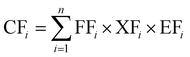 | (1) |
where FFi represents the fate factor of pollutant i, and it is calculated via Mackay's Level III multimedia fugacity model.44 The exposure factor (XFi) quantifies the population exposure intensity through multiple pathways as follows:| | 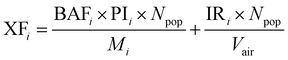 | (2) |
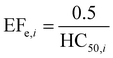
where specific variable definitions are provided in Table 1. The effect factor (EFi) encompasses human health (EFh,i) and ecological components (EFe,i), as shown in eqn (3) and (4):| | 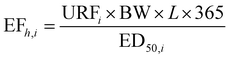 | (3) |
| |  | (4) |
where eqn (3) includes standard body weight (BW; 70 kg) and lifetime (L; 75 years) parameters. The remaining variables are defined in Table 1.
Table 1 Variable definitions and specifications
| Symbol |
Definition |
|
LCIA components
|
| BAFi |
Bioaccumulation factor for substance i |
| PIi |
Product intake rate for substance i |
|
N
pop
|
Exposed population size |
|
Mi
|
Total mass of substance i in the exposure area |
| IRi |
Inhalation intake rate for substance i |
|
V
air
|
Total air volume in the exposure area |
| URFi |
Unit risk factor for substance i |
| ED50,i |
50% effect dose for substance i |
| HC50,i |
50% hazardous concentration for substance i |
|
Economic parameters
|
|
M
can
i
|
Annual cancer mortality from substance i |
|
M
non
i
|
Annual non-cancer mortality from substance i |
|
κ
can
|
Conversion coefficient of disability-adjusted life year (DALY) for cancer impacts |
|
κ
non
|
Conversion coefficient of DALY for non-cancer impacts |
| GDP |
Gross domestic product per capita |
|
λ
|
Indicates labor productivity weight |
|
Optimization variables
|
|
D
eco
p
|
Ecosystem damage from process pi |
|
D
res
p
|
Resource damage from process pi |
|
D
health
p
|
Human health damage from process pi |
|
α, β, γ |
Economic cost factors (ecosystem, resource, health) |
| ESC |
Environmental cost of the energy system |
| EMB |
Environmental cost of raw materials |
|
Ei
|
Energy consumption of process i |
|
Ri
|
Raw material consumption of process i |
| EFi |
Pre-optimization environmental impact value of process i |
The characterization factors of the remaining five midpoint categories in the yellow box were calculated according to eqn (5):
| | 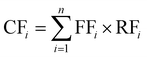 | (5) |
where RF
i represents the result factor. The calculation procedures are detailed in Table S2.
2.3 LCC assessment method
LCC assessment, which incorporates internal (e.g., raw materials, energy, and labor) and external costs (eqn (6)), was employed to evaluate the economic damage of fluorinated intermediate production:45,46| |  | (6) |
where LCCtotal and Cintk are the total life cycle cost and internal cost, respectively. The external costs encompassed expenses associated with human health costs (Chealthi), ecosystem remediation costs (Cecoi), and resource depletion costs (Cresi) during the whole life cycle of fluorinated intermediate production. In particular, Chealthi included direct (Cdiri) and indirect costs (Cindi), which were calculated using eqn (7)–(9):| | | Chealthi = Cdiri + Cindi | (7) |
| |  | (8) |
| | | Cindi = LCIAi × GDP × λ | (9) |
where Csoci is the societal health expenditures; Cgoci is the government health expenditures; and Cperi is the private health expenditures. The remaining variables are defined in Table 1. Ecosystem remediation costs (Cecoi) and resource depletion costs (Cresi) were quantified via willingness-to-pay and resource depletion methodologies, respectively.47
2.3 System optimization method
The LCC can integrate ecosystem quality, resources, and human health impact into a single quantitative indicator (eqn (10)):| | 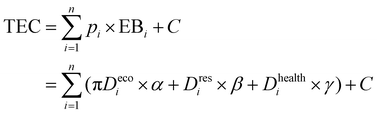 | (10) |
where TEC is the total environmental cost; pi represents the key processes identified by the aforementioned LCIA model; EBi represents their environmental burdens; and C represents the aggregated burden of nonkey processes with individual contributions <1% and total contributions <5%. The remaining variables are defined in Table 1. Different optimization objectives can be achieved based on this equation.
Three optimization targets are considered in this study as follows:
| |  | (11) |
| |  | (12) |
| |  | (13) |
Subject to:
| |  | (14) |
These three objectives address total environmental burdens (target 1), energy burdens (target 2), and material burdens (target 3), respectively. The variable specifications are provided in Table 1. The material and energy balance constraints ensure system feasibility. The optimization analysis was conducted in MATLAB R2020a, and evolutionary algorithms were used to identify Pareto-optimal solutions.
2.5 LCI and data sources
The LCI for fluorinated intermediate production was established following the defined system boundary (Table S1), incorporating primary data from two specialized fluorine chemical enterprises located in Anhui and Liaoning Provinces, China. These enterprises have annual production capacities of 1500 and 1000 tons, respectively, and provide comprehensive onsite operational data. Background system data, including transportation, electricity generation, and municipal water supply system data, were obtained from the China-specific Process-based Life Cycle Inventory Database (CPLCID) (SI S.4.).48 For chemical production processes where domestic data were unavailable, the corresponding parameters were sourced from the Ecoinvent database.49 This approach to data integration ensures spatial representativeness of the analysis within the Chinese industrial context. Meanwhile, SI S.5 verifies reproducibility using publicly available models and databases. Additionally, all LCIA and LCC analyses, including uncertainty analysis (conducted through Monte Carlo simulation with 1000 iterations), were performed via SimaPro 9.3 software. The detailed information on uncertainty analysis and its results are provided in SI S.6.
3. Results
3.1 LCIA results
The LCIA and uncertainty analysis results are presented in Table S6. For example, fossil depletion (FD) during the life cycle of C7H7O production was 3.43 × 10³ kg oil-eq., with a GSD2 value of 1.43. The value fluctuated within the range of 2.36 × 10³ to 4.83 × 10³ kg oil-eq. (95% confidence intervals). Fig. 2 shows the normalization results based on the external environmental cost evaluation. At the midpoint level, freshwater ecotoxicity emerged as the dominant contributor, followed by FD. The global warming potential (GWP), water depletion, particulate formation, non-carcinogens, and metal depletion also play important roles. The impact of the remaining categories can almost be ignored. When these midpoints are aggregated into endpoint categories, ecosystem quality damage becomes the predominant concern, accounting for 66.0–86.1% of the total impacts, and resource consumption and human health damage contribute 12.3–28.4% and 1.6–5.6%, respectively. The three intermediates exhibit similar impact patterns with variations in magnitude. These findings highlight the key categories that should be prioritized in production optimization strategies for these chemical intermediates.
 |
| | Fig. 2 LCIA results. (FE: freshwater ecotoxicity; FD: fossil depletion; GWP: global warming potential; WD: water depletion; PF: particulate formation; NC: non-carcinogens; MD: metal depletion; C: carcinogens; TA: terrestrial acidification; OF: ozone formation; LO: land occupation; AE: aquatic eutrophication; IR: ionizing radiation; ME: marine eutrophication; OLD: ozone layer depletion.) | |
3.2 Key factors in LCIA
Fig. 3 shows the key processes and pollutants across different intermediate production systems. Raw material acquisition dominated the environmental impacts at the midpoint level, with notable system-specific variations. In C7H7F systems, the environmental burden is driven primarily by aniline (C6H7N) preparation (7.8–97.9%) and HF synthesis (20.2–86.2%). Sulfuric acid (H2SO4) preparation also played a prominent role in metal depletion (56.1%). The C7H5F3O system had a broad influence on Cl2 preparation (9.2–54.9%). The C2H6O4S preparation critically affected freshwater ecotoxicity (84.2%) and metal depletion (30.3%), and HF synthesis notably impacted water depletion (35.6%). KFSI production is predominantly influenced by SOCl2 preparation (45.0–70.7%), and ClSO3H preparation significantly affects metal depletion (26.7%) and freshwater ecotoxicity (37.7%). In addition to raw materials, the electricity supply dominated the remaining impacts in most categories (6.4–22.3%). The exceptions were freshwater ecotoxicity, water depletion, and metal depletion, where steam generation contributed significantly to the C7H5F3O (3.8–37.3%) and KFSI (1.8–27.2%) systems.
 |
| | Fig. 3 Key factors to main categories: (a) process to midpoint; (b) substance to midpoint; (c) process to endpoint; and (d) substance to endpoint. (R: resources; EQ: ecosystem quality; HH: human health.) | |
When these midpoints were translated into endpoint damages, ecosystem quality damage was predominantly attributed to aluminum emissions during the preparation of raw materials (e.g., C6H7N, C2H6O4S, SOCl2, and ClSO3H), accounting for 65.0–76.3% of the total impact. For resource depletion, coal was consumed in the main raw material production (e.g., C6H7N, HF, Cl2, and SOCl2), and the energy supply was the main contributor (26.2–69.7%). Crude oil contributed 32.5% of the resource depletion in C7H7F production. Human health impacts were driven primarily by CO2 (34.8–40.1%) and atmospheric mercury (Hg) emissions (15.9–19.0%), and methane (CH4, 6.3–10.2%), nitrogen oxide (NOx, 8.8–11.5%), and sulfur dioxide (SO2, 7.4–13.7%) emissions also play important roles.
3.3 LCC results
The LCC analysis revealed internal and external economic costs (Fig. 4). Externality-to-production cost ratios vary substantially across fluorinated intermediates. C7H7O presented the most severe imbalance (36675.9 $ per t vs. 3422.1 $ per t, 10.7:1), and C7H5F3O presented the lowest ratio (49360.6 $ per t vs. 10931.0 $ per t, 4.5:1). The KFSI fell within this intermediate range (72049.3 $ per t vs. 12188.3 $ per t, 5.9:1). Overall, the external costs consistently exceeded the internal production costs by factors of 4.5–10.7 across all the systems. The internal cost structures differed markedly among the three fluorinated intermediates. Energy consumption (electricity and steam) represented the predominant cost component for C7H5F3O and KFSI production, accounting for 40.7–54.4% of the total internal costs, followed by raw material procurement (23.3–34.1%). The remainder was attributed to equipment depreciation, taxes, and operational overhead. In contrast, C7H7O production was dominated by raw material costs (76.0% of internal costs). The labor-related expenses (152.7 $ per t) contributed 4.5% of the internal cost, whereas the cost remained negligible for the other two fluorinated intermediates. The external cost composition revealed that freshwater ecotoxicity was the overwhelming contributor to ecosystem remediation costs (98.6–99.7% across all intermediates). Fossil fuel consumption drove resource depletion costs (80.9–95.6% of this category). Climate change predominantly contributed to human health-related external costs (45.2–47.8%), with the remaining damage stemming mainly from particulate formation and non-carcinogens.
 |
| | Fig. 4 Life cycle cost analysis results: (a)–(c) comprehensive cost analysis including total costs and key midpoints. | |
3.4 Integrated environmental–economic LCA results
Fig. 5 presents the integrated environmental–economic LCA results. C6H7N synthesis in the C7H7O system results in high environmental–economic coupling, with 89.4% total environmental impact and 38.7% economic cost, indicating that these processes need dual control strategies of environmental burdens and economic costs. Some processes have high environmental impacts and low economic significance, suggesting that their environmental burdens should still be considered despite their low costs. For example, in C7H5F3O intermediate production, C2H6O4S and Cl2 contribute 56.5% and 24.2% of the total environmental burden, respectively. In KFSI intermediate production, SOCl2 and ClSO3H production contribute significantly to environmental impacts, accounting for 61.9% and 29.0%, respectively. Conversely, the steam supply shows the opposite pattern. The steam supply constituted 47.0% and 34.3% of the economic costs in the C7H5F3O and KFSI production systems, respectively. However, the steam supply had disproportionately low environmental impacts during the life cycle of intermediate production, contributing only 7.1% and 7.8%, respectively. Fluorinated compounds, including HF (24.5%) and KF (15.9%), are economically significant but environmentally minor contributors, with their costs primarily derived from energy-intensive production requirements and operational expenses.
 |
| | Fig. 5 Integrated environmental–economic LCA analysis results: (a) C7H7F; (b) C7H5F3O; and (c) KFSI. | |
3.5 Sensitivity analysis
LCIA fluctuations were studied via sensitivity analysis with ±5% variation in key process inputs (Fig. S2). The results revealed that raw material preparation exhibited the most significant sensitivity across the environmental burdens of the three intermediate production systems. In C7H7F production, the input reduction of C6H7N could result in a 0.4–4.9% decrease in different environmental impact categories. The HF preparation demonstrated obvious sensitivity (1.0–4.3%) in most categories; however, its impact on the key impact (i.e., freshwater ecotoxicity) was minimal. For C7H5F3O production, the C2H6O4S preparation exhibited a sensitivity ranging from 0.1% to 4.2% across key midpoint categories, primarily influencing freshwater ecotoxicity and metal depletion. The Cl2 preparation showed a sensitivity of 0.5–2.7%. For KFSI production, the SOCl2 preparation demonstrated a sensitivity of 2.2–3.5%, and the ClSO3H preparation primarily influenced freshwater ecotoxicity (1.9%). Additionally, the efficiency of energy and heat (i.e., electricity and steam) generation can reduce the environmental impact by 0.2–1.9%. For the economic cost sensitivity analysis, steam generation exhibited the greatest economic sensitivity, with 5% input reductions yielding cost reductions of 2.4% and 1.7% for the C7H5F3O and KFSI systems, respectively (Table S7). C6H7N usage and HF consumption reductions resulted in 1.9% and 1.2% cost decreases during C7H7F production, respectively. For KFSI production, KF and SOCl2 input reductions led to 0.8% and 0.6% cost savings, respectively. The C7H5F3O systems responded to C2H6O4S and HF input reductions with 0.5% and 0.3% cost decreases, respectively.
3.6 Optimization results
A comprehensive optimization strategy targeting the overall environmental impacts of fluorine-containing intermediate production was implemented via three distinct approaches: environmental impact minimization, energy system enhancement, and raw material optimization (Table 2). Environmental impact minimization analysis revealed that C6H7N requires a consumption reduction of 0.92 t, C2H6O4S requires a consumption reduction of 0.63 t, and SOCl2 requires a consumption reduction of 1.20 t to achieve minimal total environmental impact. Energy system optimization demonstrated varying effectiveness across different production processes, with C7H5F3O and KFSI production meeting the optimization target via energy enhancements requiring steam and electricity consumption reductions of 36.2% and 59.9%, respectively, owing to their greater energy dependency than C7H7F production. However, C7H7F production cannot achieve the optimization target via energy improvements alone because electricity makes a minimal contribution (<5%) to the total impact. Raw material optimization presented the most feasible approach for achieving total impact reduction, as the main feedstocks require modest reductions of only 5.08%, 5.97%, and 5.49% for the three intermediate production processes, respectively.
Table 2 Optimization results for C7H7F, C7H5F3O, and KFSI production systems
| |
C6H7N |
HF |
H2SO4 |
NaNO3 |
Electricity |
| Optimization target 1 |
0.92 t |
0.53 t |
1.77 t |
0.64 t |
1.46 × 10³ kWh |
| Optimization target 2 |
— |
— |
— |
— |
— |
| Optimization target 3 |
0.93 t |
0.50 t |
1.68 t |
0.60 t |
1.46 × 10³ kWh |
| |
C2H6O4S |
HF |
Cl2 |
Steam |
Electricity |
| Optimization target 1 |
0.63 t |
0.38 t |
1.24 t |
130.54 t |
1.02 × 10⁴ kWh |
| Optimization target 2 |
0.69 t |
0.38 t |
1.35 t |
83.27 t |
6.49 × 10³ kWh |
| Optimization target 3 |
0.65 t |
0.35 t |
1.27 t |
130.54 t |
1.02 × 10⁴ kWh |
| |
SOCl2 |
ClSO3H |
Tap water |
Steam |
Electricity |
| Optimization target 1 |
1.20 t |
0.75 t |
189.50 t |
106.22 t |
9.88 × 10³ kWh |
| Optimization target 2 |
1.29 t |
0.81 t |
189.50 t |
42.55 t |
3.96 × 10³ kWh |
| Optimization target 3 |
1.21 t |
0.76 t |
179.10 t |
106.22 t |
9.88 × 10³ kWh |
4. Discussion
Freshwater ecotoxicity emerges as significant impact category during fluorinated intermediate manufacturing (Fig. 2). Studies in computational toxicology and chemistry, such as studies employing the Quantitative Structure–Toxicity Relationship (QSTR) method or the Quantitative Structure–Activity Relationship (QSAR) method, have also demonstrated similar findings. For example, Li et al.50 demonstrated that the introduction of fluorine atoms can enhance the electronegativity, lipophilicity, and molecular bulk of pesticides. While these modifications contribute to the high efficacy of fluorinated pesticides at low application doses, they may also pose significant toxicological risks to aquatic organisms (e.g., D. magna and O. mykiss).50,51 These mechanistic insights validate the high freshwater ecotoxicity observed in LCA. However, the inherent limitations of single LCIA models, including incomplete characterization factor coverage and regional background interference, may yield divergent conclusions for identical systems.51,52 The LCIA model employed in this study was updated on the basis of IMPACT World+,38,42 which emphasizes global-scale impacts. ReCiPe 2016 and IMPACT World+ yield analogous assessment outcomes; conversely, the regionally focused USEtox model identifies C6H5NO2 emissions (98.9% contribution) from C6H7N production wastewater and polycyclic aromatic hydrocarbons (e.g., pyrene) from chlorine electrolysis as the dominant freshwater ecotoxicity contributor.53 Given the complexity of chemical mixtures in industrial wastewater and the species-specific nature of toxicity responses,50 this discrepancy results from the absence of nitrobenzene aqueous emission characterization factors in the IMPACT World+ and related models. China's Integrated Wastewater Discharge Standard classifies nitrobenzene as a Category II pollutant,54 specifying allowable concentration limits (Table S8). The measured nitrobenzene concentration in C7H7F production wastewater reached 4.06 mg L−1, with scenario analysis demonstrating potential freshwater ecotoxicity reductions of 26% under Category II emission limits and 50% under stricter Category I standards. Enhanced nitrobenzene reutilization offers complementary mitigation, as evidenced by the research of Zhao et al.,55 who developed a carbon-free electrochemical hydrogenation method by using CuNi catalysts in aqueous electrolytes, enabling cost-effective recovery of nitrobenzene contaminants and their conversion to C6H7N (key precursor for C7H7F synthesis). These findings underscore that stringent enforcement of national standards combined with advanced recycling technologies can substantially mitigate the environmental impacts of fluorinated intermediate production.
For fluorinated intermediate production, the two-step substitution method (chlorination followed by fluorination) is conventionally employed to introduce fluorine because of the complexity and hazards associated with direct fluorine preparation (SI S.1). FD, the second-largest source of environmental pressure for fluorinated intermediate production, accounts for 54.9% and 70.7% of the contribution from Cl2 and SOCl2 chlorination reagents, respectively (Fig. 2). This phenomenon is attributed primarily to the high electricity consumption of chlorine electrolysis,56 where coal-based power generation remains dominant (43.1% of China's ≥6 × 10³ kW installed capacity in 2024).57 However, China has actively promoted the energy transition toward green and low-carbon systems to achieve its dual-carbon goals.58,59 By 2060, clean energy is projected to account for 33.1% (wind), 30.14% (nuclear), and 24.4% (photovoltaic) of the total generation based on GCAM simulations (SI S.9). This transition is expected to reduce FD by 2.4–4.7% in fluorinated intermediate production (Fig. 6) while concurrently lowering emissions of CO2, SO2, NOx, and particulate matter. The decarbonization of power systems is anticipated to decrease human health-related economic costs by 10.1–15.7% and reduce GWP by 13.2–21.1% in fluorinated intermediate manufacturing by 2060. Nevertheless, increased reliance on wind and photovoltaic energy exacerbates water depletion and metal depletion challenges. This phenomenon arises from elevated water consumption in polysilicon production and the heightened demand for steel and copper in wind turbine manufacturing.60,61 Metal mining and smelting processes significantly increase the ecotoxicity impacts.62,63 From a life-cycle perspective, while the energy transition benefits climate mitigation, resource conservation, and human health, it introduces risks of increased freshwater ecotoxicity in fluorinated pesticide intermediate production.64,65 Environmental governance in the chemical industry faces two challenges: clean energy adoption may intensify rare resource extraction pressures,66 and pollution control measures may generate secondary contaminants.67,68 Consequently, industry strategies need to integrate LCA-based multicriteria decision models, implement cross-media compensation mechanisms, and optimize circular economy frameworks to mitigate impact transference.
 |
| | Fig. 6 Comparisons: (a) electricity structure prediction through the GCAM model; (b) environmental impacts of C7H7F during 2025–2060; (c) environmental impacts of C7H5F3O during C7H7F production; (d) environmental impacts of KFSI during C7H7F production; (e) life cycle costs of C7H5F3O based on different steam sources; and (f) life cycle costs of KFSI based on different steam sources. The GCAM simulations were conducted for the period 2020–2060 at five-year intervals. The scenario design and parameter assumptions were adopted from the studies by Muratori et al.,69 Liu et al.,70 and Zhu et al.71 | |
For C7H5F3O and KFSI, steam generation accounts for 47.0% and 34.3% of their internal costs, respectively (Fig. 5). For the chemical industry, coal-fired boilers remain a critical source of steam supply.72,73 However, given the substantial amount of greenhouse gas emissions and the nonrenewable nature of coal combustion, global efforts are intensifying to identify cleaner alternatives.39,74 Compared with other fossil fuels, natural gas, which is the third-largest primary energy source after coal and oil, emits approximately 50% less CO2.75,76 Substituting coal-derived steam with natural gas reduces FD and GWP impacts by 96.9% and 98.3%, respectively (Fig. S3). In particular, this substitution reduces resource depletion costs by 1902.0 and 1547.6 $ per t for C7H5F3O and KFSI production, respectively. Similarly, ecosystem remediation costs decrease by 1243.5 and 1011.8 $ per t for these intermediates (Fig. 6e and f). However, the external environmental benefits of natural gas substitution are offset by market volatility. Unstable natural gas prices, which are driven by supply–demand dynamics and seasonal variations, present significant economic challenges. For example, according to the data from the Jinan Municipal Development and Reform Commission,77 replacing coal with natural gas increases internal production costs for fluorinated intermediates by 778.2–1655.9 and 606.3–1316.5 $ per t (Table S11). Nevertheless, despite these elevated life cycle costs, natural gas remains a pragmatic transitional energy source given the current immaturity of renewable energy technologies.76,78,79 Concurrently, biomass energy adoption is accelerating globally to reduce fossil fuel dependence.75,80,81 Coal-biomass oxy-fuel co-firing technology, validated by multiple studies,82 demonstrates life cycle carbon negativity and achieves over 30% reductions in SO2/NOx emissions through optimized blending ratios.83 Compared with natural gas, biomass energy not only possesses renewable characteristics and carbon neutrality advantages but also incurs lower operational costs.84 On the basis of current prices of 3.6 yuan per m3 for natural gas and 900 yuan per ton for biomass pellets, with respective calorific values of 8600 kcal and 4000 kcal, biomass pellet fuel costs 27% less than natural gas per equivalent heat output for boiler operations requiring 600000 kcal per hour (survey data). However, heterogeneous biomass properties, including calorific value and moisture content, may cause boiler slagging and fouling, compromising operational longevity.85 Industrial and nuclear waste heat recovery represents another alternative for steam generation. Industrial waste heat (48–200 °C) faces geographical constraints in terms of availability and transport economics.86–88 Mobile thermal energy storage (M-TES) systems, as studied by Chiu et al.,89 concentrate carbon emissions during transportation and exhibit economics tied to utilization rates. The coastal locations of nuclear plants exacerbate spatial mismatches between heat supply and demand, necessitating high-capacity long-distance transmission systems that incur thermal losses and efficiency penalties.87,90 The low-carbon steam transition in the chemical industry remains constrained by its technical feasibility and economic viability. This situation necessitates systematic tradeoffs among multiple factors, including the cost-effectiveness of clean energy alternatives, technological readiness levels, and life-cycle environmental benefits. The challenges can be addressed by focusing on strategic priorities involving three key areas. First, mitigating natural gas price volatility via diversified supply contracts is essential. Second, improving biomass fuel quality standardization can prevent boiler operational issues. Third, developing economically viable waste-heat recovery systems that overcome geographical constraints is crucial for widespread adoption.
Additionally, the assessment in this study focuses on the factory and its upstream production phases; it is necessary to expand the framework and make it comprehensive, containing “feedstock–intermediate–pesticide–application” stages. Meanwhile, the application and trade of pesticides contribute to region-specific patterns of residues and toxic effects, complicating the formulation of effective management strategies. For example, Tang et al.91 and Huang et al.92 point out that pesticide pollution exhibits significant geographical disparities, with African and South Asian countries showing particularly high contamination levels in both surface water and groundwater. Thus, Africa has been identified as a priority region for the implementation of pesticide control measures in freshwater systems. Furthermore, trade dynamics and disparities in environmental regulations can lead to transboundary shifting of toxic burdens. Fluorinated intermediate production in jurisdictions with less stringent emission controls can result in transboundary pollution transfer through international supply chains,93 creating environmental inequality.94 Accordingly, it will also be valuable for future studies to integrate more comprehensive environmental impacts beyond the factory boundary, such as transboundary transport of pollutants and globalized pesticide trade, to support equitable and effective policy interventions.
5. Conclusion
A localized environmental–economic impact assessment framework was constructed in this study to systematically quantify the environmental–economic nexus relationships of fluorinated intermediates (C7H7F, C7H5F3O, and KFSI) in China. LCIA results demonstrated that freshwater ecotoxicity (65.1–85.9%) and fossil resource depletion (11.6–26.1%) constituted the most prominent environmental burdens throughout the life cycles of these three intermediates. Heavy metal emissions from precursor synthesis processes have emerged as primary contributors to freshwater ecotoxicity, whereas coal-based energy generation has driven fossil resource depletion. Economic analysis revealed that external costs accounted for 81.9–91.5% of total production costs, predominantly from ecosystem remediation and resource depletion expenses. The internal cost structures varied substantially among intermediates: C7H7F costs originated primarily from C6H7N (50.9%) and HF (32.3%), whereas C7H5F3O and KFSI costs were derived from raw materials and energy inputs. These findings enabled the identification of compound-specific optimization pathways essential for industry decision-making processes. C6H7N process improvement offers synergistic environmental–economic benefits for C7H7F production, whereas C7H5F3O and KFSI require targeted strategies addressing raw material production optimization and steam efficiency improvements.
Prospective scenario analyses revealed critical tradeoffs in green transition policies, providing novel insights for sustainable chemical manufacturing. Decarbonization of the electricity structure resulted in reductions in FD (8.5–16.8%) and GWP (13.2–21.2%) but simultaneously intensified the impacts of water resource depletion, metal depletion, and freshwater ecotoxicity. Coal-to-gas steam substitution yielded substantial environmental benefits, reducing resource depletion costs by 1902.0 and 1547.6 $ per t and ecosystem remediation costs by 1243.5 and 1011.8 $ per t for C7H5F3O and KFSI production, respectively. However, economic assessments based on 2023–2024 price benchmarks indicated internal production cost increases of 778.2–1655.9 and 606.3–1316.5 $ per t, highlighting implementation challenges for policymakers. These results underscore the urgent need for cross-media compensation strategies and coordinated supply chain management to achieve synergistic impact mitigation. Overall, the application of the framework developed in this study enables the identification of key environmental and economic impact processes across the lifecycle of fluorinated intermediates (e.g., reducing heavy metal emissions from precursor synthesis routes and decarbonizing and optimizing energy and heat systems), and thus this can provide a scientific basis for eco-design strategies.
Author contributions
Yunzhi Zhao: data analysis and draft writing. Tianzuo Zhang: data collection and analysis. Jinglan Hong: methodology. Runqi Jin: data collection. Xiaotian Ma: manuscript revision, methodology, funding, and supervision.
Conflicts of interest
The authors declare that they have no known competing financial interest or personal relationships that could have appeared to influence the work reported in this paper.
Abbreviations
| C7H7F | Methylfluorobenzene |
| C7H5F3O | Trifluoromethoxybenzene |
| KFSI | Bis(fluoromethanesulfonyl)imide |
| C6H5NO2 | Nitrobenzene |
| C2H6O4S | Dimethyl sulfate |
| C6H7N | Aniline |
| Cl2 | Chlorine |
| ClSO3H | Chlorosulfonic acid |
| H2SO4 | Sulfuric acid |
| HF | Hydrogen fluoride |
| KF | Potassium fluoride |
| NaNO3 | Sodium nitrate |
| NH3SO3 | Sulfamic acid |
| NOx | Nitrogen oxides |
| SOCl2 | Thionyl chloride |
Data availability
The data supporting this study are from field research and a self-built database. Data from these sources are available from the corresponding author upon reasonable request. Meanwhile, some background data are sourced from commercial databases, and their access is subject to license restrictions.
Supplementary information (SI) is available. See DOI: https://doi.org/10.1039/d5gc04729c.
Acknowledgements
We gratefully acknowledge the financial support from the National Natural Science Foundation of China (Grant No. 72504164), the Shandong Provincial Natural Science Foundation (Grant No. ZR2025MS595), the Education Department of Shandong Province (Grant No. 2024KJL036), and the Young Scholars Program of Shandong University (Weihai).
References
- M. Lykogianni, E. Bempelou, F. Karamaouna and K. A. Aliferis, Sci. Total Environ., 2021, 795, 148625 CrossRef CAS PubMed.
- Y. T. Wang, X. N. Yu, S. S. Ma, S. L. Cao, X. F. Yuan, W. B. Zhu and H. L. Wang, Green Chem., 2024, 26, 42–56 RSC.
- A. E. Larsen, F. Noack and L. C. Powers, Science, 2024, 383, eadf2572 CrossRef CAS PubMed.
-
FAO, World Food and Agriculture – Statistical Yearbook 2024, FAO, 2024 Search PubMed.
- M. Nehra, N. Dilbaghi, G. Marrazza, A. Kaushik, C. Sonne, K. H. Kim and S. Kumar, J. Hazard. Mater., 2021, 401, 123369 CrossRef CAS PubMed.
- S. Sindhu and A. Manickavasagan, Compr. Rev. Food Sci. Food Saf., 2023, 22, 1226–1256 CrossRef PubMed.
- J. Chen, L. Zhao, B. Wang, L. Blaney, J. Huang, X. Y. He, F. C. Wu and G. Yu, One Earth, 2025, 8, 101163 CrossRef.
- A. Bondi, J. Phys. Chem., 1964, 68, 441–451 CrossRef CAS.
- D. A. M. Alexandrino, A. P. Mucha, C. M. R. Almeida and M. F. Carvalho, Crit. Rev. Biotechnol., 2022, 42, 991–1009 CrossRef CAS PubMed.
- M. Y. Wang, J. Ruskin, J. Marques, N. Garrison and T. Lectka, Chem. Rev., 2025, 125, 9382–9428 CrossRef CAS.
- Y. Ogawa, E. Tokunaga, O. Kobayashi, K. Hirai and N. Shibata, iScience, 2020, 23, 101467 CrossRef CAS PubMed.
- C. Gentil, C. Basset-Mens, S. Manteaux, C. Mottes, E. Maillard, Y. Biard and P. Fantke, J. Cleaner Prod., 2020, 277, 124099 CrossRef CAS.
- C. R. Singer, H. Behrens, I. Horn, M. Oeser, R. Dohmen and S. Weyer, Eur. J. Mineral., 2023, 35, 1009–1026 CrossRef CAS.
- A. Allushi, T. H. Pham and P. Jannasch, J. Membr. Sci., 2021, 632, 119376 CrossRef CAS.
- H. J. Guo, Commun. Chem., 2023, 6, 178 CrossRef CAS PubMed.
- P. Zhang, J. Wang, Y. R. Shu, W. J. Fu, Y. Wang, J. H. Ye and L. Yang, Energy Convers. Manage., 2023, 277, 116679 CrossRef CAS.
- Q. Wang, H. J. Song and Q. M. Wang, Chin. Chem. Lett., 2022, 33, 626–642 CrossRef CAS.
- K. Kubota, T. Makino, K. Kondo, T. Seo, M. Jin and H. Ito, Green Chem., 2025, 27, 1771–1776 RSC.
- Y. H. Li and J. Q. Yu, J. Am. Chem. Soc., 2025, 147, 20233–20238 CrossRef CAS PubMed.
-
ISO(14040), Environmental management Life cycle assessment Principles and framework, 2006 Search PubMed.
- P. G. Jessop and A. R. Macdonald, Green Chem., 2023, 25, 9457–9462 RSC.
- S. C. McDowall, E. Lanphear, S. Cucurachi and C. F. Blanco, Resour., Conserv. Recycl., 2025, 222, 108464 CrossRef.
- H. Holmquist, P. Fantke, I. T. Cousins, M. Owsianiak, I. Liagkouridis and G. M. Peters, Environ. Sci. Technol., 2020, 54, 11640–11640 CrossRef CAS PubMed.
- A. C. Ellis, T. H. Boyer, Y. D. Fang, C. J. Liu and T. J. Strathmann, Water Res., 2023, 243, 120324 CrossRef CAS.
- H. D. Whitehead, M. Venier, Y. Wu, E. Eastman, S. Urbanik, M. L. Diamond, A. Shalin, H. Schwartz-Narbonne, T. A. Bruton, A. Blum, Z. Y. Wang, M. Green, M. Tighe, J. T. Wilkinson, S. McGuinness and G. F. Peaslee, Environ. Sci. Technol. Lett., 2021, 8, 1104–1105 CrossRef CAS.
- T. Nemecek, A. Antón, C. Basset-Mens, C. Gentil-Sergent, C. Renaud-Gentié, C. Melero, P. Naviaux, N. Peña, P. Roux and P. Fantke, Int. J. Life Cycle Assess., 2022, 27, 527–542 CrossRef CAS.
- N. Peña, M. T. Knudsen, P. Fantke, A. Antón and J. E. Hermansen, J. Cleaner Prod., 2019, 209, 1332–1341 CrossRef.
- F. Nazari and L. D. Woods, J. Cleaner Prod., 2025, 506, 145509 CrossRef CAS.
- Y. F. Lyu, M. Raugei, X. H. Zhang, S. Mellino and S. Ulgiati, Renewable Sustainable Energy Rev., 2021, 151, 111604 CrossRef CAS.
- T. Z. Zhang, Y. K. Jia, K. Ren, S. Wang, Z. H. Li, W. Chen and J. L. Hong, J. Cleaner Prod., 2024, 477, 143806 CrossRef.
- J. L. Han, L. Kiss, H. B. Mei, A. M. Remete, M. Ponikvar-Svet, D. M. Sedgwick, R. Roman, S. Fustero, H. Moriwaki and V. A. Soloshonok, Chem. Rev., 2021, 121, 4678–4742 CrossRef CAS PubMed.
- M. Yang, A. N. Zhao, H. L. Ke and H. Q. Chen, Sustainability, 2023, 15, 1871 CrossRef CAS.
- S. Wickerts, R. Arvidsson, A. Nordelöf, M. Svanström and P. Johansson, ACS Sustainable Chem. Eng., 2023, 11, 9553–9563 CrossRef CAS.
- C. Spreafico, J. Cleaner Prod., 2024, 468, 143104 CrossRef CAS.
- F. Liu, H. Q. Liu, N. Yang and L. Wang, Resour., Conserv. Recycl., 2021, 169, 105541 CrossRef.
- B. L. S. Porto, B. Acevedo-García, A. E. Kashtiban, T. M. Sepulveda, M. Herrero, A. Cifuentes, J. A. Mendiola and E. Ibáñez, Green Chem., 2025, 27, 11021–11035 RSC.
- K. Yin, World Pestic., 2020, 42, 1–8 Search PubMed.
- Y. J. Zhai, X. T. Ma, F. Gao, T. Z. Zhang, J. L. Hong, X. Zhang, X. L. Yuan and X. Z. Li, Renewable Sustainable Energy Rev., 2020, 134, 110353 CrossRef CAS.
- R. R. Zhang, G. L. Wang, X. X. Shen, J. F. Wang, X. F. Tan, S. T. Feng and J. L. Hong, Renewable Sustainable Energy Rev., 2020, 131, 110014 CrossRef.
-
C. Smith, Z. R. J. Nicholls, K. Armour, W. Collins, P. Forster, M. Meinshausen, M. D. Palmer and M. Watanabe, The earth energy budget, climate feedbacks, and climate sensitivity supplementary material, in Climate Change 2021: The Physical Science Basis. Contribution of Working Group I to the Sixth Assessment Report of the Intergovernmental Panel on Climate Change, IPCC, 2021 Search PubMed.
- M. A. J. Huijbregts, Z. J. N. Steinmann, P. M. F. Elshout, G. Stam, F. Verones, M. Vieira, M. Zijp, A. Hollander and R. van Zelm, Int. J. Life Cycle Assess., 2017, 22, 138–147 CrossRef.
- C. Bulle, M. Margni, L. Patouillard, A. M. Boulay, G. Bourgault, V. De Bruille, V. Cao, M. Hauschild, A. Henderson, S. Humbert, S. Kashef-Haghighi, A. Kounina, A. Laurent, A. Levasseur, G. Liard, R. K. Rosenbaum, P. O. Roy, S. Shaked, P. Fantke and O. Jolliet, Int. J. Life Cycle Assess., 2019, 24, 1653–1674 CrossRef CAS.
- A. I. Belyanovskaya, B. Laratte, V. D. Rajput, N. Perry and N. V. Baranovskaya, J. Cleaner Prod., 2020, 270, 122432 CrossRef.
-
D. Mackay, Multimedia Environmental Models: the Fugacity Approach, CRC press, 2nd edn, 2001 Search PubMed.
- X. T. Ma, D. L. Yang, Y. J. Zhai, X. X. Shen, R. R. Zhang and J. L. Hong, Int. J. Life Cycle Assess., 2019, 24, 1840–1850 CrossRef CAS.
- T. Z. Zhang, Y. J. Zhai, S. T. Feng, X. F. Tan, M. D. Zhang, L. C. Duan, Q. P. Shi, J. Meng and J. L. Hong, J. Environ. Manage., 2022, 305, 114378 CrossRef PubMed.
- Z. Y. Cheng, T. Z. Zhang, X. Y. Zhou, Z. H. Li, Y. K. Jia, K. Ren, T. S. Xu, C. T. Li and J. L. Hong, J. Cleaner Prod., 2023, 415, 137888 CrossRef.
- T. Z. Zhang, X. Sun, X. Z. Li, H. R. Liu and J. L. Hong, J. Cleaner Prod., 2023, 406, 137142 CrossRef CAS.
-
Ecoinvent-centre
, Swiss centre for life cycle inventories, Database, https://ecoinvent.org/database/, (accessed Access Date).
- Y. S. Li, T. J. Fan, T. Ren, N. Zhang, L. J. Zhao, R. G. Zhong and G. H. Sun, Green Chem., 2024, 26, 839–856 RSC.
- S. Chen, T. J. Fan, N. Zhang, L. J. Zhao, R. G. Zhong and G. H. Sun, J. Hazard. Mater., 2024, 480, 136071 CrossRef CAS PubMed.
- M. Rybaczewska-Blazejowska and D. Jezierski, Int. J. Life Cycle Assess., 2024, 29, 1799–1817 CrossRef.
- A. Kounina, M. Margni, S. Shaked, C. Bulle and O. Jolliet, Environ. Int., 2014, 69, 67–89 CrossRef CAS PubMed.
-
S. E. P. Administration, National Standard of the People's Republic of China: Integrated Wastewater Discharge Standard, 1998 Search PubMed.
- Y. J. Zhao, T. H. Xu, X. W. Bai, Y. Jia, Y. L. Pan, X. W. Shi, H. J. Zheng and L. X. Zheng, Chem. Eng. J., 2024, 482, 149054 CrossRef CAS.
- Y. Y. Liu, C. Li, C. H. Tan, Z. X. Pei, T. Yang, S. Z. Zhang, Q. W. Huang, Y. H. Wang, Z. Zhou, X. Z. Liao, J. C. Dong, H. Tan, W. S. Yan, H. J. Yin, Z. Q. Liu, J. Huang and S. L. Zhao, Nat. Commun., 2023, 14, 2475 CrossRef CAS PubMed.
-
NEA, The National Energy Administration released the national electricity industry statistics for 2024, 2025 Search PubMed.
- H. B. Duan, S. Zhou, K. J. Jiang, C. Bertram, M. Harmsen, E. Kriegler, D. P. van Vuuren, S. Y. Wang, S. Fujimori, M. Tavoni, X. Ming, K. Keramidas, G. Iyer and J. Edmonds, Science, 2021, 372, 378–385 CrossRef CAS PubMed.
-
NDRC and NEA, Opinions on Improving the Institutional Mechanism and Policy Measures for Energy Green and Low-carbon Transformation by the National Development and Reform Commission and the National Energy Administration, 2022 Search PubMed.
- M. Seresová, J. Stefanica, M. Vitvarová, K. Zakuciová, P. Wolf and V. Kocí, Energies, 2020, 13, 5833 CrossRef.
- V. Kouloumpis and A. Azapagic, Sustain. Prod. Consum., 2022, 29, 495–506 CrossRef.
- R. Danovaro, S. Bianchelli, P. Brambilla, G. Brussa, C. Corinaldesi, A. Del Borghi, A. Dell'Anno, S. Fraschetti, S. Greco, M. Grosso, E. Nepote, L. Rigamonti and F. Boero, Renewable Sustainable Energy Rev., 2024, 197, 114386 CrossRef.
- A. Virtuani, A. B. Block, N. Wyrsch and C. Ballif, Joule, 2023, 7, 2511–2536 CrossRef CAS.
- E. Chioatto, S. Mancinelli, M. Mazzanti and F. Onofrio, Curr. Opin. Green Sustain. Chem., 2024, 50, 100976 CrossRef CAS.
- P. Fantke, C. Cinquemani, P. Yaseneva, J. De Mello, H. Schwabe, B. Ebeling and A. A. Lapkin, Chem, 2021, 7, 2866–2882 CAS.
- S. Han, Z. H. Meng, M. L. Li, X. H. Yang and X. X. Wang, Resour. Policy, 2023, 85, 103994 CrossRef.
- H. T. Luo, S. G. Xie, X. J. Dai, Q. Wang and Y. F. Yang, J. Environ. Manage., 2022, 310, 114729 CrossRef CAS PubMed.
- N. Thonemann and M. Pizzol, Energy Environ. Sci., 2019, 12, 2253–2263 RSC.
- M. Muratori, C. Ledna, H. McJeon, P. Kyle, P. Patel, S. H. Kim, M. Wise, H. S. Kheshgi, L. E. Clarke and J. Edmonds, Renewable Sustainable Energy Rev., 2017, 77, 861–874 CrossRef.
- H. L. Liu, T. Brown, G. B. Andresen, D. P. Schlachtberger and M. Greiner, Appl. Energy, 2019, 239, 1308–1321 CrossRef.
- G. Y. Zhu, Y. Xin, Y. Yu, S. G. Wang, X. T. Ma and H. L. Zhong, Environ. Impact Assess. Rev., 2026, 117, 108157 CrossRef.
- O. Mynko, M. Bonheure, I. Amghizar, D. J. Brown, L. Chen, G. B. Marin, R. F. de Alvarenga, D. C. Uslu, J. Dewulf and K. M. Van Geem, J. Cleaner Prod., 2023, 427, 139208 CrossRef CAS.
- M. J. P. Slapak, J. M. N. van Kasteren and A. A. H. Drinkenburg, Resour., Conserv. Recycl., 2000, 30, 81–93 CrossRef.
- A. Islam, S. H. Teo, C. H. Ng, Y. H. Taufiq-Yap, S. Y. T. Choong and M. R. Awual, Prog. Mater. Sci., 2023, 132, 101033 CrossRef CAS.
- T. Wang, T. Zhou, C. R. Li, Q. Song, M. Zhang and H. R. Yang, Energies, 2024, 17, 4484 CrossRef CAS.
- C. Gürsan and G. de, Renewable Sustainable Energy Rev., 2021, 138, 110552 CrossRef.
-
NDRC, Notice regarding the reduction of industrial steam prices, Development and Reform Commission of Jinan City, 2023 Search PubMed.
- N. Apergis and J. E. Payne, Appl. Energy, 2010, 87, 2759–2763 CrossRef.
- J. M. Li, X. C. Dong, Q. Z. Jiang and K. Y. Dong, Pet. Sci., 2022, 19, 429–440 CrossRef.
- Y. Wahyono, N. A. Sasongko, A. Trench, M. Anda, H. Hadiyanto, N. Aisyah and D. Ariyanti, Sustain. Energy Technol. Assess., 2024, 67, 103835 Search PubMed.
-
S. McCulloch, B. Page, G. Turan, J. Friedmann and T. Dixon, Global Status of CCS 2024, 2024 Search PubMed.
- X. Y. Wu, Z. B. Wei, J. Y. Liu, Z. H. Chen, F. Evrendilek and W. X. Huang, Chem. Eng. J., 2021, 422, 130312 CrossRef CAS.
- Q. W. Liu, W. Q. Zhong, A. B. Yu and C. H. Wang, Chem. Eng. J., 2022, 431, 133457 CrossRef CAS.
- A. Demirbas, Prog. Energy Combust. Sci., 2004, 30, 219–230 CrossRef CAS.
- M. Pronobis, R. Wejkowski, S. Kalisz and S. Ciukaj, Energy, 2023, 262, 125442 CrossRef.
- G. Manente and F. M. Fortun, Energy Convers. Manage., 2019, 197, 111777 CrossRef CAS.
- M. Srivastava, J. Sarkar, A. Sarkar, N. K. Maheshwari and A. Antony, Energy, 2024, 298, 131338 CrossRef CAS.
- L. Montella, X. Liu, R. Monaco, T. Murino and P. S. Nielsen, Energy, 2025, 318, 134721 CrossRef.
- J. N. W. Chiu, J. C. Flores, V. Martin and B. Lacarrière, Energy, 2016, 110, 139–147 CrossRef.
- P. Hirsch, K. Duzinkiewicz, M. Grochowski and R. Piotrowski, Appl. Energy, 2016, 182, 164–176 CrossRef.
- F. H. M. Tang, K. A. G. Wyckhuys, Z. J. Li, F. Maggi and V. Silva, Nat. Rev. Earth Environ., 2025, 6, 383–400 CrossRef.
- Y. B. Huang and Z. J. Li, iScience, 2025, 28, 112861 CrossRef CAS PubMed.
- Y. L. Shi, W. Q. Chen and Y. G. Zhu, Environ. Sci. Technol., 2024, 58, 12008–12017 CrossRef CAS PubMed.
- X. Su and J. L. Tan, Renewable Sustainable Energy Rev., 2023, 174, 113150 CrossRef.
|
| This journal is © The Royal Society of Chemistry 2026 |
Click here to see how this site uses Cookies. View our privacy policy here. 

 a,
Tianzuo
Zhang
b,
Jinglan
Hong
cd,
Ruiqi
Jin
a and
Xiaotian
Ma
*a
a,
Tianzuo
Zhang
b,
Jinglan
Hong
cd,
Ruiqi
Jin
a and
Xiaotian
Ma
*a


