

 Open Access Article
 This Open Access Article is licensed under a Creative Commons Attribution-Non Commercial 3.0 Unported Licence
Mobility of nitrogen in ashes and soils impacted by wildfires in northern California and Nevada
Travis
Numan
a,
Abrar
Shahriar
a,
Srinidhi
Lokesh
a,
Anil
Timilsina
a,
Sudarshan
Basyal
a,
Yasaman
Raeofy
b,
Simon R.
Poulson
c,
Vera
Samburova
 b and
Yu
Yang
*a
b and
Yu
Yang
*a
aDepartment of Civil and Environmental Engineering, University of Nevada, 1664 N. Virginia St., Reno, NV 89557, USA. E-mail: yuy@unr.edu
bDivision of Atmospheric Sciences, Desert Research Institute, 2215 Raggio Parkway, Reno, NV 89512, USA
cDepartment of Geological Sciences & Engineering, University of Nevada, 1664 N. Virginia St., Reno, NV 89557, USA
First published on 20th November 2025
Abstract
Wildfires drastically alter biogeochemical cycling and transport of nutrient elements, including nitrogen (N), from terrestrial to aquatic ecosystems, with the potential to degrade water quality. Understanding the impact of characteristics of wildfire-derived ashes and burned soils on the mobilization of N is essential for effectively managing wildfires and mitigating adverse effects on watershed functions. This study quantified the mobility of N in soils and ashes influenced by wildfires in the northern California/Nevada region in the western United States (Dixie, Beckwourth, and Caldor fires) and the impact of soil/ash characteristics. The mobile fraction of N ranged from 0.025–0.070 for the ashes, and the mobile fraction of N was composed of 13.1–39.6% as NO3−, up to 0.011% as NO2−, 0.004–86.9% as NH3/NH4+, and up to 49.4% as dissolved organic N. The speciation indicates possible nitrification occurring during the wildfires, but suggests no substantial denitrification. The mobile fraction of N was 11.3 ± 7.4 times that of organic carbon (OC), due to the high mobility of inorganic N (mainly NO3− and NH3/NH4+) and nitrogenous organic compounds. The mobile N fraction was associated with redox reactions of iron during wildfires, and was regulated by the redox reactivity of OC. N mobility in the ashes was lower than in control soils, potentially due to the transformation in the speciation of N. However, the total amount of mobile N was increased by wildfire, with the amount of increase being closely related to the severity of wildfires. Overall, wildfires lead to more mobile N, including both organic and inorganic N regulated by redox reactions and severity of wildfires, with subsequent concerns for water quality and water/wastewater treatment processes.
Environmental significanceWildfires, with increased frequency and intensity, exert significant impact on the biogeochemical cycles of nutritional elements, including nitrogen (N). No comprehensive understanding is available for the impact of wildfires on the mobility of N. Using the samples from wildfires in the Sierra-Nevada region, this study demonstrated that wildfires increase the total mobile nitrogen, while the mobile fraction of N was lower in ashes compared to reference soils. The mobile fraction of N was much higher than that of organic carbon. Wildfire severity determined the relative increase in the total mobile N. |
Introduction
Climate change is potentially increasing the frequency and intensity of wildfires.1–4 As temperature increases, conditions conducive to wildfires become more prevalent, particularly in the western United States, where projections suggest that increasing aridity and moisture deficits will exacerbate wildfire occurrences.5 Wildfires can significantly alter the physicochemical properties of soils, which in turn affect the biogeochemical cycling of nutritional elements, including the availability and mobilization of nitrogen (N).6Following a wildfire, incomplete combustion or pyrolysis of plant and microbial biomass can contribute N to soils.7 Nitrogen can be leached into runoff during rainfall events, potentially resulting in water quality issues such as eutrophication.8–10 Wildfires can also volatilize part of N in soils, especially organic N, at temperatures above 200 °C, which reduces the content of N in soils and its transport to aquatic ecosystems.11 In addition, pyrolysis and other thermal reactions occurring during wildfire processes can alter the compositions of N and their mobility. For example, mass spectrometry analysis and other characterization studies documented that wildfires triggered Maillard condensation between glycine and reduced sugars as well as the generation of pyrrolic, pyridinic, and quaternary N.11–13 The decomposition of organic matter during the transport of soil particles can release dissolved organic nitrogen (DON).14 In addition to the changes in concentration and mobility of N in soils, the altered hydrophobicity of soils after a wildfire can promote the transport of particles and dissolved N.11,15,16 There are still limited data and knowledge regarding the impact of wildfires on the mobility of N and the controlling biogeochemical processes and physicochemical properties of ashes/soils.
Changes in N content, speciation, and mobility caused by wildfires are associated with microbial soil health. Immediate changes in microbial populations caused by wildfires can directly influence nutrient cycling processes, such as N fixation, nitrification, denitrification, and other reactions.17–19 Microbial transformation of pyrogenic organic compounds can lead to the production of cyclic N and compounds with more oxidized functional groups and higher ratios of O/C and N/C, associated with higher mobility.20,21 Recovery of the soil microbial community following wildfires is constrained by available critical nutrients, including N, when N normally serves as a limiting factor for the recovery and growth of the soil microbial community.11,22,23
Depending on the mobility of N, post-wildfire processes may elevate concentrations of N in water bodies, which can have substantial implications for water quality, including eutrophication in downstream aquatic ecosystems.24,25 Wildfire-derived elevated N concentrations in aquatic ecosystems can promote algal growth and disrupt aquatic ecosystems by creating imbalances in nutrient availability.14,26 Eutrophication can threaten sensitive species, lead to potential local extinction of vulnerable organisms, and significantly reduce biodiversity.23,27 High algal biomass can create a dense surface layer that blocks sunlight from reaching submerged plants, stunting their growth and damaging essential habitat for various aquatic species.14 Moreover, excessive NO3− together with associated changes in pH can disrupt fish respiration, adversely affecting sensitive species.23
The possible rise in aquatic N concentrations due to wildfire events also creates operational challenges and necessitates management adjustments for water and wastewater treatment facilities.17,28–30 Elevated N levels may require adjusted treatment, such as increasing coagulant doses, and extending residence times needed for effective treatment.29,31,32 These adjustments may require expensive infrastructure upgrades and increased operational costs. Furthermore, during chlorination, the presence of nitrogenous organic matter can lead to the formation of harmful disinfection by-products (DBPs).24,33,34 These N-containing DBPs (N-DBPs), such as chlorinated amines, pose health risks to humans, including potential carcinogenic effects.33,35 Water utilities may require enhanced monitoring capabilities to respond to short-term spikes in N levels, which are often associated with storm events after wildfire or wildfire-related runoff.36
Therefore, understanding the mobility and transport of N post wildfires is not only important for managing watershed functions, but also for operating water/wastewater utilities. However, there are still limited data regarding the mobility of N in wildfire ashes and controlling factors. This study aimed to investigate the mobility of N in ashes and soils after wildfire events and influences of physicochemical properties of ashes and soils impacted by wildfires. This series of studies collected samples from northern Nevada/California wildfire sites.37 We have (1) determined and quantified the mobility of N and species (nitrate NO3−, nitrite NO2−, ammonia NH3/ammonium NH4+ and dissolved organic nitrogen DON) in the mobile phase; and (2) analyzed the influences of ashes/soils characteristics on the mobility of N.
Materials and methods
Soil and ash sampling
Samples of ashes and underlying soils were collected from locations affected by the Dixie (DF), Caldor (CF), and Beckwourth Complex wildfires that burned across northern California and Nevada in 2021, within 2 weeks after each individual fire. For sampling, BF stands for the overlap region of BF and DF, BF2 represents the site in Beckwourth fire (SI, Fig. S1 and Table S1).38–40 Details about the sampling sites and the collection methods of soil and ashes can be found in our previous report.37 In brief, according to BAER reports,38–40 all fires were medium-to-intense, and the burned area ranged from 105![[thin space (1/6-em)]](https://www.rsc.org/images/entities/char_2009.gif) 670–963309 acres. Sampling focused on areas with uniform, high burn severity, where ground fuels were fully consumed over 30 m2. Ash (0–5 cm) and soil (5–10 cm) samples were collected from the burned areas, with unburned soils sampled from nearby (∼10–30 m) locations of similar soil types. Samples were stored at −18 °C after collection and prepared for analysis by freeze-drying, sieving (<200 µm), and removing stones and roots. Additional sampling details, GPS coordinates, and site photos are provided in prior studies15,37 and the SI.
670–963309 acres. Sampling focused on areas with uniform, high burn severity, where ground fuels were fully consumed over 30 m2. Ash (0–5 cm) and soil (5–10 cm) samples were collected from the burned areas, with unburned soils sampled from nearby (∼10–30 m) locations of similar soil types. Samples were stored at −18 °C after collection and prepared for analysis by freeze-drying, sieving (<200 µm), and removing stones and roots. Additional sampling details, GPS coordinates, and site photos are provided in prior studies15,37 and the SI.
Bulk nitrogen and other properties
Total nitrogen (TN) concentrations in both ash and soil were measured with an elemental analyzer (Eurovector SPA, Milan, Italy), calibrated against an acetanilide standard containing 10.37% nitrogen by weight (>98% purity, Sigma-Aldrich, St. Louis, MO, USA). Physicochemical properties of ash and soils measured mainly include specific surface area and X-ray diffraction of minerals, as well as X-ray absorption spectroscopy for Fe in samples, for which the details of the method and results can be found in the first paper in our series of studies for OC mobility analysis.37 Key data are provided in SI, Table S2.Experiment for N mobility determination
Nitrogen mobility was evaluated by adding 10 g (dry weight) of ash or soil into 1 L of ultra-pure, double-deionized (DDI) water (>18 MΩ cm). Following previous work,41 the mixtures were then agitated horizontally for 7 days at 200 rpm, after which the liquid phase was separated using 0.25 µm glass fiber filters and subsequently tested for total nitrogen content and its various chemical forms. Soil sample analysis was conducted in triplicate for the mobility of N.Measurement/analysis of NO3−, NO2−, NH4+ and organic N
For the supernatant collected from the mobility assessment, total dissolved nitrogen (TDN) was measured with a total OC/nitrogen analyzer (Shimadzu TOC-L, Shimadzu Corporation, Japan). For dissolved N speciation, the samples were tested in a Test 'N Tube (Hach Company, Loveland, Colorado, the United States); Hach Test Method 10019, Method 10020, and Method 10023, were used for measurement of NO3−, NO2−, and NH3/NH4+.42 The dissolved organic nitrogen (DON) was calculated as the difference between TDN and the sum of NO3−, NO2− (neglected for the DON calculation due to its minimal level in the samples), and NH3/NH4+. As TDN and inorganic N were analyzed using different methods, cross-checks and calibration were conducted for the calculation of the DON (SI, Text S1).The mobile fraction of N was calculated as the fraction of N mobilized to the dissolved phase relative to the total amount of N in particles (mg g−1):
 | (1) |
Statistical analysis
Data analysis, including correlation tests and comparisons of means, was carried out using IBM SPSS software (IBM, SPSS Inc.). A two-way ANOVA was employed to assess how the sample type (ash, soil, and control) and site (BF, DF, CF, and BF2) influenced measured parameters such as the surface area and N mobility. Tukey's Honest Significant Difference (HSD) test was then used for multiple comparisons to pinpoint significant differences among groups. Additionally, Pearson and Spearman correlations were applied to explore associations between different measured parameters.Results and discussion
Mobile fraction of N and species
Bulk N content ranged from 2.81 ± 1.49 to 5.15 ± 0.212 mg N per g (average ± standard deviation) for ashes, which was higher than the control soils’ N content ranging from 0.425 ± 0.050 to 1.28 ± 0.021 mg N per g. Content of N in soils under ashes ranged from 0.973 ± 0.213 to 3.07 ± 2.63 mg N per g (Fig. 1). Considering the measurement standard deviation, N levels in ash samples from the DF, BF, and BF-2 locations exceeded those of corresponding control soils (p < 0.05). Additionally, soils beneath ash at the CF site had notably elevated N concentrations relative to control samples (p < 0.05).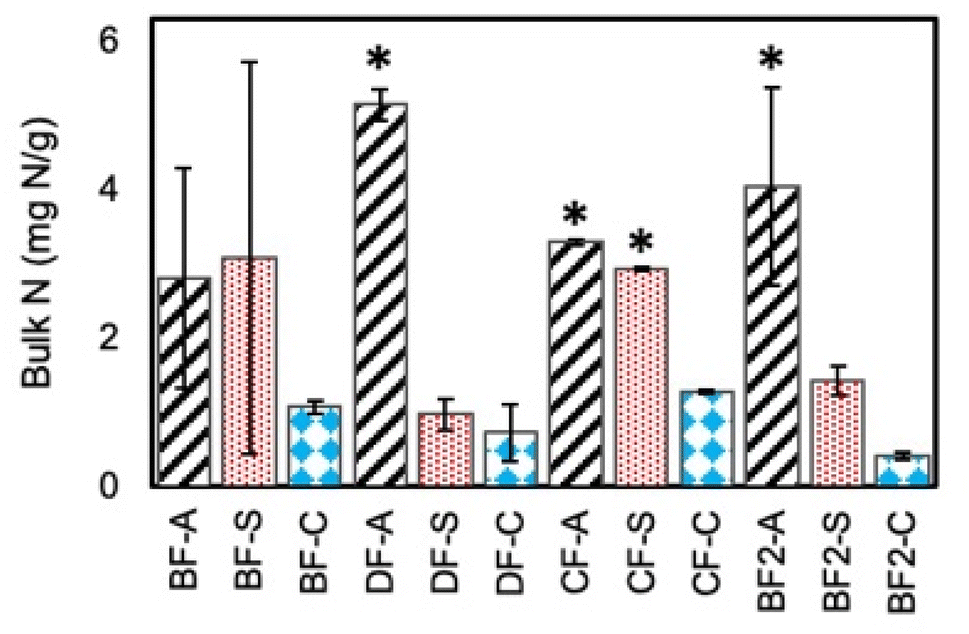 | ||
| Fig. 1 Total nitrogen content for ashes (-A), soils beneath ashes (-S), and control soils (-C) collected from various wildfire locations. Site abbreviations are as follows: BF (combined Dixie & Beckwourth fires), DF (Dixie fire alone), CF (Caldor fire), and BF2 (Beckwourth fire alone). Error bars denote standard deviations from three replicates, and asterisks mark statistically significant differences compared to respective control soils (p < 0.05). | ||
Following a 7 day agitation period in DDI water, the fraction of N released into solution varied from 0.0353 to 0.307, with ash samples releasing significantly less N compared to control soils (p < 0.05, Fig. 2). Mobile fraction of N in ashes was reduced by 20.8, 72.5, 38.0, and 89.0% relative to the control soils, for the BF, CF, DF, and BF-2 sites, respectively.
 | ||
| Fig. 2 Fraction of nitrogen (N) mobilized into solution (A) and distribution of N species (B), where DON refers to dissolved organic nitrogen. Error bars show standard deviations from three replicates. Asterisks denote statistically significant differences relative to control samples (p < 0.05). | ||
For all samples, the dissolved N mainly consisted of NO3− (13.0–73.7%), NH3/NH4+ (1.3–86.8%), and DON (0–81.4%), while the concentration of NO2− was minimal (Fig. 2). Among the different compositions of mobile N, NO3− ranged from 0.169–0.737 mg N per L, NH3/NH4+ ranged from 0.004–0.742 mg N per L, and DON ranged from non-detectable to 0.815 mg N per L. NO3− constituted a smaller proportion of dissolved N in ash samples relative to control soils, in accordance with the reduced N release observed from ashes.
Accounting for the bulk content of N, mobile fraction of N, and species of N in the mobile phase, mobile N contains 0.041–0.064 mg NO3−-N per g, 0.001–0.367 mg NH3/NH4+-N per g, and up to 0.206 mg DON-N per g (Fig. 3). Overall, N mobilized into solution ranged from 0.136 to 0.422 mg N per g for ash, 0.108 to 0.258 mg N per g for underlying soils, and 0.085 to 0.204 mg N per g for control soils. Compared to control soils, ash samples had significantly elevated levels of water-soluble N, showing relative enhancements of 107.0% at BF, 95.3% at DF, 59.6% at CF, and 4.2% at BF-2.
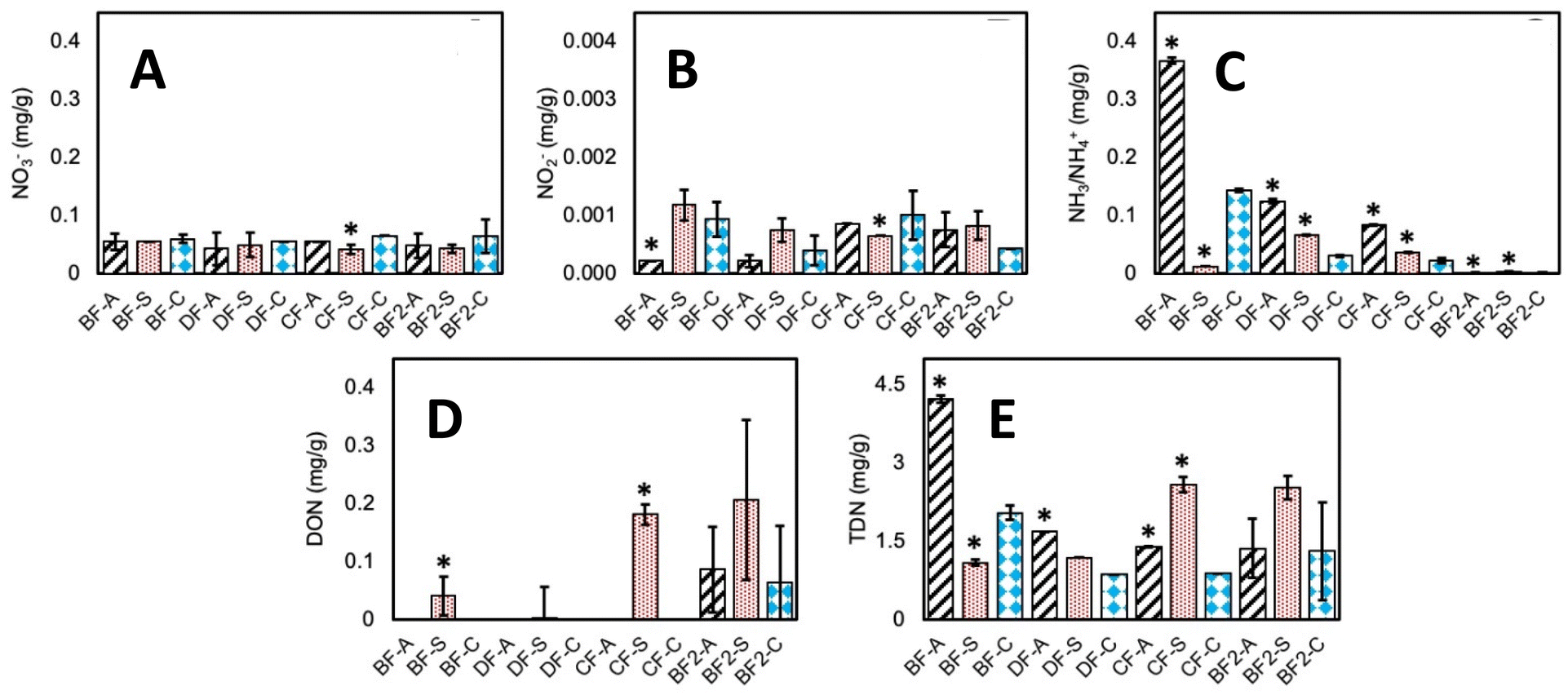 | ||
| Fig. 3 Water-soluble content (mg g−1) of NO2− (A), NO3− (B), NH3/NH4+ (C), dissolved organic nitrogen (DON) (D), and total dissolved nitrogen (TDN) (E), presented for ash, underlying soil, and control samples. Error bars reflect standard deviations based on triplicate analyses. Asterisks mark values significantly different from corresponding control soils (p < 0.05). | ||
Comparison with organic carbon
As part of a series of studies on the influences of wildfires, data and details about the mobility of OC and the physicochemical properties of ashes and soils as well as relevant discussion are available in a previous manuscript.37 Key data are also available in the SI (Table S2).For all samples, there was a weak correlation between the mobility of OC and the mobility of N (r = 0.468, p = 0.063, Fig. 4), as most of the samples fell below the line of the 1:1 ratio (red dotted line) indicating the higher mobility of N than C. The mobile fraction of N for all samples was 11.3 ± 7.4 times that of the mobile fraction of OC, while the mobile fraction of N in ashes was 7.8 ± 6.7 times that of the mobile fraction of OC. These results demonstrated that the mobile fraction of N was much higher than the mobile fraction of OC. Inorganic N (NO3−/NO2−/NH3/NH4+) was normally preserved in minerals and inorganic compounds with high solubility. Nitrogenous OC was more polar than non-nitrogenous OC, and it is easier to mobilize. Wildfires transformed amino acids/amides to pyrrolic and pyridine N through reactions including Maillard condensation, when the fire temperature and burn severity increased.12 Although there was no record for the temperature of the studied Dixie, Beckwourth, and Caldor fires, the color of the collected ash (dark grey to black) and soil (brown) samples indicates that the temperature might range from 400–600 °C (Fig. S2), based on reported relationships between temperature and ash/soil color.43 Controlled burning of soil showed that nitrogenous soil organic compounds increased when the soils were heated at temperature <250 °C, and the overall C/N ratio in the soil organic molecules decreased with the temperature as high as 450 °C.11 Our results imply the possible generation of more nitrogenous OC during the wildfires studied in this work.
 | ||
| Fig. 4 Correlation between the mobility of organic carbon (OC) and nitrogen (N). The red dotted line represents the 1:1 ratio. Symbols below this line indicate higher mobile fraction of N than OC. | ||
Impact of soil/ash characteristics on N mobility
Surface area is an important physical property of ashes and soils impacting the mobility of nutrient elements.44,45 Wildfires affect the surface area of soil particles through thermal expansion, thermal geochemical reactions affecting the aggregations of particles, and possible destruction of particle aggregates, although there are still inconsistent observations reported in the literature.46 In general, a higher surface area can promote the release of nutrient elements, including N, but there was no significant correlation between the surface area of the samples (SI, Table S2) and the mobile fraction of N analyzed in this study (Pearson correlation coefficient r = −0.053, p = 0.435) (SI, Fig. S3). These analyses suggest that the mobile fraction of N in these wildfire-impacted samples was not controlled by the surface area, but instead by other biogeochemical properties of soils.Redox controls
Thermal redox reactions may catalyze the change in N species and transform N to be associated more with amorphous minerals, with higher mobility. The oxidation state of Fe was measured by X-ray absorption near edge structure (XANES) spectroscopy, and determined by linear combination fitting, which were detailed in our previous report.37 For BF samples analyzed, the fraction of Fe(II)/(Fe(II) + Fe(III)) was 0.65 for ash, 0.10 for underlying soil, and 0.57 for control soils37 (SI, Table S1). For BF samples (with limited number of samples noted), there was a significant positive correlation between the fraction of Fe(II) in total Fe and fraction of NH3−/NH4+ in dissolved N (r = 0.997, p = 0.024) and a negative correlation with DON concentration (r = −0.991, p = 0.043) (SI, Fig. S2). This indicates the co-occurrence of thermal oxidation of Fe(II) and nitrification. Reported work also suggests that the redox reactions of Fe can be coupled to that for N;47–49 the critical reactions include where Fe(III) acts as an electron acceptor for nitrification (eqn (2)) and where Fe(II) acts as an electron donor for the denitrification (eqn (3)).| 8Fe(OH)3 + 14H+ + NH4+ → 8Fe2+ + 21H2O + NO3− | (2) |
| 2NO3− + 10Fe2+ + 24H2O → 10Fe(OH)3 + N2 + 18H+ | (3) |
If the direct nitrification by Fe(III) was the dominating process, there would be a strong negative correlation between Fe(II) and NH3−/NH4+, which contradicts our observation. For the BF site, thermal oxidation of Fe(II) may just co-occur with nitrification (with O2 as the electron acceptor), both driven by same environmental conditions or properties (burning severity or temperature). The importance of redox reactions in the N transformation and mobilization was supported by the positive correlation between the mobile fraction of N and the redox fraction of OC in the mobile OC (r = 0.590, p = 0.022) (SI, Fig. S2). Redox-reactive OC has been reported to promote the redox reactions of Fe, as an electron shuttle reaction and accelerate the release of OC as a result of weakened associations between OC and Fe minerals.50,51 Transformation of the DON was even more complicated, including possible condensation and pyrolysis, for which the relationship with Fe requires more studies. While the identification of specific wildfire-driven reactions for Fe and N is out of scope for this work, the current results warrant more investigations.
Implications for watershed functions
Wildfires increased the total mobile/water extractable N compared to the control soils. The total mobile/water extractable N in ashes was higher by 4.2–107.0% relative to control soils (Fig. 3), mainly because of high bulk N content. When the mobile fraction of N relative to total N in ashes was lower than in control soils, bulk N content was higher as a result of the contribution of incompletely burned and pyrolyzed N-enriched biomass residue. The total mobile N in underlying soils was higher than in control soils except for the BF site, when the impact of the wildfire on soil under ash is a mixture of incompletely burned/pyrolyzed biomass and heated surface mineral soils. The higher total water-soluble N implies more N can be washed off from ashes compared to control soils upon storm events. For the sampling sites, except BF, as a mixture/overlap of Beckwourth and Dixie fire, the burning severity data were available for the site of DF, CF and BF2 with the percentage of high severity of 25%, 13% and 3%, respectively.39,40,52 For the limited number of sites in this study, there was a strong correlation between the percentage of high severity burning and relative increase in the total mobile/extractable N for ashes (r = 0.918, p = 0.014; Spearman correlation coefficient = 1, p = 0.01), while the relationship was not significant for the soils under ashes (Fig. 5). Our results demonstrated that the severity of burning controlled the impact on the total mobile N, consistent with previous reports.31,53,54 Reliable evaluation for the impact of fire severity on N mobility requests further investigation, given the limited number of sampling sites in this work. | ||
| Fig. 5 Correlation between the relative percentage of increase for the mobile/water extractable N in ashes compared to control soils with the percentage of the high severity burning area. | ||
Both organic and inorganic N were mobilized by wildfires. For BF, DF, and CF, the mobile N was dominated by inorganic N, i.e., NO3− and NH3/NH4+; whereas for BF2 it is mainly DON and NO3−. Inorganic N can be directly used by aquatic plants as a driver for eutrophication, whereas the DON needs to be mineralized first before it can be utilized.55 The enhanced NO3− and NH3/NH4+ in the mobile phase can potentially cause issues of algal bloom, especially for the water bodies of Tahoe lake with very low background N, as the runoff from the Caldor fires can directly contribute to the Tahoe lake water bodies. In addition, NO3− mobilized by wildfires has immediate toxicity and can make the water unpotable if its concentration exceeds 20 mg L−1. Last but not least, DON might contribute to disinfection byproducts significantly. Previous work showed that unique disinfection byproduct precursors can be generated from wildfires.24,56,57 The molecular characterization of DON and its reactivity are among our current and next-step investigation.
Conclusion
The dynamics of post-wildfire N mobilization into water systems are shaped by complex interactions among wildfire properties (burning severity and others), N species/reactions, and soil biogeochemistry. Our analysis uncovered that N had a much higher mobile fraction (0.030–0.307) than the mobile fraction of OC. The mobile N was dominated by NO3−, NH3/NH4+, and DON, whereas NO2− is minimal indicating negligible denitrification reactions in these sites impacted by wildfire. The mobile fraction of N and its speciation were closely associated with redox reactivity of OC as well as redox reactions of Fe. Wildfires increased the total amount of mobile N in all ashes and most of the soils under ashes compared to control soils, and the percentage increase for ashes is linked to the severity of wildfires. Such observations, given the limited sites studied in this work, warrant further investigation on the impact of wildfire severity on the N mobility. Mobilization and transport of more inorganic and organic N catalyzed by wildfires can lead to concerns for the water quality and water/wastewater treatment processes.Conflicts of interest
There are no conflicts to declare.Data availability
The data supporting this article have been included as part of the supplementary information (SI). Supplementary information is available. See DOI: https://doi.org/10.1039/d5em00533g.Acknowledgements
Travis Numan acknowledges the support of the University of Nevada College of Engineering Indigenous Engineering Fellowship. Yu Yang acknowledges the support of the Alexander von Humboldt Research Fellowship. This work was also partially supported by NSF No. 2108270 and No. 2148056 along with NIFA Nevada Tribal Students grant.References
- M. Senande-Rivera, D. Insua-Costa and G. Miguez-Macho, Spatial and temporal expansion of global wildland fire activity in response to climate change, Nat. Commun., 2022, 13(1), 1208, DOI:10.1038/s41467-022-28835-2.
- J. T. Abatzoglou, A. P. Williams and R. Barbero, Global Emergence of Anthropogenic Climate Change in Fire Weather Indices, Geophys. Res. Lett., 2019, 46(1), 326–336, DOI:10.1029/2018gl080959.
- X. Liu, J. Ma, X. Zhang, K. Chen, X. Jian, S. Tao, J. Liu, H. Gao, T. Huang and Y. Zhao, Responses of wildfire-induced global black carbon pollution and radiative forcing to climate change, Environ. Res. Lett., 2023, 18(11), 114004, DOI:10.1088/1748-9326/acff7a.
- J. G. Pausas and J. E. Keeley, Wildfires and global change, Front. Ecol. Environ., 2021, 19(7), 387–395, DOI:10.1002/fee.2359.
- T. Schoennagel, J. K. Balch, H. Brenkert-Smith, P. E. Dennison, B. J. Harvey, M. A. Krawchuk, N. Mietkiewicz, P. Morgan, M. A. Moritz and R. Rasker, et al., Adapt to more wildfire in western North American forests as climate changes, Proc. Natl. Acad. Sci. U. S. A., 2017, 114(18), 4582–4590, DOI:10.1073/pnas.1617464114.
- G. Certini and R. Scalenghe, The crucial interactions between climate and soil, Sci. Total Environ., 2023, 856, 12, DOI:10.1016/j.scitotenv.2022.159169.
- G. Lie, L. Ye, H. Bao, H. Chen and L. Xue, The effects of a wildfire on soil chemical and biological properties in an Eucalyptus urophylla forest, Adv. Mater. Res., 2013, 864–867, 2492–2497, DOI:10.4028/www.scientific.net/amr.864-867.2492.
- C. Mansilha, A. Melo, Z. E. Martins, I. M. P. L. V. O. Ferreira, A. M. Pereira and J. E. Marques, Wildfire Effects on Groundwater Quality from Springs Connected to Small Public Supply Systems in a Peri-Urban Forest Area (Braga Region, NW Portugal), Water, 2020, 12(4), 1146, DOI:10.3390/w12041146.
- A. K. Hohner, K. Cawley, J. Oropeza, R. S. Summers and F. L. Rosario-Ortiz, Drinking water treatment response following a Colorado wildfire, Water Res., 2016, 105, 187–198, DOI:10.1016/j.watres.2016.08.034.
- A. E. Rhea, T. P. Covino and C. C. Rhoades, Reduced N-Limitation and Increased In-Stream Productivity of Autotrophic Biofilms 5 and 15 Years After Severe Wildfire, J. Geophys. Res.: Biogeosci., 2021, 126, 9, DOI:10.1029/2020jg006095.
- W. Bahureksa, R. B. Young, A. M. McKenna, H. Chen, K. A. Thorn, F. L. Rosario-Ortiz and T. Borch, Nitrogen Enrichment during Soil Organic Matter Burning and Molecular Evidence of Maillard Reactions, Environ. Sci. Technol., 2022, 56(7), 4597–4609, DOI:10.1021/acs.est.1c06745.
- A. M. Lopez, C. C. E. Avila, J. P. VanderRoest, H. K. Roth, S. Fendorf and T. Borch, Molecular insights and impacts of wildfire-induced soil chemical changes, Nat. Rev. Earth Environ., 2024, 1–16 Search PubMed.
- D. Torres-Rojas, R. Hestrin, D. Solomon, A. W. Gillespie, J. J. Dynes, T. Z. Regier and J. Lehmann, Nitrogen speciation and transformations in fire-derived organic matter, Geochim. Cosmochim. Acta, 2020, 276, 170–185, DOI:10.1016/j.gca.2020.02.034.
- R. N. Gustine, E. J. Hanan, P. R. Robichaud and W. J. Elliot, From burned slopes to streams: how wildfire affects nitrogen cycling and retention in forests and fire-prone watersheds, Biogeochemistry, 2022, 157(1), 51–68, DOI:10.1007/s10533-021-00861-0.
- V. Samburova, E. Schneider, C. P. Rüger, S. Inouye, B. Sion, K. Axelrod, P. Bahdanovich, L. Friederici, Y. Raeofy and M. Berli, et al., Modification of Soil Hydroscopic and Chemical Properties Caused by Four Recent California, USA Megafires, Fire, 2023, 6(5), 186, DOI:10.3390/fire6050186.
- V. Samburova, R. M. Shillito, M. Berli, A. Y. Khlystov and H. Moosmüller, Effect of Biomass-Burning Emissions on Soil Water Repellency: A Pilot Laboratory Study, Fire, 2021, 4(2), 24, DOI:10.3390/fire4020024.
- T. B. Hampton, S. Lin and N. B. Basu, Forest fire effects on stream water quality at continental scales: a meta-analysis, Environ. Res. Lett., 2022, 17(6), 064003, DOI:10.1088/1748-9326/ac6a6c.
- F. Santos, A. S. Wymore, B. K. Jackson, S. M. P. Sullivan, W. H. Mcdowell and A. A. Berhe, Fire severity, time since fire, and site-level characteristics influence streamwater chemistry at baseflow conditions in catchments of the Sierra Nevada, California, USA, Fire Ecol., 2019, 15, 3, DOI:10.1186/s42408-018-0022-8.
- E. J. Hanan, C. Tague and J. P. Schimel, Nitrogen cycling and export in California chaparral: the role of climate in shaping ecosystem responses to fire, Ecol. Monogr., 2017, 87(1), 76–90, DOI:10.1002/ecm.1234.
- E. B. Graham, H.-S. Song, S. Grieger, V. A. Garayburu-Caruso, J. C. Stegen, K. D. Bladon and A. N. Myers-Pigg, Potential bioavailability of representative pyrogenic organic matter compounds in comparison to natural dissolved organic matter pools, Biogeosciences, 2023, 20(16), 3449–3457, DOI:10.5194/bg-20-3449-2023.
- J. M. de la Rosa and H. Knicker, Bioavailability of N released from N-rich pyrogenic organic matter: an incubation study, Soil Biol. Biochem., 2011, 43(12), 2368–2373 CrossRef CAS.
- Y. Rivas, D. Huygens, H. Knicker, R. Godoy, F. Matus and P. Boeckx, Soil nitrogen dynamics three years after a severe Araucaria–Nothofagus forest fire, Austral Ecol., 2012, 37(2), 153–163, DOI:10.1111/j.1442-9993.2011.02258.x.
- C. M. Clark, M. D. Bell, J. W. Boyd, J. E. Compton, E. A. Davidson, C. Davis, M. E. Fenn, L. Geiser, L. Jones and T. F. Blett, Nitrogen-induced terrestrial eutrophication: cascading effects and impacts on ecosystem services, Ecosphere, 2017, 8(7), e01877, DOI:10.1002/ecs2.1877.
- J.-J. Wang, R. A. Dahlgren, M. S. Erşan, T. Karanfil and A. T. Chow, Wildfire Altering Terrestrial Precursors of Disinfection Byproducts in Forest Detritus, Environ. Sci. Technol., 2015, 49(10), 5921–5929, DOI:10.1021/es505836m.
- M. Yu, T. F. A. Bishop and F. F. Van Ogtrop, Assessment of the Decadal Impact of Wildfire on Water Quality in Forested Catchments, Water, 2019, 11(3), 533, DOI:10.3390/w11030533.
- J. T. Abatzoglou and A. P. Williams, Impact of anthropogenic climate change on wildfire across western US forests, Proc. Natl. Acad. Sci. U. S. A., 2016, 113(42), 11770–11775, DOI:10.1073/pnas.1607171113.
- D. F. Gomez Isaza, R. L. Cramp and C. E. Franklin, Fire and rain: A systematic review of the impacts of wildfire and associated runoff on aquatic fauna, Global Change Biol., 2022, 28(8), 2578–2595, DOI:10.1111/gcb.16088.
- B. M. S. Giambastiani, N. Greggio, G. Nobili, E. Dinelli and M. Antonellini, Forest fire effects on groundwater in a coastal aquifer (Ravenna, Italy), Hydrol. Processes, 2018, 32(15), 2377–2389, DOI:10.1002/hyp.13165.
- M. J. Paul, S. D. Leduc, M. G. Lassiter, L. C. Moorhead, P. D. Noyes and S. G. Leibowitz, Wildfire Induces Changes in Receiving Waters: A Review With Considerations for Water Quality Management, Water Resour. Res., 2022, 58, e2021WR030699, DOI:10.1029/2021wr030699.
- J. D. Murphy, D. W. Johnson, W. W. Miller, R. F. Walker, E. F. Carroll and R. R. Blank, Wildfire Effects on Soil Nutrients and Leaching in a Tahoe Basin Watershed, J. Environ. Qual., 2006, 35(2), 479–489, DOI:10.2134/jeq2005.0144.
- K. D. Bladon, U. Silins, M. J. Wagner, M. Stone, M. B. Emelko, C. A. Mendoza, K. J. Devito and S. Boon, Wildfire impacts on nitrogen concentration and production from headwater streams in southern Alberta's Rocky Mountains, Can. J. For. Res., 2008, 38(9), 2359–2371, DOI:10.1139/X08-071.
- M. B. Emelko, U. Silins, K. D. Bladon and M. Stone, Implications of land disturbance on drinking water treatability in a changing climate: Demonstrating the need for “source water supply and protection” strategies, Water Res., 2011, 45(2), 461–472, DOI:10.1016/j.watres.2010.08.051.
- H. Uzun, W. Zhang, C. I. Olivares, C. U. Erdem, T. A. Coates, T. Karanfil and A. T. Chow, Effect of prescribed fires on the export of dissolved organic matter, precursors of disinfection by-products, and water treatability, Water Res., 2020, 187, 116385, DOI:10.1016/j.watres.2020.116385.
- A. T. Chow, K. P. Tsai, T. S. Fegel, D. N. Pierson and C. C. Rhoades, Lasting Effects of Wildfire on Disinfection By-Product Formation in Forest Catchments, J. Environ. Qual., 2019, 48(6), 1826–1834, DOI:10.2134/jeq2019.04.0172.
- K. Hickenbottom, K. Pagilla and D. Hanigan, Wildfire impact on disinfection byproduct precursor loading in mountain streams and rivers, Water Res., 2023, 244, 120474, DOI:10.1016/j.watres.2023.120474.
- K. D. Bladon, M. B. Emelko, U. Silins and M. Stone, Wildfire and the Future of Water Supply, Environ. Sci. Technol., 2014, 48(16), 8936–8943, DOI:10.1021/es500130g.
- T. Numan, S. Lokesh, A. Shahriar, A. Timilsina, M. L. Lard, J. Clark, Y. Raeofy, Q. Zhao, S. R. Poulson, P. Verburg, J. A. Richardson, R. L. Cook, V. Samburova and Y. Yang, Post-wildfire mobilization of organic carbon, Soil Syst., 2025, 9(1), 11 CrossRef CAS.
- USDA and U. F. S., Beckwourth Complex Post-Fire BAER Assessment Report, 2022, accessed 25 November 2022 Search PubMed.
- USDA and U. F. S., Caldor Post-Fire BAER Assessment Report, 2022, accessed 25 November 2022 Search PubMed.
- USDA and U. F. S., Dixie Post-Fire BAER Assessment Report, 2022, accessed 25 November 2022 Search PubMed.
- D. Kuzmina, S. Loiko, A. Lim, G. Istigechev, S. Kulizhsky, F. Julien, J. Rols and O. Pokrovsky, Macro- and micronutrient release from ash and litter in permafrost-affected forest, Geoderma, 2024, 447, 116925, DOI:10.1016/j.geoderma.2024.116925.
- D. Khafaga, A. Iqbal, S. Mahmood, A. Shahzad, M. Eid, A. Alhussan and E. El-Kenawy, Evaluating groundwater quality through contaminant analysis and water quality index: a case study of Sargodha, Punjab, Pakistan, Front. Environ. Sci., 2025, 13, 1636843, DOI:10.3389/fenvs.2025.1636843.
- M. H. Rodela, I. Chowdhury and A. K. Hohner, Emerging investigator series: physicochemical properties of wildfire ash and implications for particle stability in surface waters, Environ. Sci.: Processes Impacts, 2022, 24(11), 2129–2139, 10.1039/d2em00216g.
- J. D. Judy, J. K. Kirby, M. Farrell, M. J. Mclaughlin, S. N. Wilkinson, R. Bartley and P. M. Bertsch, Colloidal nitrogen is an important and highly-mobile form of nitrogen discharging into the Great Barrier Reef lagoon, Sci. Rep., 2018, 8(1), 12854, DOI:10.1038/s41598-018-31115-z.
- Q. Li, K. E. Gray and D. P. Jaisi, Relative Roles of Sediment Transport and Localized Erosion on Phosphorus Load in the Lower Susquehanna River and Its Mouth in the Chesapeake Bay, USA, J. Geophys. Res.: Biogeosci., 2022, 127, e2022JG006944, DOI:10.1029/2022jg006944.
- A. A. Agbeshie, S. Abugre, T. Atta-Darkwa and R. Awuah, A review of the effects of forest fire on soil properties, J. For. Res., 2022, 33(5), 1419–1441, DOI:10.1007/s11676-022-01475-4.
- L. Liu, N. Zheng, Y. Yu, Z. Zheng and H. Yao, Soil carbon and nitrogen cycles driven by iron redox: A review, Sci. Total Environ., 2024, 918, 170660, DOI:10.1016/j.scitotenv.2024.170660.
- G.-W. Zhou, X.-R. Yang, H. Li, C. W. Marshall, B.-X. Zheng, Y. Yan, J.-Q. Su and Y.-G. Zhu, Electron Shuttles Enhance Anaerobic Ammonium Oxidation Coupled to Iron(III) Reduction, Environ. Sci. Technol., 2016, 50(17), 9298–9307, DOI:10.1021/acs.est.6b02077.
- M. Bloethe and E. E. Roden, Microbial Iron Redox Cycling in a Circumneutral-pH Groundwater Seep, Appl. Environ. Microbiol., 2009, 75(2), 468–473, DOI:10.1128/AEM.01817-08.
- D. Adhikari, S. R. Poulson, S. Sumaila, J. J. Dynes, J. M. McBeth and Y. Yang, Asynchronous reductive release of iron and organic carbon from hematite–humic acid complexes, Chem. Geol., 2016, 430(C), 13–20, DOI:10.1016/j.chemgeo.2016.03.013.
- S. Xu, D. Adhikari, R. Huang, H. Zhang, Y. Tang, E. Roden and Y. Yang, Biochar-Facilitated Microbial Reduction of Hematite, Environ. Sci. Technol., 2016, 50(5), 2389–2395, DOI:10.1021/acs.est.5b05517.
- USDA and U. F. S., Beckwourth Complex Post-Fire BAER Assessment Report, 2022 Search PubMed.
- V. Fernández-García, J. Miesel, M. J. Baeza, E. Marcos and L. Calvo, Wildfire effects on soil properties in fire-prone pine ecosystems: Indicators of burn severity legacy over the medium term after fire, Appl. Soil Ecol., 2019, 135, 147–156, DOI:10.1016/j.apsoil.2018.12.002.
- D. N. Pierson, P. R. Robichaud, C. C. Rhoades and R. E. Brown, Soil carbon and nitrogen eroded after severe wildfire and erosion mitigation treatments, Int. J. Wildland Fire, 2019, 28(10), 814, DOI:10.1071/wf18193.
- S. Lamba, S. Bera, M. Rashid, A. B. Medvinsky, G.-Q. Sun, C. Acquisti, A. Chakraborty and B.-L. Li, Organization of biogeochemical nitrogen pathways with switch-like adjustment in fluctuating soil redox conditions, R. Soc. Open Sci., 2017, 4(1), 160768, DOI:10.1098/rsos.160768.
- H. Uzun, R. A. Dahlgren, C. Olivares, C. U. Erdem, T. Karanfil and A. T. Chow, Two years of post-wildfire impacts on dissolved organic matter, nitrogen, and precursors of disinfection by-products in California stream waters, Water Res., 2020, 181, 115891, DOI:10.1016/j.watres.2020.115891.
- K. M. Cawley, A. K. Hohner, D. C. Podgorski, W. T. Cooper, J. A. Korak and F. L. Rosario-Ortiz, Molecular and Spectroscopic Characterization of Water Extractable Organic Matter from Thermally Altered Soils Reveal Insight into Disinfection Byproduct Precursors, Environ. Sci. Technol., 2017, 51(2), 771–779, DOI:10.1021/acs.est.6b05126.
| This journal is © The Royal Society of Chemistry 2026 |