

 Open Access Article
 This Open Access Article is licensed under a Creative Commons Attribution-Non Commercial 3.0 Unported Licence
Tailoring flexibility of nanofluidic membranes for efficient separation of gases with similar kinetic diameters
Huijie
Wang†
a,
Shuang
Huan†
a,
Zhenyu
Chu
 b,
Zongyou
Yin
c and
Chen
Wang
*a
b,
Zongyou
Yin
c and
Chen
Wang
*a
aState Key Laboratory of Microbial Technology, Jiangsu Collaborative Innovation Center of Biomedical Functional Materials, Jiangsu Key Laboratory of New Power Batteries, School of Chemistry and Materials Science, Nanjing Normal University, Nanjing 210023, China. E-mail: wangchen@njnu.edu.cn
bState Key Laboratory of Materials-Oriented Chemical Engineering, College of Chemical Engineering, Nanjing Tech University, Nanjing 211816, China
cResearch School of Chemistry, The Australian National University, Canberra, Australian Capital Territory 2601, Australia
First published on 16th September 2025
Abstract
Conventional nanofluidic membranes often exhibit low selectivities for efficient separation of gases with similar kinetic diameters. Soft nanofluidic membranes overcome this challenge through a combination of selective binding sites and tunable pore structures, creating an on-demand separation switch that enables adaptive pore opening for enhanced gas separation. Herein, three different nanofluidic membranes of soft covalent organic frameworks (named S-COF1, S-COF2, and S-COF3) with varied flexibility levels were synthesized for similar-sized gas separation using ethane (C2H6) and ethylene (C2H4) as model gases. The flexibility was precisely tuned by introducing varying numbers of functionalized –OH linkers to form intramolecular [–O–H⋯N![[double bond, length as m-dash]](https://www.rsc.org/images/entities/char_e001.gif) C] hydrogen bonding. Highly flexible S-COF1 and S-COF2 demonstrated similar pore behavior for C2H4 and C2H6, resulting in poor separation efficiency. In contrast, S-COF3, with enhanced rigidity due to the addition of the highest amount of –OH linkers, exhibited distinct pore switching from “close” in C2H4 to “open” in C2H6. This led to a C2H6/C2H4 selectivity of 18.2, which is superior to that of most of the reported membranes. This work establishes a functionalized –OH linker strategy to precisely tune COF flexibility, revealing its critical role in gas separation and advancing the design of dynamic porous membranes.
C] hydrogen bonding. Highly flexible S-COF1 and S-COF2 demonstrated similar pore behavior for C2H4 and C2H6, resulting in poor separation efficiency. In contrast, S-COF3, with enhanced rigidity due to the addition of the highest amount of –OH linkers, exhibited distinct pore switching from “close” in C2H4 to “open” in C2H6. This led to a C2H6/C2H4 selectivity of 18.2, which is superior to that of most of the reported membranes. This work establishes a functionalized –OH linker strategy to precisely tune COF flexibility, revealing its critical role in gas separation and advancing the design of dynamic porous membranes.
1 Introduction
Ethylene is the most crucial feedstock in petrochemical production systems, extensively used to produce polypropylene, plastic materials, and diverse industrial chemical commodities.1–5 However, the presence of even a small amount of ethane in ethylene production can severely disrupt further ethylene polymerization, highlighting the urgent need to develop alternative technologies for effective C2H6 separation to achieve pure-grade C2H4.6–9 Nanofluidic separation membranes provide a more cost-effective and energy-efficient gas purification method.10,11 Ideal gas separation membranes often use the size exclusion effect, but still remain challenging for efficient separation of gases with similar sizes like ethane and ethylene owing to the intricate task of precisely controlling pore size.2 Recently, our group developed carboxylic acid-based HOF membranes with adjustable pore sizes (6.2–24 Å) that achieved exceptional H2/CO2 separation (up to 164) through synergistic size exclusion and electrostatic interactions.12 However, even precisely tuned pore apertures show limited efficacy for C2 hydrocarbon separation due to their minimal size differentiation. To address this challenge, researchers drew inspiration from natural membrane systems and found that stimuli such as light and pressure can elicit the transition between “open” and “closed” conformations, enabling the regulation of ion transport.13–15 Similarly, gas separation membranes can leverage this property by combining guest-specific adsorption with a flexible internal structure design, creating unique functionality.14 This strategy provides an “on–off” separation method that eliminates the need to precisely control the aperture size and instead relies on highly sensitive object-dependent threshold pressures.16 However, porous materials with this property are limited, and most of them are focused on flexible metal–organic frameworks (MOFs) and hydrogen-bonded organic frameworks (HOFs) that face stability issues during multiple cycles.17–19 Therefore, the development of new robust porous membrane materials with gate-opening functions is critical.Covalent organic frameworks (COFs) are crystalline porous materials constructed from organic precursors via covalent bonds and have recently attracted extensive research attention for precise gas separation owing to their periodic architectures and tunable pore environments.20 Compared with MOFs based on coordination bonds and HOFs relying on hydrogen bonds, the superior covalent bond strength of COFs ensures their enhanced framework stability.19,21–24 This stability enables COFs to maintain the integrity of their pore structure during host–guest interactions and under operational pressure. Consequently, COFs are considered more suitable for gas separation as flexible porous materials. Current research primarily focuses on synthesizing flexible COFs,25,26 neglecting the precise control of flexibility to enhance separation performance.27,28 Meanwhile, there is a lack of effective strategies for tuning framework flexibility, and the impact of flexibility on membrane performance remains largely unexplored.17,18 Notably, numerous flexible porous materials have been reported, which are able to recognize highly polar molecules, such as C2H2 and C2H4.29 However, for feed gases containing less C2H6 and more C2H4, C2H6-selective membranes used for purifying C2H4 products can achieve separation with higher efficiency. Despite this, achieving the preferential recognition separation of inert C2H6 from C2H4 mixtures through a flexible adsorption mechanism remains a challenge.
Herein, three soft covalent organic framework (S-COF) membranes were in situ grown on anodized aluminum oxide (AAO) for gas separation (Scheme 1). By incorporating functionalized 4,4′-biphenyl-dicarboxaldehyde derivatives with different numbers of –OH groups, three S-COF nanofluidic membranes (termed highly soft S-COF1, moderately soft S-COF2, and low-soft S-COF3 membranes) with varying degrees of flexibility have been utilized for the challenging C2H6/C2H4 separation. Specifically, the incorporation of –OH groups adjacent to the [–CN] centers in S-COF2 and S-COF3 facilitated the formation of intramolecular [–O–H⋯NC] hydrogen bonds, which effectively reduced the flexibility of the membrane and optimized its separation performance.30 Moreover, the pore environment of the flexible S-COF membrane is rich in low-polarity aromatic rings and uncoordinated N and O atoms, which enable strong interaction with ethane molecules, thus endowing the nanofluidic membrane with excellent affinity for ethane.31–35 Therefore, the flexible S-COF3 membrane transitioned from closed-pore state to opened-pore state structures as the guest molecules changed from C2H4 to C2H6, achieving a C2H6/C2H4 selectivity of 18.2, significantly higher than that of the S-COF1 membrane (4.7) and the S-COF2 membrane (8.5). This is because the flexibility of the S-COF3 membrane is regulated by hydrogen bond interactions, resulting in the largest gated-pressure gap between ethane and ethylene. In contrast, S-COF1 and S-COF2, with higher flexibility, show similar pore behavior for C2H4 and C2H6, leading to poor separation efficiency. To the best of our knowledge, this is the first report on the preferential permeation of ethane over ethylene through flexible S-COF membranes. This work represents the first instance of gradually tuning flexibility of nanofluidic membranes for gas separation, offering a novel approach to advancing industrial gas purification technology.
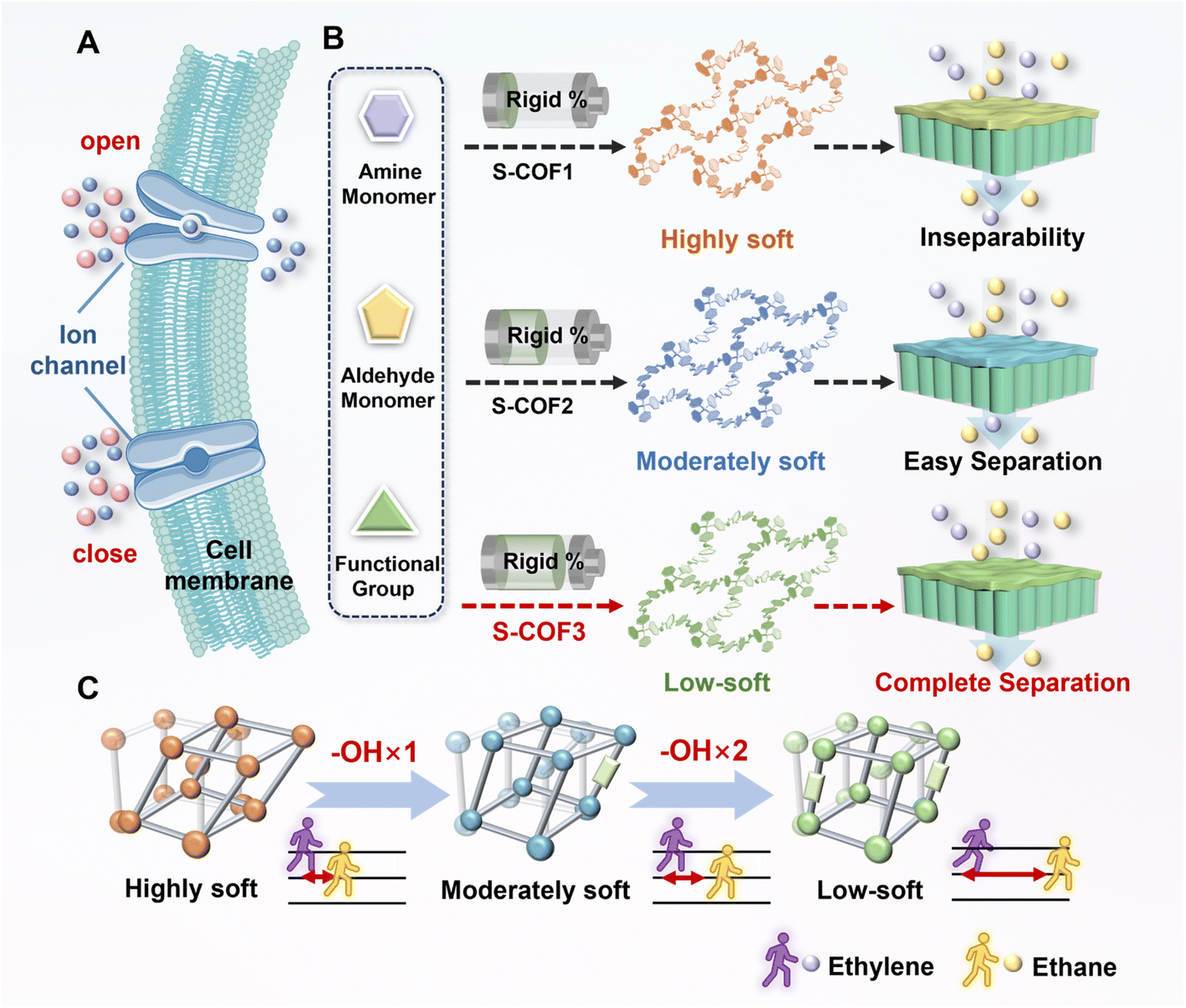 | ||
| Scheme 1 (A) The “open” and “closed” conformational transitions in natural membrane systems. (B) Three S-COF membranes (S-COF1, S-COF2, and S-COF3) with different amounts of functionalized –OH linkers synthesized for gas separation. (C) Schematic illustration of the gas separation principle using flexible S-COF membranes. | ||
2 Results and discussion
2.1 Synthesis and characterization of S-COF
The design of highly soft COF (S-COF1), moderately soft COF (S-COF2), and low-soft COF (S-COF3) enabled stepwise regulation of COF membrane flexibility through functional group modulation strategies. To optimize the functionalized S-COF, the flexibility of these three S-COFs was precisely tuned by introducing varying numbers of functionalized –OH linkers (Fig.1A). The incorporation of –OH functionalities adjacent to the [–CN] centers in S-COF2 and S-COF3 led to the formation of intramolecular [–O–H⋯NC] hydrogen bonding and reduced the degree of flexibility.36–38 S-COF1 was synthesized according to the literature reported previously, while S-COF2 and S-COF3 were synthesized using 4,4′-biphenyl-dicarboxaldehyde derivatives with single and dual hydroxyl groups as building blocks, respectively.19 The crystalline structures were proved by powder X-ray diffraction (PXRD, Fig. 1B–D and S1) and Fourier transform infrared (FT-IR) spectroscopy (Fig.1E–G). The XRD patterns matched well with those of the simulated data, demonstrating the successful formation of the expected crystal structure. In the FT-IR results, the disappearance of the representative stretching vibration of CO (1680 cm−1) and N–H stretching vibration of amines (3100–3400 cm−1) in the S-COF alongside the generation of a CN stretching vibration peak at around 1620 cm−1 revealed the successful formation of imine-based S-COF, which was consistent with the previous reports.39 In addition, thermogravimetric analysis (TGA) shows that the three S-COFs are thermally stable up to 300 °C (Fig. S2). This ensures the vacuum degassing of the S-COF at high temperatures to obtain the guest free S-COF membrane structure and stability under high temperature separation conditions.31 The above characterization studies confirm the successful preparation of a series of flexible S-COFs with similar framework structures but different degrees of flexibility, providing the necessary conditions for subsequent gas separation.
 | ||
| Fig. 1 Synthesis and characterization of S-COFs. (A) Scheme for the preparation of S-COF1, S-COF2 and S-COF3. (B–D) Powder X-ray diffraction patterns of (B) S-COF1, (C) S-COF2, and (D) S-COF3. (E–G) FT-IR spectra of (E) S-COF1, (F) S-COF2, and (G) S-COF3. | ||
The preparation of continuous, defect-free membranes is crucial for achieving highly selective gas separation.21Fig.2A illustrates the fabrication process of the S-COF membrane. First, anodic aluminum oxide (AAO) was fabricated using the anodization oxidation technique (Fig. S3).40,41 As shown in Fig.2B andC, the fabricated AAO substrate exhibited regular nanochannels with a diameter of around 50 nm. After immersion in (3-aminopropyl) triethoxysilane (APTES) solution for 12 hours, the AAO surface achieved successful amine functionalization. XPS characterization confirmed this modification through the emergence of a distinct (–Si–O–) signal at 101.5 eV (Fig. S4), which is absent in pristine AAO substrates.39 The amino-functionalized AAO substrate was then reacted with the aldehyde groups in 4,4′-biphenyldicarboxaldehyde to form a functional layer via amide bond formation, as confirmed by Attenuated Total Reflectance (ATR)-Fourier Transform Infrared (FTIR) spectroscopy (Fig. S5). Subsequently, the complete S-COF membrane was formed on the AAO surface by adding tetrakis(4-aminophenyl)methane and heating it at 65 °C for seven days. ATR-FTIR spectroscopy spectra in Fig. S6 revealed characteristic peaks of CN stretching vibrations, verifying the successful formation of imine bonds in the S-COF membrane. The zeta potential measurements reflect the surface charge of the material. As shown in Fig. S7, the introduction of hydroxyl groups reduced the positive charge of the S-COF, attributed to the negative charge of hydroxyl groups. Additionally, Fig. S8 shows that the addition of hydroxyl groups reduces the water contact angle, indicating enhanced hydrophilicity. These characterization studies provide clear evidence for the successful synthesis and functionalization of the three S-COF membranes.39,42
 | ||
| Fig. 2 Fabrication and characterization of flexible S-COF membranes with the gate-opening mechanism. (A) Schematic illustration of the fabrication process of the S-COF membrane. (B and C) SEM images for (B) the top and (C) cross-sectional view of AAO. (D–F) SEM images of the (D) S-COF1, (E) S-COF2, and (F) S-COF3 membranes (left: cross-section; right: top). (G–I) SEM image of the (G) S-COF1, (H) S-COF2, and (I) S-COF3 and corresponding energy-dispersive X-ray (EDX) elemental mapping of C, N and O. | ||
Scanning electron microscopy (SEM) was used to characterize the morphology of membranes. Fig.2D–F demonstrate the successful fabrication of the S-COF membrane, with S-COF covering the top surface of AAO. Additionally, the cross-section image of the S-COF1 membrane demonstrated successful preparation of S-COF layers ≈200 nm thick, which were densely attached to the top of the AAO layer (Fig.2D). With the same procedure, S-COF2 and S-COF3 membranes were readily synthesized (Fig. 2E and F). Notably, the thickness of the prepared S-COF layer can be facilely and precisely controlled via the duration of growth. During the first four days, monomers reacted at the solid–liquid interface of the AAO surface, but the initial material deposition did not fully cover the substrate (Fig. S9–S12). When the growth time was extended to 7 days, a continuous S-COF membrane without obvious defects formed, with thicknesses ranging from 100 nm to 280 nm (Fig. S13–S18). Therefore, considering factors such as membrane thickness and gas separation performance, the S-COF membrane prepared for 6 days, with a thickness of approximately 200 nm, was selected for subsequent characterization and tests. Being more visually intuitive, the digital photos of the S-COF membrane showed its structural integrity (Fig. S19). Energy dispersive X-ray spectroscopy (EDS) confirmed the presence of functional groups, and Fig.2G–I show the uniform distribution of C, N, and O elements in the S-COF membrane structure (note that S-COF1 lacked O), indicating successful formation of the S-COF layer on the AAO surface. Atomic-force-microscopy (AFM) analysis further confirmed the smooth and homogeneous surface morphology of the S-COF membrane (Fig. S20). To evaluate the mechanical robustness and interfacial adhesion, the S-COF membrane was subjected to ultrasonication. Post-sonication characterization via SEM confirmed that the membrane layer remained completely intact without any cracks, delamination, or detachment, indicating strong interfacial interaction and robust mechanical integrity (Fig. S21 and S22). Furthermore, FT-IR analysis confirmed the preservation of the CN covalent bonding within the S-COF structure across the coated area after this treatment, providing direct evidence of the chemical and mechanical stability at the membrane–substrate interface (Fig. S23). In summary, three S-COF membranes with different degrees of flexibility were successfully fabricated.
2.2 Gas adsorption of S-COF
Flexible S-COF membranes provide a switching method strategy to achieve molecular sieving without the need for precise control of pore size, but instead rely on highly sensitive guest dependent threshold pressure (Fig.3A).16,43 To evaluate the porous structure of S-COF, the N2 sorption isotherm was obtained at 77 K (Fig. S24–S26). Notably, the isotherms of S-COF showed typical closed-pore to opened-pore transitions. In the case of S-COF-1, negligible N2 uptake occurred below 0.5 bar while the uptake reached 687 cm3 g−1 at 1 bar. The flexible nature of the material enables its pores to dynamically adjust during the adsorption process, expanding to accommodate more gas molecules. Similar dynamic adsorption behaviors were also observed in S-COF2 and S-COF3 (Fig. S25 and S26). S-COF2 exhibited negligible N2 adsorption below 0.55 bar (Fig. S25), but underwent a pressure-activated adsorption transition at 0.55 bar. The N2 uptake subsequently increased gradually with pressure, attaining an adsorption capacity of 517 cm3 g−1 at 1 bar (Fig. S25). Similarly, S-COF3 remained in a closed-pore state toward N2 adsorption at 77 K when pressure was below 0.65 bar. Nonetheless, phase transformation to the open pore structure occurred at 0.65 bar (Fig. S26). The N2 adsorption capacity at 77 K was determined to be 395 cm3 g−1 at 1 bar. In summary, the gradual increase in pore-opening pressure from S-COF1 to S-COF3 can be attributed to the progressive incorporation of –OH groups. The introduction of more –OH linkers in S-COF3 enhances the rigidity of the framework, resulting in higher pressure thresholds required to activate the porous structure. This trend highlights the significant role of –OH linkers in modulating the flexibility and pore accessibility of S-COF membranes. To better characterize the micropores, adsorption isotherms of S-COF were tested using the smaller gas molecule CO2 as the probe (Fig.3B–D and S27). Adsorption at 195 K reached P/P0 = 1, enabling more accurate detection of micropores. BET specific surface area analysis indicates that the specific surface areas of S-COF1, S-COF2, and S-COF3 are 322 m2 g−1, 218 m2 g−1, and 155 m2 g−1, respectively. | ||
| Fig. 3 Investigation of flexible S-COF gas adsorption and separation with the gate-opening mechanism. (A) Schematic diagram of different degrees of flexibility and the gas adsorption separation in flexible S-COF. (B–D) Adsorption isotherms of CO2 (195 K) for (B) S-COF1, (C) S-COF2 and (D) S-COF3. (E–G) C2H6 and C2H4 adsorption isotherms of (E) S-COF1, (F) S-COF2 and (G) S-COF3 at 298 K. | ||
Subsequently, the single-component isotherms of flexible S-COF for C2H6 and C2H4 adsorption were measured, as shown in Fig.3E–G. Before the adsorption measurements, a vacuum was pumped under a dynamic vacuum to obtain the state of S-COF pore closure.44 S-COF1 exhibited a closed-pore state structure for C2H6 adsorption under low pressures (<0.39 bar), which transitioned to an open-gated state at a critical pressure of 0.39 bar at 298 K (Fig.3E). This structural transition triggered an abrupt surge in C2H6 uptake with increasing pressure, ultimately reaching adsorption saturation at approximately 0.8 bar. Similarly, the gate-opening pressures for C2H6 were 0.42 bar in S-COF2 and 0.75 bar in S-COF3, highlighting a substantial increase compared to S-COF1 (Fig. 3F and G). These findings indicate that the threshold pressures can be adjusted by varying the number of –OH functional groups to gradually control the number of intramolecular [–O–H⋯NC] hydrogen bonds. Superior C2H6 affinity of S-COF originates from a pore environment enriched by hydroxyl groups whose oxygen centers act as strong hydrogen bond acceptors for ethane, enhancing C–H⋯O interaction with ethane over ethylene and enabling selective recognition.33–35 These results demonstrate that the gating pressure can be effectively controlled by varying the number of –OH functional groups introduced, providing conditions for ethane and ethylene membrane separation.
2.3 Gas separation performance and mechanism
The selective adsorption properties of flexible S-COF and the operational advantages of membrane technology have driven us to further investigate C2H6/C2H4 separation in flexible S-COF-based membranes. Before the gas permeation test, the as-prepared S-COF membranes were activated in a vacuum oven at 100 °C for 12 h. The C2H6/C2H4 separation performance of flexible S-COF membranes was evaluated through measurements of both single (C2H6 or C2H4) and binary gas permeation at 25 °C using our homemade Wicke–Kallenbach setup (Fig.4A and S28).45 The bare AAO disk demonstrated extremely high gas permeance for all gases under study, and its low gas separation selectivity was calculated, thus eliminating the influence of the AAO support on gas separation (Fig. S29). First, single-component tests were conducted to determine how the thickness of the flexible S-COF membrane influences permeance and selectivity, with the goal of achieving an optimal balance between these two parameters. As the growth time of the membrane was increased from 3 to 7 days, the permeability of C2H6 and C2H4 decreased, while the C2H6/C2H4 selectivity initially increased and then remained constant. (Fig. S30–S32). Therefore, considering the tradeoff between permeability and selectivity, flexible S-COF membranes prepared for 6 days were selected for subsequent tests. A single-component gas separation experiment was carried out to evaluate the ideal separation performance of S-COF membranes. The permeation of gas molecules with different kinetic diameters (H2, CO2, N2, C2H4, and C2H6) through flexible S-COF membranes was evaluated (Fig.4B), demonstrating that C2H6 permeation rates were higher than those of C2H4 due to effective recognition. Moreover, the flexible S-COF3 membrane exhibited H2/CO2, CO2/N2, H2/N2, and C2H6/C2H4 selectivity, all of which significantly exceeded the corresponding Knudsen selectivity (Fig.4C and S33). This confirms the presence of few grain boundary defects in the membrane. Notably, S-COF3 membranes with specific recognition of C2H6 presented high C2H6/C2H4 selectivity compared to S-COF1 and S-COF2 membranes due to the best gating against ethylene and ethane. | ||
| Fig. 4 Single-gas and binary-gas C2H6/C2H4 separation performance of S-COF membranes with varying degrees of flexibility. (A) Home-made gas-permeance module and schematic illustrating gas transport through the S-COF membrane. (B) H2, CO2, N2, C2H4 and C2H6 single-component gas permeance of S-COF membranes with different degrees of flexibility at 1 bar. (C) The ideal selectivity of H2/CO2, CO2/N2, H2/N2 and C2H6/C2H4 gas pairs of S-COF membranes with different degrees of flexibility. (D) Effect of C2H6/C2H4 molar ratios on the separation performance of the S-COF3 membrane at 298 K. (E) The separation performances of binary C2H6/C2H4 gases for the S-COF1, S-COF2 and S-COF3 membranes. (F) Schematic diagram of the guest-dominated gated adsorption separation mechanism. | ||
The influence of the sweep gas flow rate on membrane performance was systematically evaluated to ensure measurement accuracy (Fig. S34). A flow rate of 25 mL min−1 was identified as optimal, effectively eliminating concentration polarization on the permeate side while avoiding excessive dilution that would compromise detection sensitivity. All permeation tests were therefore conducted at this standardized flow rate to ensure reliable measurement of intrinsic membrane properties. Subsequently, binary gas permeation tests further demonstrated that the S-COF3 membrane also has advantages in the separation of C2H6 and C2H4 gas mixtures (Fig.4D, S35 and S36). The pressure responsive gas separation performance of flexible S-COF was further evaluated using mixed gas feed with various C2H6 partial pressures. The flexible S-COF1 membrane showed a low dependence of selectivity on C2H6 partial pressure. In contrast, the flexible S-COF2 membrane underwent a sudden jump in C2H6/C2H4 selectivity when the C2H6 partial pressure was increased above 0.4 bar and an abrupt jump at 0.6 bar for the flexible S-COF3 membrane (Fig.4E). By controlling the pressure-responsive phase transition of S-COF3, C2H6-induced gate opening behaviors are observed in the resultant membranes, which are accompanied by the sharp increase of C2H6 permeance (from 30 to 90 gas permeation units) and C2H6/C2H4 selectivity (from 2 to 18.2). S-COF1 and S-COF2 membranes exhibit low selectivity due to their high flexibility and small gated pressure differences between ethane and ethylene. In contrast, the regulated S-COF3 membrane enhances framework rigidity through intramolecular [–O–H⋯NC] interactions. More importantly, the hydroxyl-functionalized pores preferentially strengthen [C–H⋯O] interactions with ethane over ethylene, as the oxygen atom in the hydroxyl group acts as a strong hydrogen bond acceptor toward ethane molecules, thereby facilitating selective ethane recognition.33–35,46 To conclusively determine the gate-opening behavior, gas permeation measurements for C2H6 were conducted using helium as a balance gas. The results unequivocally demonstrate that the S-COF3 membrane exhibits a distinct gate-opening transition at approximately 0.6–0.7 bar for C2H6 (Fig. S37). This confirms that the enhanced permeance is due to specific ethane-induced structural transitions rather than non-selective effects. As a result, different degrees of S-COF membrane flexibility led to different dynamic behaviors, whereas the S-COF3 membrane increases selectivity due to the most suitable gated pressure between ethane and ethylene, respectively. In addition, a schematic diagram was obtained to elucidate the flexible behaviors and separation mechanisms (Fig.4F). During the ethane/ethylene separation process, the membrane preferentially adsorbs ethane. As more ethane molecules are adsorbed, the host–guest interaction energy increases. When this energy exceeds the deformation energy of the host framework, the gate opens to ethane molecules (corresponding to the jump pressure in the gas adsorption isotherm), rendering the membrane permeable to ethane and allowing it to pass through smoothly.19,47 The adjusted S-COF3 membrane, with its broad range of ethane and ethylene gated pressures, effectively addresses the complex separation requirements of such mixtures.
To clarify the diffusion pathway within the S-COF membranes, permeation data were split into sorption and diffusion terms, and the results are summarized in Table S1. As expected, the S-COF3 membrane shows higher diffusion and absorption coefficients for C2H6 than for C2H4. Moreover, it exhibits the highest diffusion selectivity and solubility selectivity for C2H6/C2H4, at 4.87 and 3.83 respectively. This indicates that the membrane's superior separation performance for C2H6 and C2H4 can be attributed to its preferential diffusion and adsorption of C2H6 over C2H4. Subsequently, to investigate differences in mass-transfer kinetics of adsorbed species on S-COF3, time-dependent sorption rate measurements for C2H6 and C2H4 were conducted at 298 K and 1 bar. As shown in Figure S38, equilibrium sorption on S-COF3 was attained within 31 min for C2H6, markedly faster than the approximately 60 min required for C2H4. Consequently, the diffusion time constant (D/r2) on S-COF3 was determined to be 9.81 × 10⁻⁴ s−1 for C2H6 and 4.65 × 10⁻⁴ s−1 for C2H4. These results demonstrate that S-COF3 exhibits rapid sorption kinetics and excellent mass-transfer performance, making it a promising candidate for efficient C2H6/C2H4 separation.
Membrane stability is regarded as one of the decisive criteria for industrial application.48 Extensive testing of performance stability was carried out to explore the practicality of the S-COF membrane (Fig.5A). After continuous operation for 60 h, both C2H6 permeance and C2H6/C2H4 selectivity remained unchanged, which was indicative of excellent operation stability (Fig.5B, S39 and S40). PXRD analysis of the S-COF3 membrane after cyclic testing confirmed the intact structure of S-COF (Fig.5C), while FT-IR spectra further demonstrated its structural stability (Fig.5D). SEM images after performance testing (Fig. S41 and S42) revealed that the membrane remained intact and stable. Significantly, the operational stability of the S-COF3 membrane was further evaluated under demanding conditions to assess its practical relevance. We employed the S-COF3 membrane for C2H6/C2H4 separation under conditions of 100 °C and 1 bar pressure over 30 hours. During the entire test period, gas permeability increased moderately with rising temperature, while selectivity exhibited only slight fluctuations (Fig. S43). In addition, the S-COF3 membrane remained intact in morphology and crystallinity after seven days in water at 25 °C and exhibited only minor, fully reversible loss of C2H6/C2H4 selectivity at high humidity, confirming excellent hydrolytic stability (Fig. S44–S48). The image presented in Fig. S19 indicates that the S-COF3 membrane is suitable for scalable fabrication, with the ultimate dimensions principally constrained by the size of the substrate employed. The prepared S-COF3 membrane has an area of approximately 6 cm2 and demonstrates consistent performance stability, as shown in Fig. S49. As shown in Fig.5E, the SF of C2H6/C2H4 reached 18.2, which was superior to that of the majority of other membranes (Fig.5E, Tables S2 and S3). Gas permeation data are reported as thickness-normalized permeability (Barrer), determined from independently measured membrane thicknesses. To facilitate direct and industrially relevant comparison with the literature, separation performance was assessed using an equimolar (50/50) C2H4/C2H6 feed mixture.49 The resulting data, along with a categorized comparison of ethane-selective and ethylene-selective membranes from the literature, are summarized in Table S3. Thus, the S-COF3 membrane was used as a potential separation membrane with high stability and reusability.
 | ||
| Fig. 5 The stability of the flexible S-COF membrane under varying operational conditions. (A) Stability diagram of the cycle experiment. (B) Long-term separation stability of the S-COF3 membrane. (C) PXRD patterns of the S-COF3 membrane before and after experiments. (D) FT-IR spectra of the S-COF3 membrane after experiments. (E) The comparison of the separation performance between the prepared membranes in this work and other reported membranes in the literature. | ||
3 Conclusion
In summary, a stepwise structural transformation strategy has been proposed to gradually tune flexibility of nanofluidic S-COF membranes. Three S-COF membranes with similar framework structures but different flexibilities were fabricated through introducing varied amounts of functional –OH groups. Among the three types of flexible S-COF membranes, the S-COF3 membrane achieved the highest C2H6/C2H4 selectivity (18.2) due to its optimal flexibility, specific binding sites and wide range of ethylene ethane gated-pressures, significantly exceeding the 4.7 of the S-COF1 membrane and the 8.5 of the S-COF2 membrane. This separation capability significantly outperforms that of the majority of reported membrane-based separation systems. In addition, the obtained membranes have excellent long-term stability, and these results reveal the great application potential of flexible membrane materials based on S-COF in achieving important gas separation. This expands the application of soft S-COF in membrane separation and proposes regulating gated-pressure for the development of flexible membranes that specifically identify gases, encouraging further research into the design of novel soft COF membranes for industrial gas separation applications.4 Experimental section
4.1 Materials and reagents
Tetrakis(4-aminophenyl) methane (99.99%), 4,4′-biphenyldicarboxaldehyde (99.99%), 5-(4-formylphenyl)-2-formylphenol (99.99%), 4,4′-biphenyldicarboxaldehyde, and 3,3′-dihydroxy-4,4′-biphenyldicarboxaldehyde were purchased from Bide Pharmatech Co., Ltd. Analytical-reagent grade potassium hydroxide (KOH) and (3-aminopropyl) triethoxysilane (APTES) were bought from Sigma-Aldrich (Shanghai, China). The aluminum foil has a thickness of 0.1 mm and a purity of 99.999%, obtained from the General Research Institute of Nonferrous Metals (Beijing, China).4.2 Instrumentation
The morphology of the top and cross-section of membranes was characterized using scanning electron microscopy (SEM, S-4800, Hitachi, Japan). X-ray diffraction (XRD, SmartLab, Japan) patterns were obtained in the 2θ range of 5° to 30° at room temperature. The water static contact angle was measured using a contact angle system (Kruss-DSA25B, Germany). XPS spectra were recorded using a Kratos AXIS SUPRA (Shimadzu, Japan).4.3 Synthesis of AAO
The AAO membrane was fabricated via a two-step anodization process. Initially, the aluminum foil was ultrasonically cleaned with acetone and 1 M KOH for 10 min each, followed by rinsing with water. The first anodization was performed at 50 V for 0.5 hours using 0.3 M oxalic acid as the electrolyte. To remove the irregular oxide layer, the anodized foil was treated with a mixture of 6 wt% H3PO4 and 1.8 wt% H2CrO4 at 60 °C for 40 min. The second anodization was then conducted for 4 hours under the same conditions as those of the first. The aluminum substrate was etched away using a saturated SnCl2 solution. The barrier layer was removed by treating the AAO membrane with 1.8 wt% H3PO4 for 40 minutes. The membrane was subsequently immersed in boiling 30% H2O2 for 30 minutes to introduce –OH groups on the channel surface. Finally, the AAO membrane was soaked in water overnight and dried.4.4 Fabrication of S-COF membranes
The AAO surface was modified by immersion in a (3-aminopropyl) triethoxysilane (APTES) solution for 12 hours. The amine-functionalized AAO was then placed at the bottom of a reaction bottle. S-COF membranes were synthesized on the AAO support via an in situ growth method. Specifically, 4,4′-biphenyl-dicarboxaldehyde (20 mg) was dissolved in 1,4-dioxane (0.5 mL), followed by the addition of acetic acid (95 μL) in deionized water (0.46 mL). Subsequently, tetrakis(4-aminophenyl) methane (20 mg, 0.053 mmol) in 1,4-dioxane (1.0 mL) was added to the mixture. The mixture was heated at 65 °C for seven days in a vial under ambient conditions. The resulting S-COF1 membrane was washed with tetrahydrofuran and dried under vacuum. Similarly, S-COF2 and S-COF3 membranes were prepared using analogs of 4,4′-biphenyl-dicarboxaldehyde: 5-(4-formylphenyl)-2-formylphenol (21.5 mg) and 3,3′-dihydroxy-4,4′-biphenyldicarboxaldehyde (23 mg), respectively.4.5 Gas permeation tests
The gas permeation performance of the membranes was assessed using the Wicke–Kallenbach method. To exclude areas that did not undergo the IP process (due to sealing issues), the membranes were sandwiched between two pieces of aluminum foil tape, with the margins further sealed using a sealant. For the mixed gas separation performance test, the flow rates of equimolar mixed feedstocks were controlled by mass flow controllers, maintaining a total volumetric flow rate of 100 mL min−1 (50 mL min−1 for each gas). Argon (25 mL min−1) was used as the sweep gas on the permeate side to transport the permeate gas to an on-line gas chromatograph (Panna). The mixed gas separation test was conducted at increasing temperatures with a heating rate of 1 °C min−1. For single gas permeation tests, each gas had a flow rate of 100 mL min−1, while the sweep gas flow rate was kept at 25 mL min−1. The gas permeance of the membrane was calculated using the equation: | (1) |
The mixed gas separation factor (SF, αij) was calculated using the following equation:
 | (2) |
4.6 Calculation of adsorption coefficients and diffusion coefficients of different gases
The permeation of gases through membranes is governed by a coupled sorption–diffusion mechanism. Thus, the gas permeability coefficient, P, is expressed as the product of the diffusivity coefficient D and the solubility coefficient S:| P = D × S | (3) |
The value of P is obtained by multiplying the gas permeance by the effective thickness of the MOF membrane and is reported in Barrer. The solubility coefficient S can be derived from the adsorption isotherm measured at 298 K and 1 bar, in conjunction with the crystalline density of S-COF, using the relation S = A × ρ/Pr, where A represents the adsorption capacity (cm3 g−1), ρ denotes the crystalline density of S-COF3, and Pr is the adsorption pressure in cmHg.
Author contributions
Chen Wang, Huijie Wang, and Shuang Huan conceived and supervised the project. Huijie Wang and Shuang Huan performed experiments. All the authors discussed the experimental data. Chen Wang revised the manuscript.Conflicts of interest
H. W. and S. H. contributed equally to this work. The authors declare no conflict of interest.Data availability
The data that support the findings of this study are available within the article and SI files, including SEM images, membrane stability data, separation performance, and more. These data are also available from the authors upon request. See DOI: https://doi.org/10.1039/d5sc04964d.Acknowledgements
This work was supported by the National Key Research and Development Program of China (2025YFC3409400), the National Natural Science Foundation of China (22274076), and the Primary Research and Development of Jiangsu Province (BE2022793).Notes and references
- T. Xu, P. Zhang, F. Cui, J. Li, L. Kan, B. Tang, X. Zou, Y. Liu and G. Zhu, Fine-Tuned Ultra-Microporous Metal–Organic Framework in Mixed-Matrix Membrane: Pore-Tailoring Optimization for C2H2/C2H4 Separation, Adv. Mater., 2023, 35, 2204553 CrossRef CAS PubMed
.
- L. Li, R.-B. Lin, R. Krishna, H. Li, S. Xiang, H. Wu, J. Li, W. Zhou and B. Chen, Ethane/ethylene separation in a metal-organic framework with iron-peroxo sites, Science, 2018, 362, 443–446 CrossRef CAS PubMed
- W. Lai, Y. Jiao, Y. Liu, W. Fang, Z. Wang, M. D. Guiver and J. Jin, Engineering Ultra-Small Ag Nanoparticles with Enhanced Activity in Microporous Polymer Membranes for C2H4/C2H6 Separation, Adv. Mater., 2025, 37, 2416851 CrossRef CAS PubMed
- S. Zhou, Z. Liu, P. Zhang, H. Rong, T. Ma, F. Cui, D. Liu, X. Zou and G. Zhu, Tailoring the pore chemistry in porous aromatic frameworks for selective separation of acetylene from ethylene, Chem. Sci., 2022, 13, 11126–11131 RSC
- X.-J. Xie, Y. Wang, Q.-Y. Cao, R. Krishna, H. Zeng, W. Lu and D. Li, Surface engineering on a microporous metal–organic framework to boost ethane/ethylene separation under humid conditions, Chem. Sci., 2023, 14, 11890–11895 RSC
- W. Liu, S. Geng, N. Li, S. Wang, S. Jia, F. Jin, T. Wang, K. A. Forrest, T. Pham, P. Cheng, Y. Chen, J. G. Ma and Z. Zhang, Highly Robust Microporous Metal-Organic Frameworks for Efficient Ethylene Purification under Dry and Humid Conditions, Angew. Chem., Int. Ed., 2023, 62, e202217662 CrossRef CAS PubMed
- T. Lu, T. Xu, S. Zhu, J. Li, J. Wang, H. Jin, X. Wang, J. J. Lv, Z. J. Wang and S. Wang, Electrocatalytic CO2 Reduction to Ethylene: From Advanced Catalyst Design to Industrial Applications, Adv. Mater., 2023, 35, 2310433 CrossRef CAS PubMed
- L.-L. Ma, P. N. Zolotarev, K. Zhou, X. Zhou, J. Liu, J. Miao, S. Li, G.-P. Yang, Y.-Y. Wang, D. M. Proserpio, J. Li and H. Wang, Three in one: engineering MOF channels via coordinated water arrays for regulated separation of alkanes and alkenes, Chem. Sci., 2024, 15, 19556–19563 RSC
- J. Liu, H. Wang and J. Li, Pillar-layer Zn–triazolate–dicarboxylate frameworks with a customized pore structure for efficient ethylene purification from ethylene/ethane/acetylene ternary mixtures, Chem. Sci., 2023, 14, 5912–5917 RSC
- D. S. Sholl and R. P. Lively, Seven chemical separations to change the world, Nature, 2016, 532, 435–437 CrossRef PubMed
- C. G. Morris, N. M. Jacques, H. G. W. Godfrey, T. Mitra, D. Fritsch, Z. Lu, C. A. Murray, J. Potter, T. M. Cobb, F. Yuan, C. C. Tang, S. Yang and M. Schröder, Stepwise observation and quantification and mixed matrix membrane separation of CO2 within a hydroxy-decorated porous host, Chem. Sci., 2017, 8, 3239–3248 RSC
- H. Wang, M. Shi, C. Wang, Z. Chu, Z. Yin and C. Wang, Superior Hydrogen Separation in Nanofluidic Membranes by Synergistic Effect of Pore Tailoring and Host–Guest Interaction, Nano Lett., 2025, 25, 9353–9361 CrossRef CAS PubMed
- T. Huang, Z. Su, K. Hou, J. Zeng, H. Zhou, L. Zhang and S. P. Nunes, Advanced stimuli-responsive membranes for smart separation, Chem. Soc. Rev., 2023, 52, 4173–4207 RSC
- J. Qiao and D. Zhao, Ethane-gated MOFs meet industrial ethylene purification: Tiny gates open big possibilities, Matter, 2024, 7, 2780–2783 CrossRef CAS
- X. Liu, G. Zhang, K. B. Al Mohawes and N. M. Khashab, Smart membranes for separation and sensing, Chem. Sci., 2024, 15, 18772–18788 RSC
- X. Liu, Z. Wang, Y. Zhang, N. Yang, B. Gui, J. Sun and C. Wang, Gas-Triggered Gate-Opening in a Flexible Three-Dimensional Covalent Organic Framework, J. Am. Chem. Soc., 2024, 146, 11411–11417 CAS
- Y. Ying, Z. Zhang, S. B. Peh, A. Karmakar, Y. Cheng, J. Zhang, L. Xi, C. Boothroyd, Y. M. Lam, C. Zhong and D. Zhao, Pressure-Responsive Two-Dimensional Metal–Organic Framework Composite Membranes for CO2 Separation, Angew. Chem., Int. Ed., 2021, 60, 11318–11325 CrossRef CAS PubMed
- S. Feng, Y. Shang, Z. Wang, Z. Kang, R. Wang, J. Jiang, L. Fan, W. Fan, Z. Liu, G. Kong, Y. Feng, S. Hu, H. Guo and D. Sun, Fabrication of a Hydrogen-Bonded Organic Framework Membrane through Solution Processing for Pressure-Regulated Gas Separation, Angew. Chem., Int. Ed., 2020, 59, 3840–3845 CrossRef CAS PubMed
- C. Kang, Z. Zhang, S. Kusaka, K. Negita, A. K. Usadi, D. C. Calabro, L. S. Baugh, Y. Wang, X. Zou, Z. Huang, R. Matsuda and D. Zhao, Covalent organic framework atropisomers with multiple gas-triggered structural flexibilities, Nat. Mater., 2023, 22, 636–643 CrossRef CAS PubMed
- K. T. Tan, S. Ghosh, Z. Wang, F. Wen, D. Rodríguez-San-Miguel, J. Feng, N. Huang, W. Wang, F. Zamora, X. Feng, A. Thomas and D. Jiang, Covalent organic frameworks, Nat. Rev. Methods Primers, 2023, 3, 1 CrossRef CAS
- W. Luo, H. Li, M. Jin, J. Liu, X. Zhang, G. Huang, T. Zhou and X. Lu, Organic frameworks (MOFs, COFs, and HOFs) based membrane materials for CO2 gas-selective separation: A systematic review, Sep. Purif. Technol., 2025, 357, 130195 CrossRef CAS
- L. Li, H. Ma, J. Zhang, E. Zhao, J. Hao, H. Huang, H. Li, P. Li, X. Gu and B. Z. Tang, Emission-Tunable Soft Porous Organic Crystal Based on Squaraine for Single-Crystal Analysis of Guest-Induced Gate-Opening Transformation, J. Am. Chem. Soc., 2021, 143, 3856–3864 CrossRef CAS PubMed
- B. Yu, R.-B. Lin, G. Xu, Z.-H. Fu, H. Wu, W. Zhou, S. Lu, Q.-W. Li, Y. Jin, J.-H. Li, Z. Zhang, H. Wang, Z. Yan, X. Liu, K. Wang, B. Chen and J. Jiang, Linkage conversions in single-crystalline covalent organic frameworks, Nat. Chem., 2023, 16, 114–121 CrossRef PubMed
- A. Yao, H. Xu, K. Shao, C. Sun, C. Qin, X. Wang and Z. Su, Guest-induced structural transformation of single-crystal 3D covalent organic framework at room and high temperatures, Nat. Commun., 2025, 16, 1385 CrossRef CAS PubMed
- F. Auras, L. Ascherl, V. Bon, S. M. Vornholt, S. Krause, M. Döblinger, D. Bessinger, S. Reuter, K. W. Chapman, S. Kaskel, R. H. Friend and T. Bein, Dynamic two-dimensional covalent organic frameworks, Nat. Chem., 2024, 16, 1373–1380 CrossRef CAS PubMed
- Z. B. Zhou, H. H. Sun, Q. Y. Qi and X. Zhao, Gradually Tuning the Flexibility of Two-Dimensional Covalent Organic Frameworks via Stepwise Structural Transformation and Their Flexibility-Dependent Properties, Angew. Chem., Int. Ed., 2023, 62, e202305131 CrossRef CAS PubMed
- L. J. Wayment, S. Huang, H. Chen, Z. Lei, A. Ley, S. H. Lee and W. Zhang, Ionic Covalent Organic Frameworks Consisting of Tetraborate Nodes and Flexible Linkers, Angew. Chem., Int. Ed., 2024, 63, e202410816 CrossRef CAS PubMed
- M. Wang, T. Zeng, Y. Yu, X. Wang, Y. Zhao, H. Xi and Y.-B. Zhang, Flexibility On-Demand: Multivariate 3D Covalent Organic Frameworks, J. Am. Chem. Soc., 2023, 146, 1035–1041 CrossRef PubMed
- L. Zhang, B. Yu, M. Wang, Y. Chen, Y. Wang, L. B. Sun, Y. B. Zhang, Z. Zhang, J. Li and L. Li, Ethane Triggered Gate-Opening in a Flexible-Robust Metal-Organic Framework for Ultra-High Purity Ethylene Purification, Angew. Chem., Int. Ed., 2024, 64, e202418853 CrossRef PubMed
- J. T. Damron, J. Ma, R. Kurz, K. Saalwächter, A. J. Matzger and A. Ramamoorthy, The Influence of Chemical Modification on Linker Rotational Dynamics in Metal–Organic Frameworks, Angew. Chem., Int. Ed., 2018, 57, 8678–8681 CrossRef CAS PubMed
- Y. Yang, L. Li, R.-B. Lin, Y. Ye, Z. Yao, L. Yang, F. Xiang, S. Chen, Z. Zhang, S. Xiang and B. Chen, Ethylene/ethane separation in a stable hydrogen-bonded organic framework through a gating mechanism, Nat. Chem., 2021, 13, 933–939 CrossRef CAS PubMed
- S.-M. Wang, M. Shivanna, S.-T. Zheng, T. Pham, K. A. Forrest, Q.-Y. Yang, Q. Guan, B. Space, S. Kitagawa and M. J. Zaworotko, Ethane/Ethylene Separations in Flexible Diamondoid Coordination Networks via an Ethane-Induced Gate-Opening Mechanism, J. Am. Chem. Soc., 2024, 146, 4153–4161 CrossRef CAS PubMed
- J. Liu, J. Peng, G. Chen, F. Lai, L. Dong, H. Ji and K. Chai, Hydroxyl-functionalized linker endows an ultra-microporous aluminum based metal–organic framework with electronegative site for enhancing ethane/ethylene separation, Sep. Purif. Technol., 2024, 351, 128116 CrossRef CAS
- G. D. Wang, Y. Z. Li, W. J. Shi, L. Hou, Y. Y. Wang and Z. Zhu, Active Sites Decorated Nonpolar Pore-Based MOF for One-step Acquisition of C2H4 and Recovery of C3H6, Angew. Chem., Int. Ed., 2023, 62, e202311654 CrossRef CAS PubMed
- H. M. Wen, C. Yu, M. Liu, C. Lin, B. Zhao, H. Wu, W. Zhou, B. Chen and J. Hu, Construction of Negative Electrostatic Pore Environments in a Scalable, Stable and Low-Cost Metal-organic Framework for One-Step Ethylene Purification from Ternary Mixtures, Angew. Chem., Int. Ed., 2023, 62, e202309108 CrossRef CAS PubMed
- N. Cao, H. Wang, Y. Ban, Y. Wang, K. Yang, Y. Zhou, M. Zhao, W. Deng and W. Yang, Tuning of Delicate Host–Guest Interactions in Hydrated MIL-53 and Functional Variants for Furfural Capture from Aqueous Solution, Angew. Chem., Int. Ed., 2020, 60, 1629–1634 CrossRef PubMed
- Y. Li, J. Sui, L.-S. Cui and H.-L. Jiang, Hydrogen Bonding Regulated Flexibility and Disorder in Hydrazone-Linked Covalent Organic Frameworks, J. Am. Chem. Soc., 2023, 145, 1359–1366 CrossRef CAS PubMed
- B. Liu, X. Chen, N. Huang, S. Liu, Y. Wang, X. Lan, F. Wei and T. Wang, Imaging the dynamic influence of functional groups on metal-organic frameworks, Nat. Commun., 2023, 14, 4835 CrossRef CAS PubMed
- M. Chen, K. Yang, J. Wang, H. Sun, X. H. Xia and C. Wang, In Situ Growth of Imine-Bridged Anion-Selective COF/AAO Membrane for Ion Current Rectification and Nanofluidic Osmotic Energy Conversion, Adv. Funct. Mater., 2023, 33, 2302427 CrossRef CAS
- H. Wang, Y. Zhang, J. Wang, Saijilahu, H. Sun, H. Yang, X. H. Xia and C. Wang, In Situ Synthesized HOF Ion Rectification Membrane with Ultrahigh Permselectivity for Nanofluidic Osmotic Energy Harvesting, Adv. Funct. Mater., 2024, 35, 2412477 CrossRef
- C. Wang, F. F. Liu, Z. Tan, Y. M. Chen, W. C. Hu and X. H. Xia, Fabrication of Bio-Inspired 2D MOFs/PAA Hybrid Membrane for Asymmetric Ion Transport, Adv. Funct. Mater., 2019, 30, 1908804 CrossRef
- T. Wu, Y. Qian, Z. Zhu, W. Yu, L. Zhang, J. Liu, X. Shen, X. Zhou, T. Qian and C. Yan, Imine-Linked 3D Covalent Organic Framework Membrane Featuring Highly Charged Sub-1 nm Channels for Exceptional Lithium-Ion Sieving, Adv. Mater., 2025, 37, 2415509 CrossRef CAS PubMed
- M.-Y. Zhou, X.-W. Zhang, H. Yi, Z.-S. Wang, D.-D. Zhou, R.-B. Lin, J.-P. Zhang and X.-M. Chen, Molecular-Sieving Separation of Methanol/Benzene Azeotrope by a Flexible Metal–Organic Framework, J. Am. Chem. Soc., 2024, 146, 12969–12975 CrossRef CAS PubMed
- V. I. Nikolayenko, D. C. Castell, D. Sensharma, M. Shivanna, L. Loots, K. A. Forrest, C. J. Solanilla-Salinas, K.-i. Otake, S. Kitagawa, L. J. Barbour, B. Space and M. J. Zaworotko, Reversible transformations between the non-porous phases of a flexible coordination network enabled by transient porosity, Nat. Chem., 2023, 15, 542–549 CrossRef CAS PubMed
- X. Jing, M. Zhang, Z. Mu, P. Shao, Y. Zhu, J. Li, B. Wang and X. Feng, Gradient Channel Segmentation in Covalent Organic Framework Membranes with Highly Oriented Nanochannels, J. Am. Chem. Soc., 2023, 145, 21077–21085 CrossRef CAS PubMed
- S. K. Sobczak, J. Drwęska, W. Gromelska, K. Roztocki and A. M. Janiak, Multivariate Flexible Metal–Organic Frameworks and Covalent Organic Frameworks, Small, 2024, 20, 2402486 CrossRef CAS PubMed
- X.-W. Zhang, D.-D. Zhou and J.-P. Zhang, Tuning the gating energy barrier of metal-organic framework for molecular sieving, Chem, 2021, 7, 1006–1019 CAS
- K.-G. Liu, F. Bigdeli, A. Panjehpour, S. Hwa Jhung, H. A. J. Al Lawati and A. Morsali, Potential applications of MOF composites as selective membranes for separation of gases, Coord. Chem. Rev., 2023, 496, 215413 CrossRef CAS
- D. Ao, Z. Yang, Z. Qiao, Y. Sun, Z. Zhang, M. D. Guiver and C. Zhong, Metal–Organic Framework Crystal–Glass Composite Membranes with Preferential Permeation of Ethane, Angew. Chem., Int. Ed., 2023, 62, e202304535 CrossRef CAS PubMed
Footnote |
| † These authors contributed equally. |
| This journal is © The Royal Society of Chemistry 2025 |