Determination of biodiesel properties based on a fatty acid profile of eight Amazon cyanobacterial strains grown in two different culture media

Joseline Barbosa Aboima, Deborah Oliveiraa, John Eric Ferreiraa, Andrei Santos Siqueirab, Leonardo Teixeira Dall'Agnolb, Geraldo Narciso Rocha Filhoa, Evonnildo Costa Gonçalvesb and Luis Adriano Nascimento*a
aLaboratory of Catalysis and Oil Chemistry, Federal University of Pará, Rua Augusto Corrêa, Guamá, CEP 66075-110, Belém, Pará, Brazil. E-mail: adrlui1@yahoo.com.br
bLaboratory of Biomolecular Technology, Federal University of Pará, Rua Augusto Corrêa, Guamá, CEP 66075-110, Belém, Pará, Brazil

Received 19th September 2016 , Accepted 7th November 2016

First published on 9th November 2016


Abstract

The primary source of biodiesel obtainment in Brazil is concentrated in oleaginous vegetables, especially soy. However, there is a great hold-up caused by competition with the food industry, which makes the search for alternative pathways that do not compete with other industries needed. The goal of this study was to investigate the biotechnological potential of cyanobacteria, which were grown in two different culture media, as an alternative approach for obtaining biodiesel. For this purpose, Microcystis aeruginosa CACIAM03, CACIAM08, Synechocystis sp. CACIAM05, Lyngbya sp. CACIAM07, Cyanobium sp. CACIAM14, Leptolyngbya sp. CACIAM18, Limnothrix redekei CACIAM25 and Planktothrix pseudoagardhii CACIAM27 were evaluated. Fatty acid composition was determined using gas chromatography. Fatty acids found in all strains were identified as palmitic acid (C16:0) (7.43–38.37% content), stearic acid (C18:0) (1.44–13.82%), caproic acid (C6:0) (0.82–78.84%) and oleic acid (C18:1) (1.13–46.76%). The biodiesel quality parameters were calculated based on the fatty acid profile. Strains that showed the best values and provided better biodiesel quality were Synechocystis sp. CACIAM05 and Microcystis aeruginosa CACIAM03 that were grown in BG-11 medium. This study showed us a promising source of biodiesel production from cyanobacterial lipids based on empirical calculations of the parameters of biodiesel quality that met the fuel standards. Furthermore, our results suggest the production of fatty acids through a metabolic route, due to the change in the profile of fatty acids in both culture media, providing valuable information for future engineering to increase the percentage of fatty acids that give better biodiesel quality.

1 Introduction

Due to an apparent shortage of fossil fuel reserves in the world and economic and environmental preservation concerns, it is increasingly important to explore new possibilities for the production of non-fossil fuels such as biodiesel and ethanol.1–4 Currently, the primary source of biodiesel is oleaginous vegetables.5–7 Therefore, energy and food production become competing markets, when the same oleaginous vegetables are concomitantly used by many industries. Thus, there is a competition for the product.8,9

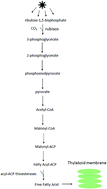
To circumvent this issue, cyanobacteria, which are a group of autotrophic photosynthetic bacteria, and microalgae, have been the subject of studies that investigated this taxon as a source of raw material for generating bioenergy.10–13 This intense interest in cyanobacteria is attributed to their ability to produce lipids, a raw material for biodiesel production, done from after a metabolic cascade initiated in the Calvin cycle in which phosphoenolpyruvate is converted to pyruvate to form acetyl-CoA, that is converted to malonyl CoA, from fatty acid synthase, to form fatty acyl-ACP, which is transformed into free fatty acids by ACP-acyl thioesterases and are accumulated in thylakoid membranes.14,15 Furthermore, this ability is related to rapid growth rates and high photosynthesis levels.15 In some species lipids can compose up to 80% of the algal dry mass that directly influences the efficiency of biodiesel conversion and combustion and its quality and the fatty acid composition analysis is the first step in the preliminary assessment of crude oil and processed products quality.15 This analysis is essential for selecting the most suitable species of cyanobacteria for biodiesel production.17–19

The estimation of biodiesel quality could be empirically predicted based on the fatty acids profile, focus of this study, and biodiesel itself, from parameters, such as iodine value (IV), calculated to limit the propensity for oxidation of biodiesel characteristic of polyunsaturated fatty acids, whereas in certain conditions iodine is inserted into the double bonds of triglycerides by an addition reaction; saponification value (SV), that is not desired considering that it reduces the ester yield and considerably hinders the recovery of glycerol due to the formation of emulsion, thus, the lower the saponification reaction value is, the more valuable it will be to the transesterification balance; cetane number (CN), measures the biodiesel capacity enter into in self-combustion when injected into the engine, as well as impact the engine cold start performance, the level of noise and exhaust emissions; degree of unsaturation (DU), directly related to the fatty acid profile and unsaturated bonds in the molecule lead to greater instability of biodiesel, considering the positions of allylic (in this study, allylic position equivalent (APE) and bis-allylic position equivalent (BAPE)) to double bonds are notedly susceptible to oxidation; cold filter plugging point (CFPP) and long chain saturated factor (LCSF), that are generally used to predict the biodiesel flow performance at low temperatures with regard to crystallization, which can cause obstruction in the filters; cloud point (CP) is the temperature at which the biodiesel starts to become cloudy and pour point (PP) is the temperature below which the fuel will not flow; kinematic viscosity (υ) and density (ρ) are directly linked with atomization process during combustion and higher heating value (HHV) is the heat released during the combustion of one gram of fuel to produce CO2 and H2O at its initial temperature.17–28

The goals of this study were as follows. First, measure biomass production in ASM-1 and BG-11 culture media. Second, extract and identify fatty acids using gas chromatography. Third, compare fatty acid profiles produced in ASM-1 and BG-11 media by Microcystis aeruginosa CACIAM03, CACIAM08, Synechocystis sp. CACIAM05, Lyngbya sp. CACIAM07, Cyanobium sp. CACIAM14, Leptolyngbya sp. CACIAM18, Limnothrix redekei CACIAM25 and Planktothrix pseudoagardhii CACIAM27. Fourth, empirically determine biodiesel quality parameters using fatty acids profile. We believe this is the first study of several cyanobacteria from Amazon to evaluate their potential as source for biodiesel production. Apparently, despite this region possess the largest hydrographical basin of the world, there are very few studies on the literature about Amazon species of cyanobacteria.

2 Material and methods

2.1 Cyanobacterial strains and cultivation

The strains of Microcystis aeruginosa CACIAM03, Synechocystis sp. CACIAM05, Lyngbya sp. CACIAM07, Microcystis aeruginosa CACIAM08, Cyanobium sp. CACIAM14, Leptolyngbya sp. CACIAM18, Limnothrix redekei CACIAM25 and Planktothrix pseudoagardhii CACIAM27 used in this study were provided by the Laboratory of Biomolecular Technology (Institute of Biological Sciences/UFPA – Belém, Pará, Brazil). The strains were collected at the hydroelectric plant of Tucuruí lake and Bologna reservoir (Table 1) and were previously identified using morphological and molecular (16S rRNA) analysis.
Table 1 Strain sources used in this study
Strain Local
Microcystis aeruginosa CACIAM03 Hydroelectric plant of Tucuruí reservoir
Synechocystis sp. CACIAM05 Bologna lake
Lyngbya sp. CACIAM07 Hydroelectric plant of Tucuruí reservoir
Microcystis aeruginosa CACIAM08 Hydroelectric plant of Tucuruí reservoir
Cyanobium sp. CACIAM14 Hydroelectric plant of Tucuruí reservoir
Leptolyngbya sp. CACIAM18 Bologna lake
Limnothrix redekei CACIAM25 Hydroelectric plant of Tucuruí reservoir
Planktothrix pseudoagardhii CACIAM27 Hydroelectric plant of Tucuruí reservoir


Each strain was grown in ASM-1 and BG-11 via methods reported by Gorham et al. 1964 (ref. 29) and Allen, 1968 (ref. 30) using Erlenmeyer flasks that contained 1 L of liquid medium. Cultivation time was 25 days. The strains were incubated in an environmental chamber under the light of 4 fluorescent lamps (2000 lux) with a photoperiod of 13 hours of light: 11 hours of dark. The strains were grown in culture media ASM-1 and BG-11 under the same conditions of time, temperature and lighting.

2.2 Biomass productivity

Biomass productivity (BP) or the amount of dry biomass produced (mg per L per day), during the stationary growth phase was analyzed. For BP determination, algal suspensions were centrifuged (5500 rpm, 30 min) and lyophilized at −40 °C for 48 h.

2.3 Total lipid extraction and fatty acid profile by gas chromatography (GC) analysis

The extraction of lipids was performed according to Bligh and Dyer31 with modifications. First, 1[thin space (1/6-em)]:[thin space (1/6-em)]2 (v/v) CHCl3[thin space (1/6-em)]:[thin space (1/6-em)]MeOH (chloroform/methanol) was added to lyophilized biomass, followed by mixing using a vortexer until homogeneous. Then, CHCl3 (chloroform) was added, followed by mixing. Then, distilled water was added, followed by mixing. Finally, the contents were centrifuged at 2000 rpm for 30 min at room temperature to produce a better separation of the two phases. Then, the organic phase at the bottom was recovered.

Esterification was performed using the AOCS Ce 2-66 method.32 First, the dry weight of each sample was determined. Then, a specified amount of 0.5 M methanolic sodium hydroxide was added. After, a condenser was attached and mixture was heated on a steam bath until the fat globules go into solution for approximately 10 min. Then, the BF3 reactant (methanol 12%) was added through the condenser and boiled for 2 min. So, heptane was added and boiled for 1 min. Finally, the heating and stirring were switched off. After the system cooled, a sufficient solution of saturated sodium chloride was added. When the phases separated, 1 mL of the heptane solution that contained methyl esters was transferred into a vial with a 1.5 mL capacity. The reference solution contained patterns of methyl esters was prepared according to the method AOCS Ce 1a-13.32 To sample analysis, 1 μL of a solution containing 20–25 mg mL−1 methyl esters, equivalent to 15–20 μg of fatty acids, was injected prepared according to AOCS Official Method Ce 2-66.32 About suitable gas chromatography operating conditions were as follows: injection port temperature: 250 °C, detector temperature: 250 °C, oven temperature: 180 °C. The fatty acid composition analysis was performed using a Varian CP 3800 chromatograph equipped with an auto-injector equipped with Flame Ionization Detector (FID) having the following characteristics: CP WAX 52 CB capillary column with 30 m long, 0.32 mm internal diameter and 0.25 μM film thickness. Helium gas was used as mobile phase at a flow rate of 1 mL min−1. The programming temperature was T1 80 °C for 2 min, R1 10 °C min−1, T2 180 °C for 1 min, R2 10 °C min−1, T3 250 °C for 5 min.

2.4 Properties of biodiesel based on fatty acid profile

Biodiesel properties were estimated using BiodieselAnalyzer© Ver. 2.2 (available on “http://www.brteam.ir/biodieselanalyzer”) inserting fatty acid profile of each strain.16

3 Results and discussion

3.1 Biomass productivity

The biomass productivity (Fig. 1) was measured after 25 days of cultivation in ASM-1 and BG-11 culture media, followed by centrifugation and lyophilization.
image file: c6ra23268j-f1.tif
Fig. 1 Biomass productivity (mg per L per day) of the lyophilized biomass of 8 cyanobacterial strains grown in BG-11 and ASM-1 culture media.

After quantifying the obtained biomass from each species, it can be inferred that the three strains used in this study that exhibited higher growth in the ASM-1 culture medium were Synechocystis sp. CACIAM05 (4.74 mg per L per day), Cyanobium sp. CACIAM14 (14.72 mg per L per day) and Planktothrix pseudoagardhii CACIAM27 (5.36 mg per L per day). In contrast, the strains with higher biomass production in the BG-11 medium were Microcystis aeruginosa CACIAM03 (2.83 mg per L per day), Microcystis aeruginosa CACIAM08 (12.11 mg per L per day), Lyngbya sp. CACIAM07 (3.33 mg per L per day), Leptolyngbya sp. CACIAM18 (2.80 mg per L per day) and Limnothrix redekei CACIAM25 (1.91 mg per L per day).

The strains that showed better cell productivity were Cyanobium sp. CACIAM 14 with values above 12.88 mg per L per day.

Similar results were found by Henrard, who found that when Cyanobium sp. strain is grown in ASM-1 culture medium has higher productivity when it is produced in the BG-11. The other strains need to be improved in cultivation conditions for enhanced biomass production, since they were grown under standard conditions. According to previous studies, it was identified that changing the composition of culture media with the deficiency or the concentration of certain reagents or by changing growing conditions can result in higher concentration of biomass and lipid production.33–36

3.2 Comparison of fatty acid profiles

The fatty acids composition of the strains was determined based on lipid extraction and esterification of fatty acids from the lyophilized biomass. The obtained results after the fatty acids analysis using gas chromatography are shown in Table 2.
Table 2 Fatty acid profile (%) of the lipids extracted from cyanobacterial strains in ASM-1 and BG-11. ND = not detected
Strains Fatty Acids SFA MUFA PUFA
C4:0 C6:0 C10:0 C12:0 C14:0 C16:0 C16:1 C17:0 C18:0 C18:1 C18:2 C18:3 C20:0 C22:0 C24:1
M. aeruginosa CACIAM03 (ASM-1) ND 0.82 ND 1.366 ND 19.11 9.17 3.37 13.82 46.76 5.58 ND ND ND ND 38.49 55.93 5.58
M. aeruginosa CACIAM03 (BG-11) ND 75.13 ND ND ND 10.22 ND ND 1.44 3.51 2.25 ND ND ND ND 86.78 3.51 2.25
Synechocystis sp. CACIAM05 (ASM-1) ND 23.11 0.38 0.61 0.58 9.33 24.47 11.76 1.65 6.85 2.79 ND ND ND ND 47.41 31.33 2.79
Synechocystis sp. CACIAM05 (BG-11) ND 78.84 ND ND ND 7.43 ND ND 1.68 4.89 1.544 ND ND ND ND 87.94 4.89 1.54
Lyngbya sp. CACIAM07 (ASM-1) ND 71.60 ND ND ND 8.56 ND ND 4.40 11.68 2.06 1.71 ND ND ND 84.56 11.68 3.76
Lyngbya sp. CACIAM07 (BG-11) ND 68.99 1.58 ND ND 10.37 ND ND 3.58 7.27 1.78 4.87 ND ND ND 84.53 7.27 6.65
M. aeruginosa CACIAM08 (ASM-1) 0.76 23.38 1.43 ND ND 38.37 2.34 ND 2.33 2.22 7.62 3.64 ND ND ND 66.27 4.55 11.25
M. aeruginosa CACIAM08 (BG-11) ND 38.97 1.32 ND ND 24.82 3.06 ND 3.77 10.70 3.18 1.37 ND ND ND 68.88 13.76 4.54
Cyanobium sp. CACIAM14 (ASM-1) ND 20.55 1.09 ND 12.58 21.57 22.09 ND 2.82 5.72 ND ND ND ND ND 58.61 27.81 0.00
Cyanobium sp. CACIAM14 (BG-11) ND 27.95 1.79 ND 10.13 17.38 16.91 ND 2.95 9.45 ND ND ND ND ND 60.19 26.36 0.00
Leptolyngbya sp. CACIAM18 (ASM-1) ND 38.78 1.85 ND ND 2.70 1.58 ND 2.91 2.20 20.47 4.03 ND ND ND 70.52 3.78 24.50
Leptolyngbya sp. CACIAM18 (BG-11) ND 34.60 ND ND ND 23.54 1.87 ND 5.81 6.54 3.92 16.52 1.43 ND ND 65.38 8.41 20.44
L. redekei CACIAM25 (ASM-1) ND 18.53 0.50 0.46 2.48 11.85 5.23 12.40 1.78 13.20 26.05 2.59 ND ND ND 48.00 18.43 28.64
L. redekei CACIAM25 (BG-11) ND 44.59 ND 0.78 2.20 11.58 1.66 1.43 3.81 25.77 2.31 ND ND 2.67 0.88 67.05 28.30 2.31
P. pseudoagardhii CACIAM27 (ASM-1) ND ND ND ND ND 12.23 17.34 1.71 6.12 20.57 1.12 ND ND ND ND 35.48 37.90 11.16
P. pseudoagardhii CACIAM27 (BG-11) ND 43.21 1.09 ND 0.79 24.55 0.76 1.62 3.65 1.13 8.94 2.86 ND ND ND 74.92 12.03 11.80


In general, the detected fatty acid profile of the species grown in two culture media is different. This is apparent for the strains of Synechocystis sp. CACIAM05, Limnothrix redekei CACIAM25 and Planktothrix pseudoagardhii CACIAM27. Most strains exhibited a significant abundance of SFA (35.48–87.94%), except for Microcystis aeruginosa CACIAM 03 and Planktothrix pseudoagardhii CACIAM27 when cultured in ASM-1 medium that showed a higher percentage of MUFA: 55.93 and 37.90%, respectively. The highest proportion of SFA, MUFA and PUFA was seen in Synechocystis sp. CACIAM05 BG-11, M. aeruginosa CACIAM03 ASM-1 and P. pseudoagardhii CACIAM27 BG-11 at 87.943%, 55.931% and 11.795%, respectively.

Cai and coworkers, in 2013, grew Synechocystis sp. PCC6803 and obtained SFA, MUFA and PUFA values equal to 64.4, 12.8 and 22.8 respectively. The PUFA values of this study are considered too high to get a quality biodiesel.37

Fatty acids that were detected in all of the strains were palmitic acid (C16:0) (7.43–38.37% content) and stearic acid (C18:0) (1.43–19.11% content). Only in Planktothrix pseudoagardhii CACIAM27, when it was grown in the ASM-1 culture medium, was there no caproic acid (C6:0). However, the caproic acid (C6:0) content ranged from 0.82 to 78.84% for the strains that produced it. Likewise, for Microcystis aeruginosa CACIAM08, when it was grown in the ASM-1 medium, no oleic acid (18:1) was detected. However, the oleic acid (18:1) content ranged from 2.20 to 46.76% for the strains in which it was detected.

For biodiesel production, the quality is determined largely by the ratio of SFA, MUFA AND PUFA. Unsaturated FAs enhance cold flow characteristics.19,38 These large quantities were detected in the strains Leptolyngbya sp. CACIAM18 (ASM-1 and BG-11) and Limnothrix redekei CACIAM25 (ASM-1). Singh and coworkers found monounsaturated and polyunsaturated fatty acids in more than half of the fatty acids detected Leptolyngbya sp. ISTCY101, different values when compared to the lineage of our study, in which the maximum value of MUFA and PUFA was 28.85%.39 Economou and coworkers cultivated Limnothrix sp. and found approximate values approximate the strain of our study Limnothrix redekei when grown in ASM-1, were 48.15, 31.48 and 20.37 of SFA, MUFA and PUFA, respectively.40

A discrepancy was identified for the strains Microcystis aeruginosa CACIAM03 and CACIAM08. In a previous study, which corroborates this result, Lang and coworkers investigated the content of fatty acids between closely related species and even among multiple isolates of the same species and found that FA contents may be rather variable.41 The observed difference between them was attributed to the sampling sites used at the Tucurui hydroelectric power station reservoir. When grown in ASM-1 medium, the above mentioned strains yielded different percentages of fatty acids. Specifically, M. aeruginosa CACIAM03 contained 38.48% and 55.93% of saturated and monounsaturated fatty acids, respectively. However, M. aeruginosa CACIAM08 contained 83.38% and 3.51% of saturated and monounsaturated fatty acids, respectively.

Similarly, when the strains were grown in BG-11 medium, they produced different fractions of fatty acids. M. aeruginosa CACIAM03 contained 86.78% of saturated fatty acids and 3.51% of monounsaturated fatty acids, while M. aeruginosa CACIAM08 contained 68.88% and 13.75% of saturated and monounsaturated fatty acids, respectively. The PUFA content was also different. Da Rós and coworkers, in 2013, found in Microcystis aeruginosa percentages of SFA, MUFA and PUFA equal to 50.1, 31.6 and 14.9, respectively. The PUFAs values of this study are not desirable since it decreases the quality of biodiesel, and thus our study showed the best values.15

Palmitoleic acid (C16:1) was detected in M. aeruginosa CACIAM03 (ASM-1) and M. aeruginosa CACIAM08 (ASM-1 and BG-11), and it was absent in M. aeruginosa CACIAM03 (BG-11). Linoleic acid was not detected only in M. aeruginosa CACIAM08 (ASM-1). Moreover, in Microcystis aeruginosa CACIAM08 when grown in ASM-1 medium, butyric acid (C4:0) was detected, which was absent in all other studied strains. Thus, it can be suggested that the fatty acids production was performed via the metabolic pathway by taking into account that the strains were from the same species but were collected at different sites at the Tucurui hydroelectric power station reservoir. Possibly, due to environmental or nutritional changes, the fatty acids production was different in each strain.

Another piece of evidence that corroborated the metabolic pathway of fatty acid production hypothesis was obtained for Planktothrix pseudoagardhii CACIAM27. In this strain, the fatty acid that was present in greater amount, when grown in the BG-11 medium, was caproic acid (C6:0), with a content of 43.21% of the total detected fatty acids. Furthermore, caproic acid (C6:0) was not detected when the strain was grown in the ASM-1 medium. Ahlgren and coworkers in 2012 grew Oscillatoria agardhii NS 1988/89 (similar to Planktothrix pseudoagardhii) and found values for 23.8, 19.6 and 33.6 for SFA, MUFA and PUFA. PUFA results higher than found in present study.42

The observed fatty acid profile in Cyanobium sp. CACIAM14 and Leptolyngbya sp. CACIAM18 presented the highest homogeneity. Furthermore, between the two above-mentioned species, Cyanobium sp. CACIAM14 exhibited more uniformity, taking into account that all of the detected saturated, monounsaturated and polyunsaturated fatty acids in this study were present both in ASM-1 and in BG-11 with comparable proportions. For gender Cyanobium, this is the first report that characterizes the profile of fatty acids.

3.3 Empirical parameters of biodiesel quality based on the fatty acid profile

Using empirical equations based on fatty acid profiles the biodiesel properties could be predicted by BiodieselAnalyzer©, calculating DU, SV, IV, CN, LCSF, CFPP, CP, PP, APE, BAPE, OS, HHV, υ and ρ (Table 3).
Table 3 Biodiesel quality parameters based on fatty acid profile of cyanobacterial strains in ASM-1 and BG-11
Strains DU SV (mg g−1) IV CN LCSF CFPP (°C) CP (°C) PP (°C) APE BAPE OS (h) HHV υ (mm2 s−1) ρ
M. aeruginosa CACIAM03 (ASM-1) 67.09 207.74 61.31 58.78 8.82 11.24 5.06 −1.33 57.93 5.58 23.72 39.39 3.90 0.87
M. aeruginosa CACIAM03 (BG-11) 8.00 398.77 7.30 58.36 1.74 −11.01 0.39 −6.40 8.01 2.25 55.06 29.95 0.79 0.820
Synechocystis sp. CACIAM05 (ASM-1) 36.91 236.76 35.65 61.33 1.76 −10.95 −0.09 −6.91 12.43 2.79 44.87 30.00 1.82 0.72
Synechocystis sp. CACIAM05 (BG-11) 7.98 412.37 7.19 57.92 1.58 −11.51 −1.08 −8.00 7.98 1.54 78.96 30.36 0.75 0.84
Lyngbya sp. CACIAM07 (ASM-1) 19.20 403.22 18.89 55.59 3.06 −6.87 −0.49 −7.35 19.20 5.47 33.94 33.23 0.94 0.88
Lyngbya sp. CACIAM07 (BG-11) 20.57 395.24 23.09 54.91 2.83 −7.59 0.47 −6.32 20.57 11.52 20.32 32.76 0.94 0.87
M. aeruginosa CACIAM08 (ASM-1) 27.05 242.65 28.07 62.48 5.00 −0.76 15.19 9.67 24.71 14.88 13.07 30.07 1.80 0.720
M. aeruginosa CACIAM08 (BG-11) 22.84 290.84 22.17 60.08 4.37 −2.75 8.06 1.93 19.79 5.91 28.55 30.90 1.47 0.77
Cyanobium sp. CACIAM14 (ASM-1) 27.81 246.09 27.20 62.36 3.57 −5.27 6.36 0.08 5.729 0.000 Infinity 31.98 1.96 0.76
Cyanobium sp. CACIAM14 (BG-11) 26.36 265.09 25.38 61.18 3.21 −6.39 4.15 −2.31 9.45 0.000 Infinity 31.43 1.72 0.76
Leptolyngbya sp. CACIAM18 (ASM-1) 52.79 314.45 51.68 52.03 4.15 −3.44 9.20 3.16 51.21 28.54 7.40 35.44 1.66 0.87
Leptolyngbya sp. CACIAM18 (BG-11) 47.41 286.28 58.19 52.27 6.69 4.54 7.39 1.20 47.41 39.82 8.36 33.35 1.68 0.81
L. redekei CACIAM25 (ASM-1) 75.70 248.29 71.36 52.23 2.08 −9.95 1.24 −5.48 70.48 31.22 6.71 35.79 2.39 0.84
L. redekei CACIAM25 (BG-11) 32.06 323.35 29.02 56.65 8.82 11.22 1.10 −5.63 30.40 2.31 53.55 34.69 1.60 0.86
P. pseudoagardhii CACIAM27 (ASM-1) 60.22 175.44 56.02 64.81 4.29 −3.02 1.44 −5.26 42.89 11.16 13.16 33.30 3.12 0.74
P. pseudoagardhii CACIAM27 (BG-11) 35.61 325.57 34.90 55.21 4.28 −3.03 7.92 1.78 34.86 14.65 12.59 35.10 1.58 0.87


A comparative study was conducted according to the Brazilian National Petroleum Agency Standard (ANP),43 the American Society for Testing and Materials (ASTM)44 and the European Standard UNE-EN 14214 (ref. 45) (Table 4).

Table 4 Biodiesel quality specifications
Characteristic Unit ABNT NBR EU USA
EN 14214 ASTM D6751
Cetane number (CN) Report 51 (min) 47 (min)
Cold filter plugging point (CFPP), max °C Country specific Country specific
Iodine value (IV) g I2/100 g Report 120 (max)
Density at 15 °C kg m−3 0.86 (min)
0.90 (max)
Kinematic viscosity at 40 °C mm2 s−1 3.0 (min) 3.5 (min) 1.9 (min)
6.0 (max) 5.0 (max) 6.0 (max)
Oxidation stability, 110 °C Hours 8 (min) 6 (min) 3 (min)
Cloud point °C Report
°C Country specific


The SV has values that range from 175.44 to 412.37 mg KOH per g, values considered high when compared with the literature.15,46,47 The comparable values with previous studies determined in this study were 175.44 and 207.73 mg KOH per g for Planktothrix pseudoagardhii CACIAM27 (ASM-1) and Microcystis aeruginosa CACIAM03 (ASM-1), respectively. This suggests there is a need to improve the culture medium growing conditions to decrease the percentage of fatty acids with double bonds, which directly influence the saponification number increase.

The IV obtained for all strains were below the value tabulated by the European standard – EN14214 (the maximum value of 120 g I2/100 g). The strains that yielded the lower results were Microcystis aeruginosa CACIAM03 (7.23 g I2/100 g) and Synechocystis sp. CACIAM05 (7.19 g I2/100 g), which were both grown in a BG-11 medium. These values indicate that the higher the percentage of saturated fatty acids, the lower the iodine index values. This is clear when the data in Table 2 is evaluated. The mentioned strains yielded the highest percentages of saturated fatty acids of 86.78 and 87.94%, respectively.

When CN of the studied species were analyzed, all species exhibited values above the parameters cited by the United States standards,44 however, some strains are close to the limit, as CACIAM18 (ASM-1 and BG-11) and CACIAM25 (ASM-1) because the content of PUFA in greater amounts with values 24.50, 20.44 and 28.64, respectively.

Thus, the results presented in this study are great, excluding the aforementioned strains, considering that the fuels with high CN content generally have a more complete combustion, with less residues, higher engine efficiency and a decreased formation of white smoke.22,48

The degree of unsaturation (DU) is a major issue that affects the use of biodiesel due to high content of methyl polyunsaturated esters (MPE). This is shown in equation used by software, where the percentage of MPE has a weight of 2.22 Using this equation, we identified strains that produced biodiesel oil with higher values of DU. These strains are Synechocystis sp. CACIAM05 (BG-11), Microcystis aeruginosa CACIAM03 (BG-11) with values of 7.97 and 8.00, respectively (Table 3).

The LCSF is calculated to assess the CFPP. It has been reported in the literature that the quality of biodiesel is higher when it has higher levels of monounsaturated fatty acids (primarily oleic acid).15,22 All surveyed strains exhibited values below the Brazilian standard stipulated by the ANP, which is 19 °C. The values obtained for the studied species varied from −11.51 to 11.24 °C, which indicated that crystallization will not occur in countries with tropical climates. In general, the saturated with 12 to 16 carbons and monounsaturated fatty acids have higher cetane numbers, low NOx emissions, low iodine value, low CFPP and better oxidative stability and are suitable for biodiesel production and allow reduction of pollutant gas emissions.49,50 In this study, the strains with the best features are Synechocystis sp. CACIAM05 (BG-11) and Microcystis aeruginosa CACIAM03 (BG-11) (Table 3).

Lower values of CP (−1.08 °C) and PP (−7.99 °C) were found in strain Synechocystis sp. CACIAM 05 (ASM-1) that exhibited the highest value of SFA, whereas higher values of CP (15.19 °C) and PP (9.67 °C) were found in strain Leptolyngbya sp. CACIAM 18 (ASM-1) showed higher values of C16:0, which is used by software as a parameter for the calculation of PC and PP.

One of the alternatives to predict oxidative instability is to evaluate the BAPE index, which showed the highest value 39.81 in Leptolyngbya sp. CACIAM18 (BG-11), unlike the strain Cyanobium sp. CACIAM14 when grown in the two media that was equal to zero. Whereas in real conditions there is no zero value for BAPE, the lowest value considered was 2.25 in Microcystis aeruginosa CACIAM03 (BG-11). For the APE index, the higher value was found in Limnothrix redekei CAMCIAM25 (ASM-1) and the lowest in Cyanobium sp. CACIAM14 (ASM-1) with values of 70.48 and 5.72, respectively.

The strains that showed higher values for oxidative stability, calculated from the allylic position values, whereas the autoxidation depends on the number and position of double bonds, were Cyanobium CACIAM14 (ASM-1 and BG-11), but considering that in reality there are no infinite values, then, to study the analysis was considered the strain with the best value Synechocystis CACIAM05 (BG-11) with 78.96 and Microcystis aeruginosa CACIAM03 (BG-11) with 55.06.28 And all the strains are in accordance with the parameters of Brazilian, European and US standards.

The higher heating value, that increases with chain length (number of carbon atoms), showed the highest and the lowest value in the same strain that was Microcystis aeruginosa CACIAM03 (ASM-1), who owned the highest value LCSF, and (BG-11) with 39.39 values and 29.95, respectively, just in samples that showed the highest and the MUFA lowest value, respectively, too.27 Thus, it can be seen that in this study, the amount of monounsaturated fatty acids is directly proportional to HHV.

Regarding to viscosity values, the strain that showed the highest value was also the HHV also possessed the greatest amount of MUFA which was Microcystis aeruginosa CACIAM03 (ASM-1) with the value of 3.90 mm2 s−1, that was the only line in accordance with the standards of all countries evaluated, unlike the strains that had the lowest values were Synechocystis sp. CACIAM05 (BG-11) 0.75 mm2 s−1, which showed the largest amount of SFA, and Microcystis aeruginosa CACIAM03 (BG-11) with 0.79 mm2 s−1, which had the lowest amount of MUFA.

As the US standards of viscosity, Cyanobium sp. CACIAM14 (ASM-1) and P. pseudoagardhii CACIAM27 (ASM-1) are also in accordance with the acceptable range. For the density values, the highest value was found in Lyngbya sp. CACIAM07 (ASM-1) with 0.88 and the lowest was found in Synechocystis sp. CACIAM05 (ASM-1) with 0.72. Also the viscosity values, few strains are in accordance with the standard of the European Union for the density.

To the strains Lyngbya sp., Cyanobium sp., Leptolyngbya sp., Limnothrix redekei and Planktothrix pseudoagardhii this is the first report that evaluates biodiesel quality parameters.

Shekn and coworkers in 2016 grew Chlorella sp., drawn a factorial design varying light intensity values, MgSO4 and salinity and found quality parameter values both theoretical, made from empirical equations, and experimental. The best values found in the factorial design were: for SV, 198.89 (experimental) and 197.95 (predicted) next to Microcystis aeruginosa CACIAM03 (ASM-1) (207.74); to IV, 99.78 (experimental) and 102.41 (predicted) the closest value of our study is the Limnothrix redekei CACIAM25 (ASM-1) (71.36); for CN, 51.73 (experimental) and 51.25 (predicted) similar to Leptolyngbya sp. CACIAM18 (ASM-1) (52.03); for DU, 27.37 (experimental) and 31.24 (predicted) similar to Cyanobium sp. CACIAM14 (ASM-1) (27.81); for LCSF, 0.99 (experimental) and 1.49 (predicted) near to Synechocystis sp. CACIAM05 (BG-11) and for CFPP, −13.36 (experimental) and −11.99 (predicted), similar Synechocystis sp. CACIAM05 (BG-11). The values obtained in this study corroborate the state que predicted and measured biodiesel quality parameters were in great concordance.51

Algae and cyanobacteria can accumulate high lipid levels, with the difference that the algae accumulate lipids only under stress. Therefore, cyanobacteria, which contains diacylglycerol and triacylglycerol, accumulate lipids from the photosynthesis process and with a rapid growth rate.52,53 Furthermore, cyanobacteria are readily manipulated genetically, which enables the changes in gene composition for lipid accumulation and higher biomass production.

A proposal to this genetic alteration is the synthetic biology study, that is the “design and construction of new biological parts, devices, and systems, or re-design of existing, natural biological systems for useful purposes” to cyanobacterial synthetic biology, it is necessary to design and standardize a library of genetic parts.54

4 Conclusions

This study promoted the production of biomass of cyanobacterial strains in ASM-1 and BG-11 media. The chemical composition analysis of the produced fatty acids indicated a wide variety of saturated, monounsaturated and polyunsaturated fatty acids, and it suggests that production was performed via a metabolic pathway because the profile acids were different when strains were grown in two different culture media.

Some of the produced cyanobacteria oils showed better empirical parameter values than those described previously in the literature. Furthermore, the produced oils had advantages compared with seed oils, which are the main sources of biodiesel in Brazil. The advantages include a low doubling time of microorganisms, no need for arable land, low water amount needed for the harvest and, finally, a high oil yield.

The strains that showed better calculated parameter values to produce better quality of biodiesel were Synechocystis sp. CACIAM05 and Microcystis aeruginosa CACIAM03 that grown in BG-11 medium. These results are an important achievement to affirm the potential of cyanobacteria lipid of Amazon as a promising biodiesel source.

Acknowledgements

The authors thank the Evandro Chagas Institute, the Laboratory of Research and Analysis of Fuel (LAPAC/UFPA), the Laboratory of Catalysis and Oil Chemistry (LCO/UFPA) and the Laboratory of Biomolecular Technology (LTB/UFPA). The authors also thank FAPESPA and CNPq for the financial support.

References

  1. J. M. Bernal, P. Lozano, E. García-Verdugo, M. I. Burguete, G. Sánchez-Gómez and G. López-López, Molecules, 2012, 17, 8696–8719 CrossRef CAS PubMed.
  2. M. Hoel and S. Kverndokk, Resource Energ. Econ., 1996, 18, 115–136 CrossRef.
  3. M. Höök and X. Tang, Energy Policy, 2013, 52, 797–809 CrossRef.
  4. J. Hill, E. Nelson, D. Tilman, S. Polasky and D. Tiffany, Proc. Natl. Acad. Sci. U. S. A., 2006, 103, 11206–11210 CrossRef CAS PubMed.
  5. L. R. V. Conceição, C. E. F. Costa, G. N. Rocha Filho and J. R. Zamian, Fuel, 2011, 90, 2945–2949 CrossRef.
  6. A. Tanimura, M. Takashima, T. Sugita, R. Endoh, M. Kikukawa, S. Yamaguchi, E. Sakuradani, J. Ogawa, M. Ohkuma and J. Shima, Sci. Rep., 2014, 4, 4776 Search PubMed.
  7. P. Thliveros, E. K. Uçkun and C. Webb, Bioresour. Technol., 2014, 157, 181–187 CrossRef CAS PubMed.
  8. J. M. M. Adams, A. B. Ross, K. Anastasakis, E. M. Hodgson, J. A. Gallagher, J. M. Jones and I. S. Donnison, Bioresour. Technol., 2011, 102, 226–234 CrossRef CAS PubMed.
  9. A. Parmar, Bioresour. Technol., 2011, 102, 10163–10172 CrossRef CAS PubMed.
  10. R. M. M. Abed, S. Dobretsov and K. Sudesh, J. Appl. Microbiol., 2009, 106, 1–12 CrossRef CAS PubMed.
  11. T. Monshupanee and A. Incharoensakdi, J. Appl. Microbiol., 2014, 116, 830–838 CrossRef CAS PubMed.
  12. K. Lee, M. Eisterhold, F. Rindi, S. Palanisami and P. K. Nam, J. Nat. Sci., Biol. Med., 2014, 5, 333–339 CrossRef PubMed.
  13. A. M. Ruffing, Front. Bioeng. Biotechnol., 2014, 2, 17 Search PubMed.
  14. N. Quitana, F. V. D. Koy, M. D. V. Rhee, G. P. Voshol and R. Verpoorte, Appl. Microbiol. Biotechnol., 2011, 91, 471–490 CrossRef PubMed.
  15. P. C. M. Da Rós, C. S. P. Silva, M. E. Silva-Stenico, M. F. Fiore and H. F. De Castro, Mar. Drugs, 2013, 11, 2365–2381 CrossRef PubMed.
  16. A. F. Talebi, M. Tabatabaei and Y. Chisti, Biofuel Res. J., 2014, 2, 55–57 CrossRef.
  17. J. Lee, C. Yoo, S. Jun, C. Ahn and H. Oh, Bioresour. Technol., 2010, 101, 75–77 CrossRef PubMed.
  18. P. V. Rao, S. Clarke and R. Brown, Presented in part at the 40th Australasian Chemical Engineering Conference, Australia, October, 2010 Search PubMed.
  19. A. F. Talebi, S. K. Mohtashami, M. Tabatabaei, M. Tohidfar, A. Bagheri, M. Zeinalabedini, H. H. Mirzaei, M. Mirzajanzadeh, S. M. Shafaroudi and S. Bakhtiari, Algal Res., 2013, 2, 258–267 CrossRef.
  20. B. Freedman, E. H. Pryde and T. L. Mounts, J. Am. Oil Chem. Soc., 1984, 61, 1638–1643 CrossRef CAS.
  21. Z. Yaakob, B. N. Narayanan, S. Padikkaparambil, K. S. Unni and P. M. Akbar, Renewable Sustainable Energy Rev., 2014, 35, 136–153 CrossRef CAS.
  22. M. J. Ramos, C. M. Fernández, A. Casas, L. Rodriguez and A. Perez, Bioresour. Technol., 2009, 100, 261–268 CrossRef CAS PubMed.
  23. R. O. Dunn, Prog. Energy Combust. Sci., 2009, 35, 481–489 CrossRef CAS.
  24. Y. Cao, W. Liu, X. Xu, H. Zhang, J. Wang and M. Xian, Biotechnol. Biofuels, 2014, 7, 59 CrossRef PubMed.
  25. R. Karpagama, R. Preeti, B. Ashokkumar and P. Varalakshmi, Ecotoxicol. Environ. Saf., 2015, 121, 253–257 CrossRef PubMed.
  26. G. Knothe, J. Am. Oil Chem. Soc., 2002, 79, 847–854 CrossRef CAS.
  27. A. Sarin, R. Arora, N. P. Singh, R. Sarin, R. K. Malhotra and K. Kundu, Energy, 2009, 34, 2016–2021 CrossRef CAS.
  28. L. F. Ramírez-Verduzco, J. E. Rodríguez-Rodríguez and A. D. R. Jaramillo-Jacob, Fuel, 2012, 91, 102–111 CrossRef.
  29. P. R. Gorham, R. W. Mclachlan and U. T. Hammer, Verh.–Int. Ver. Theor. Angew. Limnol., 1964, 19, 796–804 Search PubMed.
  30. M. M. Allen, J. Phycol., 1968, 4, 1–3 CrossRef CAS PubMed.
  31. E. G. Bligh and W. J. Dyer, A rapid method for total lipid extraction and purification, Can. J. Biochem. Physiol., 1959, 37, 911–917 CrossRef CAS PubMed.
  32. D. Firestone, Official Methods and Recommended Practices of AOCS, American Oil Chemists' Society, Champaign IL, 2009 Search PubMed.
  33. J. M. Lv, L. H. Cheng, X. H. Xu, L. Zhang and H. L. Chen, Bioresour. Technol., 2010, 101, 6797–6804 CrossRef CAS PubMed.
  34. C. S. P. Silva, M. E. Silva-Stenico, M. F. Fiore, H. F. Castro and P. C. M. Da Rós, Algal Res., 2014, 3, 1–7 CrossRef.
  35. A. Widjaja, C. C. Chien and Y. H. Ju, J. Taiwan Inst. Chem. Eng., 2009, 40, 13–20 CrossRef CAS.
  36. S. Chakraborty, D. Mohanty, S. Ghosh and D. Das, J. Biosci. Bioeng., 2016, 122, 294–300 CrossRef CAS PubMed.
  37. T. Cai, X. M. Ge, Y. S. Park and Y. B. Li, Bioresour. Technol., 2013, 144, 255–260 CrossRef CAS PubMed.
  38. M. A. Sokoto, L. G. Hassan, S. M. Dangoggo, H. G. Ahmad and A. Uba, Nig. J. Basic Appl. Sci., 2011, 19, 81–86 Search PubMed.
  39. V. Singh, R. Tripathi and I. S. Thakur, Bioresour. Technol., 2014, 166, 345–352 CrossRef PubMed.
  40. C. N. Economou, N. Marinakis, M. Moustaka-Gouni, G. Kehayias, G. Aggelis and D. V. Vayenas, Ann. Microbiol., 2015, 65, 1941–1948 CrossRef CAS.
  41. I. Lang, L. Hodac, T. Friedl and I. Feussner, BMC Plant Biol., 2011, 11, 124 CrossRef CAS PubMed.
  42. G. Ahlgren, I. B. Gustafsson and M. Boberg, J. Phycol., 1992, 28(1), 37–50 CAS.
  43. Anp Resolution nº 45, of 25.8.2014-Dou 26.8.2014, http://nxt.anp.gov.br/NXT/gateway.dll/leg/resolucoes_anp/2014/agosto/ranp%2045%20-%202014.xml?f=templates$fn=document-frameset.htm$q=cetano%20$x=server$3.0#LPHit1, accessed Aug 2016.
  44. ASTM D6751-02, Standard specification for biodiesel fuel (B100) blend stock for distillate fuels.
  45. UNE-EN 14214, Automotive Fuels. Fatty Acid Methyl Esters (FAME) for Diesel Engines. Requirements and Test Methods.
  46. G. Martínez, N. Sánchez, J. M. Encinar and J. F. González, Biomass Bioenergy, 2014, 63, 22–32 CrossRef.
  47. A. Gopinath, S. Puhan and G. Nagarajan, Renewable Energy, 2009, 34, 1806–1811 CrossRef CAS.
  48. A. I. Bamgboye and A. C. Hansen, Int. Agrophys., 2008, 22, 21–29 CAS.
  49. J. Torrens, J. V. C. Vargas, E. C. Telles, A. B. Mariano and J. C. Ordonez, Revista de Engenharia Térmica, 2008, 7, 35–43 Search PubMed.
  50. J. Sheng. PhD thesis, Arizona State University, 2011.
  51. A. Y. Shekh, P. Shrivastava, A. Gupta, K. Krishnamurthi, S. S. Devi and S. N. Mudliar, Bioresour. Technol., 2016, 201, 276–286 CrossRef CAS PubMed.
  52. S. E. Karatay and G. Dönmez, Appl. Energy, 2011, 88, 3632–3635 CrossRef CAS.
  53. B. E. Rittmann, Biotechnol. Bioeng., 2008, 2, 203–212 CrossRef PubMed.
  54. V. Singh, D. K. Chaudhary, I. Mani and P. K. Dhar, Renewable Sustainable Energy Rev., 2016, 60, 1–10 CrossRef.

Footnote

Electronic supplementary information (ESI) available. See DOI: 10.1039/c6ra23268j

This journal is © The Royal Society of Chemistry 2016
Click here to see how this site uses Cookies. View our privacy policy here.