Durable porous polyaniline supported ionic liquid coating for the highly effective solid phase microextraction of trace fatty alcohols in drinks

Youhong Aiab, Mian Wua, Liu Yanga, Faqiong Zhaoa and Baizhao Zeng*a
aKey Laboratory of Analytical Chemistry for Biology and Medicine (Ministry of Education), College of Chemistry and Molecular Sciences, Wuhan University, Wuhan 430072, P. R. China. E-mail: bzzeng@whu.edu.cn; Fax: +86-27-68754067; Tel: +86-27-68752701
bHubei Collaborative Innovation Center for Advanced Organic Chemical Materials & Key Laboratory for the Synthesis and Application of Organic Functional Molecules (Ministry of Education), College of Chemistry & Chemical Engineering, Hubei University, Wuhan 430062, P. R. China

Received 26th August 2016 , Accepted 24th November 2016

First published on 30th November 2016


Abstract

A polyaniline (PANI)-ionic liquid (IL) based solid phase microextraction (SPME) coating is presented. The porous PANI was electrodeposited on a stainless steel wire, and then it was coated with IL. The porous PANI could well immobilize IL, and the obtained hybrid coating could be used for more than 110-times of adsorption/desorption. The extraction efficiency of different ILs (i.e. 1-butyl-3-methylimidazolium hexafluorophosphate, 1-butyl-3-methylimidazolium tetrafluoroborate, 1-octyl-3-methylimidazolium hexafluorophosphate and 1-(2-hydroxyethyl)-3-methylimidazolium bis(trifluoromethylsulfonyl)imide ([HOEMim]NTf2)) based coatings was compared for different analytes (i.e. benzene, aryl halide, phenolic, amine and fatty alcohol compounds). It was found that the PANI-[HOEMim]NTf2 coating exhibited quite high extraction efficiency for fatty alcohol compounds (i.e. 1-octanol, 1-nonanol, n-decanol, 1-undecanol and dodecanol). The dependence of the gas chromatograph peak areas of the analytes after SPME on their initial concentration in solution was investigated and the corresponding isothermal adsorption equation was displayed. After optimizing the conditions, linear detection ranges of 0.05 ng mL−1 to 100 ng mL−1 were obtained for different fatty alcohol compounds. The limits of detection were 0.0061–0.018 ng mL−1. The relative standard deviations (RSD) of the peak area were below 8.4% for five repetitive extractions of solutions containing 25 ng mL−1 fatty alcohol compounds. The proposed method was applied to the determination of the analytes in two tea drinks, and 57 ng mL−1 of 1-nonanol was found in a jasmine tea sample, while 2.2 ng mL−1 of 1-undecanol was found in a rock sugar lemon sample, but other analytes were below their detection limits. The recoveries for spiked fatty alcohols were 84.9–117.6%, and the RSDs were lower than 12.2%.

Introduction

Ionic liquids (ILs) possess many unique characteristics, such as high stability, high conductivity, strong dissolution ability and extremely low volatilization, hence they have gained considerable attention in many fields.1,2 In analytical chemistry they are widely used for extraction, chromatograph separation and sensor construction, etc.3–8 They are also applied to the preparation of fibers (or coatings) for solid-phase microextraction (SPME).9,10 SPME is a popular extraction technique developed by Pawliszyn in the early 1990s.11 IL-based coatings were prepared by physical coating previously. For examples, considering the relative high viscosity and thermal stability of IL, Liu and coworkers coated fused quartz fiber with IL for SPME.12 However, as the immobilized IL amount was small, the IL-coating showed low extraction capacity. In order to enhance the loaded IL amount, Nafion was employed.13 But the fiber had to be recoated after each usage due to the loss of IL. Recently, Ho and coworkers used an analogous dip-coating method for preparing 1-butyl-3-methylimidazolium hexafluorophosphate ([C4MIM][PF6]) coating.14 The coating presented high extraction efficiency and precision when it was applied to the determination of chlorophenols (CPs) in landfill leachate. Amini et al. fabricated a 1-methyl-3-(3-trimethoxysilyl propyl) imidazolium bis[(trifluoromethyl)sulfonyl]imide ([MTPIM][NTf2]) coating on a fused-silica support through chemical bonding, but the resulting coating was just used for 16 headspace extractions.15

In order to improve the performance of IL-based coatings, doping technique was developed. Zhao et al. combined 1-butyl-3-methylimidazolium tetrafluoroborate ([C4MIM][BF4]) with polyaniline (PANI) to prepare a PANI-IL composite SPME coating for the detection of benzene derivatives, and it showed high thermal stability (up to 320 °C) and extraction efficiency.16 They thought that IL could enter into the conductive polymer film during the electropolymerization. Sun et al. prepared a nano-structured [C4MIM][PF6]-PANI coating by electrodeposition.17 The composite coating was applied to the headspace solid-phase microextraction (HS-SPME) of organochlorine pesticides. Ai et al. fabricated a proton-type IL doped PANI coating through electrodeposition in aqueous solution. The coating showed granular nanostructure and large specific surface, its enrichment factors for amines were much higher than those of common PANI and commercial polydimethylsiloxane/divinylbenzene (PDMS/DVB) coatings.18 In addition, through doping the durability of IL-based coating could be greatly enhanced, but the loaded IL amount was low.

Most fatty alcohols have unique fragrance and are widely used as additives in drink and food production. But the compounds can cause adverse effects on human health if their contents are high enough. Therefore, their detection is necessary in many cases. As they are volatile and semi-volatile, they are generally determined by using gas chromatography (GC). To achieve high sensitivity and selectivity, they are usually extracted from samples prior to determination.

The purpose of this study was to prepare a new polymer supported IL coating. Here PANI was selected as support material because it was easily electrodeposited on metal wires and showed netlike structure,19,20 which benefited the immobilization of IL. Dipping method was adopted as it was more convenient for controlling the loaded IL amount and changing IL. The obtained PANI-IL composite coating was characterized and applied to the analysis of trace fatty alcohols in real samples by coupling with GC with flame ionization detection (FID).

Experimental

Materials and reagents

Fatty alcohols, i.e. 1-octanol (OA), 1-nonanol (NA), n-decanol (DA), 1-undecanol (UA) and dodecanol (DOA), were purchased from the Aladdin Chemistry Co. (Shanghai, China). The stock solution was prepared with methanol and stored in a refrigerator. It contained 1 mg mL−1 OA, NA, DA, UA and DOA. The working solutions of fatty alcohols were prepared by diluting the stock solution. 1-Butyl-3-methylimidazolium hexafluorophosphate ([Bmim]PF6), 1-butyl-3-methylimidazolium tetrafluoroborate ([Bmim]BF4), 1-octyl-3-methylimidazolium hexafluorophosphate ([Omim]PF6) and 1-(2-hydroxyethyl)-3-methylimidazolium bis(trifluoromethylsulfonyl)imide ([HOEMim]NTf2) were purchased from Lanzhou Institute of Chemical Physics (Lanzhou China). Their structures were presented in the ESI material (Table S1). Aniline (ANI) and N,N-dimethylformamide (DMF) were obtained from Sinopharm Chemical Reagent Co., Ltd (Shanghai, China). ANI was purified through vacuum distillation before use. Other chemicals used were of analytical or reagent grade. Tea drink samples came from local supermarket.

Benzene compounds (i.e. methylbenzene (MEB), 1,2-dimethylbenzene (1,2-DMB), 1,4-dimethylbenzene (1,4-DMB), 1,3,5-trimethylbenzene (1,3,5-TMB) and 2-chlorotoluene (2-CT)), aryl halide compounds (i.e. chlorobenzene (CB), bromobenzene (BB), 1,4-dichlorobenzene (1,4-DCB), 4-bromotoluene (4-BT) and 1,2,4-trichlorobenzene (1,2,4-TCB)), phenolic compounds (i.e. 2-chlorophenol (2-CP), 2-methylphenol (2-MP), 3-methylphenol (3-MP), 2,6-dimethylphenol (2,6-DMP) and 2,4-dimethylphenol (2,4-DMP)), and amine compounds (i.e. ANI, N-methylaniline (NMA), 3-methylaniline (3-MA), 2-chloroaniline (2-CA) and 3-chloroaniline (3-CA)) were purchased from Sinopharm Chemical Reagent Co., Ltd (Shanghai, China).

Instruments

A CHI 600D electrochemical workstation (Shanghai Chenhua Instrument Co., Ltd) was employed for preparing PANI coating and cyclic voltammetry (CV) was adopted. A conventional three-electrode system was used, including a stainless steel wire (2 cm × 250 μm O.D.) as working electrode, a Pt rod (2.5 cm × 0.1 cm O.D.) as counter electrode and a saturated calomel electrode (SCE) as reference electrode. The GC experiments were performed on a Model SP-6890 GC instrument with FID (Shangdong Lunan Ruihong Chemical Instrument Co., Ltd, Tengzhou, China). A N2000 chromatographic workstation program (Zhejiang University, Zhejiang, China) was used to process chromatographic data. The separation of fatty alcohols and other analytes was carried out on a SE-54 capillary column (30 m × 0.25 mm I.D.) with 0.25 μm film thickness (Lanzhou Atech Technologies, Lanzhou, China). The stationary phase was polydimethyl phenyl vinyl siloxane (containing 5% phenyl). The following column temperature program was used: 50 °C held for 3 min, followed by increasing temperature to 150 °C at 15 °C min−1, and to 170 °C at 5 °C min−1, and to 190 °C at 10 °C min−1 and kept at this temperature for 5 min. The injection temperature was 250 °C. Its inlet was operated under the splitless mode and the flow rate of carrier gas (i.e. nitrogen gas) was 2.4 mL min−1. The FID temperature was set at 260 °C. The scanning electron microscopy (SEM) images were obtained by using a Quanta-200 SEM instrument (FEI, The Netherlands).

Preparation of SPME fiber

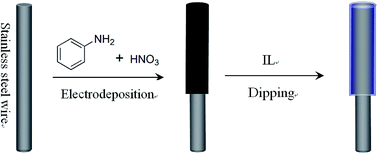
Fig. 1 shows the preparation process of PANI-supported IL coating. At first, a stainless steel wire was cleaned by ultrasonication in 0.5 mol L−1 sodium hydroxy, 0.5 mol L−1 sulfuric acid and distilled water each for 15 min. Then the electrode system was immersed in 1 mol L−1 nitric acid solution containing 0.10 mol L−1 ANI. The electropolymerization of ANI was performed by cycling the potential scan between −0.2 V and 1.2 V for 80 times at 50 mV s−1. The obtained PANI coated stainless steel wire was washed with deionized water and methanol respectively, and then was kept in a desiccator for 24 h at room temperature. Subsequently, it was aged in an electric furnace under nitrogen atmosphere for 50 min at 90 °C and for 120 min at 300 °C respectively. Next, the aged PANI fiber was immersed into an IL solution (i.e. IL-DMF, v/v: 1/2) for 30 min and dried under an infrared lamp for 30 min, thus IL was distributed evenly throughout the PANI film. Finally, the PANI supported IL fiber was fixed on a home-made device for SPME with epoxy resin. According to the microscope measurement result, the thickness of this coating was about 52 μm.
image file: c6ra21481a-f1.tif
Fig. 1 Illustration of the procedure for preparing PANI supported IL coating.

HS-SPME procedure

Firstly, 10.0 mL working solution was transferred into a 15.0 mL sample vial capped with a septum. Then the fiber (length: 1.6 cm) was exposed to the headspace over the solution. The extraction temperature was controlled by a water bath placed on a magnetic stirrer. After extraction for certain time, the fiber was withdrawn into the needle, removed from the sample vial and immediately introduced into the GC injector port for thermal desorption of 3 min. The chromatographic peak area was used for quantitation and as well used to examine the extraction efficiency of SPME fiber.

Results and discussion

Optimization of coating conditions

As the ILs had high viscosity and were not suitable for direct coating, IL solutions (in DMF) were used for this purpose. The aged PANI fibers were immersed into 0.5 mL IL solutions for 30 min, followed by dried under an infrared lamp for 30 min. The resulting fibers were used for HS-SPME of the analytes, and their extraction efficiencies were assessed. Taking [Bmim]PF6 solution as an example, when the IL concentration was changed (i.e. volume ratio of IL and DMF: 1[thin space (1/6-em)]:[thin space (1/6-em)]1, 1[thin space (1/6-em)]:[thin space (1/6-em)]2, 1[thin space (1/6-em)]:[thin space (1/6-em)]5, 1[thin space (1/6-em)]:[thin space (1/6-em)]10), the extraction efficiency also changed for benzene compounds (i.e. MEB, 1,2-DMB, 1,4-DMB, 1,3,5-TMB and 2-CT) (Fig. S1). This phenomenon should be ascribed to the change of IL amount and its surface area. When IL concentration was higher the solution was sticky and more IL was loaded, but the surface area was smaller because the pores of PANI were blocked. However, when IL concentration was lower, the amount of immobilized IL was less; even more it was not enough to well cover the surface of PANI. In this case, 33% IL solution (i.e. volume ratio of IL and DMF was 1[thin space (1/6-em)]:[thin space (1/6-em)]2) was favorable, so this concentration was adopted in the following experiments.

The electrodeposited PANI is generally porous, thus the air in the pores may hinder IL entering. To test it's effect, the PANI coating was pretreated before dipping in IL solution. Taking [Bmim]PF6 as an example (Fig. S2), before dipping the PANI was heated (80 °C) or degassed in vacuum the resulting coating presented higher extraction efficiency in comparison with that without pretreatment. The reason was that heating and degassing could get rid of the air in the pores to some extent. So the loading of IL was performed after heating the PANI fiber.

Selection of ionic liquids

The extraction efficiencies of four imidazolium ionic liquid (i.e. [Bmim]PF6, [Bmim]BF4, [Omim]PF6 and [HOEMim]NTf2) coated PANI fibers for different analytes (i.e. benzene, aryl halide, phenolic, amine and fatty alcohol compounds) were compared. As shown in Fig. S3, these analytes could produce GC signals. After HS-SPME their chromatographic peak areas increased (Fig. 2). This indicated that these PANI-IL fibers presented some extraction ability for them, but the extraction ability of different fibers was different, and for different analytes the extraction efficiency was different. For fatty alcohols the extraction capacity of the fibers followed such order as: PANI-[HOEMim]NTf2 > PANI-[OMim]PF6 > PANI-[Bmim]BF4 > PANI-[Bmim]PF6. For aryl halide compounds the order was: PANI-[Bmim]PF6 > PANI-[HOEMim]NTf2 > PANI-[Bmim]BF4 > PANI-[OMim]PF6. For phenolic compounds the order was as follows: PANI-[Bmim]BF4 > PANI-[Bmim]PF6 > PANI-[HOEMim]NTf2 > PANI-[OMim]PF6. Similarly, for benzene compounds they showed such order as: PANI-[Bmim]PF6 > PANI-[HOEMim]NTf2 > PANI-[OMim]PF6 > PANI-[Bmim]BF4, while for amine compounds the order was: PANI-[Bmim]BF4 > PANI-[Bmim]PF6 > PANI-[HOEMim]NTf2 > PANI-[OMim]PF6.
image file: c6ra21481a-f2.tif
Fig. 2 Chromatographic peak area of different analytes after HS-SPME. Extraction temperature: 30 °C extraction time: 40 min; stirring speed: 600 rpm; NaCl concentration: 0.35 g mL−1; concentration of all compounds: 50 ng mL−1. For the five series of analytes the order was (from left to right): benzols (i.e. MEB, 1,2-DMB, 1,4-DMB, 1,3,5-TMB and 2-CT), aryl halide (i.e. CB, BB, 1,4-DCB, 4-BT and 1,2,4-TCB), alcohols (i.e. OA, NA, DA, UA and DOA), phenols (i.e. 2-CP, 2 MP, 3 MP, 2,6-DMP and 2,4-DMP) and amines (i.e. ANI, NMA, 3 MA, 2-CA and 3-CA).

The extraction selectivity of ILs depends on the interactions between ILs and the target analytes, including dispersion, dipole induction, dipole orientation, hydrophobilic, and hydrogen-bonding interactions. The interactions are related to the structures of ILs and analytes.21,22 According to “like dissolves like” principle, fatty alcohols should have high distribution in [HOEMIm]NTf2 phase as it has a –OH group. In fact, the PANI-[HOEMIm]NTf2 coating exhibited higher extraction efficiency for fatty alcohols than for other analytes. Hence, this fiber was selected for the HS-SPME of these fatty alcohols in the following experiments. In addition, other properties (such as density, viscosity and solubility) of ILs also affected extraction efficiency,23,24 because they affected the loaded IL amount.

Surface structure of PANI supported IL coating

The SEM images of PANI and PANI supported IL coatings are shown in Fig. 3. PANI coating displays typical netlike structure, which is favorable for the immobilization of IL. For PANI supported IL coating (Fig. 3b and c), the IL adheres well on the PANI surface. As the IL layer is thin the PANI supported IL coating still shows netlike structure and has large surface area.
image file: c6ra21481a-f3.tif
Fig. 3 SEM images of PANI coating (A) and PANI supported IL coating (B and C). Magnified rate: 40[thin space (1/6-em)]000 (for A and C), 5000 (for B).

Optimization of the HS-SPME conditions

Generally, for HS-SPME the experimental conditions include extraction temperature, extraction time, stirring rate, and salt concentration. Here they were studied and optimized for the HS-SPME of fatty alcohols. Extraction temperature was firstly considered. The extraction was performed at 10, 20, 30, 40 and 50 °C, while the extraction time was kept at 40 min, stirring speed at 600 rpm and NaCl concentration at 0.35 g mL−1. As a result, at 20 °C the chromatographic peak area for UA and DA reached maximum (Fig. S4). But for NA, DOA and OA it reached maximum at 30 °C. To achieve higher sensitivity, 30 °C was adopted.

The effect of extraction time on extraction efficiency was studied by varying the extraction time from 5 min to 40 min (Fig. S5). The results indicated that the extraction equilibriums were achieved for the analytes when extraction time was up to 30 min.

As shown in Fig. S6, the extraction efficiency decreased with increasing stirring rate. The possible reason was that stirring promoted the hydration and dispersion of the fatty alcohols in aqueous solution, and thus their concentrations in the head-space phase decreased. Hence the solution was not stirred during extraction.

The addition of NaCl made the extraction efficiency increase for these analytes, due to salting-out effect18 (Fig. S7). However, the peak areas of UA and DOA decreased a little when NaCl concentration was too high (e.g. 0.35 g mL−1). This phenomenon could be explained by electrostatic interaction.13 When NaCl concentration increased the ionic strength of the solution increased and the electrostatic effect grew, thus the UA and DOA were attracted more strongly in the solution. Here 0.35 g mL−1 NaCl solution (i.e. saturated NaCl solution) was selected.

Determination of enhancement factors

Enhancement factor (EF) was used to evaluate the extraction ability of the PANI supported IL fiber. The EF was defined as the ratio of the chromatographic peak area corresponding to the HS-SPME to that obtained by direct liquid injection.25 The concentration of each analyte was 100 ng mL−1 in 10 mL saturated NaCl aqueous solutions for HS-SPME. For direct liquid injection 0.1 μL standard solution (concentration: 100 μg mL−1 for each analyte) was used. The EF values obtained by using the PANI supported IL, commercial PDMS/DVB and PDMS fibers were compared in Fig. 4. It was clear that the PANI supported IL fiber presented much higher EF values for the fatty alcohols than other two fibers, indicating that the PANI supported IL fiber had higher affinity to them.
image file: c6ra21481a-f4.tif
Fig. 4 Comparison of the EFs of the fatty alcohols obtained by using PANI supported IL fiber, commercial PDMS (100 μm) and PDMS/DVB (65 μm) fibers. Extraction temperature: 30 °C, extraction time: 40 min.

Kinetics of extraction

In order to evaluate the effect of external IL layer on the kinetics of extraction, the extraction equilibrium time was recorded (Fig. S8). As could be seen, the extraction equilibriums were achieved when extraction time was 20 to 30 min for different analytes on the PANI supported IL fiber. For PANI fiber, the extraction equilibrium time was about 40 min. This indicated that the IL layer did not hinder the adsorption of analytes on PANI, but could promote the extraction equilibriums. It was related to the pre-enrichment effect of IL. In addition, for the fatty alcohols the equilibrium-extraction amount of PANI supported IL increased by about 57% to 207% in comparison with that of PANI coating, implying that the contribution of IL to the equilibrium-extraction amount was about 57% to 207%.

Adsorption curve of the proposed fiber

To better understand the extraction behavior of the PANI supported IL fiber to the fatty alcohols, the dependence of the chromatographic peak area (A) of OA (as a example) after HS-SPME (using splitless injection mode) on its initial concentration (c) in working solution was investigated. In order to achieve extraction equilibrium for OA, the extraction time was fixed at 40 min. The results were shown in Fig. 5. The adsorption behaviors of PANI supported IL and PANI fibers for OA were very similar to Langmuir isothermal adsorption. So the dependence between A and c could be described by the Langmuir isothermal adsorption equation. At equilibrium, the adsorption amount (na) was expressed by the following equation:
 
image file: c6ra21481a-t1.tif(1)
where nma is the saturation adsorption amount, ce is the concentration of analyte in sample solution at equilibrium, b is adsorption coefficient which represents the adsorption capacity of adsorbent.

image file: c6ra21481a-f5.tif
Fig. 5 Variation of the chromatographic peak area of OA after HS-SPME with its initial concentration in working solution. (A) PANI supported IL fiber and (B) PANI fiber. Extraction time: 40 min; extraction temperature: 30 °C; NaCl concentration: 0.35 g mL−1.

As A was proportional to the mass (m) of a component entering into FID, following relationship could be obtained: A = km, where k was proportional constant which reflected the sensitivity of FID. In addition, HS-SPME is a non-exhaustive extraction technique, because it causes minimal and negligible perturbation to the system.26 Hence, the concentration of analyte at equilibrium can be replaced by initial concentration of the analyte in sample solution (i.e. cec). Thus, eqn (1) can be modified as follows:

 
image file: c6ra21481a-t2.tif(2)
where a is in combination with k and nma. Therefore, nonlinear curve fit is conducted for the experimental data according to eqn (2). As shown in Fig. 5, the experimental data is very consistent with the eqn (2) (correlation coefficient R2 > 0.9942). It is clear, at low concentration, their relationship approximates to straight line, which is the basis of quantitative analysis for HS-SPME associated with GC-FID. When the concentration of analyte in working solution is high enough, all sites on the fiber surface are occupied by the analyte molecules and the adsorption reaches saturation. Furthermore, the PANI supported IL fiber presents higher adsorption coefficient (b = 0.00419) than the PANI fiber (b = 0.00352), indicating that the IL enhances the extraction ability of the fiber.

Lifetime of the coating

The lifetime or durability of a fiber is important for practical application. For many IL based coatings, the extraction efficiency declines with extraction times increasing because of the loss of IL.12,13 Here the lifetime of PANI supported IL coating was examined. As a result, after it undergone 114-times adsorption/desorption, its extraction efficiency hardly decreased (Fig. S9), considering the unavoidable variation of measurement conditions.

In addition, it was observed that the PANI supported IL coating did not present weight loss under 300 °C, meaning it had good thermal stability and could bear higher desorption temperature. This indicated that the introduction of IL (with decomposition temperature of about 400 °C) could improve the thermal stability of PANI (with decomposition temperature of about 220 °C (ref. 27)) to some extent.

Method evaluation

The analytical performance of the PANI supported IL coating was evaluated under optimized conditions by extracting working solutions, and the results were listed in Table 1. For different fatty alcohols, the chromatographic peak areas were linear to their concentrations in the ranges of about 0.05 ng mL−1 to 100 ng mL−1, with correlation coefficients (R) of 0.9917–0.9960; the limits of detection (LOD) were 0.0061–0.018 ng mL−1. The relative standard deviations (RSDs) of peak areas were below 8.4% for five repetitive extractions of solutions containing 25 ng mL−1 fatty alcohols, and the fiber-to-fiber RSDs were 6.7–12.2% under the same preparation conditions. These indicated that the coating had acceptable reproducibility and stability and provided wide linear range and satisfactory sensitivity.
Table 1 Analytical parameters for HS-SPME-GC-FID of fatty alcohols using the PANI supported IL fiber
Analytes LOD (ng L−1) Linear range (ng mL−1) Linear equation R RSDb (%)
One fiber (n = 5) Fiber to fiber (n = 5)
a A: peak area; c: ng mL−1.b At 25 ng mL−1 concentration level.
OA 12.2 0.09–100 A = 17[thin space (1/6-em)]969c + 53[thin space (1/6-em)]180a 0.9928 6.0 10.4
NA 6.1 0.09–50 A = 18[thin space (1/6-em)]173c + 67[thin space (1/6-em)]682 0.9922 6.4 6.7
DA 6.1 0.09–50 A = 22[thin space (1/6-em)]243c + 47[thin space (1/6-em)]985 0.9917 6.4 9.9
UA 6.1 0.05–100 A = 18[thin space (1/6-em)]137c + 42[thin space (1/6-em)]519 0.9960 8.4 10.7
DOA 18.3 0.09–50 A = 10[thin space (1/6-em)]719c + 21[thin space (1/6-em)]774 0.9945 8.3 12.2


Real sample analysis

The established HS-SPME-GC method was applied to the determination of the five fatty alcohols in two drinks (i.e. jasmine tea and rock sugar lemon drink). Prior to detection, 10.0 mL original drink sample was diluted to 100 mL with water. Then 10 mL diluent was taken for detection under the optimized conditions. The fatty alcohols were identified according to the relative retention time. As results, NA was found in jasmine tea sample and its concentration was ca. 57 ng mL−1. In rock sugar lemon drink sample, UA was found and its concentration was ca. 2.2 ng mL−1. The typical chromatograms of the non-spiked sample and standard working solution were shown in Fig. 6. As could be seen the chromatogram of the rock sugar lemon drink exhibited many peaks. The reason was that it contained many volatile compounds (such as aromatic compounds) and they could also be extracted, thus the sample had major matrix effect. In order to demonstrate the reliability, the recoveries for the target compounds spiked in jasmine tea sample (spiked at 12.5 ng mL−1 concentration level) and in rock sugar lemon drink sample (spiked at 0.4 ng mL−1 concentration level) were determined. The results were shown in Table 2, and they were 84.9–117.6% for these analytes.
image file: c6ra21481a-f6.tif
Fig. 6 The chromatograms of standard solution (A), the non-spiked jasmine tea sample (B) and non-spiked rock sugar lemon drink sample (C) after HS-SPME.
Table 2 Analytical results of diluted jasmine tea drink sample and rock sugar lemon drink sample with HS-SPME-GC-FID using PANI supported IL fiber (n = 3)
  OA NA DA UA DOA
a Spiked at 12.5 ng mL−1 concentration level for OA, NA, DA, UA and DOA.b Mean value ± standard deviation.c Spiked at 0.4 ng mL−1 concentration level for OA, NA, DA, UA and DOA.
Jasmine tea drink Found (ng mL−1) <LOD 5.7 <LOD <LOD <LOD
Recovery (%)a 86.4 ± 8.6b 112.8 ± 7.2 117.6 ± 5.9 95.2 ± 10.5 84.9 ± 8.9
Rock sugar lemon drink Found (ng mL−1) <LOD <LOD <LOD 0.22 <LOD
Recovery (%)c 107.5 ± 4.3 97.5 ± 6.8 115 ± 5.3 106.2 ± 5.1 90 ± 7.2


Conclusion

The electrodeposited PANI film on stainless steel wire was netlike and it was used as support material for IL sorbents. The resulted composite coating had enhanced extraction efficiency and was quite durable when it was used for HS-SPME. The additional IL layer made the extraction equilibrium time decrease, while it improved the thermal stability of PANI film. In addition, this preparation method was convenient for controlling the loaded IL amount and for changing IL for the extraction of different analytes. In this case, the PANI-[HOEMim]NTf2 coating was suitable for the HS-SPME of fatty alcohols (i.e. 1-octanol, 1-nonanol, n-decanol, 1-undecanol and dodecanol). By coupling with gas chromatography, wide linear ranges and low LODs were obtained. The coating could be applied to the determination of the fatty alcohols in tea drinks.

Acknowledgements

The authors appreciate the support of the National Natural Science Foundation of China (Grant No: 21275112) and the support of the Open Foundation of Key Laboratory of Analytical Chemistry for Biology and Medicine (Wuhan University), Ministry of Education (ACBM2016008).

References

  1. R. Liu, J. F. Liu, Y. G. Yin, X. L. Hu and G. B. Jiang, Ionic liquids in sample preparation, Anal. Bioanal. Chem., 2009, 393, 871–883 CrossRef CAS PubMed.
  2. E. Aguilera-Herrador, R. Lucena, S. Cardenas and M. Valcarcel, The roles of ionic liquids in sorptive microextraction techniques, Trends Anal. Chem., 2010, 29, 602–616 CrossRef CAS.
  3. E. Aguilera-Herrador, R. Lucena, S. Cárdenas and M. Valcárcel, Determination of trihalomethanes in waters by ionic liquid-based single drop microextraction/gas chromatographic/mass spectrometry, J. Chromatogr. A, 2008, 1209, 76–82 CrossRef CAS PubMed.
  4. M. Y. Yang, X. F. Xi, X. L. Yang, L. Z. Bai, R. H. Lu, W. F. Zhou, S. B. Zhang and H. X. Gao, Determination of benzoylurea insecticides in environmental water and honey samples using ionic-liquid-mingled air-assisted liquid–liquid microextraction based on solidification of floating organic droplets, RSC Adv., 2015, 5, 25572–25580 RSC.
  5. Q. L. Zhang, F. Yang, K. Zeng, K. K. Wu, Q. Y. Cai and S. Z. Yao, Ionic liquid-coated Fe3O4 magnetic nanoparticles as an adsorbent of mixed hemimicelles solid-phase extraction for preconcentration of polycyclic aromatic hydrocarbons in environmental samples, Analyst, 2010, 135, 2426–2433 RSC.
  6. D. W. Armstrong, L. He and Y. S. Liu, Examination of ionic liquids and their interaction with molecules, when used as stationary phases in gas chromatography, Anal. Chem., 1999, 71, 3873–3876 CrossRef CAS PubMed.
  7. H. D. Qiu, S. X. Jiang, X. Liu and L. Zhao, Novel imidazolium stationary phase for high-performance liquid chromatography, J. Chromatogr. A, 2006, 1116, 46–50 CrossRef CAS PubMed.
  8. C. Ragonese, D. Sciarrone, P. Q. Tranchida, P. Dugo and L. Mondello, Use of ionic liquids as stationary phases in hyphenated gas chromatography techniques, J. Chromatogr. A, 2012, 1255, 130–144 CrossRef CAS PubMed.
  9. M. D. Joshi and J. L. Anderson, Recent advances of ionic liquids in separation science and mass spectrometry, RSC Adv., 2012, 2, 5470–5484 RSC.
  10. H. Y. Kang, Y. L. Mao, X. L. Wang, Y. Zhang, J. F. Wu and H. Q. Wang, Disposable ionic liquid-coated etched stainless steel fiber for headspace solid-phasemicroextration of organophosphorus flame retardants from water samples, RSC Adv., 2015, 5, 41934–41940 RSC.
  11. C. L. Arthur and J. Pawliszyn, Solid-Phase microextraction with thermal-desorption using fused-silica optical fibers, Anal. Chem., 1990, 62, 2145–2148 CrossRef CAS.
  12. J. F. Liu, N. Li, G. B. Jiang, J. M. Liu, J. A. Jonsson and M. J. Wen, Disposable ionic liquid coating for headspace solid-phase microextraction of benzene, toluene, ethylbenzene, and xylenes in paints followed by gas chromatography–flame ionization detection, J. Chromatogr. A, 2005, 1066, 27–32 CrossRef CAS PubMed.
  13. Y. N. Hsieh, P. C. Huang, I. W. Sun, T. J. Whang, C. Y. Hsu, H. H. Huang and C. H. Kuei, Nafion membrane-supported ionic liquid–solid phase microextraction for analyzing ultra-trace PAHs in water samples, Anal. Chim. Acta, 2006, 557, 321–328 CrossRef CAS.
  14. T. T. Ho, C. Y. Chen, Z. G. Li, T. C. Yang and M. R. Lee, Determination of chlorophenols in landfill leachate using headspace sampling with ionic liquid-coated solid-phase microextraction fibers combined with gas chromatography-mass spectrometry, Anal. Chim. Acta, 2012, 712, 72–77 CrossRef CAS PubMed.
  15. R. Amini, A. Rouhollahi, M. Adibi and A. Mehdinia, A novel reusable ionic liquid chemically bonded fused-silica fiber for headspace solid-phase microextraction/gas chromatography-flame ionization detection of methyl tert-butyl ether in a gasoline sample, J. Chromatogr. A, 2011, 1218, 130–136 CrossRef CAS PubMed.
  16. F. Q. Zhao, M. L. Wang, Y. Y. Ma and B. Z. Zeng, Electrochemical preparation of polyaniline–ionic liquid based solid phase microextraction fiber and its application in the determination of benzene derivatives, J. Chromatogr. A, 2011, 1218, 387–391 CrossRef CAS PubMed.
  17. Z. Gao, W. Li, B. Liu, F. Liang, H. He, S. Yang and C. Sun, Nano-structured polyaniline-ionic liquid composite film coated steel wire for headspace solid-phase microextraction of organochlorine pesticides in water, J. Chromatogr. A, 2011, 1218, 6285–6291 CrossRef CAS PubMed.
  18. Y. H. Ai, F. Q. Zhao and B. Z. Zeng, Novel proton-type ionic liquid doped polyaniline for the headspace solid-phase microextraction of amines, Anal. Chim. Acta, 2015, 880, 60–66 CrossRef CAS PubMed.
  19. Y. H. Ai, M. Wu, L. L. Li, F. Q. Zhao and B. Z. Zeng, Highly selective and effective solid phase microextraction of benzoic acid esters using ionic liquid functionalized multiwalled carbon nanotubes-doped polyaniline coating, J. Chromatogr. A, 2016, 1437, 1–7 CrossRef CAS PubMed.
  20. M. M. Abolghasemi, S. Parastari and V. Yousefi, Microextraction of phenolic compounds using a fiber coated with a polyaniline-montmorillonite nanocomposite, Microchim. Acta, 2015, 182, 273–280 CrossRef CAS.
  21. P. Yang, C. Lau, X. Liu and J. Z. Lu, Direct solid-support sample loading for fast cataluminescence determination of acetone in human plasma, Anal. Chem., 2007, 79, 8476–8485 CrossRef CAS PubMed.
  22. X. X. Jin, L. Yu, D. Garcia, R. X. Ren and X. Q. Zeng, Ionic liquid high-temperature gas sensor array, Anal. Chem., 2006, 78, 6980–6989 CrossRef CAS PubMed.
  23. S. V. Dzyuba and R. A. Bartsch, Influence of structural variations in 1-alkyl(aralkyl)-3-methylimidazolium hexafluorophosphates and bis(trifluorormethyl-sulfonyl)imides on physical properties of the ionic liquids, ChemPhysChem, 2002, 3, 161–166 CrossRef CAS PubMed.
  24. S. N. V. K. Aki, J. F. Brennecke and A. Samanta, How polar are room-temperature ionic liquids?, Chem. Commun., 2001, 413–414 RSC.
  25. H. L. Xu, Y. Li, D. Q. Jiang and X. P. Yan, Hydrofluoric acid etched stainless steel wire for solid-phase microextraction, Anal. Chem., 2009, 81, 4971–4977 CrossRef CAS PubMed.
  26. J. Q. Xu, J. Zheng, J. Y. Tian, F. Zhu, F. Zeng, C. Y. Su and G. F. Ouyang, New materials in solid-phase microextraction, Trends Anal. Chem., 2013, 47, 68–83 CrossRef CAS.
  27. H. Bagheri, A. Mir and E. Babanezhad, An electropolymerized aniline-based fiber coating for solid phase microextraction of phenols from water, Anal. Chim. Acta, 2005, 532, 89–95 CrossRef CAS.

Footnote

Electronic supplementary information (ESI) available. See DOI: 10.1039/c6ra21481a

This journal is © The Royal Society of Chemistry 2016
Click here to see how this site uses Cookies. View our privacy policy here.