DOI:
10.1039/C6RA21291C
(Paper)
RSC Adv., 2016,
6, 101660-101670
Fabrication of biocompatible nanohybrid shish-kebab-structured carbon nanotubes with a mussel-inspired layer
Received
24th August 2016
, Accepted 19th October 2016
First published on 19th October 2016
Abstract
In this study, a carbon nanotubes (CNTs)/polyethylene (PE) nanohybrid shish-kebab (NHSK) structure was fabricated and subsequently coated with a polydopamine (PDA) layer. This work aims to introduce the nano-sized topography and the high biocompatibility of PDA into CNTs to enhance cell affinity. The NHSK architecture was fabricated with CNTs and PE via a solution crystallization technique. The nanotopology of the shish-kebab structure can be tailored by adjusting the PE concentration and crystallization time. Moreover, dopamine self-polymerization was subsequently utilized to coat a thin and immobilized layer of bioactive PDA around the NHSK, which showed enhanced hydrophilicity compared with uncoated NHSK scaffolds. Cell assays with fibroblasts demonstrated that the nanotopography of the kebab crystals and their dimensions enhanced cell attachment and spreading while the PDA functionalization on the NHSK scaffolds further facilitated cell adhesion and viability, indicating that this study has potential applications in tissue engineering.
1. Introduction
Carbon nanotubes (CNTs) have generated a tremendous amount of research since their discovery.1–3 They are stable, strong, electrically conductive, naturally have a nanoscale topography and the diameter of an individual CNT (1–100 nm, depending on the number of walls) is comparable to that of a single protein complex, such as a microtubule (25 nm diameter), which forms the basic structural element of the cytoskeleton.4,5 All these features enable CNTs to play an important role in biomedical applications such as medical diagnostic techniques,6–8 drug delivery,9,10 gene alterations11–13 and tissue engineering. CNT-based scaffolds for cell culture have been successfully prepared by means of various methods including electrospinning,14–16 solvent casting,17 and incorporation into composites.18–20 Studies have verified the biocompatibility of CNTs and the CNTs-based scaffolds are able to support the growth of a variety of cells, for example fibroblasts,21,22 neurons23,24 and osteoblasts.25,26
Surface property of material is a significant factor that affects the adhesion and subsequent cell behaviors on it. However, the surface of CNTs is smooth and relatively inert. Functionalization was always used to introduce a more bio-active surfaces of CNTs to enhance the cell response on them. The surfaces modification can be carried out with organic and inorganic molecules,27 and with RNA28 or DNA,29 which all showed enhanced biocompatibility. Among all the surface properties of scaffolds, surface topographical feature is of importance to the cell adhesion and growth.30–33 The positive effect of the material nanotopography on cell colonization has been ascribed to a promoted protein adsorption, such as fibronectin and vitronectin, and an enhanced spatial conformation of the adsorbed cell adhesion-mediating proteins.34,35 Recently, a unique nanohybrid shish kebab (NHSK) structure was discovered, in which fibrous CNTs act as shish while polymer lamellae as kebab.36–39 This collagen-like nanotopography provides rugged surfaces of CNTs, which we believe, shows promising potential to facilitate cell attachment, growth, and proliferation on CNTs-based materials for tissue engineering. Therefore, a more in-depth investigation is necessary for the sake of preparing and optimizing shish-kebab-structured CNTs/polymer NHSK architecture. To the best of our knowledge, this is the first report to investigate the biocompatibility of the CNTs/polymer NHSK structure for tissue engineering.
On the other hand, chemical property of the material surface also dominates the cell response. Cell affinity toward those scaffolds prepared of synthetic polymers was generally poor as a consequence of their low hydrophilicity and lack of cell recognition sites on the surface.40 Hence, surface chemical decoration is important for promoting biocompatibility. Dopamine (2-(3,4-dihydroxyphenyl) ethylamine) was discovered as a new surface modification agent, inspired by the composition of adhesive proteins in mussels. Dopamine undergoes a self-polymerization reaction when a neutral solution of dopamine is exposed to air; it turns brown due to dopaminochrome oxidation and changes into polydopamine (PDA). This thin, surface-adherent polydopamine membrane can be prepared onto a wide variety of inorganic and organic materials.41,42 Numerous tissue engineering studies have revealed that the biocompatibility of scaffolds is facilitated by the coating of poly-dopamine film.43–46
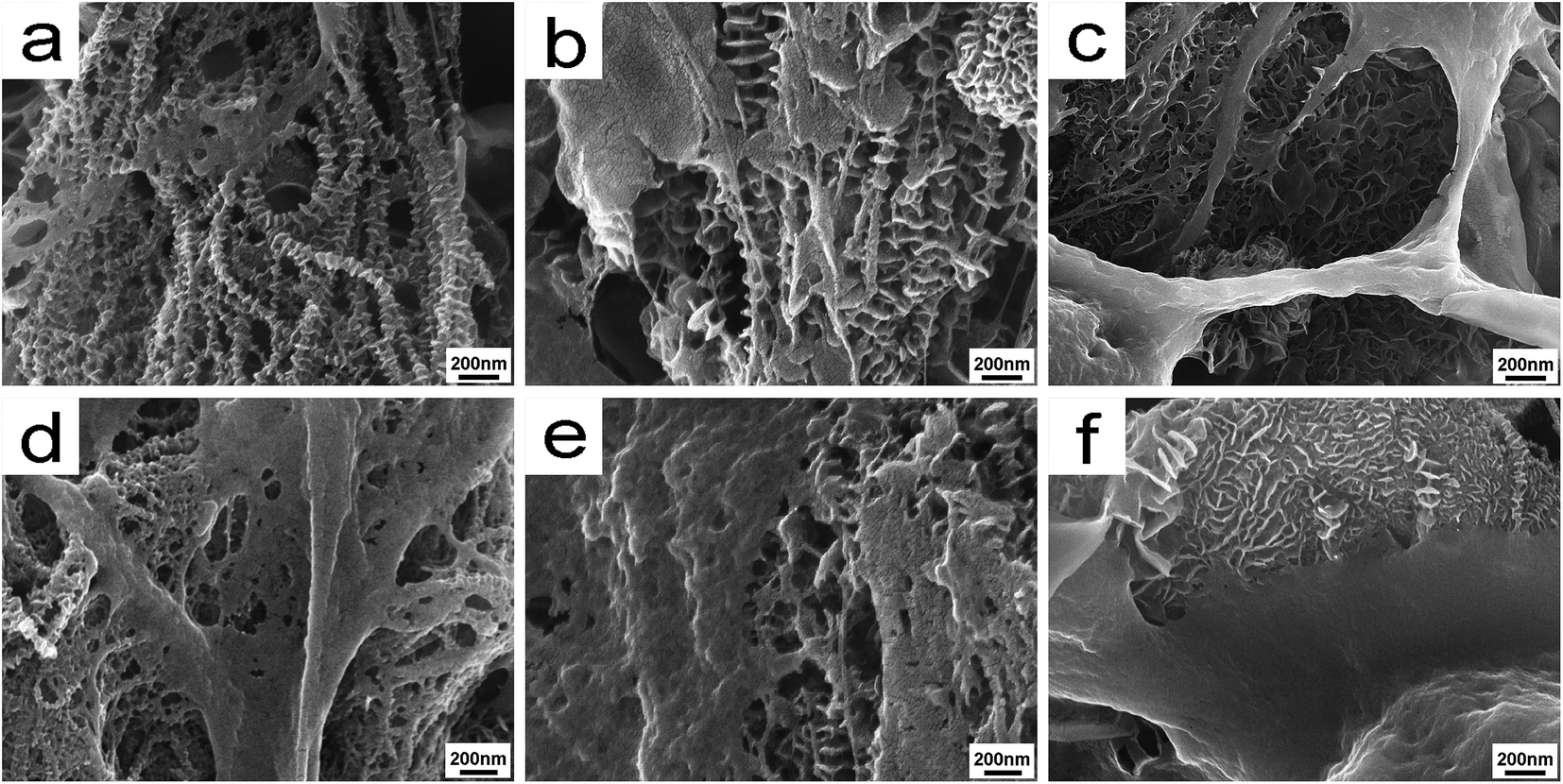
In this study, the NHSK structure with varying kebab dimensions was first prepared via the solution crystallization technique. The effect of PE concentration on the lamellae size was investigated. Afterwards, the specimen was then treated with dopamine, which spontaneously polymerizes to PDA in an aqueous solution. The unique NHSK structure and the polydopamine shell on the NHSK were studied using scanning electron microscopy, Fourier transform infrared spectroscopy, and water contact angle measurements. Fibroblast cells were seeded on the specimens with and without a polydopamine coating to investigate the surface morphology of NHSK and PDA functionalization on cell adhesion and proliferation.
2. Materials and methods
2.1 Materials
Single-walled carbon nanotube (SWCNT) bundles (1–2 nm in diameter for a single tube and 30–50 nm for the bundle) were purchased from Chengdu Organic Chemicals Co. Ltd., Chengdu, China, and used without any additional treatment in order to preserve the integrity of the CNTs' sidewall structure. The high density polyethylene (HDPE) used in this study was supplied by Chevron Phillips Chemical Company LP. p-Xylene, dopamine hydrochloride, 2-amino-2-(hydroxymethyl)-1,3-propanediol (Tris), and ethanol were purchased from Sigma-Aldrich (MO, USA). They were used as received without further purification.
2.2 Preparation of the CNTs/PE NHSK structure and polydopamine functionalization
The CNTs/PE NHSK structures were prepared using the isothermal crystallization method. Briefly, PE was dissolved in p-xylene at 125 °C and then added with CNTs. The final PE concentrations were 0.002%, 0.01%, and 0.05% (w/w), whilst the concentrations of SWCNT were all the same at 0.02% (w/w). All of the mixtures were kept at 95 °C for isothermal crystallization. On the other hand, the surface modification with polydopamine was performed by a simple solvent conversion from p-xylene into a dopamine solution (100 mg dopamine (Aldrich) and 60 mg 2-amino-2-hydroxymethylpropane-1,3-diol (Tris, Aldrich) were added into 50 mL deionized water) and stirred at 25 °C for 2 hours. The product was centrifuged, rinsed, and re-dispersed in ethanol. Thus, the NHSK/ethanol mixture and polydopamine-coated NHSK/ethanol system were both prepared. All of the mixtures were evenly spray painted on a series of micro cover glass pieces (CAT. no. 48393106, VWR) via a 0.3 mm gravity feed dual-action airbrush paint spray gun (purchased form Amazon.com), with a heating plate (Model 250, MTI Corporation) under the glass for the sake of alcohol evaporation. All samples were dried overnight and cut into 1 cm squares. The specimens were labeled as follows: A (0.002% PE), B (0.01% PE), C (0.05% PE).
2.3 Morphological characterization
The morphologies of the CNTs/PE NHSK samples with varying kebab size and the polydopamine-coated NHSK samples were investigated by scanning electron microscopy (SEM) (LEO GEMINI 1530) with an accelerating voltage of 10 kV. Prior to SEM imaging, samples were sputter coated with gold. Composition analyses of pure HDPE, CNTs, CNTs/PE NHSKs, and polydopamine-coated NHSKs were performed using a Bruker Tensor 27 FTIR instrument. The samples were analyzed in transmittance mode in the range of 600 to 4000 cm−1 with a resolution of 4 cm−1. The water contact angle (WCA) of NHSK was measured by a video contact angle instrument (Dataphysics, OCA 15) to test the surface hydrophilicity. The droplet size was set at 10 mL. The surface contact angle was measured when the water drop was stable on the surface. The results were reported with standard deviation (±SD) and five samples were investigated in each group.
2.4 Cell culture and seeding
NIH 3T3 ECACC fibroblasts below passage 20 were used for all of the biological assays. These cells were cultured in high-glucose DMEM (Gibco), supplemented with 10% fetal bovine serum (Gibco) and 1% penicillin–streptomycin (5000 U mL−1, Gibco). The sub-culture was carried out by harvesting the cells at 80% confluence by incubation in Trypsin-EDTA (0.05%, Gibco) for 5 min and seeding them onto tissue culture polystyrene (TCPS) six-well plates (Corning) at a 1![[thin space (1/6-em)]](https://www.rsc.org/images/entities/char_2009.gif) :25 ratio, followed by culturing them in an incubator set at 5% CO2 and 37 °C. Both sides of the NHSK coated glass slides were exposed to sterilizing UV rays for 30 min before being placed into a poly-HEMA-coated 24-well plate. 3T3 cells were dissociated, centrifuged, resuspended, counted, and seeded at a density of 20000 cells per well. Cells were cultured at incubator settings of 5% CO2 and 37 °C and fed with media (as described above) every two days.
:25 ratio, followed by culturing them in an incubator set at 5% CO2 and 37 °C. Both sides of the NHSK coated glass slides were exposed to sterilizing UV rays for 30 min before being placed into a poly-HEMA-coated 24-well plate. 3T3 cells were dissociated, centrifuged, resuspended, counted, and seeded at a density of 20000 cells per well. Cells were cultured at incubator settings of 5% CO2 and 37 °C and fed with media (as described above) every two days.
2.5 Cell number and viability assay
The viability of NHSK on cover glass was evaluated using a live/dead cell assay (Invitrogen, CA, USA) and an MTS assay. The stain utilized green fluorescent calcein-AM to target esterase activity within the cytoplasm of living cells, and red fluorescent ethidium homodimer-1 (EthD-1) to represent cell death by penetrating damaged cellular membranes. Cells were imaged by a Nikon ECLIPSE Ti inverted microscope. CellTiter 96 Aqueous One Solution Cell Proliferation assay (Promega) was used to determine the cell number. Assays were performed by adding a small amount of MTS reagent to the culture wells, incubating for 4 h, and then recording the absorbance at 490 nm via a 96-well plate GloMax-Multi+ multiplate reader (Promega). The absorbance was read three times per well. Standard curves were established and confirmed by comparison to hemocytometer readings prior to the experiments.
2.6 Cell cytoskeleton and cell/NHSK interaction study
The cytoskeleton organization of cells grown on unmodified and PDA-coated NHSK was analyzed via actin staining. After 3 days and 7 days of cultivation, cells were fixed in 4% paraformaldehyde diluted in PBS (Santa Cruz Biotechnology, Inc.) for 15 min at room temperature, followed by a wash with PBS and permeabilization with 0.1% Triton X-100 in PBS for 5 min at room temperature, and then stained with phalloidin (CF568, Biotium) and 4′,6-diamidino-2-phenylindole (DAPI, Sigma-Aldrich) for 1 h at room temperature under dark conditions. Afterwards, samples were washed with PBS and imaged. The interaction between cells and NHSK was characterized by SEM. Briefly, the specimens of the 3 day and 7 day cultivation were washed and fixed with 4% paraformaldehyde in PBS. The rinsed samples were dehydrated using a series of ethanol washes (50%, 80%, 90%, and 100% ethanol for 30 min each), and finally the dehydrated specimens were dried before gold sputtering for SEM.
2.7 Statistical analysis
All of the quantitative results were expressed as mean standard deviation (SD). Statistical analysis was carried out by means of a one-way analysis of variance (ANOVA). A significance level of p < 0.05 was used.
3. Results and discussion
3.1 Formation of the NHSK architecture
The polymer solution crystallization technique was applied in order to obtain functionalized CNTs. Fig. 1(b) and (c) represents a typical structure of CNTs/PE NHSK. It was noticed that the CNTs were coated with disc-like crystal lamellae that were perpendicular to the axes of the CNTs and periodically located along the tubes. These lamellae were uniform in size and the shish-kebab morphology was similar to the native collagen fibers. The magnified image (Fig. 1(c)) revealed that the size of the crystals was in the range of hundreds of nanometers and the periodic distance between the adjacent lamellae was tens of nanometers, which was much smaller than that fabricated via aforementioned electrospinning technique. Here we believe that CNTs provide an external surface for the PE to nucleate on, and the PE crystallization period is shorter than that of the CNTs' agglomeration. Consequently, the tubes will be wrapped by PE crystals and the steric hindrance offered by the lamellae will prevent the agglomeration of CNTs. The measurements of kebab size and periodic distance are presented in Fig. 1(d). The kebab size refers to the diameter of disc-like crystals while the periodic distance signifies the distance between two adjacent crystals.
 |
| | Fig. 1 Scanning electron microscopy images of (a) CNTs and the (b, c) CNTs/PE NHSK structure. (d) Schematic of NHSK structure. | |
3.2 Effect of PE concentration on the lamellae dimension
The formation of PE crystal lamellae on the surface of carbon nanotubes was studied at various PE concentrations to further investigate the effect of solvents on the formation of kebabs as observed by SEM (cf. Fig. 2). In Fig. 2(a), after 1 hour of isothermal crystallization, the kebab crystals are visible even if the PE concentration is relatively low. The dimension of the kebabs are just compatible with their shish; namely, the CNTs' axes. The kebabs on the nanotubes' surfaces start covering the whole circumference of their own tubes and there are no solid connections between the PE kebabs from different shish. Given a higher concentration, the size of the kebabs increases and covers the shish completely, forming complete disk-like lamellae (Fig. 2(b)). It is also worth mentioning that the crystal lamellae growing between the tubes are capable of linking surrounding shish as long as the distance between the two tubes is less than the dimension of the crystal lamellae. In Fig. 2(c), the kebabs became much larger and a single kebab was difficult to distinguish due to the uniting of the adjacent lamellae on the nanotubes in a relatively high PE concentration. In some areas, petal-like kebabs were observed owing to the overgrowth of PE lamellae on the CNTs. The kebab size with increasing PE concentration was calculated as 71.4 ± 11.8 nm, 148.5 ± 16.9 nm, and 199.2 ± 29.3 nm, while their corresponding periodic distances were 94.3 ± 11.2 nm, 74.2 ± 14.5 nm, and 69.3 ± 24.6 nm, respectively (Fig. 2(d)).
 |
| | Fig. 2 SEM images of the CNTs/PE NHSK structure with different PE concentrations: (a) 0.002%, (b) 0.01%, and (c) 0.05%. (d) Geometric dimensions of the crystal: kebab size and periodic distance at different PE concentrations. | |
3.3 Effect of crystallization time on the lamellae dimension
The effect of crystallization time on the kebab dimension was also studied to investigate the morphology of PE lamellae on CNTs. The PE concentration was given at 0.01% and the specimen were observed by SEM (cf. Fig. 3). It can be seen that some PE lamellae crystallized on the shish after only 10 min of isothermal crystallization (Fig. 3(a)). Many PE subglobules were observed, representing the initial state of PE kebabs during the crystallization. However, there is almost no disc-like lamellae appeared and most of the crystals are too small to grow epitaxially outside of the CNTs. Besides, the distance of adjacent kebabs fluctuated very much and there is no distinct periodicity. In Fig. 3(b), after 30 min of isothermal crystallization, the PE kebabs emerged in almost every tubes. The lamellae grew periodically on the shish and formed an initial shish-kebab structure. It can be seen that the kebab size are relatively small, and the diameter of kebabs are just beyond that of the CNTs. The dimension of the PE kebabs continues growing with the increasing of crystallization time. All the lamellae grew epitaxially and periodically outside of the CNTs after 60 min of crystallization, as shown in Fig. 2(b). The kebab size was obviously larger than that of the former and exhibited a typical shish-kebab architecture. In addition, it is worth mentioning that the average distance between adjacent kebabs varies little after 30 min or longer period of crystallization (Fig. 3(d)), which indicated that there is almost no new PE subglobules generated at that time and the periodicity maintains. In Fig. 3(c), it is interesting to see that there is almost no visible change for both of the kebab size and periodic distance after 90 min of crystallization, which reveals that the crystallization accomplished in approximately 60 minutes.
 |
| | Fig. 3 SEM images of the CNTs/PE NHSK structure with different crystallization time: (a) 10 min, (b) 30 min, and (c) 90 min. (d) Geometric dimensions of the crystal: kebab size and periodic distance at different crystallization time. | |
Through above analysis, it can be summarized that both of the PE concentration and crystallization time affect the nanotopology of shish-kebab structure. Specifically, the diameter of the lamellae is proportional to PE concentration. The size of kebabs also increases with the extending of crystallization time, especially before the end of the crystallization at approximately 60 minutes. However, there is little change on the periodic distance with increasing crystallization time. Once the hierarchical periodicity generated in about 30 minutes, the kebabs begin to grow circumferentially and the periodic distance maintains. Concerning it is difficult to apparently change the kebab distance and preserve the hierarchical periodicity at the same time, we focused on the effect of kebab size on the biocompatibility and prepared the shish-kebab structure with varying lamellar diameters by the selection of PE concentrations during the following experiment.
3.4 Coating of PDA on the NHSK architecture
The morphology and diameter of PDA-modified NHSK were analyzed using SEM (cf. Fig. 4). The kebab size of PDA with increasing PE concentration was 72.7 ± 12.1 nm, 149.8 ± 14.5 nm, and 202.4 ± 31.3 nm, respectively (Fig. 4(d)). The kebab dimension increased by around 2 nm compared to their neat (uncoated) counterparts; however, this was not convincing enough to confirm PDA formation because the diameter difference was not statistically significant. In this case, we further investigated the PDA coating by using FTIR and the water contact angle measurement. In addition, it is noteworthy that both brief ultrasonication and the PDA coating did not disrupt the integral NHSK structure, which indicates that the architecture is stable and, consequently, can be used as a scaffold for subsequent biocompatibility assays.
 |
| | Fig. 4 SEM images of the PDA-coated CNTs/PE NHSK structure with different PE concentrations: (a) 0.002%, (b) 0.01%, and (c) 0.05%. (d) Geometric dimensions of the crystal: kebab size and periodic distance at different PE concentrations. | |
3.5 FTIR results and surface wettability of neat CNTs, PE, CNTs/PE NHSK, and PDA-coated samples
Fig. 5(a) displays the FTIR spectra of neat CNT, PE, CNTs/PE NHSK and PDA-coated scaffolds. The strong characteristic peaks of HDPE, including 2918 cm−1 and 2850 cm−1 (asymmetric and symmetric stretching of C–H bond in CH2 groups, respectively), 1471 cm−1 (CH2 scissoring), and 720 cm−1 (CH2 rocking), are shown in all of the PE-coated specimens.47,48 After coating a polydopamine layer, the characteristic peaks of PE shrink notably. Compared with the original PE, a broad absorbance between 3600 and 3100 cm−1 (N–H/O–H stretching vibrations) and new peaks at 1609 cm−1 (superposition of N–H bending and phenylic C![[double bond, length as m-dash]](https://www.rsc.org/images/entities/char_e001.gif) C stretching), and 1508 cm−1 (N–H scissoring) were presented in the spectrum of dopamine-functionalized samples, thereby indicating the existence of dopamine on the NHSK surface.49–51
C stretching), and 1508 cm−1 (N–H scissoring) were presented in the spectrum of dopamine-functionalized samples, thereby indicating the existence of dopamine on the NHSK surface.49–51
 |
| | Fig. 5 (a) FTIR spectra and (b) water contact angles of varying samples. A (0.002% PE), B (0.01% PE), C (0.05% PE). | |
The wetting characteristics of the prepared specimens were characterized by using the water contact angle (WCA) measurement (Fig. 5(b)). Hydrophilicity plays a pivotal role in the interactions between the cells and the matrix. CNTs/PE NHSK structures with different PE concentrations (A (0.002% PE), B (0.01% PE), C (0.05% PE)) exhibited a high contact angle of about 140°, corresponding to a lower surface hydrophilicity, which can be mainly ascribed to the relatively high hydrophobicity of both CNTs and PE. After coating the PDA, the contact angle of PDA-coated CNTs/PE NHSK structures (samples A-PDA, B-PDA, and C-PDA) decreased to around 85°, which indicated that the modified NHSK became more hydrophilic with the coating of PDA on its surfaces. It is interesting to note that the WCA of the original and PDA-coated NHSK specimens showed an inverse tendency with the growth of the kebab (from sample A to C), which was probably due to the increasing roughness without PDA coating. On the other hand, a greater amount of PDA tended to be coated on the larger kebabs (again due to the increasing roughness and thus a higher surface area-to-volume ratio) and resulted in better hydrophilicity and a drop in the WCA. These results further confirmed that the PDA nano-layer containing hydrophilic groups (–OH and –NH–) was successfully coated onto CNTs/PE NHSK. Hence, the PDA-coated scaffolds are expected to exhibit better biocompatibility than native NHSK samples.
3.6 Biocompatibility evaluations
3.6.1 Cell viability and proliferation study. The viability of cells on NHSK after 3 days and 7 days of culture was investigated via live/dead assay (Fig. 6 and 7). The clear prominence of living cells in comparison to dead cells suggests that the 3T3 cells survived and flourished on the NHSK scaffolds. It was noticed that the cells were more stretched on the scaffolds with higher PE concentrations, indicating a stronger affinity for those specimens. Furthermore, on all of the PDA-coated scaffolds, there were more live cells observed than on their untreated counterparts, which demonstrates that the PDA layer facilitated cell attachment and viability on the NHSK samples. MTS assays were carried out to evaluate the number of cells (cf. Fig. 8(a)). It can be seen that the cell population on the NHSK-decorated scaffolds was higher than on the native CNTs, especially on day 7. This indicates that the surface roughness enhanced cell attachment and proliferation due to the NHSK structure. This is further confirmed by an increase in the cell number with increased kebab size, as observed in Fig. 8(a). The data for day 7, in conjunction with the live/dead imaging, shows that the cell number on all of the scaffolds was much higher and the cell population on the PDA-coated ones was significantly higher than that of the pristine NHSK specimens. This same tendency of cell population was also observed as the kebab size increased. Thus, it can be summarized that, for one thing, the immobilized PDA layer on the NHSK surface enhanced cell adhesion and proliferation, and, for another, the increased surface roughness—owing to the shish-kebab structure on the surface of the CNTs—accelerated cell attachment and resulted in much better cell viability and proliferation.
 |
| | Fig. 6 Live/dead cell assays showing 3T3 cells cultured on (a, e) CNTs and raw NHSK with varying kebab size, their corresponding PE concentrations are (b, f) 0.002%, (c, g) 0.01%, and (d, h) 0.05%. The images on the first and second rows are the result on day 3 and day 7, respectively. | |
 |
| | Fig. 7 Live/dead cell assays showing 3T3 cells cultured on PDA coated NHSK with varying kebab size, their corresponding PE concentrations are (a, d) 0.002%, (b, e) 0.01%, and (c, f) 0.05%. The images on the first and second rows are the result on day 3 and day 7, respectively. | |
 |
| | Fig. 8 (a) Cell number based on MTS results and (b) cell viability based on live/dead assay. (*p < 0.05). | |
3.6.2 Cytoskeleton investigation. In general, mammalian cells are known to undergo a cell adhesion process of substrate attachment, spreading, and cytoskeleton development on scaffolds.52 The cytoskeleton organization of 3T3 cells growing on the samples were investigated by actin staining the cells with phalloidin in this study. We compared the cell morphology and development of actin structures on CNTs, NHSK and PDA coated NHSK with varying PE concentrations. After 3 days of incubation, cells grown on pristine CNTs displayed a spherical or narrow shape (Fig. 9(a)), which is a typical non-adherent and non-spreading morphology for fibroblasts. In contrast, on samples decorated with kebabs, cells showed a better spreading morphology, especially for the ones with larger kebabs (Fig. 9(d)). After 7 days of culture, cells grown on CNTs still struggled to survive on the specimens and displayed a narrow morphology. However, it was noteworthy that, cells spread on NHSK-structured scaffolds, and with increasing kebab size, more stretched actin bundles were observed, which suggested that the specimens with increased surface roughness could promote cell adhesion. It has been reported that, when the cells were seeded on the scaffolds, cell migration and proliferation took place only after the cells were securely attached. Other kinds of nanotopology such as nanograte, nanopit and nanopost have been used to study the relationship between the surface nanotopology and the cell behavior of fibroblasts, however, there was no obvious enhanced cell proliferation occurred.53–55 On the other hand, promoted cell proliferation was observed in the NHSK nanotopology, which is probably due to the interconnected nano-pores between the CNTs that promoted distribution and adsorption of proteins35 and the shish-kebab structure on the CNTs provided more sites for the cells to adhere. Besides, high surface area-to-volume ratio offered more absorption of fibronectin and vitronectin molecules for cell adhesion.56 In this case, as the kebab expanded, the surface area-to-volume ratio increased simultaneously, which enhanced the adsorption ability of the fibronectin and vitronectin. Consequently, cell adhesion on the NHSK specimens was improved.
 |
| | Fig. 9 Staining of actin from the cytoskeleton for 3T3 grown on (a, e) CNTs and raw NHSK with varying kebab size, their corresponding PE concentrations are (b, f) 0.002%, (c, g) 0.01%, and (d, h) 0.05%. The images on the first and second rows are the result on day 3 and day 7, respectively. | |
On the other hand, we also compared the cell morphology and the organization of actin structures on neat and PDA-coated NHSK samples. Even though the cell morphology on NHSK functionalized CNTs has been verified to be more stretched and spread than the neat CNTs as mentioned above, cells grown on untreated NHSK scaffolds still exhibited a relatively narrow shape, especially for the ones with smaller kebab dimensions. In contrast, cells grown on the PDA-coated specimens displayed more actin bundles. It can be seen that the 3 day cytoskeleton organization result of the PDA-treated scaffolds (Fig. 10(b) and (c)) even caught up with the 7 day result of the untreated ones (Fig. 9(g) and (h)). After 7 days of incubation, it is remarkable to see that cells grown on the PDA-functionalized specimens displayed more actin bundles and more well-stretched shapes, indicating a flourishing living state and an enhanced cell adhesion on them (Fig. 10(d)–(f)). The increased cell adhesion on the PDA-coated NHSK scaffolds can probably be ascribed to the adsorption and immobilization of serum proteins on the PDA layer. For one thing, evidence showed that PDA can be a versatile surface modifier that can minimize the denaturation of serum proteins by adjusting the surface energy of materials, resulting in better cell adhesion.43 For another, PDA can react with thiols and amines via Shiff-base or Michael addition chemistry.42 In this case, the serum proteins, which support cell adhesion, can deposit on the surface and subsequently attach to the PDA coating tightly. Since the proteins adsorbed on the PDA coating are unaffected and are able to maintain their native structure and activity,57 the serum proteins adhered on the PDA layer served as cell adhesion sites. Through the above cytoskeleton studies, it can be concluded that the scaffolds with increased surface roughness and an immobilized PDA coating benefit cell adhesion.
 |
| | Fig. 10 Staining of actin from the cytoskeleton for 3T3 grown on PDA coated NHSK with varying kebab size, their corresponding PE concentrations are (a, d) 0.002%, (b, e) 0.01%, and (c, f) 0.05%. The images on the first and second rows are the result on day 3 and day 7, respectively. | |
3.6.3 Cell–scaffold interactions. SEM images were taken after 7 days of cell culture for a more detailed examination of the interactions between the NHSK scaffold and the cells (cf. Fig. 11) since scaffold surface properties are one of the dominant factors that affect the cell morphology and intracellular responses. As can be seen, the cells on sample A (prepared in a relatively low 0.002% PE concentration and without the PDA coating) had a tendency to form a round shape (Fig. 11(a)), signifying poor adhesion and limited cell spreading. However, with increased kebab size, the surface roughness increased, and consequently, the cells became more elongated and showed a more stretched shape (Fig. 11(b)). Furthermore, obvious filopodia were generated on sample C (Fig. 11(c)). These results illustrate improved attachment onto the NHSK surface due to the increasing size of the lamellae. What's more, cells proliferated much more quickly on the PDA-functionalized specimens, and it is surprising to note that a continuous layer on the PDA-coated scaffolds emerged (Fig. 11(f)). Hence, the PDA proved its ability to facilitate cell adhesion and proliferation on the NHSK scaffolds.
 |
| | Fig. 11 SEM images of 7 day cell culture on NHSK with varying kebab size, their corresponding PE concentrations are (a, d) 0.002%, (b, e) 0.01%, and (c, f) 0.05%. Images in the first and second rows are the result of neat and PDA-coated NHSK, respectively. | |
4. Conclusions
In this work, a CNTs/PE NHSK structure was fabricated by means of the solution crystallization technique and subsequently coated with a PDA layer. This unique PDA-coated architecture, which was successfully verified, facilitated the cell response to the scaffold. It can be seen that this unique architecture possessed a stable and adjustable periodicity, while the size of the toroid crystals coated on the CNTs was strongly dependent on the PE concentration. Furthermore, we successfully coated a PDA layer outside of the NHSK to enhance the adhesion and viability of 3T3 fibroblasts. The results of FTIR analyses and water contact angle measurements proved that the shish-kebabs were uniformly coated with the PDA layer, which also showed enhanced hydrophilicity compared with uncoated NHSK scaffolds. Biocompatibility assays on NHSK with varying lamellae size revealed that the presence of kebabs and their size affected the cell attachment and proliferation by changing the surface area-to-volume ratio. In addition, both SEM images and cytoskeleton assessments proved that PDA-functionalized NHSK structures allowed cells to adhere well and subsequently spread with a high viability. This work offers a simple and efficient path for functionalizing NHSK structures in a non-covalent way. Combined with the outstanding properties of CNTs, we foresee a promising future for NHSK in tissue engineering applications (e.g., in the areas of electrically conductive and dielectrically active scaffolds).
Conflict of interest
The authors declare no competing financial interest.
Acknowledgements
The authors sincerely acknowledge the support of Fundamental Research Funds for the Central Universities [22A201514030], China Postdoctoral Science Foundation [2015M571504], National Natural Science Foundation of China [51503065, 51273065], China Scholarship Council, and the Wisconsin Institute for Discovery in University of Wisconsin-Madison.
References
- S. Iijima, Nature, 1991, 354, 56–58 CrossRef CAS.
- R. H. Baughman, A. A. Zakhidov and W. A. de Heer, Science, 2002, 297, 787–792 CrossRef CAS PubMed.
- H. Dai, Acc. Chem. Res., 2002, 35, 1035–1044 CrossRef CAS PubMed.
- C. A. C. Abdullah, P. Asanithi, E. W. Brunner, I. Jurewicz, C. Bo, C. L. Azad, R. Ovalle-Robles, S. L. Fang, M. D. Lima, X. Lepro, S. Collins, R. H. Baughman, R. P. Sear and A. B. Dalton, Nanotechnology, 2011, 22, 205102 CrossRef PubMed.
- M. J. Roberts, M. K. Leach, M. Bedewy, E. R. Meshot, D. Copic, J. M. Corey and A. J. Hart, J. Neural Eng., 2014, 11, 036013 CrossRef PubMed.
- Y. H. Yun, Z. G. Dong, V. N. Shanov and M. J. Schulz, Nanotechnology, 2007, 18, 465505 CrossRef PubMed.
- J. Wang, M. Musameh and Y. H. Lin, J. Am. Chem. Soc., 2003, 125, 2408–2409 CrossRef CAS PubMed.
- Y. Yun, A. Bange, W. R. Heineman, H. B. Halsall, V. N. Shanov, Z. Y. Dong, S. Pixley, M. Behbehani, A. Jazieh, Y. Tu, D. K. Y. Wong, A. Bhattacharya and M. J. Schulz, Sens. Actuators, B, 2007, 123, 177–182 CrossRef CAS.
- L. Lacerda, A. Bianco, M. Prato and K. Kostarelos, Adv. Drug Delivery Rev., 2006, 58, 1460–1470 CrossRef CAS PubMed.
- K. H. Park, M. Chhowalla, Z. Iqbal and F. Sesti, J. Biol. Chesm., 2003, 278, 50212–50216 CrossRef CAS PubMed.
- M. S. Strano, M. Zheng, A. Jagota, G. B. Onoa, D. A. Heller, P. W. Barone and M. L. Usrey, Nano Lett., 2004, 4, 543–550 CrossRef CAS.
- M. Zheng, A. Jagota, M. S. Strano, A. P. Santos, P. Barone, S. G. Chou, B. A. Diner, M. S. Dresselhaus, R. S. McLean, G. B. Onoa, G. G. Samsonidze, E. D. Semke, M. Usrey and D. J. Walls, Science, 2003, 302, 1545–1548 CrossRef CAS PubMed.
- S. E. Baker, W. Cai, T. L. Lasseter, K. P. Weidkamp and R. J. Hamers, Nano Lett., 2002, 2, 1413–1417 CrossRef CAS.
- H. H. Liao, R. L. Qi, M. W. Shen, X. Y. Cao, R. Guo, Y. Z. Zhang and X. Y. Shi, Colloids Surf., B, 2011, 84, 528–535 CrossRef CAS PubMed.
- H. L. Zhang, J. Bioact. Compat. Polym., 2011, 26, 590–606 CrossRef CAS.
- F. Z. Volpato, S. L. F. Ramos, A. Motta and C. Migliaresi, J. Bioact. Compat. Polym., 2011, 26, 35–47 CrossRef CAS.
- Q. Cheng, K. Rutledge and E. Jabbarzadeh, Ann. Biomed. Eng., 2013, 41, 904–916 CrossRef PubMed.
- X. F. Shi, B. Sitharaman, Q. P. Pham, F. Liang, K. Wu, W. E. Billups, L. J. Wilson and A. G. Mikos, Biomaterials, 2007, 28, 4078–4090 CrossRef CAS PubMed.
- K. Balani, R. Anderson, T. Laha, M. Andara, J. Tercero, E. Crumpler and A. Agarwal, Biomaterials, 2007, 28, 618–624 CrossRef CAS PubMed.
- S. L. Edwards, J. S. Church, J. A. Werkmeister and J. A. M. Ramshaw, Biomaterials, 2009, 30, 1725–1731 CrossRef CAS PubMed.
- F. L. Y. Yuen, G. Zak, S. D. Waldman and A. Docoslis, Cytotechnology, 2008, 56, 9–17 CrossRef PubMed.
- Y. H. Yun, Z. Y. Dong, Z. Q. Tan, M. J. Schulz and V. Shanov, Mater. Sci. Eng., C: Biomimetic Supramol. Syst., 2009, 29, 719–725 CrossRef CAS.
- M. P. Mattson, R. C. Haddon and A. M. Rao, J. Mol. Neurosci., 2000, 14, 175–182 CrossRef CAS PubMed.
- H. Hu, Y. C. Ni, V. Montana, R. C. Haddon and V. Parpura, Nano Lett., 2004, 4, 507–511 CrossRef CAS PubMed.
- T. Akasaka, A. Yokoyama, M. Matsuoka, T. Hashimoto, S. Abe, M. Uo and F. Watari, Bio-Med. Mater. Eng., 2009, 19, 147–153 CAS.
- K. L. Elias, R. L. Price and T. J. Webster, Biomaterials, 2002, 23, 3279–3287 CrossRef CAS PubMed.
- J. Liu, F. Appaix, O. Bibari, G. Marchand, A. L. Benabid, F. Sauter-Starace and M. De Waard, Nanotechnology, 2011, 22, 195101 CrossRef PubMed.
- Y. Liu, M. Chen, M. L. Wang and M. R. Dokmeci, Appl. Phys. Lett., 2013, 103, 103103 CrossRef.
- L. Santiago-Rodriguez, G. Sanchez-Pomales and C. R. Cabrera, Isr. J. Chem., 2010, 50, 277–290 CrossRef CAS.
- C. J. Bettinger, R. Langer and J. T. Borenstein, Angew. Chem., Int. Ed., 2009, 48, 5406–5415 CrossRef CAS PubMed.
- M. J. Dalby, S. Childs, M. O. Riehle, H. J. H. Johnstone, S. Affrossman and A. S. G. Curtis, Biomaterials, 2003, 24, 927–935 CrossRef CAS PubMed.
- S. Heydarkhan-Hagvall, C. H. Chof, J. Dunn, S. Heydarkhan, K. Schenke-Layland, W. R. Maclellan and R. E. Beygul, Cell Commun. Adhes., 2007, 14, 181–194 CrossRef CAS PubMed.
- W. Tutak, K. H. Park, A. Vasilov, V. Starovoytov, G. Fanchini, S. Q. Cai, N. C. Partridge, F. Sesti and M. Chhowalla, Nanotechnology, 2009, 20, 255101 CrossRef PubMed.
- T. J. Webster, C. Ergun, R. H. Doremus, R. W. Siegel and R. Bizios, J. Biomed. Mater. Res., 2000, 51, 475–483 CrossRef CAS PubMed.
- K. M. Woo, V. J. Chen and P. X. Ma, J. Biomed. Mater. Res., Part A, 2003, 67, 531–537 CrossRef PubMed.
- C. Y. Li, L. Y. Li, W. W. Cai, S. L. Kodjie and K. K. Tenneti, Adv. Mater., 2005, 17, 1198–1202 CrossRef CAS.
- L. Y. Li, C. Y. Li and C. Y. Ni, J. Am. Chem. Soc., 2006, 128, 1692–1699 CrossRef CAS PubMed.
- L. Y. Li, Y. Yang, G. L. Yang, X. M. Chen, B. S. Hsiao, B. Chu, J. E. Spanier and C. Y. Li, Nano Lett., 2006, 6, 1007–1012 CrossRef CAS PubMed.
- L. Zhang, T. Tao and C. Z. Li, Polymer, 2009, 50, 3835–3840 CrossRef CAS.
- G. Ciardelli, V. Chiono, G. Vozzi, M. Pracella, A. Ahluwalia, N. Barbani, C. Cristallini and P. Giusti, Biomacromolecules, 2005, 6, 1961–1976 CrossRef CAS PubMed.
- E. Herlinger, R. F. Jameson and W. Linert, J. Chem. Soc., Perkin Trans. 2, 1995, 259–263, 10.1039/p29950000259.
- H. Lee, S. M. Dellatore, W. M. Miller and P. B. Messersmith, Science, 2007, 318, 426–430 CrossRef CAS PubMed.
- S. H. Ku, J. Ryu, S. K. Hong, H. Lee and C. B. Park, Biomaterials, 2010, 31, 2535–2541 CrossRef CAS PubMed.
- W. B. Tsai, C. Y. Chien, H. Thissen and J. Y. Lai, Acta Biomater., 2011, 7, 2518–2525 CrossRef CAS PubMed.
- S. H. Ku and C. B. Park, Biomaterials, 2010, 31, 9431–9437 CrossRef CAS PubMed.
- M. Lai, K. Cai, L. Zhao, X. Chen, Y. Hou and Z. Yang, Biomacromolecules, 2011, 12, 1097–1105 CrossRef CAS PubMed.
- J. H. Jiang, L. P. Zhu, X. L. Li, Y. Y. Xu and B. K. Zhu, J. Membr. Sci., 2010, 364, 194–202 CrossRef CAS.
- L. P. Zhu, J. H. Jiang, B. K. Zhu and Y. Y. Xu, Colloids Surf., B, 2011, 86, 111–118 CrossRef CAS PubMed.
- C. Cheng, S. Li, W. F. Zhao, Q. Wei, S. Q. Nie, S. D. Sun and C. S. Zhao, J. Membr. Sci., 2012, 417, 228–236 CrossRef.
- M. H. Lin, H. L. Huang, Y. J. Liu, C. J. Liang, S. D. Fei, X. F. Chen and C. L. Ni, Nanotechnology, 2013, 24, 065501 CrossRef PubMed.
- M. Baginska, B. J. Blaiszik, T. Rajh, N. R. Sottos and S. R. White, J. Power Sources, 2014, 269, 735–739 CrossRef CAS.
- U. Hersel, C. Dahmen and H. Kessler, Biomaterials, 2003, 24, 4385–4415 CrossRef CAS PubMed.
- C. H. Choi, S. H. Hagvall, B. M. Wu, J. C. Y. Dunn, R. E. Beygui and C. J. Kim, Biomaterials, 2007, 28, 1672–1679 CrossRef CAS PubMed.
- M. J. Dalby, N. Gadegaard and C. D. W. Wilkinson, J. Biomed. Mater. Res., Part A, 2008, 84, 973–979 CrossRef PubMed.
- M. T. Yang, N. J. Sniadecki and C. S. Chen, Adv. Mater., 2007, 19, 3119–3123 CrossRef CAS.
- W. J. Li, J. A. Cooper, R. L. Mauck and R. S. Tuan, Acta Biomater., 2006, 2, 377–385 CrossRef PubMed.
- H. Lee, J. Rho and P. B. Messersmith, Adv. Mater., 2009, 21, 431–434 CrossRef CAS PubMed.
|
| This journal is © The Royal Society of Chemistry 2016 |
Click here to see how this site uses Cookies. View our privacy policy here. 

 abc,
Jin Shaac,
Yiyan Pengb,
Xin Chenabc,
Linsheng Xieac,
Yulu Ma*ac and
Lih-Sheng Turng*b
abc,
Jin Shaac,
Yiyan Pengb,
Xin Chenabc,
Linsheng Xieac,
Yulu Ma*ac and
Lih-Sheng Turng*b