R. Nouri,
S. Abedi and
A. Morsali
*
Department of Chemistry, Faculty of Sciences, Tarbiat Modares University, P.O. Box 14115-4838, Tehran, Iran. E-mail: morsali_a@modares.ac.ir; Fax: +98 21 8009730; Tel: +98 21 82884416
First published on 14th October 2016
In this study, two novel metal–organic capsules were synthesized based on coordination-directed organization of two new extended tetrazolate ligands (1,4-bis((1H-tetrazol-5-yl)methyl)benzene (btmbenzene), 4,4′-bis((1H-tetrazol-5-yl)methyl)biphenyl (btmbiphenyl)) and Zn2+ ions. Furthermore, the function of these capsules in the inclusion of inorganic nanoparticles (Fe3O4), dyes (Rhodamine B) and drugs (5-fluorouracil) was investigated. Moreover, the effects of ligand expansion on the size, morphology, loading capacity and other properties of these capsules were studied. In addition, other morphologies of these coordination polymers were fabricated under different conditions . Finally, the obtained microcapsules were utilized for the synthesis of crystalline ZnO hollow spheres via a calcination method.
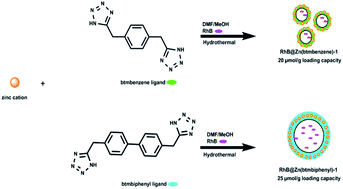
We suppose that addition of a phenyl group would result in larger dimensions of the metal–organic spheres and that the prepared capsules could entrap larger amounts of the guest molecules.13 Moreover, an additional phenyl ring in the linker leads to an increase in the electron density of the structure and favorable π–π interactions. Hence, such capsules could have better interactions with guest molecules.14 Therefore, we aimed to design two novel metal–organic ICP capsules based on two new tetrazolate ligands of different lengths to investigate the expansion effects on these materials (Scheme 1). Moreover, other morphologies of these coordination polymers were synthesized under different conditions. We hope that this work can open up a new route for the synthesis of various tetrazole-based metal–organic microcapsules with novel extended linkers of the same type, while maintaining the original morphology.
![]() | ||
| Fig. 1 (a) Low-magnification SEM image of the Zn(btmbenzene)-1 spheres, (b) high-magnification SEM image and (c) high-resolution TEM image of an individual Zn(btmbenzene)-1 sphere. | ||
This analysis demonstrated that a major loss of weight occurred between 350 °C and 420 °C (Fig. S11†). X-ray diffraction (XRD) analysis of the material was carried out to study its structure. According to the XRD analysis of the microcapsules, the structure is amorphous without any crystalline area (Fig. S9†). Elemental analysis data for the ICPs confirmed the formula [Zn(btmbenzene)]n for Zn(btmbenzene)-1. Luminescence is a well-known feature of inorganic–organic coordination polymers which is due to the presence of aromatic or conjugated linkers or lanthanide ions in their structures.16 The photoluminescence characteristics of the ICPs were studied by photoluminescence spectroscopy. Excitation of the Zn(btmbenzene)-1 microcapsules at 350 nm led to emission with a peak maximum at 450 nm (Fig. 2b). Fluorescence microscopy images of Zn(btmbenzene)-1 showed an intense blue emission for these microcapsules (Fig. 2a). The inclusion capability of these self-assembled hollow microspheres was investigated by loading of Rhodamine B fluorescent dye. Rhodamine B is regularly utilized as a tracer dye, a hydrophilic model drug and widely in biotechnology applications.17–19 Therefore, a certain amount of the dye was added to the reaction mixture to be entrapped inside the polymeric sphere through an in situ encapsulation process.
![]() | ||
| Fig. 2 (a) Fluorescence microscopy image of the Zn(btmbenzene)-1 microspheres deposited onto glass (λex = 359–371 nm, λem > 440 nm) and (b) PL spectrum collected at λexc = 350 nm. | ||
Fluorescence optical microscopy and fluorescence spectroscopy analyses were carried out to study the dye inclusion ability of these hollow microspheres. As can be seen in Fig. 3, red emission is associated with excitation at 540 nm which indicates the inclusion of dye molecules into Zn(btmbenzene)-1, denoted RhB@Zn(btmbenzene)-1. The quantity of RhB loaded into Zn(btmbenzene)-1 was also evaluated by a UV-vis spectrophotometer. RhB@Zn(btmbenzene)-1 was dispersed in deionized water at pH 5 and stirred for 72 h. Next, the mixture was centrifuged and the absorbency of the supernatant was determined at 554 nm utilizing a UV-vis spectrophotometer. According to the UV-vis analysis, the loading capacity of Rhodamine B into Zn(btmbenzene)-1 was 20 μmol g−1 (Table S2 and Fig. S19†). Fig. S20† shows FT-IR spectra of Zn(btmbenzene)-1 and RhB@Zn(btmbenzene)-1, which are the same. Moreover, a FESEM image of RhB@Zn(btmbenzene)-1 confirms that the product maintains its spherical morphology after the in situ encapsulation process (Fig. S21†). Therefore, the guest molecules did not interfere with the overall synthesis of the host polymer during in situ encapsulation. Nowadays a common approach for smart drug delivery to tumor cells is applying microcapsules containing human therapeutic drugs.20–22 5-Fluorouracil (5-FU) is an anticancer drug that is broadly applied in clinical chemotherapy for the treatment of different tumors such as breast adenocarcinoma and colon cancer.23–25
![]() | ||
| Fig. 3 (a) Fluorescence optical microscopy image of RhB@Zn(btmbenzene)-1 (λexc = 540–552 nm, λem > 590 nm) and (b) PL spectrum collected at λexc = 350 nm. | ||
To exhibit the diversity in ability of these hollow spheres for encapsulation of molecules, 5-FU was chosen as a guest. Following a similar experimental procedure, Zn(btmbenzene)-1 microspheres that could entrap 5-FU were synthesized (ESI†). 5-FU@Zn(btmbenzene)-1 was dispersed in deionized water at pH 5 and stirred for 72 h.
UV-vis analysis was performed at 260 nm on the supernatant solution to estimate the quantity of 5-FU loaded into the 5-FU@Zn(btmbenzene)-1 microspheres. The quantity of 5-FU encapsulated in the microspheres was found to be 158 μmol g−1 (Table S1 and Fig. S18†). Moreover, the influence of different synthesis strategies and solvents on the morphology of this infinite coordination polymer was studied (Scheme 2). The conventional method reported for the preparation of metal–organic capsules is fast precipitation, referring to the addition of a poor solvent to the reaction mixture which leads to precipitation of the polymerized hollow metal–organic capsules.4 Therefore, a solution of Zn(NO3)2·6H2O in methanol was added to the tetrazolate ligand btmbenzene in DMF under vigorous stirring. Fig. 4a displays a SEM image of the product obtained from the reaction denoted Zn(btmbenzene)-2 with an average size of 100 nm. A FT-IR spectrum of the sample showed two strong peaks at 1374 and 1667 cm−1, similar to Zn(btmbenzene)-1, related to tetrazole coordination to Zn2+ ions (Fig. S7†).26,27 XRD analysis showed an amorphous phase for Zn(btmbenzene)-2 (Fig. S9†). Thermogravimetric analysis of the sample showed a 20% weight loss related to DMF and the main weight loss region is between 320 and 420 °C (Fig. S12†). Fe3O4 nanoparticles were selected as a model to investigate the inclusion affinity of infinite coordination polymers for the insoluble guest. Fe3O4 nanoparticles were dispersed in a DMF solution of btmbenzene ligand and a methanolic solution of Zn(NO3)2·6H2O was added to the mixture gradually (ESI†). Fig. 5 shows the corresponding FESEM and TEM images of the product. HRTEM images obviously show Fe3O4 nanoparticles entrapped inside the polymeric spheres. The magnetic properties of the obtained Fe3O4@Zn(btmbenzene)-2 capsules were examined utilizing a vibrating sample magnetometer. According to the magnetization curve of the magnetic polymeric nanocapsules, the saturation magnetization for Fe3O4@Zn(btmbenzene)-2 is 10 emu g−1 (Fig. 6).
In practice, an aqueous solution of zinc nitrate was added to a btmbenzene ligand solution in DMF and refluxed for 72 h. Next, the product was separated by centrifugation and characterized by FESEM. The FESEM image of this compound, denoted Zn(btmbenzene)-3, shows that the morphology of this coordination polymer is rod-like in structure (Fig. 4b). XRD analysis of the Zn(btmbenzene)-3 rods demonstrated some sharp peaks, indicating a semi-crystalline nature (Fig. S9†). Moreover, flower-like structures, denoted Zn(btmbenzene)-4, could be synthesized by reaction of a aqueous solution of zinc nitrate and btmbenzene ligand in DMF at 140 °C in a Teflon-lined stainless steel autoclave (Fig. 4c). The structure of the material was studied by XRD analysis, and exhibited a crystalline character (Fig. S9†). Elemental analyses were performed for these four morphologies, which all displayed the same percentages of carbon, nitrogen and hydrogen atoms and confirmed the formula of [Zn(btmbenzene)]n for all the infinite coordination polymers. As can be seen in Fig. S7,† FT-IR spectra of these three morphologies resemble each other with two distinctive strong peaks at about 1400 and 1600 cm−1, indicating the coordination of tetrazole groups to Zn2+ ions. This evidence confirm that all five morphologies of [Zn(btmbenzene)]n have the same constituents. In addition, transformation of these structures upon changes to their exterior environments was studied. Zn(btmbenzene)-2 nanocapsules were separated by centrifugation from the reaction mixture, washed with DMF and dried, then put into a Teflon-lined stainless steel autoclave containing DMF and methanol and heated at 120 °C for 24 h. Remarkably, an important morphological transformation occurred and small nanocapsules of Zn(btmbenzene)-2 turned to spherical microcapsules of Zn(btmbenzene)-1 (Fig. S15†). In an experiment, nanocapsules of Zn(btmbenzene)-2 were heated at 140 °C for 72 h in a Teflon-lined stainless steel autoclave containing DMF and H2O. FESEM images of the product showed that these nanocapsules changed to cubic-like structures (Fig. 4d and S17†).
Zinc oxide nanostructures have been considered as significant key materials due to their potential in a wide range of applications such as photocatalysis, gas sensing, as antimicrobial materials, and in electronic and optoelectronic devices. Various micro- and nanostructures of zinc oxide have been synthesized as exemplified by rods, belts, combs, saws, spirals, rings and hollow spheres.28–35 Hollow zinc oxide spheres have been considered as an applicable desired morphology of this material due to their special advantages such as good surface area and low density.36–43 We decided to use these hollow metal–organic microspheres to prepare hollow zinc oxide microspheres through calcination. Therefore, hollow Zn(btmbenzene)-1 spheres were calcined at 450 and 550 °C for 3 h in air to find the best temperature to prepare ZnO while retaining the spherical morphology. FESEM images of the products show that the spheres keep their spherical morphology after calcination at 450 °C but that the morphology changed under calcination at 550 °C (Fig. 11). The sample produced at 450 °C was characterized by XRD analysis. The obtained XRD pattern can be indexed to the wurtzite structure of zinc oxide (Fig. S14†). It is noteworthy that no other diffraction peaks were observed, confirming that the spherical ICPs entirely changed into the ZnO phase. The diversity and development of supramolecular coordination compounds are obviously indebted to the use of larger extended decorated bridging ligands.13 We chose a longer linker of the same type (btmbiphenyl) to synthesize an extended network with the morphology of the spherical capsule (Scheme 1). To prepare the btmbiphenyl ligand, 4,4′-bis(bromomethyl)biphenyl was used as a precursor. The alkyl halide underwent nucleophilic aliphatic substitution with sodium cyanide in distilled H2O under reflux conditions for 24 h. The obtained dinitrile product was transformed into the tetrazolate ligand through reaction with sodium azide and triethylamine hydrochloride under reflux in dry toluene for 72 h and an inert argon atmosphere.
The work-up procedure can be found in the ESI†. Elemental analysis, 1H NMR (Fig. S5†) and 13C NMR (Fig. S6†) spectroscopy confirmed the synthesis of the btmbiphenyl ligand. Following a similar procedure, Zn(btmbiphenyl)-1 microcapsules were prepared by solvothermal reaction of the btmbiphenyl ligand in DMF and a methanolic solution of Zn(NO3)2·6H2O salt at 120 °C. The morphology of the as-synthesized product was studied by FESEM analysis. In accordance with the FESEM images (Fig. 7), the particles can be seen to have a spherical morphology with an average size of 20 μm. As anticipated, by employing the extended linker, the size of the prepared spheres increased obviously. Moreover, unlike the Zn(btmbenzene)-1 microcapsules, the surface of these expanded ICPs is completely unsmooth. The structure of the Zn(btmbiphenyl)-1 compound was analyzed by HRTEM as well. Fig. 7 shows the TEM images of the Zn(btmbiphenyl)-1, which validate the formation of hollow microcapsules. The infrared spectrum of the sample resembles that of Zn(btmbenzene)-1, displaying peaks at 1403 and 1604 cm−1 which prove the polymerization of Zn2+ ions and tetrazole groups (Fig. S8†). A thermogravimetric study of Zn(btmbiphenyl)-1 showed that the major weight decline domain was between 310 °C and 430 °C, relating to the destruction of the ICPs (Fig. S13†). A powder X-ray diffraction experiment was carried out to investigate the crystallinity of the sample. Surprisingly, the related XRD pattern displayed sharp peaks indicating the crystalline structure of these capsules (Fig. S10†). The elemental composition of these hollow capsules was examined by elemental analysis. According to the elemental analysis, a formula of [Zn(btmbiphenyl)]n was suggested for Zn(btmbiphenyl)-1. The emission properties of Zn(btmbiphenyl)-1 were studied using photoluminescence spectroscopy. When the microcapsules were excited at 420 nm, the obtained emission spectrum exhibited a peak with λmax at 660 nm (Fig. 8). The PL spectrum of Zn(btmbiphenyl)-1 showed an obvious red-shift in comparison with the Zn(btmbenzene)-1. Increasing the π-conjugation in the ligand led to a decrease in the HOMO–LUMO gap which meant that ligand to metal charge transfer became ineffective and consequently ligand-based emission occurred and a red-shift was observed in the PL spectrum. To investigate the potential of Zn(btmbiphenyl)-1 for the loading of 5-FU in a similar procedure, it was encapsulated into the microcapsules (ESI†). The amount of 5-FU loaded into the microcapsules was determined by utilizing a UV-vis spectrophotometer (Table S1 and Fig. S18†). The outcomes revealed that the 5-FU loading content was 188 μmol g−1 which, interestingly, is more than Zn(btmbenzene)-1. Moreover, encapsulation of Rhodamine B as a guest was also performed and analyzed through an identical method (Table S2 and Fig. S19†). According to the UV-vis spectrophotometry analysis, the Rhodamine B loading capacity of RhB@Zn(btmbiphenyl)-1 was 25 μmol g−1. Fluorescence microscopy images of RhB@Zn(btmbiphenyl)-1 showed intense green emission related to the encapsulated fluorescent dye (Fig. 9). Fig. S22† displays FT-IR spectra of Zn(btmbiphenyl)-1 and RhB@Zn(btmbiphenyl)-1 which have the same pattern. In addition, an FESEM image of RhB@Zn(btmbiphenyl)-1 proves that the sample keeps its spherical morphology after the in situ encapsulation process (Fig. S23†). Therefore, our expectations were fulfilled and the Zn(btmbiphenyl)-1 microcapsules showed a higher loading capacity for both 5-FU and Rhodamine B in comparison to Zn(btmbenzene)-1, which can be attributed to stronger host–guest interactions due to the additional aromatic ring of the btmbiphenyl organic linker (Scheme 1) and the larger dimensions of the capsules. Afterward we tried to perform encapsulation of Fe3O4 magnetic nanoparticles inside the polymeric spheres through an in situ process by a solvothermal method, but FESEM analysis of the samples did not show any special structure.
![]() | ||
| Fig. 9 Fluorescence optical microscopy images of RhB@Zn(btmbiphenyl)-1 (a and b) λexc = 359–371 nm and λem > 397 nm. | ||
Furthermore, the influence of the operating conditions and solvents on the morphology of these ICPs was also inspected. To study the effects on the morphology of the conventional method, a methanolic solution of Zn(NO3)2·6H2O was added to the btmbiphenyl ligand in DMF dropwise at RT under stirring. The separated product was denoted Zn(btmbiphenyl)-2 and analyzed by FESEM. A FESEM image of the Zn(btmbiphenyl)-2 demonstrated that flower-like structures were synthesized (Fig. 10a). XRD analysis of the sample showed some sharp peaks indicating the semi-crystallinity of the compound (Fig. S10†). In next step, an aqueous solution of Zn(NO3)2·6H2O was reacted with a btmbiphenyl solution in DMF under solvothermal conditions at 140 °C. The morphology of the product denoted Zn(btmbiphenyl)-3 was studied by FESEM analysis. As can be seen in Fig. 10b and Scheme 3c flower-like structures were obtained that have much thicker branches in comparison to Zn(btmbiphenyl)-2. The powder was characterized by XRD analysis and it indicated that the compound is crystalline (Fig. S10†). FT-IR spectra of Zn(btmbiphenyl)-n (n = 2, 3) appeared similar to the Zn(btmbiphenyl)-1 infrared spectrum (Fig. S8†). According to the elemental analyses of Zn(btmbiphenyl)-n (n = 2, 3), these morphologies have the same formula expressed as [Zn(btmbiphenyl)]n, indicating that these three morphologies have similar compositions. Morphological transformation of Zn(btmbiphenyl)-2 under solvothermal conditions was also examined. Thereupon, Zn(btmbiphenyl)-2 powder was heated at 120 °C under solvothermal conditions in DMF and methanol for 12 h (ESI†). Surprisingly, the flower-like constructions changed into spherical structures (Fig. S16†). Subsequently, the Zn(btmbiphenyl)-1 microcapsules were used to synthesize zinc oxide hollow spheres via calcination. Hence, the Zn(btmbiphenyl)-1 microcapsules were heated at 450 and 550 °C for 3 h in air. According to the FESEM images of the samples shown in Fig. 11, both of the resultant products preserved their spherical morphology. Pursuant to the perforated sphere shown in Fig. 11, the emptiness of these structures even after calcination was also proved. The white powder prepared at 450 °C was examined by XRD analysis. The XRD pattern indicated that ZnO with a wurtzite structure and a hexagonal unit cell was prepared (Fig. S14†). Moreover, the determined lattice constants were a = 3.2 and c = 5.2 Å. It is worth noting that the morphology of the Zn(btmbenzene)-1 microcapsules and the previously reported Zn(btb)11 changed after calcination at 550 and 450 °C respectively, unlike the Zn(btmbiphenyl)-1 microcapsules which could keep the desired hollow spherical morphology under both conditions. Therefore, using the Zn(btmbiphenyl)-1 microspheres also seems a better choice for obtaining hollow zinc oxide structures, achieving greater thermal stability for their morphologies.
![]() | ||
| Fig. 10 SEM images of (a) Zn(btmbiphenyl)-2 (scale bar = 2 μm) and (b) Zn(btmbiphenyl)-3 (scale bar = 1 μm). | ||
Footnote |
| † Electronic supplementary information (ESI) available. See DOI: 10.1039/c6ra23075j |
| This journal is © The Royal Society of Chemistry 2016 |