Shani Egodawattea,
Katherine E. Greensteinb,
Ivy Vancea,
Edris Riveraa,
Nosang V. Myungc,
Gene F. Parkinb,
David M. Cwiertnyb and
Sarah C. Larsen
*a
aDepartment of Chemistry, University of Iowa, USA. E-mail: sarah-larsen@uiowa.edu
bDepartment of Civil and Environmental Engineering, University of Iowa, USA
cUniversity of California-Riverside, Department of Chemical and Environmental Engineering, USA
First published on 14th September 2016
Functionalized nanomaterials hold tremendous promise for water treatment because their high surface area makes them ideal sorbents for pollutants like heavy metal ions that are pervasive in global water supplies. Here, a novel core/shell nanomaterial consisting of an electrospun hematite nanofiber core and a mesoporous silica shell of tunable thickness (from 20–60 nm) was prepared for the first time. The synthesis involved careful control of pH and sequential addition of the silica source to control the growth and ultimately, thickness of the mesoporous silica shell on the electrospun hematite nanofiber. The core/shell structure was subsequently tailored for heavy metal adsorption by grafting an aminopropyl functional group on the mesoporous silica surface. The resulting electrospun hematite/mesoporous silica core/shell nanomaterials were extensively characterized by energy dispersive spectroscopy (EDS) with high resolution transmission electron microscopy (HRTEM), and ζ potential measurements both before and after adsorption of the Cr(III), from aqueous solution. Notably, sorption capacities for Cr(III) exceeded those previously reported for other nanostructured sorbents for this metal. The advantages of these core/shell materials include controllable surface area through introduction of porosity and the option for facile surface modification to optimize physicochemical interactions for pollutant uptake. These nanocomposites also exhibit improved chemical resistance in harsh environments. At acidic pH values, for example, the core/shell nanomaterials were more chemically resistant to iron dissolution than the parent electrospun hematite nanofibers, which broadens the range of waste streams to which these sorbents can be applied.
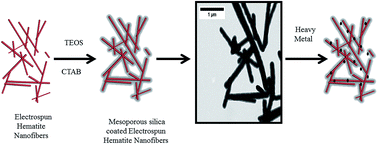
Electrospinning is a low cost, simple and scalable method for generating ultra-long polymer and/or metal oxide fibers with tunable diameters in the range of a few microns to tens of nanometers.10–12 The unique mesh-like structure of the nanofibers results in a three-dimensional reticular structure with high specific surface area and porosity,13 ideal for water treatment applications. However, electrospun hematite nanofibers still have some limitations that may hinder their application in certain environments; they are unstable at acidic pH and can be brittle.14 To overcome these challenges, recent research studies have focused on the synthesis and application of electrospun nanofiber composites, in which reactive metal oxides such as ZnO and TiO2 are integrated with various supporting metal, polymer or carbon substrates.14,15
Mesoporous silica (MS) materials are mechanically, thermally and chemically stable matrices and have been used for the adsorption of environmental contaminants, catalysis, and sensing.16,17 Mesoporous silica nanomaterials have very high surface areas (around 1000 m2 g−1), good biocompatibility, tunable pore sizes and well-defined surface properties that can be tailored for specific applications by modifying the surface with functional groups.18–21 For example, mesoporous silica materials functionalized with groups such as amine, thiol, carboxy, sulfonate and phosphonates have shown enhanced adsorption for heavy metals including As, Hg, Pb and Co.16,22–24
In this work, the properties of electrospun hematite nanofibers (ESH) are combined with mesoporous silica to form a novel core/shell nanomaterial with a meso- and macroporous structure that has high adsorption capacity and is chemically stable. This core/shell nanomaterial composite was evaluated for the application of heavy metal adsorption from aqueous solution. Notably, heavy metal contaminated waste water is often acidic in nature, and a major limitation of iron oxide sorbents is that they exhibit limited stability in acidic media and thus cannot be used effectively to treat such waste streams.6,25 With enhanced stability in low pH aqueous matrices, these core/shell nanomaterials have the potential to exhibit higher adsorption capacity than the parent hematite nanofiber or the parent mesoporous silica owing to the coupling of the adsorption properties of these two materials.
Herein, we prepared electrospun hematite (ESH) nanofiber/mesoporous silica (MS) core/shell nanomaterials (ESH@MS) with a controlled silica shell thickness between 20–60 nm. This study represents the first time electrospun metal oxide nanofibers have been uniformly coated with a mesoporous silica shell of controlled thickness. The core/shell materials were functionalized with an aminopropyl group to enhance the heavy metal adsorptive properties and were extensively characterized by a variety of physicochemical techniques. The chemical stability of the core/shell material in highly acidic aqueous solution and the performance as a heavy metal adsorbent for Cr(III) was also evaluated. The nanomaterials were analyzed after adsorption to elucidate the speciation of the adsorbed heavy metal species in order to gain a molecular level understanding of the adsorption process of heavy metals on these materials.
300
000, Sigma Aldrich), iron(III) nitrate nonahydrate (Sigma Aldrich), nitric acid (Fisher Scientific), sodium hydroxide (Fisher Scientific), ethanol (200 proof, Decon Laboratories), boric acid (99.8%, Alfa Aeser), and hydrofluoric acid (51% in water, Acros Organics) were utilized in this study.
For the electrospinning process, a 12 mL syringe was filled with the above mixture and loaded onto a syringe pump (New Era Pump Systems, Inc. NE-300). Using polyethylene tubing, the syringe was attached to a stand retrofitted with a metallic syringe adapter and 25-gauge plastic needle tip NanoNC (Korea). The stand was set 5 cm away from an Al foil-covered rotating drum, which served as the grounded collector. The metal adapter was connected to an Acopian (Easton, PA) high-voltage power supply set to 18 kV. The electrospinning chamber was heated to 35 °C. As the solution progressed through the system (0.4 mL h−1), it became electrified upon reaching the metal adaptor, resulting in electrospun nanofibers collected on the foil. After 14 h, the electrospinning process was ceased and the Al foil with the nanofibers was removed from the rotating drum. It was then inserted into a drying oven (Fisher Scientific Isotemp Oven 750G) at 60 °C overnight. Next, the nanofiber mat was placed in a tube furnace (MTI OTF-1200x-80) and annealed under air at 600 °C for 1 h for polymer removal and hematite crystallization.
120 g and the products were collected, washed with water and methanol and dried at 100 °C overnight. The dried product was calcined at 600 °C for 6 h in air to remove the CTAB. The iron content and the amount of TEOS added to the reaction mixture were varied to tune the thickness of the mesoporous silica coating around the electrospun hematite nanofibers. The coated electrospun nanofibers are labeled according to the thickness of the mesoporous silica shell. For example, ESH@MS-60 refers to electrospun hematite fibers (ESH) with a mesoporous silica (MS) coating of 60 nm.
:
1 mixture of dichloromethane and diethylether and dried in an oven at 100 °C.27 These samples which are surface functionalized with the amine group will be referred to as ESH@MS-60-NH2. Loading of APTES was 1.34 mmol g−1 as measured by thermogravimetric analysis (TGA).
120 g in order to separate the solid from the supernatant. The Cr(III) samples were stirred for 2 h, Cu(II) samples were stirred for 48 h and the As(III) samples were stirred for 48 h. The supernatants were analyzed for the heavy metal content using inductively coupled plasma optical emission spectroscopy (ICP/OES). All the experiments were conducted in triplicate.
The surface area and the pore size and diameter were measured using nitrogen adsorption/desorption isotherms with a Nova 1200 Nitrogen Adsorption Instrument (Quantachrome). The samples were degassed for 12 h at 120 °C and a 7-point BET method and a 50-point nitrogen adsorption desorption isotherm was measured and used to calculate the surface area and the pore volume and diameter, respectively. Inductively coupled plasma/optical emission spectroscopy (ICP/OES, Varian 720-ES) was used to determine the iron and silicon content of the samples. The samples were digested with hydrofluoric acid and diluted with the appropriate amount of nitric acid, boric acid and water.28 The results of nitrogen adsorption and ICP are listed in Table 1.
| Sample | Surface areaa (m2 g−1) | Pore volumea (cm3 g−1) | Pore diametera (nm) | Fe/Si ratiob | ζ potential (pH = 5.4) before Cr(III) adsorption | ζ potential (pH = 5.4) after Cr(III) adsorption |
|---|---|---|---|---|---|---|
| a Measured by nitrogen adsorption isotherms.b Measured by ICP/OES. | ||||||
| ESH@MS-60 | 390 (±50) | 0.2 (±0.02) | 3.14 (±0.03) | 0.54 (±0.03) | −40 (±9) | 22 (±5) |
| ESH@MS-40 | 215 (±3) | 0.101 (±0.005) | 3.12 (±0.01) | 0.82 (±0.04) | — | |
| ESH@MS-20 | 110 (±20) | 0.094 (±0.001) | 3.14 (±0.03) | 4.0 (±0.2) | — | |
| ESH | 15 (±2) | — | — | — | 1 (±7) | 26 (±6) |
| ESH@MS-60-NH2 | 210 (±50) | 0.13 (±0.01) | 3.19 (±0.09) | 0.66 (±0.03) | 6 (±12) | 22 (±7) |
Transmission electron microscopy (TEM) imaging (JEOL JEM-1230 transmission electron microscope) was used to confirm the thickness of the mesoporous silica coating and the diameter of the hematite fiber core, as well as the morphology of the silica coating. To prepare samples for the TEM, a drop of dilute sample suspended in ethanol was placed on a copper/nickel grid with thin polymer coating and dried at room temperature prior to the measurement. 250 measurements were taken to measure the thickness of the mesoporous silica coating in different places along the length of the nanofibers with the mesoporous silica shell. Image J was used to measure the thickness of the mesoporous silica shell from the TEM images of the core shell material. The Energy Dispersive Spectroscopy (EDS) spectra were recorded with a JEOL JEM 2100F, installed with Thermo Scientifc NORAN system 7 for EDS imaging where the X-rays were collected from a NanoTrace SiLi detector. Scanning transmission electron microscopy (STEM) images were collected by a JEOL JEM 2100F. Scanning Electron Microspcopy (SEM) imaging (Hitachi S-4800) was used to image the fibers before and after coating. The fibers were added to methanol, were placed on a sample stud, dried and then sputter coated with gold nanoparticles prior to imaging.
Fourier transform infrared spectra (FTIR) were recorded using the Nicolet FT-IR (Nexus 670) spectrometer. The samples were pressed into disks by mixing them in the ratio of 1
:
180 with KBr. Thermogravimetric (TGA) analysis (TA instruments, Q 5000) with a heating rate of 5 °C min−1 was used to quantify the amount of amine groups grafted onto the ESH@MS-60-NH2 sample. 13C Magic Angle Spinning (MAS) NMR experiments were conducted on ESH@MS-NH2 samples at a spinning speed of 10 kHz with adamantane as the reference material.
ζ-Potential measurements were conducted on samples before (pH = 2 to 9) and after Cr(III)/Cu(II) adsorption at pH = 5.4 and pH = 4. A small amount of sample was placed in disposable plastic centrifuge tubes and 2 mL of the aqueous solution of desired pH was added. The resulting suspensions were sonicated for approximately 5 min (1510 Sonicator, Branson). The suspensions were then tested for ζ potential using Zetasizer Nano-ZS, Malvern Instruments.
![]() | ||
| Fig. 1 Schematic representation of the synthesis of the electrospun hemtatite nanofiber/mesoporous silica nanocomposite (ESH@MS). | ||
In addition to the CTAB and TEOS concentrations in the reaction solution, it was determined that pH played a very important role in the growth of the silica shell. The experimental pH of the reaction was varied from 9 to 12 by controlling the amount of added base. It was observed that pH = 10.80 was the optimum pH for the reaction, and the formation of free silica was minimal after sample cleanup. When the pH of the reaction was increased or decreased from pH = 10.80, the amount of free silica increased (Fig. S1†). Representative samples with MS shell thicknesses of 20, 40 and 60 nm were prepared and are hereafter referred to as ESH@MS-20, ESH@MS-40, and ESH@MS-60. To improve the adsorptive properties, the core/shell materials were functionalized with APTES to form an aminopropyl functionalized surface.
SEM and TEM images were obtained and are shown in Fig. 2. These images provide the structural details of the ESH@MS samples including the thicknesses of the ESH cores and the mesoporous silica shells. The images indicate that the thickness of the mesoporous silica shell can be varied from approximately 20–60 nm by controlling the synthesis conditions. The histograms verify the thickness of the materials and is computed by counting 200 areas in an ESH@MS sample (Fig. S2†). The length of the nanofiber and the ends of the nanofiber are uniformly coated with mesoporous silica and the core/shell structure is clearly observed by the difference in densities of silica and hematite in the TEM images in Fig. 2B–D. Higher magnification of the TEM images show that the silica shell is mesoporous (inset in Fig. 2C).
Fig. 3 shows the p-XRD patterns of the calcined samples, ESH, ESH@MS-20, 40 and 60. The low angle powder X-ray diffraction (p-XRD) pattern (Fig. 3A) shows a characteristic peak at 2θ ∼ 2, indicating short range order of the mesoporous shell, while the high angle p-XRD pattern (Fig. 3B) shows the characteristic peaks for the hematite core.26 The low intensity of the low angle peak is due to the incremental addition of the silicon source and indicates that the ordering of the mesopores is a more disordered or wormhole (WO) type of mesoporous silica. The amine functionalized electrospun hematite nanofiber/mesoporous silica core shell material (ESH@MS-60-NH2) has a low angle peak that is slightly shifted from the parent core shell material of similar thickness (ESH@MS-60). This is because the inclusion of the amine functional groups in the pores of the mesoporous silica makes the structure slightly more disordered. The diffraction patterns of the high angle p-XRD show the characteristic peaks of hematite which confirm its presence in the core/shell materials.30 In addition, when the thickness of the mesoporous silica shell increases, a broad peak around 2θ = 20 appears with growing intensity. This accounts for the high angle peak of amorphous silica formation and it is further evidence of the coating of mesoporous silica around the electrospun hematite nanofibers.
The porous nature of the mesoporous silica was confirmed by nitrogen adsorption–desorption isotherms for ESH@MS samples. The Brunauer–Emmett–Teller (BET) method was used to calculate the surface area and the Barrett–Joyner–Halenda (BJH) method was used to calculate the pore volume and diameter from the nitrogen adsorption isotherms. A representative nitrogen adsorption desorption isotherm for ESH@MS-40 is shown in Fig. S3.† The adsorption isotherm is a type IV hysteresis curve which is typical of a mesoporous silica material.31 The surface area, pore volume and pore diameter for all the samples are given in Table 1. The ESH nanofibers have a relatively low surface area of 18 m2 g−1 which is increased significantly to 115, 215 and 394 m2 g−1 for ESH@MS-20, 40 and 60, respectively. After functionalization with APTES, the surface area and pore volume of ESH@MS-60-NH2 are reduced relative to ESH@MS-60 which can be attributed to the grafting of the aminopropyl groups in the mesopores.27,32
ζ-Potential measurements (Fig. 4) show that the parent ESH has a positive ζ-potential at low pH (pH = 3, +17 mV) that decreases as the pH increases (pH = 9, −28 mV) due to the deprotonation of the surface hydroxyl groups on the hematite surface with increasing pH. When the ESH nanofibers are coated with mesoporous silica (ESH@MS-60), the ζ potential is negatively charged in the entire pH range investigated (pH = 3, −36 mV and pH = 9, −40 mV) and this is attributed to the surface hydroxyl groups on the mesoporous silica surface. With amine functionalization, ESH@MS-60-NH2 trends towards a more positive ζ-potential in the whole range of pH values evaluated confirming that the amine group is covalently bound to the silica surface and is protonated until the pH approaches the pKa.
Thermogravimetric analysis (TGA), Fourier transform infrared (FTIR) spectroscopy, solid state 13C NMR and ζ-potential measurements confirmed the amine functionalization of the ESH@MS-60-NH2. Thermogravimetric analysis (TGA) indicated that the amine group loading in the ESH@MS-60-NH2 was 1.34 mmol g−1 (Fig. S4†). Solid state 13C NMR and FTIR spectra shown in Fig. S5 and S6,† respectively, also provide evidence of the aminopropyl group on the surface.
The adsorption isotherms for Cr(III) on ESH, ESH@MS-60 and ESH@MS-60-NH2 are shown in Fig. 6A. We note that our ability to conduct isotherm experiments with Cr(III) was limited to initial concentrations less than 2 mM, as higher concentrations at pH = 5.4 resulted in precipitation of Cr(III) solids. The adsorption isotherms of Cr(III) on ESH and ESH@MS-60 are very similar (Fig. 6A) indicating that the adsorption is not substantially affected by the MS shell alone. By comparison, the Cr(III) adsorption is enhanced on ESH@MS-60-NH2 (Fig. 6A) by amine functionalization of the mesoporous silica shell.
![]() | ||
| Fig. 6 (A) Equilibrium adsorption isotherms for Cr(III) on core/shell nanocomposites and linearized adsorption isotherms with model fits assuming the (B) Freundlich and (C) Langmuir adsorption isotherm models. Data were obtained for Cr(III) at pH = 5.4 for ESH, ESH@MS-60 and ESH@MS-60-NH2 with model fit parameters reported in Table 2. | ||
To analyze the adsorption data more quantitatively, the adsorption isotherms were fit to the Freundlich and Langmuir adsorption isotherm models (Fig. 6B and C). The Freundlich isotherm is given in eqn (1) below
| qe = KFCe1/n | (1) |
![]() | (2) |
![]() | (3) |
The adsorption data was fitted to both the Langmuir and Freundlich isotherm models. The resulting fits to the data are shown in Fig. 6B and C and the fitted parameters and associated errors are listed in Table 2.
| Freundlich isotherm (linear fit) | Langmuir isotherm (linear fit) | |||||
|---|---|---|---|---|---|---|
| R2 | KF | n | R2 | qm (mmol g−1) | KL (L mmol−1) | |
| ESH | 0.94 | 2.46 (±0.1) | 1.2 (±0.1) | 0.86 | 4.0 (±0.6) | 708 (±0.05) |
| ESH@MS-60 | 0.97 | 2.42 (±0.06) | 1.35 (±0.09) | 0.91 | 3.4 (±0.4) | 4790 (±10) |
| ESH@MS-60-NH2 | 0.99 | 4.00 (±0.06) | 1.10 (±0.03) | 0.95 | 6.6 (±0.6) | 478.6 (±0.7) |
For Cr(III) uptake, the Freundlich isotherm model exhibited overall the best fit (based on R2 analysis) to our experimental adsorption data (Fig. 6B and Table 2). The aminopropyl functionalization on the mesoporous silica coated nanofiber (ESH@MS-NH2) resulted in the greatest Cr(III) uptake relative to the other core/shell materials based on fitted values of KF and qm. Model fit KF values were comparable for ESH and ESH@MS-60, but increased markedly after aminopropyl functionalization, consistent with a higher affinity of Cr(III) for the surface sites on the aminopropyl functionalized nanocomposite. For comparison the adsorption isotherms were also fit to the Langmuir model and the results are provided in Fig. 6C and Table 2 but the R2 values were lower relative to the Freundlich fits.
The Freundlich isotherm accounts for a mechanism of multisite adsorption, while the Langmuir isotherm assumes a single binding site with a capacity limited to a monolayer. The core–shell nanocomposites, and especially the aminopropyl functionalized core–shell nanocomposite, have several different adsorption sites available for Cr(III) uptake. These include the surface hydroxyl groups of the iron oxide core, the surface silanol groups in the mesoporous silica shell, and the amine groups in the nanocomposite. Therefore, the Freundlich isotherm seems better suited to describe and model the adsorption phenomena occurring on such heterogeneous sorbent surfaces.
To quantify the maximum adsorption capacities for these materials, the linearized form of the Langmuir isotherm and the fitted qm values are most convenient. Langmuir estimates of adsorption capacities for ESH, ESH@MS-60 and ESH@MS-60-NH2 were 4, 3.4, 6.6 mmol Cr(III) per g sorbent, respectively. Out of the materials explored, the surface modification of the nanocomposite by the aminopropyl group exhibited the highest capacity, a value that compares well to adsorption capacities reported for similar adsorbents of Cr(III), which are provided in Table 3 for comparison. The adsorption capacities of other heavy metals such as Cu(II) and As(III) were also compared with Cr(III). For Cu(II), the adsorption capacities of ESH, ESH@MS-60 and ESH@MS-NH2 were 0.34 (±0.04), 1.3 (±0.4), 2.2 (±0.5) mmol g−1, respectively. For As(III) the adsorption capacities are 0.42 (±0.4) and 0.25 (±0.05) mmol g−1 for ESH and ESH@MS-60, respectively.
| Adsorbent material | Heavy metal | Capacity (mmol g−1) | Experimental conditions (pH, temperature, contact time) | Reference |
|---|---|---|---|---|
| a Determined from adsorption data fitted to Langmuir isotherm (linearized form).b Fe3O4–SiO2-poly(1,2-diaminobenzene) sub-micron particles. | ||||
| ESH | Cr3+ | 4.00 | pH = 5.4, 298 K, 2 h | This studya |
| ESH@MS-60 | Cr3+ | 3.4 | pH = 5.4, 298 K, 2 h | This studya |
| ESH@MS-60-NH2 | Cr3+ | 6.6 | pH = 5.4, 298 K, 2 h | This studya |
| Amino functionalized electrospun mesoporous silica | Cr3+ | 1.81 | pH = 7.5, 298 K, 40 min | 34 |
| Fe3O4 | Cr3+ | 0.31 | pH = 3.0; 298 K, 1 h | 35 |
| FSPb sub micron particles | Cr3+ | 1.48 | pH = 5.3, 303 K, 2 h | 36 |
| m-MCM-41 | Cr3+ | 0.70 | pH = 5.4, 298 K, 2 h | 32 |
| m-MCM-41-NH2 | Cr3+ | 2.08 | pH = 5.4, 298 K, 2 h | 32 |
To better understand the molecular basis for the adsorption of Cr(III) and Cu(II) on the EHS@MS nanomaterials, TEM/EDS mapping and ζ-potential measurements were conducted on the samples after heavy metal adsorption. The EDX mapping (Fig. 7 and S7–S9†) show the spatial distribution of Fe, Si, O, and N on the amine functionalized samples. The intense and the relatively thinner maps of Fe in ESH, ESH@MS and ESH@MS-NH2 show the presence of the hematite core, and the strong signals of Si and O throughout the particles in the ESH@MS and ESH@MS-NH2 samples illustrate that the particles have a uniform coating of mesoporous silica. In the functionalized samples, the presence of N can be seen over the whole fiber, which confirms that the functionalization has taken place throughout the mesoporous silica framework. Nitrogen has a lower intensity compared to Si or O as the core/shell functionalized material is only 1.34 mmol per gram of nitrogen. In Fig. 7, the distribution of the adsorbed heavy metal, Cr(III) on ESH@MS can be clearly seen in the elemental maps. The Cr(III) and Cu(II) is distributed over the entire core/shell nanofiber rather than being locally adsorbed on just the iron oxide core.
The surface charge of the materials is also important in understanding the adsorption of these metal ions. ζ potential measurements were conducted on ESH, ESH@MS, ESH@MS-NH2 after Cr(III) and Cu(II) adsorption at pH = 5.4 and pH 4 respectively (Table 1). It can be seen that after the adsorption of Cr(III) and Cu(II), the ζ potential of the material shifted towards a more positive value in all cases. For Cr(III), the ζ potential values shifted from +1, −40 and 6 mV to +26, +22, +22 mV and for Cu(II) the potential values shifted from +7, −35 and 30 mV to +16, −12, +40 mV for ESH, ESH@MS-60, ESH@MS-NH2, respectively. This suggests that there is a positive complex being adsorbed on the surface. At pH = 5.4 the dominant species in aqueous solution are Cr(OH)2+ and Cr(OH)2+, and at pH 4, the dominant species in aqueous solution is Cu(OH)+. In the amine modified materials, the heavy metals can coordinate to the amine group forming a dative bond, whereas in the ESH and the ESH@MS, the adsorption of heavy metals is due to the deprotonated hydroxyl groups on the surface.32 Whereas the adsorption capacity is higher for cations, it is relatively low for anions, and thus it can be inferred that these materials are more efficient sorbents for cations. This may be due to mesoporous silica being negatively charged above pH 2, and this negative charge will repel anions and limit their interaction with the surface. For cation uptake on ESH@MS-NH2, particularly Cr(III), the uptake is believed to involve coordination between the cation and the amine nitrogen.32
Footnote |
| † Electronic supplementary information (ESI) available. See DOI: 10.1039/c6ra19876g |
| This journal is © The Royal Society of Chemistry 2016 |