Optimizing the silanization of thermally-decomposed iron oxide nanoparticles for efficient aqueous phase transfer and MRI applications

Xin-Yang Wanga, Damien Mertz*a, Cristina Blanco-Andujara, Anindita Boraa, Mathilde Ménardab, Florent Meyerbc, Céline Giraudeaud and Sylvie Bégin-Colina
aInstitut de Physique et Chimie des Matériaux de Strasbourg, Université de Strasbourg, UMR 7504 CNRS, 23, rue du Loess, 67034 Strasbourg, France. E-mail: damien.mertz@ipcms.unistra.fr
bInstitut National de la Santé et de la Recherche Médicale, UMR 1121 FMTS, 11 rue Humann, 67085 Strasbourg, France
cUniversité de Strasbourg, Faculté de Chirurgie Dentaire, 8 rue Sainte Elisabeth, Strasbourg, France
dIHU Strasbourg, Institute of Image-Guided Surgery, 67000, Strasbourg, France

Received 19th July 2016 , Accepted 19th September 2016

First published on 23rd September 2016


Abstract

The design of magnetic iron oxide nanoparticles (IONPs) as contrast agents for magnetic resonance imaging (MRI) requires good magnetic properties of the core but also an organic coating suitable for in vivo applications. IONPs synthesised by thermal decomposition display optimal properties due to their excellent monodispersity, controlled morphology and high crystallinity; however, their in situ coating by hydrophobic ligands make them only dispersible in nonpolar solvents. A wide range of methods was developed to coat IONPs with molecules or polymers bearing anchoring groups such as carboxylates mainly. Nonetheless, very few have dealt with silane based molecules due to difficulties (e.g., slow kinetics of reaction, NPs aggregation during reaction, non miscibility of solvents) to graft homogeneously and efficiently silanes at the surface of hydrophobic NPs. In this work, a new and versatile method was developed to graft hydrophilic silanes on the surface of hydrophobic IONPs based on the direct reaction of IONPs in miscible polar/apolar co-solvents: EtOH/CHCl3. The feasibility of this efficient process was demonstrated by using various silanes bearing amino and carboxylate end-groups. We show that this novel process allows several improvements in comparison with the few existing methods to silanize hydrophobic IONPs: (i) shorter reaction time, (ii) increased amount of processed NPs per cycle, (iii) the establishment of a silane limit stoichiometry to ensure good colloidal properties and (iv) easier implementation without the need of specific or stringent treatments, which are all key issues for scale-up aspects. IONPs grafted with aminosilanes display an excellent colloidal stability in ethanol and only in acidic aqueous solutions (pH < 5). By contrast, carboxylated silane-IONPs were shown to exhibit excellent colloidal stability in the physiological pH range (pH = 6–8). Moreover, such new silanized NPs display MRI contrast enhancement as efficient as commercially available magnetic NPs.

Introduction

Superparamagnetic iron oxide nanoparticles (IONPs) have a great potential for several applications in biomedicine and in particular for magnetic resonance imaging (MRI), magnetic hyperthermia and drug delivery.1–4 Their magnetic properties, inherent biocompatibility and low cost, make them particularly attractive materials for such applications. IONPs were first used as liver MRI contrast agents 25 years ago,3 and are currently commercially used to evidence abnormal biological activity in the liver, spleen and bone marrow.5 Moreover, they have recently been commercialized as nanoheaters in magnetic hyperthermia for treatment of cancer and they are being developed as drug carriers for targeted delivery.6–8 To achieve a high efficacy in translation of the new generations of IONPs in nanomedicine applications, controlling the synthesis and functionalisation steps of IONPs is of paramount importance to get the desired properties such as specific size, morphology, monodispersity, magnetic structure and suitable surface properties.1,9–12 Aside from the various IONPs synthesis routes such as co-precipitation or hydrothermal synthesis, thermal decomposition of iron precursors in high temperature-boiling organic solvents in presence of surfactants allows the synthesis of IONPs with excellent monodispersity, controlled morphology and high crystallinity. The ratio of the reactants, the type of solvent, reaction temperature, and reaction time determine the shape and size of the NPs.13–15 However, IONPs synthesized by this method are only dispersible in apolar solvents as they are covered and stabilised by hydrophobic surfactants. Thus, to ensure their colloidal stability in physiological media which is necessary to envision nanomedical applications, a step of ligand exchange is crucial to replace the hydrophobic surfactants with more strongly binding hydrophilic ligands, and thus stabilise IONPs in aqueous phase. Ligand exchange is a widely used strategy, which includes different chemical processes and also the use of biocompatible bifunctional molecules bearing one anchoring group and also one functional group for colloidal stability or for further grafting of dye or targeting ligands. Carboxylate anchoring groups have been proven to work well for ligand exchange processes.16 Salas et al. modified the IONPs' surface prepared by thermal decomposition through a ligand substitution process with dimercaptosuccinic acid.17 On the other hand, phosphonate groups are also widely used to couple with IONPs to yield water-phase transfer. The phosphonate group has been proven to have a significantly higher grafting rate, stronger binding than carboxylate anchors, excellent water dispersability and in vivo MRI properties.18–21

Before the use of such carboxylate and phosphonate groups, several research groups have studied the process of condensation of alkoxysilanes on the surface of IONPs mainly synthesized by coprecipitation in water. Grafted silane groups are reported to have two main advantages over the former ligands: (i) higher chemical stability, and (ii) greater availability and versatility regarding the choice of chemical end-group functions. Indeed bifunctional molecules bearing both phosphonate and amino groups are not stable in solutions and cannot be grafted efficiently on IONPs. Aminopropyl-triethoxysilane (APTS) is the main silane molecule which has been grafted at the surface of IONPS. The silanization process by APTS is known to be sensitive to a wide range of parameters: type of solvent, temperature, reaction time and silane concentration.22,23 The mechanism of functionalisation at the IONPs surface was reported to be similar to that of siloxane layer formation on silica surfaces. It involves the formation of a Fe–O–Si bond between the Fe–OH bond at the IONP surface and the hydrolysed alkoxysilane ligand.22 However, an accurate control of the formation of a silane monolayer or oligomeric multilayers is difficult.23–27 Different routes are involved in the amino-silanization process, which makes the grafting density of silane ligands highly dependent on the reaction conditions. Therefore silanes may be attached to the IONPs via physisorption, hydrogen bonding or electrostatic attachment, and often arise in multilayer formation. Overall, the kinetics of silanization is critical for controlling the formation process of the layer.25 Bruce et al. revealed that hydrophilic and protic solvents (e.g. alcohols) usually accelerate hydrolysis and condensation kinetics, thus promoting the surface modification process.22 They also observed that an increase in reaction time (from 1 to 24 h) led to an increase in the silane density at the surface of IONPs, the effect being more significant at high temperature. Furthermore, one may notice that silanization studies were mainly performed on IONPs prepared by co-precipitation in water suspension and thus very few silanization studies have been done on IONPs prepared by thermal decomposition.28,29 In addition, the available ligand exchange protocols are only suitable under specific reaction conditions. The method by De Palma,28 which is considered as the reference method to perform silane ligand exchange on hydrophobic ferrite NPs, is performed under diluted conditions (0.2 mg of NPs per ml hexane) and takes 72 h of reaction. Other rare/scarce methods applied on thermally decomposed IONPs require the use of continuously applied ultra-sounds29 at 50 °C for 5 h, which can be energy consuming and cost-effective.

Herein, we propose a new, rapid, and easily implemented method of silane ligand exchange allowing an efficient aqueous-phase transfer of monodispersed hydrophobic IONPs obtained by thermal decomposition. This new process is based on IONPs silanization in miscible EtOH/CHCl3 co-solvents (proportion ca. of 3[thin space (1/6-em)]:[thin space (1/6-em)]1). In previous works, we used an efficient procedure of silanization of silica particles in EtOH catalysed by ammonia (Stöber-like conditions).30–32 Noticing the miscibility of polar EtOH and apolar CHCl3, and assuming an efficient ligand exchange using acetic acid as a catalyst, we translated these conditions for the silanization of thermally decomposed IONPs. These optimized conditions ensure the optimal grafting of various hydrophilic alkoxysilanes bearing functional amines or carboxylate end-groups on hydrophobic oleic-acid coated IONPs and then an efficient aqueous-phase transfer (Scheme 1). The advantages of this process over other existing approaches of silanization are (i) the reaction is more rapid than the current methods (ca. 24 and even 4 h vs. 72 h), (ii) the process is made in more concentrated conditions of IO NPs in low-cost solvents (ca. 1 vs. 0.2 mg ml−1), (iii) the process is easy to implement, as it can be done in plastic or glass vials by simply stirring the solutions in a tube rotator without stringent conditions. Hence, in this work, we demonstrate the great applicability of this new process and versatility towards various silanes. For this, an extensive characterisation of the silanized thermally decomposed IONPs was performed. Colloidal stability, surface charge, nanostructural and physico-chemical properties of silanized IONPs were investigated by varying the reaction time, the stoichiometry and the type of silane ligand used. Regarding biomedical applications, to assess the potential of these new silanized IONPs as novel efficient MRI contrast agents, proton's longitudinal (r1) and transversal (r2) relaxivities of amino and carboxylate-ended silanized NPs dispersed in water were measured. Finally, MRI-phantom imaging and a preliminary cell viability study were performed.


image file: c6ra18360c-s1.tif
Scheme 1 Silanization process of thermally decomposed IONPs in polar/apolar co-solvents.

Experimental

A. Materials

Iron(III) stearate from TCI, oleic acid from Alfa Aesar, dioctyl ether, (3-aminopropyl)-triethoxysilane (APTS) (>98%), N-(3-(trimethoxysilyl) propyl) ethylenediamine (TPED) (97%), N(3-trimethoxysilylpropyl) diethylenetriamine (TPDT), acetic acid, hexane from Sigma Aldrich, N-3-(trimethoxysilyl) propyl ethylene diamine triacetic acid trisodium salt (45% in water) (TPEDTA) from ABCR GmbH, chloroform, tetrahydrofuran, ethanol and nitric acid from Carlo Erba were used as received. The pH buffers were prepared from hydrochloric acid 2 M and sodium hydroxide 0.1 M. A549luc human lung carcinoma cells (ATCC® CCL-185™ provided by Polyplus transfection®, Illkirch, France), stably transfected to express firefly luciferase were cultivated in DMEM 1 mg l−1 glucose (EMEM, LGC Standards), 10% FBS, 100 μg ml−1 penicillin, 100 μg mL−1 streptomycin (Invitrogen, Carlsbad, CA) and 0.01% geneticin (Geneticin® Selective Antibiotic (G418 Sulfate) (50 mg ml−1), ref. 10131027, ThermoFisher).

B. IONPs synthesis by thermal decomposition

This method was adapted from Baaziz et al.:14 1.83 g (2.0 mmol) of iron stearate, 1.24 g (4.4 mmol) of oleic acid and 20 ml of octyl ether were added in a two-necked round bottom flask. The mixture was sonicated and magnetically stirred, and then heated at 130 °C for 1 h without condenser to homogenise the reactants. The mixture was then heated with a condenser at the boiling temperature of octyl ether (288 °C) with a heating rate of 5 °C min−1 and that temperature was maintained for 2 h. After heating, the mixture was cooled to room temperature. IONPs were precipitated with acetone. The black precipitate was washed several times with a mixture of acetone/chloroform (3[thin space (1/6-em)]:[thin space (1/6-em)]1) by centrifugation (18[thin space (1/6-em)]400g, 5 min). The washing process of NPs was followed by IR spectroscopy and the obtained NPs were dispersed in chloroform (40 ml).

C. Silanization of oleic acid-coated IONPs

Starting conditions. 2 ml IONPs in chloroform as 4 mg ml−1, 5.6 ml ethanol, 183 μl APTS (stoichiometry calculated of 1101 silanes per nm2 for 11 nm spherical NPs) and 240 μl acetic acid (25% wt in water) were added successively into a 14 ml centrifuge tube. The suspension was shaken for 24 h in a tube rotator. After this period, the suspension became limpid black-brown and well-suspended. The NPs were precipitated by addition of THF and were washed 3 times using any of the following mixed solvents: acidified water (pH = 3.5)/THF (ca. 1[thin space (1/6-em)]:[thin space (1/6-em)]2) or EtOH/THF (ca. 1[thin space (1/6-em)]:[thin space (1/6-em)]2) by centrifugation (5000g, 5 min). The IO-APTS NPs were finally dispersed in 5 ml acidified water or EtOH. Application of a magnet may help to remove small aggregates and afford highly stable colloidal suspensions. Similar silanization and washing processes were done with TPED (172 μl), TPDT (197 μl) and TPEDTA (628 μl) which were incubated at a stoichiometry of 1101 silanes per nm2 for 24 h. The IO-TPEDTA NPs were washed 3 times with deionized water (pH = 7)/THF (ratio 1[thin space (1/6-em)]:[thin space (1/6-em)]2 to 1[thin space (1/6-em)]:[thin space (1/6-em)]4) by centrifugation (5000g, 5 min) and re-dispersed in 5 ml of slightly basified water (pH = 7.5). Regarding the optimization of these conditions, APTS, TPED, TPDT and TPEDTA grafting were performed at 4 h reaction time, and by varying the stoichiometry number of silanes per nm2 to 6020[thin space (1/6-em)]:[thin space (1/6-em)]1; 351[thin space (1/6-em)]:[thin space (1/6-em)]1 and 100[thin space (1/6-em)]:[thin space (1/6-em)]1. For the sake of clarity, all the experimental conditions used for the silanization process are summarised in Tables S1A and B.
Reference silanization method in hexane (De Palma et al.28). Under ambient conditions, 0.5% (v/v) trialkoxysilane* and 0.01% (v/v) acetic acid were added to a dispersion of IONPs in hexane (6 mg in 30 ml hexane). The mixture was shaken for 72 h, during which the NPs precipitated. The black-brown precipitate was separated using a magnet. The precipitate was washed 3 times with water/THF (ca. 1[thin space (1/6-em)]:[thin space (1/6-em)]2) by centrifugation. Finally, the NPs were re-dispersed in acidified or basified water (same conditions as the above method). *APTS, TPED and TPDT were all added in a volume of 150 μl (corresponding to a stoichiometry of 1204, 1281 and 1115 silanes per nm2 respectively).

D. Dissolution of IONPs in strong acidic media and titration of iron by a relaxometric method

The dissolution of oleic acid-coated IONPs was performed as follows: 100 μl IONPs in chloroform was dried. The dried NPs were then suspended in 100 μl deionized water, 600 μl HNO3 (65%) and 300 μl H2O2 (30%). The mixture was heated at 80 °C for 2 h. Deionized water (18.5 ml) was added to the mixture to reach HNO3 2%. Iron concentration was estimated by relaxometry (see principle of the method below in F). The dissolution procedure of iron for the silanized IONPs was the same as that of IONPs in chloroform, except that the IONPs were dispersed initially in 100 μl aqueous solution.

E. Cell viability study

The number of viable A549luc cells after IO-TPEDTA NPs exposure was evaluated by the MTT (3-[4,5-methylthiazol-2-yl]-2,5-diphenyl-tetrazolium bromide) assay. In brief, A549luc cells (1 × 10⁴ cells per well) were seeded in a 96-well plate and kept overnight for attachment. The next day the medium was replaced with fresh medium with various concentrations of IO-TPEDTA NPs and cells were allowed to grow for 24 h. After completion of incubation, medium was discarded and well thoroughly washed with 200 μL of PBS in order to eliminate all remaining extracellular nanoparticles. 200 μL of cell culture medium + MTT (0.5 mg ml−1) is added to each well and cells are incubated for further 3h30 at 37 °C and 5% CO2. After completing the incubation, Medium is carefully discarded and 100 μl of DMSO was added to each well and incubated 15 min at room temperature under orbital shaking. Color developed after the reaction was measured at 550 nm using Xenius microplate reader (SAFAS, Monaco).

F. Characterization methods

Transmission electron microscopy (TEM) and energy dispersive X-ray (EDX) analysis. Morphology and size of the NPs were characterized by TEM (JEOL 2100) high resolution microscope operating at 200 kV coupled with EDX detector. TEM samples were prepared by dropping 5 μl of 1 mg ml−1 IONPs solutions onto carbon-coated copper grids. Size distribution was obtained using ImageJ software.
Fourier transform infra-red spectroscopy (FTIR). Transmission mode FTIR spectra of IONPs in KBr were recorded on a Perkin Elmer instrument. The spectra were recorded in the range 400–4000 cm−1.
Diffusion light scattering (DLS) and zeta potential (ZP) measurements. DLS and ZP measurements were performed on a Zetasizer Nano ZS instrument (Malvern). The concentration of the NPs in aqueous solutions and ethanol for DLS measurements was at a concentration of 1 mg ml−1. ZP values were recorded for solutions of IONPs in different buffers between pH 3 and 12. The pH of these buffers was adjusted by using HCl and NaOH at 100 mM. For all ZP measurements in this work, 10–50 μl of IONP suspension was diluted in 1 ml of buffer.
Nuclear magnetic resonance (NMR) 1H relaxivity measurements. T1 and T2 relaxation time measurements of silanized IONPs were performed on a Brucker Minispec 60 (Karlsruhe, Germany) working at a Larmor frequency of 60 MHz (1.41 T) at 37 °C. The longitudinal (r1) and transverse (r2) relaxivity values were obtained according to the general equation of relaxivity R = R0 + r*[CA], where [CA] is the concentration of the contrast agent (CA) (i.e.) the concentration of Fe in IONPs, R is the relaxation rate (1/T) in the presence of the CA, R0 is the relaxation rate of the aqueous medium in the absence of the CA and r is the relaxivity value of the CA.
Iron titration by a relaxometric method. To determine the amount of Fe in our IONPs batches, the procedure of Muller et al.33 was applied allowing to determine [Fe] in dissolved IONPs in HNO3 2% by the use of a calibration curve R1 = f([Fe]).
Magnetic resonance imaging (MRI). Aqueous dispersions of silanized IO-TPEDTA NPs diluted in cascade were imaged in 1.5 ml tubes using a 1.5 T MRI clinical research apparatus (Siemens Aera, IHU Strasbourg). The tubes were placed onto a rack at room temperature and inserted into the MRI antenna. A 2D T2-weighted turbo spin echo sequence was used to image the silanized IONPs. The parameters used were TE/TR = 8.4/3000 ms, resolution 0.47 × 0.47 mm2 and 7 mm-thick slices, 20 excitations for a 4 min total scan time.

Results and discussions

A. Synthesis of iron oxide NPs by thermal decomposition

Superparamagnetic IONPs were synthesized by a thermal decomposition method according to a previously published procedure.14 Iron stearate was decomposed in a high boiling solvent, dioctylether (b.p. 288 °C) in the presence of oleic acid as a stabilizing agent. The purification of the as-synthesized IONPs in situ coated with oleic acid was followed by IR spectroscopy as a function of the number of washing steps (see details in S1). TEM images revealed the homogeneous spherical morphology of the NPs having an average diameter of 11 ± 1 nm (Fig. 1A). DLS measurements in chloroform indicated a mean hydrodynamic size of 12 ± 2 nm (PDI = 0.15), which is consistent with an oleic acid layer of around 1 nm at the surface of IONPs (Fig. 1B). The quantification of Fe element in the synthesised IONPs suspension was done by a relaxometric method as described by Muller et al.33 using a standardised calibration curve (see titration protocol in the experimental section and the calibration curve in S2). In a typical batch of thermally decomposed IONPs re-dispersed in chloroform, a concentration of [Fe] = 63 mM was determined corresponding to a concentration of IONPs of 4.86 mg ml−1. For silanization, this batch was diluted to 52 mM of Fe (4 mg ml−1 IONPs). For comparison, the coating of such NPs by phosphonated dendrons is generally performed on suspensions with a concentration of 1 mg ml−1 IONPs.15,34,35
image file: c6ra18360c-f1.tif
Fig. 1 (A) TEM image and (B) DLS size distribution in CHCl3 of oleic-acid coated IONPs.

B. Grafting of APTS aminosilanes

Starting conditions. Firstly, the grafting of the often used APTS silanes was investigated under the stated starting conditions (see experimental section) in EtOH[thin space (1/6-em)]:[thin space (1/6-em)]CHCl3, 3[thin space (1/6-em)]:[thin space (1/6-em)]1 co-solvents, 24 h reaction time at room temperature with a stoichiometry of 1101 silanes per nm2 of IONPs surface. This stoichiometry corresponds to a similar stoichiometry to that used by De Palma et al.28 of 1204 silanes per nm2 of ferrite NPs (calculated value), which was shown to ensure a full coverage of the IONPs surface with a number of ca. 29 grafted APTS per nm2 (TGA) and a silane shell thickness of 4.7 nm (XPS). Given that a grafting degree in the range of 2–4 APTS silanes per nm2 on silica planar substrates was reported for a pure APTS monolayer,26,36,37 these results suggest that a high stoichiometry (≥1000 silanes per nm2) is a key parameter to form a siloxane multilayer of several nm thickness around the IO NPs and to ensure its colloidal stability. After the washing steps in acidified water (pH = 3.5), the hydrodynamic size distributions in volume of the IO-APTS NPs were monitored by DLS. The results show a high colloidal stability with a mean hydrodynamic size of 26 nm (PDI = 0.27) (Fig. 2A, black curve) in acidified water. Similar results were found after washing steps and redispersion in EtOH with a mean size of 19 nm (PDI = 0.36) in EtOH (Fig. 2B, black curve). These results show that the silanized IO-APTS NPs are mainly dispersed as individual nanoparticles in these media and the differences found as compared with the magnetic core (11 nm) are attributed to the formation of a siloxane layer of several nm thickness and to the solvation sphere of the amino-silane layer around the IONPs. Recently, Laurent and Stanicki et al., reported the formation of highly stable carboxysilane coated IONPs (made by hydrothermal synthesis) by forming a polysiloxane shell around the magnetic NPs.38,39
image file: c6ra18360c-f2.tif
Fig. 2 (A) DLS size distributions of IO-APTS NPs in (A) acidified water (pH = 3.5) and (B) EtOH obtained at 24 and 4 h reaction times (stoichiometry – 1101 silanes per nm2 IO NPs). (C) Zeta potential evolution of IO-APTS NPs with pH in water.
Influence of the reaction time. With the aim to optimise the process conditions, the reaction time was decreased from 24 h to 4 h. DLS size distributions of the IO-APTS NPs dispersed in acidified water (pH = 3.5) and in EtOH with a mean hydrodynamic size of 22 nm (PDI = 0.40) and 25 nm (PDI = 0.39) (respectively Fig. 2A and B red curves), confirmed that reducing reaction time was as efficient as the starting conditions to stabilise the NPs. ZP measurements as a function of pH were performed in water to investigate the colloidal stability at higher pH, especially under physiological pH. The results indicated that IO-APTS NPs display an isoelectric point (IEP) at around pH = 7–8 (Fig. 2C). This is in agreement with the loss of colloidal stability of IO-APTS NPs observed visually above this pH. Indeed, IO-APTS NPs provide a positive ammonium charge in acidified medium ensuring colloidal stability via electrostatic repulsion. However, when the ammonium groups start to be deprotonated in neutral medium, surface charge might be insufficient to stabilise IO-APTS NPs in solution. Furthermore, interactions of the amine groups with IO NPs shifting the IEP value towards lower pH ≤ 8 are not excluded in the absence of thermal treatment as shown with silica NPs.40 For both 24 and 4 h reactions, the grafting of APTS molecules on IONPs was investigated by FTIR spectroscopy and EDX analysis. FTIR study showed the effective coating of APTS on IO NPs (see details in S3). EDX analysis (S4) carried out with the TEM microscope on a zone containing thousands of IO-APTS NPs (magnitude 50[thin space (1/6-em)]000) confirmed the simultaneous presence of Si and Fe elements and thus the effective coating of the silane layers.

Furthermore, we compared our silanization method (in EtOH/CHCl3, 24 or 4 h reactions, IO NPs at ca. 1 mg ml−1) with the method of De Palma et al.28 (in hexane, 72 h reaction, IO NPs at ca. 0.2 mg ml−1). This method is a seminal reference method ensuring the efficient grafting of numerous silanes on hydrophobic magnetic ferrite NPs made by thermal decomposition. Comparing both methods, very similar size, ZP distributions in acidic media, and NPs agglomeration above pH = 7 were observed. Table S2 summarises all the silanization results obtained by the two methods with the various conditions used.

Influence of the stoichiometry. The influence of the stoichiometry (i.e.) the number of APTS reacted per nm2 of IO NPs on the colloidal stability was also investigated to optimise the process conditions. The reaction time was set at 24 h and the stoichiometry number of APTS per nm2 was respectively decreased to 350[thin space (1/6-em)]:[thin space (1/6-em)]1 and 100[thin space (1/6-em)]:[thin space (1/6-em)]1. The results summarized in Table S3 shows that the hydrodynamic sizes measured by DLS in water at pH 3.5 at these lower ratios were higher (48 nm (PDI = 0.20) at 350[thin space (1/6-em)]:[thin space (1/6-em)]1 and 78 nm (PDI = 0.24) at 100[thin space (1/6-em)]:[thin space (1/6-em)]1) as compared to the 1101[thin space (1/6-em)]:[thin space (1/6-em)]1 stoichiometry which shows a loss of colloidal stability when the stoichiometry is decreased. An increased condition of stoichiometry at 6020[thin space (1/6-em)]:[thin space (1/6-em)]1 shown that the IO-APTS NPs dispersed well in water at pH = 3.5 with a high colloidal stability (hydrodynamic size of 24 nm). These data indicate that below a certain amount of added silanes, the IONPs lose their colloidal stability. This suggests that with the aim to achieve a good colloidal stability of IONPs grafted with silanes, a polysiloxane shell having an enough dense, thick and cross-linked siloxane network is needed. Furthermore, in all cases, the IO-APTS NPs aggregated from pH 7.5.

C. Grafting of TPED, TPDT aminosilanes

As the IO-APTS NPs could not be stabilised in physiological pH conditions, we investigated two other aminosilanes with longer alkyl chains and more amine groups as compared to APTS: TPED and TPDT molecules (see molecular structures in Scheme 1). TPED and TPDT silanes were grafted at 1101 silanes per nm2 for 24 h. These results indicate that both IO-TPED and IO-TPDT NPs are stable in acidified water (pH = 3.5) with respective mean hydrodynamic diameters measured at 47 nm (PDI = 0.20) and 42 nm (PDI = 0.26) (see S5 for DLS distribution graphs in acidic medium). Better results were found with a stoichiometry of 6020[thin space (1/6-em)]:[thin space (1/6-em)]1 with respective mean hydrodynamic diameters measured at 28 nm (PDI = 0.34) and 27 nm (PDI = 0.40) (S5). These results show that a better colloidal stability was obtained by increasing the stoichiometry. This is consistent with the results obtained with APTS and the idea that the formation of a well-structured polysiloxane shell is required to ensure colloidal stability. Furthermore, as it was the case for IO-APTS NPs, IO-TPED and IO-TPDT NPs aggregated too in physiological pH (7.5) (DLS diameter ≥ 1000 nm). Grafting of TPED and TPDT silanes was also assessed by FTIR spectroscopy, which confirmed the effective grafting of these two silanes with the appearance of the vibration bands at 1000 and 1100 cm−1 characteristic of the Si–O bonds, and of the N–H bendings at 1633 cm−1, characteristic of the presence of NH2 groups from TPED and TPDT (see S6 for TPED, IO-TPED and TPDT, IO-TPDT FTIR spectra). Table S4 summarises all the results obtained with IONPs grafted with TPED and TPDT reporting DLS size distribution and ZP measurements. Finally, from the data obtained on the grafting of APTS, TPED, TPDT amino-silanes, neither method was suitable to produce amino-silane-modified IONPs with a good colloidal stability at physiological pH 7.5. This emphasizes the need for other end-groups to stabilize IONPs in aqueous physiological conditions.

D. Grafting of TPEDTA carboxylate silanes

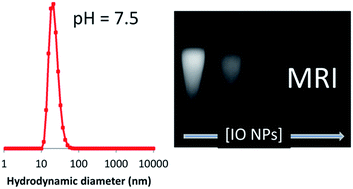
To achieve a high colloidal stability at physiological pH, the grafting of a silane bearing three carboxylate (COO) end groups named TPEDTA (see molecular structure in Scheme 1) was investigated according to our silanization procedure in EtOH/CHCl3. A stoichiometry of 1101 silanes per nm2 of IONPs was used for the two reaction times: 24 and 4 h. After washing in water/THF, IO-TPEDTA NPs were re-dispersed in deionized water and the pH was adjusted to 7.5 with NaOH. DLS analysis revealed that IO-TPEDTA NPs exhibited an excellent colloidal stability and a good monodispersity in physiological pH media (pH = 7.5) for both 24 and 4 h reactions with hydrodynamic diameters of 22 nm (PDI = 0.26) and 24 nm (PDI = 0.25) respectively (Fig. 3A). The difference in size compared to the 11 nm IO cores is attributed both to the formation of a thin siloxane shell around the IO core NPs and of the hydration layer in water. ZP measurements were performed as a function of the pH and decreasing negative values from −15 to −33 mV were observed all along the range of pH = 3–10 confirming the presence of the deprotonated carboxylate end groups (Fig. 3B). For IO-TPEDTA NPs, the IEP was found below pH = 3. This means that in this wide range of pH, the IO-TPEDTA NPs possess negative charge that comes from the COO functions. The IR spectra of IO-TPEDTA NPs and TPEDTA silane molecule (as a reference) were acquired (Fig. 4). The appearance of vibrations bands at 1000 and 1126 cm−1 (Si–O) indicate the efficient coating of the TPEDTA carboxylate silane layer around the IONPs cores. The presence of carboxylate (COO) end groups was confirmed by the appearance of its typical vibrations asymmetric and symmetric COO stretching, respectively 1607 and 1407 cm−1. EDX analysis (S7) performed with TEM apparatus on a zone at magnitude 50[thin space (1/6-em)]000 (performed on ∼thousands of NPs) confirmed the presence of Si and Fe elements within the IO-TPEDTA NPs which also indicate the effective silane coating at the surface of the IONPs.
image file: c6ra18360c-f3.tif
Fig. 3 (A) DLS size distribution of IO-TPEDTA NPs in deionized water (pH = 7.5) obtained at 24 h (black curve) and at 4 h (red curve) reaction, at a stoichiometry: 1101 silanes per nm2 IO NPs. (B) Zeta potential evolution of IO-TPDETA NPs as a function of the pH in water.

image file: c6ra18360c-f4.tif
Fig. 4 FTIR spectra of IO-TPEDTA NPs and TPEDTA molecules.

With the aim to optimize the grafting conditions, the TPEDTA grafting was investigated with a lower stoichiometry: 350[thin space (1/6-em)]:[thin space (1/6-em)]1 and 100[thin space (1/6-em)]:[thin space (1/6-em)]1 TPEDTA reacted per nm2 with a reaction time set at 24 h. The results obtained showed that the hydrodynamic size of TPEDTA-IO NPs dramatically increased under these conditions (≥1000 nm). This shows again the importance of a limit stoichiometry (number of silane per nm2) to ensure a high colloidal stability of the silanized IO NPs. Table 1 summarises all the results obtained reporting DLS size distribution and ZP measurements performed on IONPs grafted with TPEDTA carboxylate silane.

Table 1 Summary of the conditions used for the silanization of IO NPs with TPEDTA carboxylate silane
Silane Reaction time (h) Reaction solvents Stoichiometry silane per nm2 Dispersant medium DLS size (nm) (PDI) Zeta potential (mV)
TPEDTA 24 EtOH/CHCl3 3[thin space (1/6-em)]:[thin space (1/6-em)]1 1101[thin space (1/6-em)]:[thin space (1/6-em)]1 Water pH = 7.5 22 (0.26) −21
24 EtOH/CHCl3 3[thin space (1/6-em)]:[thin space (1/6-em)]1 350[thin space (1/6-em)]:[thin space (1/6-em)]1 Water pH = 7.5 ≥1000 n/a
24 EtOH/CHCl3 3[thin space (1/6-em)]:[thin space (1/6-em)]1 100[thin space (1/6-em)]:[thin space (1/6-em)]1 Water pH = 7.5 ≥1000 n/a
4 EtOH/CHCl3 3[thin space (1/6-em)]:[thin space (1/6-em)]1 1101[thin space (1/6-em)]:[thin space (1/6-em)]1 Water pH = 7.5 24 (0.25) −21


E. Evaluation of MRI contrast enhancement properties

In this section, we investigated the MRI contrast enhancement properties of APTS and TPEDTA modified-IONPs by evaluating their longitudinal (r1) and transverse (r2) relaxivity values in water at 37 °C and 1.41 T. First, the graph representing the relaxation rates R1 and R2 = f([Fe]) of IO-APTS NPs suspensions were traced in the range 0–1 mM [Fe] in acidified water (pH = 3.5) where the NPs are colloidally stable (Fig. 5A). A linear evolution for R1 and R2 with [Fe] was found. The slopes were fitted with linear models to afford the relaxivity values. For IO-APTS NPs, values of r1 = 15.2 mM s−1 and r2 = 102.7 mM s−1 were found at pH = 3.5. However, when the pH of the suspensions was increased to pH = 5.2, the evaluation of relaxivity was not possible due to aggregation of the nanoparticles under the magnetic field of the NMR spectrometer. Fig. 5B illustrates the effect of the magnetic field on three successive measurements of relaxation times T1 and T2 of the IO-APTS suspensions. The values were found to increase considerably at pH 5.2 compared with those at pH 3.5, which were constantly reproducible. Indeed, at this pH = 5.2 and under an applied magnetic field, IO-APTS NPs aggregate and T1, T2 values increase as the water accessibility is reduced. These data evidence that the relaxometric properties of IO-APTS NPs can only be estimated in an acidic aqueous medium (pH < 4–5) as expected given the limited colloidal stability of IO-APTS NPs. Oppositely, IO-TPEDTA NPs are highly stable at pH 7.5 and remained unaffected by the applied magnetic field during the measurements. The graphs representing the relaxation rates R1 and R2 = f([Fe]) for IO-TPEDTA NPs suspensions were thus traced in water at physiological pH (7.5) (Fig. 6A). For IO-TPEDTA NPs, values of r1 = 13.9 mM s−1 and r2 = 88.6 mM s−1 were found at pH = 7.5. To the best of our knowledge, these relaxivity values are the first measurements reported for silanized IO NPs synthesized by thermal decomposition and transferred in aqueous phase. These values of r1 and r2 are listed in Table 2 and compared with the current existing IONPs based contrast agents available in the market.
image file: c6ra18360c-f5.tif
Fig. 5 (A) Relaxation rates R1 and R2 (s−1) as a function of [Fe] (mM) for IO-APTS NPs in acidified water (pH 3.5) at 37 °C and 1.41 T. (B) Comparison of the evolution of relaxation times T1 and T2 of IO-APTS NPs at 1 mM Fe between water at pH = 3.5 and 5.2 after three successive measurements.

image file: c6ra18360c-f6.tif
Fig. 6 (A) Relaxation rates R1 and R2 (s−1) as a function of [Fe] (mM) for IO-TPEDTA NPs in water at pH 7.5 at 37 °C and 1.41 T. (B) T2w-MRI images in water at ambient T and 1.5 T of IO-TPEDTA NPs suspensions diluted in water. Position tubes from left to right are given by increasing Fe concentration: (1) control no NPs in water, (2) 0.219 mM, (3) 0.438 mM, (4) 0.875 mM, (5) 1.75 mM (6) 3.5 mM.
Table 2 Table summarizing r1, r2 relaxivities and r2/r1 values for mono-disperse IONPs on the market compared with the TPEDTA-silanized IONPs
Type of IO NPs Coating DH (Vol) (nm) r1 (mM s−1) r2 (mM s−1) r2/r1
Supravist Carboxydextran 21 10.7 38 3.6
Sinerem Dextran 15–30 9.9 65 6.7
Ferumoxyl Carboxydextran 30 15 89 5.9
Resovist Carboxydextran 60 9.7 189 19.5
NS11 TPEDTA 22 13.9 88.6 6.4


Interestingly, the TPEDTA-modified IONPs have superior relaxivity r2 values and r2/r1 ratio as compared to commercially available CAs (Supravist, Sinerem) displaying similar mean hydrodynamic size. They have similar r2 relaxivity and r2/r1 values with Ferumoxyl and this confirms the non-aggregation of these IONPs. Indeed the mean hydrodynamic diameter of NPs is a crucial parameter when considering in vivo applications as it has to be lower than 50 nm to ensure a good in vivo biodistribution. Therefore the TPEDTA-modified IONPs display promising MRI properties and a mean hydrodynamic size suitable for in vivo applications.

To better visualise this contrast enhancement effect, MRI of the silanized IONPs suspensions as phantoms was performed. Aqueous dispersions of IO-TPEDTA NPs were imaged in 1.5 ml plastic tubes using a 1.5 T MRI clinical research apparatus (Siemens) dedicated for research purposes. The tubes with silanized IONPs suspensions were placed into a rack, at room temperature, and inserted onto the MRI antenna. As IONPs are usually employed and investigated as T2-weighted hypodense MRI contrast agents, T2-weighted sequences were acquired to image the TPEDTA silanized IONPs (see details in experimental section). The IO-TPEDTA NPs suspensions were thus diluted in cascade in plastic tubes and imaged at the following concentrations in Fe in water: (1) control no NPs in water, (2) 0.219 mM, (3) 0.438 mM, (4) 0.875 mM, (5) 1.75 mM (6) 3.5 mM (Fig. 6B). The MRI image of the tubes taken in the sagittal plane clearly display the T2-w hypocontrast effect with the concentration of the silanized IONPs. This evolution is in agreement with the r2 values ensuring a performant hypocontrast for IO-TPEDTA at such concentrations in Fe. These data suggest the broad potential of our novel method to silanize thermally-decomposed IONPs for MRI imaging.

F. Cell viability study

As preliminary biological studies, the biocompatibility of IO-TPEDTA NPs was tested by MTT assay on A549luc cells. Cells were incubated with various concentration of IO-TPEDTA NPs from 0.31 to 322 μg mL−1 [Fe] for 24 h. As shown in Fig. 7, IO-TPEDTA NPs did not present any toxicity for a concentration up to 40 μg mL−1 [Fe]. Above this NPs concentration, the cell viability showed a slight continuous decrease with NPs concentration reaching ca. 60% viable cells at 322 μg ml−1. These values are in the same range that was found in various cytotoxicity studies made with IONPs synthesized by hydrothermal or reductive routes and coated with positively or negatively charged silane coatings,41,42 or with IONP synthesized by thermal decomposition methods and coated with neutral molecule/polymer.43,44 Furthermore, the cytotoxicity experiments above cited have been done on different cell lines (respectively for the cited examples:41–44 astrocytes, KB, RAW 264.7 B16F10, etc…) hence the variability in cell viability may arise from the nature of the different cell lines.
image file: c6ra18360c-f7.tif
Fig. 7 MTT cell viability study of A549Luc cells incubated with variable amounts of IO NPs.

Conclusions

In this work, a novel and facile silanization method has been developed to efficiently stabilise highly monodisperse magnetic IONPs (ca. 11 nm diameter) synthesized by thermal decomposition in aqueous media. This new and improved process compared with the current methods was performed by exchanging oleic acid bound at the surface IO NPs by silane molecules in miscible EtOH[thin space (1/6-em)]:[thin space (1/6-em)]CHCl3 (ca. 3[thin space (1/6-em)]:[thin space (1/6-em)]1) co-solvents in the presence of acetic acid as catalyst. This approach provides an excellent colloidal stability and core monodispersity with hydrodynamic diameter being ca. 20 nm in aqueous solutions. The silanized IONPs were thoroughly characterised to confirm the grafting of silane at the surface of IONPs. We have shown that the nature and charge of the end-group of the silanes determines the water-dispersibility of the NPs especially regarding the pH domains. Indeed, NH2 endgroup could stabilise IONPs in ethanol or in acidified water (pH ≤ 5), while COOH endgroups stabilise the IONPs in neutral and basic media (pH ≥ 5) by ensuring a mean hydrodynamic size suitable for in vivo applications. Finally, these results combined with the MRI imaging properties of the TPEDTA modified IONPs demonstrate their potential of application as contrast agents for different biomedical applications. Future works will also be dedicated to translate this method to the silanisation of IONPs displaying therapeutic properties by hyperthermia and to study in details the interactions of these optimized silanized magnetic NPs with cells.

Acknowledgements

C. Ulhaq and D. Ihiawakrim are gratefully acknowledged for assistance with TEM microscope. D. M. thanks the University of Strasbourg for financial support from IDEX-Attractivité framework. S. B.-C., F. M. and D. M. thank ARC (Association de recherche contre le Cancer) and IHU (Institut Hospitalo-Universitaire) de Strasbourg for financial support under the TheraHCC framework.

References

  1. S. Laurent, D. Forge, M. Port, A. Roch, C. Robic, L. V. Elst and R. N. Muller, Chem. Rev., 2008, 108, 2064–2110 CrossRef CAS PubMed.
  2. N. Lee and T. Hyeon, Chem. Soc. Rev., 2012, 41, 2575–2589 RSC.
  3. I. Hilger and W. A. Kaiser, Nanomedicine, 2012, 7, 1443–1459 CrossRef CAS PubMed.
  4. C. Blanco-Andujar, A. Walter, G. Cotin, C. Bordeianu, D. Mertz, D. Felder-Flesch and S. Begin-Colin, Nanomedicine, 2016, 11, 1889–1910 CrossRef CAS PubMed.
  5. J. Lodhia, G. Mandarano, N. Ferris, P. Eu and S. Cowell, Biomed. Imaging Intervention J., 2010, 6, e12 CAS.
  6. A. Hervault and N. T. K. Thanh, Nanoscale, 2014, 6, 11553–11573 RSC.
  7. C. S. Kumar and F. Mohammad, Adv. Drug Delivery Rev., 2011, 63, 789–808 CrossRef CAS PubMed.
  8. S. Laurent, S. Dutz, U. O. Häfeli and M. Mahmoudi, Adv. Colloid Interface Sci., 2011, 166, 8–23 CrossRef CAS PubMed.
  9. F. M. Kievit and M. Zhang, Acc. Chem. Res., 2011, 44, 853–862 CrossRef CAS PubMed.
  10. M. Mahmoudi, S. Sant, B. Wang, S. Laurent and T. Sen, Adv. Drug Delivery Rev., 2011, 63, 24–46 CrossRef CAS PubMed.
  11. P. Guardia, R. D. Corato, L. Lartigue, C. Wilhelm, A. Espinosa, M. Garcia-Hernandez, F. Gazeau, L. Manna and T. Pellegrino, ACS Nano, 2012, 6, 3080–3091 CrossRef CAS PubMed.
  12. R. Hachani, M. Lowdell, M. Birchall, A. Hervault, D. Mertz, S. Begin-Colin and N. T. K. Thanh, Nanoscale, 2016, 8, 3278–3287 RSC.
  13. S. Sun and H. Zeng, J. Am. Chem. Soc., 2002, 124, 8204–8205 CrossRef CAS PubMed.
  14. W. Baaziz, B. P. Pichon, S. Fleutot, Y. Liu, C. Lefevre, J.-M. Greneche, M. Toumi, T. Mhiri and S. Begin-Colin, J. Phys. Chem. C, 2014, 118, 3795–3810 CAS.
  15. A. Walter, C. Billotey, A. Garofalo, C. Ulhaq-Bouillet, C. Lefevre, J. Taleb, S. Laurent, L. V. Elst, R. N. Muller and L. Lartigue, Chem. Mater., 2014, 26, 5252–5264 CrossRef CAS.
  16. A. Ruiz, P. C. Morais, R. B. de Azevedo, Z. G. Lacava, A. Villanueva and M. del Puerto Morales, J. Nanopart. Res., 2014, 16, 1–20 CrossRef CAS.
  17. G. Salas, C. Casado, F. J. Teran, R. Miranda, C. J. Serna and M. P. Morales, J. Mater. Chem., 2012, 22, 21065–21075 RSC.
  18. C. Boyer, V. Bulmus, P. Priyanto, W. Y. Teoh, R. Amal and T. P. Davis, J. Mater. Chem., 2009, 19, 111–123 RSC.
  19. T. Daou, J. M. Greneche, G. Pourroy, S. Buathong, A. Derory, C. Ulhaq-Bouillet, B. Donnio, D. Guillon and S. Begin-Colin, Chem. Mater., 2008, 20, 5869–5875 CrossRef CAS.
  20. T. Daou, G. Pourroy, J. M. Greneche, A. Bertin, D. Felder-Flesch and S. Begin-Colin, Dalton Trans., 2009, 4442–4449 RSC.
  21. V. Torrisi, A. Graillot, L. Vitorazi, Q. Crouzet, G. Marletta, C. Loubat and J.-F. Berret, Biomacromolecules, 2014, 15, 3171–3179 CrossRef CAS PubMed.
  22. I. J. Bruce and T. Sen, Langmuir, 2005, 21, 7029–7035 CrossRef CAS PubMed.
  23. Y. Liu, Y. Li, X.-M. Li and T. He, Langmuir, 2013, 29, 15275–15282 CrossRef CAS PubMed.
  24. M. Yamaura, R. Camilo, L. Sampaio, M. Macedo, M. Nakamura and H. Toma, J. Magn. Magn. Mater., 2004, 279, 210–217 CrossRef CAS.
  25. M. Zhu, M. Z. Lerum and W. Chen, Langmuir, 2011, 28, 416–423 CrossRef PubMed.
  26. R. G. Acres, A. V. Ellis, J. Alvino, C. E. Lenahan, D. A. Khodakov, G. F. Metha and G. G. Andersson, J. Phys. Chem. C, 2012, 116, 6289–6297 CAS.
  27. S. G. Thakurta and A. Subramanian, Colloids Surf., A, 2012, 414, 384–392 CrossRef.
  28. R. D. Palma, S. Peeters, M. J. Van Bael, H. Van den Rul, K. Bonroy, W. Laureyn, J. Mullens, G. Borghs and G. Maes, Chem. Mater., 2007, 19, 1821–1831 CrossRef.
  29. M. Bloemen, W. Brullot, T. T. Luong, N. Geukens, A. Gils and T. Verbiest, J. Nanopart. Res., 2012, 14, 1–10 CrossRef PubMed.
  30. D. Mertz, P. Tan, Y. Wang, T. K. Goh, A. Blencowe and F. Caruso, Adv. Mater., 2011, 23, 5668 CrossRef CAS PubMed.
  31. D. Mertz, J. Cui, Y. Yan, G. Devlin, C. Chaubaroux, A. Dochter, R. Alles, P. Lavalle, J.-C. Voegel, A. Blencowe and F. Caruso, ACS Nano, 2012, 6, 7584 CrossRef CAS PubMed.
  32. D. Mertz, C. Affolter-Zbaraszczuk, J. Barthès, J. Cui, F. Caruso, T. F. Baumert, J.-C. Voegel, J. Ogier and F. Meyer, Nanoscale, 2014, 6, 11676 RSC.
  33. S. Boutry, D. Forge, C. Burtea, I. Mahieu, O. Murariu, S. Laurent, L. V. Elst and R. N. Muller, Contrast Media Mol. Imaging, 2009, 4, 299–304 CrossRef CAS PubMed.
  34. A. Walter, A. Parat, A. Garofalo, S. Laurent, L. V. Elst, R. N. Muller, T. Wu, E. Heuillard, E. Robinet and F. Meyer, Part. Part. Syst. Charact., 2015, 32, 552 CrossRef CAS.
  35. A. Walter, A. Garofalo, A. Parat, J. Jouhannaud, G. Pourroy, E. Voirin, S. Laurent, P. Bonazza, J. Taleb and C. Billotey, J. Mater. Chem. B, 2015, 3, 1484–1494 RSC.
  36. N. Rathor and S. Panda, Mater. Sci. Eng., C, 2009, 29, 2340 CrossRef CAS.
  37. J. Zhao, Y. Li, H. Guo and L. Gao, Chin. J. Anal. Chem., 2006, 34, 1235 CAS.
  38. J. L. Bridot, D. Stanicki, S. Laurent, S. Boutry, Y. Gossuin, P. Leclère, R. Lazzaroni, L. V. Elst and R. N. Muller, Contrast Media Mol. Imaging, 2013, 8, 466 CrossRef CAS PubMed.
  39. D. Stanicki, S. Boutry, S. Laurent, L. Wacheul, E. Nicolas, D. Crombez, L. V. Elst, D. L. Lafontaine and R. N. Muller, J. Mater. Chem. B, 2014, 2, 387 RSC.
  40. N. Reinhardt, L. Adumeau, O. Lambert, S. Ravaine and S. Mornet, J. Phys. Chem. B, 2015, 119, 6401 CrossRef CAS PubMed.
  41. Z. Sun, V. Yathindranath, M. Worden, J. A. Thliveris, S. Chu, F. E. Parkinson, T. Hegmann and D. W. Miller, Int. J. Nanomed., 2013, 8, 961 CrossRef PubMed.
  42. S. Mingwu, C. Hongdong, W. Xifu, C. Xueyan, L. Kangan, W. Su He, G. Rui, Z. Linfeng, Z. Guixiang and S. Xiangyang, Nanotechnology, 2012, 23, 105601 CrossRef PubMed.
  43. M. Gonzales, L. M. Mitsumori, J. V. Kushleika, M. E. Rosenfeld and K. M. Krishnan, Contrast Media Mol. Imaging, 2010, 5, 286–293 CrossRef CAS PubMed.
  44. D. Maity, S. Kale, R. Kaul-Ghanekar, J.-M. Xue and J. Ding, J. Magn. Magn. Mater., 2009, 321, 3093–3098 CrossRef CAS.

Footnote

Electronic supplementary information (ESI) available: Silanization parameters, Table S1. FTIR of the purification of oleic acid-coated IONPs, S1. Dosage of Fe in IONPs by a relaxometric method, S2. FTIR study of IO-APTS NPs, S3. EDX analysis of IO-APTS NPs, S4. Summary tables for the silanization of IO NPs with APTS, Tables S2, S3 and with TPED, TPDT, Table S4. DLS size distribution of IO-TPED and TPDT NPs in acidified water (pH = 3.5), S5. FTIR spectra of TPED and TPDT grafted IO-NPs, S6. EDX analysis of IO-TPEDTA NPs, S7. See DOI: 10.1039/c6ra18360c

This journal is © The Royal Society of Chemistry 2016
Click here to see how this site uses Cookies. View our privacy policy here.