
Zongsheng Hou‡
a,
Chongqing Yang‡a,
Wenbei Zhanga,
Chenbao Lua,
Fan Zhang*a and
Xiaodong Zhuang*ab
aSchool of Chemistry and Chemical Engineering, State Key Laboratory of Metal Matrix Composites, Shanghai Key Laboratory of Electrical Insulation and Thermal Ageing, Shanghai Jiao Tong University, Dongchuan Road 800, 200240 Shanghai, P. R. China. E-mail: fan-zhang@sjtu.edu.cn; zhuang@sjtu.edu.cn
bCenter for Advancing Electronics Dresden (cfaed), Department of Chemistry and Food Chemistry, Technische Universität Dresden, Mommsenstrasse 4, 01062 Dresden, Germany
First published on 24th August 2016
Porous carbon materials have been widely developed as catalysts for the oxygen reduction reaction (ORR) under basic conditions but very few under acidic conditions. In this work, two-dimensional (2D) cobalt/nitrogen co-doped porous carbon nanosheets were prepared as catalysts for the ORR under both basic and acidic conditions by using a cobalt porphyrin based 2D conjugated microporous polymer as a precursor. Remarkably, the as-prepared porous carbon nanosheets exhibited excellent electrochemical catalytic performance for the ORR, with a low half-wave potential (E1/2) at −0.146 V in 0.1 M KOH and 0.54 V in 0.5 M H2SO4 (versus Ag/AgCl) as well as a dominant four-electron transfer mechanism (n = 3.8 at −0.28 V in 0.1 M KOH; n = 3.8 at 0.55 V in 0.5 M H2SO4). The high catalytic ORR performance can be attributed to the high activity of CoNx active sites as well as the high specific surface area that derived from the cobalt porphyrin blocks among the conjugated microporous polymer nanosheets. It's believed that this method opens up new avenues for metal/heteroatom co-doped porous carbon materials with promising performance for energy storage and conversion.
Great efforts have been made to search for readily available, inexpensive, and efficient alternatives to Pt-based electrode materials.3,10 Carbonaceous materials doped with non-precious metals (e.g. iron, cobalt, and nickel)5,11,12 or heteroatoms (e.g. nitrogen, boron, phosphorus, and sulfur)13–15 with diverse nanostructures are notable candidates for ORR that have been studied since 1964 because of their unique electronic properties and structural features. As the most often studied system, Met/nitrogen (Met = Co and Fe in particular) co-doped carbonaceous catalysts present activity and stability levels either superior or comparable to Pt-based catalysts in alkaline media.12,16,17 However, few reports of these materials claim that they can compete with Pt/C catalysts in terms of half-wave potential in acidic media. This inhibits their implementation in practical energy conversion/storage devices. To improve the performance of non-precious metal catalysts in acid electrolytes, one must simultaneously consider two decisive factors governing the performance of carbon-based nonprecious metal catalysts: (1) uniform surface functionalities, namely homogenous distribution of doped elemental composition and interactions between different components, which determine the intrinsic nature of the active sites, like the turnover frequency (TOF) per active site; (2) hierarchical porous structures, which provide high specific surface areas and accessible active sites, and favor the fast transport of ORR-relevant species (H+, O2, e−, and H2O). The most traditional method to produce Met/nitrogen co-doped porous carbon is the direct pyrolysis of precursor mixtures that contain nitrogen and transition metals. However, pyrolysis suffers from poor controllability of Met/N active sites, such as the uniform distribution of FeN4 sites.18,19
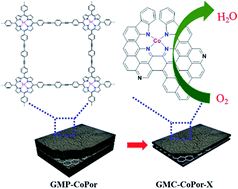
In this work, cobalt porphyrin-based two-dimensional (2D) conjugated microporous polymer was first synthesized using functionalized graphene as a 2D template, and was further used as a precursor to prepare cobalt/nitrogen (Co/N) co-doped porous carbon nanosheets by direct pyrolysis. The as-prepared porous carbon nanosheets (named as GMC-CoPor-T, T = 700, 800, 900, corresponding to 700 °C, 800 °C, 900 °C) exhibited typical 2D morphology, high specific surface areas of up to 466 m2 g−1 and the uniform Co/N co-doping feature. Benefiting from these characteristics, the prepared Co/N co-doped porous carbon nanosheets exhibited excellent electrochemical catalytic performance for ORR in 0.1 M KOH, with a low half-wave potential (E1/2) at −0.146 V versus Ag/AgCl and a dominant four-electron transfer mechanism (n = 3.8 at −0.28 V). Unlike most reported heteroatom-doped porous carbons, they also exhibited high catalytic ORR performance in acidic conditions (0.5 M H2SO4, E1/2 = 0.54 V versus Ag/AgCl and n = 3.8 at 0.55 V), which can be attributed to the high activity of CoNx active sites that derived from cobalt porphyrin blocks among the conjugated microporous polymer nanosheets.
The electrochemical experiments were conducted in O2 saturated 0.1 M KOH and 0.5 M H2SO4 electrolyte. The RRDE measurements were conducted at a rotating speed of 1600 rpm with a sweep rate of 10 mV s−1. In order to estimate the double layer capacitance, the electrolyte was deaerated by bubbling with nitrogen for 30 min, and then the voltammogram was evaluated again in the deaerated electrolyte. On the basis of ring current and disk current, the electron transfer number (n) and H2O2 yield for catalysts were calculated from the following equations:
![]() | (1) |
![]() | (2) |
The RDE measurements were conducted at a scan of 10 mV s−1 with the rotating speed from 225 to 1600 rpm. The slopes of the linear fitted lines were used to calculate the transferred electron number (n) per oxygen molecule in the ORR process on the basis of the Koutecky–Levich equations:
![]() | (3) |
| B = 0.62nFC0(D0)2/3θ−1/6 | (4) |
| JK = nFkC0 | (5) |
486 C cm−1); C0 is the bulk concentration of O2 (C0 = 1.2 × 10⁻³ mol L−1); D0 is the diffusion coefficient of O2 (1.9 × 10⁻⁵ cm2 s−1); n is the kinematic viscosity of the electrolyte (0.01 cm2 s−1), and k is the electron-transfer rate constant.
The morphologies of the as-prepared GMP-CoPor were examined by scanning electron microscopy (SEM) and transmission electron microscopy (TEM). It was observed that all the porous polymer nanosheets showed similar sheet-like morphologies with sizes from 500 nm to several micrometers (Fig. 2a–c). Neither free porous polymers nor naked graphene were visible, which suggests that almost all of the monomers were grafted onto the surface of graphene. The control sample of CMP-CoPor exhibited rod-like morphologies (Fig. 2d). All these results demonstrated that the graphene had successfully directed the conjugated microporous polymers into a 2D form. Notably, the introduction of highly dispersible RGO-Br not only produces a competitive template for the growth of porous polymers and prevents aggregation problems, but also greatly enhances long-distance conductivity for GMC-Por.
The chemical characteristics of GMP-CoPors and CMP-CoPors were studied by Fourier transform infrared spectroscopy (FT-IR). As shown in Fig. 3a, the vibration peak bridging –C
C– in the porous polymers was detected at 2330 cm−1. The peaks at 1631 cm−1, 1508 cm−1, 1384 cm−1, and 999 cm−1 can be attributed to the –C
C–, –C
N, –Co–N– bonds of benzene, and –Co–N– bonds of porphyrin rings respectively.24,25 All these results confirmed that the porous polymer was successfully prepared from the in situ polymerization of ethynylenes–arylhalides on RGO-Br. In order to examine the chemical structure, Co and N in GMP-CoPor were further investigated by X-ray photoelectron spectroscopy (XPS). The high-resolution spectra of Co were fitted to four peaks (Fig. 3b), among which the peaks at 780.3 eV (2p3/2) and 795.9 eV (2p1/2) corresponded to Co(III) and the peaks at 782.1 eV (2p3/2) and 804.1 eV (2p1/2) corresponded to the Co(II) of the cobalt porphyrin blocks.26,27 The high-resolution N 1s spectra of GMP-CoPor (Fig. 3c) were fitted to two peaks centered at 398.9 and 400.3 eV, corresponding to the pyridinic N–Co and pyrrolic N–Co, respectively.5,12,28 These results indicated the successful introduction of Co and N into GMP-CoPor microstructures.
![]() | ||
| Fig. 3 (a) FT-IR spectra of GMP-CoPor and CMP-CoPor; (b) XPS Co 2p and of N 1s; (c) core level spectra of GMP-CoPor; (d) nitrogen adsorption/desorption isotherms of GMP-CoPor and CMP-CoPor. | ||
The porous natures of GMP-CoPor and CMP-CoPor were further revealed by N2 adsorption–desorption isotherms (Fig. 3d). The hysteresis loops of the isotherms can be classified as type I according to IUPAC classifications. The specific Brunauer–Emmett–Teller (BET) surface area of GMP-CoPors was 685 m2 g−1, which was slightly higher than that of the control sample, 673 m2 g−1 (CMP-CoPor, Table 1). These phenomena may be attributed to the high surface areas of graphene templates. Notably, the micropore surface area (denoted as Smicro) for GMP-CoPor (Smicro = 438 m2 g−1, 64% of total surface area) was lower than that of CMP-CoPors (Smicro = 492 m2 g−1, 73% of total surface area), indicating that the introduction of graphene may contribute to in-plane long distance polymerization, but may affect the degree of out-of-plane polymerization. The narrow micropore size distribution was found according to the Barrett–Joyner–Halenda (BJH) model (insets in Fig. 2d). It was centered at 1.6 nm for both GMP-CoPors and CMP-CoPors.
| SBETa [m2 g−1] | SLangb [m2 g−1] | Davc [nm] | Smicrod [m2 g−1] | Vmicroe [cm3 g−1] | Vtotf [cm3 g−1] | |
|---|---|---|---|---|---|---|
| a Surface areas calculated from the nitrogen adsorption based on BET model.b Surface areas calculated from the nitrogen adsorption based on Langmuir model.c Average pore diameter.d Micropore surface area.e Pore volume of micropore.f The total pore volume calculated at P/P0 = 0.99.g A–H: CMP-CoPor, CMC-CoPor-700, CMC-CoPor-800, CMC-CoPor-900, GMP-CoPor, GMC-CoPor-700, GMC-CoPor-800, GMC-CoPor-900. | ||||||
| A | 673 | 786 | 4.37 | 492 | 0.22 | 2.70 |
| B | 540 | 582 | 4.90 | 397 | 0.17 | 2.43 |
| C | 400 | 446 | 4.54 | 285 | 0.12 | 1.67 |
| D | 568 | 605 | 3.87 | 472 | 0.19 | 2.02 |
| E | 685 | 864 | 8.06 | 438 | 0.20 | 1.38 |
| F | 466 | 531 | 2.96 | 301 | 0.13 | 1.27 |
| G | 463 | 541 | 2.96 | 255 | 0.11 | 1.26 |
| H | 401 | 468 | 3.23 | 227 | 0.10 | 1.19 |
The obtained 2D conjugated microporous polymers can further serve as a type of carbon-rich precursor.21,29–32 Such precursors excel at uniformly integrating metal and heteroatom atoms (Co and N) into carbon frameworks for electrochemical catalysis. Thermogravimetric analysis (TGA) was performed for GMP-CoPor and CMP-CoPor to evaluate their thermal stability. As shown in Fig. 4a, GMP-CoPor was feasibly transformed into carbon materials with a carbon yield of 62% at 800 °C, and the control sample CMP-CoPor exhibited a great weight loss in the temperature range from 350 to 650 °C, leading to a low carbon yield of 10%. The enhanced thermal stability of GMP-CoPor could be attributed to the stabilization effect caused by covalent functionalization of graphene as well as by weak interactions (e.g. π–π interaction) between the conjugated polymers and graphene template, which suggests the combination of conjugated polymers and graphene in the hybrid GMP-CoPor was notable for its stabilizing properties. Therefore, graphene-directed Co and N co-doped microporous carbons can be generated by the direct pyrolysis of GMP-CoPor at various temperatures (denoted as GMC-CoPor-T, T = 700, 800, 900, corresponding to 700 °C, 800 °C, 900 °C) under nitrogen atmosphere. For comparison, Co/N co-doped porous carbons (CMC-CoPor-T, T = 700, 800, 900) were also prepared by the same procedure using CMP-CoPor as the precursor.
GMC-CoPor-800 was chosen as a typical example for morphological examination because it showed results similar to those of GMC-CoPor-700 and GMC-CoPor-900. The SEM and TEM images suggested that the GMC-CoPor-800 maintained 2D morphology with a large aspect ratio because of its effective restriction of agglomeration, while the control sample CMC-CoPors presented rod-like morphology similar to that of earlier samples (Fig. 4b–d). XRD pattern of the composite (Fig. S1†) exhibited two broad peaks at 25.7° and 43.4°, which can be attributed to the corresponding (002) and (101) facets of the sample respectively, illustrating the amorphous structure of GMC-CoPor-800. Then XPS was performed to analyze the N and Co in CMC-CoPors. High-resolution Co 2p3/2 spectra were divided into two peaks with the binding energies of 780 eV and 784 eV. These peaks were assigned to N–Co and O–Co.5,12 The N 1s spectra of GMC-CoPor-800 were divided into two signals with binding energies of 398.9 eV and 401.0 eV, corresponding to pyridinic N and graphitic N, respectively. Notably, these peaks should include the contribution of N–Co because only a small difference of binding energy exists between pyridinic N and cobalt N (Fig. 4e and f). The elemental ratio of N/Co for the obtained samples varies from 7.5–9.1 when calcination at different temperatures (Table S1†). These results show that Co and N atoms could form into the structure-uncertained complex CoNx after calcination, indicating possible high ORR catalytic activities.
The porosity of GMC-CoPor-T was confirmed by its nitrogen physisorption. The BET surface areas of GMC-CoPor-700, GMC-CoPor-800, and GMC-CoPor-900 were 466, 463 and 401 m2 g−1, respectively, all of which were slightly smaller than those of the control samples of CMC-CoPor-T (400–560 m2 g−1) (Table 1). The slight difference of GMC-CoPor-T in BET surface area may have been caused by the degradation of polymers and recombination of fragments under the different pyrolysis temperatures.21,33–39
The unique Co/N co-doping feature, its 2D morphology, and its porous nature all suggest that as-prepared GMC-CoPor-T might demonstrate excellent electrochemical catalytic performance toward ORR. The ORR catalytic activities of the as-prepared GMC-CoPor-T were first evaluated by cyclic voltammetry (CV, Fig. 5a). The ORR peak potential of −0.21 V versus Ag/AgCl for GMC-CoPor-800 was slightly higher than that for the control sample CMC-CoPor-800 (−0.22 V). The ORR polarization curves (Fig. 5b) showed that the half-wave potential (E1/2) and the diffusion-limiting current densities (JDL) of the GMC-CoPor-800 were −0.146 V and 4.3 mA cm−2, respectively, both of which were better than those of CMC-CoPor-800 (E1/2 = −0.168 V; JDL = 3.6 mA cm−2). These results indicated that the GMC-CoPors with graphene exhibited electrocatalytic activity superior to that of samples without graphene.
In addition, the ORR polarization curves for GMC-CoPor-700, GMC-CoPor-800, and GMC-CoPor-900 (Fig. 5c) indicate that the high temperature had no obvious effect on the catalytic ORR performance; the E1/2 values were at −0.147, −0.146 and −0.145 V; JDL values were 4.6, 4.3, and 4.2 mA cm−2 at 0.9 V, respectively. The E1/2 values for GMC-CoPors were only 10–13 mV lower than commercial precious metal Pt/C catalyst. Because the various types of GMC-CoPors had only negligible differences between their ORR polarization curves, GMC-CoPor-700 was chosen as a typical example for further RRDE study (Fig. 5d).
The calculated electron transfer number and H2O2 concentration were approximately 3.8 and 13% at −0.28 V vs. Ag/AgCl (Fig. 5d inset). This result highlights that the ORR proceeds through a primary four-electron pathway. The RDE voltammetric profiles in O2-saturated 0.1 M KOH solution showed that current density was increased when the rotation rate increased (from 225 to 1600 rpm, Fig. 5e). The kinetic current density based on Koutecky–Levich (K–L) plots derived from RDE curves for GMC-CoPor-700 was high, the value fo which was up to 26 mA cm−2 (Fig. 5f). This superior performance might result from the high density of active sites CoNx exposed to the electrochemical interface, high electrical conductivity, and long-distance 2D electron transport of porous carbon nanosheets.
Because the high temperature had no obvious effect on the catalytic ORR performance as mentioned before, GMC-CoPor-700 was chosen as a typical example for further analysis of the catalytic activity in acidic conditions (0.5 M H2SO4). First, the ORR catalytic activity of GMC-CoPor-700 was evaluated by CV (Fig. 6a) in N2- and O2-saturated 0.5 M H2SO4. The oxygen reduction peak for GMC-CoPor-700 was observed at 0.65 V, whereas the signal vanished in N2-saturated 0.5 M H2SO4. The half-wave potential (E1/2) of the GMC-CoPor-700 in an RDE voltammogram was at approximately 0.54 V versus Ag/AgCl (Fig. 6b), and the electron transfer number and H2O2 concentration were calculated, approximately, as 3.8 and 10% at 0.55 V versus Ag/AgCl (Fig. 6c), which was better than the performance under basic conditions. The RDE voltammetric profiles in O2-saturated 0.5 M H2SO4 solution showed that the current density was increased by an increase in the rotation rate (from 225 to 1600 rpm, Fig. 6d). K–L plots (Fig. 6e) with a well-fitting linear relationship for GMC-CoPor-700 were calculated from linear sweep voltammetry (LSV) curves (Fig. 6d) at various rotation rates. Linearity and parallelism of the plots are usually interpreted as an indication of first-order reaction kinetics with respect to the concentration of dissolved O2. The kinetic current density (JK) was calculated as 12.6 mA cm−2 at 0.4 V (Fig. 6f), therefore GMC-CoPor-700 delivered superior ORR performance under acidic conditions.
Footnotes |
| † Electronic supplementary information (ESI) available. See DOI: 10.1039/c6ra16539g |
| ‡ Zongsheng Hou and Chongqing Yang contributed equally to this work. |
| This journal is © The Royal Society of Chemistry 2016 |