Methane decomposition over unsupported mesoporous nickel ferrites: effect of reaction temperature on the catalytic activity and properties of the produced nanocarbon

Manoj Pudukudy*, Zahira Yaakob and Mohd Sobri Takriff
Department of Chemical and Process Engineering, Faculty of Engineering and Built Environment, Universiti Kebangsaan Malaysia, UKM, Bangi, 43600, Selangor, Malaysia. E-mail: manojpudukudy@gmail.com; Fax: +60 389216148; Tel: +60 389216422

Received 6th June 2016 , Accepted 1st July 2016

First published on 6th July 2016


Abstract

The thermocatalytic decomposition of methane is a promising route for the simultaneous production of COx-free hydrogen and nanocarbon. In this work, unsupported mesoporous nickel ferrites were successfully synthesized via a facile co-precipitation method and used to catalyze the decomposition of methane. The as-prepared nickel ferrites were characterized by using X-ray diffraction, energy dispersive X-ray spectroscopy, scanning and transmission electron microscopy, X-ray photoelectron spectroscopy, N2 adsorption and temperature-programmed reduction analysis. The NiFe2O4 catalyst was found to be highly phase pure and porous. The porosity is resulted from the inter-aggregation of more or less spherical nickel ferrite particles. Moreover, these particles had a total specific surface area of 21 m2 g−1 with a monomodal mesoporous distribution. The catalytic performance of the catalysts was evaluated for methane decomposition at various reaction temperatures, and the dependence of the properties of the nanocarbon on reaction temperature was investigated in detail. Upon increasing the temperature from 700 °C to 900 °C, the yields of hydrogen and nanocarbon increased significantly. A maximum hydrogen yield of 68% was observed over the catalyst at 900 °C within the first 20 minutes of time on the stream. After that, its activity slightly declined, and at the end of 360 minutes, the hydrogen yield was measured to be 47%. At 700 °C and 800 °C, maximum hydrogen yields of 41% and 58% were achieved within 90 minutes of time on stream. No deactivation was observed for the catalyst at any of the temperatures tested, which was attributed to the formation of NiFe bimetallic alloys, which in turn increased the carbon diffusion rate and prevented deactivation of the catalyst. The effect of reaction temperature on the crystalline, morphological and graphitization properties of the deposited nanocarbon was studied. Metal-encapsulated carbon particles with a nano-onion-like appearance and multi-layered graphene sheets were deposited over the catalyst at 700 °C and 900 °C, respectively. Moreover, the crystallinity and graphitization degree of the deposited nanocarbon was found to increase with increasing reaction temperature.

Introduction

The drastic depletion of non-renewable fossil fuels has required the development of alternative energy sources.1 Hydrogen is considered to be a promising energy carrier for the near future and its usage would help in the development of a sustainable planet. Hydrogen is a clean fuel, since it combustion yields only water as a by-product.2 In recent years, the production of hydrogen has attracted great research interest due to the desire to eliminate emission of greenhouse gases and hence slow down global warming. Many methods are now available for producing hydrogen including steam reforming of natural gas, water splitting, hydrocarbon cracking, coal gasification and so on.3 The large/industrial scale production of hydrogen has been achieved specifically by the steam reforming of natural gas.4 The scope of this method, however, is limited by its bulk emission of greenhouse gases such as carbon dioxide and carbon monoxide.5 Moreover, for the direct utilization of the produced hydrogen for fuel cells, an additional purification process is required, which results in high costs.

Thermocatalytic decomposition of methane is an alternative route for the producing hydrogen without emitting any greenhouse gas or other type of air pollutant.6 The thermal decomposition of methane is an endothermic reaction. Therefore, a high reaction temperature of above 1200 °C is needed to decompose the methane into hydrogen and crystalline carbon, because of the high molecular symmetry of the methane molecule and the strength of the C–H bond.7 Therefore, to reduce the reaction temperature, it is necessary to use heterogeneous catalysts for the reaction. Such catalysts also have the side benefit of accelerating the rate of the reaction. One of the most important advantages associated with the process is the bulk deposition of nanocarbon, which is a clean material with extraordinary physical and chemical properties. The produced nanocarbon can be also utilized as functional electrode materials for various applications.8 The carbon nanomaterials are generally produced by the carbon arc discharge and laser ablation methods. However, these methods are highly tedious, have high costs, and have resulted in a very low yield of nanocarbon. Therefore, there has been in recent years an active demand for new ways to apply the decomposition of methane to the production of nanocarbon.

Catalysts based on transition metals such as Ni, Co and Fe are the most commonly used catalysts for methane decomposition because of their high catalytic efficiency and wide availability.9–12 These active metals have been supported over various types of metal oxides such as silica, alumina, magnesia, titanium oxide and their mixed oxides,13–15 and recently unpromoted and metal-promoted carbonaceous catalysts have also been successfully utilized for methane decomposition due to their low costs and high availability.16 However, the efficiency of the catalysts for the reaction further depends on several catalytic factors such as the method of synthesis, type of active metal and support, composition (metal loading), metal promoters, particle size, dispersion rate of active metals on the support, etc.17 In addition to these factors, reaction parameters such as reaction temperature, feed flow rate, dilution of methane, pressure, and reduction temperature also play important roles in determining the catalytic performance, as well as determining the properties of the deposited nanocarbon.18 Previously, Li et al.19 reviewed several supported metallic catalysts for methane decomposition. There are, however, very few reports about the use of unsupported catalysts for methane decomposition. While the separation and purification of the nanocarbon from the spent catalysts are of concern, i.e., it is very hard to separate the support material from the spent catalyst by traditional methods, the unsupported catalysts are highly recommended since the metallic parts can be easily removed by acid treatments.

There are already several reports of the use of nickel- and iron-based bimetallic catalysts for decomposing methane into COx-free hydrogen and nanocarbon. The bimetallic catalysts are more advantageous than their monometallic analogs, since the introduction of a second active metal to the first metal enhances its catalytic properties by a synergetic effect between the active metals.20 Avdeeva et al.21 studied methane decomposition over NiFe and CoFe bimetallic catalysts supported on alumina and prepared by the coprecipitation method with a total metal loading of 50 wt%. The bimetallic catalysts provided superior catalytic performance for the deposition of nanocarbon with a filamentous morphology compared to the monometallic iron-loaded alumina catalysts.22 The thermocatalytic decomposition of methane over the NiFe bimetallic catalyst supported over magnesium aluminate was studied by Shen et al.,23 at reaction temperatures of 600–700 °C. According to their report, the active bimetallic species was completely reduced at the lower reduction temperature of 625 °C and showed excellent catalytic activity and stability for the direct decomposition of methane into COx-free hydrogen and uniform multi-walled carbon nanotubes with high crystallinity. According to Latorre et al.,24 compared to monometallic catalysts, the bimetallic NiCo catalyst supported over mixed oxides of magnesium and alumina showed high catalytic activity and stability for methane decomposition into hydrogen and carbon nanofilaments under steady state conditions.

Shah et al.25 studied methane decomposition over Fe-based bimetallic catalysts with Pd, Mo and Ni supported on alumina. They found that the Fe-based bimetallic catalysts reduced the reaction temperatures significantly, compared to the non-catalytic thermal decomposition of methane. The bimetallic catalysts exhibited higher catalytic activity than did the monometallic catalysts. Over bimetallic catalysts, an approximately 80% yield of hydrogen was obtained at reaction temperatures of 700–800 °C with a space velocity of 600 ml g−1 h−1. A maximum hydrogen yield of ∼65% was obtained over the NiFe bimetallic alumina catalyst at a reaction temperature of 700 °C. The effect of reaction temperature on the morphology of deposited nanocarbon was also studied. They reported that at low reaction temperatures, multi-walled carbon nanotubes were deposited over the catalyst whereas carbon flakes were deposited at high reaction temperatures. Previously, Awadallah et al.26 studied methane decomposition over Ni-, Co- and Fe-based bimetallic catalysts supported on magnesium oxide. They reported a maximum hydrogen yield of 86% for the CoFe/MgO catalyst, for up to 570 minutes of time on the stream, and reported enhanced catalytic stability. However, the Ni-based bimetallic catalysts provided a low catalytic efficiency for the reaction due to the formation of a MgxNi(1−x)O solid solution, which is very difficult to reduce and hence lowers activity. Lua and Wang27 reported the enhanced catalytic activity of trimetallic NiCuCo alloy particles for methane decomposition.

Recently, Wang et al.28 reported the decomposition of methane over a NiFe bimetallic catalyst supported on silica. A maximum methane conversion of 44% was achieved over the 65% Ni–10% Fe–25% SiO2 bimetallic catalyst in the first stage of the reaction and it was found to decrease to ∼25% after 200 minutes of time on the stream at 550 °C. Moreover, the catalyst was observed to rapidly deactivate as the gas space velocity of the feed gas was increased. The dependence of the catalytic activity of NiCu/alumina bimetallic catalysts for methane decomposition on reaction temperature was studied by Suelves et al.29 They reported maximum hydrogen yields of 55%, 67% and 70% at reaction temperatures of 700 °C, 750 °C and 800 °C, respectively. Recently Bayat et al.30 reported methane decomposition over NiFe/Al2O3 catalysts and the resulting production of hydrogen and of carbon nanofilaments. According to their report, the addition of iron to the nickel catalyst improved the catalytic efficiency by enhancing the carbon diffusion rate through the formation of bimetallic alloys. According to our previous report, a maximum hydrogen yield of 51% was obtained over the NiFe/SBA-15 catalyst via methane decomposition after the first 30 minutes of time on the stream.31 The activity of the catalyst was reduced with longer reaction times, with the yield reduced to 44% after a 60 min duration of reaction, and to 33% after 300 minutes on the stream. In contrast to the many reports about supported bimetallic catalysts for methane decomposition, the use of unsupported bimetallic catalysts for methane decomposition has not been reported in the literature.

In this article, we report on the synthesis, characterization and temperature-dependent catalytic performance of unsupported mesoporous nickel ferrite catalysts for the decomposition of undiluted methane for the first time. The mesoporous nickel ferrite catalyst was synthesized via a co-precipitation method using ammonium carbonate as the precipitant. Furthermore, the use of any other pore-directing agents was excluded in its synthesis. We have given equal importance to the catalyst preparation, catalyst characterization, catalytic activity and the characterization of the produced nanocarbon. Moreover, the effects of reaction temperature on the catalytic activity and the properties of the nanocarbon over nickel ferrites were studied in detail. To the best of our knowledge, there has previously been only a limited study on this subject, which reported the effect of reaction temperature on the nanocarbon properties: Dong et al.32 studied the effect of methane decomposition temperature on the properties of the deposited carbon over a commercial Ni/SiO2 catalyst. However, the effect of temperature on catalytic activity, as well as the stability and the structural and crystalline properties of the nanocarbon deposited over the unsupported nickel ferrites have not yet been reported for methane decomposition.

Experimental

Synthesis of unsupported nickel ferrite catalysts

All chemicals used in the experiments were of analytical grade (R&M Chemicals), and used as received without any purification. A simple co-precipitation method followed by thermal decomposition was employed for the synthesis of nickel ferrite catalysts. The use of ammonium carbonate as a precipitating agent for the development of a porous catalyst was established here. In a typical synthesis, a volume of 500 ml of distilled water was placed in a 2 L beaker, into which 0.1 mol of nickel nitrate hexahydrate (Ni(NO3)2·6H2O) and 0.1 mol of iron nitrate nonahydrate (Fe(NO3)3·6H2O) were also added. The mixture was stirred until the nitrate salts were completely dissolved. Next, 0.2 mol of ammonium carbonate was dissolved in 500 ml of distilled water separately. Then, the prepared ammonium carbonate solution was added dropwise to the metal salt solution with magnetic stirring. After the complete addition of the precipitant, the solution was further stirred for one hour. The precipitates derived from the chemical reaction between these two solutions were then collected by filtration, washed several times with distilled water and dried at 90 °C overnight in an hot air oven. The dried sample was then crushed, converted into a powder and finally calcined at 700 °C for five hours in a muffle furnace to obtain the final catalyst.

Characterization of fresh and spent catalysts

The fresh and spent catalysts were characterized by using various techniques. The crystal structure and phase purity of the fresh and spent samples were determined by powder X-ray diffraction (XRD) using a Bruker D8 Advance diffractometer with a Cu Kα radiation wavelength of 1.54 Å as the X-ray source. The samples were scanned from 5 to 80° with a step size of 0.025°. The mean crystalline size of the oxide phase of the fresh catalyst was calculated from the full widths at half maximum of the intense X-ray diffraction peaks using Scherrer's equation. The morphological appearance of the fresh catalyst and the deposited carbon sample was observed using a MERLIN COMPACT scanning electron microscope (SEM) at an operating voltage of 3 kV. An energy dispersive X-ray (EDX) analyzer equipped with an SEM instrument was used to analyze the elemental composition of the fresh sample. The transmission electron microscopic (TEM) studies of the catalyst and the nanocarbon were carried out using a Philips CM-12 transmission electron microscope operated at an accelerating voltage of 120 kV. The sample for the TEM analysis was prepared on a carbon-coated copper grid by placing a drop of the dilute solution prepared by dispersing the sample powder in ethanol.

The nitrogen adsorption desorption measurements were taken at −196 °C using a Micromeritics ASAP 2020 surface area and porosity analyzer. Prior to the measurements, the samples were degassed for six hours at 300 °C. The surface area was calculated using the Brunauer–Emmett–Teller (BET) interpretation of the nitrogen sorption isotherms whereas the pore parameters were measured using the Barrett–Joyner–Halenda (BJH) method. For the determination of the chemical structure of the fresh catalyst, X-ray photoelectron spectroscopy (XPS) was carried out using a Kratos XSAM X-ray photoelectron spectrometer having a base pressure of 10−9 Torr. The Mg Kα X-radiation was used as the excitation source. The binding energy of C 1s (284.6 eV) was used as the reference, in order to correct any charging shifts. A linear background subtraction was performed and the peaks in each spectrum were fitted using a Gaussian function. The reducibility of the fresh catalyst was studied using temperature-programmed reduction (TPR) analysis. The analysis was performed in a Micromeritics Autochem 2920 chemisorption analyzer from room temperature to 800 °C under a flow of 20 ml min−1 10% H2/N2 gas mixture and a heating rate of 10 °C per min. The hydrogen consumption was monitored by using a gas chromatograph equipped with a thermal conductivity detector (TCD). The nanocarbon obtained after the reaction was further analyzed by using a Raman spectrometer and a thermogravimetric analyzer. The Raman spectra of the deposited carbon samples were taken in a WItec Alpha 300R Raman spectrometer equipped with a diode Nd:YAG laser and an excitation wavelength of 532 nm from 10 to 4000 cm−1. The thermal analysis was conducted in a Mettler Toledo TGA/DSC1 thermogravimetric analyzer with a heating rate of 10 °C per min from 30 °C to 900 °C under an oxygen atmosphere (30 ml min−1).

Methane decomposition experiments

The catalytic performances of the as-prepared nickel ferrites at various reaction temperatures were assessed in an experimental set-up as reported in our previous works.31,33–35 A vertical-up flow cracking reactor made of stainless steel 2520 (with a total height of 60 cm, outer diameter of 3.1 cm and an inner diameter of 2.5 cm) was used for the decomposition experiments. The reactor was heated by an electric muffle furnace under atmospheric pressure. The weighed amount of catalyst (2 g) was packed freely in the middle of the reactor using thermal resistive quartz wool and the catalyst was reduced in situ with hydrogen (150 ml min−1) at 600 °C for 90 minutes. After reduction, the reactor was flushed with nitrogen to increase the reduction temperature to the reactor temperature for methane decomposition. In this study, we conducted the reaction at 700 °C, 800 °C and 900 °C. Once attaining the reaction temperature, the nitrogen gas was shut off and undiluted methane (99.95%, NIG Gases, Malaysia) with a flow rate of 150 ml min−1 was introduced into the reactor. The experiments were then performed for 360 minutes on the stream. During the course of the reaction, the outlet gases were collected in gas bags at fixed time intervals and the gas samples were injected and analyzed by using a gas chromatograph (SRI GC 8610C) equipped with a Molecular Sieve 5A column connected to a thermal conductivity detector with helium as the carrier gas. No gases other than hydrogen and unreacted methane were detected in the reaction products. The hydrogen yield and amount of unreacted methane were calculated based on the calibrated data. After the 6 h reaction, the reactor was cooled to room temperature under a low flow of nitrogen (50 ml min−1) to collect the carbon deposited over the catalyst for its analysis. The carbon yield was calculated based on the initial amount of catalyst used and the amount the carbon deposited on it after the decomposition reaction.

Results and discussion

Catalyst characterization

The crystal structure and phase purity of the fresh catalyst was studied using X-ray diffraction (XRD), and the XRD patterns are shown in Fig. 1. The intense diffraction peaks centered at the 2θ values of 18.41°, 30.30°, 35.68°, 37.42°, 43.36°, 53.81°, 57.36°, 63° and 74.56° were directly indexed to the face-centered cubic crystalline structure of trevorite, a spinel phase of NiFe2O4, with the lattice parameter a = 0.8339 nm and the space group of Fd[3 with combining macron]m (227) (JCPDS data: 01-076-6119). No other peaks were identified from the diffraction patterns, indicating the high phase purity of the prepared nickel ferrites. The average crystalline size of the nickel ferrite was calculated using Scherrer's equation and was found to be 28 nm.
image file: c6ra14660k-f1.tif
Fig. 1 X-ray diffraction patterns of the fresh catalyst.

The elemental composition of the nickel ferrites was studied using EDS, and the spectrum is shown in Fig. 2. The sample was found to contain Ni, Fe, O and C as the elements. The peak for C arose from the C-tape used for the SEM/EDX analysis.


image file: c6ra14660k-f2.tif
Fig. 2 EDS spectrum and elemental composition of the nickel ferrites.

The morphological appearance of the fresh catalyst was studied using FESEM, and the images at different magnifications are shown in Fig. 3. Large lumps of nickel ferrites were observed at low magnification as shown in Fig. 3(a). In the high-magnification images, the nickel ferrites were found to mainly exist in the form of more or less spherical particles, as shown in Fig. 3(b–d). Moreover, a well-established porous network of organized particles was clearly observed, as shown in Fig. 3(d). The release of very large amounts of carbon oxides from the bulk of the sample during the annealing process may have been responsible for the generation of this visibly porous texture of the catalyst.36 The pseudospherical particles were highly inter-aggregated to provide a porous exterior to the catalyst. The average size of the particles was measured to be ∼20–50 nm.


image file: c6ra14660k-f3.tif
Fig. 3 FESEM images of the nickel ferrites at various magnifications (a–d).

TEM images shown in Fig. 4 validate these observations. As shown in the TEM images, the particles were found to adopt a more or less spherical shape with sizes ranging from 30–50 nm. The inter-aggregation of the nickel ferrite particles was also clear in the TEM images.


image file: c6ra14660k-f4.tif
Fig. 4 TEM images of the freshly prepared nickel ferrites at two different spots (a and b).

XPS analysis was carried out to study the elemental composition, chemical states and bonding environments of the nickel ferrites. The binding energy of the carbon peak located at 284.6 eV was used as an internal reference. Fig. 5(a–c) shows the high-resolution narrow-scan XPS spectra of Ni (2p), Fe (2p) and O (1s). As shown in Fig. 5(a), a peak centered at the binding energy of 862.7 eV with a satellite peak at 856.4 eV were observed. This set of peaks was attributed to the Ni 2p3/2 level and indicated the presence of Ni2+ species.37 This binding energy value was found to be considerably higher than the normal binding energy value of Ni2+ present in NiO (854.6 eV), indicating that the Ni2+ species interacted strongly with the crystal framework and did not exist in the form of pure NiO.38 Furthermore, the deconvoluted peaks with binding energies of 875.1 eV and 881.2 eV were ascribed to the Ni 2p1/2 level.39 For the Fe 2p region (Fig. 5(b)), the peaks were observed at the binding energies of 725.6 and 713.2 eV, indicative of the Fe 2p1/2 and Fe 2p3/2 levels, respectively, and attributed to the presence of Fe3+ ions in the crystal framework.40


image file: c6ra14660k-f5.tif
Fig. 5 Deconvoluted XPS spectra of (a) Ni 2p, (b) Fe 2p and (c) O 1s.

Apart from these two peaks, other peaks appeared. Those at a binding energy of 728.3 eV for Fe 2p1/2 and 717.1 eV for Fe 2p3/2 were attributed to the formation of NiFe2O4 and agreed well with the XRD data.41 As shown in Fig. 5(c), the O 1s XPS signal was mainly at 534.7 eV, corresponding to the presence of lattice oxygens. The absence of any strong deconvoluted peaks in the O 1s spectrum was indicative of the absence of any impurities in the product as reported.37

The textural properties of the nickel ferrites, such as specific surface area, pore size and pore volume, were studied using the BET/BJH analysis, and the corresponding nitrogen adsorption desorption isotherms are shown in Fig. 6. The obtained sorption isotherms were classified as type IV, which are the characteristic isotherms of mesoporous materials according to IUPAC. The specific surface area measured by the BET method was found to be 21 m2 g−1, with a mean pore volume of 0.36 cm3 g−1. The significant BET surface area and the porosity indicated that the nickel ferrite catalysts formed a mesoporous structure. Moreover, the large hysteresis loops observed between the adsorption and desorption isotherms in the P/P0 ranging from 0.49 to 0.87 further confirmed the formation of mesopores with worm-like pore structures and which were found to be connected by the tiny voids formed by the inter-aggregation of nickel ferrite particles in the catalyst. A similar observation was previously reported by Yu and Kwak.42


image file: c6ra14660k-f6.tif
Fig. 6 (a) BET nitrogen physisorption isotherms and (b) BJH pore-size distribution curves of the NiFe2O4 catalyst.

The pore-size distribution of nickel ferrites was estimated using the BJH method, and the BJH curve is shown in Fig. 6(b). The pore-size distribution plot presented a relatively narrow mesopore-size distribution and the average pore size was found to be around 10 nm, indicating the presence of a monomodal mesoporous structure of the catalyst.

The reduction behaviour of the nickel ferrites were studied using TPR analysis and the corresponding profile is shown in Fig. 7. The reduction profile of the nickel ferrites shows a broad peak from 300 °C to 600 °C with two reduction maxima at 435 °C and 535 °C. Similar results were previously reported by Bayat et al.30 These reduction temperatures were attributed to the reduction of nickel ferrites into the NiFe alloy by its thermal treatment with hydrogen. According to the reports by Bayat et al.30 and Wang et al.,28 the addition of iron to the nickel catalyst overall increased the reduction temperature (to about 650 °C), specifically with the area of the low-temperature reduction peak decreased considerably as the amount of iron was increased, suggesting the formation of nickel ferrites and its reduction to NiFe alloy, a result highly consistent with the present observation.


image file: c6ra14660k-f7.tif
Fig. 7 Chemisorption (TPR) profile of the nickel ferrites.

Catalytic performance for methane decomposition

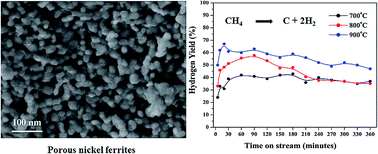
The kinetic curves of methane decomposition over nickel ferrites at various reaction temperatures (such as 700 °C, 800 °C and 900 °C) as a function of time on the stream were studied, and the results are shown in Fig. 8. Only hydrogen and unreacted methane were detected in the product gases. From Fig. 8, it is clear that the unsupported porous nickel ferrites were highly active and stable for the thermal decomposition of undiluted methane (150 ml min−1). Moreover, the reaction temperature was found to have a significant role in the yield of hydrogen and also the stability of the catalyst. The hydrogen yield was found to increase as the reaction temperature was increased from 700 °C to 900 °C, which was attributed to the endothermic nature of the reaction.43 For each temperature tested, the hydrogen yield was found to be comparatively low at the initial stage of the reaction, but then increased as the reaction was continued, reached a peak, and then slightly declined, before remaining steady. The low hydrogen yield at the initial stage of the reaction may have been due to the consumption of part of the formed hydrogen for the complete reduction of any remaining unreduced nickel ferrites, as reported previously.26,44
image file: c6ra14660k-f8.tif
Fig. 8 Kinetic curves of methane decomposition as a function of time on the stream: (a) hydrogen yield and (b) amount of unreacted methane.

The initial hydrogen yield was found to be 23%, 34% and 49.8% at 700 °C, 800 °C and 900 °C, respectively (within the first five minutes on the stream). However, a maximum hydrogen yield of ∼68% was obtained at 900 °C within the first 20 minutes on the stream. The hydrogen yield then slightly decreased and remained more or less the same (60 ± 2) up to 180 minutes on the stream. After a prolonged 360 minutes of time on the stream, the hydrogen yield was measured to be ∼47%. However, a maximum hydrogen yield of 57% was obtained at 800 °C within 90 minutes of time on the stream. After that, the hydrogen yield decreased to 37% at 240 minutes of time on the stream, and remained at this level (specifically 35 ± 2) for up to 360 minutes. However, a different trend was noticed when the reaction was conducted at 700 °C. A maximum hydrogen yield of 42% was observed at the first 60 minutes on the stream and the yield more or less remained at this level (40 ± 2) until 240 minutes of time on the stream. At the end of 360 minutes, the hydrogen yield was measured to be 37%. That is, in this case, only a slight decrease in hydrogen yield was observed, from 42% to 37%. Moreover, after 240 minutes of time on the stream, the hydrogen yield was observed to remain almost the same at the reaction temperatures of 700 °C and 800 °C. The slight decrease in the hydrogen yield with increasing time on the stream over the catalyst was attributed to the accumulation of nanocarbon on the surface of the catalyst, which prevented access of methane molecules to some of the active sites, hence lowering the carbon diffusion rate and decreasing the catalytic performance.45 However, for each reaction temperature, the catalyst was not deactivated completely even after 360 minutes on the stream. This observation indicated the high stability of the catalyst for prolonged methane decomposition, which could be attributed to the formation of NiFe bimetallic alloys.

Characterization of the carbon-covered catalysts

The yield of nanocarbon produced over the catalyst was measured to be 349 wt%, 575 wt% and 813 wt% at 700 °C, 800 °C and 900 °C, respectively. That is, as the reaction temperature was increased in this range, the carbon yield significantly increased. This relationship may have been due to the enhanced catalytic activity of the catalyst at high reaction temperatures. The higher the reaction temperature, then the higher the catalytic activity and hence the carbon yield. The crystal structures and active phases of the spent catalysts after the methane decomposition reactions were studied at different reaction temperatures using XRD, and the diffraction patterns are shown in Fig. 9.
image file: c6ra14660k-f9.tif
Fig. 9 XRD patterns of the spent catalysts at (a) 700 °C, (b) 800 °C, and (c) 900 °C.

The diffraction peak centered at the 2θ value of 26.1° was indexed to the (002) plane and attributed to the formation of graphitic carbon on the surface of the catalyst with few structural imperfections.46 The other diffraction peaks observed at the 2θ values of 43.66°, 53.81° and 74.91° were due to the presence of bimetallic NiFe alloys, which were formed by the reduction of nickel ferrites after methane decomposition.22,47 These NiFe alloy species were responsible for the stability of the catalyst and hence for the continuation of the reaction without any deactivation.22,26,30,31,48 At 900 °C, in addition to the peaks of crystalline carbon and the NiFe alloy, other weak peaks were also observed at the 2θ values of 44.50°, 51.78° and 76.51°. These peaks were attributed to the formation of metallic carbides by the reaction of metallic species with carbon at 900 °C. These peaks were not observed at low reaction temperatures, suggesting the lack of any chemical interaction between the graphitic carbon and alloys at low reaction temperatures.

The intensity of the NiFe alloy peak was found to be higher than that of the graphitic carbon peak at 800 °C and 900 °C, indicating the nickel ferrites to be highly effective for producing hydrogen and avoiding the accumulation of nanocarbon at these reaction temperatures. However, the C and NiFe alloy peak intensities were almost the same at the reaction temperature of 700 °C, indicating its equal production of hydrogen and carbon at this temperature. This property may be the reason for the catalytic activity of the nickel ferrites at 700 °C being similar to that at 800 °C, as shown in Fig. 8(a). Moreover, the reaction temperature was found to influence the crystalline properties of the deposited nanocarbon. The carbon peak intensity was clearly observed to increase as the reaction temperature was increased from 700 °C to 900 °C, indicating the excellent crystalline quality of the deposited nanocarbon.

Measuring the intensity of the peak from the (002) plane has been reported to be an effective way to determine the degree of graphitization of the deposited carbon nanomaterials.49 Based on this measure, of the three temperature values tested in the present case, i.e., 700 °C, 800 °C and 900 °C, the highest graphitization degree was shown for the nanocarbon deposited over the nickel ferrites at 900 °C, and the lowest for that at 700 °C. Furthermore, the interlayer d-spacing of the crystalline carbon was calculated to be 0.3368 nm, 0.3372 nm and 0.3359 nm at 700 °C, 800 °C, and 900 °C, respectively. These values were found to be quite close to the reported values for the distance between ideal graphitic layers, i.e., 0.3354 nm, which further indicated the excellent crystalline quality of the deposited nanocarbon.46,50

The external morphology of the nanocarbon deposited over nickel ferrites at various reaction temperatures was studied using FESEM, and the images are shown in Fig. 10. Previously it was reported that the bare/unsupported metal oxide nanocatalysts could not produce carbon nanofilaments in the hydrocarbon media,51,52 and the same result was observed here. More or less spherical metal-encapsulated carbon particles with a nano-onion-like appearance were observed at 700 °C, as shown in Fig. 10(a–c). It was reported that the formation of encapsulating carbon on the surface of the active sites could decrease the activity of the catalyst.30 However, in the present case a different trend was observed, which can be attributed to the formation of bimetallic NiFe alloys with a high rate of carbon diffusion. The size of the carbon particles varied from 50–300 nm. Graphitic layers were clearly observed in the high-magnification image shown in Fig. 10(c), and these layers were the material that covered the surfaces of the metallic species. At the high reaction temperature of 900 °C, few layered graphene sheets were deposited over the catalyst, as shown in Fig. 10(e and f).


image file: c6ra14660k-f10.tif
Fig. 10 FESEM images of the nanocarbon over nickel ferrites at (a–c) 700 °C, (d) 800 °C and (e and f) 900 °C.

The high diffusion rate of carbon over the bimetallic NiFe alloy species at 900 °C could have decreased the extent of deposition of metal encapsulated carbon particles and facilitated the formation of graphene sheets. However, both irregular carbon particles and graphene sheets were observed at a reaction temperature of 800 °C. The graphene sheets displayed several rumples and ripples. Moreover, the graphene layers were found to be highly aggregated, and generated a puffy external appearance for the nanocarbon.

There have hardly been any published reports about the formation of graphene sheets via the catalytic decomposition of methane. Previously Shen and Lua53 and our group33 had reported the formation of multi-layer graphene sheets over iron-based catalysts via methane decomposition. According to these previous results, at reaction temperatures of 800 °C to 950 °C, the formation of carbon nanofilaments also occurred along with formation of graphene sheets. A high reaction temperature of above 1000 °C was needed for the complete formation of graphene sheets. However, in the present study, pure multilayer graphene sheets were deposited over the nickel ferrites at 900 °C without the formation of any filamentous carbon, which is quite advantageous compared to the previously reported catalysts at this reaction temperature.

TEM analysis was carried out to study the internal structure of the deposited nanocarbon obtained at 700 °C and 900 °C. As shown in Fig. 11(a and b), the irregular metal-encapsulated carbon particles with nano-onion-like or fruit-like appearances were obtained at 700 °C. The average sizes of the carbon particles were found to vary from 100 nm to 250 nm. Moreover, the particles were found to be pseudospherical in shape as shown in the SEM images. The dark spots observed in the TEM images were due to the metallic species, and the grey portion indicated the graphitic carbon. The bimetallic NiFe alloy particles were observed to be both spherical and elongated in shape as shown in Fig. 11(b and c), and a surface coverage of carbon was observed on it without changing their shapes.


image file: c6ra14660k-f11.tif
Fig. 11 TEM images of the nanocarbon deposited over nickel ferrites at (a–c) 700 °C and (d–f) 900 °C.

The isolated carbon-covered metallic species observed to form at 700 °C and 800 °C clearly showed low catalytic activity for methane decomposition.52 The formation of graphene sheets was further confirmed by inspecting the TEM images. Fig. 11(d–f) shows the TEM images of the graphene sheets obtained at 900 °C. These sheets were observed to contain several wrinkles and folds as in the SEM images. The graphene sheets were found to be formed by the stacking of few graphitic layers.

The crystalline quality and graphitization degree of the nanocarbon deposited over nickel ferrites at various reaction temperatures were studied using Raman analysis and the spectra are shown in Fig. 12.


image file: c6ra14660k-f12.tif
Fig. 12 Raman spectra of the nanocarbon over nickel ferrites at (a) 700 °C, (b) 800 °C and (c) 900 °C.

As shown in Fig. 12, two well-resolved Raman bands were observed in the Raman spectrum of the nanocarbon at each of the reaction temperatures. The first band was centered at about 1340 cm−1 (known as the D band) and the second band was centered at about 1574 cm−1 (known as the G band). The D band centered at 1340 cm−1 had previously been ascribed to the presence of amorphous carbon or the structural imperfections of the graphitic carbon.54 However, in the present case, this band was attributed to the graphitic carbon defects because no amorphous carbon was detected using the XRD analysis as shown in Fig. 9. The G band centered at 1574 cm−1 was attributed to the tangential mode stretching vibrations of the exfoliated graphene sheets such as the in-plane carbon–carbon stretching vibration of the graphitic layers.55,56 In addition to these two bands, an additional band was also observed at ∼1605 cm−1, as a shoulder of the G band. This band is known as the D′ band and was assigned to graphitic defects on the nanocarbon.57 The positions of the Raman bands were found to be identical irrespective of the reaction temperature and also of the morphology of the deposited nanocarbon.

However, the intensity of one of the Raman bands was found to differ for different reaction temperatures. As the reaction temperature was increased from 700 °C to 900 °C, the intensity of the D band decreased significantly. Also, no appreciable change in the intensity of the G band was noticed upon increasing the reaction temperature. These results indicated that the structural imperfections of graphitic carbon decreased as the reaction temperature was increased. The crystallinity and graphitization degree can be further explained on the basis of ID/IG values of the nanocarbon deposited at various reaction temperatures, since it is an effective tool to assign the crystalline quality and graphitization degree of the deposited nanocarbon. The calculated ID/IG values was found to be 1.15, 1.09 and 0.95 at 700 °C, 800 °C and 900 °C respectively. These values being very small and close to unity indicated the high crystalline quality and excellent graphitization of the deposited nanocarbon. The smaller the ID/IG value, then the higher is the graphitization degree.58 The decreased ID/IG value with increasing reaction temperature indicated the deposition of the well-ordered graphitic carbon to be better than the deposition of the defective carbon species. Thus, in the present case, a higher graphitization degree was observed for the nanocarbon deposited at 900 °C. This observation is highly consistent with the results reported by Dong et al.32

The oxidation stability, purity and graphitization degree of the nanocarbon deposited at 900 °C were further studied using thermogravimetric analysis. As shown in Fig. 13, the nanocarbon resulted a thermal curve with only one prominent weight loss step, corresponding to the one-pot oxidative degradation of crystalline carbon with oxygen. This observation further indicated the absence of any amorphous carbon content in the deposit, since the amorphous carbon usually oxidatively decomposed before 450 °C.59 The TGA onset temperature, inflection temperature, end temperature and total weight loss were measured to be 490 °C, 591 °C and 678 °C and 71% respectively. The high oxidation temperature of 678 °C confirmed the high thermal and oxidation stability of the nanocarbon in addition to its excellent crystalline quality and graphitization degree.60


image file: c6ra14660k-f13.tif
Fig. 13 Thermogravimetric curves of the carbon deposited over nickel ferrites at 900 °C.

Conclusions

Highly porous unsupported nickel ferrites were successfully synthesized via a precipitation method using ammonium carbonate as the precipitant, followed by the thermocatalytic decomposition of methane into COx-free hydrogen and nanocarbon at various reaction temperatures from 700 °C to 900 °C. The inter-aggregation of pseudospherical nickel ferrite nanoparticles provided a porous texture to the catalyst as shown by the scanning and transmission electron microscopic images. The catalyst showed a total specific surface area of 21 m2 g−1 with a pore size of ∼10 nm. Upon increasing the temperature from 700 °C to 900 °C, the yield of hydrogen and nanocarbon from the methane decomposition increased significantly. A maximum hydrogen yield of 68% was observed over the catalyst at 900 °C within the first 20 minutes of time on the stream. Metal-encapsulated carbon particles with a nano-onion-like morphology and few layered graphene sheets were deposited over the catalysts at 700 °C and 900 °C. A mixture of both types of nanocarbons was observed at 800 °C. The high catalytic stability of the catalysts at various reaction temperatures was due to the formation of bimetallic NiFe alloys. The encapsulation of metallic species by nanocarbon caused the lowering of their catalytic efficiency, which could be the reason for the different activity levels at the various reaction temperatures. Moreover, the effect of reaction temperature on the nanocarbon properties was studied: increasing the reaction temperature from 700 °C to 900 °C resulted in increases in the crystallinity and in the graphitization degree of the nanocarbon.

Acknowledgements

This project was financially supported by Universiti Kebangsaan Malaysia – Yayasan Sime Darby (YSD) and Sime Darby Research, under grants PKT 6/2012 and KK-2014-014. The authors would like to acknowledge FST and CRIM, UKM for the characterization of the samples. Institut Teknologi Maju (ITMA), Universiti Putra Malaysia (UPM) is acknowledged for providing the Raman analysis.

References

  1. H. F. Abbas and W. M. A. Wan Daud, Int. J. Hydrogen Energy, 2010, 35, 1160–1190 CrossRef CAS .
  2. M. Pudukudy, Z. Yaakob, M. Mohammad, B. Narayanan and K. Sopian, Renewable Sustainable Energy Rev., 2014, 30, 743–757 CrossRef .
  3. A. M. Amin, E. Croiset and W. Epling, Int. J. Hydrogen Energy, 2011, 36, 2904–2935 CrossRef CAS .
  4. L. B. Braga, J. L. Silveira, M. E. Silva, C. E. Tuna, E. B. Machin and D. T. Pedroso, Renewable Sustainable Energy Rev., 2013, 28, 166–173 CrossRef CAS .
  5. R. Kothari, D. Buddhi and R. L. Sawhney, Renewable Sustainable Energy Rev., 2008, 12, 553–563 CrossRef CAS .
  6. U. P. M. Ashik, W. M. A. Wan Daud and H. F. Abbas, Renewable Sustainable Energy Rev., 2015, 44, 221–256 CrossRef CAS .
  7. S. Takenaka, M. Ishida, M. Serizawa, E. Tanabe and K. Otsuka, J. Phys. Chem. B, 2004, 108, 11464–11472 CrossRef CAS .
  8. U. P. M. Ashik and W. M. A. Wan Daud, RSC Adv., 2015, 82, 67227–67241 RSC .
  9. R. Utrilla, J. L. Pinilla, I. Suelves, M. J. Lázaro and R. Moliner, Fuel, 2011, 90, 430–432 CrossRef CAS .
  10. J. Li, E. Croiset and L. R. Sandoval, Appl. Surf. Sci., 2014, 311, 435–442 CrossRef CAS .
  11. U. P. M. Ashik and W. M. A. Wan Daud, RSC Adv., 2015, 5, 46735–46748 RSC .
  12. S. Impeng, P. Khongpracha, C. Warakulwit, B. Jansang, J. Sirijaraensre, M. Ehara and J. Limtrakul, RSC Adv., 2014, 4, 12572–12578 RSC .
  13. A. H. Fakeeha, W. U. Khan, A. S. Al Fatesh, A. E. Abasaeed and M. A. Naeem, Int. J. Hydrogen Energy, 2015, 40, 1774–1781 CrossRef CAS .
  14. Z. Yang, J. Liu, L. Zhang, S. Zheng, M. Guo and Y. Yan, RSC Adv., 2014, 4, 39394–39399 RSC .
  15. Q. Zhang, T. Wu, P. Zhang, R. Qi, R. Huang, X. Song and L. Gao, RSC Adv., 2014, 4, 51184–51193 RSC .
  16. I. Suelves, M. J. Lázaro, R. Moliner, J. L. Pinilla and H. Cubero, Int. J. Hydrogen Energy, 2007, 32, 3320–3326 CrossRef CAS .
  17. Z. Jiang, B. Wang and T. Fang, Appl. Surf. Sci., 2014, 320, 256–262 CrossRef CAS .
  18. S. Llobet, J. L. Pinilla, M. J. Lazaro, R. Moliner and I. Suelves, Int. J. Hydrogen Energy, 2012, 37, 7067–7076 CrossRef .
  19. Y. Li, D. Li and G. Wang, Catal. Today, 2011, 162, 1–48 CrossRef CAS .
  20. A. E. Awadallah, A. A. Aboul-Enein and A. K. Aboul-Gheit, Energy Convers. Manage., 2014, 77, 143–151 CrossRef CAS .
  21. L. B. Avdeeva, T. V. Reshetenko, Z. R. Ismagilov and V. A. Likholobov, Appl. Catal., A, 2002, 228, 53–63 CrossRef CAS .
  22. T. V. Reshetenko, L. B. Avdeeva, V. A. Ushakov, E. M. Moroz, A. N. Shmakov, V. V. Kriventsov, D. I. Kochubey, Y. T. Pavlyukhin, A. L. Chuvilin and Z. R. Ismagilov, Appl. Catal., A, 2004, 270, 87–99 CrossRef CAS .
  23. W. Shen, F. E. Huggins, N. Shah, G. Jacobs, Y. Wang, X. Shi and G. P. Huffman, Appl. Catal., A, 2008, 351, 102–110 CrossRef CAS .
  24. N. Latorre, F. Cazana, V. M. Hansen, C. Royo, E. Romeo and A. Monzón, Catal. Today, 2011, 172, 143–151 CrossRef CAS .
  25. N. Shah, D. Panjala and G. P. Huffman, Energy Fuels, 2001, 15, 1528–1534 CrossRef CAS .
  26. A. E. Awadallah, A. A. Aboul-Enein, D. S. El-Desouki and A. K. Aboul-Gheit, Appl. Surf. Sci., 2014, 296, 100–107 CrossRef CAS .
  27. A. C. Lua and H. Y. Wang, Appl. Catal., B, 2014, 156–157, 84–93 CrossRef CAS .
  28. W. Wang, H. Wang, Y. Yang and S. Jiang, Int. J. Hydrogen Energy, 2012, 37, 9058–9066 CrossRef CAS .
  29. I. Suelves, J. L. Pinilla, M. J. Lázaro, R. Moliner and J. M. Palacios, J. Power Sources, 2009, 192, 35–42 CrossRef CAS .
  30. N. Bayat, M. Rezaei and F. Meshkani, Int. J. Hydrogen Energy, 2016, 41, 1574–1584 CrossRef CAS .
  31. M. Pudukudy, Z. Yaakob and Z. S. Akmal, Appl. Surf. Sci., 2015, 330, 418–430 CrossRef CAS .
  32. L. Dong, Y. Du, J. Li, H. Wang, Y. Yang, S. Li and Z. Tan, Int. J. Hydrogen Energy, 2015, 40, 9670–9676 CrossRef CAS .
  33. M. Pudukudy and Z. Yaakob, Chem. Eng. J., 2015, 262, 1009–1021 CrossRef CAS .
  34. M. Pudukudy, Z. Yaakob and M. S. Takriff, Appl. Surf. Sci., 2015, 356, 1320–1326 CrossRef CAS .
  35. M. Pudukudy, Z. Yaakob and Z. S. Akmal, Appl. Surf. Sci., 2015, 353, 127–136 CrossRef CAS .
  36. M. Pudukudy, Z. Yaakob and R. Rajendran, Mater. Lett., 2014, 136, 85–89 CrossRef CAS .
  37. L. Chen, H. Dai, Y. Shen and J. Bai, J. Alloys Compd., 2010, 491, L33–L38 CrossRef CAS .
  38. J. F. Moulder, W. F. Stickle, P. E. Sobol and K. D. Bomben, A Reference Book of Standard Spectra for Identification and Interpretation of XPS Data, Handbook of X-ray Photoelectron Spectroscopy, Perkin– Elmer, Minnesota, US, 1992 Search PubMed .
  39. R. S. Yadav, J. Havlica, J. Masilko, L. Kalina, J. Wasserbauer, M. Hajdúchová, V. Enev, I. Kuřitka and Z. Kožáková, J. Magn. Magn. Mater., 2015, 394, 439–447 CrossRef .
  40. P. Xiong, Y. Fu, L. Wang and X. Wang, Chem. Eng. J., 2012, 195–196, 149–157 CrossRef CAS .
  41. Y. Tao, Z. Li and K. Zhou, Ceram. Int., 2013, 39, 865–869 CrossRef CAS .
  42. B. Y. Yu and S. Y. Kwak, Dalton Trans., 2011, 40, 9989–9998 RSC .
  43. Y. Shen and A. C. Lua, Appl. Catal., B, 2015, 164, 61–69 CrossRef CAS .
  44. A. E. Awadallah, M. S. Mostafa, A. A. Aboul-Enein and S. A. Hanafi, Fuel, 2014, 129, 68–77 CrossRef CAS .
  45. A. C. Lua and H. Y. Wang, Appl. Catal., B, 2013, 132–133, 469–478 CrossRef CAS .
  46. A. E. Awadallah, W. Ahmed, M. R. N. El-Din and A. A. Aboul-Enein, Appl. Surf. Sci., 2013, 287, 415–422 CrossRef CAS .
  47. A. F. Cunha, J. J. M. Órfão and J. L. Figueiredo, Fuel Process. Technol., 2009, 90, 1234–1240 CrossRef CAS .
  48. C. Zhang, J. Li, C. Shi, E. Liu, X. Du, W. Feng and N. Zhao, Carbon, 2011, 49, 1151–1158 CrossRef CAS .
  49. J. Ashok, G. Raju, P. S. Reddy, M. Subrahmanyam and A. Venugopal, Int. J. Hydrogen Energy, 2008, 33, 4809–4818 CrossRef CAS .
  50. D. Kang and J. W. Lee, Appl. Catal., B, 2016, 186, 41–55 CrossRef CAS .
  51. M. S. Kim, N. M. Rodriguez and R. T. K. Baker, J. Catal., 1991, 131, 60–73 CrossRef CAS .
  52. U. P. M. Ashik and W. M. A. Wan Daud, J. Taiwan Inst. Chem. Eng., 2016, 61, 247–260 CrossRef CAS .
  53. Y. Shen and A. C. Lua, Sci. Rep., 2013, 3, 3037 Search PubMed .
  54. M. S. Dresselhaus, G. Dresselhaus, A. Jorio, A. G. Souza and R. Saito, Carbon, 2002, 40, 2043–2061 CrossRef CAS .
  55. K. Sinha and J. Menendez, Phys. Rev. B, 1990, 41, 10845–10847 CrossRef CAS .
  56. A. C. Ferrari, Solid State Commun., 2007, 143, 47–57 CrossRef CAS .
  57. Y. Kameya and K. Hanamura, Chem. Eng. J., 2011, 173, 627–635 CrossRef CAS .
  58. G. D. B. Nuernberg, H. V. Fajardo, E. L. Foletto, S. M. H. Probst, N. L. V. Carrenod, L. F. D. Probst and J. Barrault, Catal. Today, 2011, 176, 465–469 CrossRef CAS .
  59. G. S. Gallego, J. Barrault, C. B. Dupeyrat and F. Mondragón, Catal. Today, 2010, 149, 365 CrossRef .
  60. A. E. Awadallah, A. A. Aboul-Enein and A. K. Aboul-Gheit, Renewable Energy, 2013, 57, 671–678 CrossRef CAS .

This journal is © The Royal Society of Chemistry 2016
Click here to see how this site uses Cookies. View our privacy policy here.