Cardiac screening of intact Drosophila melanogaster larvae under exposure to aqueous and gaseous toxins in a microfluidic device

R. Ardeshiri, L. Hosseini, N. Amini and P. Rezai*
Department of Mechanical Engineering, York University, BRG 433B, 4700 Keele St, Toronto, ON M3J 1P3, Canada. E-mail: prezai@yorku.ca; Tel: +1-416-736 2100 ext. 44703

Received 31st May 2016 , Accepted 4th July 2016

First published on 5th July 2016


Abstract

Drosophila melanogaster is one of the promising model organisms for investigation of human diseases such as cardiac disorders. However, intact (not dissected) Drosophila larvae have not been extensively used as models in cardiac toxicity assays due to many challenges associated with assessment of their heart activities in the intact mode (i.e., heartrate monitoring of alive larva under exposure to aqueous and gaseous reagents). These challenges include the need for precise spatiotemporal control of stimulus exposure to posterior spiracles (i.e., breathing valves) and full immobilization of larvae in favorable orientations to monitor the heart under a microscope. In this paper, we not only present a novel microfluidic device that is capable of loading, orientating and immobilizing the larva reversibly in a chip, but also demonstrate for the first time the transient effects of toxic liquids (e.g., sodium azide) and gases (e.g., oxygen and carbon dioxide) at various concentrations on the heart of intact Drosophila larvae. The results demonstrated that cardiac activity increase (with excess oxygen) or arrest (with sodium azide, carbon dioxide, or lack of oxygen) are highly dependent on the concentration of the stimuli, but heart recovery after removal of chemicals is independent of chemical concentration. The presented device can be used for investigation of biological pathways underlying these responses and also for screening of various chemicals such as pharmaceutical, toxicological, and agricultural compounds on the cardiac system of intact Drosophila melanogaster or other compatible insect models. This will open new windows of opportunity in drug discovery and toxicology applications.

Introduction

Cardiovascular diseases (CVDs) such as stroke, cardiomyopathy, and atrial fibrillation are among the leading causes of death worldwide and are estimated to double by 2020.1,2 Several studies in biology, genetics and biomedical engineering are focused on the causes, prevention and cure of cardiovascular disorders using vertebrate and invertebrate model organisms. While vertebrates are more similar to humans in terms of their genetics, organs and biological functionalities, there are many challenges such as ethical regulations and physiological complexities involved in performing biological experiments on them.3,4 Invertebrates such as Caenorhabditis elegans and Drosophila melanogaster, on the other hand, are low-cost and easy to culture and maintain in labs, physiologically and genetically simpler than vertebrates yet relatively similar to humans, not restricted by ethical regulations, and optically accessible down to cellular level due to their almost transparent bodies. These advantages have led to emergence of Drosophila as one of the simplest model organisms for investigation of olfactory coding,5–7 neuropsychiatric disorders,8–10 pain,4,11 sleep disorders,12 chemical toxicity13 and cardiac diseases.14–17

A number of heart development and function assays using different aqueous18 and gaseous19 reagents have been demonstrated with Drosophila larvae models. Drosophila heart tubes are located at the dorsal vessel and proper dorsal orientation with full immobilization is required for monitoring the heart activities in intact animals.20 Tweezers are used for animal manipulation and glue or dissection pins are utilized for larva immobilization.19–21 Semi-intact (or dissected) Drosophila larvae have been commonly used in cardiac assays to provide direct access of chemicals to the heart for studying organ-level responses. In these studies, pharmacological effects of cholinergic receptor subtypes, nicotinic acetylcholine receptors (nAChRs), and muscarinic acetylcholine receptors (mAChRs) in modulating heartrate (HR) activities have been successfully investigated.18 Moreover, effect of gaseous stimuli such as carbon dioxide has also been studied on the body wall movement (BWM) and HR of fruit flies.19 The use of tweezers for handling and orienting delicate larvae requires extended training and technical expertise. Moreover, the glue-based immobilization methods are irreversible and not useful for post-exposure assays. Altogether, these technological difficulties have impeded the use of intact Drosophila larvae in cardiac screening studies and the overall development and reaction of intact larva's heart to many toxic chemicals (and specially gases) are not well understood. Upon addressing of the abovementioned technological gaps, many fundamental biological questions, such as the transient and long-term effects of various toxicants at different concentrations on heart function and development, can be investigated using intact Drosophila melanogaster.

Microfluidic devices have been extensively used in biology, biotechnology and biochemical studies.22 Ease of use, inexpensiveness, and ability to precisely manipulate fluidic and biological samples at the microscale level have led to the development of various chips for biological assays on Drosophila at embryonic,23 larval,24,25 and adult25,26 stages. Although cardiac studies on a chip using intact Drosophila larvae have not been demonstrated yet, but the microfluidic technology is well-suited for addressing the challenges associated with spatiotemporal control of chemicals and animals (e.g., delicate loading, on-demand orientation to visualize heart, and reversible immobilization to enable post chemical exposure assays). The microfluidic techniques developed to-date for other whole-organisms such as C. elegans and D. rerio27–29 can be adopted for this purpose. Examples include the rotary glass capillaries to orient zebrafish larvae for imaging30 or the side suction channels to immobilize worms inside microchannels.31 However, the challenge still lies within the area of developing an integrated device that can perform intact Drosophila larva manipulation, chemical exposure, and heart screening all in one device.

In this paper, a novel hybrid polydimethylsiloxane–glass microfluidic chip has been developed to investigate the transient effects of gases and liquids at various concentrations on Drosophila's cardiac activities. The chip enables the operator to load a 3rd instar Drosophila larva conveniently into the device via an inlet glass capillary, orient it non-invasively using another glass capillary in a favourable direction that maximizes heart visualization under the microscope, and immobilize it reversibly during the chemical exposure stage. Using this novel chip, we have been able to investigate the time-dependent effects of different concentrations of sodium azide, oxygen and carbon dioxide on the cardiac activities of intact Drosophila melanogaster larvae for the first time. These chemicals are widely used in agricultural, automotive, and biomedical industries and the presented technology and biological outcomes can shed light on their toxicity effects on the heart. The presented device can also be used for investigation of biological pathways underlying these effects and also for screening of various chemicals such as pharmaceutical, toxicological, and agricultural compounds on cardiac system of Drosophila melanogaster or any other compatible insect model.

Materials and Methods

Drosophila melanogaster Larvae preparation

White (w1) Drosophila melanogaster larvae were mass cultured on standard yeast media in fly stock bottles at ambient temperature (approximately 22 °C). Prior to the experiments, adult flies were emptied from the bottle, and wandering 3rd instar larvae were transferred from the bottle to a Phosphate-Buffered Saline (PBS) solution using a spatula.

Chemicals and reagents

Cyanoacrylates glue (LePage Ultra Gel, PN#1471916) was used for conventional immobilization of larvae (as a control experiment) where immobilization in the microfluidic chip was being investigated. For chemical screening studies, sodium azide (NaN3) purchased from Sigma Aldrich, Canada, and oxygen (O2), nitrogen (N2), compressed air, and carbon dioxide (CO2) gas cylinders purchased from Linde, Canada were used. Table 1 shows the concentration level of these chemicals used in our assays for screening their effect on cardiac activities of intact Drosophila melanogaster larvae. Sodium azide solutions were prepared off the chip at 10% and 20% concentration levels (prevalent in automotive industry).32 Carbon dioxide at 50% concentration (with air as the balancing gas) was generated using two flow regulators (25 ml min−1 each) attached to the carbon dioxide and air cylinders.
Table 1 Aqueous and gaseous chemical screening assays and their chemical constituents and concentrations
Chemical screening assay Concentration level (%) Chemical composition
NaN3 (g) DI water (g) O2 (ml min−1) N2 (ml min−1) Air (ml min−1) CO2 (ml min−1)
a Chemicals mixed in the ratios above and introduced at 1 ml min−1 into the device.
Sodium azidea 20 20 80        
10 10 90
Oxygen 100     50      
21     50
0   50  
Carbon dioxide 100           50
50 25 25


Design and fabrication of the hybrid microfluidic screening device

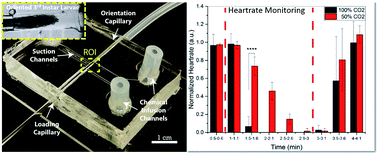
The hybrid microfluidic device (Fig. 1) consisted of two modules, i.e., animal handling module and chemical delivery module. The animal handling module consisted of loading and orientation glass capillaries (Fig. 1a) positioned at the front and end of an animal trap channel (Fig. 1b) which was equipped with four side suction channels (250 μm × 250 μm cross-section) for pneumatic immobilization of loaded larvae. The loading glass capillary (1.1 mm inner diameter, Fisher Scientific, P# 22-260-943) was used to introduce 3rd instar Drosophila larvae individually from the PBS solution into the animal trap channel. This channel was 4 mm-long, 0.8 mm-wide, and 0.8 mm-thick and was intentionally designed to loosely conform to the early-stage 3rd instar Drosophila larva's body (0.6 mm diameter). ‬The‬ oversized trap‬ ‬design was implemented so that the loaded larva could be pneumatically captured from the head region using a negative pressure applied to the orientation glass capillary (0.4 mm inner diameter, Fisher Scientific, P# 1-000-0040) and rotated in the trap channel to achieve any favourable orientation. The side suction channels were then used to achieve rapid immobilization of the oriented larva upon applying a negative pressure.‬‬‬‬‬‬‬‬‬‬‬‬‬‬
image file: c6ra14159e-f1.tif
Fig. 1 (a) Hybrid microfluidic chip used for 3rd instar Drosophila larva orientation, immobilization, chemical exposure, and monitoring of cardiac activities. Region of interest (ROI) in (a) is magnified in (b). Loading and orientation glass capillaries were installed in the corresponding guide channels shown in (b) and rotated manually for larva orientation.

The chemical delivery module consisted mostly of external pneumatic tools (discussed in the next section) but also two chemical infusion channels (500 μm × 250 μm cross-section) placed at the side of the animal trap and opposite to the side suction channels (Fig. 1b). These channels were used to inject the liquids and gases in Table 1 into desired spatial locations in the chip and towards the head or tail of the larva.

The microfluidic device was fabricated from a polydimethylsiloxane (PDMS) layer, containing the network of microchannels discussed above, bonded to a flat PDMS layer and installed onto a 35 mm × 50 mm glass slide (Fisher Scientific). The top layer was fabricated by replica molding of PDMS (10[thin space (1/6-em)]:[thin space (1/6-em)]1 ratio of elastomer and curing agent, SYLGARD 184, Dow Corning, USA) onto a 3D-printed (ProJet HD 3000, 3D Systems, USA) plastic master mold. The PDMS pre-polymer was poured over the master mold and cured at 80 °C for 3 hours. The bottom PDMS layer was fabricated by casting the same mixture of PDMS onto a Petri dish and curing at 80 °C for 3 hours. The two PDMS layers and the glass slide back-support were bonded to each other by oxygen plasma bonding at 1 Torr pressure and 50 W power for 90 seconds (PDC-001-HP Harrick Plasma, USA). The loading and orientation glass capillaries were then installed into the designated inlets and connected to syringes for loading the larva and applying the negative pressure required for orientation.

Experimental setup and procedure

The designed hybrid microfluidic device (Fig. 1) was capable of loading, orienting, immobilizing and monitoring the cardiac activities of 3rd instar Drosophila melanogaster larvae in a semi-automatic manner. The experimental setup (Fig. 2) that was used to operate the device and record the cardiac activities of the tested larvae consisted of three main components, i.e. the animal handling unit, the chemical delivery unit, and the monitoring and imaging unit. The animal handling unit consisted of two syringes connected to loading and orientation glass capillaries on the chip and a bench-top negative pressure source (regulated by a 0–15 psi vacuum gauge, Cole-Palmer, USA) connected to the side suction channels of the device. The chemical delivery unit consisted of a syringe pump (Legato 110, KD Scientific Inc., USA) for infusion of sodium azide or gas cylinders for introducing oxygen, carbon dioxide, air, or nitrogen into the device via the chemical infusion channels. Pressure regulators (0–145 psi, McMaster-Carr, USA) and flow gauges (0.04–0.42 scfh, McMaster-Carr, USA) attached to the gas cylinders were used to adjust the volumetric flow rates of gases to desired levels (Table 1) before they were mixed in a T-junction and introduced into the device. The monitoring and imaging unit contained an inverted microscope (BIM-500FLD, Bioimager Inc., Canada), a camera (GS3-U3-23S6M-C, Point Grey Research Inc., Canada) and a computer for recording, storing and analysing the cardiac activities of tested larvae.
image file: c6ra14159e-f2.tif
Fig. 2 Experimental setup consisting of three main units, i.e., animal handling, chemical delivery, and monitoring and imaging units. Animal handling unit included two syringes connected to loading and orientation glass capillaries on the microfluidic device and a regulated suction source. Chemical delivery unit consisted of a syringe pump, gas cylinders, flow and pressure regulators, and a T-junction. Monitoring and imaging unit consisted of a microscope, a camera and a computer.

After preparation of the experimental setup and the animals, a 3rd instar Drosophila larva was selected and loaded into the loading glass capillary by applying a manual negative pressure. Loading capillary was then placed inside the microfluidic device via the corresponding guide channel. The larva was introduced into the animal trap channel, captured pneumatically by the orientation glass capillary and rotated in desired directions under the microscope. After achieving the desired dorsal orientation, regulated negative pressure (5–10 psi) was applied to the side suction channels to fully immobilize the oriented larva. A time duration of 5 minutes was provided to each animal at this point before recording the heartbeats in order to prevent recording of any deceptive heartbeats caused by stress. The heartrate activities were then monitored for the duration of the desired experiment at 30 frame per second (fps) recording speed. During these experiments and after a resting period of up to 5 minutes, different chemical stimuli at desired rates (1 ml min−1 for sodium azide and 50 ml min−1 for gases in Table 1) were introduced into the device via the chemical infusion channels. After an exposure duration of up to 10 minutes, the chemical stimulus was removed and the heart recovery was monitored for up to 3 minutes. Heartrates in Beats Per Minute (BPM) were then measured from the recorded videos by directly counting the movements of the trachea or heart33 in 10 s intervals. These heartrates were normalized for each animal by dividing the measured values by the average heartrate of the animal one minute prior to exposure to chemical stimulus (called baseline heartrate). Tested animals were then removed from the device easily by using the loading glass capillary before the next animal was introduced into the chip for a new set of chemical screening.

Results and discussions

Drosophila melanogaster is a promising model organism for cardiac diseases.14–17 But, cardiac studies on intact (alive and awake) Drosophila larvae poses a significant technological challenge that requires favourable orientation and full immobilization of the animal under the microscope with capability to expose the specimen to target chemicals with spatiotemporal accuracy. Hence, the application of intact larvae in cardiac toxicity assays has not been exploited to its full capacity. In order to monitor larva's cardiac activities under controllable exposure to chemicals, a hybrid microfluidic device (Fig. 1) was designed to desirably orient the larva and immobilize it thoroughly under the microscope, expose its posterior or anterior sides to various new chemicals (Table 1) with control over concentration and time, and analyze its transient heart activities during exposure and after removal of the chemical stimulus.

Intact Drosophila larva manipulation in the hybrid microfluidic device

The hybrid microfluidic device shown in Fig. 1 was operated as discussed in the Materials and Methods section and under the experimental setup schematically illustrated in Fig. 2. It enabled a minimally-trained operator to easily manipulate intact 3rd instar Drosophila larvae on the chip. A successful sample manipulation (Fig. 3 and ESI Video 1) was defined as loading, orientation, and immobilization of a single animal for subsequent chemical exposure and cardiac investigations. A single larva suspended in PBS solution was loaded into the microfluidic device via the loading glass capillary (Fig. 3a). Longitudinal orientation of the larva inside the chip was not a point of concern as the chip was designed with chemical infusion channels at the two ends of the animal trap to enable exposure of the larva from the head or tail regions as desired by the operator. Dorsal orientation (i.e., dorsal side of larva facing the microscope lens) was found to be necessary for successful acquisition of unobstructed videos from larva's heart (see ESI Video 1). As such, the negative pressure in the orientation glass capillary was used to capture the larva's head for subsequent lateral orientation. The captured larva was then rotated manually (Fig. 3b) by external rotation of the glass capillary to reach the desired dorsal orientation and to obtain the best possible visualization of the heart under the microscope. The oriented animal was then immobilized (Fig. 3c) by application of a 5–10 psi negative pressure to the side suction channels of the microfluidic device. A higher magnification image (5× in Fig. 3d) was then acquired in order to visualize and record the heartbeats clearly, for future quantitative assessment of cardiac activities.
image file: c6ra14159e-f3.tif
Fig. 3 Intact 3rd instar Drosophila larva manipulation in the hybrid microfluidic device. The larva was (a) loaded from the loading glass capillary into the animal trap region of the chip, then (b) captured pneumatically by the orientation capillary and oriented dorsally under the microscope. It was then (c) immobilized via negative pressure in the side suction channels and (d) exposed to different chemicals while heartbeat activities were recorded at 5× magnification. Scale bars are all 250 μm. Video of this process is provided as a ESI file.

A successful sample preparation took 3–4 minutes from animal selection in the stock bottle to immobilization in the chip. Animal unloading after immobilization was also achieved in less than a minute. The viability rate of N = 10 larvae immobilized in the microfluidic device was found to be 90% (reaching adult stage) after ejection from the device as compared to 100% for control animals which were not exposed to the device at all. Moreover, the chip could be used conveniently by minimally trained personnel to handle and manipulate Drosophila larvae. These provide significant advantages over the conventional larvae manipulation methods in which tweezers are used to orient the larvae and anaesthetics, glue or double side tape are used to immobilize them onto the substrate. Orientation with tweezer requires a high level of expertise and is highly prone to disruption of the cuticle while immobilization with glue or tape is irreversible and possibly toxic to the animals. Larvae manipulation in our device was easy, reversible, and did not require use of chemical reagents plus, it can further be accelerated by computer-based automation in the future.

Intact Drosophila larvae cardiac activity monitoring in the hybrid microfluidic device

We aimed to use the microfluidic device for cardiac toxicity assays on intact Drosophila larvae under exposure to various new chemicals listed in Table 1. Hence, the effect of loading, orientation, and immobilization on animals' heart activity in the chip without any chemical exposure was investigated at this stage. Five 3rd instar Drosophila larvae were loaded individually into the microfluidic device, oriented and immobilized dorsally in the trap channel as shown in Fig. 3. Then, their heartrates were assessed at 5 minute intervals for a period of 20 minutes as discussed in the Materials and Methods section. Another group of 3rd instar Drosophila larvae (N = 5) were conventionally oriented with tweezers and immobilized with glue on a sylgard-coated substrate. Heartrate activities of the control group were also recorded and assessed in a similar manner. Fig. 4a demonstrates the heartrate of individual animals for both manipulation methods and the average heartrates are shown in Fig. 4b.
image file: c6ra14159e-f4.tif
Fig. 4 Heartrate (HR) activities of 3rd instar Drosophila larvae immobilized using the conventional glue-based (control group) method (N = 5) and within the microfluidic device (N = 5) for an immobilization period of 20 minutes. Heartrate of individual flies are shown in (a) while the average ± S.E.M. heartrates of all tested flies are shown in (b), demonstrating more stability over 20 min and less variability in heartrate for animals tested in the microfluidic device.

As shown in Fig. 4b, the initial heartrates in both methods (at t = 5 min) were within the range of previously reported heartrates for intact larvae34 which is known to be higher than the heartrate of dissected larvae.33 A two tail t-test comparison at 10, 15 and 20 minute intervals between the glue-based and the microfluidic-based immobilization methods resulted in p-values of 0.1, 0.8 and 0.3, respectively. This showed no statistically significant differences between the two methods providing evidence that the microfluidic chip does not have a negative impact on the heartrate activities of Drosophila larvae. However, the conventional glue-based immobilization method resulted in an overall decline in the heartrate activities of the immobilized larvae while the microfluidic-based method resulted in a steadier cardiac activity over the immobilization period of 20 minutes. The variability of heartrate was also less significant between the animals immobilized in the microfluidic device. The decrease in the animals heartrate immobilized by the glue can be attributed to the toxicity of the cyanoacrylate glue and its hyperthermia effect. Another disadvantage of the glue-based method in comparison to our technique is its irreversibility as per our discussions in previous section.

Cardiac chemical screening assays using the hybrid microfluidic device

Intact Drosophila larvae have not been adopted widely for cardiac toxicity assays mainly due to the complexities associated with precise exposure of animals to chemicals and visualizing their heart activities over extended periods of time (up to 20 minutes). As shown in previous sections, the developed microfluidic device demonstrated no negative impact on the heartrate in this time period and provided a proper environment for long term assessment of individual larva's heart. This allowed us to use the chip for screening the effect of various aqueous and gaseous chemicals at different concentrations (Table 1) on the cardiac system of intact Drosophila larvae.

Concentration-dependent effect of toxic liquids on cardiac activities of intact Drosophila larvae

Sodium azide (NaN3) is one of the most widely used chemicals in various applications such as pesticide production in agriculture industry,35 gas production in airbags in automotive industry,36 and mutagenesis or anaesthetization in biological applications.37,38 This chemical is believed to have severe toxicity effects on the brain and the heart, however, these effects are currently not well-understood.39–41 Drosophila melanogaster larvae have been used as a model organism for toxicity and mutagenesis studies.38 Here, we were interested to investigate whether intact 3rd instar Drosophila larva in our microfluidic chip can be used as a sensitive model to elucidate the immediate effect of sodium azide and its concentration on the cardiac system.

To investigate the effect of sodium azide on heart activities, 3rd instar Drosophila larvae were loaded into the microfluidic device and immobilized individually inside the trap as described in previous sections. Heart activities were recorded continuously in video formats for approximately 20 minutes. Animals were given 5 minutes to distress and then exposed to PBS for 10 minutes to stabilize in the device. The baseline heartrate used for data normalization was obtained at this time. The animals were then exposed to different concentrations of Sodium azide solution (Table 1) at minute 10 with a flow rate of 1 ml min−1 inside the two chemical infusion channels. As an example, one of the animals demonstrated a 188 BPM cardiac activity during the initial 10 min interval with no chemical, but after exposure to a 10% NaN3 solution, a continuous reduction in the heartbeat was observed with values decreasing to 130, 24, and 0 BPM at 12, 15 and 18 minutes post exposure. The normalized heartrate activities for ten similarly-tested larvae at two different sodium azide concentrations (N = 5 animals for each) are shown in Fig. 5.


image file: c6ra14159e-f5.tif
Fig. 5 Normalized heartrate activities of 3rd instar intact Drosophila larvae (N = 5 for each exposure condition) under exposure to 10% and 20% sodium azide (NaN3) solutions introduced into the microfluidic device at t = 10 min past immobilization. t-Test statistical analysis at t = 15 min resulted in a p-value of 3.5 × 10⁻³ (p < 0.01) suggesting a significant difference in heartrate reduction rate between 10% and 20% NaN3. a.u.: arbitrary unit.

As shown in Fig. 5, the immobilized larvae in the chip exposed to PBS for the beginning 10 minutes showed a stable heartrate activity (average 183 BPM). Upon introduction of 10% NaN3 into the device at minute 10, heart activity reduced significantly to 136 BPM at t = 12 min and heart arrest was observed within 10 minutes of exposure. By increasing the concentration of NaN3 to 20%, a faster rate of heartbeat reduction was observed (96 BPM at t = 12 min) resulting in full stoppage of the heart within approximately 5 min after exposure to the chemical. The average heartrate values at t = 15 min of exposure to 10% or 20% sodium azide were statistically different (p-value = 3.5 × 10⁻³ in two-tailed t-test) proving that the concentration of chemical plays an important role in the rate of cardiac activity reduction. Spatial exposure of larvae's head or cuticle showed that sodium azide can affect the heart activities very severely in both cases. No heartbeat recovery was observed for either concentrations after removal of sodium azide and re-treatment of larvae with air. The results clearly demonstrated that sodium azide causes a severe cardiac arrest effect over a relatively short period of time on intact Drosophila larvae and leads to death of animals within 24 hours post-exposure. The presented technology can therefore be conveniently used to investigate the biological pathways underlying the effect of sodium azide or other aqueous chemicals at any concentration on cardiac system of Drosophila melanogaster or other insects in their larval developmental stages.

Concentration-dependent effect of toxic gases on cardiac activities of intact Drosophila larvae

Gaseous reagents such as carbon dioxide and oxygen are widely used in biological studies as anaesthetics or vital gases for living. The biological pathways involved in their sensing needs to be investigated systematically. For instance, it has been shown that carbon dioxide can act as a chemo-attractant42 or an anaesthetic chemical19,24 in various insect species. Recent behavioural studies on Drosophila larvae43,44 with different concentrations of oxygen proved that atypical soluble guanylyl cyclases (sGCs) act as oxygen sensors yet there are additional undefined proteins involved in this process that need to be investigated. The effects of hypoxia and re-oxygenation have also been recently studied on Drosophila's heart.45 However, semi-intact (dissected) animals immersed in saline or artificial hemolymph solutions saturated with target gases have mostly been used in these studies and the immediate real-time heart responses under direct exposure to gases have not been investigated in intact larvae. Our goal in this assay was to investigate the effect of concentration of oxygen (from anoxia to hyperoxia) or carbon dioxide (hypercapnia) on immediate and transient responses of intact Drosophila larva's heart, which was achievable with the hybrid microfluidic device introduced in this paper.

To achieve our goal, 3rd instar Drosophila larvae were oriented and immobilized individually inside the device and allowed to stabilize in heartrate. Baseline heartrates were measured for a minute, then gasses at desired concentrations (Table 1) were introduced at a flow rate of 50 ml min−1 towards the tail of the immobilized larva for 2 minutes. The gaseous stimulus was then removed and the heartrate recovery was investigated for another minute. For a single animal exposed to air (approximately 21% O2 and 78% N2), no significant changes in heartrate activities were observed during the exposure as expected. Heartrate frequencies 30 seconds before exposure, during the 2 min exposure, and in the recovery period were all approximately 180 BPM. For another larva exposed to 100% oxygen (hyperoxia), slight increase in the heartrate activity during the exposure was observed. The heartrate increased from 180 BPM at 30 seconds before exposure to 198 BMP during exposure, and then returned to 186 BPM at minute 4 upon removing the oxygen from the device. In the anoxia experiment (0% oxygen), the initial heartrate of the animal was 150 BPM at 30 seconds before exposure, which was rapidly reduced to 30 BMP during the 2 minutes exposure. Irregular periods of on and off beating was observed during the anoxia assay. However, rapid and full recovery of heart function (160 BMP heartrate at t = 4 min) was observed upon introducing air back into the device. The overall normalized results (average ± S.E.M.) for fifteen 3rd instar Drosophila larvae exposed to 0%, 21%, and 100% oxygen concentrations (N = 5 animals for each concentration) are shown in Fig. 6.


image file: c6ra14159e-f6.tif
Fig. 6 Normalized heartrate activities of 3rd instar intact Drosophila larvae (N = 5 for each exposure condition) under exposure to oxygen (O2) at (a) 21% (air), (b) 100% and (c) 0% (100% N2) concentrations. Larvae's heartrates were monitored for a minute prior to exposure to obtain the baseline values for normalizing the data. The target gas was then introduced at t = 1 min for two additional minutes. At t = 3 min, the target gas was replaced by air and the heartrate recovery of larvae were quantitatively assayed. For this purpose, heartrates were counted in 10 s intervals and converted to heartrate frequency, then normalized by the baseline values. (d) Comparison of averaged normalized heartrate activities of assayed larvae at various time intervals (before, during, and after exposure) under exposure to 0%, 21% and 100% oxygen. For 100% O2 exposure, a slight increase in heartrate activities was statistically identified with a p-value of 0.013 (using t-test) before and after exposure. t-Test for 0% O2 exposure resulted in a p-value of 2.7 × 10⁻⁶ suggesting a statistically significant decrease in heartrate.

As shown in Fig. 6, heartrate activities remained relatively stable in the first minute of the assays and before any gases were introduced into the device (average of 180, 212 and 166 BPM for air, 100% O2, and 0% O2 concentrations, respectively). A steady heartrate activity was observed under exposure of larvae to 21% oxygen or pure air (Fig. 6a and d), showing that the flow of gas at 50 ml min−1 had no significant effect on the cardiac activities of larvae. This allowed us to study the effect of other concentrations of oxygen. During exposure to 100% oxygen (Fig. 6b), a 7% increase (227 BPM) in the averaged heartrate activities of larvae was observed (Fig. 6d). A two-tailed student's t-test on these results showed a p-value of 0.013 that indicated a small increase (P < 0.05) in heartrate response of larvae to 100% oxygen. This is the first time that the cardiac response of intact Drosophila larvae to hyperoxia in a microdevice is reported, showing a similar trend in heartrate activity enhancement as observed in humans.46 This increase in the heartrate can potentially be attributed to the toxic effect of free radicals of pure oxygen on the heart and tissues known as oxidative stress which is common between vertebrates and invertebrates.47,48

The effect of lack of oxygen or anoxia on cardiac activities of intact Drosophila larvae was more significant (Fig. 6c and ESI Video 2). Removal of oxygen from the device resulted in a rapid drop of heartrate (to 34 BPM) within the first 30 seconds and a short period of full heart stoppage in majority of the tested larvae. Interestingly, most animals gained a slow heartbeat after the sudden decline phase and continued to increase their heartrate with a very slow rate even during the anoxia phase. A t-test statistical analysis showed a significant effect (p = 2.7 × 10⁻⁶) of lack of oxygen on heartrate activities of intact Drosophila larvae. The increase in heartrate during anoxia phase was continued with the slow rate until air was re-introduced into the device at minute 3. During this recovery phase, we observed that the rate of heartbeat increase in the animals improved significantly. All animals were able to fully recover to normal heartrate activity (199 BPM average heartrate) within 45 seconds of air exposure. To the best of our knowledge, this is the first time that the transient response of Drosophila larva under anoxia condition is investigated using a microfluidic device. The trends described above are similar to the ones observed in adult-stage flies under hypoxia conditions.49 Hypoxia-inducible factor (HIF), the metabolic AMP-activated protein kinase, nitric oxide signalling pathways and trehalose50 have all been shown to be involved in hypoxia and anoxia responses of mammalian heart cells, and are also present in Drosophila.51 Our easy-to-use microfluidic device can facilitate anoxia, hypoxia and hyperoxia studies in intact Drosophila larvae by reducing the time and expertise needed for cardiac studies, allowing to quantify cardiac activities in real-time, and enhancing the precision and sensitivity of the assays.

We also investigated the effect of carbon dioxide at two different concentrations (100% and 50%) on the heart activities of intact 3rd instar Drosophila larvae, following the same procedures discussed for oxygen experiments above. A longer recovery period of 2 minutes was provided to animals compared to the oxygen experiments due to the more severe effect of carbon dioxide on heart activities. For instance, for a larva immobilized in the device, the heartrate was 168 BPM right before exposure to carbon dioxide. However, upon exposing the larva to 100% carbon dioxide, the heartrate reduced to 48 BPM after 30 seconds and full stoppage was observed after 50 seconds. During the recovery phase, rapid heartrate increase to 156 BPM after a minute of re-exposure to air was observed. On the other hand, for a larva exposed to 50% carbon dioxide, heartrate reduced less rapidly from 156 BPM before exposure to 126 and 36 BPM within 30 s and 90 s of exposure, respectively. Full heartrate recovery to 168 BPM was observed within a minute after removing the 50% carbon dioxide stimulus. Overall normalized cardiac activity results for two groups of five larvae exposed to 50% and 100% carbon dioxide are shown and compared in Fig. 7.


image file: c6ra14159e-f7.tif
Fig. 7 Normalized heartrate activities of 3rd instar intact Drosophila larvae (N = 5 for each exposure condition) under exposure to carbon dioxide (CO2) at (a) 100% and (b) 50% concentration levels. Larvae's heartbeats were monitored for a minute prior to exposure to obtain the baseline values for normalizing the data. The target gas was introduced at t = 1 min for two additional minutes. At t = 3 min, the target gas was replaced by air and the recovery of larvae were quantitatively assayed. For this purpose, heartrates were counted in 10 s intervals and converted to heartrate frequency, then normalized by the baseline values. (c) Comparison of averaged normalized heartrate activities of assayed larvae at various time intervals (before, during, and after exposure) under exposure to 100% and 50% carbon dioxide. t-Test statistical analysis at t = 1.5–1.6 min resulted in a p-value of 3.8 × 10⁻⁵ (p < 0.0001) suggesting a significant difference in heartrate reduction rate under exposure to various concentrations of CO2. No significant difference during recovery phase (p > 0.05) between different concentrations was observed.

The rate of heartrate decay in Drosophila larvae strongly depended on the concentration of carbon dioxide. Fig. 7a and c show a significant and rapid reduction in heartrate of animals after exposure to 100% carbon dioxide. The average heartrate for the five larvae right before exposure was 152 BPM which was reduced to 10 BPM within 30 seconds after exposure. Full heart stoppage was variable across the tested larvae and ranged from 20 to 50 seconds. Compared to the anoxia assay (Fig. 6c) where animals gained a slight heartrate recovery during the lack of oxygen phase, no heartrate recovery was observed during exposure of animals to 100% carbon dioxide and after the full heart stoppage occurred. Interestingly, exposure to 50% carbon dioxide (Fig. 7b and c) resulted in a slower decay of heartrate and a full heart stoppage was only observed after 110 to 120 seconds post exposure. The average heartrate for the five larvae before exposure to 50% CO2 was 150 BPM, which was reduced to 114 and 66 BPM within 30 s and 90 s of exposure. Statistical comparison of the two groups (Fig. 7c) after exposure to carbon dioxide showed a significant difference (t-test p-value of 3.8 × 10⁻⁵) between the heartrate of animals within 30 seconds of exposure. After removal of the carbon dioxide stimulus, both group of animals recovered to a normal heartrate frequency with no significant difference in rate of recovery (Fig. 7c). The average heartrates after one minute of exposure to air were 146 and 163 BPM for 100% and 50% CO2 conditions, respectively. However, a larger variability in heartrate was observed during the recovery phase of animals pre-exposed to 100% carbon dioxide as compared to 50%. This is potentially attributed to a more severe damage of carbon dioxide at higher concentrations on the heart that can be studied in the future. Our results in terms of the overall time of cardiac arrest under exposure to 100% carbon dioxide (Fig. 7a) and 100% nitrogen (Fig. 6c) are in agreement with Badre et al.,19 however, our device enabled us to monitor the real-time and transient cardiac activities of intact larvae under exposure to various concentrations of carbon dioxide and other gases for the first time.

Conclusions

Semi-intact or dissected Drosophila melanogaster larvae have been used widely for screening of chemicals directly on the heart. A dissected larva maintained under synthetic hemolymph is physiologically unstable and not the ideal model for systemic chemical screening. Such investigations on intact animals are desirable but highly challenging due to the continuous locomotion of larva and the need for its immobilization as well as larva's semi-transparent cuticle and the need for orientation to obtain acceptable images of internal organs such as heart. Conventional manipulation (e.g., tweezers) and immobilization (e.g., glue and tape) techniques are fatal to animals and irreversible. We have introduced a novel microfluidic device that can address all of the abovementioned challenges, hence, providing a platform technology for screening of chemicals in aqueous and gaseous phases directly on intact Drosophila larvae. The working principles can be applied identically with design modifications to develop microfluidic devices for screening other small-scale model organisms such as C. elegans and zebrafish.

Animals could be loaded and oriented easily inside our device by using integrated glass capillaries. Immobilization could also be achieved reversibly with no negative impact on the heart activities of Drosophila larvae. Elimination of image-obstructing glue allowed us to obtain clearer images of the heart in our device. Taking advantage of all these assets, we investigated the cardiac response of intact Drosophila larvae to industrial chemicals such as sodium azide, carbon dioxide and oxygen. Concentration of these chemicals played a critical role in inducing hyper or hypo cardiac activities. Increased concentration of sodium azide and carbon dioxide led to a faster rate of decline in heartrate of animals until a full cardiac arrest was observed. Anoxia or lack of oxygen also led to a very rapid decline in cardiac activities but hyperoxia showed only a slight increase in the heartrate. Except for exposure to sodium azide, animals were able to recover to a normal heartrate within a minute after removal of the stimuli with no significant effect from the pre-exposure condition.

Animal manipulation and screening can be done rapidly and reversibly with the presented device; however, in order to increase the throughput of this assay, some processes such as larva pneumatic capturing, glass capillary rotation, and video acquisition and analysis can be automated with pneumatic control setups, rotary motors and video processing tools,21,52 respectively. The presented device can be used for investigation of biological pathways underlying cardiac responses and also for screening of various chemicals such as pharmaceutical, toxicological, and agricultural compounds on cardiac systems of intact Drosophila melanogaster or other compatible insect models. This will open new windows of opportunity in drug discovery and toxicology applications.

Acknowledgements

This research was financially supported by the Natural Sciences and Engineering Research Council of Canada. The authors would like to thank Professor Arthur Hilliker from York University for providing the Drosophila melanogaster strain used in this research.

Notes and references

  1. J. Dong, Z. Sun, K. Inthavong and J. Tu, Comput. Methods Biomech. Biomed. Engin., 2014, 1–9 Search PubMed.
  2. A. S. Go, D. Mozaffarian, V. L. Roger, E. J. Benjamin, J. D. Berry, W. B. Borden, D. M. Bravata, S. Dai, E. S. Ford, C. S. Fox, S. Franco, H. J. Fullerton, C. Gillespie, S. M. Hailpern, J. A. Heit, V. J. Howard, M. D. Huffman, B. M. Kissela, S. J. Kittner, D. T. Lackland, J. H. Lichtman, L. D. Lisabeth, D. Magid, G. M. Marcus, A. Marelli, D. B. Matchar, D. K. McGuire, E. R. Mohler, C. S. Moy, M. E. Mussolino, G. Nichol, N. P. Paynter, P. J. Schreiner, P. D. Sorlie, J. Stein, T. N. Turan, S. S. Virani, N. D. Wong, D. Woo and M. B. Turner, Circulation, 2013, 127, e6–e245 CrossRef PubMed.
  3. H. Manev and N. Dimitrijevic, Eur. J. Pharmacol., 2004, 491, 207–208 CrossRef CAS PubMed.
  4. H. Manev and N. Dimitrijevic, Life Sci., 2005, 76, 2403–2407 CrossRef CAS PubMed.
  5. J. Boyle and M. Cobb, J. Exp. Biol., 2005, 208, 3483–3491 CrossRef PubMed.
  6. A. F. Carey and J. R. Carlson, Proc. Natl. Acad. Sci. U. S. A., 2011, 108, 12987–12995 CrossRef CAS PubMed.
  7. A. C. Keene and S. Waddell, Nat. Rev. Neurosci., 2007, 8, 341–354 CrossRef CAS PubMed.
  8. A. Jeibmann and W. Paulus, Int. J. Mol. Sci., 2009, 10, 407–440 CrossRef CAS PubMed.
  9. C. J. O'Kane, in Molecular and functional models in neuropsychiatry, Springer, 2011, pp. 37–60 Search PubMed.
  10. S. Lenz, P. Karsten, J. B. Schulz and A. Voigt, J. Neurochem., 2013, 127, 453–460 CrossRef CAS PubMed.
  11. C. Leung, Y. Wilson, T. M. Khuong and G. G. Neely, Pharmacogenomics, 2013, 14, 1879–1887 CrossRef CAS PubMed.
  12. N. C. Donelson and S. Sanyal, Exp. Neurol., 2015, 274, 72–79 CrossRef PubMed.
  13. M. Fujiwara, Y. Hamatake, S. Arimoto, K. Okamoto, T. Suzuki and T. Negishi, Genes Environ., 2011, 33, 89–95 CrossRef CAS.
  14. G. G. Gu and S. Singh, J. Neurobiol., 1995, 28, 269–280 CrossRef CAS PubMed.
  15. K. Ocorr, L. Perrin, H.-Y. Lim, L. Qian, X. Wu and R. Bodmer, Trends Cardiovasc. Med., 2007, 17, 177–182 CrossRef CAS PubMed.
  16. S. B. Diop and R. Bodmer, J. Cell. Mol. Med., 2012, 16, 966–971 CrossRef CAS PubMed.
  17. L. Qian and R. Bodmer, J. Cell. Mol. Med., 2012, 16, 972–977 CrossRef CAS PubMed.
  18. C. A. Malloy, K. Ritter, J. Robinson, C. English and R. L. Cooper, J. Comp. Physiol., B, 2016, 186, 45–57 CrossRef CAS PubMed.
  19. N. H. Badre, M. E. Martin and R. L. Cooper, Comp. Biochem. Physiol., Part A: Mol. Integr. Physiol., 2005, 140, 363–376 CrossRef PubMed.
  20. A. S. Cooper, K. E. Rymond, M. A. Ward, E. L. Bocook and R. L. Cooper, J. Visualized Exp., 2009, 1–6 Search PubMed.
  21. G. Vogler and K. Ocorr, J. Visualized Exp., 2009, 6–8 Search PubMed.
  22. E. K. Sackmann, A. L. Fulton and D. J. Beebe, Nature, 2014, 507, 181–189 CrossRef CAS PubMed.
  23. T. J. Levario, M. Zhan, B. Lim, S. Y. Shvartsman and H. Lu, Nat. Protoc., 2013, 8, 721–736 CrossRef PubMed.
  24. M. Ghannad-Rezaie, X. Wang, B. Mishra, C. Collins and N. Chronis, PLoS One, 2012, 7, e29869 CAS.
  25. J. C. K. Leung, R. W. Taylor-Kamall, A. J. Hilliker and P. Rezai, Biomicrofluidics, 2015, 9, 034112 CrossRef PubMed.
  26. J. C. K. Leung, A. J. Hilliker and P. Rezai, Lab Chip, 2016, 16, 709–719 RSC.
  27. D. Wlodkowic, K. Khoshmanesh, J. Akagi, D. E. Williams and J. M. Cooper, Cytometry, Part A, 2011, 79, 799–813 CrossRef PubMed.
  28. G. M. Whitesides, Nature, 2006, 442, 368–373 CrossRef CAS PubMed.
  29. M. M. Crane, K. Chung, H. Lu, J. Stirman and H. Lu, Lab Chip, 2010, 10, 1509–1517 RSC.
  30. T.-Y. Chang, C. Pardo-Martin, A. Allalou, C. Wählby and M. F. Yanik, Lab Chip, 2012, 12, 711–716 RSC.
  31. X. Zhao, F. Xu, L. Tang, W. Du, X. Feng and B. Liu, Biosens. Bioelectron., 2013, 50, 28–34 CrossRef CAS PubMed.
  32. E. Betterton, Crit. Rev. Environ. Sci. Technol., 2003, 33, 423–458 CrossRef CAS.
  33. S. Dasari and R. L. Cooper, J. Comp. Physiol., B, 2006, 176, 349–357 CrossRef CAS PubMed.
  34. A. R. Papoy, M. Ward and R. L. Cooper, Open Physiol. J., 2010, 16–36 Search PubMed.
  35. J. M. Trappe, R. Molina and M. Castellano, Annu. Rev. Phytopathol., 1984, 22, 331–359 CrossRef CAS.
  36. D. Francis, S. A. Warren, K. J. Warner, W. Harris, M. K. Copass and E. M. Bulger, J. Emerg. Med., 2010, 39(3), e113–e115 CrossRef PubMed.
  37. M. F. Sadiq and W. M. Owais, Mutat. Res., 2000, 469, 253–257 CAS.
  38. E. González-César and P. Ramos-Morales, Mutat. Res., Genet. Toxicol. Environ. Mutagen., 1997, 389, 157–165 CrossRef.
  39. O. J. Olajide, B. U. Enaibe, O. O. Bankole, O. B. Akinola, B. J. Laoye and O. M. Ogundele, Metab. Brain Dis., 2015, 25–35 Search PubMed.
  40. M. J. b. Delgado-Cortés, A. M. b. Espinosa-Oliva, M. b d Sarmiento, S. b. Argüelles, A. J. b Herrera, R. b Mauriño, R. F. b. Villarán, J. L. b. Venero, A. b. Machado and R. M. b. c. De Pablos, Chem. Res. Toxicol., 2015, 28, 651–661 CrossRef PubMed.
  41. R. G. Deshpande and M. B. Khan, Am. J. Physiol.: Regul., Integr. Comp. Physiol., 1998, 66, 5337–5343 CAS.
  42. P. G. Guerenstein, E. A. Yepez, J. Van Haren, D. G. Williams and J. G. Hildebrand, Naturwissenschaften, 2004, 91, 329–333 CrossRef CAS PubMed.
  43. A. Vermehren-Schmaedick, J. A. Ainsley, W. A. Johnson, S. A. Davies and D. B. Morton, Genetics, 2010, 186, 183–196 CrossRef CAS PubMed.
  44. D. B. Morton, Fly, 2011, 5, 119–125 CrossRef CAS PubMed.
  45. R. Zarndt, S. Piloto, F. L. Powell, G. G. Haddad, R. Bodmer and K. Ocorr, Am. J. Physiol.: Regul., Integr. Comp. Physiol., 2015, 309, 1347–1357 CrossRef PubMed.
  46. A. B. Scholey, M. C. Moss, N. Neave and K. Wesnes, Physiol. Behav., 1999, 67, 783–789 CrossRef CAS PubMed.
  47. D. Jamieson, B. Chance and E. Cadenas, Annu. Rev. Physiol., 1986, 48, 703–719 CrossRef CAS PubMed.
  48. G. N. Landis, D. Abdueva, D. Skvortsov, J. Yang, B. E. Rabin, J. Carrick, S. Tavaré and J. Tower, Proc. Natl. Acad. Sci. U. S. A., 2004, 101, 7663–7668 CrossRef CAS PubMed.
  49. J. D. Feala, J. H. Omens, G. Paternostro and A. D. McCulloch, Ann. N. Y. Acad. Sci., 2008, 1123, 169–177 CrossRef CAS PubMed.
  50. Q. Chen and G. G. Haddad, J. Exp. Biol., 2004, 207, 3125–3129 CrossRef CAS PubMed.
  51. J. Harrison, M. R. Frazier, J. R. Henry, A. Kaiser, C. J. Klok and B. Rascon, Respir. Physiol. Neurobiol., 2006, 154, 4–17 CrossRef CAS PubMed.
  52. K. Ocorr, M. Fink, A. Cammarato, S. Bernstein and R. Bodmer, J. Visualized Exp., 2009, 3–6 Search PubMed.

Footnote

Electronic supplementary information (ESI) available: Supplementary Movie 1: the movie shows process of loading a 3rd instar Drosophila melanogaster larva from the loading capillary into the animal trap of the microfluidic chip, pneumatic capturing of the head with the orientation capillary and its rotation in the trap to achieve the desired orientation, and immobilizing it with side suction channels. A higher magnification view of the heart is then obtained and heartbeats are recorded. In the second part of the movie, we show another larva immobilized in a non-favourable orientation in the device right after loading, with the heartbeats not clearly visible, showing the importance of proper orientation. Supplementary Movie 2: the movie shows magnified heartbeats of a 3rd instar Drosophila larva 10 s before exposure and 20 s after exposure to 100% N2 (anoxia). See DOI: 10.1039/c6ra14159e

This journal is © The Royal Society of Chemistry 2016
Click here to see how this site uses Cookies. View our privacy policy here.