
On-chip thermo-triggered coalescence of controllable Pickering emulsion droplet pairs

Jian Suna, Wei Wang*a, Fan Hea, Zhi-Hao Chena, Rui Xiea, Xiao-Jie Juab, Zhuang Liua and Liang-Yin Chu*abc
aSchool of Chemical Engineering, Sichuan University, No. 24, Southern 1 Section, Yihuan Road, Chengdu, Sichuan 610065, P. R. China. E-mail: wangwei512@scu.edu.cn; chuly@scu.edu.cn
bState Key Laboratory of Polymer Materials Engineering, Sichuan University, Chengdu, Sichuan 610065, P. R. China
cJiangsu National Synergetic Innovation Center for Advanced Materials (SICAM), Nanjing, Jiangsu 211816, P. R. China

Received 15th May 2016 , Accepted 24th June 2016

First published on 29th June 2016


Abstract

This paper reports on the continuous thermo-triggered one-to-one coalescence of controllable Pickering emulsion droplet pairs in microchannels, with thermo-responsive poly(N-isopropylacrylamide) (PNIPAM) microgels for stabilizing and destabilizing the droplet surface. Oil-in-water (O/W) emulsion droplets with distinct contents are periodically generated in the microfluidic device at temperatures below the volume phase transition temperature (VPTT) of PNIPAM microgels, thus the droplet surfaces are densely packed with hydrophilic and swollen PNIPAM microgels as stabilizers. With increasing the temperature higher than the VPTT, the PNIPAM microgels shrink and aggregate at the O/W interfaces, which expose the initially microgel-covered droplet surface for destabilization. Thus, when flowed into the heated expanded microchamber of the device, every two different droplets are paired and contact with each other for thermo-triggered coalescence, leading to fast mixing of the distinct contents. Such an on-chip thermo-triggered coalescence of controllable droplet pairs is highly attractive for the design and construction of novel droplet-based microsystems as microreactors and microdetectors for various applications such as bio/chemical synthesis, enzyme assays and DNA analysis.

Introduction

Coalescence of emulsion droplets with different contents enables mixing of diverse substances,1–4 showing great potential for applications in various fields such as microreaction and microdetection.5–12 Controllable and continuous one-to-one coalescence of emulsion droplets with different contents in microchannels allows fast and efficient micro-mixing between different reactants or between analytes and detection agents, with minimal and controlled amounts. This is of great importance for continuous on-chip reaction and detection, especially for dangerous exothermic reactions,13 as well as those reactions and detections requiring precise control of chemical amounts. Generally, controllable coalescence of emulsion droplets can be induced by applying stimuli such as temperature,14 pH,15,16 electric field,17 magnetic field,18 and wetting energy for destabilization of droplet surfaces.19–21 The exerted stimuli change the distribution and arrangement of the interfacial stabilizers at the droplet surface, such as amphiphilic surfactant molecules and micro- or nanoparticles.22,23 Thus the initial stability of droplet surface is destroyed, resulting in controllable droplet coalescence. Among the stimuli, temperature change is a simple and efficient stimulus since it can be simply and controllably manipulated and detected. Therefore, continuous one-to-one coalescence of controllable emulsion droplet pairs in microchannel via a thermo-trigger is highly desired for exploiting new droplet-based platforms for practical applications such as microreactions and microdetections.

Usually, the emulsion systems for thermo-triggered droplet coalescence include conventional emulsions stabilized by thermo-responsive surfactants, and Pickering emulsions stabilized by thermo-responsive microparticles.24,25 Coalescence of the surfactant-stabilized droplets in bulk emulsion systems can be triggered by increasing the temperature above the lower critical solution temperature of the surfactants.26,27 This can make the surfactants detach from the O/W interface for emulsion destabilization, resulting in random coalescence of multiple droplets in the bulk emulsions. However, these emulsion systems usually consist of multilayer-stacked droplets with same content and polydisperse sizes, thus it is difficult to achieve controllable one-to-one coalescence of different droplets with controlled contents. Microfluidic technique enables generation of uniform droplets with controllable sizes and versatile contents, providing a powerful platform for continuous and controllable coalescence of droplet pairs.28–32 For example, thermo-triggered coalescence of flowing or still droplet pairs in microchannel can be achieved by conducting laser through the transparent microchannel wall for local heating.33–35 The laser-based heating leads to non-uniform distribution of surfactants at the droplet surface for surface destabilization, thus leading to coalescence of neighboring droplets for mix and reaction of different reagents. However, the surfactants in the above-mentioned emulsion systems are usually difficult to be separated and may cause undesired side-effects for bio-products.36,37 By contrast, Pickering emulsion droplets stabilized by particles can provide better stability,38 less poisonousness,39 and easier recycling via solid–liquid separation.40,41 Especially, thermo-responsive microgels show special advantages for controllable stabilization and destabilization of droplet surfaces for temperature-triggered coalescence.42–47 When increasing the temperature above the volume phase transition temperature (VPTT), the microgels that located at the droplet surface for stabilization can transit from a hydrophilic swollen state to a hydrophobic shrunken state. This destabilizes the droplet surface and triggers the coalescence of neighboring droplets. However, up to now, the Pickering emulsions used for thermo-triggered coalescence are all bulk emulsion systems, thus it is still difficult to achieve one-to-one coalescence of droplets with droplet sizes and distinct contents. Therefore, the thermo-triggered one-to-one coalescence of controllable Pickering emulsion droplets with distinct contents of precise amount still remains a challenge.

Here we report on the continuous thermo-triggered one-to-one coalescence of controllable Pickering emulsion droplet pairs in microchannel. Two controllable oil-in-water (O/W) emulsion droplets, each containing distinct contents and with surface stabilized by thermo-responsive poly(N-isopropylacrylamide) (PNIPAM) microgels, are separately and periodically produced at two flow-focusing geometries upstream in a microfluidic device (Fig. 1a). After converging by the Y-shaped microchannel, the two droplets regularly and alternately flow in the microchannel, forming one-to-one droplet pairs. The surfaces of these droplets are well-covered with hydrophilic and swollen PNIPAM microgels for stabilization, by designing the environmental temperature lower than the VPTT of PNIPAM (Fig. 1b and c). Subsequently, the droplet pairs are heated to a temperature above the VPTT by an indium tin oxide (ITO) glass downstream in the microchannel (Fig. 1a). This leads to the transition of interfacial microgels to a hydrophobic and shrunken state, which partially exposes the initially microgel-covered surface for destabilization (Fig. 1d and e). When flowed into the heated expanded microchamber (Fig. 1a), the droplets slow down and the two paired droplets contact with each other for on-chip coalescence (Fig. 1f and g). Thus, continuous one-to-one coalescence of controllable Pickering emulsion droplets with different contents upon thermo-triggering in microchannel on-chip can be achieved, which is highly promising for design and construction of novel droplet-based microsystems as microreactors and microdetectors.


image file: c6ra12594h-f1.tif
Fig. 1 Schematic illustration showing the on-chip thermo-triggered coalescence of controllable Pickering emulsion droplet pairs. (a) Microfluidic device with two flow-focusing geometries for production of droplet pairs with distinct contents, and an expanded microchamber for controllable coalescence of droplet pairs upon ITO glass heating. (b–g) Detailed illustrations of the PNIPAM-microgel-stabilized droplets in the relevant positions in (a). (b–e) PNIPAM-microgel-stabilized droplet pairs flowed in the microchannel, with the interfacial microgels in hydrophilic swollen state at temperature below the VPTT (b and c), and in hydrophobic shrunken state at temperature above the VPTT (d and e). (f and g) Contacted droplet pair in the expanded microchamber (f), and the resulted coalesced droplet from the contacted droplet pair (g), at temperature above the VPTT.

Experimental section

Materials

N-Isopropylacrylamide (NIPAM) was purchased from Sigma-Aldrich and purified by recrystallization with a hexane/acetone mixture. N,N′-Methylenebise-bis-acrylamide (MBA) and ammonium persulfate (APS) were purchased from Chengdu Kelong Chemical Reagents. Methacryloxy thiocarbonyl rhodamine B (polyfluor 570) was purchased from Polysciences. Benzyl benzoate (BB) was purchased from Sinopharm Chemical Reagents. Lumogen® F Red 300 (LR 300) was purchased from BASF. Polydimethylsiloxane (PDMS, Sylgard 184) was purchased from Dow Corning. SU-8 2035 permanent epoxy negative photoresist (SU-8 2035) was purchased from Microchem. All solvents and other chemicals were of analytical grade and used as received. Deionized water (18.2 MΩ, 25 °C) from a Milli-Q Plus water purification system (Millipore) was used throughout this work.

Preparation and characterization of PNIPAM microgels

Thermo-responsive PNIPAM microgels were prepared by free-radical precipitation polymerization.48 Briefly, monomer NIPAM (2.2636 g), crosslinker MBA (0.0770 g), and initiator APS (0.0456 g) were dissolved in pure water (400 mL) at room temperature. Then, the solution was bubbled with nitrogen gas for ∼30 min to remove the dissolved oxygen. Next, the solution was heated to 70 °C to initiate the polymerization. The reaction was maintained at 70 °C for 4 h without stirring. The resultant PNIPAM microgels were purified by centrifugation (Biofuge Primo R, Sorvall) at 8000 rpm for 20 min, and then redispersed in pure water. Such a centrifugation/redispersion process was repeated for at least three times. The PNIPAM microgels were further used to stabilize the interface between water and oil for forming Pickering emulsions.

The morphology of the PNIPAM microgels in air-dried state was observed by field-emission scanning electron microscope (FESEM) (JSM-7500F, JEOL) and transmission electron microscopy (TEM) (Tecnai G2 F20 STWIN, FEI). For characterization of the microgel morphology in water, the PNIPAM microgels were fluorescently labelled by adding polyfluor 570 in the synthesis recipe. Confocal laser scanning microscope (CLSM) (SP5-II, Leica) was used to characterize the morphology of the fluorescent PNIPAM microgels, with red fluorescent channel excited at 543 nm. The temperature-dependent hydrodynamic diameters of PNIPAM microgels in water at temperatures ranging from 20 to 50 °C were measured by dynamic light scattering (DLS) (Zetasizer Nano ZS90, Malvern) equipped with a He–Ne light source (λ = 633 nm, 4.0 mW). The scattering angle used in the DLS measurement was 90°.

The interfacial tensions between BB and aqueous solution containing PNIPAM microgels at different temperatures were measured by a drop shape analysis system (DSA25, Krüss GmbH) via pendant drop method. At the initial temperature, the sample was equilibrated for 30 min before measurement, while at each of the following test temperatures, the sample was equilibrated for 10 min. The concentration of PNIPAM microgels was changed from 0 to 0.8 (w/v)% for the interfacial tension measurements.

Microfluidic production of controllable Pickering emulsion droplets for thermo-triggered coalescence

The microfluidic device used for thermo-triggered coalescence of droplet pairs was fabricated by soft-lithography technique using SU-8 2035 and PDMS (Fig. 1a).49 For better thermal conductivity, the PDMS chip containing etched Y-shaped microchannels and expanded microchamber was bonded to a glass slide to construct the microfluidic device. Briefly, two flow-focusing geometries were created in the microfluidic device for controllable generation of droplets with distinct contents. In the device, BB and BB dyed with 0.05 (w/v)% LR 300 were respectively used as the inner fluid 1 (IF1) and the inner fluid 2 (IF2), while aqueous solution containing PNIPAM microgels was used as the outer fluid (OF). The inner and outer fluids were injected into the microchannel through syringe pumps (PHD 2000, Harvard Apparatus) for droplet generation. For pairing the droplets of IF1 and IF2, the flow rates of IF1 and IF2 were fixed at 40 μL h−1, and the flow rate of all OF were fixed at 1500 μL h−1 to synchronize the droplet formation frequency. After converging the droplets in the Y-shaped microchannel, an expanded microchamber was created downstream for pairing every two different droplets for thermo-triggered coalescence. This expanded microchamber was heated by an ITO glass connected with a direct current regulated power supply for temperature control. An infrared camera (E40, Flir system) coupled with an analysis software (FLIR tools+) was used to monitor the temperature of the expanded microchamber.

Characterization of PNIPAM-microgel-stabilized emulsion droplet

The generation process of the PNIPAM-microgel-stabilized O/W droplets in the microfluidic device was observed by an inverted optical microscope (IX71, Olympus) coupled with a high-speed camera (Phantom Miro3, Vision Research). The morphology of the PNIPAM-microgel-stabilized O/W droplets was observed by CLSM. For CLSM characterization of the packing structures of microgels at the droplet surface, the fluorescent PNIPAM microgels dyed with polyfluor 570 were used for emulsion stabilization. Moreover, for such CLSM characterization, droplets with diameter of 15 μm were generated from microfluidic device containing flow focus geometry with both width and depth of the microchannel being 30 μm.

The temperature-dependent packing structure of PNIPAM microgels at the droplet surface was investigated by using a thermostatic stage (TSA02i, Instec) to control the droplet temperature. Briefly, the O/W droplet stabilized by the fluorescent PNIPAM microgels was heated from 25 to 40 °C, and then cooled back to 25 °C. The temperature-dependent packing structures of PNIPAM microgels at the O/W interfaces were monitored by CLSM. During the heating/cooling process, the temperature was monitored by the infrared camera.

Effects of droplet size and microgel concentration on the droplet coalescence

First, the effects of droplet size and microgel concentration on the droplet coalescence behaviors were investigated by collecting the PNIPAM-microgel-stabilized O/W droplets in an off-chip microchamber for observation. The microchamber was heated from room temperature to 40 °C by thermostatic stage (TS62, Instec), to trigger the droplet coalescence. The coalescence process of droplets in the microchamber upon heating was recorded by optical microscope (DM 4000, Leica). For quantitatively analyzing the coalescence behavior, the coalescence percentage was calculated by dividing the number of coalesced droplets by the number of total droplets. For the droplet coalescence, the effect of droplet size on the coalescence percentage was investigated by using uniform droplets with different diameters of 40 μm, 60 μm and 80 μm under PNIPAM microgel concentration of 0.4 (w/v)%; while the effect of microgel concentration on the coalescence percentage was investigated by using droplets with diameter of 40 μm under PNIPAM microgel concentrations of 0.4, 0.6, and 0.8 (w/v)%. During the heating process, the temperature-dependent packing structures of PNIPAM microgels at the droplet surface before and after the coalescence were characterized by using fluorescent PNIPAM microgels as emulsion stabilizers for CLSM observation.

Next, the effect of microgel concentration on the on-chip coalescence behaviors of droplet pairs flowing in the microfluidic device was investigated by using PNIPAM microgels with different concentrations of 0.4, 0.6, and 0.8 (w/v)%. The coalescence processes of droplet pairs upon heating the expanded microchamber at 40 °C were continuously monitored by the inverted optical microscope coupled with high-speed camera. The coalescence process of droplet pairs in the microfluidic device at 25 °C was also studied as the control group.

Results and discussion

Temperature-dependent interfacial tensions of O/W droplet systems stabilized by PNIPAM microgels

The synthesized thermo-responsive PNIPAM microgels dyed with polyfluor 570 exhibit good uniformity in water (Fig. 2a); while the SEM images (Fig. 2b and c) further confirms the uniform shapes in dried state with average diameter of 350 nm. The PNIPAM microgels enable reversible volume phase transition between a hydrophilic swollen state and a hydrophobic shrunken state when the environmental temperature changes across the VPTT (Fig. 2d). For example, the PNIPAM microgels exhibit an average diameter of 805 nm at 20 °C in water; when the temperature is increased across the VPTT to 50 °C, the microgel diameter dramatically reduces to 364 nm, showing a 90% decrease in volume and a 80% decrease in surface area.
image file: c6ra12594h-f2.tif
Fig. 2 Characterization of PNIPAM microgels. (a) CLSM image of the PNIPAM microgels dispersed in water at 25 °C. (b and c) FESEM (b) and TEM (c) images of air-dried PNIPAM microgels. (d) Temperature-dependent hydrodynamic diameter of PNIPAM microgels in water. (e) Temperature-dependent interfacial tension between BB and aqueous solution containing the PNIPAM microgels with different concentrations. The scale bars are 2 μm in (a), 1 μm in (b), and 100 nm in (c).

Based on the excellent thermo-responsive volume phase transition, when the PNIPAM microgels are used as emulsion stabilizers, change of the temperature allows simply control of the microgel structure at the emulsion interfaces, thus adjusting the interfacial properties. We demonstrated this by using emulsion systems consisting of BB and PNIPAM-microgel-containing water for interfacial tension measurement. The interfacial tension between BB and water can be largely reduced by using PNIPAM microgels for stabilizing the interface (Fig. 2e). Moreover, upon increasing temperature, as compared with the interfacial tension between BB and pure water, the interfacial tension between BB and microgel-containing water exhibit an interesting temperature-dependent change behavior. When no PNIPAM microgels are added in water, the interfacial tension between BB and pure water shows a slight decline with increasing temperature from 26 to 39 °C. By contrast, when PNIPAM microgels are added in water, the interfacial tensions dramatically decrease with increasing temperature from 26 to ∼33 °C, and then increase slightly with further increasing temperature from ∼33 to 39 °C. The minimum values of interfacial tensions appear around ∼33 °C, which is close to the VPTT of PNIPAM microgels. At temperatures below the VPTT, the microgels at the interface between water and BB shrink with increasing temperature and expose the initially microgel-covered interface. Meanwhile, the free microgels dispersed in water can be adsorbed at the exposed area to form a more-densely packed microgel layer at the interface for stabilization, thus resulting in a reduced interfacial tension.44 With further increasing the temperature above the VPTT, the microgels change into a hydrophobic and more shrunken state, which are prone to form aggregates in water and at the O/W interface. Thus, the microgel-covered area at the interface decreases due to the aggregation of shrunken microgels at the interface, and the restricted motion of microgel aggregates from water to the interface, leading to a slightly increased interfacial tension. Furthermore, by increasing the microgel concentration from 0.2 to 0.8 (w/v)%, the interfacial tension can be further decreased due to the adsorption of more microgels at the interface. All the results demonstrate the temperature-dependent changes of interfacial tensions in PNIPAM-microgel-stabilized droplet systems for adjusting the interfacial stability.

Packing structures of PNIPAM microgels at the O/W interfaces of emulsion droplets

Monodisperse O/W Pickering emulsion droplets stabilized by PNIPAM microgels are generated in the flow-focusing geometry of PDMS microfluidic device by using BB as the IF and PNIPAM-microgel-containing water as the OF (Fig. 3a1 and a2). When the BB phase is sheared by the water phase in the flow-focusing geometry, the PNIPAM microgels adsorb at the O/W interface thus stabilize the surface of the generated droplets. With fluorescent PNIPAM microgels as the emulsion stabilizers, the packing structure of PNIPAM microgels at the droplet surface can be simply observed by CLSM. As shown in Fig. 3b, the emulsion droplets stabilized by the fluorescent PNIPAM microgels show good stability at room temperature (Fig. 3b1). The CLSM image focusing on the equator part of droplet (Fig. 3b2) clearly shows the monolayer packing structure of fluorescent PNIPAM microgels at the droplet surface. Meanwhile, the CLSM image focusing on the top part (Fig. 3b3) shows that the top surface is covered with densely packed fluorescent PNIPAM microgels, and also confirms their hexagonal packing styles. Fig. 3c shows the CLSM images of 3D structure of an O/W emulsion droplet with surface stabilized by fluorescent PNIPAM microgels (Movie S1). Most parts of the droplet surface are covered with closely-packed fluorescent PNIPAM microgels (Fig. 3c1 and c2), while no microgels are observed inside the droplets (Fig. 3c3), confirming the stable adsorption of microgels at the interface for interface stabilization. The results show that the PNIPAM microgels are densely packed at the droplet surface for forming Pickering emulsion droplets.
image file: c6ra12594h-f3.tif
Fig. 3 Generation of O/W emulsion droplets with surface stabilized by PNIPAM microgels with concentration of 0.4 (w/v)%. (a) Schematic illustration (a1) and high-speed snapshot (a2) showing the droplet generation process in flow-focusing device. (b) CLSM images that focus on the equator (b1 and b2) and the top (b3) of a single droplet stabilized by fluorescent-labelled PNIPAM microgels. (c) CLSM images showing the reconstructed 3D structure of half a single droplet with surface stabilized by fluorescent-labeled microgels, in which (c1) and (c2) show the outer surface and (c3) shows the inner surface. The different colors of the microgels in (c2) and (c3) indicate the vertical height between the colored microgel and the equator plane of the droplet. The scale bars are 100 μm in (a2), and 5 μm in (b) and (c).

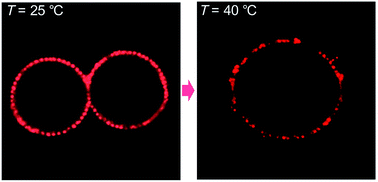
With thermo-responsive properties, the PNIPAM microgels at the interface can undergo volume phase transition from a hydrophilic swollen state to a hydrophobic shrunken state upon thermo-triggering, thus leading to changes of their packing structures as well as the interfacial stability. As shown in Fig. 4, at 25 °C, the O/W droplets are initially armored with a monolayer of densely and hexagonally packed PNIPAM microgels at their surfaces (Fig. 4a1 and b1), thus the droplets remain stable due to the reduced interfacial energy and microgel barriers between droplets. With increasing the temperature across the VPTT, the PNIPAM microgels undergo a dramatic transition from a hydrophilic swollen state to a hydrophobic shrunken state (Fig. 2d), which are prone to form aggregates in aqueous condition. This makes the droplet surfaces that are initially armored with swollen PNIPAM microgels exposed, leading to a rapidly decreased surface coverage as well as increased interfacial tension for surface destabilization. Especially, it is worth noting that, the temperature-responsive change of packing structure of PNIPAM microgels at the droplet surface at such a high temperature (40 °C) is directly observed in our experiments (Fig. 4a2 and b2). At 40 °C, the PNIPAM microgels at the droplet surface shrinks and aggregates, making the initially-covered droplet surface exposed, which strongly confirms the hypothesis we proposed above. Moreover, compared with the microgel aggregation, the microgel shrinkage contributes more for exposing the droplet surface, because every microgel shrinks upon heating but only a small part of microgels form aggregates. Moreover, such a packing structure change is reversible when the temperature is decreased back to 25 °C (Fig. 4a3 and b3). All the results show the temperature-dependent changes of the packing structure of PNIPAM microgels at the droplet surface for stability adjustment. Thus, based on such behaviors, when two destabilized droplet surfaces contact with each other, coalescence of droplets can be achieved.


image file: c6ra12594h-f4.tif
Fig. 4 Temperature-dependent packing structures of PNIPAM microgels on the droplet surface. (a and b) CLSM images that respectively focus on the equator (a) and the top (b) of an O/W droplet stabilized by fluorescent PNIPAM microgels with concentration of 0.4 (w/v)%, showing the changes of packing structures of microgels on the droplet surface upon heating from 25 (a1 and b1) to 40 °C (a2 and b2), and then cooling back to 25 °C (a3 and b3). The scale bar is 5 μm.

Thermo-triggered coalescence of O/W droplets stabilized by PNIPAM microgels

A single layer of monodisperse PNIPAM-microgel-stabilized droplets are collected in a microchamber, and heated from room temperature to 40 °C for thermo-triggered droplet coalescence (Fig. 5a and Movie S2). Upon heating, at the early stage, the PNIPAM microgels that cover the droplet surfaces shrink gently, thus the O/W droplets can still remain stable and no coalescence is observed. When the temperature increases across the VPTT, the PNIPAM microgels undergo a dramatic transition from a hydrophilic swollen state to a hydrophobic shrunken state, which are prone to form aggregates at the interface and in the water phase. This makes the droplet surfaces that are initially armored with swollen PNIPAM microgels exposed, leading to a rapidly decreased surface coverage as well as an unstable droplet surface. Thus, neighboring O/W droplets, with unstable surfaces contacted with each other, start to coalesce (Fig. 5a2–a4). Such thermo-triggered coalescence behaviors are further investigated by using CLSM technique focusing on two neighboring droplets. As shown in Fig. 5b1, at 40 °C, with PNIPAM microgels shrink and aggregate at the interface, the surfaces of two neighboring droplets are partially exposed for destabilization. At the point where the exposed surfaces contact with each other, coalescence of the two droplets occurs and forms a larger coalesced droplet with surface covered by shrunken PNIPAM microgels (Fig. 5b2).
image file: c6ra12594h-f5.tif
Fig. 5 Thermo-triggered coalescence of O/W emulsion droplets stabilized by PNIPAM microgels with concentration of 0.4 (w/v)%. (a) Optical images showing the coalescence process of droplets stabilized by PNIPAM microgels in a microchamber. (b) CLSM images showing Packing structure changes of fluorescent PNIPAM microgels on the droplet surface before (b1) and after (b2) thermo-triggered coalescence. Scale bars are 200 μm in (a), and 5 μm in (b).

To further confirm the thermo-triggered droplet coalescence caused by PNIPAM microgels, bulk O/W emulsions with surfaces of BB droplets respectively stabilized by PNIPAM microgels, PLGA nanoparticles and surfactant Pluronic F-127 in the water phase are prepared by shaking, and then used for coalescence study. The PLGA nanoparticles with average diameter of 450 nm are fabricated by solvent evaporation method.50 The concentrations of the three interfacial stabilizers are 0.4 (w/v)%. At 25 °C, all the three bulk emulsions remain stable (Fig. S1a). With increasing temperature from 25 to 40 °C, the stacked droplets in the bulk emulsions with PNIPAM microgels as stabilizers coalesce for phase separation, while the other two emulsions still remain stable (Fig. S1b). The results confirm the effect of PNIPAM microgels for thermo-triggered coalescence of Pickering emulsion droplets.

Effects of droplet size and microgel concentration on the thermo-triggered droplet coalescence

For the thermo-triggered droplet coalescence, the effects of droplet size and microgel concentration on the thermo-triggered coalescence behaviors are quantitatively studied by analyzing the coalescence percentage. First, uniform O/W droplets with different diameters of 40 μm, 60 μm and 80 μm under PNIPAM microgel concentration of 0.4 (w/v)% are generated using flow-focusing geometry with width and depth of microchannel respectively being 70 μm and 80 μm. The droplets are used to study the effect of droplet size on the thermo-triggered coalescence behaviors (Fig. 6a). For all samples at the early stage of heating, the O/W droplets remain stable and no coalescence is observed. When the temperature increases across the VPTT, the adjacent O/W droplets start to coalesce with each other (t = ∼59 s). After that, the droplets coalesce fast upon further heating and reach a coalescence percentage of ∼90% for all the three samples, indicating excellent thermo-triggered coalescence behaviors. The coalescence rate increases with decreasing the droplet diameter from 80 to 40 μm (Fig. 6a). For example, at t = 120 s, the coalescence percentages are 86%, 70%, and 64% for the droplets with diameters of 40, 60, and 80 μm respectively, indicating a better coalescence behavior for droplets with diameter of 40 μm as compared with the other two bigger ones. Because the adsorption free energy required for removing particles from the particle-stabilized interface decreases with increasing interface curvature,51 the smaller droplets with larger interface curvature can show less stability, resulting in faster coalescence. Therefore, droplets with diameter of 40 μm are used for further coalescence study.
image file: c6ra12594h-f6.tif
Fig. 6 Effect of droplet size and microgel concentration on the thermo-triggered coalescence behaviors. (a) Time-dependent coalescence percentage of droplets with different diameters upon heating. The microgel concentration is 0.4 (w/v)%. (b) Time-dependent coalescence percentage of droplets stabilized by different concentrations of microgels upon heating. The droplet diameter is 40 μm.

Next, we have investigated the effect of the concentration of PNIPAM microgels on the thermo-triggered coalescence behaviors by using uniform O/W droplets with diameter of 40 μm (Fig. 6b). Similarly, upon heating, the O/W droplets with different microgel concentrations remain stable at the early stage, and start to coalesce when the temperature increases across the VPTT. The coalescence rate decreases with increasing the microgel concentration from 0.4 to 0.8 (w/v)%. At t = 120 s, the coalescence percentages are 86%, 71%, and 57% for microgel concentrations of 0.4%, 0.6%, and 0.8% (w/v) respectively. Such a difference in coalescence percentage indicates that, better droplet coalescence can be achieved with microgel concentration of 0.4% as compared with the other two. With such an increase in microgel concentration, more microgels can be adsorbed at the exposed droplet surface for stabilization. Meanwhile, there are more microgels in the aqueous phase between droplets as barriers against the coalescence, thus leading to a decreased coalescence rate. Based on these results, PNIPAM-microgel-stabilized droplets with diameter of 40 μm and microgel concentration of 0.4 (w/v)% are used for further investigation on on-chip thermo-triggered coalescence.

On-chip thermo-triggered coalescence of controllable Pickering emulsion droplet pairs

Based on the temperature-induced destabilization of PNIPAM-microgel-stabilized droplet surface, a PDMS microfluidic device is developed for continuous thermo-triggered coalescence of droplet pairs on-chip (Fig. 7a), with an ITO glass placed below the device downstream for local heating of the expanded microchamber and the nearby microchannels (Fig. 7b). Fig. 7c and d are infrared thermal images respectively showing the temperature distributions of the microfluidic device, with ITO glass for controlling the average temperature of the expanded microchamber at 25 and 40 °C respectively.
image file: c6ra12594h-f7.tif
Fig. 7 On-chip thermo-triggered coalescence of controllable O/W droplet pairs stabilized by PNIPAM microgels with concentration of 0.4 (w/v)%. (a and b) Photos of the PDMS microfluidic device used for thermo-triggered droplet coalescence (a), with magnified image showing the flow-focusing geometries and the expanded microchamber coupled with ITO glass for temperature control (b). (c and d) Infrared thermal images showing the temperature distribution of the microchannels, with ITO glass for controlling the average temperatures of their expanded microchamber respectively at 25 °C (c) and 40 °C (d). (e and f) High-speed snapshots showing the non-coalescence (e) and thermo-triggered coalescence (f) of droplet pairs at 25 °C and at 40 °C respectively. The scale bars are 5 mm in (a), 2 mm in (b), (c) and (d), and 200 μm in (e) and (f).

The microfluidic device contains two flow-focusing geometries for separately generating different droplets from two inner fluids (IF1 and IF2). BB dyed with and without LR 300 for distinguishing the content difference, are respectively used as IF2 and IF1. The OF is aqueous dispersion of PNIPAM microgels, with concentration of 0.4 (w/v)%. The flow rates of the inner and outer fluids are adjusted to synchronize the formation frequencies of both types of droplets. After converged by the Y-shaped microchannel, one IF1 droplet is matched with one IF2 droplet for pairing, thus forming an array with regularly and alternatively aligned droplets of IF1 and IF2. When the droplet pairs flow into the expanded microchamber, the reduced flow rate of continuous phase at the expanded microchamber slows down the dispersed droplets, thus making the paired two droplets contact with each other. When the average temperature of the expanded microchamber is kept at 25 °C (Fig. 7c), the droplet surfaces remain stable due to the nearly unchanged packing structure of PNIPAM microgels at the interfaces; thus no coalescence occurs (Fig. 7e). By contrast, when the average temperature of the expanded microchamber is heated to 40 °C (Fig. 7d), the pairs of two droplets coalesce within several milliseconds, leading to fast mix of the encapsulated two distinct contents (Fig. 7f and Movie S3). Upon heating, the temperature of the microchannel in the upstream of expanded microchamber becomes higher than the VPTT (Fig. 7d), thus the droplet surfaces become unstable before they enter the expanded microchamber, due to the volume phase transition and aggregation of interfacial PNIPAM microgels. Thus, when they contact with each other in the expanded microchamber, the pairs of two droplets coalesce within several milliseconds.

The effect of microgel concentration on such on-chip thermo-triggered coalescence behaviors are investigated by using droplets stabilized by PNIPAM microgels with concentrations of 0.4, 0.6, and 0.8 (w/v)%, respectively (Fig. 8). The average coalescence percentage decreases from ∼83% to ∼8% with increasing the microgel concentration from 0.4 to 0.8 (w/v)% (Fig. 8a); meanwhile, the average coalescence time for the coalesced droplet pairs, defined as the time from droplet contact to droplet coalescence, increases from 8 to 28 ms with increasing the microgel concentration (Fig. 8b). These results indicate the less stability of droplet surface at lower microgel concentration is beneficial to the thermo-triggered droplet coalescence.


image file: c6ra12594h-f8.tif
Fig. 8 Effect of the concentration of PNIPAM microgels on the on-chip thermo-triggered coalescence behaviors of droplet pairs. (a) Coalescence percentage, (b) coalescence time.

Conclusions

In summary, this work reports on the on-chip thermo-triggered coalescence of controllable Pickering emulsion droplet pairs with distinct contents in microchannel. Microfluidic device with ITO glass for temperature control is used for generating, pairing and coalescing O/W emulsion droplets containing distinct contents, with thermo-responsive PNIPAM microgels for stabilization and destabilization of the droplet surface. At temperatures lower than the VPTT, the droplet surfaces are densely covered with hydrophilic and swollen PNIPAM microgels for stabilization. While at temperatures higher than the VPTT, the PNIPAM microgels shrink and aggregate at the interfaces, which expose the initially microgel-covered droplet surface for destabilization. Thus, when flowed into the heated expanded microchamber, the droplet pairs contact and coalesce due to their unstable surfaces, leading to fast mixing of the distinct contents. Based on the excellent manipulation of droplets with microfluidics,31 thermo-triggered coalescence of droplet pairs with controllable droplet sizes and with diverse contents of precisely controlled amounts is achieved. Such a rapid coalescence process provides a novel approach for thermo-triggered mix of different controllable components for on-chip microreactions and mircodetections. The on-chip thermo-triggered coalescence of controllable droplet pairs presented in this study are highly potential for development of novel droplet-based microsystems as microreactors and microdetectors for various applications such as bio/chemical synthesis, enzyme assay and DNA analysis.

Acknowledgements

The authors gratefully acknowledge support from the National Natural Science Foundation of China (91434202, 21322605, 81321002), the Program for Changjiang Scholars and Innovative Research Team in University (IRT15R48), and State Key Laboratory of Polymer Materials Engineering (sklpme2014-1-01).

References

  1. C. N. Baroud, F. Gallaire and R. Dangla, Lab Chip, 2010, 10, 2032–2045 RSC.
  2. H. Song, D. L. Chen and R. F. Ismagilov, Angew. Chem., Int. Ed., 2006, 45, 7336–7356 CrossRef CAS PubMed.
  3. S.-Y. Teh, R. Lin, L.-H. Hung and A. P. Lee, Lab Chip, 2008, 8, 198–220 RSC.
  4. A. B. Theberge, F. Courtois, Y. Schaerli, M. Fischlechner, C. Abell, F. Hollfelder and W. T. Huck, Angew. Chem., Int. Ed., 2010, 49, 5846–5868 CrossRef CAS PubMed.
  5. A. M. Huebner, C. Abell, W. T. Huck, C. N. Baroud and F. Hollfelder, Anal. Chem., 2011, 83, 1462–1468 CrossRef CAS PubMed.
  6. H. Chen, Y. Zhao, J. Li, M. Guo, J. Wan, D. A. Weitz and H. A. Stone, Lab Chip, 2011, 11, 2312–2315 RSC.
  7. W. J. Duncanson, A. Abbaspourrad, H. C. Shum, S.-H. Kim, L. L. Adams and D. A. Weitz, Langmuir, 2012, 28, 6742–6745 CrossRef CAS PubMed.
  8. L. Frenz, A. El Harrak, M. Pauly, S. Bégin-Colin, A. D. Griffiths and J. C. Baret, Angew. Chem., Int. Ed., 2008, 47, 6817–6820 CrossRef CAS PubMed.
  9. D. Pekin, Y. Skhiri, J.-C. Baret, D. Le Corre, L. Mazutis, C. B. Salem, F. Millot, A. El Harrak, J. B. Hutchison and J. W. Larson, Lab Chip, 2011, 11, 2156–2166 RSC.
  10. E. Brouzes, M. Medkova, N. Savenelli, D. Marran, M. Twardowski, J. B. Hutchison, J. M. Rothberg, D. R. Link, N. Perrimon and M. L. Samuels, Proc. Natl. Acad. Sci. U. S. A., 2009, 106, 14195–14200 CrossRef CAS PubMed.
  11. L. Mazutis, A. F. Araghi, O. J. Miller, J.-C. Baret, L. Frenz, A. Janoshazi, V. Taly, B. J. Miller, J. B. Hutchison and D. Link, Anal. Chem., 2009, 81, 4813–4821 CrossRef CAS PubMed.
  12. L. Mazutis, J.-C. Baret, P. Treacy, Y. Skhiri, A. F. Araghi, M. Ryckelynck, V. Taly and A. D. Griffiths, Lab Chip, 2009, 9, 2902–2908 RSC.
  13. L. Ducry and D. M. Roberge, Angew. Chem., Int. Ed., 2005, 117, 8186–8189 CrossRef.
  14. T. Ngai, S. H. Behrens and H. Auweter, Chem. Commun., 2005, 3, 331–333 RSC.
  15. T. T. Liu, S. Seiffert, J. Thiele, A. R. Abate, D. A. Weitz and W. Richtering, Proc. Natl. Acad. Sci. U. S. A., 2012, 109, 384–389 CrossRef CAS PubMed.
  16. T. Ngai, H. Auweter and S. H. Behrens, Macromolecules, 2006, 39, 8171–8177 CrossRef CAS.
  17. D. R. Link, E. Grasland-Mongrain, A. Duri, F. Sarrazin, Z. Cheng, G. Cristobal, M. Marquez and D. A. Weitz, Angew. Chem., Int. Ed., 2006, 45, 2556–2560 CrossRef CAS PubMed.
  18. J. S. Sander, R. M. Erb, C. Denier and A. R. Studart, Adv. Mater., 2012, 24, 2582–2587 CrossRef CAS PubMed.
  19. N. N. Deng, S. X. Sun, W. Wang, X. J. Ju, R. Xie and L. Y. Chu, Lab Chip, 2013, 13, 3653–3657 RSC.
  20. N.-N. Deng, J. Sun, W. Wang, X.-J. Ju, R. Xie and L.-Y. Chu, ACS Appl. Mater. Interfaces, 2014, 6, 3817–3821 CAS.
  21. M.-Y. Zhang, H. Zhao, J.-H. Xu and G.-S. Luo, RSC Adv., 2015, 5, 32768–32774 RSC.
  22. E. Verneuil, M. L. Cordero, F. Gallaire and C. N. Baroud, Langmuir, 2009, 25, 5127–5134 CrossRef CAS PubMed.
  23. Z. Rozynek, A. Mikkelsen, P. Dommersnes and J. O. Fossum, Nat. Commun., 2014, 5, 1–6 Search PubMed.
  24. W. Richtering, Langmuir, 2012, 28, 17218–17229 CrossRef CAS PubMed.
  25. Z. Li and T. Ngai, Nanoscale, 2013, 5, 1399–1410 RSC.
  26. H. Feng, N. A. Verstappen, A. J. Kuehne and J. Sprakel, Polym. Chem., 2013, 4, 1842–1847 RSC.
  27. H. Feng, D. Ershov, T. Krebs, K. Schroen, M. A. C. Stuart, J. van der Gucht and J. Sprakel, Lab Chip, 2015, 15, 188–194 RSC.
  28. G. M. Whitesides, Nature, 2006, 442, 368–373 CrossRef CAS PubMed.
  29. M. Joanicot and A. Ajdari, Science, 2005, 309, 887–888 CrossRef CAS PubMed.
  30. L.-Y. Chu, A. S. Utada, R. K. Shah, J.-W. Kim and D. A. Weitz, Angew. Chem., Int. Ed., 2007, 46, 8970–8974 CrossRef CAS PubMed.
  31. W. Wang, R. Xie, X.-J. Ju, T. Luo, L. Liu, D. A. Weitz and L.-Y. Chu, Lab Chip, 2011, 11, 1587–1592 RSC.
  32. N.-N. Deng, Z.-J. Meng, R. Xie, X.-J. Ju, C.-L. Mou, W. Wang and L.-Y. Chu, Lab Chip, 2011, 11, 3963–3969 RSC.
  33. R. M. Lorenz, J. S. Edgar, G. D. Jeffries and D. T. Chiu, Anal. Chem., 2006, 78, 6433–6439 CrossRef CAS PubMed.
  34. C. N. Baroud, M. R. de Saint Vincent and J.-P. Delville, Lab Chip, 2007, 7, 1029–1033 RSC.
  35. E. Fradet, C. Mcdougall, P. Abbyad, R. Dangla, D. Mcgloin and C. N. Baroud, Lab Chip, 2011, 11, 4228–4234 RSC.
  36. W. Giger, P. H. Brunner and C. Schaffner, Science, 1984, 225, 623–625 CAS.
  37. D. Rosso, D. L. Huo and M. K. Stenstrom, Chem. Eng. Sci., 2006, 61, 5500–5514 CrossRef CAS.
  38. B. P. Binks, Curr. Opin. Colloid Interface Sci., 2002, 7, 21–41 CrossRef CAS.
  39. P. Wongkongkatep, K. Manopwisedjaroen, P. Tiposoth, S. Archakunakorn, T. Pongtharangkul, M. Suphantharika, K. Honda, I. Hamachi and J. Wongkongkatep, Langmuir, 2012, 28, 5729–5736 CrossRef CAS PubMed.
  40. S. Wiese, Angew. Chem., Int. Ed., 2013, 125, 604–607 CrossRef.
  41. H. Yang, T. Zhou and W. Zhang, Angew. Chem., Int. Ed., 2013, 125, 7603–7607 CrossRef.
  42. S. Tsuji and H. Kawaguchi, Langmuir, 2008, 24, 3300–3305 CrossRef CAS PubMed.
  43. B. Brugger, B. A. Rosen and W. Richtering, Langmuir, 2008, 24, 12202–12208 CrossRef CAS PubMed.
  44. Z. Li, W. Richtering and T. Ngai, Soft Matter, 2014, 10, 6182–6191 RSC.
  45. C. Monteux, C. Marliere, P. Paris, N. Pantoustier, N. Sanson and P. Perrin, Langmuir, 2010, 26, 13839–13846 CrossRef CAS PubMed.
  46. M. Destribats, V. Lapeyre, M. Wolfs, E. Sellier, F. Leal-Calderon, V. Ravaine and V. Schmitt, Soft Matter, 2011, 7, 7689–7698 RSC.
  47. M. Destribats, V. Lapeyre, E. Sellier, F. Leal-Calderon, V. Ravaine and V. Schmitt, Langmuir, 2012, 28, 3744–3755 CrossRef CAS PubMed.
  48. J. Wei, X. J. Ju, X. Y. Zou, R. Xie, W. Wang, Y. M. Liu and L. Y. Chu, Adv. Funct. Mater., 2014, 24, 3312–3323 CrossRef CAS.
  49. D. C. Duffy, J. C. McDonald, O. J. Schueller and G. M. Whitesides, Anal. Chem., 1998, 70, 4974–4984 CrossRef CAS PubMed.
  50. M. M. Yallapu, B. K. Gupta, M. Jaggi and S. C. Chauhan, J. Colloid Interface Sci., 2010, 351, 19–29 CrossRef CAS PubMed.
  51. R. Aveyard, J. H. Clint and T. S. Horozov, Phys. Chem. Chem. Phys., 2003, 5, 2398–2409 RSC.

Footnote

Electronic supplementary information (ESI) available: Fig. S1 showing the thermo-triggered coalescence of droplets stabilized by PNIPAM microgels, PLGA nanoparticles and surfactant Pluronic F-127 in bulk O/W emulsions; Movies S1–S3 respectively showing the 3D structure of droplets stabilized by fluorescent PNIPAM microgels, the thermo-triggered coalescence of PNIPAM-microgel-stabilized droplets, and the on-chip thermo-triggered coalescence of PNIPAM-microgel-stabilized droplet pairs. See DOI: 10.1039/c6ra12594h

This journal is © The Royal Society of Chemistry 2016
Click here to see how this site uses Cookies. View our privacy policy here.