
A. Potdevin*ab,
V. Brioisc,
N. Caperaabd,
C. V. Santillie,
G. Chadeyronab and
R. Mahioubd
aUniversité Clermont Auvergne, Sigma Clermont, Institut de Chimie de Clermont-Ferrand, BP 10448, F-63000 Clermont-Ferrand, France. E-mail: audrey.potdevin@sigma-clermont.fr
bCNRS, UMR 6296, ICCF, F-63178 Aubiere, France
cSynchrotron SOLEIL, L'Orme des Merisiers, Saint-Aubin-BP48, 91192 Gif sur Yvette, France
dUniversité Clermont Auvergne, Université Blaise Pascal, Institut de Chimie de Clermont-Ferrand, BP 10448, F-63000 Clermont-Ferrand, France
eInstituto de Quimica, UNESP, PO BOX 355, 14800-900 Araraquara, SP, Brazil
First published on 11th April 2016
Undoped and Tb3+-doped precursor solutions of Y3Al5O12 (YAG) have been prepared by the sol–gel process using alkoxide precursors stabilized by a chelating agent: acetylacetone (acacH), with various complexation ratios RC = 0, 1, 2 and 3 defined as the ratio between [Al(OPri)3] and [acacH]. Combining in situ UV-visible investigation of the hydrolysis process of these sols with X-ray diffraction study on the powders extracted after water addition to the sols, drying and subsequent heating, an optimal RC value has been determined. It leads to sols stable over a long period of time and resulting in a pure YAG phase. Structural and optical properties of Tb3+-doped precursor sols characterized by RC = 0 (as a reference for the influence of acacH) and RC = 1 (determined optimal value) were studied by means of X-ray Absorption Spectroscopy (XAS) and photoluminescence, respectively. Y K and Tb L3 edges XAS results show the presence of double heterometallic Y or Tb/Al alkoxides for the sol with RC = 1 involving pre-nuclei cluster with YAG structure. Emission and excitation spectra as well as decay curves were recorded and compared. Results revealed that the stabilized sol is much more efficient upon UV excitation than its unmodified counterpart thanks to an efficient energy transfer from acetylacetonate groups to active ions. Upon a 485 nm excitation, acac-modified samples remain the most efficient ones. It could be related to the dissimilar Tb local environments of the sols suggested by both UV-visible and photoluminescence excitation results.
Hence, chemical additives are frequently employed to better control the hydrolysis–condensation process5–8 in order to obtain materials with tuned properties. A literature survey shows that most commonly used chemical modifiers are organic acids, e.g. acetic and malic acids,6,7,9,10 and β-diketones or allied derivatives.3,5 These complexing ligands prevent or at least slow down the condensation step and act as surface protecting entities. As a result, complexation strongly affects not only synthesis parameters such as gelation time, but also final morphology of the as-prepared solid such as porosity, particle shape and size, allowing the fine tuning of nanostructural feature of powder.11,12 For example, their use allows for obtaining monodisperse non-aggregated nanoparticles.13
Yttrium aluminium garnet (YAG or Y3Al5O12) is one of the most important matrices in optical devices. In particular, when doped with Ce3+ or Tb3+, it represents a very efficient compound for solid-state lighting.14–17 Thanks to a chloride-modified alkoxide-based sol–gel route, we synthesized both powders and films at temperatures lying from 800 °C to 900 °C (ref. 18 and 19) which is much lower than that required by traditional solid-state preparation route.20 Furthermore, the very good rare-earth distribution obtained in the matrix through these synthesis conditions leads to better photoluminescence properties compared to materials prepared by other processes.4 In recently published papers,19,21 we investigated the influence of acetylacetone on the structural, morphological and optical properties of YAG:Tb3+ powders. In particular, Small Angle X-ray Scattering (SAXS) and photoluminescence techniques have shown that acac-modified powders are characterized by an open morphology resulting from monomer–cluster aggregation process and exhibit, for powders heated between 400 and 900 °C, a significant improvement of the luminescence intensity upon UV radiation compared to samples prepared free of acac. These results strongly suggest that acacH plays a role since the early stage of the synthesis that is the precursor sol formation.
In this framework, this paper deals with the structural organization and optical properties of Tb3+ doped unmodified and acac-modified sols, molecular precursors of the YAG:Tb powders studied elsewhere.19,21 The main goal of this work is to better understand the mechanisms involved at the early stages of the YAG synthesis and, especially, to unravel the role played by acetylacetone during the sol elaboration. For this purpose, the influence of the quantity of acacH on the properties of sols and derived powders has been studied using UV-visible spectroscopy and X-ray diffraction. Then, X-ray absorption spectroscopy (XAS) has been used to investigate oxidation state and local environment of terbium ions for unmodified as well as for acac-modified sols. Their photoluminescence properties were recorded upon UV and blue excitation in Tb3+ 5D4 level. These results are discussed in light of the structural properties of the samples.
It is noteworthy that numerous papers have been devoted to the hydrolysis of “simple” alkoxides such as Ti or Zr derived ones, and to their chemical modifications.11,22–28 Except results reported for Ln[Al(OiPr)3]4,29,30 only very few studies concern heterometallic alkoxides involving both isopropoxide and acetylacetonate groups. Those works mainly concern a transition metal31,32 as metallic centre. In this general context, this paper presents an original work on heterometallic alkoxide systems, which could allow to better understand and to master the early stages of the sol–gel synthesis of functional ceramics. A preliminary study18 carried out on sols had highlighted that acac-groups are truly linked to metals and that acac-modified sols exhibit larger and more stable colloids than unmodified ones. The present study will particularly focus on the structural and optical modifications of the sol, induced by the presence of acetylacetone with a first insight in the features of functional heterometallic alkoxides.
Solution C is generally hydrolysed by introducing an excess of water, then dried at 80 °C and heat-treated to form crystallized YAG powders. But it can also be stabilized by adding acetylacetone after 2 hours of the above mentioned reflux at 85 °C. After the introduction of the desired quantity of acacH into the reactional solution, the reflux is maintained during 2 supplementary hours. Then, after cooling, centrifugation is used for removing KCl precipitate. This gives rise to a stabilized acac-modified sol which is usually used to elaborate thin films by dip-coating for example or which is hydrolysed with the same procedure aforementioned to yield acac-modified powders.
In this work, in order to determine the optimal quantity of acacH required to obtain a stable sol leading to pure YAG phase, several syntheses were carried out with various complexation ratios: RC = 0, 1, 2 and 3, RC being defined as:
Undoped and Tb3+-activated (20 mol%) matrices were prepared via the synthesis procedure described above. The doping rate of 20 mol% Tb3+ was chosen in relation to the observed optimal luminescence performances under blue excitation (485 nm).33 The different solutions with RC = 0, 1, 2 or 3 were stored at 10 °C in order to slow down hydrolysis and condensation processes. After several weeks at 10 °C, some crystals appeared in these solutions. To better understand the nature of these crystals, they have been analysed by Raman spectroscopy and X-ray diffraction.
In order to help us for the interpretation of our in-depth spectroscopic study of the sols, simple (homometallic) alkoxide solutions have been also elaborated, following the synthesis process afore described. Three solutions have been prepared from aluminium, terbium or yttrium chlorides dissolved in isopropanol, using the same quantities of acetylacetone.
XRD measurements were performed on a Siemens D501 diffractometer operating with a Cu-Kα radiation monochromatized whit a curved graphite monocristal.
Yttrium K-edge (17
080 eV) and terbium L3-edge (7514 eV) X-ray absorption spectra of references and samples were collected on the beamline BL-11-1 of the Elettra storage ring (Trieste, Italy) operating at 2/2.4 GeV with an optimal current around 300 mA. Measurements were performed using a Si(111) double crystal monochromator. All the data were recorded at liquid nitrogen temperature (77 K) in transmission mode using two ionization chambers filled with a mixture of nitrogen and argon optimized in pressure at each edge in order to achieve absorptions of 20% and 80% for incident I0 and transmitted I1 photon flux, respectively. At the Y K-edge and Tb L3 edge, EXAFS spectra were collected with a step of 2 eV with integration time of 2 s whereas, at the L3 Tb-edge, XANES spectra were recorded with a step of 0.2 eV and 1 s of integration time. Typically, three or four scans were merged for each sample to get a good signal to noise ratio. A liquid cell with Kapton® windows placed in a liquid nitrogen-chilled cryostat was filled by the sols for their absorption spectra recording.
EXAFS data analysis was carried out using the Athena and Artemis programs.34 The EXAFS extraction and fitting at the Y K edge (respectively Tb L3 edge) were performed using the same functions and S02 and enot parameters than those described in our previous papers19 (respectively21). The reliability of the fit is assessed by the value of the residual factor RF, which was minimized during the least square fitting procedure. For the XANES study, Tb4O7 was used as a standard and data were normalized at 7609 eV.
Raman spectra were recorded with a T64000 Jobin-Yvon confocal micro-Raman spectrograph. The confocal configuration of the micro-Raman instrument allows depth profiling of the samples, permitting the detection of the Raman spectrum from a volume as small as 1 μm3 focusing at different depths into the sample. The excitation source used was the 514.5 nm wavelength line from a Coherent model 70C5 Ar+ laser operating at a power of 400 mW. A 100-fold objective lens was used for the focusing so that only a volume of 1 μm3 was sampled. The data was collected for 2 × 30 s. The resolution on the wavenumbers is approximately 1 cm−1.
Excitation and UV-excited emission spectra were recorded with a Jobin-Yvon set-up consisting of a Xe lamp operating at 400 W and two monochromators (Triax 550 and Triax 180) combined with a cryogenically cooled charge coupled device (CCD) camera (Jobin-Yvon Symphony LN2 series) for emission spectra and with a Hamamatsu R980 photomultiplier for excitation ones. Excitation spectra have been corrected for instrument response and Xe lamp intensity thanks to sodium salicylate. The resolution of the system is better than 0.1 nm in both emission and excitation configurations. Emission spectra upon blue excitation as well as decay curves were recorded with a monochromator Jobin-Yvon HR 1000 spectrometer, using a dye laser (continuum ND62) pumped by a frequency doubled pulsed YAG:Nd3+ laser (continuum surelite I). The dye solution was prepared by mixing rhodamines 610 and 640. To achieve a resonant pumping in the blue wavelength range, the output of the dye laser was up-shifted to 4155 cm−1 by stimulated Raman scattering in a high pressure gaseous H2 cell. Fluorescence decays were measured with a LeCroy 400 MHz digital oscilloscope. All luminescence properties have been studied at room temperature.
The hydrolysis–condensation step of the precursor solution C with various RC ratios was studied by UV-Vis spectroscopy. Fig. 1 reports the absorbance change measured at 800 nm of the system heated at 60 °C after addition of distilled water (10% vol).
![]() | ||
| Fig. 1 Time evolution of the absorbance of YAG:Tb (20%) sols synthesized with different RC at 800 nm during hydrolysis at 60 °C. | ||
At 800 nm, precursors do not absorb (see Fig. S1†) whatever the RC ratio, then the increase in absorbance level can be mainly related to scattering phenomenon by the size of particles embedded in solution. Herein, a significant increase of absorbance is expected during the gel formation for which the media becomes turbid due to increase of connectivity between particles. For RC = 1 and 2, the absorbance slowly increases in time confirming the stability of these sols. For RC = 3, the absorbance first slowly increases at a rate similar to the variations observed for RC = 1 and 2 before to rise abruptly due to the formation of large aggregates in the medium owing to the progression of the sol–gel transition (hydrolysis–condensation processes). Finally, the unmodified sol (RC = 0) is unstable since gelation instantaneously occurs after water addition, as indicated by the significant increase in the absorbance after few minutes. These results show that there is an optimal quantity of acacH achieved with RC = 1 and 2 which preserves stable the sols for a long time. This kind of behaviour has also been observed by Spijksma and co-workers35 who studied stabilization and destabilization of zirconium isopropoxide sols by acetylacetone. Depending on the added acacH quantity, mixed zirconium isopropoxide/acetylacetonate [Zr(OiPr)2(acac)3] turned into more stable Zr(acac)4.
In order to appreciate the influence of acacH on the YAG crystallinity, the different as-prepared sols (RC = 0, 1, 2 and 3) were hydrolysed, dried for 12 hours at 80 °C and fired 4 hours at 1100 °C. Fig. 2 displays the XRD patterns of these so-obtained powders. Whereas for RC ≤ 1, pure YAG phase is obtained, a secondary phase i.e. YAM (Y4Al2O9) is identified for RC = 2 and 3, together with the YAG phase. The intensity of the diffraction peaks assignable to this phase remains weak for RC = 2 but strongly increases for RC = 3. Thanks to this XRD analysis, the value RC = 2 has been further banished in our synthesis protocol since it leads to impure material.
![]() | ||
| Fig. 2 XRD patterns recorded from acac-modified YAG:Tb (20%) samples sintered at 1100 °C for 4 h with different RC. | ||
This behaviour can be related to the nature of crystals formed after storing the solutions at 10 °C for several weeks. For RC = 1, luminescent small needles are obtained. Unfortunately as these needles are changed to an amorphous powder analogous to xerogels when they are dried, their further investigation by XRD was unsuccessful.
For RC = 3, non-luminescent cubic-like crystals have been isolated. They are insensitive to drying contrary to needles obtained for RC = 1. For RC = 2, both kinds of crystals have been observed. The non-luminescent crystals have been analysed by XRD and Raman spectroscopy. As an example, Fig. 3 exhibits the Raman spectrum of the solid phase crystallizing in the sol characterized by RC = 3. All the lines observed correspond to vibration modes usually obtained for aluminium tris-acetylacetone.36 This result is in good agreement with the non-luminescence of these crystals since luminescence properties are only due to the presence of Tb3+ ions. The XRD pattern obtained is close to the one previously reported by Le Bihan et al.37 and ascribed to Al(acac)3. Then we propose that, in the presence of acacH with RC > 1, several acac groups link preferably to the aluminium atoms to form the stable Al(acac)3.
Since reagents are used in stoichiometric proportions to form Y3Al5O12, the formation of Al(acac)3 for RC > 1 explains that, upon hydrolysis–condensation processes and subsequently drying, a lower Al-rich phase than YAG identified by XRD as YAM (Y4Al2O9), is obtained.
Based on the communications of Spijksma et al.,35 Ribot et al.,38 and Harlan et al.,39 we assume that Al(acac)3 is more stable than Y(acac)3 or Tb(acac)3 and the appearance of Al(acac)3 entails the destabilization of sols after addition of water by leaving unstable [M(OiPr)3]n or [M(OiPr)2(acac)]n (M = Y or Tb and n to be presumably equal to 2, 3 or 4) species alone. This can explain the specific behaviour observed for RC = 3 in Fig. 1: a slight increase in absorbance during the first 30 minutes (time needed for destabilization mechanism) followed by a rapid sol–gel transition. This assumption is consistent with the 89Y NMR study of Harlan et al.39 showing that when mixed with alumoxane, Y(acac)3 tends to create an yttrium-doped alumoxane together with the formation of Al(acac)3. In this case, Al(acac)3 naturally appears as more stable than Y(acac)3.
To conclude this part, an optimal quantity of acacH defined by a value of RC = 1 has been determined for the preparation of solution C: after water-addition, this ratio leads to a more stable sol (Fig. 1) resulting in a pure single YAG phase with good crystallinity as evidenced by XRD (Fig. 2). As a consequence, the next sections of this paper will be devoted only to the comparison of the structural and optical properties between unstabilized (RC = 0) and stabilized (RC = 1) sols.
The spectrum obtained for the acac-modified precursor sols of YAG:Tb (Fig. 4a) only presents a broad absorption band lying from approximately 240 to 340 nm whereas the unmodified sample does not display any absorption band within this wavelength range (Fig. 4b). The absorption signal observed for the modified sample seems to result from different contributions, with two maxima located at 274 and 302 nm, respectively. This broad band can be ascribed to the π→π* transition of acetylacetonate groups.40
This confirms the chelating effect of acetylacetone, already reported by IR spectroscopy for this sol.18 Furthermore, considering the absorption spectra obtained for the simple acac-modified isopropoxide sols of Tb (Fig. 4c), Al (Fig. 4d) and Y (Fig. 4e) and for free acetylacetone (Fig. 4f), it can be concluded that the modified sol possesses a complex architecture where acac-groups have chelated at least two different metallic atoms, among them Tb ones. As explained by Holm and Cotton,40 the wavelength of the main absorption band is dependent on the coordinated metal and its position is nearly random; consequently, it is difficult, from UV-Vis spectra, to conclude if the sol is only composed of a mixture of homometallic alkoxides, of heterometallic alkoxides, chelated by acac groups or contains both of them.
Structural parameters characterizing the local order around Y and Tb of both sols were refined by least square fitting procedure and gathered in Tables 1 and 2 respectively. Fits for stabilized acac-modified sol (RC = 1) are compared with the filtered experimental EXAFS spectra at the Tb L3 edge in the 1–4 Å range in Fig. 6. Results obtained for acac-modified sample at the Y K-edge are presented in Fig. S2.†
| Sample | Y neighbourhood | N | R (Å) | Sigma (Å) |
|---|---|---|---|---|
| Unstabilized sol RC = 0 | O | 1.4 | 2.01 | 0.094 |
| O | 7.5 | 2.33 | 0.102 | |
| Stabilized sol RC = 1 | O | 3.3 | 2.29 | 0.049 |
| O | 4.0 | 2.42 | 0.071 | |
| Al | 1.9 | 3.22 | 0.065 |
| Sample | Tb neighbourhood | N | R (Å) | Sigma (Å) |
|---|---|---|---|---|
| Unstabilized sol RC = 0 | O | 1.0 | 2.20 | 0.116 |
| O | 7.0 | 2.39 | 0.116 | |
| Al | 5.3 | 3.24 | 0.130 | |
| Stabilized sol RC = 1 | O | 4.7 | 2.30 | 0.086 |
| O | 3.3 | 2.44 | 0.086 | |
| Al | 4.4 | 3.22 | 0.110 |
![]() | ||
| Fig. 6 Experimental (solid line) and fitted (dot line) two first-shell filtered EXAFS spectra at Tb L3-edge for stabilized acac-modified sol (RC = 1). | ||
Data and theoretical signals are in good agreement (RF comprised between 0.57 and 1.03%). It is noteworthy that for the acac-modified sol, the oxygen contributions around both absorbing atoms are located at distances in agreement with those found for the first coordination shell around yttrium embedded in the YAG structure, i.e. R1 = 2.30 Å and R2 = 2.43 Å.45 Irrespective of the absorbing atom, the acac-modified sol displays a coordination shell with almost equivalent number of oxygen atoms around 4 in both sub-shells whereas the first coordination shell of the unmodified sol is mainly composed by 7 oxygen atoms at the longer distance, giving rise to the apparent shift at longer distance of the corresponding PRDFs peak for this sample compared to the modified one.
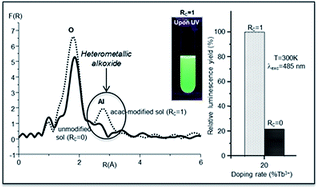
Besides the first coordination shell, least square fitting of EXAFS data for the modified sol reveals as second neighbours aluminium atoms located at 3.23 ± 0.01 Å for both absorbing atom. This contribution is at longer distance than the one characterizing the 2 aluminium atoms in tetrahedral site of the YAG structure (3.00 Å) but shorter than the one reported for the 4 second aluminium nearest neighbours in octahedral site (3.35 Å). We assume that pre-nuclei of YAG are already formed in the sol state but the lack of contributions at longer distances of aluminium/yttrium/terbium shells at 3.66 Å in the YAG or TAG structures does not constrain these first aluminium neighbours to be located in the tetrahedral and octahedral sites of the garnet structures but rather at the mean distance of both sites (3.24 Å = (2 × 3.00 Å + 4 × 3.35 Å)/6, 2 and 4 being the occupancy of tetrahedral and octahedral sites respectively). It is noteworthy that any attempt to fit the medium range order around yttrium for the unmodified sol beyond the first coordination shell with an aluminium contribution was unsuccessful. This contribution is probably due to light element contributions belonging to isopropoxide ligands.
Although the EXAFS data does not unambiguously revealed the formation of the triple heterometallic alkoxide (Y–Tb–Al) by the presence of Y or Tb contribution at longer distances, we have clearly evidenced the formation of heterometallic alkoxide with Al atoms linked to Tb atoms for both sols and to Y atoms for the modified sol. Actually, the latter does not only consist of a mix of simple homometallic alkoxide [M(OiPr)2(acac)]n M = Al, Y or Tb and n to be presumably equal to 2, 3 or 4) as it has been observed by Ion et al.44 for zirconium-based sols. This is in good agreement with UV-visible results reported in the Fig. 4 which emphasize the presence of a mixture of homo and/or heterometallic alkoxides, associated with acetylacetonate groups.
Finally, the similarity of the local order around Tb and Y when acac ligands are added in the synthesis route, suggests that pre-nuclei of YAG:Tb structure are formed. We assume that the aluminium second neighbours around both cations are themselves bonded to acac ligands to form a capping shell leading to the apparent stabilization of the sol in presence of water (Fig. 1). Similar order around yttrium, with aluminium atoms as second nearest neighbours, is not evidenced for the unmodified sol. This feature is probably responsible for the unstable behaviour of this sol when water is added (Fig. 1).
A Tb L3 edge XANES study has been undertaken on both Tb-doped sols in order to assess a possible influence of acacH on the Tb oxidation degree. Indeed, the presence of Tb4+ ions would be prejudicial to the optical properties: actually, Tb3+ always leads to radiative emission whereas Tb4+ does not and can even promote luminescence quenching.46,47
Fig. 7 displays XANES spectra recorded for both sols as well as the one corresponding to the standard mixed valent Tb4O7. Sols are characterized by similar XANES profiles for which Tb4+ signal has not been observed.46 The synthesis procedure does not entail the formation of Tb4+, even if acacH is used.
![]() | ||
| Fig. 7 Normalized Tb L3-edge XANES spectra of both YAG:Tb (20% mol) precursor sols and Tb standard Tb4O7. | ||
The main absorption band obtained for RC = 1 is characteristic of the π→π* transition of acetylacetonate groups. It can be assumed that it is broad and strong enough to hide the excitation peaks relative to 4f→5d Tb3+ transitions. The significant differences recorded between both sols below 350 nm are directly related to the modifications of Tb3+ local environment induced by acetylacetone, as evidenced by the XAS study (see Table 2). Indeed, the 5d orbit, being the outer orbit of the ion, is strongly influenced by the strength and symmetry of crystal-field undergone by the active ions. In the framework of crystal-field theory, amorphous phases exhibit lower symmetry and weaker crystal-field strength induced by the neighbouring ions if compared with crystallized ones. Consequently, the next neighbour could significantly alter the crystal-field parameters and so the spectral distribution, as observed here.
Emission spectra have been recorded, exciting the sols at the wavelengths corresponding to their maximum of absorption, which are 330 nm for acac-modified sols and 300 nm for unmodified ones. They are presented in Fig. 9a and b respectively. The spectral profiles are similar and exhibit the characteristic 5D4→7FJ (J = 6 to 0) Tb3+ transitions.47,48 They are characteristic of Tb3+ ions embedded in an amorphous matrix with relatively broad signals and not clearly defined Stark components.49
![]() | ||
| Fig. 9 Room temperature emission spectra of YAG:Tb (20 mol%) (a) acac-modified sol and (b) unmodified sol upon UV excitations. The inset presents a photograph of acac-modified sol upon UV excitation. | ||
For both samples, the 5D4→7F5 transition which usually confers to the Tb3+-doped matrices their green fluorescence (see the picture in the inset of Fig. 9) is the most intense. If compared the emission intensities between the acac-modified (Fig. 9a) and unmodified (Fig. 9b) sols, the first one is much more efficient upon UV-excitation. It can be related to an efficient energy transfer from the acac-groups that absorb the 330 nm excitation to the Tb3+ ions:50,51 it is the well-known “antenna effect” of rare-earth doped β-diketonates52 described through the schema presented in Fig. S3.†
Emission spectra recorded for the same sols under blue excitation (485 nm) are displayed in Fig. 10. They are similar and the green emission observed arises from the spectral profiles. Thus, the relative outputs of luminescence related to both sols were determined by integrating the area under this emission band. Results are shown in Fig. S4.†
The higher luminescence yield is obtained for the stabilized sol (RC = 1) which is five times more efficient than the unmodified one upon blue excitation (485 nm). This can be explained by changes in Tb3+ local environment since Tb3+ 5D4 level is directly excited in this case.
It is in good agreement with both dissimilar Tb3+ surroundings evidenced by XAS study and the assumption of the presence of pre-nuclei in acac-modified sol made based on Y3+ local environment (see discussion in XAS part and results gathered in Tables 1 and 2).
It is noteworthy to precise that the addition of acetylacetone during the synthesis has not only an influence on sols properties but also on structural, morphological and optical features of the derived crystallized powders, as evidenced in our previous works.19,21 Indeed, acac-modified powders were characterized by a different network aggregation process resulting in an earlier crystallization and a better removal of organic residue compared to non-modified powders. Thanks to this behaviour, acac-modified YAG:Tb powders presented a significantly improved luminescence under both blue and UV excitation for heating temperatures comprised between 400 and 900 °C.
Finally, the decay curves of these sols recorded at room temperature under blue excitation, monitoring 5D4→7F5 transition, are presented in Fig. 11a and b for sol with RC = 0 and RC = 1, respectively. For both investigated sols (Fig. 11), a single exponential decay is observed with time constants of 1.8 ms and 1.1 ms for RC = 0 and RC = 1 respectively.
![]() | ||
| Fig. 11 Luminescence decay traces at 300 K of the 5D4→7F5 emission of Tb3+ in (a) unstabilized YAG sol (RC = 0) and (b) stabilized YAG sol (RC = 1). | ||
These lifetimes are much lower than those recorded for YAG:Tb (20% mol) crystallized powders for which values around 3 ms were obtained.53,54
This shortening can be ascribed to the presence of organic residues which act as non-radiative relaxation promoters, via vibrations associated to C–H and O–H groups. For sol prepared with RC = 1, the 5D4 luminescence decay is faster than for RC = 0, which can be ascribed to energy transfer between Tb3+ followed by trapping of part of the luminescence by additional organic impurities due to acacH as previously evidenced by TGA.18 Furthermore, the time constant corresponding to the acac-modified sol is close to those observed for Tb3+ β-diketonates.
The second part of this paper has been focused on the relationship between optical properties of the solutions defined by RC = 0 and RC = 1 and the local environment of Y3+ and Tb3+ ions. XAS has highlighted the presence of heterometallic alkoxides Y/Al in acac-modified solutions whereas XANES has established that the trivalent oxidation state of Tb cations is preserved during the sol–gel process for both kinds of solutions. Thanks to the chelating effect of acac-groups, acac-modified solutions have turned out to be much more efficient upon UV-excitation than unmodified ones. Upon blue excitation acac-modified solutions remain more efficient but, in this case, it has to be related to local environment around Tb3+. Indeed, modified sols are organized differently compared to unmodified ones, with the assumed presence of pre-nuclei of YAG:Tb structure entailing a stronger crystal-field undergone by Tb3+ ions. This high luminescence of sols is very interesting for using them for applications and substrates where heating treatment is not possible. By the way, we have already used this acac-modified sol to elaborate luminescent silica monoliths55 usable for mood lighting or interior design.
Footnote |
| † Electronic supplementary information (ESI) available: Fig. S1: absorbance spectra of the precursor solutions; Fig. S2: experimental (solid line) and fitted (dot line) two first-shell filtered EXAFS spectra at Y K-edge for stabilized acac-modified sol (RC = 1); Fig. S3: general scheme representing the energy transfer from a ligand to Tb3+ ions, evidencing the antenna effect; Fig. S4: comparison of relative luminescence yields determined under blue excitation for Tb-doped sols between an acac-modified sol and an unmodified one. See DOI: 10.1039/c6ra06444b |
| This journal is © The Royal Society of Chemistry 2016 |