DOI:
10.1039/C5RA28107E
(Paper)
RSC Adv., 2016,
6, 30699-30709
Effects of reactive oxygen species on the biological, structural, and optical properties of Cordyceps pruinosa spores
Received
31st December 2015
, Accepted 15th March 2016
First published on 17th March 2016
Abstract
Effects of reactive oxygen species (ROS) on the optical, structural, and biological properties of Cordyceps pruinosa spores were studied. Both the atmospheric pressure plasma jet (APPJ) and chemically induced ROS significantly reduced the viability of C. pruinosa spores. Changes in the peak intensity of fluorescence and the depth of the dip in the circular dichroism (CD) spectrum suggested that both the APPJ and chemical induction of ROS can cause structural alteration of the spore cell wall. Fluorescence spectra of propidium iodide-stained spores indicated that alteration of cell wall (and/or membrane) permeability is involved in the change of spore viability after plasma treatment. High-performance liquid chromatography analysis of C. pruinosa ethanol extracts showed that the APPJ and chemical induction of ROS decreased the amount of ergosterol in the spores, indicating that excessive oxidative stress destroys cellular antioxidant capacity. Absorption spectroscopy, CD spectroscopy and agarose gel electrophoresis of the DNA extracted from the plasma-treated spores showed that a decrease in the DNA content and DNA degradation can be caused by either of the two treatments. The nonthermal APPJ and chemical induction were used to generate ROS in an aqueous solution. Electron spin resonance spectra provided evidence that hydroxyl radicals and singlet oxygen exist in the plasma activated water (PAW). Overall, the decline in spore viability, in antioxidative capacity, and in DNA content can be attributed to structural alteration of the cell wall and cellular damage by reactive species originating from the APPJ and the PAW.
Introduction
Insect pathogenic fungi have received considerable attention in multidisciplinary research groups because of their diversity of species and structural and biological properties relevant to industry and medicine.1,2 For better use of these fungi, an understanding of the survival of an entomopathogenic fungus in the presence of diverse environmental stresses is needed. Ionizing radiation (e.g., gamma-irradiation), ultraviolet (UV) light, and heat treatments have been used to inactivate fungal cells because these approaches alter genetic and cellular properties including deoxyribonucleic acid (DNA) and the cell wall.3–5 An atmospheric-pressure plasma jet (APPJ) or a dielectric barrier discharge (DBD) plasma has been used for nonthermal plasma treatment of biological materials.5–11 Nonetheless, the effect of plasma stress on Cordyceps fungi is not well understood. Recently, Cordyceps bassiana spores were studied under conditions of thermal, oxidative, or plasma-associated stress.12 Plasma treatment causes damage to the cell wall and DNA of C. bassiana spores. The effects of specific plasma radicals on Cordyceps pruinosa spores and on their cellular components have been relatively poorly studied, and it is not clear which cell wall components are involved in the resistance of spores to stresses when the fungi grow in the dark or under light. Furthermore, it has not been determined whether damage to the cell wall and DNA is a common phenomenon among all Cordyceps fungi because more than 400 Cordyceps species have been identified in different regions of the world, and different species show different resistance to various environmental stresses.
Cordyceps fungi are pathogens of various invertebrates, especially insects, spiders, and scale insects.13 Some of these fungi infect host insects from larval to adult stages and initially form endosclerotia that later produce cylindrical, club-shaped, or stipitate fruiting bodies outside the host body under favorable environmental conditions in the summer. Because they contain diverse compounds, the infected insect specimens with the fungal fruiting body have been studied with respect to medicinal, pharmaceutical, and biological applications.14,15 Consequently, biological research and methods for fungal cultivation are aimed at improving the production of the fungal fruiting bodies. Commercial use of these fungi requires information on the growth of the fungi and survival of fungal spores under various conditions, including environmental stress. Among Cordyceps species, Cordyceps bassiana (anamorph Beauveria bassiana) is one of the most well studied species16,17 because of its use in agriculture and forestry as a natural source of environmentally friendly pesticides. This fungus grows in mycelial form inside the host animal and produces yellow-pigmented fruiting bodies outside the host. Because there is no light inside the host body, the fungus grows as mycelia without the yellow color. Artificial growth of the fungus in the dark on Sabouraud dextrose agar supplemented with yeast extract (SDAY) suggests that the fungus grows in the form of white mycelia in the absence of light. It is generally expected that during infection inside an invertebrate-host body, fungi should cope with stressful conditions generated by the host defense responses, including reactive oxygen species (ROS).
Cordyceps pruinosa is known to invade the larvae of Lepidoptera and produces red fruiting bodies.18 This fungal species has also been studied for artificial cultivation and metabolic products in mycelia including adenosine and N6-(2-hydroxyethyl) adenosine by high-performance liquid chromatography (HPLC).19 Nuclear magnetic resonance and gas chromatography with mass spectrometry revealed that C. pruinosa mycelia show different metabolic profiles when they grow on different artificial media.20 In addition, recent reports on the production of the anticancer compound Cordycepin by C. pruinosa further extends the need for research on the biological properties of this fungus.19 In this regard, it would be useful to study the optical and structural properties of plasma-treated C. pruinosa. To achieve efficient production of radicals in an aqueous solution, we used a nonthermal APPJ.
In this study, we explore the effects of plasma treatment and chemically-induced ROS on the optical, structural, and biological properties of C. pruinosa spores. Reactive species generated by the jet plasma itself and those produced within the spore–water mixture by the APPJ were studied by measuring their optical emission and electron spin resonance (ESR) spectra. Viability of the plasma-treated spores was analyzed by counting the live and dead spores. Optical and structural properties of the plasma-treated spores were evaluated by HPLC, optical absorption, circular dichroism (CD) and fluorescence spectroscopic analyses. Morphological characteristics of the plasma-treated spores were examined by scanning electron microscopy (SEM). Oxygen radical scavenging activity of the C. pruinosa ethanol extract (CPEE) was assessed by measuring the antioxidant capacities of CPEE with the 1,1-diphenyl-2-picrylhydrazyl (DPPH), ferric reducing antioxidant power (FRAP), and 2,2′-azino-bis(3-ethylbenzo thiazoline-6-sulfonic acid) (ABTS) assays. The modification of (or damage to) the DNA extracted from the plasma-treated spores was analyzed by agarose gel electrophoresis. APPJ-driven changes in spore viability were compared with variations in the optical and structural properties of the plasma-treated spores.
Results and discussion
Viability and morphology of the plasma-treated spores
Fig. 1 shows the effects of plasma treatment on the viability of C. pruinosa spores at the concentration of 5 × 10⁷ spores per mL. All the plasma treatments decreased the viability of C. pruinosa spores. The spore cells exposed to plasma for 1 min were more viable than those exposed for 3 min or more. At a plasma treatment time of 3 min, the viability of C. pruinosa spores was 0.9% with significant inactivation effect of 99%. The survived spores could germinate and grow as mycelia. The tendency of decrease in spore viability with increase in plasma treatment time was also found in a previous study with C. bassiana.12 However, spore viability was lower in C. pruinosa than C. bassiana when they were exposed to plasma for 3 min. Thus, we could see that there were differences in the degree of cellular resistance to non-thermal plasma in C. bassiana and C. pruinosa.
 |
| | Fig. 1 Photos of C. pruinosa colonies generated from viable spores: (a) control and (b) 1 min and (c) 3 min plasma-treated spores. | |
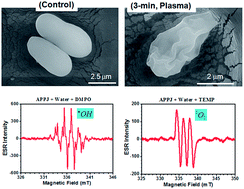
To identify the cause of the decreased spore viability, we examined the cell morphology of the plasma-treated spores. Fig. 2 shows SEM images of the plasma-treated C. pruinosa spores. The cell morphology of the plasma-treated spores underwent a dramatic change, as compared to the control spores. After plasma treatment, the spores were shrunk, ruptured, and flattened, indicating changes in cell morphology; the majority of the spores appeared to be slightly shrunk. The flattening of spores suggests that the intracellular space was at least partially emptied of its contents. Rough and wrinkled spore surfaces were also observed. All these data offer imaging evidence that the spore cell wall was deformed by plasma treatment. The cell wall deformation could affect spore viability when the cell wall lost its functions that control cell wall permeability and maintain structural rigidity. Considering that the spore deformation is increasingly severe (Fig. 2) and spore viability decreases as the plasma treatment time increases (Fig. 1), the spore cell wall is likely damaged enough to lose its function. Consequently, the damaged cell walls of the spores could provide a path for leakage of intracellular components such as nucleic acids, proteins, and various metabolites and/or make them vulnerable to attacks by plasma radicals and/or reactive species. Thus, spore cell death seems to be caused by the loss of (and/or damage to) intracellular components through the damaged cell wall.
 |
| | Fig. 2 SEM images of plasma-treated C. pruinosa spores: (a) control and (b) 1 min and (c) 3 min plasma-treated spores. | |
Optical emission analysis of the APPJ
The APPJ was used to study the effect of plasma treatment on C. pruinosa spores. To elucidate the mechanism of changes in spore viability and cell morphology caused by nonthermal plasma, we measured plasma radicals by optical emission spectroscopy. As shown in Fig. 3, the optical emission spectrum (OES) of the APPJ contained characteristic emission bands corresponding to Ar, N2, and hydroxyl radicals (˙OH). The emission bands of Ar and N2 were observed at 690–925 and 310–440 nm, respectively. This result is due to the fact that our plasma device operates at atmospheric pressure and Ar is used as the working gas. When the APPJ enters the aqueous solution, the possible reactions include21–24| |
 | (1) |
| |
 | (2) |
| |
 | (3) |
here, M+ is any plasma ion with ionization energy above the H2O ionization threshold. Optical emission of ˙OH appeared at 309 nm. The observation of ˙OH in OES suggests that superoxide anion radicals (O2−) and hydrogen peroxide (H2O2) can exist in the plasma-treated water because of the four-electron reduction of oxygen to water in an acidic environment.25,26| |
 | (4) |
 |
| | Fig. 3 Optical emission spectrum of the APPJ. | |
In eqn (3), the ratio of O2− to H2O2 depends on acidity of the liquid solution. For the water treated for 3 min, the pH of PAW was found 3.5, showing that water became acidic by plasma treatment. This result indicates that ˙OH, H2O2, and reactive nitrogen species can exist in the PAW.
ESR analysis of ROS generated in water by the APPJ
In addition to plasma radicals detected by OES, another important reactive species is singlet oxygen (1O2). Singlet oxygen can be observed spectroscopically by monitoring its infrared emission at 1270 nm. It is difficult, however, to detect singlet oxygen by optical spectroscopy because of the limit on the detection wavelength of our spectrometer. Therefore, the presence of singlet oxygen in the PAW was confirmed by ESR spectroscopy. To overcome the sensitivity problem of ESR spectroscopy arising from low spin concentration or fast spin relaxation, the spin-trapping technique can be used for detection of free radicals in biological systems. In this research, singlet oxygen-sensitive spin trap, 2,2,6,6-tetramethyl-4-piperidone (TEMP), was used for analysis of singlet oxygen in the PAW. TEMP was added to water, and the APPJ was applied to the aqueous solution. As TEMP reacted with the APPJ-induced singlet oxygen, a stable nitroxyl radical, 2,2,6,6-tetramethyl-4-piperidone-N-oxyl (TEMPO), was generated as their radical adduct. TEMPO produced a significant ESR signal. Therefore, the number density of singlet oxygen can be obtained from the number density of TEMPO radicals. Fig. 4(a) shows the ESR spectrum of singlet oxygen generated in water by the APPJ. When the APPJ was applied to the water, a significant ESR signal was observed, indicating that singlet oxygen exists in the PAW. The ESR spectrum consisted of a 1
:
1
:
1 triplet. A triplet ESR spectrum with a peak intensity ratio of 1
:
1
:
1 can be assigned to TEMPO (spin adduct of 1O2), which is the evidence of singlet oxygen.27,28 In derivative ESR spectroscopy, the double integral of ESR intensity is proportional to the number of spins (or radicals):| |
 | (5) |
here, ∫∫IS(ν)dνdν and ∫∫IR(ν)dνdν represent the double integrals of ESR intensity of the sample and of the reference material, respectively; n(S) and n(R) represent the number of spins in the sample and in the reference material, respectively. By comparing the double integral of the ESR spectrum for the TEMPO radicals produced in the PAW (sample) with that for the DPPH radicals (reference material), we obtained the number density of singlet oxygen in the PAW: n(1O2) = 6.0 × 10¹⁵ singlet oxygen molecules per cm3.
 |
| | Fig. 4 ESR spectra of (a) singlet oxygen and (b) hydroxyl radicals generated in water by the APPJ. Spin traps, TEMP and DMPO, were used for detection of singlet oxygen and hydroxyl radicals, respectively. | |
Next, a hydroxyl radical-sensitive spin trap, 5,5-dimethyl-1-pyrroline-N-oxide (DMPO), was used to confirm the presence of hydroxyl radicals in the PAW. DMPO was added to water, and the APPJ was applied to the aqueous solution. After reacting with the APPJ-induced hydroxyl radicals, DMPO was converted to DMPO-OH radicals, generating significant ESR signals. Therefore, the number density of the hydroxyl radical can be obtained from the number density of DMPO-OH radicals. Fig. 4(b) shows an ESR spectrum of the hydroxyl radical generated in water by the APPJ. When the APPJ was applied to the water, a significant ESR signal was observed, indicating that hydroxyl radicals exist in the PAW. The ESR spectrum consisted of a 1
:
2
:
2
:
1 quartet. A quartet ESR spectrum with a peak intensity ratio of 1
:
2
:
2
:
1 can be assigned to DMPO-OH (spin adduct of ˙OH), which is the evidence of OH generation.27,28 By comparing the double integral of the ESR spectrum for the DMPO-OH radicals produced in the PAW (sample) with that for the DPPH radicals (reference material), we obtained the number density of hydroxyl radicals in the PAW: n(˙OH) = 3.9 × 10¹⁵ hydroxyl radicals per cm3. To summarize, the ESR spectra [Fig. 4(a) and (b)] provided evidence that hydroxyl radical and singlet oxygen exist in the PAW.
CD and fluorescence analyses of the plasma-treated spores
Generally, spore viability depends not only on the cell wall integrity but also on many other factors such as DNA damage and mitochondrial dysfunction. Thus, we further studied the plasma-treated C. pruinosa spores by CD spectroscopy. Fig. 5(a) shows the CD spectra of the C. pruinosa spores in an aqueous solution before and after plasma treatment. The CD spectrum of the control spores showed a negative dip at about 231 nm, which might be attributed to cell wall proteins. When the APPJ was applied to C. pruinosa spores in the aqueous solution, the magnitude of the dip in the CD spectrum was smaller in the plasma-treated spores than in the control. The decreased CD might be attributed to many effects such as structural alteration of the spore cell wall proteins and leakage of intracellular components. One possible explanation of the decreased CD is that the APPJ causes structural alteration and/or damage to the spore cell wall. Furthermore, the damaged cell walls could provide a path for leakage of intracellular components. To confirm the structural alteration of the spore cell wall by plasma treatment, we measured the CD spectra of the freeze-dried C. pruinosa spores. The freeze-dried spores were prepared using 10 μL spore suspension at a concentration of 5 × 10⁷ spores per mL. Fig. 5(b) shows the CD spectra of the freeze-dried C. pruinosa spores before and after plasma treatment. In these CD spectra, the 231 nm CD band intensity was also lower in the plasma-treated spores than in the control. Therefore, Fig. 5 supports the notion that the APPJ in an aqueous solution can cause structural alteration of the spore cell wall, most likely due to ROS such as ˙OH, O2−, HO2, and H2O2, as well as reactive nitrogen species.
 |
| | Fig. 5 CD spectra of the plasma-treated C. pruinosa spores: (a) wet spores and (b) freeze-dried spores. | |
Tryptophan is one of naturally occurring fluorescent amino acids (phenylalanine, tyrosine, and tryptophan) that are commonly found in organisms, such as fungi, yeast, and algae.29 Tryptophan is a more convenient probe than phenylalanine or tyrosine. Tryptophan has a relatively high quantum yield,30 and tryptophan's fluorescence intensity is sensitive to the molecular environment in the vicinity of the fluorophore.30,31 Therefore, tryptophan's fluorescence intensity may be used as an optical indicator of spore viability.12,29 Fig. 6(a) shows the fluorescence spectra of plasma-treated C. pruinosa spores. In this experiment, we used 293 nm light for selective excitation of tryptophan's fluorescence. Spore fluorescence intensity was lower in the plasma-treated spores than in the control, and decreased with increasing the plasma treatment time. The fungal cell wall protects cellular components from oxidative damage caused by reactive oxygen and nitrogen species. The fluorescence spectra of the spores indicated that plasma treatment caused structural alteration of the cell wall of C. pruinosa spores. Alteration of cell wall components certainly hindered the functions of the spore cell wall. Therefore, the decline in spore viability was attributable to structural alteration of the cell wall and cellular damage by reactive species originating from the APPJ and the PAW. Several research groups reported that membrane permeabilization plays an important role in cell death. Arnusch et al. demonstrated that membrane pores are produced by a pore-forming antifungal agent such as amphotericin B, which associates with ergosterol in the fungal cell membrane.32 Gray et al. explained that Amphotericin B kills yeast by binding to ergosterol in the fungal cell membrane,33 and yeast killing is attributed to membrane permeabilization via channel formation.33 Bischofberger et al. reported membrane injury by pore-forming proteins.34 Generally, membranes constitute a kind of cellular Achilles heel, sensitive to both mechanical rupture and molecule-driven alterations,34 and many organisms have produced pore-forming molecules to disturb membrane integrity.34 Cell membrane pore-opening can also be induced by ROS of the APPJ. To find whether membrane integrity is affected by plasma treatment, we measured the fluorescence spectra of the C. pruinosa spores stained with membrane impermeable fluorophore, propidium iodide (PI). Fig. 6(b) shows the fluorescence spectra of PI–stained spores before and after plasma treatment. The fluorescence intensity of PI–stained spores was stronger in the plasma-treated spores than in the control, indicating that membrane integrity is weakened by plasma treatment.
 |
| | Fig. 6 Fluorescence spectra of (a) plasma-treated spores and (b) propidium iodide–stained spores after plasma treatment. | |
Absorption, CD, and HPLC analyses of the plasma-treated CPEE
To further evaluate the changes in cellular components under the influence of plasma treatment, we analyzed CPEE. Fig. 7(a) shows an optical absorption spectrum of CPEE. It showed a broad absorption band in the UV region, but CPEE was transparent in the visible region. Four absorption peaks were observed: at 261, 271, 281, and 293 nm. These absorption peaks of CPEE come from the cellular components of C. pruinosa spores. The observed absorption spectrum of CPEE is similar to the absorption spectrum of ergosterol reported in literature.35,36 The absorption spectrum also matched well that of commercial ergosterol in ethanol [Fig. 7(a)]. Thus, we found that CPEE contains ergosterol as a major component. Fig. 7(b) shows CD spectra of plasma-treated CPEE. These spectra suggest that ergosterol content of CPEE was decreased by the APPJ. According to the results in Fig. 7, we analyzed ergosterol in CPEE from the fungus with and without plasma treatment by HPLC. When the APPJ was applied to CPEE in water, ergosterol content decreased in the plasma-treated CPEE as compared to the control (Fig. 8). To see the effect of specific reactive species on ergosterol, we generated a specific radical by a chemical reaction. Hydroxyl radicals were generated by means of Fenton's reaction. FeCl2 was dissolved in water, and then H2O2 was mixed with FeCl2 to generate hydroxyl radicals. The concentrations of FeCl2 and H2O2 were 10 and 10 mM, respectively. Ergosterol content decreased in the CPEE treated with chemically induced hydroxyl radicals. In fungi, ergosterol is known to play a critical role in many membrane functions, affecting rigidity, fluidity, and permeability of the cell membrane.37 Furthermore, ergosterol has a radical-scavenging function as an antioxidant compound. These results suggest that the decrease in ergosterol content impairs the functions of cell membrane and lowers antioxidant activity of ergosterol in C. pruinosa spores. Thus, the decrease in ergosterol content of the fungal spores by plasma treatment should partly contribute to the decrease in spore viability. These results suggest that the decreased spore viability is attributed to a decrease in the ergosterol content in the spore.
 |
| | Fig. 7 (a) Absorption spectra of CPEE and ergosterol (standard). (b) CD spectra of plasma-treated CPEE. | |
 |
| | Fig. 8 HPLC chromatograms of the CPEE: (a) control CPEE, (b) plasma-treated CPEE, (c) hydroxyl radical-treated CPEE, and (d) ergosterol. Ergosterol was used as a reference. | |
Absorption and CD analyses of spores treated with chemically induced singlet oxygen
From the data in Fig. 3 and 4, we hypothesized that ROS generated by the APPJ had detrimental effects on C. pruinosa spores and on cellular components. To confirm that singlet oxygen actually causes changes in C. pruinosa spores and in the cellular components, we studied responses of C. pruinosa spores and their cellular components to chemically produced singlet oxygen. Singlet oxygen was generated by acidification of hypochlorite in an aqueous solution. NaOCl was dissolved in water, and then H2O2 was mixed with NaOCl to generate singlet oxygen. The concentrations of NaOCl and H2O2 were 20 and 20 mM, respectively. As shown in Fig. 9, both the peak intensity of fluorescence and the depth of the dip in the CD spectrum were lower in the singlet oxygen-treated spores than in the control spores. These results agreed with the data in Fig. 6 showing that fluorescence intensity was lower in the plasma-treated spores than in the control. To summarize, OES and ESR results (Fig. 3 and 4) show that APPJ generates hydroxyl radicals and singlet oxygen; HPLC and optical spectroscopic findings (Fig. 8 and 9) show that chemically induced singlet oxygen as well as hydroxyl radicals can modify the spore cell wall. Together, these two sets of results indicate that the effects of plasma treatment on the fungal spores can be attributed to the action of hydroxyl radicals and singlet oxygen.
 |
| | Fig. 9 Effect of chemically induced singlet oxygen on (a) fluorescence and (b) CD spectra of C. pruinosa spores. | |
Oxygen radical scavenging activity of CPEE
To overcome the plasma-induced oxidation stress, the fungal cells should cope with the action of hydroxyl radicals and singlet oxygen. Oxygen radical-scavenging action of antioxidant compound(s) is one of possible ways to deal with oxidative stress in viable cells. On the basis of the results of Fig. 7 and 8, we assumed that CPEE may contain active antioxidant compound(s). Accordingly, to confirm the antioxidant effects of CPEE, we measured the effect of CPEE on the oxygen radical-scavenging activity. To this end, DPPH was used as a standard oxidant for measuring the oxygen radical-scavenging activity of CPEE. The DPPH assay is a widely used antioxidant assay for plant samples.38,39 The DPPH method is based on the scavenging of DPPH via addition of a radical species or an antioxidant that decolorizes the DPPH solution. The antioxidant activity is then measured by a decrease in the absorbance at the absorption maximum of the green band. As shown in Fig. 10(a), the maximum of the green band absorption is weaker in the CPEE–DPPH mixture than in control DPPH, indicating that CPEE has antioxidant properties.
 |
| | Fig. 10 (a) Oxygen radical scavenging effect of the CPEE on the absorption spectrum of DPPH radicals. Antioxidant capacities of the CPEE relative to the trolox standard by (b) DPPH, (c) FRAP, and (d) ABTS assays. | |
To quantitatively evaluate oxygen radical scavenging activity of CPEE, the trolox equivalent antioxidant capacities of the CPEE were measured by DPPH, FRAP, and ABTS assays. Fig. 10(b)–(d) show the antioxidant capacities of the CPEE by DPPH, FRAP, and ABTS assays, respectively. The antioxidant capacities of CPEE were determined on the basis of the standard curve of trolox. Results are expressed as trolox equivalent antioxidant capacity. As shown in Fig. 10(b)–(d), the antioxidant capacities of the CPEE were found to be 20, 71, and 69 μg Trolox equivalents (TE) per 25 mg (dry weight of Cordyceps pruinosa extract) for DPPH, FRAP, and ABTS assays, respectively. The antioxidant activities of the CPEE by the FRAP and ABTS assays could correspond to the scavenging of hydroxyl and peroxyl radicals, respectively.39 Hydroxyl radical was also detected in OES and ESR spectra. Peroxyl radical could be transformed to hydrogen peroxide; the presence of hydrogen peroxide in the PAW was confirmed in a previous study.12 Antioxidant activity was also reported for aqueous extracts from natural and cultured mycelia of Cordyceps sinensis.40 According to the HPLC results (Fig. 8), antioxidant ergosterol content was lower in plasma-treated CPEE than in the control CPEE, and the spore viability was lower in the plasma-treated spores than in the control spores (Fig. 1). These results suggest there is a possible link between the decrease in viability of the plasma-treated C. pruinosa spores and the decrease in ergosterol content resulting in attenuated antioxidant activity. In general, a certain level of oxidative stress is expected to be handled by cellular antioxidants, but excessive oxidative stress can overpower cellular antioxidant capacity. Considering the results on spore viability in Fig. 1, it seems that the APPJ can produce large enough amounts of ROS to inundate the antioxidant defense system of fungal spores.
Electrophoresis, absorption, and CD analyses of the DNA extracted from the plasma-treated spores
We questioned whether the excessive amount of ROS generated by nonthermal plasma could reach the intracellular space of the spore cell. In eukaryotic cells such as fungi, genomic DNA is enclosed in the nuclear membrane and thus protected as one of the important cellular components. Therefore, we decided to test the possibility of DNA damage by analyzing electrophoretic patterns of the DNA extracted from the plasma-treated C. pruinosa spores. Fig. 11 shows agarose gel electrophoretic patterns of the genomic DNA extracted from the plasma-treated C. pruinosa spores. Analysis of the agarose gel revealed a significant decrease in the band intensity of the DNA extracted from the plasma-treated spores. The high-molecular-weight DNA molecules, marked with a box in lane C of the agarose gel, were present in the DNA from the control spores but not in the DNA from the plasma-treated spores. These data showed that plasma treatment resulted in DNA degradation in C. pruinosa spores. In addition, when we measured the amount of total DNA extracted from the spores, only 18 μg was obtained from the 3 min, plasma-treated spores, but 120 μg from the control spores. These results mean that the amount of DNA extracted from the plasma-treated spores was quantitatively less than that extracted from the control spores. The reduced amount of DNA in the plasma-treated spores is possibly a result of either degradation or leakage of DNA through the damaged cell wall, as shown in Fig. 2. Next, APPJ-driven changes in electrophoretic patterns were compared with variations in the optical properties of the DNA extracted from the plasma-treated C. pruinosa spores. Fig. 12 shows absorption and CD spectra of the DNA extracted from the plasma-treated C. pruinosa spores. The absorption spectrum of the control DNA revealed an absorption band at around 260 nm, attributable to Watson–Crick base-pairing between complementary strands of double-stranded DNA.41,42 When the APPJ was applied to fungal spores in water, intensity of the absorption peak of the plasma-treated DNA decreased, as compared to the control DNA. Next, we analyzed the CD spectra of DNA extracted from the plasma-treated C. pruinosa spores. The CD spectrum of the control DNA showed a characteristic CD signature, with a negative Cotton effect at 238 nm and a positive Cotton effect at 268 nm. The bisignate Cotton effect at around 260 nm is attributable to chirality of the DNA helices. When the APPJ was applied to fungal spores in water, the peak-to-valley variation in the CD spectrum between 230 and 280 nm was smaller in the plasma-treated spores than in the control, as shown in Fig. 12(b). These results suggest that changes in the absorbance and in the magnitude of the dip in the CD spectrum were caused by DNA deformation and/or degradation. Overall, our DNA analysis provides evidence that ROS generated by nonthermal plasma cause DNA damage that is fatal to C. pruinosa spores. Therefore, we concluded that ROS are key factors in the inactivation of fungal spores.
 |
| | Fig. 11 Agarose gel electrophoretic patterns of the genomic DNA extracted from the plasma-treated C. pruinosa spores. Lanes C, 1, and 2 represent the control DNA, and DNA after treatment with plasma for 1 and 3 min, respectively. The molecular size markers are in Lane M. The control DNA was extracted from the control spores at the concentration of 5 × 10⁷ spores per mL. The plasma-treated DNA was extracted from the spores that were exposed to the APPJ for 1 or 3 min. | |
 |
| | Fig. 12 (a) Absorption and (b) CD spectra of the DNA extracted from the plasma-treated C. pruinosa spores. | |
Conclusions
A nonthermal APPJ and chemical induction of ROS were used to study the effects of ROS on the optical, structural, and biological properties of spores derived from an insect pathogenic fungus, Cordyceps pruinosa. All the plasma treatments decreased the viability of C. pruinosa spores. In the plasma-treated C. pruinosa spores, the modification of cell morphology was proven by SEM analysis. In addition, the modifications of (or damage to) the cell wall, cell wall proteins, and DNA were verified by analyses of fluorescence spectra, CD spectra, and agarose gel electrophoresis. The fluorescence spectra of PI–stained spores indicate that alteration of cell wall permeability plays an important role in the decrease of spore viability caused by plasma treatment. The alteration of C. pruinosa spores was found to be caused by hydroxyl radicals and singlet oxygen generated in the jet plasma itself and by those produced in the spore–water mixture by the APPJ. Optical absorption and HPLC analysis of CPEE indicated that ergosterol concentration decreased in the plasma-treated C. pruinosa spores, implying that the ability to overcome excessive oxidative stress is important for survival of the fungus. Overall, our data suggest that plasma radicals and the derived reactive species are detrimental factors responsible for the inactivation of fungal spores.
Materials and experimental methods
Materials
Methanol and acetonitrile were purchased from J.T. Baker (Phillipsburg, NJ, USA). The ergosterol standard (3β-hydroxy-5,7,22-ergostatriene, 5,7,22-ergostatrien-3β-ol, provitamin D2; 95% pure) was purchased from Sigma-Aldrich (St. Louis, MO, USA). For the DPPH assay, DPPH and trolox were purchased from Sigma-Aldrich. For the FRAP assay, iron(ΙΙΙ) chloride hexahydrate (FeCl3·6H2O), 2,4,6-tripyridyl-s-triazine (TPTZ), and sodium acetate (C2H3NaO2·3H2O) were purchased from Sigma-Aldrich. Acetic acid and hydrochloric acid were purchased from Samchun (Pyungtek, Kyunggi-do, Korea). For the ABTS assay, ABTS and potassium persulfate (K2S2O8) were purchased from Sigma-Aldrich.
Fungal strains and spore preparation
Cordyceps pruinosa was used for this study. For solid culture, the fungus was maintained on SDAY medium by growing at 25 °C for 7 days in the dark. Fungal spores that formed on the solid medium were flooded with sterile water, resuspended by shaking, and filtered through several layers of sterile gauze. The resulting spore suspension was inoculated into a 300 mL glass flask containing 100 mL of SDY broth and cultured at 25 °C for 5 days with shaking at 200 rpm. Spores from the liquid culture were filtered again through two layers of sterile gauze, washed two times with sterile water by centrifugation at 7000 rpm for 10 min in a bench top centrifuge (Thermo Fisher Scientific, Sorvall™ ST 16, USA), were concentrated to 5 × 10⁷ spores per mL, and used for treatments with the APPJ and chemically induced ROS. The spores were counted using a hemocytometer (Sigma-Aldrich, Bright-Line™, USA).
Plasma device and plasma treatment conditions
The effects of plasma treatment on fungal spores were studied using the APPJ as a plasma source.43,44 The plasma device that we used in this study produces a nonthermal plasma jet, operates at atmospheric pressure, and consists of a dielectric glass tube with a medical needle and a copper tape attached to the bottom of a microtiter plate. The needle-shaped charged electrode was made of a stainless steel tube with an inner diameter of 0.8 mm and thickness of 0.2 mm. The needle electrode is located inside the cylindrical glass tube with the outer diameter of 5 mm, and the needle tip is 7 mm above the end of the glass tube. The grounded copper electrode is located 20 mm away from the end of the glass tube tip, which is attached to the rear bottom surface of a microtiter plate containing the biological samples. The distance between the charged electrode and the solution surface was set to 12 mm. The two electrodes of the plasma device were connected to a sinusoidal power supply, a commercial transformer of neon light, and the driving frequency of this power supply was approximately 22 kHz. To study the effects of plasma treatment on C. pruinosa spores, the spores were suspended in water at the concentration of 5 × 10⁷ spores per mL. One milliliter of the spore suspension was placed in each well of 48-well culture plates (SPL Life Sciences, Korea). The spore sample was treated with the APPJ with a power output of approximately 9 W. The Ar plasma jet was applied to each well for a few minutes. The Ar flow rate was about 150 sccm (standard cubic centimeters per minute). To detect the reactive species produced by the plasma, the optical emission spectra of the APPJ were recorded by a fiber-optic spectrometer (Ocean Optics, HR4000CG-UV-NIR, USA).
Spore viability, SEM, and electrophoretic analysis
For spore viability test, spores treated with the APPJ or chemically induced ROS or untreated spores were diluted with sterile water up to 10-fold, spread on SDAY and incubated at 25 °C for 7 days. The viable fungal colonies that formed on SDAY were counted, and their morphological characteristics were examined by a field emission scanning electron microscope (Hitachi, S-4300, Japan). For SEM analysis, fungal specimens were prepared using 1% osmic acid as described by Yun et al.45 The fungal spores were disrupted using a bead beater, and genomic DNA was prepared using a genomic DNA extraction kit (Solgent, Korea). The structural stability of genomic DNA was analyzed by electrophoresis on a 0.7% agarose gel. Tris-acetate EDTA (TAE) buffer and EcoDye (Solgent, Korea) were used for the DNA electrophoresis and staining. The stained DNA was examined under UV light and documented with an Image Analyzer; a 1-kb ladder (Bioneer Co., Korea) served as DNA molecular size marker.
Absorption, CD, fluorescence, and ESR spectroscopic analyses
To assess the optical and structural properties of plasma-treated spores and of the cellular components, we used optical absorption, CD, and fluorescence spectroscopic analyses. After plasma treatment, the C. pruinosa spores were washed with deionized water and then used for the analyses. For the spectroscopic assay, an aqueous suspension of C. pruinosa spores was used to measure absorption, CD, and fluorescence spectra. The UV-visible absorption spectra were obtained using a diode array spectrophotometer (Agilent, 8453, USA), and the CD spectra were recorded by a CD spectrophotometer (Jasco, J-815, Japan). The fluorescence spectra were obtained at room temperature by a fluorescence spectrometer (Hitachi, F-7000, Japan). The ESR spectra were recorded at room temperature by means of an X-band (∼9.45 GHz) ESR spectrometer (JEOL, JES-FA 200, Japan). The incident microwave power was 3 mW, and the ESR signals were acquired at the receiver gain of 500. The modulation frequency and amplitude were 100 kHz and 10 G, respectively. The external magnetic field was swept from 2860 to 3860 G. A flat cell (JEOL, LC11, Japan) was used for the aqueous samples. Spin numbers of the samples were calculated from the integrated area of magnetic susceptibility of the samples, with DPPH as a standard.
HPLC analysis of CPEE
Ergosterol content was determined using an HPLC system (Shimadzu, LC-20AD, Japan) with an autoinjector (Shimadzu, SIL-20AC, Japan). CPEE was loaded onto a silica-based reverse-phase column (Agilent, 5TC-C18, USA; 250 × 4.6 mm internal diameter). The HPLC mobile phase was 80
:
20 (v/v) acetonitrile/methanol flowing at a rate of 0.4 mL min−1. The column temperature was maintained at 35 °C, and 280 nm absorbance of the eluted ergosterol was measured using a UV-Vis detector (Shimadzu, SPD-20A, Japan). The ergosterol standard showed retention time of 34.65 min. The linearity of ergosterol concentration versus the peak area curve was analyzed using standard ergosterol samples of five different concentrations (500, 250, 125, 62.5, and 31.25 ppm). The standard calibration curve was constructed using a regression equation expressed in the form y = ax + b (with x being the sample concentration and y the peak area ratio). The linearity of the resulting calibration curve was determined using the value of R2. When the value of R2 exceeded 0.99, the calibration curve was used to evaluate the concentrations of ingredient.
Antioxidant activity of CPEE
The antioxidant capacities of CPEE were measured by the DPPH, FRAP, and ABTS assays. The CPEE solution was prepared by mixing 50 mg CPEE with 2 mL ethanol. The DPPH assay was used for measuring antioxidant activity according to the method of Chang et al. with some modifications.46 The stock solution was 1.27 mM DPPH solution. Each CPEE solution (100 μL) was allowed to react with 100 μL of 1.27 mM DPPH solution. After 30 min incubation at room temperature, the DPPH radical-scavenging activity was assessed by measuring 520 nm absorbance using an enzyme-linked immunosorbent assay (ELISA) reader (Tecan, Austria).
The FRAP assay was conducted according to the method of Benzie et al. with some modifications.47 The stock solutions included 300 mM acetate buffer (3.1 g C2H3NaO2·3H2O and 16 mL acetic acid, pH 3.6), 10 mM TPTZ solution in 40 mM HCl, and 20 mM FeCl3·6H2O solution. The fresh working solution was prepared by mixing 25 mL of acetate buffer, 2.5 mL of the TPTZ solution, and 2.5 mL of the FeCl3·6H2O solution. A CPEE sample (10 μL) was allowed to react with 190 μL of the FRAP solution for 30 min in the dark. The FRAP value was measured by measuring the 570 nm absorbance using an ELISA reader.
The ABTS assay was conducted according to the method of Arnao et al. with some modifications.48 The stock solutions included 7.4 mM ABTS solution and 2.6 mM solution of potassium persulfate. The working solution was then prepared by mixing the two stock solutions in equal quantities and allowing them to react for 24 h at room temperature in the dark. Each CPEE sample (10 μL) was allowed to react with 190 μL of the ABTS solution for 2 h in the dark. After that, the ABTS radical-scavenging activity was evaluated by measuring 750 nm absorbance on an ELISA reader.
Acknowledgements
This research was supported by the Basic Science Research Program through the National Research Foundation of Korea funded by the Korean government [Grant numbers: 2015R1D1A1A01057501 (to GJ Lee), and NRF-2010-0027963 (to PBRC)], and in part by Kwangwoon University in 2016. This work was also supported by the Next Generation BioGreen 21 Program [PJ008154022014 (to SH Kim)] of the Rural Development Administration, Republic of Korea.
Notes and references
- A. El-Ghany, H. H. El-Sheikh, G. A. El-Rahman and A. M. El-Nasser, Int. J. Curr. Res. Rev., 2012, 2002(4), 17 Search PubMed.
- H. S. Tuli, S. S. Sandhu and A. K. Sharma, 3. Biotech., 2014, 4, 1 CrossRef.
- B. Boudaiffa, P. Cloutier, D. Hunting, M. A. Huels and L. Sanche, Science, 2000, 287, 1658 CrossRef CAS PubMed.
- G. S. Madugundu, Y. Park, L. Sanche and J. R. Wagner, J. Am. Chem. Soc., 2012, 134, 17366 CrossRef CAS PubMed.
- D. Dobrynin, G. Fridman, G. Friedman and A. Fridman, New J. Phys., 2009, 11, 115020 CrossRef.
- G. Fridman, A. D. Brooks, M. Balasubramanian, A. Fridman, A. Gutsol, V. N. Vasilets and G. Friedman, New J. Phys., 2007, 4, 370 CAS.
- M. G. Kong, G. Kroesen, G. Morfill, T. Nosenko, T. Shimizu, J. Van Dijk and J. L. Zimmermann, New J. Phys., 2009, 11, 115012 CrossRef.
- S. J. Kim, H. M. Joh and T. H. Chung, Appl. Phys. Lett., 2013, 103, 153705 CrossRef.
- F. Iza, G. J. Kim, S. M. Lee, J. K. Lee, J. L. Walsh, Y. T. Zhang and M. G. Kong, Plasma Processes Polym., 2008, 5, 322 CrossRef CAS.
- N. N. Misra, B. K. Tiwari, K. S. M. S. Raghavarao and P. J. Cullen, Food Eng. Rev., 2011, 3, 159 CrossRef.
- G. J. Lee, Y. W. Kwon, Y. H. Kim and E. H. Choi, Appl. Phys. Lett., 2013, 102, 021911 CrossRef.
- G. J. Lee, G. B. Sim, E. H. Choi, Y. W. Kwon, J. Y. Kim, S. Jang and S. H. Kim, J. Appl. Phys., 2015, 117, 023303 CrossRef.
- G. H. Sung, N. L. Hywel-Jones, J. M. Sung, J. J. Luangsa-ard, B. Shrestha and J. W. Spatafora, Stud. Mycol., 2007, 57, 5 CrossRef PubMed.
- X. Zhou, Z. Gong, Y. Su, J. Lin and K. Tang, J. Pharm. Pharmacol., 2009, 61, 279 CrossRef CAS PubMed.
- J. W. Bok, L. Lermer, J. Chilton, H. G. Klingeman and G. N. Towers, Phytochemistry, 1999, 51, 891 CrossRef CAS PubMed.
- G. Xiao, S. H. Ying, P. Zheng, Z. L. Wang, S. Zhang, X. Q. Xie and M. G. Feng, Sci. Rep., 2012, 2, 1409 Search PubMed.
- S. H. Hyun, S. Y. Lee, G. H. Sung, S. H. Kim and H. K. Choi, PLoS One, 2013, 8, e73065 CAS.
- J. C. Shin, B. Shrestha, W. H. Lee, Y. J. Park, S. Y. Kim, G. R. Jeong and J. M. Sung, Korean J. Mycol., 2004, 32, 79 CrossRef.
- Z. Meng, T. Wen, J. Kang, B. Lei and K. D. Hyde, Arch. Biol. Sci., 2014, 66, 1411 CrossRef.
- T. J. Oh, S. H. Hyun, S. G. Lee, Y. J. Chun, G. H. Sung and H. K. Choi, PLoS One, 2014, 9, e90823 Search PubMed.
- B. H. J. Bielski, D. E. Cabelli, R. L. Arudi and A. B. Ross, J. Phys. Chem. Ref. Data, 1985, 14, 1041 CrossRef CAS.
- D. Dobrynin, G. Fridman, A. Fridman and A. Starikovskiy, New J. Phys., 2011, 13, 103033 CrossRef PubMed.
- A. D. N. J. de Grey, DNA Cell Biol., 2002, 21, 251 CrossRef CAS PubMed.
- J. Waskoenig, K. Niemi, N. Knake, L. M. Graham, S. Reuter, V. Schulz-von der Gathen and T. Gans, Plasma Sources Sci. Technol., 2010, 19, 045018 CrossRef.
- M. Giorgio, M. Trinei, E. Migliaccio and P. G. Pelicci, Nat. Rev. Mol. Cell Biol., 2007, 8, 722 CrossRef CAS PubMed.
- S. B. Farr and T. Kogoma, Microbiol. Mol. Biol. Rev., 1991, 55, 561 CAS.
- P. Sun, Y. Sun, H. Wu, W. Zhu, J. L. Lopez, W. Liu and J. Fang, Appl. Phys. Lett., 2011, 98, 021501 CrossRef.
- H. Wu, P. Sun, H. Feng, H. Zhou, R. Wang, Y. Liang, J. Lu, W. Zhu, J. Zhang and J. Fang, Plasma Processes Polym., 2012, 9, 417 CrossRef CAS.
- D. J. O'Connor, D. Iacopino, D. A. Healy, D. O'Sullivan and J. R. Sodeau, Atmos. Environ., 2011, 45, 6451 CrossRef.
- R. W. Sinkeldam, N. J. Greco and Y. Tor, Chem. Rev., 2010, 110, 2579 CrossRef CAS PubMed.
- R. L. Jensen, J. Arnbjerg and P. R. Ogilby, J. Am. Chem. Soc., 2012, 134, 9820 CrossRef CAS PubMed.
- C. J. Arnusch, H. Ulm, M. Josten, Y. Shadkchan, N. Osherov, H. G. Sahl and Y. Shaia, Antimicrob. Agents Chemother., 2012, 56, 1 CrossRef CAS PubMed.
- K. C. Gray, D. S. Palacios, I. Dailey, M. M. Endo, B. E. Uno, B. C. Wilcock and M. D. Burke, Proc. Natl. Acad. Sci. U. S. A., 2012, 109, 2234 CrossRef CAS PubMed.
- M. Bischofberger, M. R. Gonzalez and F. G. van der Goot, Curr. Opin. Cell Biol., 2009, 21, 589 CrossRef CAS PubMed.
- S. Shao, M. Hernandez, J. K. Kramer, D. L. Rinker and R. Tsao, J. Agric. Food Chem., 2010, 58, 11616 CrossRef CAS PubMed.
- J. P. Yuan, J. H. Wang, X. Liu, H. C. Kuang and S. Y. Zhao, Food Chem., 2007, 105, 1755 CrossRef CAS.
- L. W. Parks and W. M. Casey, Annu. Rev. Microbiol., 1995, 49, 95 CrossRef CAS PubMed.
- D. Krishnaiah, R. Sarbatly and R. Nithyanandam, Food Bioprod. Process., 2011, 89, 217 CrossRef CAS.
- R. L. Prior, X. Wu and K. Schaich, J. Agric. Food Chem., 2005, 53, 4290 CrossRef CAS PubMed.
- C. H. Dong and Y. J. Yao, LWT--Food Sci. Technol., 2008, 41, 669 CrossRef CAS.
- A. Omerzu, D. Mihailovic, B. Anzelak and I. Turel, Phys. Rev. B: Condens. Matter Mater. Phys., 2007, 75, 121103 CrossRef.
- H. Deng, V. A. Bloomfield, J. M. Benevides and G. J. Thomas Jr, Biopolymers, 1999, 50, 656 CrossRef CAS PubMed.
- Y. J. Hong, C. J. Nam, K. B. Song, G. S. Cho, H. S. Uhm, D. I. Choi and E. H. Choi, J. Instrum., 2012, 7, C03046 Search PubMed.
- Y. H. Kim, Y. J. Hong, K. Y. Baik, G. C. Kwon, J. J. Choi, G. S. Cho, H. S. Uhm and E. H. Choi, Plasma Chem. Plasma Process., 2014, 34, 457 CrossRef CAS.
- Y. H. Yun, M. W. Hyun, D. Y. Suh, Y. M. Kim and S. H. Kim, Mycobiology, 2009, 37, 251 CrossRef PubMed.
- S. T. Chang, J. H. Wu, S. Y. Wang, P. L. Kang, N. S. Yang and L. F. Shyur, J. Agric. Food Chem., 2001, 49, 3420 CrossRef CAS PubMed.
- I. F. F. Benzie and J. J. Strain, Anal. Biochem., 1996, 239, 70 CrossRef CAS PubMed.
- M. B. Arnao, A. Cano and M. Acosta, Food Chem., 2001, 73, 239 CrossRef CAS.
|
| This journal is © The Royal Society of Chemistry 2016 |
Click here to see how this site uses Cookies. View our privacy policy here.