DOI:
10.1039/C5RA23761K
(Paper)
RSC Adv., 2016,
6, 10650-10654
Au nanoparticles fluorescence switch-mediated target recycling amplification strategy for sensitive nucleic acid detection†
Received
10th November 2015
, Accepted 16th January 2016
First published on 19th January 2016
Abstract
The sensitive detection of clinically significant DNA is of critical importance in early clinical diagnostics and medical research. Herein, we developed a sensitive fluorescent method for the detection of DNA fragments from the breast cancer 1 gene based on Au nanoparticles (AuNPs) fluorescence switch-mediated target recycling amplification. First, the designed FAM-labeled single-stranded DNA recognition probes at the 5′-terminus (donated as F-DNA) were adsorbed on the surface of AuNPs, followed by the substantial fluorescence quenching of the FAM. Then, the F-DNA specifically hybridized with the complementary region of the target DNA (T-DNA) and desorbed from the AuNPs surface, leading to the recovery of the partially quenched fluorescence. Finally, under the action of Exo III, T-DNA was released and hybridized with F-DNA for the target recycling; thereby large amounts of fluorescent probe fragments were obtained, resulting in significant fluorescent amplification for T-DNA detection. The proposed strategy exhibited a detection limit of 1.0 × 10⁻¹¹ mol L−1 and good selectivity towards the mismatched T-DNA, which was better than or comparable to the existing nanomaterial-based fluorescent methods. The method possessed perfect recoveries in the human serum and cell lysate. Therefore, the proposed strategy would offer a new potential for quantification of specific DNA sequences in early clinical diagnostics and medical research.
1. Introduction
The detection of nucleic acids plays a critical role in clinical diagnostics, genetic therapy, and medical development.1,2 Especially, quantification of specific DNA sequences related to diseases is a goal for DNA detection. Real-time quantitative polymerase chain reaction (qPCR),3 DNA microarrays4 and DNA sequencing5 have been widely applied in DNA detection. Except these methods, some simple and cost-effective methods have been developed on the basis of electrochemical,6 colorimetric7 and fluorescent8,9 techniques. Comparing these methods, fluorescent methods become increasingly popular due to their safety, simplicity and high sensitivity.10 In particular, the nanomaterial-based fluorescent assays relying on the interactions between DNA and nanomaterials attracts more attention owing to operational convenience, rapid hybridization kinetics and potential compatibility.11 These nanomaterials, including single walled carbon nanotubes,12,13 graphene oxide,14,15 conjugation polymer nanobelts,16 Pd nanowires,11 MoS2 nanosheets17 and carbon nitride nanosheets,18 provide good performance in these ideal assays, but they suffer from complex treatment procedures, such as multistep synthesis, strict conditions and modified groups. More importantly, the anti-interference ability of the mentioned nanomaterials in biological samples has not been evaluated, which may limit their practical application. Therefore, some simple and convenient nanomaterials with high anti-interference ability are urgently needed for nanomaterial-based fluorescent DNA sensors.
Au nanoparticles (AuNPs) are promising nanomaterials for widely application in biosensors due to their fascinating features, including low toxicity, good biocompatibility, high water solubility and excellent stability.19 Comparing with other nanomaterials, AuNPs enhance the sensitivity and selectivity towards targets in complex biological systems,1,20 which improves the potential for practical application. AuNPs-based nanoprobes have been successfully applied in the detection of nucleic acids,21 proteins,22 and metal ions,23 due to their quenching ability as well as high anti-interference ability. As Rothberg and his coworkers reported, AuNPs exhibit strong van der Waals attraction with single-stranded DNA (ss-DNA), while they repel the exposed negative phosphate backbone of double-stranded DNA (ds-DNA).24–26 Furthermore, AuNPs can selectively absorb dye-labeled ss-DNA via van der Waals forces and quench the dye fluorescence, whose quenching efficiency is about 99% within 10 min.27,28 This provides an interested concept to build high quenching efficiency sensing platforms consisted of dye-labeled ss-DNA and AuNPs for the detection of DNA and other biological samples. And furthermore, AuNPs are prepared by one step synthesis and without any modifications, which greatly simplifies the procedure of the detection assay.27 Therefore, AuNPs hold a potential to develop the simple and effective sensing platform for DNA detection based on the interactions between DNA and AuNPs.
Herein, we has developed a sensitive fluorescent method based on AuNPs fluorescence switch-mediated target recycling amplification for the detection of breast cancer 1 (BRCA1) gene fragment, which is closely related to the early diagnosis of the breast cancer. First, the fluorescence of carboxy-fluorescein (FAM)-labeled single-stranded DNA recognition probe (donated as F-DNA) is quenched after noncovalent adsorption on AuNPs surface. Then, the F-DNA specially hybridizes with the complementary region of the target DNA (T-DNA) and desorbs from the AuNPs surface, leading to the recovery of the partial quenched fluorescence. Finally, under the action of Exo III, T-DNA is released and hybridizes with F-DNA for the target recycling; thereby large amounts of fluorescent probe fragments are obtained, resulting in significant fluorescent amplification for T-DNA detection. In the proposed strategy, the AuNPs served as fluorescence switch are prepared by one step synthesis and without any modifications, which greatly simplifies the procedure of the detection assay. Because of the target recycling, the AuNPs fluorescence switch-mediated amplification strategy exhibits high sensitivity and good selectivity towards the T-DNA. And the method possesses perfect recoveries in the human serum and cell lysate. Therefore, the proposed strategy will offer a new potential for quantification of specific DNA sequences in early clinical diagnostics and medical research.
2. Experimental section
2.1. Materials and apparatus
Oligonucleotides were synthesized and purified by Sangon Inc. (Shanghai, China), and the sequences were listed in Table 1. HAuCl4·4H2O was obtained from Guoyao Chemical Co. (Shanghai, China). Sodium citrate was purchased from Shanghai Chemical Reagent Company (Shanghai, China). Exonuclease III (Exo III) was obtained from Fermentas (Burlington, Canada). Other reagents and chemicals used in this work were of analytical grade. All the solutions were prepared by standard methods with ultrapure water (>18.25 MΩ cm).
Table 1 Sequences of oligonucleotides used in this study
| Oligonucleotide |
Sequence (from 5′ to 3′) |
| FAM-labeled DNA |
FAM-AGA GAA ACC CTA TGT ATG CTC |
| Target DNA |
GAG CAT ACA TAG GGT TTC TCT TGG TTT |
| Single-base mismatched DNA |
GAG CAT ACA TAG G T TTC TCT TGG TTT |
| Three-base mismatched DNA |
GAG CAT ACA TAG ![[C with combining low line]](https://www.rsc.org/images/entities/char_0043_0332.gif) ![[C with combining low line]](https://www.rsc.org/images/entities/char_0043_0332.gif) TTC TCT TGG TTT |
The transmission electron microscopy (TEM) images were made on a JEM-1011 instrument (Jeol, Japan). The fluorescence spectra were measured by Hitachi F-4500 spectro-fluorimeter (Hitachi, Japan). The ultrapure water was obtained from a Millipore Milli-Q water purification system.
2.2. Synthesis of AuNPs
AuNPs were synthesized according to the published protocol without any modifications.28 The solutions of chloroauric acid and sodium citrate were filtered by 0.22 μm porous filtration membranes, respectively. Then 10 mL of 3.9 × 10⁻² mol L−1 sodium citrate was added to the 100 mL 1.0 × 10⁻³ mol L−1 boiling chloroauric acid solution along with the color change from yellow to red. The mixture was stirred and maintained at 100 °C for 20 min and gradually cooled down to the room temperature. The product was stored in brown glass bottle at 4 °C before used.
2.3. Procedures for DNA detection
In the typical DNA assay, 5.0 μL of 1.0 × 10⁻⁶ mol L−1 F-DNA and 60 μL AuNPs solution were mixed together at 37 °C for 10 min before in addition of different concentrations of T-DNA and the mixture was incubated at 37 °C for 30 min. Then 0.13 μL Exo III was added, and the mixture was incubated at 37 °C for 60 min. The procedure was performed in 1 × reaction buffer (6.6 × 10⁻² mol L−1 Tris–HCl, 6.6 × 10⁻⁴ mol L−1 MgCl2, pH 8.0). Finally, the emission spectra were recorded from 500 to 600 nm upon excitation at 493 nm. The fluorescence intensity at 515 nm was used to evaluate the performances of the proposed assay. The slits of excitation and emission were both set at 5.0 nm and the photomultiplier tube voltage was 700 V. All the experiments were repeated at least three times.
2.4. Preparation of human serum and cell lysate
Normal human blood was obtained from the local hospital. The blood sample was collected by venipuncture and centrifugation (10 min, 10
000 rpm) after stored at room temperature for 120 min. After the blood clotted and precipitated the supernatant, the supernatant was taken out and centrifugated at 10
000 rpm for 10 min. The resulting supernatant was collected and yielded the serum.
The cell lysate was prepared by centrifugation (5 min, 3000 rpm) to be pelleted and resuspended in 1.0 × 10⁻² mol L−1 Tris–HCl buffer (pH 7.0) for lysis on ice using a sonicator (four pulses at 200 W for 30 s with a tapered microtip). The mixture solution was then centrifuged at 12
000 rpm for 30 min at 4 °C to remove insoluble materials. The resulting supernatant was collected and filtered through a 0.45 mm filter membranes, yielding the crude lysate.
3. Results and discussion
3.1. Principle of sensitive fluorescent strategy
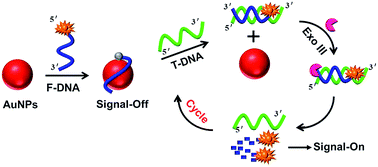
The principle of the sensitive fluorescent strategy based on AuNPs was illustrated in Scheme 1. The designed FAM-labeled single-stranded DNA recognition probes at the 5′-terminus (donated as F-DNA) are adsorbed on the surface of AuNPs, followed by the substantial fluorescence quenching of the FAM through plasmon effect of AuNPs. The labeled-FAM interaction with AuNPs ensures a low background because the maximum emission wavelength of FAM is the same as the maximum adsorption wavelength of AuNP.31 When the T-DNA is present in the system, it can hybridize with the F-DNA on AuNPs and form the duplex structure (donate as duplex), leading to the desorption of the duplex from AuNPs surface as well as the recovery of partial fluorescence. Exonuclease III (Exo III) is a sequence-independent enzyme and catalyzes the stepwise removal of mononucleotide from 3′-hydroxyl termini of DNA in the duplex structure.30,32 Under the action of Exo III, the F-DNA in duplex is hydrolyzed and the T-DNA is remained due to the overhanging of 6 bases segment at 3′-terminus. The released T-DNA can hybridize with F-DNA for the target recycling; thereby large amounts of fluorescent probe fragments are obtained, resulting in significant fluorescent amplification for T-DNA detection.
 |
| | Scheme 1 Thematic illustration of the sensitive fluorescent strategy based on AuNPs fluorescence switch-mediated target recycling amplification for breast cancer 1 gene fragment detection. | |
3.2. Characterization of AuNPs
The morphology of the AuNPs was investigated by transmission electron microscopy (TEM). As shown in Fig. 1, the prepared AuNPs are uniform sphere particles and the average diameter of the AuNPs is about 13 nm. They disperse homogeneously in the water. They can be used as a potential nanomaterial to develop homogeneous detection assays.30 According to the Lambert Beer Law, the concentration of AuNPs is 1.3 × 10⁻⁸ mol L−1.
 |
| | Fig. 1 TEM image of the prepared AuNPs. | |
3.3. Fluorescence spectra of the detection assay
The feasibility of AuNPs as fluorescence switch for nucleic acid detection was tested. As shown in Fig. 2, the only F-DNA shows strong fluorescence intensity (curve a). The F-DNA absorbed on AuNPs surface exhibits very weak fluorescence emission (curve d), because of the plasmon effect of the AuNPs.29 In the presence of T-DNA, the F-DNA is hybridized with it and desorbs from the AuNPs, resulting in the fluorescence recovery. The fluorescence intensity is slightly enhanced (curve c) because one T-DNA can release one F-DNA. When Exo III is present in the system, it can hydrolyze the F-DNA in duplex and release the T-DNA to initiate the target recycling. As a result, the signals are significantly enhanced (curve b), indicating that the Exo III can amplify the signals effectively. Furthermore, the change in fluorescence during the detection procedure was demonstrated in Fig. S1.† The fluorescence intensity of F-DNA shows a rapid reduction in the first 5 min in addition of AuNPs and reaches gradually equilibrium within the following 5 min.27,28 In the absence of target (curve a), the fluorescence of F-DNA is quenched as the function of the whole reaction time. In the presence of target (curve b), the fluorescence slightly enhances in the next 20 min and reached equilibrium due to the fluorescence recovery of F-DNA caused by the hybridization of T-DNA and F-DNA on AuNPs surface. In addition of Exo III, the curve b shows a second increase because of the Exo III-assisted target recycling. The maximum fluorescence intensity is obtained after 60 min of incubation time.
 |
| | Fig. 2 Fluorescence spectra of different system: (a) F-DNA and Exo III; (b) F-DNA, AuNPs, T-DNA and Exo III; (c) F-DNA, AuNPs and T-DNA; (d) F-DNA, AuNPs and Exo III. Condition: F-DNA: 5.0 × 10⁻⁸ mol L−1, AuNPs: 7.8 × 10⁻⁹ mol L−1, T-DNA: 5.0 × 10⁻⁹ mol L−1, Exo III: 1.3 × 10⁶ U L−1. 10 min incubation time of F-DNA and AuNPs, 30 min hybridization time of F-DNA on AuNPs surface and T-DNA, 60 min incubation time of Exo III. | |
3.4. Optimization of reaction conditions
The crucial factors of the assay, including the concentrations of AuNPs, the pH of the system, the reaction temperature, the concentration of Exo III and the reaction time, were investigated to obtain the optimum results. The ΔF(F2 − F1) serves as the standard to evaluate the experiment results. F1 and F2 are fluorescence intensities of the system in the absence and presence of T-DNA, respectively. The quenching efficiency is closely depended on the concentration of AuNPs. The concentration of the AuNPs is changed to achieve the optical results. As shown in Fig. S2,† the ΔF reaches the optimum, when the concentration of AuNPs is 7.8 × 10⁻⁹ mol L−1. So, 7.8 × 10⁻⁹ mol L−1 AuNPs is selected for the following experiments.
The effects of pH and temperature of the system were investigated for optical experimental conditions. As shown in Fig. S3 and S4,† the optical pH and reaction temperature are 8.0 and 37 °C, respectively. In addition, the concentration and incubation time of Exo III were studied, respectively. As shown in Fig. S5 and S6,† the ΔF gradually increases and reaches leveled off when the concentration of the Exo III is 1.3 × 10⁶ U L−1, and the incubation time of the Exo III is 60 min. Thus, 1.3 × 10⁶ U L−1 of Exo III and 60 min of the reaction time are selected in the study.
3.5. Sensitivity and selectivity
Under the optimized conditions described above, the fluorescence spectra of the different concentrations of T-DNA were recorded. With the increase of concentration of T-DNA from 0 to 1.0 × 10⁻⁹ mol L−1, the fluorescence emission increases obviously at 515 nm. An excellent liner relationship between ΔF and T-DNA concentration is obtained (Fig. 3). The linear regression equation is determined to be ΔF = 28.8 + 1.59 × 10¹¹C (R = 0.997) and the detection limit is 1.0 × 10⁻¹¹ mol L−1 (3δ rule) which is better or comparable to existing nanomaterial-based fluorescent methods,12–18 while the whole detection procedure is simple and convenient assisted by AuNPs.
 |
| | Fig. 3 Linear relationship between the fluorescence intensity and T-DNA concentrations (2.5 × 10⁻¹¹, 5.0 × 10⁻¹¹, 1.0 × 10⁻¹⁰, 2.5 × 10⁻¹⁰, 5.0 × 10⁻¹⁰, 1.0 × 10⁻⁹ mol L−1). The error bars are standard deviations of three repetitive measurements. | |
The selectivity of the proposed strategy was investigated by the complementary target DNA sequence, the single-base mismatched DNA sequence and the three-base mismatched DNA sequence to the F-DNA, respectively. The results were shown in Fig. 4. The high fluorescence intensity is obtained of the complementary sequences, while the intensity obviously decreases with the increase of mismatched base number. The results indicate the detection method can discriminate the base mismatched sequences. The reason is that the AuNPs obviously dehybridize the mismatched DNA sequences, which improves the selectivity of the detection assay.26
 |
| | Fig. 4 Selectivity of the proposed method for BRCA1 DNA fragment detection. (1) Complementary sequences, (2) one-base mismatch sequences, (3) three-base mismatch sequences, (4) no target. Condition: F-DNA: 5.0 × 10⁻⁸ mol L−1, T-DNA: 5.0 × 10⁻⁹ mol L−1, other DNA: 5.0 × 10⁻⁸ mol L−1, AuNPs: 7.8 × 10⁻⁹ mol L−1, Exo III: 1.3 × 10⁶ U L−1. The error bars are standard deviations of three repetitive measurements. | |
3.6. Detection of T-DNA in spiked biological samples
To test the feasibility of the proposed method for real biological sample analysis, samples of 10% human serum (No. 1 to 3) and 10% cell lysate (No. 4 to 6) with three different concentrations (3.0 × 10⁻¹¹, 5.0 × 10⁻¹¹ and 2.0 × 10⁻¹⁰ mol L−1) of T-DNA were analyzed. The recoveries are from 93.3% to 104.0% and the relative standard deviations are from 3.7% to 5.9% (Table 2). The results indicate that the proposed strategy has the potential for biological sample application.
Table 2 Detection of DNA in spiked biological samples using the proposed strategy
| No. |
T-DNA added (mol L−1) |
Amount found (mol L−1) |
Recovery (%) |
RSD (%, n = 6) |
| 1 |
3.0 × 10⁻¹¹ |
2.9 × 10⁻¹¹ |
96.7 |
4.7 |
| 2 |
5.0 × 10⁻¹¹ |
5.2 × 10⁻¹¹ |
104.0 |
5.9 |
| 3 |
2.0 × 10⁻¹⁰ |
1.9 × 10⁻¹⁰ |
95.0 |
4.5 |
| 4 |
3.0 × 10⁻¹¹ |
2.8 × 10⁻¹¹ |
93.3 |
4.9 |
| 5 |
5.0 × 10⁻¹¹ |
5.1 × 10⁻¹¹ |
102.0 |
3.7 |
| 6 |
2.0 × 10⁻¹⁰ |
1.9 × 10⁻¹⁰ |
95.0 |
4.2 |
4. Conclusions
In this study, we demonstrated a sensitive fluorescent strategy for the detection of breast cancer 1 (BRCA1) gene fragment based on Au nanoparticles (AuNPs) fluorescence switch-mediated target recycling amplification. A Au nanoparticles (AuNPs) fluorescence switch is constructed to simplify the procedure and improve the performance. And the switch can mediated a target recycling for sensitive detection. The fluorescence intensity is obviously enhanced at a low concentration of T-DNA. The proposed strategy exhibits a detection limit of 1.0 × 10⁻¹¹ mol L−1 and perfect recoveries in the human serum and cell lysate, showing a potential to be used in biological samples. More than these, the proposed strategy will offer a new potential for quantification of specific DNA sequences in early clinical diagnostics and medical research.
Acknowledgements
This work was supported by the National Natural Science Foundation of China (Grant No. 21175081, 21175082, 21375077, and 21475078).
Notes and references
- H. Q. Zhang, F. Li, B. Dever, X. F. Li and X. C. Le, Chem. Rev., 2013, 113, 2812–2841 CrossRef CAS PubMed.
- L. J. Xu, Z. C. Lei, J. X. Li, C. Zong, C. J. Yang and B. Ren, J. Am. Chem. Soc., 2015, 137, 5149–5154 CrossRef CAS PubMed.
- I. Bieche, M. Olivi, M. H. Champeme, D. Vidaud, R. Lidereau and M. Vidaud, Int. J. Cancer, 1998, 78, 661–666 CrossRef CAS.
- C. M. Niemeyer and D. Blohm, Angew. Chem., Int. Ed., 1999, 38, 2865–2870 CrossRef CAS.
- J. Clarke, H. C. Wu, L. Jayasinghe, A. Patel, S. Reid and H. Bayley, Nat. Nanotechnol., 2009, 4, 265–270 CrossRef CAS PubMed.
- Y. H. Hu, X. Q. Xu, Q. H. Liu, L. Wang, Z. Y. Lin and G. N. Chen, Anal. Chem., 2014, 86, 3676–3681 CrossRef PubMed.
- K. Scida, B. L. Li, A. D. Ellington and R. M. Crooks, Anal. Chem., 2013, 85, 9713–9720 CrossRef CAS PubMed.
- C. Song, Q. Zhang, G. M. Han, Y. C. Du and D. M. Kong, RSC Adv., 2014, 4, 53993–53998 RSC.
- F. A. Wang, L. Freage, R. Orbach and I. Willner, Anal. Chem., 2013, 85, 8196–8203 CrossRef CAS PubMed.
- H. Y. Zhao, L. Wang, J. Zhu, H. P. Wei and W. Jiang, Talanta, 2015, 138, 163–168 CrossRef CAS PubMed.
- L. B. Zhang, S. J. Guo, S. J. Dong and E. K. Wang, Anal. Chem., 2012, 84, 3568–3573 CrossRef CAS PubMed.
- R. H. Yang, J. Y. Jin, Y. Chen, N. Shao, H. Z. Kang, Z. Y. Xiao, Z. W. Tang, Y. R. Wu, Z. Zhu and W. H. Tan, J. Am. Chem. Soc., 2008, 130, 8351–8358 CrossRef CAS PubMed.
- J. Chen, Y. Huang, M. Shi, S. L. Zhao and Y. C. Zhao, Talanta, 2013, 109, 160–166 CrossRef CAS PubMed.
- C. H. Lu, H. H. Yang, C. L. Zhu, X. Chen and G. N. Che, Angew. Chem., Int. Ed., 2009, 48, 4785–4787 CrossRef CAS PubMed.
- W. Wei, C. Y. Gao, Y. X. Xiong, Y. J. Zhang, S. Q. Liu and Y. P. Pu, Talanta, 2015, 131, 342–347 CrossRef CAS PubMed.
- L. Wang, Y. W. Zhang, J. Q. Tain, H. L. Li and X. P. Sun, Nucleic Acids Res., 2011, 39, e37 CrossRef CAS PubMed.
- C. F. Zhu, Z. Y. Zeng, H. Li, F. Li, C. H. Fan and H. Zhang, J. Am. Chem. Soc., 2013, 135, 5998–6001 CrossRef CAS PubMed.
- Q. B. Wang, W. Wang, J. P. Lei, N. Xu, F. L. Gao and H. X. Ju, Anal. Chem., 2013, 85, 12182–12188 CrossRef CAS PubMed.
- R. A. Sperling, P. R. Gil, F. Zhang, M. Zanella and Wo. J. Parak, Chem. Soc. Rev., 2008, 37, 1896–1908 RSC.
- J. P. Lei and H. X. Ju, Chem. Soc. Rev., 2012, 41, 2122–2134 RSC.
- W. Pan, T. T. Zhang, H. J. Yang, W. Diao, N. Li and B. Tang, Anal. Chem., 2013, 85, 10581–10588 CrossRef CAS PubMed.
- H. J. Cai, Y. X. Wang, Y. Yu, M. V. Mirkin, S. Bhakta, G. W. Bishop, A. A. Joshi and J. F. Rusling, Anal. Chem., 2015, 87, 6403–6410 CrossRef CAS PubMed.
- H. X. Li and L. J. Rothberg, Anal. Chem., 2004, 76, 5414–5417 CrossRef CAS PubMed.
- L. Li, J. Feng, Y. Y. Fan and B. Tang, Anal. Chem., 2015, 87, 4829–4835 CrossRef CAS PubMed.
- H. X. Li and L. J. Rothberg, J. Am. Chem. Soc., 2004, 126, 10958–10961 CrossRef CAS PubMed.
- H. X. Li and L. J. Rothberg, Proc. Natl. Acad. Sci. U. S. A., 2004, 101, 14036–14039 CrossRef CAS PubMed.
- Y. Akhlaghi, M. Kompany-Zareh and M. R. Hormozi-Nezhad, Anal. Chem., 2012, 84, 6603–6610 CrossRef CAS PubMed.
- F. Li, H. Pei, L. H. Wang, J. X. Lu, J. M. Gao, B. W. Jiang, X. C. Zhao and C. H. Fan, Adv. Funct. Mater., 2013, 23, 4140–4148 CrossRef CAS.
- E. Boisselier and D. Astruc, Chem. Soc. Rev., 2009, 38, 1759–1782 RSC.
- M. Grzelczak, J. Perez-Juste, P. Mulvaney and L. M. Liz-Marzan, Chem. Soc. Rev., 2008, 37, 1783–1791 RSC.
- L. M. Demers, C. A. Mirkin, R. C. Mucic, R. A. Reynolds, R. L. Letsinger, R. Elghanian and G. Viswanadham, Anal. Chem., 2000, 72, 5535–5541 CrossRef CAS PubMed.
- X. L. Zuo, F. Xia, Y. Xiao and K. W. Plaxco, J. Am. Chem. Soc., 2010, 132, 1816–1818 CrossRef CAS PubMed.
Footnote |
| † Electronic supplementary information (ESI) available: DNA sequences and supporting figures. See DOI: 10.1039/c5ra23761k |
|
| This journal is © The Royal Society of Chemistry 2016 |
Click here to see how this site uses Cookies. View our privacy policy here.