

Development of nordihydroguaiaretic acid derivatives as potential multidrug-resistant selective agents for cancer treatment†
Lin-Chiang Sherlock Huanga,
Hong Chuanga,
Mohit Kapoora,
Cheng-Ying Hsieha,
Shih-Ching Choub,
Hui-Hsien Linc,
Yi-Wei Chenc,
Chia-Ching Changd,
Jih-Ru Hwu*a,
Yu-Chuan Liang*e and
Ming-Hua Hsu*f
aDepartment of Chemistry, National Tsing Hua University, Hsinchu 30013, Taiwan, Republic of China. E-mail: jrhwu@mx.nthu.edu.tw
bDepartment of Biology, Johns Hopkins University, Maryland 21218, USA
cDivision of Radiotherapy, Department of Oncology, Taipei Veterans General Hospital, Taipei, Taiwan, Republic of China
dDepartment of Biological Science and Technology, National Chiao Tung University, Hsinchu 300, Taiwan, Republic of China
eAgricultural Biotechnology Research Center, Academia Sinica, Taipei 11529, Taiwan, Republic of China. E-mail: ycliang@gate.sinica.edu.tw
fNuclear Science & Technology Development Centre, National Tsing Hua University, Hsinchu 30013, Taiwan, Republic of China. E-mail: mhhsu@mx.nthu.edu.tw
First published on 15th December 2015
Abstract
In this research, we designed and synthesized a new series of nordihydroguaiaretic acid (NDGA) derivatives for multidrug resistance (MDR) research. A methylsulfonyl NDGA derivative, ((2R,3S)-2,3-dimethylbutane-1,4-diyl)bis(benzene-4,1,2-triyl) tetramethanesulfonate (5d), was found to inhibit MDR1 gene expression and suppress drug resistant MES-SA/Dx5 cells. Moreover, the combination of 5d and doxorubicin/terameprocol (M4N) showed a profound synergistic effect on inhibition of drug resistant cancer cells, suggesting that 5d is a potential adjuvant applied with doxorubicin or terameprocol in cancer treatment.
Cancer is a major health problem worldwide that claims millions of lives annually. Although there have been great advances in the diagnosis and treatment of cancer, many people still succumb to cancer death because the chemotherapeutics adopted do not respond well to the spreading cancer. A major reason for the resistance of cancer cells to anticancer drugs is multidrug resistance (MDR), which is an intrinsic survival program deploying a variety of mechanisms that desensitize cancer cells to anticancer drugs, and increase the endurance of malignancies to therapeutic cytotoxic agents. Of these mechanisms, the most commonly encountered is mediated by ATP-binding cassette (ABC) transporters, which extrude a broad range of hydrophobic cytotoxic drugs that have already invaded the tumor cell.1 P-Glycoprotein (P-gp) [ABCB1/MDR1] is an important member of the ABC transporter family, and acts as a vacuum cleaner of the plasma membrane to expel hundreds of chemically unrelated toxins, preventing the cellular entry of xenobiotics and keeping the concentration of cytotoxic drugs below a cytotoxic threshold.2,3 Overexpression of P-gp has been found in various drug resistant tumor cells, and is a notorious wire-puller that causes nearly 90% of treatment failure.3 Therefore, P-gp has become a well-known and feasible drug target for moderating the drug resistance of cancer cells.4
In this research, we have designed and synthesized a new series of nordihydroguaiaretic acid (NDGA 1, Fig. 1) derivatives for MDR research. NDGA is a lignin isolated from creosote bush (Larrea tridentate), which has been used as an herbal medicine by ethnic groups in America for the treatment of many diseases for a long time.5 Known as masoprocol, NDGA was approved in the United States as an antineoplastic drug of topical treatment for actinic keratosis.6
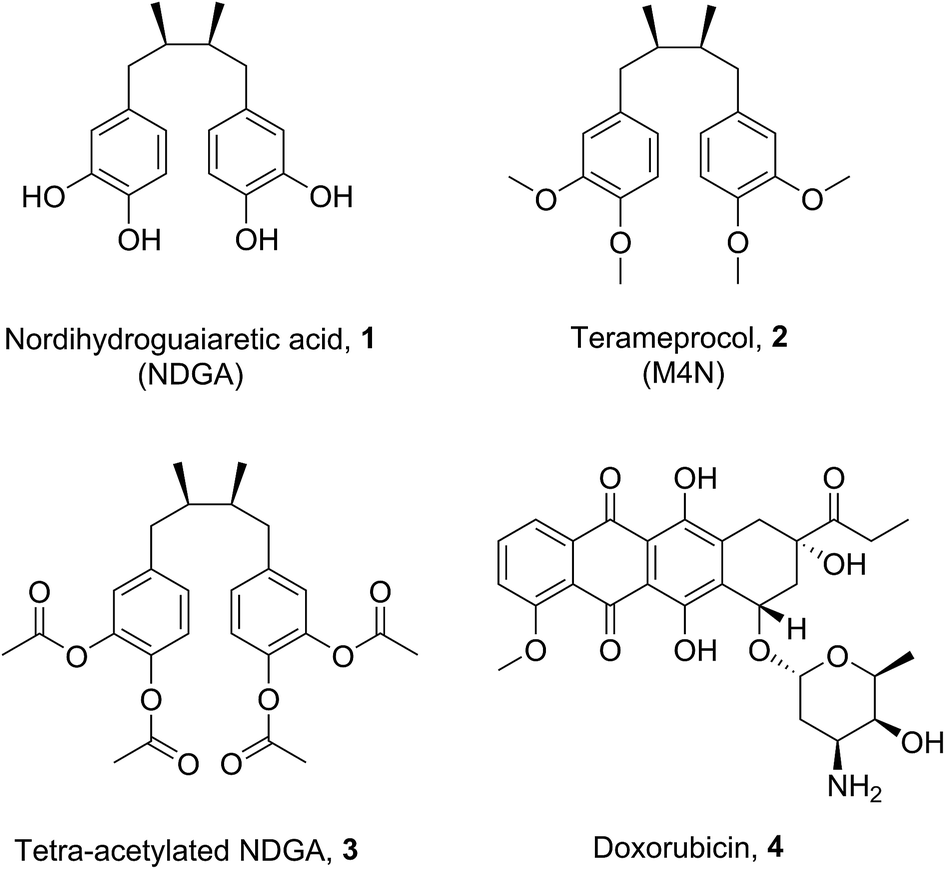 | ||
| Fig. 1 Nordihydroguaiaretic acid (NDGA) derivatives and chemotherapeutic agents. | ||
In terms of biological activities, NDGA has very important and well-known antioxidant properties, such as being a scavenger of reactive oxygen species (ROS) and an inhibitor of lipoxygenase (LOX). Interestingly in non-tumor cells, NDGA displays cytoprotective effects, which are related to modulating the Nrf2/antioxidant response element (ARE) antioxidant pathway and preventing mitochondrial damage. In the case of tumor cells, NDGA displays pro-apoptotic activity and anti-tumor effects.7 In the case of tumor cells, NDGA displays pro-apoptotic activity and anti-tumor effects.8 Also, NDGA prevents Alzheimer's pathology by interfering with the amyloid-β aggregation pathway.9 Recently, NDGA was found to have the capability to extend murine lifespan,10 inhibiting replication of dengue virus,11 and reducing secondary damage after spinal cord injury in rats via anti-inflammatory effects.12
The derivatives of NDGA, especially O-methylated NDGA, terameprocol (2, Fig. 1), have antitumor activity based on the selective inhibition of proteins regulating specificity protein 1 (Sp1), including cyclin-dependent kinase 1, survivin and VEGF. Using this mechanism, terameprocol potentially inhibits the cell cycle, triggers apoptosis, and decreases angiogenesis.13 Furthermore, terameprocol was found to have the capability to circumvent the drug resistance of the tumor cells in a xenograft model, and concomitantly strengthen the toxicity of doxorubicin and paclitaxel to the drug resistant cancer cells in combination treatment.14 It is also reported that tetra-acetylated NDGA (3, Fig. 1) enhanced the toxicity of doxorubicin and several cytotoxic agents against drug resistant cancer cells as an adjuvant agent.15 In the case of uterine sarcoma, a major barrier in improving treatment outcomes is the intrinsic or acquired resistance to cytotoxic drugs.16 The major mechanisms of drug resistance in uterine sarcoma involve overexpression of P-gp, which is encoded by the MDR1 gene.17 Our approach to overcoming MDR1/P-gp-mediated MDR is unique, as we adopted NDGA, which itself is a potent anticancer agent, as the core scaffold.
In this research, we designed and synthesized a new series of NDGA derivatives for the inhibition of MDR gene expression in cancer cells. Several studies on NDGA structure modification have been carried out over the past few decades.17–25 The central linker (7, 7′, 8, 8′, 9, and 9′ positions of NDGA, Fig. 2) of potential NDGA derivatives tend to be hydrophobic, and adding any polar functional group would diminish the bioactivities. Stereoisomers of NDGA (8 and 8′ positions, Fig. 2) were shown to give almost the same level of activity.24 The phenyl group of NDGA has undergone modification of several functional groups, which have led to compounds with potent anti-cancer activity, i.e., terameprocol. Here, we attached various sulfonyl and benzoyl groups to the hydroxyl terminal of NDGA with corresponding sulfonyl and benzoyl chlorides (Scheme 1), to increase water solubility and lipid solubility, respectively.
 | ||
| Fig. 2 Synthetic strategy for modifying NDGA. | ||
 | ||
| Scheme 1 Synthesis of benzoyl and sulfonyl NDGA derivatives. | ||
The synthetic route of the new NDGA derivatives is shown in Scheme 1. NDGA (1) was treated with various benzoyl and sulfonyl chlorides in the presence of potassium carbonate in acetonitrile at 80–85 °C. After cooling down the reaction mass to room temperature, the inorganic residue was filtered off, and the filtrate was concentrated under reduced pressure to afford a residue. The residue was extracted by ethyl acetate, and washed with brine followed by purification by column chromatography or MPLC to give the yield of 67–78%. All these products were purified with 95% purity by chromatography and recrystallization was conducted for bioactivity assays.
The lipophilicity and water solubility of synthesized compounds were evaluated with the ALOGPS 2.1 program, developed by the virtual computational chemistry laboratory.26 Calculated n-octanol/water partition coefficients (clog![[thin space (1/6-em)]](https://www.rsc.org/images/entities/char_2009.gif) P) are shown in Table 1. NDGA and terameprocol clogP is 3.44 and 5.77 respectively, and both of them are current antineoplastic agents. The benzoyl derivatives of NDGA, 5a, 5b, and 5c were found to be highly lipophilic with clogP value of 7.91–9.24. On the other hand, phenylsulfonyl derivatives 5e–5h were found to be less lipophilic than the benzoyl derivatives with a clogP value of 3.54–3.97. These results show that the sulfonyl group possess higher hydrophilicity than the benzoyl groups and the methoxy group of terameprocol. Whereas 5d had a clogP of 1.17, indicating the methylsulfonyl derivative is much more hydrophilic than other synthesized NDGA derivatives, terameprocol and NDGA. The result of clogS (Table 1) shows that the sulfonyl derivatives have better water solubility, especially 5d, which has a clogS of −4.57, a higher level of water solubility than terameprocol.
P) are shown in Table 1. NDGA and terameprocol clogP is 3.44 and 5.77 respectively, and both of them are current antineoplastic agents. The benzoyl derivatives of NDGA, 5a, 5b, and 5c were found to be highly lipophilic with clogP value of 7.91–9.24. On the other hand, phenylsulfonyl derivatives 5e–5h were found to be less lipophilic than the benzoyl derivatives with a clogP value of 3.54–3.97. These results show that the sulfonyl group possess higher hydrophilicity than the benzoyl groups and the methoxy group of terameprocol. Whereas 5d had a clogP of 1.17, indicating the methylsulfonyl derivative is much more hydrophilic than other synthesized NDGA derivatives, terameprocol and NDGA. The result of clogS (Table 1) shows that the sulfonyl derivatives have better water solubility, especially 5d, which has a clogS of −4.57, a higher level of water solubility than terameprocol.
To determine the biological activity of synthesized compounds, we applied MTT assay to evaluate the cytotoxicity of synthesized NDGA derivatives towards ovarian carcinoma cells, OVCAR-3 and SKOV3 (ESI data, Fig. S1–S4†). After treatment for 48 and 72 hours, no significant toxicity was observed in either cancer cell line. However, terameprocol showed a certain level of suppression of tumor growth, and the cell viability was decreased to below 60% after 72 hours. This preliminary result suggested that sulfonyl and benzoyl NDGA derivatives did not have good anticancer potency.
When we investigated the toxic concentration (TC50) of the test compounds on MDR cell lines; however, we found a different outcome compared to the cytotoxicity result of the tumor cells described above. Previously, we reported that terameprocol27 effectively inhibited the growth of drug resistant human cancer cell lines ovarian carcinoma NCI/ADR-RES in culture, with TC50 ≦ 10 μM.14 In this study, we further examined the effect of synthesized NDGA derivatives 5a–5h, on human uterine sarcoma (MES-SA, P-gp deficient) and the drug resistant uterine sarcoma cell lines (MES-SA/Dx5, P-gp proficient) by following previous reported protocols.28 Table 2 shows the cytotoxicity of synthesized NDGA derivatives on MES-SA and MES/Dx5 cell lines. The results demonstrated that 5a, 5b, 5c, 5e, 5f, 5g, and 5h show low inhibition activity to human tumor cells. However, the methylsulfonyl derivative 5d was able to inhibit the growth of drug resistant uterine sarcoma MES-SA/Dx5 cells in culture (Fig. 3 and Table 2), indicating that 5d suppresses the growth of P-gp overexpressing cancer cells selectively to a certain extent.
| Compound | TC50 (μM) | |
|---|---|---|
| MES-SA | MES-SA/Dx5 | |
| 5a | >100 | >100 |
| 5b | >100 | >100 |
| 5c | >100 | >100 |
| 5d | >100 | 44.38 |
| 5e | >100 | >100 |
| 5f | >100 | >100 |
| 5g | >100 | >100 |
| 5h | >100 | >100 |
 | ||
| Fig. 3 Dose-dependent inhibition of human uterine sarcoma cell line (MES-SA) and multidrug resistant uterine sarcoma cell line (MES-SA/Dx5) by 5a–5h in culture. The data are expressed as the mean and the standard deviation of the mean (n = 4). | ||
The effect of NDGA derivative 5d on MDR1 promoter activity was further examined by luciferase reporter assay (Fig. 4A). The MDR1 promoter gene modified vector containing luciferase reporter gene, pMetLuc-MDR1, was transfected into drug resistant MES-SA/DX5 cells. The control counterpart luciferase containing vector without MDR1 promoter gene, pMetLuc, was also transfected into MES-SA/DX5 cells. Two kinds of transfected cell were cultured with and without 5d treatment for 48 hours. MDR1 promoter activity was reported by the luciferase reporter system, depicted in Fig. 4A, indicating that 5d has the capability to abolish MDR1 promoter activity, and further obstruct P-gp expression. According to results of luciferase activity, we further examined the effect of 5d on MDR1 gene expression. To examine this possibility, MES-SA/Dx5 cells were exposed to 0, 5, 10, and 20 μM 5d for 2 day, after which total protein were examined for levels of P-gp. After treatment with 20 μM 5d, the amount of P-gp was reduced with its abundance decreasing to 31.2% of the control amount after a 2 day exposure to 20 μM 5d (Fig. 4B). Even a 2 day exposure to 5 μM 5d resulted in a 12.8% reduction in P-gp. The levels of P-gp were normalized to β-actin.
 | ||
| Fig. 4 Effect of compound 5d on MDR1 promoter activity and P-glycoprotein levels (P-gp) in MES-SA/Dx5 cells. (A) Luciferase activity in MES-SA/Dx5 stable transfected with MDR1 promoter (pMetLuc-MDR1), or control vector (pMetLuc-CMV) after treatment with compound 5d. *Significant difference (p < 0.05) for the comparison is indicated. Data are expressed as the mean ± SEM. (B) Western blot analysis of P-gp and β-actin (normalization control) protein levels in cells treated for 3 days with 0, 5, 10, and 20 μM compound 5d. Results in bar graph form normalized to β-actin. | ||
A combination of chemotherapeutics and 5d has a more profound effect on MDR1 promoter activity than single drug treatment. The pMetLuc-MDR1 transfected MES-SA/DX5 cells were treated with various combinations of doxorubicin, terameprocol (M4N) and 5d, as demonstrated in Fig. 5. After incubation for 48 hours, cells treated only with doxorubicin showed full activity of MDR1 promoter, whereas cells treated with terameprocol alone showed apparent lower level activity of MDR1 promoter, which was indicated by nearly 50% of luciferase activity. Cells treated with 5d showed 70% luciferase activity, higher than the cells treated only with terameprocol; however, when cells were treated with the combination of 5d with doxorubicin or terameprocol, the activity of luciferase was suppressed to nearly 20%, revealing that 5d intensifies attenuation of MDR1 promoter. Moreover, to confirm 5d and combination treatments on MDR1 promoter activity in Fig. 5, we measured viability of MES-SA/Dx5 cells incubated with the 5d, Dox, M4N and their combination for 2 day respectively by MTT assay. After incubation for 2 day, cells treated only with doxorubicin showed almost 100% viability, whereas cells treated with M4N and 5d alone showed 75% to 80% viability. However, when cells were treated with the combination of 5d with doxorubicin or M4N, the cell viability was suppressed to 50–60% (Fig. 6). According to these results, formulae of 5d combined with doxorubicin or terameprocol have a synergistic effect to control MDR1 promoter activity. Moreover, these results also indicated a combination of chemotherapeutics and 5d has a more extreme effect on multi-drugs resistant cancer cells than single drug treatment.
 | ||
| Fig. 5 Inhibition of MDR1 promoter activity in MES-SA/DX5 treated with doxorubicin (Dox), M4N (2), 5d and combination formula. Luciferase activity was used to measure promoter response of in MES-SA/DX5 stable transfected with MDR1 promoter reporter vector (PMetLuc-MDR1). Relative luciferase activity are expressed as mean ± SEM. Student's t-test was used to compare the difference between 5d alone and each combination treated group, and P < 0.05 (*) are shown to be statistically significant. | ||
 | ||
| Fig. 6 Effect of doxorubicin (Dox), M4N (2) and 5d and their combination on the cell viability of MES-SA/DX5 drug resistant cell lines. The number of viable cells after 72 hours of treatment with Dox, M4N (2) and 5d alone and in combination. The horizontal line in graph represents the number of viable at the initiation of drugs exposure. Cell viability are expressed as mean ± SEM. Student's t-test was used to compare the difference between 5d alone and each combination of treatment groups, and P < 0.05 (*) are shown. P < 0.05 (*) are considered to be statistically significant. | ||
Methylsulfonyl functionalized NDGA, 5d, has better water solubility than commercial NDGA-type antineoplastic agents 1 and 2, and much more hydrophilic than other synthesized NDGA derivatives in this research, as described in Table 1. With more hydrophilic clogP value, 5d itself has certain suppression effect on doxorubicin resistant uterine sarcoma cells, MES-SA/DX5. Having more than 100 μM of TC50 value in normal uterine sarcoma cells (MES-SA), 5d has 44.38 μM of TC50 in drug resistant counterpart (Table 2); although 5d has similar viability in both cell lines, the suppression of MES-SA/DX5 is more obvious with increasing amount of 5d (Fig. 3). Such a mild toxicity might make 5d a suitable adjuvant agent in cancer treatment. 5d could suppress MDR1 promoter to a certain extent, and further interrupt the expression of P-gp, one of the cruxes that caused multidrug-resistant cancer (Fig. 4). Moreover, combining the chemotherapeutics Dox 4 and M4N 2 with 5d shows a remarkable synergistic effect on inhibition of MDR1 promoter activity, which is much better than single-agent treatment with Dox and M4N (Fig. 5). This shows that 5d could prevent the early development of MDR in cancer treatment, i.e., 5d inhibits doxorubicin mediated induction of MDR1 gene expression. Furthermore, combination of 5d with doxorubicin and/or terameprocol (M4N, 2) has much improved suppression effect on the growth of MES-SA/DX5 cells, especially compared with the single-drug treatments with Dox or M4N, i.e., 5d has a good synergistic effect on inhibition of Dox-resistant uterine sarcoma cell growth drug-resistant (Fig. 6). Also, good water solubility allows 5d to work very well with water-soluble doxorubicin and M4N; the consumption of doxorubicin would decrease massively with 5d as an adjuvant agent in regular cancer treatment.
Conclusions
In conclusion, we synthesized 8 new NDGA derivatives and evaluated their potential as multidrug resistance selective agents for cancer treatment. We found one of the derivatives, the methylsulfonyl functionalized NDGA derivative, 5d, can inhibit MDR1 gene expression, decrease the P-gp protein formation, and then suppress drug resistant MES-SA/Dx5 cells (resistant uterine sarcoma cells). Moreover, the combination of 5d and doxorubicin/terameprocol (M4N) has much better efficacy of suppressing the drug-resistant cancer cells than single-agent treatment. From the clinical point of view, this good synergistic effect shows that 5d has great potential adjuvant drug with doxorubicin or terameprocol for cancer treatment.Acknowledgements
We thank the Ministry of Science and Technology of the Republic of China National Tsing Hua University for financial support. This work was supported by the Ministry of Science and Technology (Grant MOST103-2113-M-007-020). Authors also thank the Laboratory Animal Core Facility which is funded by Agricultural Biotechnology Research Center (ABRC) at Academia Sinica for technical support in cytotoxic and MDR1 reporter gene experiments.Notes and references
- G. Szakacs, J. K. Paterson, J. A Ludwig, C. Booth-Genthe and M. M. Gottesman, Nat. Rev. Drug Discovery, 2006, 5, 219–234 CrossRef CAS PubMed.
- I. Pastan and M. M. Gottesman, Annu. Rev. Med., 1991, 42, 277–286 CrossRef CAS PubMed.
- S. G. Aller, J. Yu, A. Ward, Y. Weng, S. Chittaboina, R. Zhuo, P. M. Harrell, Y. T. Trinh, Q. Zhang, I. L. Urbatsch and G. Chang, Science, 2009, 323(5922), 1718–1722 CrossRef CAS PubMed.
- G. Szakacs, M. D. Hall, M. M. Gottesman, A. Boumendjel, R. Kachadourian, B. J. Day, H. Baubichon-Cortay and A. Di Pietro, Chem. Rev., 2014, 114(11), 5753–5774 CrossRef CAS PubMed.
- S. Arteaga, A. Andrade-Cetto and R. Cardenas, J. Ethnopharmacol., 2005, 98(3), 231–239 CrossRef CAS PubMed.
- J. L. Billinsky and E. S. Krol, J. Nat. Prod., 2008, 71(9), 1612–1615 CrossRef CAS PubMed.
- R. W. McDonald, W. Bunjobpon, T. Liu, S. Fessler, O. E. Pardo, I. K. Freer, M. Glaser, M. J. Seckl and D. J. Robins, Anti-Cancer Drug Des., 2001, 16(6), 261–270 CAS.
- J. Hernandez-Damian, A. C. Anderica-Romero and J. Pedraza-Chaverri, Arch. Pharm., 2014, 347(10), 685–697 CrossRef CAS PubMed.
- T. Hamaguchi, K. Ono, A. Murase and M. Yamada, Am. J. Pathol., 2009, 175(6), 2557–2565 CrossRef CAS PubMed.
- S. R. Spindler, P. L. Mote, A. L. Lublin, J. M. Flegal, J. M. Dhahbi, R. Li, J. Gerontol., Ser. A, 2014, 1–11 Search PubMed.
- R. Soto-Acosta, P. Bautista-Carbajal, G. H. Syed, A. Siddiqui and R. M. Del Angel, Antiviral Res., 2014, 109, 132–140 CrossRef CAS PubMed.
- H. Xue, X. Y. Zhang, J. M. Liu, Y. Song, T. T. Liu and D. Chen, Brain Res., 2013, 1516, 83–92 CrossRef CAS PubMed.
- P. Smolewski, IDrugs, 2008, 11(3), 204–214 CAS.
- C. C. Chang, Y. C. Liang, A. Klutz, C. I. Hsu, C. F. Lin, D. E. Mold, T. C. Chou, Y. C. Lee and R. C. Huang, Cancer Chemother. Pharmacol., 2006, 58(5), 640–653 CrossRef CAS.
- C. Plaza, M. Pavani, R. Araya-Maturana, J. Pezoa, J. D. Maya, A. Morello, M. I. Becker, A. D. Ioannes and J. Ferreira, In Vivo, 2009, 23(6), 959–967 CAS.
- E. Teplinsky and F. Muggia, Gynecol. Oncol., 2014, 135(2), 364–370 CrossRef CAS PubMed.
- M. M. Gottesman, T. Fojo and S. E. Bates, Nat. Rev. Cancer, 2002, 2(1), 48–58 CrossRef CAS PubMed.
- J. R. Hwu, W. N. Tseng, J. Gnabre, P. Giza and R. C. Huang, J. Med. Chem., 1998, 41(16), 2994–3000 CrossRef CAS PubMed.
- J. R. Hwu, M. H. Hsu and R. C. C. Huang, Bioorg. Med. Chem. Lett., 2008, 18(6), 1884–1888 CrossRef CAS PubMed.
- R. C. C. Huang, Y. Li, P. E. Giza, J. N. Gnabre, I. S. Abd-Elazem, K. Y. King and J. R. Hwu, Antiviral Res., 2003, 58(1), 57–64 CrossRef CAS PubMed.
- J. R. Hwu, C. I. Hsu, M. H. Hsu, Y. C. Liang, R. C. C. Huang and Y. C. Lee, Bioorg. Med. Chem. Lett., 2011, 21(1), 380–382 CrossRef CAS PubMed.
- M. H. Hsu, S. C. Wu, K. C. Pao, I. Unlu, J. N. Gnabre, D. E. Mold, R. C. Huang and J. R. Hwu, ChemMedChem, 2014, 9(5), 1030–1037 CrossRef CAS PubMed.
- S. S. Ho and M. L. Go, Bioorg. Med. Chem. Lett., 2013, 23(22), 6127–6133 CrossRef CAS PubMed.
- T. Wukirsari, H. Nishiwaki, K. Nishi, T. Sugahara, K. Akiyama, T. Kishida and S. Yamauchi, J. Agric. Food Chem., 2014, 62(23), 5305–5315 CrossRef CAS PubMed.
- R. O. Meyers, J. D. Lambert, N. Hajicek, A. Pourpak, J. A. Kalaitzis and R. T. Dorr, Bioorg. Med. Chem. Lett., 2009, 19(16), 4752–4755 CrossRef CAS PubMed.
- I. V. Tetko and V. Y. Tanchuk, J. Chem. Inf. Model., 2002, 42(5), 1136–1145 CrossRef CAS.
- J. N. Gnabre, J. N. Brady, D. J. Clanton, Y. Ito, J. Dittmer, R. B. Bates and R. C. Huang, Proc. Natl. Acad. Sci. U. S. A., 1995, 92(24), 11239–11243 CrossRef CAS.
- A. L. Larroque-Lombard, M. Todorova, N. Golabi, C. Williams and B. J. Jean-Claude, J. Med. Chem., 2010, 53(5), 2104–2113 CrossRef CAS PubMed.
Footnote |
| † Electronic supplementary information (ESI) available. See DOI: 10.1039/c5ra18827j |
| This journal is © The Royal Society of Chemistry 2015 |