DOI:
10.1039/C5RA18559A
(Paper)
RSC Adv., 2015,
5, 82144-82152
Study on divalent copper, nickel and zinc model complexes for fluoride ion detection†
Received
10th September 2015
, Accepted 21st September 2015
First published on 22nd September 2015
Abstract
A series of new model complexes of 2,4-dihydroxybenzaldoxime (H3L) with divalent copper and nickel ions having a general formula [M(H2L)2]·sol (sol = solvent or nitrogen containing heterocycle) and a new zinc complex [Zn(H2L)2(pep)2] (where pep = 4-(2-(pyridine-4-yl)propyl)pyridine) were synthesized for the detection of fluoride ions. All complexes were structurally characterized by X-ray single crystal diffraction, powder X-ray diffraction and conventional spectroscopic tools. All these complexes show selective interactions with tetrabutylammonium fluoride. The position of the new UV-Vis absorption in each of these complexes in the presence of fluoride ions is guided by the electronic configuration of the metal ion. The complex [Zn(H2L)2(pep)2] has a distinct advantage over the other model complexes, as it can detect fluoride ions through both emission and absorption spectroscopy.
Introduction
Due to selective interactions of fluorophore or chromophore containing phenols,1a,b ureas,1c thioureas,1d oximes,1e–k sulphonamides,1l amides1m with fluoride ions, they are used in the detection of fluoride ions. Fluorescent sensors based on high chemical affinity of the fluoride ions towards silicon2 or boron3 atoms are reported in literature. The silicon based receptors in aqueous solution require several minutes to complete the detection process,2 which is a disadvantage to such receptors. In an another approach, the fluoride ions are detected on the basis of their specific tendency to coordinate to the hard metal ions such as divalent calcium,4a trivalent iron4b or tetravalent zirconium.4c–g Such fluoride sensors based on metal complexes require pretreatment to avoid interference of other metal ions such trivalent aluminum or iron ions.4b Platinum(II) complex possessing triarylboron groups shows distinct phosphorescent response to fluoride ions.5 Among the other metal complexes, the ruthenium-2,2′-bipyridine,6a the thiourea based iron(III) complexes6b were used to detect fluorides ions. Fluorescence receptor having a rhodamine unit senses fluoride ions and was used in imaging of fluoride ions in living cell.7
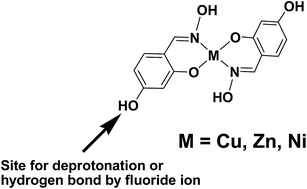
From the above examples it is clear that chromophoric or fluorophoric compounds capable of forming hydrogen bond or deprotonation causing signal transduction have been widely used in fluoride ion detection. Such methodologies have been extended through introduction of biocompatible hydrophilic polymer such as poly(ethylene glycol)8 to understand their practical utility in biological in aqueous medium. Besides these compounds containing main group elements such as boron, silicon, phosphorous having affinity to bind to fluoride ions have been also used in detection of fluoride by UV-Vis or fluorescence spectroscopy. On the other hand chemical affinity of the fluoride ion towards metal ions is conventionally used in detection of fluoride. Conventionally, the ligand exchange reactions of fluoride ions help to detect of fluoride ions by spectroscopic tools. In such reactions one or more ligands are released to generate spectroscopic or electrochemical signals. In the metal containing systems focus is put on the central metal atom and in many cases pre-treatment of the metal complexes are required which deters them to use in real time detection processes. In recent days modulations of fluorescence of ligands attached to metal ions have shown promise to develop new sensors.9 Hydroxyaromatic oximes are good ligands for metal chelating10 but their metal complexes have not been explored for fluoride detection. Use of the poly-hydroxyaromaticaldoxime metal complexes such as the representative structure shown in Fig. 1 would have several ways to interact with fluoride ions. Namely the signal transduction can be due to interaction of fluoride with the ligand or on the metal site as illustrated in the Fig. 1. Further such process may be guided by the central metal ion. With this background we prepared and studied interactions with fluoride ions of a series of model complexes of the 2,4-dihydroxybenzaldoxime (H3L) with divalent copper, nickel and zinc ions.
 |
| | Fig. 1 Sites of interaction of fluoride ion in a bis-chelated metal complex of hydroxyaromatic aldoxime. | |
Experimental
Physical measurement
Infrared spectra of the solid samples were recorded on a Perkin-Elmer Spectrum-One FT-IR spectrophotometer in the region 4000–400 cm−1 by making KBr pellets. UV-visible spectra were recorded on a Perkin-Elmer-Lambda 750 UV-Vis spectrometer at room temperature. Mass were recorded on a micro mass Q-TOF (waters) mass spectrometer by using an acetonitrile/formic acid matrix. Fluorescence emissions were measured in a Perkin-Elmer LS-55 spectrofluorimeter by taking definite amounts of solutions of samples and exciting at required wavelengths. Powder X-ray diffraction patterns were collected on a Bruker D2 Phaser desktop diffractometer with Cu Kα radiation (λ = 1.5418 Å). The single crystal X-ray diffraction data were collected at 296(2) K on a Bruker Nonius SMART CCD diffractometer with Mo Kα radiation (λ = 0.71073 Å). SMART software was used for data collection, indexing the reflections and determination of the unit cell parameters. Structures were solved by direct methods and refined by full-matrix least-square calculations using SHELXTL software. Crystallographic parameters are summarized in ESI Table S1.†
Experimental procedure for UV-Vis and fluorescence experiments
For study of interactions with fluoride ions separate solutions of the complexes 1, 5 and 7 (10−5 M solution) as well as the solutions of different tetrabutyl ammonium ions (10−3 M solution) were prepared in dimethylsuphoxide or water or DMSO–water mixture (1
:
1 v/v). To record the UV-Vis spectra or fluorescence spectra 3 ml solution of the complex was placed in quartz cell of a 10 mm path length at room temperature. Absorption or emission spectra were recorded after each addition, by adding definite amounts of solutions of anions in aliquot to such a solution by using micropipette.
Synthesis of ligand H3L
To a solution of hydroxylamine hydrochloride (0.138 g, 2 mmol) in ethanol (20 ml) pyridine (1 ml) was drop wise added. Resulting solution was stirred at 25 °C for 15 min. Followed by which 2,4-dihydroxybenzaldehyde (0.276 g, 2 mmol) was added to the reaction mixture and stirred at for 1 h. Extraction of the reaction mixture by ethylacetate and evaporation of solvent yielded H3L as a colorless solid. Isolated yield: 84%. 1H-NMR (400 MHz, DMSO-d6): 10.98 (s, 1H), 10.12 (s, 1H), 9.77 (s, 1H), 8.22 (s, 1H), 7.28 (d, J = 8.8 Hz, 1H), 6.32 (m, 2H). IR (KBr, cm−1): 3363 (br, m), 1643 (m), 1623 (m), 1598 (w), 1524 (s), 1488 (m), 1446 (w), 1365 (w), 1344 (w), 1304 (s), 1255 (s), 1208 (s), 1170 (m), 1117 (m), 1003 (s), 973 (s), 957 (m), 933 (w), 857 (w), 830 (s), 801 (m), 733 (w), 712 (w), 631 (w). Mass (ESI) m/z: 154.1049 (m + 1); (calculated exact mass 153.0426 for C7H7NO3).
[Cu(H2L)2]·2DMF (1)
To a well-stirred solution of H3L (0.153 g, 1 mmol) in methanol (10 ml), copper(II) nitrate trihydrate (0.120 g, 0.5 mmol) was added. A black precipitate obtained was dissolved by adding minimum amount of dimethylformamide (DMF). Reaction mixture was filtered and transparent liquid was kept for crystallization. After 5 days crystals were obtained. Isolated yield: ∼60%. IR (KBr, cm−1): 3416 (bs), 2925 (m), 1663 (s), 1643 (s), 1621 (s), 1548 (s), 1510 (w), 1454 (s), 1384 (w), 1341 (w), 1317 (m), 1253 (m), 1209 (s), 1170 (s), 1126 (s), 1098 (m), 1016 (s), 986 (s), 968 (w), 849 (m), 836 (w), 796 (s), 759 (s), 667 (s), 630 (w), 614 (w). TGA: 200–250 °C (–2DMF; exptl. wt loss 27.67%, calcd 28.40%). Elemental anal. calcd for C20H26CuN4O8; C: 46.69%, H: 5.05%, N: 10.89%; found, C: 46.56%, H: 5.01%, N: 10.78%.
[Cu(H2L)2]·2DMA (2)
Complex 2 was prepared by a procedure similar to complex 1 using dimethylacetamide (DMA) as solvent for crystallization. After 7 days needle type crystals were obtained. Isolated yield: 62%. IR (KBr, cm−1): 3400 (bw), 3106 (bs), 1637 (s), 1613 (bs), 1546 (s), 1457 (s), 1414 (w), 1397 (m), 1344 (w), 1312 (m), 1257 (s), 1215 (s), 1174 (s), 1137 (s), 1012 (s), 985 (s), 970 (w), 858 (m), 842 (s), 814 (m), 761 (s), 796 (s), 661 (w), 620 (m), 630 (m). TGA: 200–250 °C (–2DMA; exptl. wt loss 29.56%, calcd 32.14%). Elemental anal. calcd for C22H30CuN4O8; C: 48.70%, H: 5.53%, N: 10.33%; found, C: 48.66%, H: 5.50%, N: 10.28%.
[Cu(H2L)2]·DMSO (3)
Complex 3 was prepared in a similar manner to complex 1 using dimethylsulfoxide (DMSO) instead of DMF. After 8 days black plate type crystals were obtained. Isolated yield: 60%. IR (KBr, cm−1): 3332 (bs), 2922 (w), 1648 (s), 1606 (s), 1481 (s), 1453 (s), 1376 (m), 1347 (w), 1328 (w), 1314 (w), 1284 (m), 1247 (m), 1212 (s), 1190 (w), 1129 (s), 1014 (s), 987 (s), 953 (w), 850 (m), 834 (s), 795 (w), 786 (m), 761 (m), 698 (m), 651 (m), 630 (s), 610 (m). TGA: 200–250 °C (–DMSO; exptl. wt loss 17.16%, calcd 17.52%). Elemental anal. calcd for C16H18CuN2O7S; C: 43.05%, H: 4.03%, N: 6.27%, S: 7.17%; found, C: 43.01%, H: 4.01%, N: 6.21%, S: 7.10%.
[Cu(H2L)2]·4,4′-bipy (4)
Complex 4 was prepared by a procedure similar to synthesis of complex 1, but adding 4,4′-bipyiridine (4,4′-bipy). After 15 days black needle shaped crystals were obtained. Isolated yield: 58%. IR (KBr, cm−1): 3452 (bs), 1620 (s), 1606 (s), 1597 (w), 1549 (s), 1516 (w), 1491 (w), 1455 (s), 1408 (s), 1377 (w), 1321 (s), 1256 (s), 1222 (w), 1212 (s), 1173 (s), 1134 (m), 1058 (s), 1015 (s), 1001 (w), 982 (s), 964 (w), 846 (m), 832 (s), 799 (s), 760 (s), 668 (w), 633 (s), 621 (s), 609 (w). Elemental anal. calcd for C24H20CuN4O6; C: 54.96%, H: 3.81%, N: 10.68%; found, C: 54.91%, H: 3.76%, N: 10.61%.
[Ni(H2L)2]·2DMF (5)
To a well-stirred solution of H3L (0.153 g, 1 mmol) in methanol (10 ml), nickel(II) nitrate hexahydrate (0.145 g, 0.5 mmol) was added. A green precipitate was obtained, which was dissolved in a minimum amount of DMF and filtered, transparent filtrate after 7 days gave green block type crystals. Isolated yield: 65%. IR (KBr, cm−1): 3380 (bs), 2925 (w), 1659 (s), 1643 (s), 1615 (s), 1569 (w), 1555 (s), 1514 (w), 1494 (w), 1451 (s), 1386 (w), 1346 (w), 1310 (s), 1261 (w), 1228 (w), 1216 (s), 1170 (s), 1124 (s), 1102 (w), 1020 (s), 987 (s), 955 (w), 861 (m), 845 (m), 831 (s), 794 (s), 769 (m), 668 (s), 647 (s). TGA: 250–300 °C (–2DMF; exptl. wt loss 27.85%, calcd 28.71%). Elemental anal. calcd for C20H26N4NiO8; C: 47.13%, H: 5.10%, N: 10.99%; found, C: 47.08%, H: 5.06%, N: 10.92%.
[Ni(H2L)2] (6)
Complex 6 was obtained from an identical reaction that was used in preparation of 5 but was carried out in DMSO. After 6 days green crystals were obtained. Isolated yield: 67%. IR (KBr, cm−1): 3372 (bs), 2923 (w), 1635 (w), 1607 (s), 1574 (w), 1553 (s), 1514 (w), 1483 (w), 1449 (s), 1381 (m), 1308 (s), 1261 (m), 1214 (s), 1167 (s), 1122 (s), 1019 (s), 986 (s), 955 (w), 862 (m), 832 (s), 794 (m), 768 (m), 673 (w), 647 (s). Elemental anal. calcd for C14H12N2NiO6; C: 46.28%, H: 3.30%, N: 7.71%; found, C: 46.22%, H: 3.25%, N: 7.66%.
[Zn(H2L)2(pep)2] (7)
To a solution of H3L (0.153 g, 1 mmol) and 4-(2-(pyridine-4-yl)propyl)pyridine (pep) (0.198 g, 1 mmol) in methanol (10 ml), zinc(II) nitrate hexahydrate (0.148 g, 0.5 mmol) was added and stirred. A white precipitate was obtained. Precipitate was dissolved in a minimum amount of DMF and filtered. Filtrate on standing, resulted in formation of crystals after 15 days. Isolated yield: 70%. IR (KBr, cm−1): 3039 (w), 2923 (w), 1646 (m), 1605 (s), 1557 (m), 1500 (s), 1477 (s), 1452 (s), 1419 (s), 1383 (s), 1332 (w), 1274 (s), 1245 (s), 1207 (s), 1177 (s), 1119 (s), 1070 (m), 1008 (s), 998 (s), 983 (s), 957 (w), 840 (s), 794 (s), 761 (m), 613 (s). Elemental anal. calcd for C40H40N6O6Zn; C: 62.64%, H: 5.22%, N: 10.96%; found, C: 62.60%, H: 5.16%, N: 10.88%.
Results and discussion
Characterization of the model complexes
A series of divalent copper, nickel and zinc complexes of H3L were prepared by reacting H3L with respective metal salts in different solvents as illustrated in Scheme 1. The copper complexes 1–4 have a general composition [Cu(H2L)2]·sol [when sol = DMF (1), DMA (2), DMSO (3) and 4,4′-bipyiridine (4)]. The complexes 1–7 were characterized by conventional spectroscopic tools and single crystal diffraction study. Powder X-ray diffraction (PXRD) patterns of the bulk samples were recorded to ascertain the phase purity and the PXRD patterns of the complexes 1–4 are given in Fig. 2 and the rest of the PXRD patterns are included as ESI.† It is clear from the Fig. 2 that the PXRD patterns of the solvates have very close resemblances with the corresponding PXRD pattern generated by MERCURY program, showing that the complexes are obtained in bulk comprise of one solvate in each case. IR-spectra of the complex 1 has absorptions at 2925 cm−1 due to C–H stretch, and C
O stretch of the DMF appear at 1663 cm−1, beside this there are C
N and C
C stretches at 1643 cm−1 and 1621 cm−1 respectively. On the other hand, the complex 2 has DMA molecules which shows the C
O stretch at 1637 cm−1; similarly the complex 3 shows a sharp S
O stretching at 1129 cm−1 due to the DMSO. Thermogravimetric analysis has revealed that these complexes are thermally stable to about 200 °C and they lose respective solvent of crystallization molecules around 200–250 °C. All these complexes decompose around 450 °C to form the respective metal oxide (please refer to thermograms in ESI†).
 |
| | Scheme 1 Synthesis of the metal complexes. | |
 |
| | Fig. 2 (a) Experimental and (b) simulated powder X-ray diffraction patterns of the complexes 1–4. | |
Structurally all the complexes adopt bis-chelated structures that are commonly observed in the salicylaldoxime complexes.11 Complexes 1–3 have similar coordination environment around copper but they have distinct differences in bond parameters. The metal–ligand bond lengths are dependent on the nature of solvent of crystallization molecules present in their lattices. Packing pattern of such metal complexes are guided the crystallized solvent molecules. As a representative example, the structure of complex 1 is shown in Fig. 3a and the rest are shown as ESI figures.† Bond parameters of complexes 1–3 are compared in Table 1. Complex 1 and 2 are more symmetric, they show two identical Cu–O and two identical Cu–N bond distances. Whereas, the complexes 3 and 4 have show four different metal ligand bond distances. Differences are attributed to packing requirement of different guest molecules in respective lattice to form tight packed structure. As a result of packing requirement, two oxygen atoms of neighboring molecules of complex 4 in crystal lattice are at close vicinities to show a weak interaction. Thus in solid state, the complex 4 appears to be a hexa-coordinated complex to form a coordination polymer. In this structure, the axial copper–oxygen distance is 2.654 Å, which is relatively long and high enough to describe as dative bond. On the other hand, the other Cu–O bonds of the complex lie between 1.8–1.9 Å.
 |
| | Fig. 3 (a) Self-assembly of the complex 1 and (b) the structure of the zinc complex 7 (30% thermal ellipsoids). | |
Table 1 Some of the selective metal–ligand bond parameters in the complexes 1–4
| Complex no. |
M–L |
Length (Å) |
<L–M–L |
Angle (°) |
<L–M–L |
Angle (°) |
|
1
|
Cu1–O1 |
1.895(3) |
O1–Cu1–O1′ |
180.0 |
O1′–Cu1–N1 |
92.40(13) |
| Cu1–N1 |
1.945(3) |
O1–Cu1–N1 |
87.60(13) |
N1–Cu1–N1′ |
180.0 |
|
2
|
Cu1–O1 |
1.892(2) |
O1–Cu1–O1′ |
179.99(1) |
O1′–Cu1–N1′ |
87.64(11) |
| Cu1–N1 |
1.937(3) |
O1–Cu1–N1 |
92.36(11) |
N1–Cu1–N1′ |
180.00 |
|
3
|
Cu–O2 |
1.895(2) |
O2–Cu–O1 |
179.48(12) |
O1–Cu–N1 |
92.32(11) |
| Cu–O1 |
1.907(2) |
O2–Cu–N2 |
92.01(11) |
N2–Cu–N1 |
179.37(13) |
| Cu–N2 |
1.934(3) |
O1–Cu–N2 |
88.05(11) |
|
|
| Cu–N1 |
1.940(3) |
|
|
|
|
|
4
|
Cu1–O2 |
1.898(2) |
O2–Cu1–O2 |
178.52(14) |
O2–Cu1–N2 |
92.00(11) |
| Cu1–O1 |
1.915(2) |
O2–Cu1–N1 |
86.79(11) |
O1–Cu1–N2 |
88.48(11) |
| Cu1–N1 |
1.930(3) |
O1–Cu1–N1 |
92.63(11) |
N1–Cu1–N2 |
175.58(15) |
| Cu1–N2 |
1.941(3) |
|
|
|
|
There are many examples of copper complexes in which the 4,4′-bipyridine act as bridging ligands by coordinating to axial positions of the copper ions of paddle-wheel geometry.12 In spite of the fact that 4,4′-bipyridine is a good coordinating ligand, it does not coordinate to the copper ion in the complex 4. The complexes 1–3 have square planar geometries. In these complexes the nitrogen atoms of the two oxime ligands are at trans dispositions in the coordination sphere. The nickel complexes 5 and 6 also have similar coordination environments as that of the copper complexes 1–3, but differ in the obvious metal–ligand bond parameters due to the presence nickel ion in lieu of the copper. The complex 5 is a DMF solvate, whereas the complex 6 is devoid of solvent of crystallization. Among the copper and nickel complexes we observed an important difference in their packing patterns. Packing pattern of the nickel complexes have nickel ions positioned on the top of aromatic rings of a neighboring molecule showing weak stacking interactions. Shortest distance between a nickel ion and the centroid of an aromatic ring above it is 3.407 Å for the complex 6 and 3.695 Å for the complex 5. DMF molecules are responsible to hold the layered packing structure of the complex 5, whereas the layered packing of the complex 6 is held by intermolecular hydrogen bonds between free hydroxyl groups of ligands. The copper complexes also have layered packing patterns in which copper ions are found to be present on the top of each other with or without an intervening atom. The zinc complex 7 is a hexa-coordinate mononuclear complex; which has pep coordinating through the nitrogen atom at one end of the pep and the other end remains free (Fig. 3b). Nitrogen atom of the free end of pep is hydrogen bonded to a hydroxy group of a neighboring complex to form self-assembly.
Interactions of fluoride ions
From the UV-Vis spectroscopic studies it is found that the complexes 1–7 are selective to detect fluoride ions in aprotic polar solvents such as DMSO, DMF, DMA and THF etc. UV-Vis spectra of these complexes were recorded in water by adding solution of tetrabutylammonium fluoride in water (Fig. S16†) and found no noticeable changes to suggest a detection process. We have also studied similar experiment in DMSO–water mixture and found the solvent system is not suitable for the detection process (Fig. S17†). Thus the detection of fluoride by these complexes is limited to aprotic solvent. Fluorescence emission spectra of complex 7 depend on solvent polarity, more polar solvent causes red shift of fluorescence emission spectra of complex 7. One illustrative change in the UV-Vis spectra on the interaction of the complex 7 with tetrabutylammonium salts such as fluoride, chloride, bromide, phosphate and carbonate is shown in Fig. 4a. It shows that only the tetrabutylammonium fluoride causes change in the UV-Vis spectra of the complexes and effect on the rest of the salts are negligible. The parent ligand as well as the complexes 1–7 has a strong absorption at 259 nm in DMSO. As illustrated in Fig. 4a, when a solution of the complex 7 in DMSO was treated with the respective solution of tetrabutylammonium salt, no significant changes caused on this absorption by any of these salt other than tetrabutylammonium fluoride. On interaction with tetrabutylammonium fluoride a new peak at 343 nm appeared in solution of complex 7. The change caused by the tetrabutylammonium fluoride ions is shown independently Fig. 4b. This figure shows that the new absorption peak at 343 nm formed on gradual increase of the tetrabutylammonium fluoride ions passes through an isosbestic point at 307 nm. Similar profiles on the changes in UV-Vis absorptions were observed from all these complexes 1–7 on interactions with tetrabutylammonium fluoride. Positions of the new absorptions observed from such interaction of the complexes 1–3 are independent of the solvent of crystallization. However, the positions of the new peaks are dependent on the central metal ions. For example, it occurred at 357 nm for the copper complexes, whereas at 382 nm for the nickel complexes and 343 nm for the zinc complex on addition of tetrabutylammonium fluoride ions. From the shifts in absorption peaks of the nickel, copper and zinc complexes showed a definite trend. The new peak in a solution of zinc complex appeared at a relatively shorter wavelength, followed by the copper and the nickel complex. This is attributed to the electronic factors of these metal ions as the occupancies in d-orbitals follow the sequence Ni < Cu < Zn. It was reported earlier that the color changes of metal complexes with polyhydroxy ligands can be caused by hydrogen bonds with fluoride ions.13 The ligand H3L acts as fluoride sensor showing spectral changes in UV-Vis region.1g The UV-Vis spectra of the copper complex 1 and the nickel complex 5 were recorded at acidic (pH = 6), neutral and basic (pH = 9) medium in dimethylsulphoxide. It is observed that, in basic medium the complexes show longer wavelength peak which is similar to the peak that were observed in presence of fluoride ions (Fig. S18†). Whereas, the UV-Vis spectra of the complexes in acidic medium tally with the peak of the ligand, suggesting that the complexes decompose in acid medium. These experiments also show that the fluoride detection by these complexes is possible only at a neutral condition in aprotic medium. Further to these we have examined the fluorescence emission of the zinc complex (7) in different pH (Fig. S19†). The zinc complex is very weakly fluorescent in neutral and in acidic medium. To the solution of this complex at pH = 6 when tetrabutylammonium fluoride was added no change in fluorescence emission took place. This suggests that the complex is stable at this pH and does not respond to fluoride ions. But this complex at pH = 9 showed a strong emission at 415 nm. This showed that a substrate able to abstract the acidic hydrogen of the ligand should also cause a similar effect. The emission peak at 415 nm was associated with a shoulder at 375 nm. This shoulder peak however appears as a prominent peak with comparable intensity to the peak a 415 nm at lower concentration of fluoride ions. Hence the peak at 375 nm is attributed to arise due to hydrogen bond formation. As the concentration of fluoride ions was increased proton transfer took place showing the prominence of the peak at 415 nm from the anionic form of the complex. At low concentration of fluoride there is equilibrium between hydrogen bonded assembly of metal complex and deprotonated metal complex caused by fluoride ions. After more amount of fluoride ions the equilibrium shifts toward deprotonated metal complex which emits at 415 nm. Based on this the emission spectral changes of the complex at neutral condition by adding different amount of fluoride ions were recorded. The ligand H3L is weakly fluorescent and without complex formation it is not suitable for the detection of fluoride ions by fluorescence technique. The complex 7 has a fluorescence emission at 346 nm on excitation at 270 nm. However, a new fluorescence emission at 415 nm (Fig. 5a) on addition of fluoride ions to the complex 7 was observed which is similar to the metal complex at basic pH. The emission was very selective to the fluoride ions among different ions tested (Fig. 5b).
 |
| | Fig. 4 The changes in the UV-Vis spectra of the complex 7 (10−5 M solution in DMSO) on addition of (a) different solutions (50 μl, 10−3 M) of tetrabutylammonium salts (fluoride, chloride, bromide, phosphate, carbonate) and (b) solution of tetrabutylammonium fluoride (10−3 M in DMSO in 10 μl aliquot). | |
 |
| | Fig. 5 The changes in the fluorescence emission spectra of the complex 7 (10−5 M solution in DMSO) on addition of (a) tetrabutylammonium fluoride (10 μl aliquot of 10−3 M in DMSO) and (b) tetrabutylammonium salts (fluoride, chloride, bromide, phosphate, and carbonate) (50 μl of 10−3 M). | |
A series of anions were tested for changes in UV-Vis with the solution of complex 7 and the relative sensitivity of the complexes and is shown in Fig. S20a† by a bar graph diagram. Beside this the effect of the sensitivity of the emission caused by presence of various anions are checked and found that the fluoride ions can be easily detected in the presence of other ions such as acetate, biphosphate, bromide, carbonate, chloride, perchlorate etc. (Fig. S20b†). Hence, complex 7 is a highly sensitive fluorophore for the detection of fluoride ions.
Comparing the fluorescence emission spectra of the complex 7 in basic medium with the one in neutral medium in presence fluoride ions showed that deprotonation of hydroxy group of the ligand was responsible for such an increase in intensity of emission with a shift of fluorescence towards longer wavelength. The complexation of divalent metal ions having a d10 configuration through deprotonation generally causes fluorescence enhancement of fluorphoric units.13 Hence a highly sensitive fluorophore for the detection of fluoride ions. The detection limit of the complex 7 was found to be 4.86 × 10⁻⁶ M which was calculated by using 3σ/k as the detection limit, where σ is the standard deviation of the complex and k is the slope of intensity vs. concentration plot (Fig. S21†).
Thus, the basic behavior of the fluoride deprotonate all these complexes to form resonance stabilized anions shown in Scheme 2. Divalent zinc posses a d10 configuration, generates less resonance stabilized anion; whereas, the d9 and d8 configuration of the central metal ions have comparatively higher delocalization, hence the absorption occurs at a longer wavelength than the corresponding zinc complex. Phenols shows absorption changes on deprotonation by fluoride ions,1b but such a change may occur without a proton transfer.14 Specific changes in absorption by the fluoride ions in the present case but not caused by the respective acetate or hydroxide tetrabutylammonium salt showed that proton-transfer is not necessarily required for such a process. In basic medium these complexes are deprotonated, hence fail to detect the fluoride ions. Based on these observations, Scheme 2 is proposed to explain the absorption changes. Disadvantage of using these complexes is that the detection of fluoride ions is not possible by these complexes in pure water. Further support to the mechanism is drawn from EPR spectra for copper complexes and 1H-NMR spectroscopy of zinc and nickel complexes. EPR spectral features of the copper complexes in DMSO (Fig. S22†) do not show change in after addition of tetrabutylammonium fluoride. This suggests that the copper sites are not affected by the presence of fluoride ions and the effect of fluoride ion is on the external periphery of the complex. In the titration carried out by recording the 1H-NMR of the nickel and zinc complexes (Fig. S23 and 24†) after addition of different amounts of tetrabutylammonium fluoride did not how shift in the positions of the signals showing that complex is not decomposed and a fast exchange of proton by fluoride takes. However the exchange process could not be ascertained as we could not clearly get the free hydroxy peak in solution. The role of fluoride is further clarified by recording the UV-Vis spectra of the complexes in presence of tetrabutylammonium hydroxide (Fig. S25†). These complexes behave similarly as the tetrabutylammonium fluoride establishing the proposed mechanism.
 |
| | Scheme 2 Resonance stabilized anions generated from the complexes by the interactions of fluoride ions. | |
In conclusion, the divalent metal ion other than the conventional hard ions can also be used for the fluoride detection by putting them as a part of a receptor. Population of d-electron of the central metal ions in a delocalized system plays a key role in shifting the emission or absorption spectra with respect to the parent ligand during the detection of fluoride ions. Depending on the metal ions such as in the complex 7 fluorescence emission can be a tool for the detection of fluoride ions despite the parent ligand does not have such a capability. Interesting aspect of the complex 7 is that it has a very weakly fluorescent counterpart, but the complex 7 on the interactions with the fluoride ions becomes strongly fluorescent to show an emission at longer wavelength. Incorporation of the basic aromatic heterocyclic compounds as ligands or solvent of crystallization do not interfere in the fluoride detection.
References
-
(a) F. Zheng, C. Yu, X. Hou and S. Wu, Chem.–Eur. J., 2013, 19, 936–942 CrossRef CAS PubMed;
(b) V. Bhalla, R. Tejpal and M. Kumar, Tetrahedron, 2011, 67, 1266–1271 CrossRef CAS PubMed;
(c) C. H. Chen and M. K. Leung, Tetrahedron, 2011, 67, 3924–3935 CrossRef CAS PubMed;
(d) D. A. Jose, D. K. Kumar, B. Ganguly and A. Das, Org. Lett., 2004, 6, 3445–3448 CrossRef CAS PubMed;
(e) S. Kondo, M. Nagamine, S. Karasawa, M. Ishihara, M. Unno and Y. Yano, Tetrahedron, 2011, 67, 943–955 CrossRef CAS PubMed;
(f) C. B. Rosen, D. J. Hansen and K. V. Gothelf, Org. Biomol. Chem., 2013, 11, 7916–7922 RSC;
(g) A. Tarai and J. B. Baruah, CrystEngComm, 2015, 17, 2301–2309 RSC;
(h) C. Chen and D. Zhu, Org. Lett., 2005, 7, 4629–4632 CrossRef PubMed;
(i) S. Li, C. Zhang, S. Huang, F. Hu, J. Yin and S. H. Liu, RSC Adv., 2012, 2, 4215–4219 RSC;
(j) W. Guan, S. Yamabe and S. Sakaki, Dalton Trans., 2013, 42, 8717–8728 RSC;
(k) D. A. Jose, P. Kar, D. Koley, B. Ganguly, W. Thiel, H. N. Ghosh and A. Das, Inorg. Chem., 2007, 46, 5557–5564 Search PubMed;
(l) S. V. Bhosale, M. B. Kalyankar and S. J. Langford, Org. Lett., 2009, 11, 5418–5421 CrossRef CAS PubMed;
(m) C. Caltagirone, A. Mulas, F. Isaia, V. Lippolis, P. A. Gale and M. E. Light, Chem. Commun., 2009, 6279–6281 RSC.
-
(a) T. H. Kim and T. M. Swager, Angew. Chem., Int. Ed., 2003, 42, 4803–4806 CrossRef CAS PubMed;
(b) S. Y. Kim and J. I. Hong, Org. Lett., 2007, 9, 3109–3112 CrossRef CAS PubMed;
(c) X. F. Yang, Spectrochim. Acta, Part A, 2007, 67, 321–330 CrossRef PubMed;
(d) R. Hu, J. Feng, D. H. Hu, S. Q. Wang, S. Y. Li, Y. Li and G. Q. Yang, Angew. Chem., Int. Ed., 2010, 49, 4915–4918 CrossRef CAS PubMed;
(e) X. F. Yang, H. Qi, L. Wang, Z. Su and G. Wang, Talanta, 2009, 80, 92–97 CrossRef CAS PubMed;
(f) S. Y. Kim, J. Park, M. Koh, S. B. Park and J. I. Hong, Chem. Commun., 2009, 4735–4737 RSC.
-
(a) L. Weber, D. Eickhoff, J. Kahlert, L. Bohling, A. Brockhinke, H. Stammler, B. Neumanna and M. A. Fox, Dalton Trans., 2012, 41, 10328–10346 RSC;
(b) S. Arimori, M. G. Davidson, T. M. Fyles, T. G. Hibbert, T. D. James and G. I. Kociok-Kohn, Chem. Commun., 2004, 1640–1641 RSC.
-
(a) S. Rochat and K. Severin, Chem. Commun., 2011, 4391–4393 RSC;
(b) H. Parham and N. Rahbar, Talanta, 2009, 80, 664–669 CrossRef CAS PubMed;
(c) O. A. Zaporozhets and L. Y. Tsyukalo, Anal. Chim. Acta, 2007, 597, 171–177 CrossRef CAS PubMed;
(d) K. Okazaki, M. Mifune, J. Odo, Y. Tanaka and Y. Saito, Anal. Sci., 1992, 8, 567–569 CrossRef CAS;
(e) P. Sahu, J. D. Panda and B. C. Sinha, Talanta, 1992, 39, 541–545 CrossRef CAS;
(f) L. Kanwar and K. K. Rao, Sens. Actuators, B, 2010, 149, 245–251 CrossRef PubMed;
(g) R. F. Devine and G. L. Partington, Environ. Sci. Technol., 1975, 9, 678–679 CrossRef CAS.
- S. B. Zhao, T. McCormick and S. Wang, Inorg. Chem., 2007, 46, 10965–10967 CrossRef CAS PubMed.
-
(a) Z. Lin, Y. Zhao, C. Duan, B. Zhang and Z. Bai, Dalton Trans., 2006, 3678–3684 RSC;
(b) W. Lu, H. Jiang, F. Hu, L. Jiang and Z. Shen, Tetrahedron, 2011, 67, 7909–7912 CrossRef CAS PubMed.
- G. Sivaraman and D. Chellappa, J. Mater. Chem. A, 2013, 1, 5768–5772 CAS.
- X. Yong, M. Su, W. Wan, W. You, X. Lu, J. Qu and R. Liu, New J. Chem., 2013, 37, 1591–1594 RSC.
- Q. Zhao, F. Li and C. Huang, Chem. Soc. Rev., 2010, 39, 3007–3030 RSC.
-
(a) A. Chakravorty, Coord. Chem. Rev., 1974, 13, 1–46 CrossRef CAS;
(b) P. S. Reddy and K. H. Reddy, Polyhedron, 2000, 19, 168–174 Search PubMed;
(c) D. Mandal and B. D. Gupta, Organometallics, 2005, 24, 1501–1510 CrossRef CAS;
(d) V. Y. Kukushikin and A. J. L. Pomberio, Coord. Chem. Rev., 1999, 181, 147–181 CrossRef.
- A. G. Smith, P. A. Tasker and D. J. White, Coord. Chem. Rev., 2003, 241, 61–85 CrossRef CAS.
- D. L. Reger, A. Debreczeni, B. Reinecke, V. Rassolov, M. D. Smith and R. F. Semeniuc, Inorg. Chem., 2009, 48, 8911–8924 CrossRef CAS PubMed.
- J. S. Wu, J. H. Zhou, P. F. Wang, X. H. Zhang and S. K. Wu, Org. Lett., 2005, 7, 2133–2136 CrossRef CAS PubMed.
-
(a) M. Cametti and K. Rissanen, Chem. Commun., 2009, 2809–2829 RSC;
(b) X. Yong, M. Su, W. Wang, Y. Yan, J. Qu and R. Liu, Org. Biomol. Chem., 2013, 11, 2254–2257 RSC;
(c) J. Wang, Y. Hou, C. Li, B. Zhang and X. Wang, Sens. Actuators, B, 2011, 157, 586–593 CrossRef CAS PubMed;
(d) P. D. Beer and P. A. Gale, Angew. Chem., Int. Ed., 2001, 40, 486–516 CrossRef CAS.
Footnote |
| † Electronic supplementary information (ESI) available: The CIF of the complexes are deposited. CCDC 1402350–1402356. ORTEP diagram, thermogravimetry, UV-Vis titrations, PXRD patterns, and table for crystallographic parameters of the complexes. For ESI and crystallographic data in CIF or other electronic format see DOI: 10.1039/c5ra18559a |
|
| This journal is © The Royal Society of Chemistry 2015 |
Click here to see how this site uses Cookies. View our privacy policy here.