DOI:
10.1039/C5RA17998J
(Paper)
RSC Adv., 2015,
5, 92499-92505
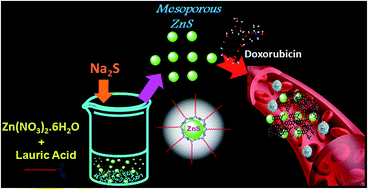
Self-assembled ZnS nanospheres with nanoscale porosity as an efficient carrier for the delivery of doxorubicin†
Received
4th September 2015
, Accepted 16th October 2015
First published on 16th October 2015
Abstract
We report the synthesis of self-aggregated mesoporous ZnS nanoparticles with large mesoscopic void spaces via anionic surfactant mediated templating pathway. High BET surface area and mesoporosity of the material has motivated us to use it as a drug-delivery vehicle employing doxorubicin as a chemotherapeutic drug. The study indicates the novel approach to restrict the leukemic cell proliferation by the induction of apoptosis has been achieved through the doxorubicin loaded mesoporous ZnS nanoparticle (MZns-Edox). We found concentration and time dependently inhibition of cell viability that provokes apoptosis via mitochondrial pathway with the generation of ROS and the destabilization of mitochondrial membrane permeability. It leads to the release of various apoptotic factors like AIF, EndoG, Cyt c that may activate the caspase pathway. In this study, we established the apoptotic induction property of the drug loaded mesoporous ZnS nanoparticles against leukemic cells. Thus, mesoporous ZnS nanomaterial based drug-delivery system can activates the apoptotic pathway in time dependent response with a minimal concentration of doxorubicin and it can regulates lymphocytic leukemia cell growth.
Introduction
Metal sulfide nanostructures, particularly those composed of regular arrangement of pores in nanoscale dimensions have attracted a large scale research interest due to their unique optoelectronic, magnetic, catalytic, energy conversion/storage and biomedical applications.1–5 In this context well-aligned nanostructure arrays of a given material is highly demanding for its enhanced properties and novel applications.1 Among these semiconductor nanomaterials, zinc sulphide (ZnS) has been receiving considerable attention because of its high chemical stability and wide potential applications in different fields such as nonlinear optical devices, light emitting diodes, solar cells, photocatalytic water splitting, live cell imaging and drug delivery.6–10 The enhanced performances associated with zinc sulphide nanostructures are strongly dependent on their morphology, particle size, shapes as well as their high specific surface areas.11 During the last few decades, various synthetic strategies such as solvothermal,12 sol–gel,13,14 thermal decomposition of a single source molecular precursor,15 hydrothermal16,17 and chemical vapour deposition18 methods have been successfully employed for the synthesis of porous ZnS nanocrystals of control the pore size, particle morphology and narrow particle size distribution. However, major drawbacks associated with these materials are low surface area and large pore size, which often restricted zinc sulphide nanostructure materials for the suitable applications. Thus, it is highly desirable to design a simple and cost-effective route for the synthesis of zinc sulphide nanostructured material with high BET surface area, well controlled pore size and uniform particle morphology.
Often the applications of the zinc sulphide nanomaterials are largely influenced by their accessible specific surface area. The surface area of the nanomaterials can be increased by inducing nanoscale porosity or interparticle voids created as a result of the self-assembly of nanoparticles. Various structure directing agents (SDAs) are often employed as porogen to introduce porosity in the materials.19,20 SDA molecules often play the crucial role as the capping agent to stabilize the tiny nanoparticles through the self-aggregation of nanostructures in the solution phase. Among the various capping agents, naturally available fatty acids (e.g. lauric acid) are very useful molecules, for their biodegradability, easy availability, and mesostructural stability.21 So, here we have been used lauric acid as template/capping agent for the synthesis of mesostructured zinc sulphide material in alkaline medium. The electrostatic interaction between negatively charged head group of lauric acid and positively charged inorganic ZnS precursors are supposed to be the driving force for the formation of mesostructured material.22
Recently, the use of the nanostructured materials as drug delivery system for cancer therapy has been attracting a considerable attention in worldwide.23,24 Loading the anticancer drugs into self-assembled nanoparticles offer several significant advantages including high drug-loading efficiency, enhanced drug stability in blood circulation, decrease of toxicity to normal cells, and controlled release of drugs.25 In recent years, various delivery vehicles have been studied for therapeutic purposes such as proteins, antibodies, nucleic acids, liposomes, micelles and organic polymer.26–29 The serious drawbacks of these carriers are the large particle size, poor loading efficiency and quickly deactivated and degraded during blood circulation before they get to the target disease site.
Porous ZnS nanoparticles have drawn significant importance as a drug delivery vehicle for conventional chemotherapeutic agents due to their colloidal stability, easy availability, nontoxic nature and good biocompatibility. The therapeutic efficacies of chemotherapeutic agents depend upon its toxicity and bioavailability that may alter by its design and fabrication. Doxorubicin is an antibiotic from the anthracycline family that is widely used as chemotherapeutic agent in different cancer to regulate DNA replication and act by intercalating into DNA, thereby inhibiting macromolecular biosynthesis (Scheme 1). Now a days, several doxorubicin-loaded nanoparticles have been developed, which can transport drugs to cancer cells depending upon the pathophysiology of tumours. Further, it may not recognized the P-glycoprotein, which affected the mediator for multidrug resistance and resulted in an increase in intracellular concentration of active component. However, its toxicity and low solubility limit its efficacy in cancer therapy.30 To the best of our knowledge, this is the first report of anionic surfactant mediated of self-aggregated mesoporous ZnS material with large mesoscopic void spaces. We have used doxorubicin as a chemotherapeutic drug. Although there is a report on cytotoxic property of doxorubicin loaded porous zinc sulfide nanospheres,31 here we would like to establish the apoptotic induction property of the drug loaded mesoporous ZnS nanoparticles against leukemic cells. Here, we have explored that mesoporous ZnS based drug-delivery system sequentially activates the apoptotic pathway in time dependent manner with a minimal concentration of doxorubicin and it can regulates lymphocytic leukemia cell growth.
 |
| | Scheme 1 Schematic diagram of self-assembled MZnS-1E nanospheres loaded doxorubicin. | |
Experimental section
Chemicals
Lauric acid [99%, used as structure directing agent (SDA)] and zinc nitrate hexahydrate were purchased from Loba Chemie, India. Sodium sulfide and aqueous ammonia (25%) were purchased from Merck, India. All the reagents were used without any further purification.
Synthesis procedure of self-assembled zinc sulfide (ZnS) nanoparticle
Self-assembled ZnS nanomaterial was synthesized via a sol–gel synthesis route by using lauric acid as a SDA. In this typical synthesis, 0.5 g lauric acid was dissolved in mixture of 10 ml doubled distilled water and 10 ml alcohol. Then, we have added the 0.5 ml aqueous solution of ammonia and stirrer the resultant solution up to 1 h at room temperature until we get the clear solution. Then, 0.78 g Na2S was dissolved in 10 ml distilled water and this solution was slowly added to the above solution. Simultaneously, 2.33 g of Zn(NO3)2·6H2O was dissolved in 10 ml distilled water in another dry beaker. The synthesis gel was prepared by adding the acidic metal salt to the former solution and the pH of the final solution was adjusted to ca. 7.0 by adding of 25% aqueous ammonia solution. Then, the reaction mixture was stirred for 5 h. Then the content was transferred in to a polypropylene bottle and treated at 277 K for 4 days. After the reaction, the final suspension was centrifuged at 5000 rpm to get the zinc sulfide nanoparticle. Then the product was suspended in distilled water and again centrifuged to get the desired solid product and dried at room temperature. For removing template molecules the as-synthesized material was extracted three times with hydrochloric acid (1 N)–ethanol mixture (1 ml HCl in 20 ml ethanol) at room temperature for 2 h each. In the presence of hydrochloric acid the lauric acid molecule gets protonated and removed from the surface of zinc sulfide nanoparticles. The as-synthesized and template-extracted materials were designated as MZnS-A and MZnS-E, respectively.
Characterization techniques
Powder X-ray diffraction patterns of both as-synthesized and extracted mesoporous ZnS samples were recorded on a Bruker D8 Advance SWAX diffractometer operated at 40 kV voltages and 40 mA current. The instrument has been calibrated with a standard silicon sample, using Ni-filtered Cu Kα (λ = 0.15406 nm) radiation. Field-emission scanning electron microscopy (FESEM; JEOL JEM 6700F) was used for determination of the morphology of powder samples. JEOL JEM 2010 transmission electron microscope operated at an accelerating voltage ranging from 100 kV to 200 kV has been employed for the determination of nanostructure and pore size. Nitrogen adsorption/desorption isotherms were obtained by using a Quantachrome Instruments Autosorb-1C surface area analyzer at 77 K. Prior to gas adsorption, samples were degassed for 4 h at 393 K under high vacuum. UV-visible diffuse reflectance spectra were recorded on a Shimadzu UV 2401PC coupled with an integrating sphere attachment. BaSO4 was used as background standard.
Results and discussion
Powder X-ray diffraction
The small angle powder X-ray diffraction patterns of the MZnS-A and MZnS-E samples are shown in Fig. 1A. The material MZnS-A showed single peak centred at 1.58 degree 2θ and after removal of the structure directing agent from the nanostructure, the porous architecture is expanded from its closed packed structure to a more open nanostructure. Consequently, the small-angle diffraction peak is shifted to slightly lower 2θ values 2θ = 1.22°. A single diffraction peak in both the materials (MZnS-A and MZnS-E) indicating the presence of disordered mesophase, which can be formed via self-assembly of zinc sulfide nanoparticles.32 From a comparison of the small angle PXRD patterns before and after the SDA removal, we can notice there is no obvious change in the nature of the diffraction peak, suggesting the retention of mesophase after the removal of the template molecules. The wide angle X-ray diffraction pattern of MZnS-A and MZnS-E are shown in Fig. 1B. These patterns suggest that both the material have good crystallinity and correspond well match with the PXRD pattern of face-centered cubic ZnS structure (JCPDS file no. 00-001-0792).33,34 No other characteristic peaks for impurities have been detected.
 |
| | Fig. 1 (A) Small angle powder XRD patterns of as-synthesized MZnS-A (a) and acid extracted MZnS-E (b); (B) wide angle PXRD pattern of as-synthesized MZnS-A (black line) and acid extracted MZnS- E (red line). | |
Surface area and porosity
The Brunauer–Emmett–Teller (BET) surface area and architectural porosity of the synthesized ZnS materials are estimated from the N2 adsorption–desorption isotherms at liquid nitrogen temperature and this is shown in Fig. 2. As seen from the figure the material MZnS-E shows typical type IV isotherm,35–37 which is characteristic for the mesoporous materials together with a H3 type hysteresis loop.38,39 For the mesoporous structure, multilayer adsorption takes place by a strong capillary condensation at high relative pressure region. This capillary condensation in the relative pressure range (P/P0) 0.52 to 0.98 with a large hysteresis loop suggests the presence of mesoporosity. The porosity in the material may originate from the aggregation of spherical nanoparticles. The BET surface area of the material is 217 m2 g−1 with a pore volume of 0.2062 ccg−1. The corresponding pore size distribution (PSD) of the sample MZnS-E estimated by using the non-local density functional theory (NLDFT)40 model, is shown in the inset of Fig. 2. The pore size distribution peak centred at 3.54 and 5.08 nm, suggesting the presence of two types of mesopores in material.
 |
| | Fig. 2 N2 adsorption (●)–desorption (○)–adsorption isotherms of the material MZnS-E at 77 K. The adsorption and desorption isotherms for MZnS-E is shifted by 50 cm3 g−1 for clarity. Corresponding NLDFT pore size distributions are shown in the inset. | |
Nanostructure and morphology analysis
The field emission SEM (FE-SEM) images of MZnS-E are shown in Fig. 3a and it suggests that material is composed of very tiny nanoparticles with spherical morphology. The representative HRTEM images of the extracted zinc sulfide material are shown in Fig. 3b–f. The HR TEM analysis of the material (MZnS-1E) clearly reveals that; the material is composed self-assembled spherical nanoparticles of dimension ca. 5–6 nm (surrounded by red circles in Fig. 3c). These self-aggregated nanoparticles could be responsible for the interparticle voids and mesoporosity. The material MZnS-1E showed two types of pore with average dimension of ca. 3.54 nm (surrounded by purple circles in Fig. 3c) and ca. 5.08 nm (surrounded by yellow circles in Fig. 3c). The high-resolution TEM image (Fig. 3d) of the material MZnS-E showed the presence of lattice fringes and suggested the high crystallinity of the material. The distance between the two fringes are in quite good agreement with the d spacing of the (111) crystal plane of cubic crystal structure with a unit cell parameter a = 3.090 Å (JCPDS no. 00-001-0792). Selected area electron diffraction (SAED) pattern of the SDA extracted zinc sulfide is shown in Fig. 3e and diffraction spots are indexed corresponding to cubic ZnS phase, which is good agreement with the wide angle PXRD pattern (Fig. 1B). We have also carried out the TEM of the MZnS-1E material by dispersing in PBS (phosphate buffered saline) solution to check the nature of the ZnS nanoparticles in physiological pH condition (Fig. 3f). By comparing the Fig. 3b and f, it is clear that the phosphate buffer solution has not so much effect on the inherent self-aggregation tendency of porous ZnS nanomaterial.
 |
| | Fig. 3 FE-SEM image of the mesoporous material MZnS-E (a), HR TEM image of MZnS-E showing self-assembled nanostructure (b and c), lattice fringe pattern for the material MZnS-E (d), selected area electron diffraction (SAED) pattern of MZnS-E (e) and HR TEM image of the material MZnS-E in PBS (f). | |
UV-visible DRS and band gap analysis
The optical properties and bandgap energy of the zinc sulfide nanomaterial has been determined from the UV-visible diffuse reflectance spectroscopic analysis. The UV-visible reflectance spectrum of the sample MZnS-E is shown in Fig. 4. The adsorption maxima of the material situated at 311 nm and this is extended up to 447 nm, which corresponds to the band gap energy of 3.45 eV (inset of Fig. 4). The long tail in the absorption spectrum could be attributed to the scattering from the nanomaterial. The adsorption maxima of the mesoporous material MZnS-E shifted towards higher wavelength and shows lower band gap than bulk zinc sulphide (3.54 eV).41 Presence of pores/void spaces at the surface of the semiconductor nanoparticles decrease the band gap of the material than its non-porous/bulk analogue.36 This could be attributed to the presence of increased number surface atoms in high strain state and surface defects. As a result, the electron distribution in the porous ZnS is influenced and it causes a decrease in the energy difference between the valance-to-conduction bands than bulk ZnS material.42
 |
| | Fig. 4 UV-visible diffuse reflectance spectrum of MZnS-E. Bandgap of the material is shown in inset. | |
Biological analysis
1. Effect of MZnS-EDox on the growth inhibition of cancer cell lines. To eliciting the apoptotic efficacy, doxorubicin loaded MZnS-E (MZnS-EDox) was evaluated for its cytotoxic property in a panel of cancer cells (Fig. 5a). However, the MZnS-E was not effective to trigger any significant cytotoxicity and similar effect was found in the two different type cells like normal cells and cancerous cells with MZnS-E only. MZnS-EDox reduced the viability of K562 cells with GI50 after 24 h in comparison with only doxorubicin (Fig. 5b). Morphological analysis explored that K562 cell death upon the treatment of MZnS-EDox at 24 h treatment (Fig. 5c).43
 |
| | Fig. 5 Growth inhibitory effect of MZnS-EDox on K562 cells. Cells were treated with different concentrations in a panel of cancer cells. The cell viability was measured by MTT assay in concentration of MZnS-EDox1 (0.001 μM), MZnS-EDox2 (0.005 μM), MZnS-EDox3 (0.01 μM) and MZnS-EDox4 (0.05 μM) (a) and time (b) dependently. (c) Morphological analysis of bright field images in the presence or absence of MZnS-EDox at 24 h. The data were obtained from three independent experiments. Values are presented as mean ± SD (*P < 0.05, **P < 0.01, ***P < 0.001). | |
2. Induction of apoptosis with MZnS-EDox in K562 cells. Apoptosis induction in cancer cells is one of the important and desirable criteria for the cancer therapy.44 So, involvement of apoptosis with the newly MZnS-EDox induced death of K562 cells was evaluated. At the consequences of apoptosis, phosphatidyl serine is exposed from inner membrane to outer that was measured by flow cytometric analysis using annexin V FITC in K562 cells (Fig. 6).45 This simultaneous effect was found on cell cycle arrest with MZnS-EDox with (Fig. 7).46 This study confirms that the MZnS-EDox induces apoptosis in K562 cells at lower concentration than doxorubicin alone.
 |
| | Fig. 6 Apoptosis inducing effect of MZnS-EDox on K562 cells. Annexin V-FITC binding in K562 cells in different time including 0 h, 12 h, 24 h and 36 h. | |
 |
| | Fig. 7 Apoptosis inducing effect of MZnS-EDox on K562 cells. Cell cycle analysis up to 36 h with MZnS-EDox. The data were obtained from three independent experiments. Values are presented as mean ± SD (*P < 0.05, **P < 0.01, ***P < 0.001). | |
3. Effect of MZnS-EDox in mitochondrial membrane potential and generation of reactive oxygen species. The induction of apoptosis regulates the mitochondrial integrity like alteration of mitochondrial membrane potential or activation of series of caspase with release of cytochrome C.47 To confirm the mitochondrial involvement, we measured MPP by fluorescence emission shift of the Ψm sensitive cationic JC-1 dye in the presence of MZnS-EDox at 24 h. Fig. 8a showed the potential depolarization of mitochondrial membrane potential. The excessive ROS production is in cancer cells may induce apoptosis via the damaging of different cellular component like protein, lipid and DNA.48 It also simultaneous the increased ROS generation in K562 cells in time dependent manner measured by flow cytometrically as per Fig. 8b.
 |
| | Fig. 8 Effect of MZnS-EDox on K562 cells. (a) Membrane potential evaluated with JC-1 dye reactively and (b) generation of reactive oxygen species evaluated by DCFDA, measured by flow cytometric analysis. The data were obtained from three independent experiments. Values are presented as mean ± SD (*P < 0.05, **P < 0.01, ***P < 0.001). | |
4. Effect of MZnS-EDox in different pro-and anti apoptotic proteins in K562 cells. As the sequential phenomenon, the significant increase of cytochrome C release in cytosolic portion was balanced with the reduced amount in mitochondrial portion (Fig. 9) in k562 cells in time dependent manner.49 Simultaneously, it also altered the status of two important proteins like apoptosis inducing AIF and EndoG. Time dependently; MZnS-EDox significantly increased the expression of AIF and EndoG in K562 cells. This MZnS-EDox also altered the caspase 3 activation which is the one of the key regulator of apoptotic death in mitochondrial dependent pathway. In time dependent manner, MZnS-EDox increased the caspase 3 activation in K562 cells as shown in Fig. 9. Alteration of caspase status also regulates different pro and anti apoptotic proteins including Bax, Bad and Bcl2.50,51 Significant changes was found in three proteins status upon the treatment of MZnS-EDox in time dependently (Fig. 10). These results suggested that MZnS-EDox induces the cellular apoptosis via ROS mediated mitochondrial pathway.
 |
| | Fig. 9 Effect of MZnS-EDox in K562 cells. Status of different apoptotic markers including Cyt C, AIF and EndoG were evaluated in K562 cells in time dependent manner (0, 12, 24 and 36 h) with the treatment of MZnS-EDox by flow cytometric analysis. Values are presented as mean ± SD (*P < 0.05, **P < 0.01, ***P < 0.001). | |
 |
| | Fig. 10 Effect of MZnS-EDox in K562 cells. Status of different pro- and anti-apoptotic proteins including Bax, Bad, Bcl2 and Caspase3 were measured in K562 cells in time dependent manner (0, 12, 24 and 36 h) with the treatment of MZnS-EDox by flow cytometric analysis. Values are presented as mean ± SD (*P < 0.05, **P < 0.01, ***P < 0.001). | |
Conclusions
Our experimental findings suggested that lauric acid can be employed as the template for the synthesis of self-assembled mesoporous ZnS nanospheres. The induction of porosity and high specific surface area in mesoporous ZnS material is responsible for the therapeutic efficiency of the chemotherapeutic agents. Doxorubicin loaded porous ZnS nanomaterial can be able to enhance the apoptosis inducing property in leukemic cells. At the apoptotic consequence, it alters the mitochondrial membrane potential and also its associated proteins. Thus, we can conclude that self-assembled mesoporous ZnS nanomaterial has a wide potential to be used as a nano-carrier for delivering anti-cancer drug doxorubicin to induce greater efficiency.
Acknowledgements
VK and SB wishes to thank CSIR, New Delhi for their respective senior and junior research fellowships. AB wishes to thank DST, New Delhi for financial supports through the DST-DERB project grant. Authors are thankful to Dr S. N. Kabir and Mr T. Ghosh for Flow Cytometry study. KDS thanks Director CSIR-IICB for necessary supports.
References and notes
- C. H. Lai, M. Y. Lu and L. J. Chen, J. Mater. Chem., 2012, 22, 19 RSC.
- W. Yin, L. Yan, J. Yu, G. Tian, L. Zhou, X. Zheng, X. Zhang, Y. Yong, J. Li, Z. Gu and Y. Zhao, ACS Nano, 2014, 8, 6922 CrossRef CAS PubMed.
- X. Rui, H. Tan and Q. Yan, Nanoscale, 2014, 6, 9889 RSC.
- P. C. Dai, W. Li, J. Xie, Y. M. He, J. Thorne, G. McMahon, J. H. Zhan and D. W. Wang, Angew. Chem., Int. Ed., 2014, 53, 13493 CrossRef CAS PubMed.
- L. Zhao, Y. Wang, Z. Sun, A. Wang, X. Li, C. Song and Y. Hu, Green Chem., 2014, 16, 2619 RSC.
- F. Muhammad, W. X. Qi, A. F. Wang, J. K. Gu, J. S. Du and G. S. Zhu, J. Mater. Chem. B, 2015, 3, 1597 RSC.
- R. Xing and S. Liu, Nanoscale, 2012, 4, 3135 RSC.
- P. Zhao, J. Zhang, Y. H. Zhu, X. L. Yang, X. Jiang, Y. Yuan, C. S. Liu and C. Z. Li, J. Mater. Chem. B, 2014, 2, 8372 RSC.
- W. Yang, X. Liu, D. Li, L. Fan and Y. Li, Phys. Chem. Chem. Phys., 2015, 17, 14532 RSC.
- E. Baniasadi, I. Dincer and G. F. Naterer, Appl. Catal., A, 2013, 455, 25 CrossRef CAS.
- W. N. Jia, X. Wu, B. X. Jia, F. Y. Qu and H. J. Fan, Sci. Adv. Mater., 2013, 5, 1329 CrossRef CAS.
- L. Dong, Y. Chu and Y. Zhang, Mater. Lett., 2007, 61, 4651 CrossRef CAS.
- N. I. Kovtyukhova, E. V. Buzaneva, C. C. Waraksa, B. R. Martin and T. E. Mallouk, Chem. Mater., 2000, 12, 383 CrossRef CAS.
- B. Bhattacharjee, D. Ganguli, S. Chaudhuri and A. K. Pal, Mater. Chem. Phys., 2002, 78, 372 CrossRef.
- A. Piquette, C. Cannon and A. W. Apblett, Nanotechnology, 2012, 23, 294014 CrossRef PubMed.
- M. Muruganandham, R. Amutha, E. Repo, M. Sillanpaa, Y. Kusumoto and M. A. A. Mamun, J. Photochem. Photobiol., A, 2010, 216, 133 CrossRef CAS.
- C. Jiang, W. Zhang, G. Zou, W. Yu and Y. Qian, Mater. Chem. Phys., 2007, 103, 24 CrossRef CAS.
- D. F. Moore, Y. Ding and Z. L. Wang, J. Am. Chem. Soc., 2004, 126, 14372 CrossRef CAS PubMed.
- D. Chandra, S. Mridha, D. Basak and A. Bhaumik, Chem. Commun., 2009, 2384 RSC.
- W. Zhang, G. P. Tu, H. J. Zhang, Y. Zheng and L. L. Yang, Mater. Lett., 2014, 114, 119 CrossRef CAS.
- V. Kumari and A. Bhaumik, Dalton Trans., 2015, 44, 11843 RSC.
- A. K. Patra, S. K. Kundu, D. Kim and A. Bhaumik, ChemCatChem, 2015, 7, 791 CrossRef CAS.
- M. Mahmoudi, S. Sant, B. Wang, S. Laurent and T. Sen, Adv. Drug Delivery Rev., 2011, 63, 24 CrossRef CAS PubMed.
- Y. Xia, W. Li, C. M. Cobley, J. Chen, X. Xia, Q. Zhang, M. Yang, E. C. Cho and P. K. Brown, Acc. Chem. Res., 2011, 44, 914 CrossRef CAS PubMed.
- Q. J. Xing, N. J. Li, D. Y. Chen, W. W. Sha, Y. Jiao, X. X. Qi, Q. F. Xu and J. M. Lu, J. Mater. Chem. B, 2014, 2, 1182 RSC.
- P. D. Senter and C. J. Springer, Adv. Drug Delivery Rev., 2001, 53, 247 CrossRef CAS.
- V. R. Sinha and A. Trehan, J. Controlled Release, 2003, 90, 261 CrossRef CAS.
- M. C. Jones and J. C. Leroux, Eur. J. Pharm. Biopharm., 1999, 48, 101 CrossRef CAS.
- S. Bhunia, N. Chatterjee, S. Das, K. D. Saha and A. Bhaumik, ACS Appl. Mater. Interfaces, 2014, 6, 22569 CAS.
- S. Bisht and A. Maitra, Wiley Interdiscip. Rev.: Nanomed. Nanobiotechnol., 2009, 1(4), 415–425 CrossRef CAS PubMed.
- D. Zhu, H. M. Wen, W. Li, X. B. Cui, L. Ma and A. Kang, RSC Adv., 2014, 4, 33391 RSC.
- Y. Zhou and M. Antonietti, J. Am. Chem. Soc., 2003, 125, 14960 CrossRef CAS PubMed.
- J. Liu, J. Ma, Y. Liu, Z. Song, Y. Sun, J. Fang and Z. Liu, J. Alloys Compd., 2009, 486, L40 CrossRef CAS.
- A. Dutta, A. K. Patra, S. Dutta, B. Saha and A. Bhaumik, J. Mater. Chem., 2012, 22, 14094 RSC.
- V. Kumari, A. K. Patra and A. Bhaumik, RSC Adv., 2014, 4, 13626 RSC.
- D. Chandra, N. Mukherjee, A. Mondal and A. Bhaumik, J. Phys. Chem. C, 2008, 112, 8668 CAS.
- D. Zhao, D. Yuan, D. Sun and H. C. Zhou, J. Am. Chem. Soc., 2009, 131, 9186 CrossRef CAS PubMed.
- M. Kruk and M. Jaroniec, Chem. Mater., 2001, 13, 3169 CrossRef CAS.
- M. Pramanik, M. Nandi, H. Uyama and A. Bhaumik, Green Chem., 2012, 14, 2273 RSC.
- P. I. Ravikovitch and A. V. Neimark, J. Phys. Chem. B, 2001, 105, 6817 CrossRef CAS.
- R. Xing, Y. Xue, X. Liu, B. Liu, B. Miao, W. Kanga and S. Liu, CrystEngComm, 2012, 14, 8044 RSC.
- P. H. Huang and C. M. Lu, Sci. World J., 2014, 863404 Search PubMed.
- S. Das, N. Chatterjee, D. Bose, S. K. Dey, R. N. Munda, A. Nandy, S. Bera, S. K. Biswas and K. D. Saha, Cell. Physiol. Biochem., 2012, 29, 251 CrossRef CAS PubMed.
- C. B. Thompson, Science, 1995, 267, 1456 CrossRef CAS.
- S. Ghavami, C. Kerkhoff, W. J. Chazin, K. Kadkhoda, W. Xiao, A. Zuse, M. Hashemi, M. Eshraghi, K. S. Osthoff, T. Klonisch and M. Los, Biochim. Biophys. Acta, 2008, 1783, 297 CrossRef CAS PubMed.
- M. Pramanik, N. Chatterjee, S. Das, K. D. Saha and A. Bhaumik, Chem. Commun., 2013, 49, 9461 RSC.
- N. Chatterjee, S. Das, D. Bose, S. Banerjee, T. Jha and K. Das Saha, PLoS One, 2015, 10, e0120509 Search PubMed.
- M. V. Gurp, N. Festjens, G. V. Loo, X. Saelens and P. Vandenabeele, Biochem. Biophys. Res. Commun., 2003, 304, 487 CrossRef.
- M. H. Cobb, Prog. Biophys. Mol. Biol., 1999, 71, 479 CrossRef CAS.
- E. A. Tanner, T. A. Blute, C. B. Brachmann and K. McCall, Development, 2011, 138, 327 CrossRef CAS PubMed.
- T. G. Cotter, Nat. Rev. Cancer, 2009, 9, 501 CrossRef CAS PubMed.
Footnote |
| † Electronic supplementary information (ESI) available. See DOI: 10.1039/c5ra17998j |
|
| This journal is © The Royal Society of Chemistry 2015 |
Click here to see how this site uses Cookies. View our privacy policy here.