
Injectable conducting interpenetrating polymer network hydrogels from gelatin-graft-polyaniline and oxidized dextran with enhanced mechanical properties

Longchao Lia, Juan Gea, Peter X. Maabcde and Baolin Guo*a
aCenter for Biomedical Engineering and Regenerative Medicine, Frontier Institute of Science and Technology, Xi'an Jiaotong University, Xi'an, 710049, China. E-mail: baoling@mail.xjtu.edu.cn; Fax: +86-29-83395131; Tel: +86-29-83395361
bDepartment of Biomedical Engineering, University of Michigan, Ann Arbor, MI 48109, USA
cDepartment of Biologic and Materials Sciences, University of Michigan, 1011, North University Ave., Room 2209, Ann Arbor, MI 48109, USA
dMacromolecular Science and Engineering Center, University of Michigan, Ann Arbor, MI 48109, USA
eDepartment of Materials Science and Engineering, University of Michigan, Ann Arbor, MI 48109, USA

Received 21st September 2015 , Accepted 15th October 2015

First published on 16th October 2015


Abstract

Electrically conductive hydrogels have great potential for biomedical applications. However, they usually exhibited poor mechanical properties. We present a simple approach to prepare injectable conductive interpenetrating polymer network (IPN) hydrogels with enhanced mechanical properties. The in situ forming IPN conductive hydrogels were based on gelatin-graft-polyaniline and carboxymethyl-chitosan, which were crosslinked with oxidized dextran via Schiff base at physiological conditions. Storage modulus of the injectable conductive IPN hydrogels was greatly increased. Gelation time, swelling ratio, pore size and conductivity of these injectable hydrogels were adjusted by polyaniline content. Electroactivity of the hydrogels was studied by UV-vis and cyclic voltammetry. Cytocompatibility of the hydrogels was investigated by cell adhesion and proliferation of C2C12 myoblasts and adipose-derived mesenchymal stem cells. The in vivo biocompatibility of the hydrogels was confirmed by H&E staining. These injectable conductive hydrogels with good mechanical properties and biocompatibility as bioactive biomaterials have great potential for drug delivery and tissue engineering.

1. Introduction

Hydrogels are promising materials for tissue engineering due to their remarkable characteristics, such as similarity to extracellular matrix, biocompatibility, and flexibility in fabrication.1–4 In terms of materials requirement, hydrogels with various different chemical and physical properties have been developed.5–9 Conductive hydrogels as emerging functional materials can provide conductivity by combining conductive polymers with three-dimensional network hydrogels.10–15 Because the scaffolds fabricated by conductive polymers can promote cell adhesion, proliferation, and differentiation,16–19 conductive hydrogel is a popular subject with growing attention. In situ forming conductive hydrogels, which can be prepared by injection into human body, have many advantages including easing of patient pains, minimally invasive treatment, and simple cell encapsulation, as well as fitting complex shape in damaged tissue.20–23 Cui et al. synthesized injectable electroactive hydrogels based on PLA-PEG-PLA copolymer and electroactive tetraaniline, and the modulus of the hydrogels is up to about 1000 Pa.24 In our previous work, we synthesized a series of biodegradable electroactive hydrogels based on gelatin-graft-polyaniline and genipin which had excellent electroactivity and biocompatibility.25 We also developed injectable electroactive hydrogels via host–guest interaction between tetraaniline, poly(ethylene glycol) and γ-cyclodextrin dimer, which could avoid the side reaction of chemical crosslinking during hydrogel preparation.26 However, these hydrogels lack of mechanical strength compared with human body tissue such as bones,27,28 cartilage,29 muscle, and ligaments. Therefore, design and synthesis of high modulus injectable conductive hydrogels is an important aim in this field.

To improve mechanical performance of hydrogels, many efforts have been made to develop new strategies.30–34 In general, hydrogels with high modulus can be fabricated via several methods such as: (1) double network and interpenetrating network hydrogels;31,35–38 (2) covalently and physically cross-linked hydrogels;39–41 (3) nano-/micro-composite hydrogels.42–45 Compared with other high modulus hydrogels, interpenetrating network hydrogels exhibited the high modulus and stability.34,46 Several groups have developed a variety of interpenetrating network (IPN) hydrogels, by using two different kinds of polymers to form interpenetrating polymeric networks.47,48 The preparation of IPN hydrogels was simple by mixing pre-prepared solution of polymers.

The purpose of this work is to develop a series of injectable conducting hydrogels with enhanced mechanical properties. Herein we present a new, simple method to prepare strong injectable conductive hydrogels. The IPN conductive hydrogels were synthesized by Schiff base reaction, and their mechanical properties and cytotoxicity were investigated. In order to improve mechanical properties, we used carboxymethyl-chitosan (CMCS) and gelatin-graft-polyaniline (GP) which were crosslinked with oxidized dextran (OD) to prepare IPN hydrogels. The preparation was achieved by simply mixing oxidized dextran with CMCS and gelatin-graft-polyaniline at human body temperature. In addition, we can control the gelation time and pore size of hydrogel by adjusting polyaniline content. More important, we found that the storage modulus of the injectable conductive IPN hydrogels increased to about hundred times higher than that in our previous work,25,26 and these hydrogels greatly enhanced the cell proliferation of C2C12 myoblasts. The good in vivo biocompatibility of the conductive hydrogels were also confirmed. These injectable conductive hydrogels with good mechanical properties and biocompatibility have great potential for tissue engineering.

2. Experimental section

2.1 Materials

Chitosan was obtained from J&K Scientific Ltd. Aniline (99.5%, J&K Scientific Ltd.) was distilled under reduced pressure before use and stored at 4 °C. Gelatin (gelatin from cold water fish skin, Sigma), dextran, sodium periodate, sodium hydroxide, ammonium persulfate (APS, Sigma, 98%), (±)-10-camphorsulfonic acid (CSA, Alfa Aesar, 98%), monochloroacetic acid, ethanol, isopropanol, diethyl ether, dimethyl sulfoxide (DMSO) and N-methyl-2-pyrrolidone (NMP) were used without further purification.

2.2 Synthesis of gelatin-graft-polyaniline (GP) and oxidized dextran (OD)

Gelatin-graft-polyaniline (GP) was synthesized according to our previous publication.25 Briefly, 100 mg gelatin and 1.8 mg aniline was dissolved in 7.5 mL H2O with 3.9 mg CSA in a round-bottomed flask. 4.6 mg APS was added to the solution and stirred for 12 hours. The solution was precipitated in ethanol/diethyl ether, and then washed with NMP to remove free polyaniline. The product was precipitated and vacuum dried for 3 days. GP1 and GP2 with different polyaniline content of 0.9 wt% and 1.8 wt% were synthesized. The grafting ratio of polyaniline onto gelatin was determined according to ref. 49, and the grafting ratio of polyaniline for GP1 and GP2 were higher than 99%.

For the synthesis of OD, 3.28 g sodium periodate (0.0154 M) in 100 mL of distilled water was added dropwise to 400 mL 1.25% (w/v) dextran (0.0308 M subunits) solution, and then stirred for 24 h at room temperature in the dark place.50 After completion of the reaction, the equivalent of ethylene glycol was added to quench the unreacted NaIO4. The solution was dialyzed (MWCO 3500) for 2 days against water, and freeze-dried to obtain the oxidized dextran. The oxidation degree of dextran was about 20% by titration method.50,51 Briefly, solutions of OD (0.5 mL, 1% w/v) and tert-butylcarbazate (tBC) (0.5 mL, 0.03 M) in aqueous trichloroacetic acid (1%) were mixed, and allowed to react for 24 h at room temperature, and then 100 μL of mixture was transferred to a vial containing 1 mL of trinitrobenzenosulfonic acid (TNBS) (4 mM in 0.1 M borate, pH = 8.0) solution, and the reaction was conducted for 60 min at room temperature. The resulting solution was diluted with 0.5 M HCl, and its absorbance was measured at 334 nm. Aqueous tBC solution was used as standards to obtain a calibration curve for determining the unreacted carbazates in experimental samples.

2.3 Synthesis of carboxymethyl-chitosan (CMCS)

0.5 g chitosan and 0.85 g sodium hydroxide were added in 6.25 mL solvent (water/isopropanol = 1/4 (v/v)) at 50 °C for 1 h. 0.9375 g monochloroacetic acid in 1.25 mL isopropanol was then added dropwise to the mixture with stirring at 50 °C for 4 h. The mixture was dissolved in 30 mL H2O and centrifuged to remove precipitation. The solution was precipitated in 150 mL of anhydrous ethanol to obtain crude product. After soaked in 80% ethanol to desalt and dewater, the product was vacuum dried at room temperature.

2.4 Synthesis of gelatin-graft-polyaniline/carboxymethyl-chitosan/oxidized dextran (GP/CMCS/OD) hydrogels

The OD, CMCS, and GP were dissolved in PBS (pH = 7.4) to form solution. The solutions were stored at 4 °C and mixed by desired ratios at 37 °C to form hydrogels. For example, to prepare 5 mL hydrogels, 2 mL 25% G or GP solution, 2 mL 5% CMCS solution, and 1 mL 15% OD solution were mixed together, and the mixture transformed into hydrogels at body temperature. The final composition of GP, CMCS, and OD in the hydrogels is 66.7%, 13.3%, and 20% as shown in Table 1, respectively.
Table 1 Composition of the hydrogels
Sample code G or GP CMCS OD
G/CMCS/OD 50 mg G 10 mg 15 mg
GP1/CMCS/OD 50 mg GP1 10 mg 15 mg
GP2/CMCS/OD 50 mg GP2 10 mg 15 mg


2.5 Characterization

FTIR spectra of polyaniline, GP, CMCS, OD, and GP/CMCS/OD hydrogel were recorded on a Nicolet 6700 FT-IR spectrometer (Thermo Scientific Instrument) in the range of 4000–600 cm−1.

The UV-vis spectra were recorded using a UV-vis spectrophotometer (PerkinElmer Lambda 35).

Cyclic voltammetry (CV) of gelatin-graft-polyaniline/oxidized dextran hydrogel was conducted on a CHI 660D Electrochemical Workstation using Ag/AgCl and platinum-wire as the reference and counter electrodes, respectively. The indium tin oxide (ITO) electrode was used as the working electrode and the scan rate was 50 mV s−1.

The hydrogel was immersed in distilled water until swelling equilibrium was reached. The excessive water on the hydrogel surface was removed by filter paper, and the sample was placed in air for 30 min and then transferred to a cylinder. The conductivity of swollen hydrogel was tested by a Pocket Conductivity Meter (HANNA8733).

The sol–gel transition time at body temperature was determined by tube inverting test.52 The sample was defined as a “gel” in the case of no visual flow was observed within 30 s by inverting the vial.

The rheological properties of the GP/CMCS/OD hydrogel were evaluated with a TA Rheometer (DHR-2) at 37 °C with the parallel-plate geometry (plate diameter of 20 mm, gap of 1000 μm). The measurement was performed using a dynamic frequency sweep test, which covered a range of frequencies from 1 to 100 rad s−1 at constant shear amplitude of 0.1%.53

The swelling ratio (SR) of the hydrogels was determined by swelling tests. The hydrogels were immersed in PBS and weighed from the solution without external water at various times (Wt). Hydrogels were weighed until swelling equilibrium was established. SR was calculated by the following equation: image file: c5ra19467a-t1.tif, where Wi and Wt represent the initial weight and the weight at different swelling times, respectively.

The morphologies of the swollen hydrogels after freeze-drying were observed using a field emission scanning electron microscope (FE-SEM, SU-8010, Hitachi, Japan).

2.6 Cytotoxicity of the hydrogels

Cytotoxicity and cell proliferation of hydrogels were assessed by the alamarBlue® assay and LIVE/DEAD assay. The dry hydrogels were firstly sterilized, and then they were incubated into culture medium (Dulbecco's Modified Eagle Medium (DMEM), Gibco) supplemented with 10% fetal bovine serum (Gibco), 1.0 × 10⁵ U L−1 penicillin (Hyclone) and 100 mg L−1 streptomycin (Hyclone) for 24 h and 30 days at 37 °C to obtain their extract liquid with concentration of 1.56, 3.13, 6.25 and 12.5 mg mL−1. 100 μL of C2C12 myoblast cells were seeded in 96-well plates (Costar) at a density of 2000 cells per well and were incubated in the culture medium at 37 °C in a humidified incubator containing 5% CO2. After 4 h incubation, extract solution with various concentrations was added into the corresponding wells. The wells filled with the culture medium instead of the extract liquid were considered as the control group (TCP). After cultured for 3 days, 10 μL of the alamarBlue® reagent was added into each well. The plates were incubated for 5 h at 37 °C under 5% CO2. 90 μL of the medium in each well was transferred into 96-well black plates (Costar). The fluorescence was read by a microplate reader (Molecular Devices) with excitation and emission wavelengths of 560 nm and 590 nm.

The living and the dead cells in extract solution after incubation for 24 h were stained with LIVE/DEAD® Viability/Cytotoxicity Kit (Molecular Probes) for 30 min at 37 °C after being washed three times with PBS. The stained cells were observed under the inverted fluorescence microscope (IX53, Olympus).

Adipose-derived mesenchymal stem (ADMSC) were also used to evaluate the cytotoxicity of the hydrogels in a similar way as that of C2C12 cells, except that the cell density is 1500 cells per well. Rabbit ADMSC cells were isolated and expanded according to our previous report.54

2.7 In vivo inflammatory response after subcutaneous injection

All experiments were carried out in accordance with current guidelines for the care of laboratory animals and were approved by proper committee of Xi'an Jiaotong University. The solution of GP, OD, and CMCS were sterilized under high temperature and pressure. Three groups of Sprague Dawley (SD) rats (6–8 weeks, male) were anesthetized by isofluorane before being injected subcutaneously with 0.4 mL GP/CMCS/OD solution. The inflammatory response and histological examination was performed on three groups of animals. The injectable samples were retrieved at 1 week and 4 weeks after surgery, processed for further histological analysis. At the pre-determined time points, the animals were sacrificed, and the hydrogels with inflamed tissue were removed, fixed in a phosphate buffered formalin solution, embedded in paraffin, sectioned for further histological examination. All species were stained by Hematoxylin–Eosin (H&E). The stained sections of each sample were examined by a microscope (Olympus, Japan) for tissue inflammatory reaction evaluation.

2.8 Statistical analysis

All the data were expressed as mean ± standard deviation. Statistical comparison of the data was performed using the variance analysis of repeated measurements between two groups. Data were analyzed using the SPSS18.0 statistical package. A value of p < 0.05 was considered statistically significant.

3. Results and discussion

3.1 Synthesis of injectable conducting hydrogels

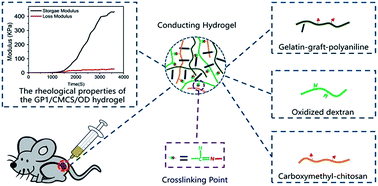
The synthesis procedure of injectable conductive hydrogels is shown in Fig. 1. Three kinds of natural polymers were modified to prepare hydrogels with good biodegradation and biocompatibility. The gelatin was grafted various contents of polyaniline on the side chains to improve conductivity. Carboxymethyl chitosan with good biocompatibility can dissolve in distill water. Dextran has hydroxyl groups which could be oxidized into aldehyde group. The amino groups from gelatin-graft-polyaniline and carboxymethyl chitosan were crosslinked with the aldehyde groups of oxidized dextran to form interpenetrating network hydrogels at body temperature (Fig. 1).
image file: c5ra19467a-f1.tif
Fig. 1 Preparation of injectable conductive IPN hydrogel based on gelatin-graft-polyaniline (GP), oxidized dextran (OD) and carboxymethyl-chitosan (CMCS).

The structure of polymer was verified via FT-IR spectroscopy. From FT-IR spectra of OD (curve a in Fig. 2), the peak at 1731 cm−1 is attributed to C[double bond, length as m-dash]O stretching deformation of aldehyde group, indicating that some hydroxyl groups in dextran have been oxidized by NaIO4. In curve b of CMCS, the peak at 1760 cm−1 is absorption bond of C[double bond, length as m-dash]O stretch carbonyl group of carboxymethyl group in CMCS. For curve c of polyaniline, the prominent signals of polyaniline were observed: quinine diimine ring-stretching deformation at 1572 cm−1 and benzonoid diamine ring stretching at 1490 cm−1, respectively. From GP2 curve, the absorption peaks at 1566 cm−1 and 1490 cm−1 are assigned to the C[double bond, length as m-dash]C benzonoid diamine ring stretching of polyaniline in gelatin-graft-polyaniline, which indicated integration of gelatin with polyaniline. For curve e of GP2/CMCS/OD hydrogel, the aldehyde group at 1731 cm−1 disappears and the peak at 1656 cm−1 from the newly formed Schiff base via the reaction of aldehyde group from OD and amine group from CMCS and GP is present, indicating that the hydrogel was formed.


image file: c5ra19467a-f2.tif
Fig. 2 FT-IR spectra of samples: (a) OD, (b) CMCS, (c) polyaniline, (d) GP2 and (e) GP2/CMCS/OD hydrogel.

3.2 Gelation time and rheological measurement

For injectable hydrogels, the gelation time is a very important factor for clinical applications.55 The gelation time is investigated by tube inverting technique. Fig. 3(A) and (B) depict the appearance of the GP2/CMCS/OD solution and hydrogels. Before the gelation point, the GP2/CMCS/OD solution is brown in color, and hydrogel was formed after being placed in a 37 °C oven for a while. The gelation time of G/CMCS/OD gels is 20 seconds (Fig. 3(C)). For GP1/CMCS/OD and GP2/CMCS/OD, gelation time is 40 s and 80 s, respectively.
image file: c5ra19467a-f3.tif
Fig. 3 Gelation time and mechanical properties of hydrogels. GP2/CMCS/OD solution before crosslinking (A) and after crosslinking (B), (C) gelation time measured by test tube inverting method, and (D) mechanical properties of hydrogels.

The storage modulus of hydrogels was evaluated by a rheometer, as shown in Fig. 3(D). The storage modulus of G/OD hydrogel was about 1 kPa, and it increased as high as 924 kPa for G/CMCS/OD hydrogels, which is quite strong. The GP1/CMCS/OD hydrogels showed a lower modulus about 571 kPa compared to G/CMCS/OD, and the modulus of GP2/CMCS/OD decreased to 21 kPa. The modulus of the GP1/CMCS/OD and GP2/CMCS/OD hydrogels is much higher than that in our previous work which is about hundreds of Pa, and these values are also much higher than the modulus of PLA-PEG-PLA-aniline tetramer complex hydrogels with the highest modulus about 1 kPa in other report.24 The crosslinking density is the key factor for storage modulus, and the storage modulus generally increased as crosslinking density increased. The decreased modulus of GP/CMCS/OD hydrogel might be because the grafting reaction of polyaniline to gelatin consumed amine group on gelatin chains that lead to the crosslinking density induced.

3.3 Electrochemical characterization of GP copolymer and conducting hydrogels

The electrochemistry of the hydrogels was investigated by UV-vis and CV. As shown in Fig. 4(I), the UV-vis spectrum of GP2 solution shows two peaks at 345 nm and 600 nm, which are attributed to the π–π* transition of the benzene ring and the benzenoid to quinoid excitonic transition, respectively. After doping with HCl, there is a new absorption peak at 430 nm of the graft copolymer along with a blue shift of the peak from the benzene ring to 340 nm due to the formation of polarons. The disappearance of πB–πQ excitonic transition and the delocalization of polarons indicated that the hydrogels are readily oxidized and reduced electrochemically, resulting in materials having electrical conductivity.
image file: c5ra19467a-f4.tif
Fig. 4 (I) UV-vis of gelatin-graft-polyaniline. (a) GP2 and (b) GP2 doped with HCl; (II) cyclic voltammograms for the GP2/CMCS/OD hydrogel in 1 mol L−1 HCl solution; (III) conductivity of the hydrogels.

Fig. 4(II) shows the CV of GP2/CMCS/OD hydrogels obtained by coating on ITO in 1 mol−1 HCl aqueous solution. The hydrogels showed two pairs of reversible redox peaks, and the redox peak at 0.26 V corresponds to the transition between leucoemeraldine state to emeraldine state of polyaniline, and the peak at 0.56 V is attributed to the transition from emeraldine state of polyaniline to pernigraniline state. This result is consistent with our previous studies.25

3.4 Conductivity of the swollen hydrogels

The conductivity of GP hydrogels in swollen state was measured using a conductivity meter. Fig. 4(III) illustrates that the conductivity of the hydrogels varies as polyaniline content changes from G/CMCS/OD to GP2/CMCS/OD. The conductivity of G/CMCS/OD hydrogels is 6.2 mS cm−1, because of ionic conductivity of amino groups and carboxyl groups on the chains of gelatin and CMCS. The conductivity of GP1/CMCS/OD and GP2/CMCS/OD increased to 6.7 and 7.3 mS cm−1, respectively, due to the incorporation of polyaniline into the hydrogels. These values are much higher than that of our previous work, in which the gelatin-graft-polyaniline hydrogels showed a conductivity of 0.4 mS cm−1.25

3.5 Morphology of the hydrogels

The swelling ratio of the hydrogels was shown in Fig. 5. Compared with polyaniline modification hydrogels, the G/CMCS/OD hydrogels showed lower swelling ratio of 70%. For GP1/CMCS/OD and GP2/CMCS/OD hydrogels, the swelling ratio was 100% and 140%, respectively. The equilibrium swelling ratio is generally influenced by the crosslinking density and hydrogel composition. When polyaniline was grafted on gelatin chains, it consumed amino groups from gelatin and this resulted in limited amino group to react with aldehyde groups of oxidized dextran. Therefore, the G/CMCS/OD gels showed the lowest swelling ratio owing to its highest crosslinking density, and they reached swelling equilibrium at about 20 hours. The GP1/CMCS/OD hydrogels and GP2/CMCS/OD hydrogels showed a higher swelling ratio and reached swelling equilibrium at about 50 and 60 hours. The swelling ratio increased as polyaniline content increased hence the swelling ratio can be controlled from 70 to 140% by tuning the polyaniline content in the hydrogels.
image file: c5ra19467a-f5.tif
Fig. 5 Swelling ratio and morphology of the conductive hydrogels after swelling. (a) G/CMCS/OD, (b) GP1/CMCS/OD, and (c) GP2/CMCS/OD.

The micro-morphology of the swollen hydrogels after swelling was observed by SEM, as shown in Fig. 5. Three types of hydrogels all showed a porous structure, and had similar pore shapes but different sizes. The G/CMCS/OD gels exhibited relative small pores whose size is around 75 μm. For the hydrogels of GP1/CMCS/OD and GP2/CMCS/OD, pore size is around 125 and 200 μm, respectively. The pore size of hydrogels increased with polyaniline content increasing in the hydrogel and pore size of the hydrogels is generally consistent with the swelling behavior.

3.6 In vitro and in vivo biocompatibility of the conductive hydrogels

ADMSCs with the ability of self-renewing and multi-directional differentiation have promising future for tissue engineering and clinical application. C2C12 myoblast cells have a good response to electrical stimulations, and they are commonly used as model to evaluate the muscle cell growth and differentiation. Herein, ADMSCs and C2C12 myoblasts were used to test the cytotoxicity of the hydrogels. The cytotoxicity of the hydrogels was tested by employing LIVE/DEAD assay, and the results are shown in Fig. 6(A). After 24 h, both ADMSCs and C2C12 cells showed few dead cells (red color), and they exhibited a normal cell morphology, demonstrating that the hydrogels are not cytotoxic.
image file: c5ra19467a-f6.tif
Fig. 6 (A) The Live/Dead staining results of ADMSCs and C2C12 cells at 24 h. A large amount of live cells (green) were observed for the hydrogels. Scale bars represent 50 μm. (B) ADMSCs and (C) C2C12 cell proliferation in different concentrations (mg mL−1) of hydrogel extract solutions (incubation time: 72 h).

Cell proliferation of ADMSCs and C2C12 cell lines was quantified by alamarBlue, and the results are shown in Fig. 6(B) and (C). A continuous increase of influence intensity was observed for all the hydrogel groups with different concentration of extract solution, and the cell proliferation of ADMSCs and C2C12 cells after cultured for 3 days in the extract solution of G/CMCS/OD, GP1/CMCS/OD and GP2/CMCS/OD hydrogels are higher than that of control group (TCP). These results indicated that all the hydrogels are not cytotoxic and they could improve cell proliferation. In case of C2C12 cells, the cell proliferation in 1.56 and 3.13 mg mL−1 extract solution of GP1/CMCS/OD and GP2/CMCS/OD is much higher than that in G/CMCS/OD (P < 0.05), indicating that the incorporation of polyaniline in the hydrogels greatly enhanced the C2C12 myoblast proliferation, probably due to the improved chemical and communication changes between the cells. The results of both ADMSCs group and C2C12 cells group showed that the extract solution of hydrogels were nontoxic and better for cell proliferation than TCP.

The biocompatibility of the conductive hydrogels was also studied in vivo. Foreign body response was studied by subcutaneous implantation in Sprague Dawley rats as shown in Fig. 7. Little fibrous tissue capsule was found around all hydrogels after 1 and 4 weeks, indicating that the hydrogels have good biocompatibility. After 1 week, inflammatory cell was found in hydrogels. The number of these cells was increased after 4 weeks, probably because the hydrogels began to degradation. All hydrogels elicited a mild foreign body type immune response upon subcutaneous implantation in rats.


image file: c5ra19467a-f7.tif
Fig. 7 Foreign body response by subcutaneous injection of hydrogels in Sprague Dawley rats (scale bar: 50 μm). Implants and surrounding tissues were harvested after 1 week and 4 weeks implantation for H&E staining. “H” represents hydrogels.

4. Conclusion

Injectable electrically conductive hydrogels with good mechanical properties were successfully synthesized. These hydrogels were obtained by a facile approach via Schiff base reaction between the amine group of gelatin-graft-polyaniline (GP) and carboxymethyl-chitosan (CMCS) and aldehyde group from oxidized dextran (OD) at body temperature. The storage modulus of the GP/CMCS/OD hydrogels reached hundreds of kPa, which is greatly improved compared to the previous injectable conductive hydrogels. The gelation time of the hydrogels is around one minute. The conductivity, swelling ratio and pore size of the hydrogels were controlled by the polyaniline content. The injectable conductive hydrogels showed good cytocompatibility with adipose-derived mesenchymal stem cells and greatly enhanced the cell proliferation of C2C12 myoblasts. The in vivo biocompatibility of the hydrogels was also confirmed by subcutaneous implantation. All these results indicated these strong injectable conductive hydrogels are excellent candidates for biomedical applications.

Acknowledgements

The authors gratefully acknowledge the National Natural Science Foundation of China (grant number 21304073) and Xi'an Jiaotong University for financial support of this work.

References

  1. D. Seliktar, Science, 2012, 336, 1124–1128 CrossRef CAS PubMed.
  2. N. Annabi, A. Tamayol, J. A. Uquillas, M. Akbari, L. E. Bertassoni, C. Cha, G. Camci-Unal, M. R. Dokmeci, N. A. Peppas and A. Khademhosseini, Adv. Mater., 2014, 26, 85–124 CrossRef CAS.
  3. B. V. Slaughter, S. S. Khurshid, O. Z. Fisher, A. Khademhosseini and N. A. Peppas, Adv. Mater., 2009, 21, 3307–3329 CrossRef CAS PubMed.
  4. B. L. Guo and P. X. Ma, Sci. China: Chem., 2014, 57, 490–500 CrossRef CAS.
  5. B. L. Guo, J. F. Yuan and Q. Y. Gao, Colloid Polym. Sci., 2008, 286, 175–181 CAS.
  6. Y. B. Wu, L. Wang, B. L. Guo and P. X. Ma, J. Mater. Chem. B, 2014, 2, 3674–3685 RSC.
  7. J. Zhao, B. L. Guo and P. X. Ma, RSC Adv., 2014, 4, 17736–17742 RSC.
  8. L. Zhang, L. Wang, B. L. Guo and P. X. Ma, Carbohydr. Polym., 2014, 103, 110–118 CrossRef CAS PubMed.
  9. L. Wang, Y. Wu, B. Guo and P. X. Ma, ACS Nano, 2015, 9, 9167–9179 CrossRef CAS PubMed.
  10. A. Guiseppi-Elie, Biomaterials, 2010, 31, 2701–2716 CrossRef CAS PubMed.
  11. B. Guo, A. Finne-Wistrand and A. C. Albertsson, Biomacromolecules, 2011, 12, 2601–2609 CrossRef CAS PubMed.
  12. H. J. Ding, M. J. Zhong, Y. J. Kim, P. Pholpabu, A. Balasubramanian, C. M. Hui, H. K. He, H. Yang, K. Matyjaszewski and C. J. Bettinger, ACS Nano, 2014, 8, 4348–4357 CrossRef CAS PubMed.
  13. D. Mawad, E. Stewart, D. L. Officer, T. Romeo, P. Wagner, K. Wagner and G. G. Wallace, Adv. Funct. Mater., 2012, 22, 2692–2699 CrossRef CAS.
  14. B. L. Guo, L. Glavas and A. C. Albertsson, Prog. Polym. Sci., 2013, 38, 1263–1286 CrossRef CAS.
  15. L. Zhang, Y. Li, L. C. Li, B. L. Guo and P. X. Ma, React. Funct. Polym., 2014, 82, 81–88 CrossRef CAS.
  16. X. J. Ma, J. Ge, Y. Li, B. L. Guo and P. X. Ma, RSC Adv., 2014, 4, 13652–13661 RSC.
  17. L. C. Li, J. Ge, L. Wang, B. L. Guo and P. X. Ma, J. Mater. Chem. B, 2014, 2, 6119–6130 RSC.
  18. M. H. Xie, L. Wang, J. Ge, B. L. Guo and P. X. Ma, ACS Appl. Mater. Interfaces, 2015, 7, 6772–6781 CAS.
  19. M. Xie, L. Wang, B. Guo, Z. Wang, Y. E. Chen and P. X. Ma, Biomaterials, 2015, 71, 158–167 CrossRef CAS PubMed.
  20. Y. L. Li, J. Rodrigues and H. Tomas, Chem. Soc. Rev., 2012, 41, 2193–2221 RSC.
  21. D. Y. Ko, U. P. Shinde, B. Yeon and B. Jeong, Prog. Polym. Sci., 2013, 38, 672–701 CrossRef CAS.
  22. J. A. Yang, J. Yeom, B. W. Hwang, A. S. Hoffman and S. K. Hahn, Prog. Polym. Sci., 2014, 39, 1973–1986 CrossRef CAS.
  23. L. Yu and J. D. Ding, Chem. Soc. Rev., 2008, 37, 1473–1481 RSC.
  24. H. T. Cui, J. Shao, Y. Wang, P. B. Zhang, X. S. Chen and Y. Wei, Biomacromolecules, 2013, 14, 1904–1912 CrossRef CAS PubMed.
  25. L. C. Li, J. Ge, B. L. Guo and P. X. Ma, Polym. Chem., 2014, 5, 2880–2890 RSC.
  26. Y. B. Wu, B. L. Guo and P. X. Ma, ACS Macro Lett., 2014, 3, 1145–1150 CrossRef CAS.
  27. J. Y. Rho, L. Kuhn-Spearing and P. Zioupos, Med. Eng. Phys., 1998, 20, 92–102 CrossRef CAS.
  28. S. Bose, M. Roy and A. Bandyopadhyay, Trends Biotechnol., 2012, 30, 546–554 CrossRef CAS PubMed.
  29. Q. T. Nguyen, Y. Hwang, A. C. Chen, S. Varghese and R. L. Sah, Biomaterials, 2012, 33, 6682–6690 CrossRef CAS PubMed.
  30. K. Haraguchi and T. Takehisa, Adv. Mater., 2002, 14, 1120–1124 CrossRef CAS.
  31. J. P. Gong, Y. Katsuyama, T. Kurokawa and Y. Osada, Adv. Mater., 2003, 15, 1155–1158 CrossRef CAS.
  32. Y. Okumura and K. Ito, Adv. Mater., 2001, 13, 485–487 CrossRef CAS.
  33. Y. Tanaka, J. P. Gong and Y. Osada, Prog. Polym. Sci., 2005, 30, 1–9 CrossRef CAS.
  34. M. A. Haque, T. Kurokawa and J. P. Gong, Polymer, 2012, 53, 1805–1822 CrossRef CAS.
  35. K. Yasuda, J. P. Gong, Y. Katsuyama, A. Nakayama, Y. Tanabe, E. Kondo, M. Ueno and Y. Osada, Biomaterials, 2005, 26, 4468–4475 CrossRef CAS PubMed.
  36. V. R. Tirumala, T. Tominaga, S. Lee, P. D. Butler, E. K. Lin, J. P. Gong and W. L. Wu, J. Phys. Chem. B, 2008, 112, 8024–8031 CrossRef CAS PubMed.
  37. Q. Chen, H. Chen, L. Zhu and J. Zheng, J. Mater. Chem. B, 2015, 3, 3654–3676 RSC.
  38. Q. Chen, L. Zhu, H. Chen, H. L. Yan, L. N. Huang, J. Yang and J. Zheng, Adv. Funct. Mater., 2015, 25, 1598–1607 CrossRef CAS.
  39. J. Y. Sun, X. H. Zhao, W. R. K. Illeperuma, O. Chaudhuri, K. H. Oh, D. J. Mooney, J. J. Vlassak and Z. G. Suo, Nature, 2012, 489, 133–136 CrossRef CAS PubMed.
  40. H. J. Kong, E. Wong and D. J. Mooney, Macromolecules, 2003, 36, 4582–4588 CrossRef CAS.
  41. X. H. Zhao, N. Huebsch, D. J. Mooney and Z. G. Suo, J. Appl. Phys., 2010, 107, 103535 CrossRef.
  42. A. K. Gaharwar, N. A. Peppas and A. Khademhosseini, Biotechnol. Bioeng., 2014, 111, 441–453 CrossRef CAS PubMed.
  43. J. F. Wang, L. Lin, Q. F. Cheng and L. Jiang, Angew. Chem., Int. Ed., 2012, 51, 4676–4680 CrossRef CAS PubMed.
  44. T. Huang, H. G. Xu, K. X. Jiao, L. P. Zhu, H. R. Brown and H. L. Wang, Adv. Mater., 2007, 19, 1622–1626 CrossRef CAS.
  45. Q. Wang, R. X. Hou, Y. J. Cheng and J. Fu, Soft Matter, 2012, 8, 6048–6056 RSC.
  46. Z. L. Wu, T. Kurokawa and J. P. Gong, Bull. Chem. Soc. Jpn., 2011, 84, 1295–1311 CrossRef CAS.
  47. E. S. Dragan, Chem. Eng. J., 2014, 243, 572–590 CrossRef CAS.
  48. P. Matricardi, C. Di Meo, T. Coviello, W. E. Hennink and F. Alhaique, Adv. Drug Delivery Rev., 2013, 65, 1172–1187 CrossRef CAS PubMed.
  49. X. Zhao, P. Li, B. Guo and P. X. Ma, Acta Biomater., 2015, 26, 236–248 CrossRef CAS PubMed.
  50. H. W. Zhang, A. Qadeer, D. Mynarcik and W. Chen, Biomaterials, 2011, 32, 890–898 CrossRef CAS PubMed.
  51. H. W. Zhang, A. Qadeer and W. Chen, Biomacromolecules, 2011, 12, 1428–1437 CrossRef CAS PubMed.
  52. B. Jeong, S. W. Kim and Y. H. Bae, Adv. Drug Delivery Rev., 2012, 64, 154–162 CrossRef.
  53. A. Banerjee, M. Arha, S. Choudhary, R. S. Ashton, S. R. Bhatia, D. V. Schaffer and R. S. Kane, Biomaterials, 2009, 30, 4695–4699 CrossRef CAS PubMed.
  54. J. Zhao, X. Zhao, B. Guo and P. X. Ma, Biomacromolecules, 2014, 15, 3246–3252 CrossRef CAS PubMed.
  55. F. Lee, J. E. Chung and M. Kurisawa, Soft Matter, 2008, 4, 880–887 RSC.

This journal is © The Royal Society of Chemistry 2015
Click here to see how this site uses Cookies. View our privacy policy here.