pH-induced recovery and redispersion of shape-controlled gold nanorods for nanocatalysis

Clara Morita-Imura*a, Takahiro Kobayashia, Yoshiro Imurab, Takeshi Kawaib and Hitoshi Shindo*a
aDepartment of Applied Chemistry, Chuo University, 1-13-27 Kasuga, Bunkyo-ku, Tokyo 112-8551, Japan. E-mail: cimura@kc.chuo-u.ac.jp; shindo@kc.chuo-u.ac.jp
bDepartment of Industrial Chemistry, Tokyo University of Science, 1-3 Kagurazaka, Shinjuku-ku, Tokyo 162-8614, Japan

Received 27th August 2015 , Accepted 2nd September 2015

First published on 2nd September 2015


Abstract

The amphiphilic, pH-responsive amine derivative, 3-[(2-carboxy-ethyl)-hexadecyl-amino]-propionic acid (C16CA) was used for the functionalization of gold nanorods (Au NRs) prepared with cetyltrimethylammonium bromide (CTAB). The Au NRs could also be stabilized with C16CA owing to the selective adsorption of the amino moiety, and the Au NRs were well dispersed following one-step ligand exchange using C16CA. Based on a change in the nature of C16CA, self-assemblies of spherical micelles (pH > 5) or lamellar precipitates (pH 2–5) are formed in dispersion. Au NRs were incorporated into the precipitates at pH 2–5, but could be redispersed by redissolution of C16CA at pH > 5. The pH-induced recovery–redispersion of Au NRs was successfully accomplished without affecting the morphology of the Au NRs, the amount of Au in the dispersion, or the catalytic activity of the Au NRs for the reduction of p-nitrophenol.

Introduction

Noble metal nanomaterials are very important for applications in fields such as electrochemistry, electronics, magnetic storage, sensing, catalysis, and biotechnology.1–4 The properties of metal nanomaterials are strongly dependent on their morphology, including size and shape. Therefore, an effective synthetic method is essential to obtain nanomaterials with the desired properties. Recently, there have been many reports on the fabrication of metal nanomaterials with various shapes, such as cubes,5 plates,6 rods,7–12 and wires.11,13–19 In most cases, these shape-controlled nanomaterials were prepared using capping agents that selectively adsorb on particular noble metal surfaces.11 For example, the amine amphiphile cetyltrimethylammonium bromide (CTAB) preferentially adsorbs on Au (100) and (110) crystal facets rather than on (111) crystal facets.7–11 Nanorods (NRs) selectively grown in a particular direction were obtained by using CTAB as a capping ligand. The shape of a synthesized nanomaterial is also significantly influenced by the reduction rate, with slow reduction favouring the synthesis of non-spherical nanomaterials.11–14,20 Therefore, nanomaterials with various shapes were carefully prepared by the selective adsorption of a suitable capping agent under slow reduction.11 The morphology of these shape-controlled nanomaterials can easily be changed by subsequent functionalization using another ligand that does not exhibit selective adsorption.21,22 Accordingly, a capping agent with selective adsorption properties is essential for preparing shape-controlled nanomaterials and retaining the desired morphology after preparation. For successful application of such materials as nanocatalysts, which have properties dependent on the morphology, it is important to manipulate the noble metal nanomaterials without causing morphological changes.

Nanomaterials that are capped with a functional ligand and respond to external stimuli have been examined for potential application in sensors and drug delivery systems.23–27 Nanomaterials that respond to light,28–32 temperature,23,33,34 pH changes,25,33,35 and organic components25,36 have been reported. In addition, the reversible recovery and redispersion of spherical Au nanoparticles under the influence of pH was shown to be a very useful approach for reducing the consumption of gold.37 For further applications, it is important to achieve stimuli-responsive systems by introducing functional ligand onto various non-spherical nanomaterials.21 To establish stimuli-responsive systems such as recovery–redispersion method on the shape-controlled nanocatalyst, Au NRs is suitable nanomaterial that easily can be evaluated morphological properties by multiple means. However, many common shape-controlling capping agents, including CTAB, are not affected by stimuli such as pH or temperature, and it is therefore necessary to develop an alternative ligand.

Our previous study demonstrated that a long-chain amine derivative containing two carboxyl groups, 3-[(2-carboxy-ethyl)-hexadecyl-amino]-propionic acid (C16CA, Fig. 1), underwent pH-dependent self-assembly to form either spherical micelles (pH > 5) or lamellar precipitates (pH 2–5). These characteristic phenomena were used to develop a unique recovery and redispersion system for spherical Au nanoparticles prepared with citrate.37 Such a system is promising for the reuse of gold nanomaterials. It is known that capping ligands with a hydrophilic amine group, such as CTAB or melamine, selectively absorb onto the Au surface and stabilize non-spherical structures.35,38–42 As C16CA has an amine group similar to that of CTAB, partial replacement of CTAB with C16CA should retain the non-spherical nanostructure of Au nanorods (NRs) and provide pH responsiveness for the recovery and redispersion of Au NRs.


image file: c5ra17369h-f1.tif
Fig. 1 pH-responsive phase transition of C16CA in aqueous solution.

Experimental

Materials

Hexadecylamine (Aldrich Chemicals) was recrystallized from hexane. Methyl acrylate (Kanto Chemicals) was purified by distillation under reduced pressure. All other reagents were used as received. Cetyltrimethylammonium bromide (CTAB) was purchased from Aldrich Chemicals. Sodium borohydride (NaBH4), sodium salicylate (NaSal), ascorbic acid, and silver nitrate (AgNO3) were purchased from Kanto Chemicals. The 1 M hydrochloric acid (HCl) and 1 M sodium hydroxide (NaOH) solutions were obtained from Wako Pure Chemical Industries. Hydrogen tetrachloroaurate tetrahydrate (HAuCl4·4H2O) was obtained from Nacalai Tesque. C16CA was synthesized as previous our work.37

Phase diagram for the aqueous solution of C16CA–CTAB

Phase diagram of the two-component aqueous solution of C16CA–CTAB was examined by the observation of aq. 25 mM C16CA (10 mL) at various pH. CTAB was added to aq. 25 mM C16CA to obtain [CTAB]/[C16CA] = 1.0, 0.1, 0.05, 0.025, 0.01, respectively. pH of mixed solutions were regulated by addition of 1 M HCl, then the solutions maintained at 27 °C for 1 hour to determine the phase such as transparent solution, turbid solution, and precipitation by visual-observation.

Preparation of Au nanorods (NRs) stabilized with CTAB43–45

For gold-seed production, 5 mL of aq. 0.5 mM HAuCl4 was mixed with 5 mL of aq. 0.2 M CTAB. Then, 0.5 mL of freshly prepared aq. 0.1 M NaBH4 was added under vigorous stirring to produce a brownish yellow seed solution.

To prepare the growth solution, 0.18 g of CTAB and 0.016 g of NaSal were dissolved in 5 mL water, followed by the addition of 60 μL of aq. 4 mM AgNO3. Next, 5 mL of aq. 1 mM HAuCl4 and 0.5 mL of aq. 1 M HCl were added. After 15 min of slow stirring, 40 μL of aq. 64 mM ascorbic acid was added, and the solution was stirred vigorously until it became colorless.

To grow the Au NRs, 16 μL of the seed solution was injected into the growth solution, causing the solution to change from colorless to blue.

Ligand exchange of Au nanorods (NRs)

Excess CTAB was removed from 5 mL of CTAB-stabilized Au NRs dispersion by centrifugation at 9000 rpm for 15 min three times. The CTAB-stabilized Au NRs settled to the bottom of tube, and the transparent supernatant was removed. The Au NR precipitate was redispersed in pure water using the same volume (5 mL) as that of the removed solution. The removal ratio of CTAB was determined by measuring the residual weight.

To prepare the Au NRs–C16CA dispersion, 2.5 mL of aq. 50 mM C16CA was added to 2.5 mL of the Au NR dispersion to obtain a final C16CA concentration of 25 mM. The mixed solution, Au NRs–C16CA dispersion was used to following recovery and redispersion procedure.

Ligand-exchange by introducing C16CA to the Au NRs was examined by FT-IR spectra using a Nicolet 380 FT-IR spectrometer (Thermo Scientific). Both of Au NRs-CTAB and Au NRs–C16CA dispersion were centrifuged at 9000 rpm for 15 min at three times, respectively, to remove the free capping molecules. The centrifuged Au NR precipitate was casted on the CaF2 window crystals and dried in vacuum. For each spectrum of Au NRs, 1000 scans were recorded and averaged.

Recovery and redispersion procedure

Au NRs–C16CA dispersion was initially obtained at pH ∼ 12. Adding 0.1 mL of 1 M HCl to 5 mL of the initial Au NRs–C16CA dispersion, the pH of the dispersion was adjusted to pH 4. Then C16CA precipitates including Au NRs were removed from the solution by filtration and transferred to another vial and were hold for 30 min. After addition of 5 mL of aq. 0.1 M NaOH to the precipitates, the mixture (pH ∼ 8) was gently shaken and then Au NRs–C16CA redispersed.

Catalytic reaction

The initial or redispersed Au NR–C16CA dispersion (0.2 mL) was added to 1.2 mL of water containing NaBH4 (37.83 μmol) and p-nitrophenol (0.2 μmol) in a quartz cell with a 10 mm path length. Immediately after mixing these solutions, the absorbance at 400 nm was monitored by UV-vis spectroscopy at 25 °C.

Results and discussion

To achieve pH responsiveness using CTAB-prepared Au NRs by ligand exchange to C16CA, it is necessary to ensure that CTAB does not interfere with the self-assembly of residual C16CA. First, the ability of CTAB molecules to prevent the formation of C16CA lamellae was investigated. In general, the behaviour of a two-component surfactant system is sometimes different from that of a single-component system.41 In a single-component solution of C16CA, the amine was protonated and interacted electrostatically with the carboxyl group of a neighbouring molecule at pH values below 5, and lamellar structured precipitates were obtained at pH 2–5 (Fig. 1).37 At [CTAB]/[C16CA] = 1, the C16CA–CTAB mixed solution was transparent and the phase did not transit by pH change (Fig. 2a). At [CTAB]/[C16CA] = 0.1, the mixed solution became turbid at pH 4, although precipitation did not occur (Fig. 2b), indicating that the lamellar precipitates could not form owing interruption of the C16CA molecular alignment by CTAB. However, at a [CTAB]/[C16CA] ratio of 0.025, the interactions between C16CA molecules were minimally affected by CTAB, and lamellar precipitates formed at pH 4. Thus, to achieve a pH-responsive recovery and redispersion system with Au NRs, excess CTAB should be removed by a method such as centrifugation and then exchanged to C16CA to allow self-assembly of lamellae at pH 4. It is known that ligand exchange often results in morphological changes in nanomaterials; however, C16CA is expected to stabilize the (100) and (110) facets of non-spherical Au nanomaterials owing to its amine moiety.
image file: c5ra17369h-f2.tif
Fig. 2 Phase diagram for the two-component aqueous solution of C16CA–CTAB at 27 °C. The inset photographs show the three phases of the C16CA–CTAB two-component solution at pH 4 for [C16CA] = 25 mM.

We next attempted to prepare CTAB-stabilized Au NRs (Au NRs-CTAB) using seed-mediated growth under slow reduction conditions (Fig. 3).43–45 TEM observations showed that the resulting Au NRs had a short axis length of 25.1 nm and a long axis length of 51.9 nm (Fig. 3b, ESI). The surface plasmon (SP) band of Au nanomaterials is highly sensitive to the shape and dispersion state of the nanomaterial.11,42,46–49 In the UV-vis spectrum, peaks due to the SP bands are present at 516 and 633 nm (Fig. 3c). The weak peak at 516 nm originates from the short axis, and the strong peak at 633 nm is from the long axis of the Au NRs. These absorbance peaks gave the dispersed solution a bluish colour (Fig. 3a). To exchange the capping CTAB with C16CA, 98% of CTAB, estimated by measuring the weight of the removed CTAB residue (Fig. 4a), was removed from the dispersion by centrifuging three times, followed by the addition of aq. C16CA to obtain a C16CA concentration of 25 mM ([CTAB]/[C16CA] < 0.02). We examined ligand-exchange to C16CA by FT-IR spectra of Au NRs. Fig. 4b showed the spectra of Au NRs, which are extracted from free capping molecules by centrifugation, before and after introducing C16CA molecules. Each FT-IR spectra showed the antisymmetric and symmetric CH stretching bands of an alkyl chain at 2918 and 2850 cm−1, respectively,37,50 indicating Au NRs were capped with amphiphilic compound such as CTAB or C16CA. The bands at ∼1460 cm−1 were assigned to CH2 scissoring bands,51 and also indicated that both of Au NRs were capped with amphiphiles. On the contrary, the antisymmetric COO stretching band at ∼1590 cm−1 was appeared only in the spectra of C16CA-introduced Au NRs. These results indicated that C16CA capping molecule was introduced on Au NRs surface instead of CTAB partially.


image file: c5ra17369h-f3.tif
Fig. 3 (a) Photograph, (b) TEM image, and (c) UV-vis spectrum of the as-prepared Au NR dispersion.

image file: c5ra17369h-f4.tif
Fig. 4 (a) Removal ratio of CTAB from the CTAB-stabilized Au NR dispersion by centrifugation at 9000 rpm for 15 min. (b) FT-IR spectra of the as-prepared Au NRs as-prepared (black) and the Au NRs after introducing C16CA (red).

The obtained Au NRs–C16CA dispersion retained the properties of the Au NRs-CTAB dispersion, including the morphology (Fig. 5a, ESI) and position of the SP band at 516 nm and 628 nm, respectively (Fig. 6a), indicating that C16CA acted as an alternative ligand of Au NRs.


image file: c5ra17369h-f5.tif
Fig. 5 TEM images of Au NRs–C16CA: (a) initial dispersion and (b) redispersion. (c) Photographs of the recovery and redispersion processes of Au NRs–C16CA. ([CTAB]/[C16CA] < 0.02, [C16CA] = 25 mM).

image file: c5ra17369h-f6.tif
Fig. 6 (a) UV-vis spectra of the initial dispersion (blue solid line) and redispersion (red solid line) of Au NRs–C16CA, as well as the filtrate (blue dashed line). (b) UV-vis reflectance spectrum of the recovered Au NRs–C16CA precipitates at pH 4 ([CTAB]/[C16CA] < 0.02, [CTAB] = 25 mM).

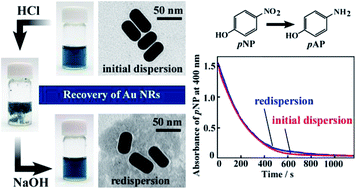
The pH of the initial AuNRs–C16CA dispersion (pH 12) was adjusted to pH 4 by adding 1 M HCl. Bluish precipitates appeared, and the supernatant became colourless and transparent (Fig. 5c). The UV-vis spectrum of the filtrate did not show any peaks originating from Au nanomaterials (Fig. 6a), indicating that Au NRs were not present in the transparent solution. In contrast, the UV-vis reflectance spectrum of the precipitates contained SP band peaks at 522 and 653 nm, respectively (Fig. 6b), indicating that the Au NRs were incorporated in the precipitate without major morphological changes.

After removal of the blue precipitates by filtration, they were redispersed in an aqueous solution at a pH of ∼8. TEM observations showed that the redispersed Au NRs had a short axis length of 25.5 nm and a long axis length of 52.3 nm (Fig. 5b, ESI). The UV-vis spectrum of the redispersion showed typical Au NR SP bands at 516 nm and 629 nm, similar to those for the initial Au NRs (Fig. 6a). In addition, intensity of these bands of redispersion was almost equal to that of initial dispersion. These results indicate that almost all of the Au NRs were recovered and redispersed without any morphological changes. The amine moieties in both C16CA and CTAB appeared to have selective adsorption properties and retained the non-spherical morphology of the Au NRs during the recovery and redispersion procedures. C16CA acted not only as a stabilizer for Au NRs instead of CTAB, but was also suitable for pH-responsive capping ligand.

We then examined the catalytic activity of the Au NRs before and after the recovery–redispersion of Au NRs–C16CA using the reduction of p-nitrophenol to p-aminophenol by NaBH4.52 The reaction rate can be evaluated by monitoring the intensities of the characteristic bands of p-nitrophenol at 400 nm and p-aminophenol at 300 nm in the UV-vis spectra (Fig. 7a). Fig. 7b shows the intensity changes for p-nitrophenol at 400 nm after the injection of initial and redispersed Au NRs–C16CA, as well as the filtrate. The reduction of p-nitrophenol did not proceed in the presence of the filtrate, indicating that there were no Au NRs in the filtrate, which is consistent with the disappearance of the SP band (Fig. 7a). Because the concentration of the borohydride ion was much greater than that of p-nitrophenol, pseudo-first-order kinetics can be applied to the reaction of p-nitrophenol.52,53 The pseudo-first-order rate constant k was evaluated using the equation −kt = ln(Ct/C0), where k is the pseudo-first-order rate constant and Ct and C0 represent the concentrations of p-nitrophenol at time t and the initial concentration at t = 0, respectively. The k values for initial and redispersed Au NRs–C16CA were 0.0046 and 0.0045 s−1, respectively, indicating that the catalytic activity of Au NRs–C16CA did not change following recovery and redispersion. The catalytic activity of Au nanomaterials is related to the morphology and the amount of Au. Judging by the intensity of SP bands of initial and redispersed Au NRs (Fig. 6a), it seemed that the amount of Au NRs did not change through recovery and redispersion procedure. Thus it was found that the morphology of the Au NRs did not change. The recovery–redispersion of shape-controlled Au nanomaterials was accomplished without any changes to the morphology, total amount of Au in the dispersion, or catalytic activity. This procedure will lead to the effective reuse of nanocatalysts using shape-controlled nanomaterials.


image file: c5ra17369h-f7.tif
Fig. 7 (a) UV-vis spectra at various reaction times during the reduction of p-nitrophenol catalyzed by initial Au NRs–C16CA. (b) Absorbance at 400 nm during the p-nitrophenol reduction reaction in the presence of (red) initial Au NRs–C16CA, (blue) redispersed Au NRs–C16CA, and (black) filtrate. (c) Plots of −ln(Ct/C0) against time for (red) initial Au NRs–C16CA, (blue) redispersed Au NRs–C16CA, and (black) filtrate.

Conclusions

We demonstrated that a pH-responsive property is provided to shape-controlled Au NRs via ligand exchange from CTAB to C16CA, and the recovery and redispersion of Au NRs using C16CA assemblies can be achieved without morphological changes. The morphology of the Au NRs was stabilized and retained owing to the selective adsorption capping of the amine moiety in C16CA. These methods can be applied to various shape-controlled Au nanomaterials that are prepared with other amine amphiphiles and will lead to the effective reuse of nanocatalysts using shape-controlled nanomaterials.

Acknowledgements

This work was supported by Grants-in-Aid for Scientific Research from the Japan Society for the Promotion of Science (No. 24510144 and 26790018) and the Institute of Science and Engineering of Chuo University.

Notes and references

  1. J. Yao, M. Yang and Y. Duan, Chem. Rev., 2014, 114, 6130–6178 CrossRef CAS PubMed.
  2. P. C. Ray, Chem. Rev., 2010, 110, 5332–5365 CrossRef CAS PubMed.
  3. B. Lim and Y. Xia, Angew. Chem., Int. Ed., 2011, 50, 76–85 CrossRef CAS PubMed.
  4. J. Zeng, Q. Zhang, J. Chen and Y. Xia, Nano Lett., 2010, 10, 30–35 CrossRef CAS PubMed.
  5. F. Kim, S. Connor, H. Song, T. Kuykendall and P. Yang, Angew. Chem., Int. Ed., 2004, 43, 3673–3677 CrossRef CAS PubMed.
  6. X. Liu, N. Wu, B. H. Wunsch, R. J. Barsotti and F. Stellacci, Small, 2006, 2, 1046–1050 CrossRef CAS PubMed.
  7. C. J. Murphy and N. R. Jana, Adv. Mater., 2002, 14, 80–82 CrossRef CAS.
  8. N. R. Jana, L. Gearheart and C. J. Murphy, Chem. Commun., 2001, 617–618 RSC.
  9. D. K. Smith, N. R. Miller and B. A. Korgel, Langmuir, 2009, 25, 9518–9524 CrossRef CAS PubMed.
  10. Y. Niidome, K. Honda, K. Higashimoto, H. Kawazumi, S. Yamada, N. Nakashima, Y. Sasaki, Y. Ishida and J.-i. Kikuchi, Chem. Commun., 2007, 3777–3779 RSC.
  11. Y. Xia, Y. Xiong, B. Lim and S. E. Skrabalak, Angew. Chem., Int. Ed., 2009, 48, 60–103 CrossRef CAS PubMed.
  12. S. E. Lohse and C. J. Murphy, Chem. Mater., 2013, 25, 1250–1261 CrossRef CAS.
  13. T. Sakai and P. Alexandridis, Chem. Mater., 2006, 18, 2577–2583 CrossRef CAS.
  14. A. Halder and N. Ravishankar, Adv. Mater., 2007, 19, 1854–1858 CrossRef CAS PubMed.
  15. X. Lu, M. S. Yavuz, H.-Y. Tuan, B. A. Korgel and Y. Xia, J. Am. Chem. Soc., 2008, 130, 8900–8901 CrossRef CAS PubMed.
  16. Z. Huo, C.-k. Tsung, W. Huang, X. Zhang and P. Yang, Nano Lett., 2008, 8, 2041–2044 CrossRef CAS PubMed.
  17. C. Wang, Y. Wei, H. Jiang and S. Sun, Nano Lett., 2010, 10, 2121–2125 CrossRef CAS PubMed.
  18. J. Xu, H. Wang, C. Liu, Y. Yang, T. Chen, Y. Wang, F. Wang, X. Liu, B. Xing and H. Chen, J. Am. Chem. Soc., 2010, 132, 11920–11922 CrossRef CAS PubMed.
  19. H. Feng, Y. Yang, Y. You, G. Li, J. Guo, T. Yu, Z. Shen, T. Wu and B. Xing, Chem. Commun., 2009, 1984–1986 RSC.
  20. Y. Xiong, A. R. Siekkinen, J. Wang, Y. Yin, M. J. Kim and Y. Xia, J. Mater. Chem., 2007, 17, 2600–2602 RSC.
  21. Y. Imura, H. Tanuma, H. Sugimoto, R. Ito, S. Hojo, H. Endo, C. Morita and T. Kawai, Chem. Commun., 2011, 47, 6380–6382 RSC.
  22. Y. Imura, S. Hojo, C. Morita and T. Kawai, Langmuir, 2014, 30, 1888–1892 CrossRef CAS PubMed.
  23. D. Wang and L. Chen, Nano Lett., 2007, 7, 1480–1484 CrossRef CAS PubMed.
  24. P. W. Barone and M. S. Strano, Angew. Chem., Int. Ed., 2006, 45, 8138–8141 CrossRef CAS PubMed.
  25. Y. Imura, C. Morita and T. Kawai, New J. Chem., 2013, 37, 3607–3611 RSC.
  26. K. Kobayashi, K. Niikura, C. Takeuchi, S. Sekiguchi, T. Ninomiya, K. Hagiwara, H. Mitomo, Y. Ito, Y. Osada and K. Ijiro, Chem. Commun., 2014, 50, 1265–1267 RSC.
  27. S. Sekiguchi, K. Niikura, Y. Matsuo and K. Ijiro, Langmuir, 2012, 28, 5503–5507 CrossRef CAS PubMed.
  28. C. Raimondo, F. Reinders, U. Soydaner, M. Mayor and P. Samori, Chem. Commun., 2010, 46, 1147–1149 RSC.
  29. R. Klajn, P. J. Wesson, K. J. M. Bishop and B. A. Grzybowski, Angew. Chem., Int. Ed., 2009, 48, 7035–7039 CrossRef CAS PubMed.
  30. R. Klajn, K. J. M. Bishop, M. Fialkowski, M. Paszewski, C. J. Campbell, T. P. Gray and B. A. Grzybowski, Science, 2007, 316, 261–264 CrossRef CAS PubMed.
  31. R. Klajn, K. J. M. Bishop and B. A. Grzybowski, Proc. Natl. Acad. Sci. U. S. A., 2007, 104, 10305–10309 CrossRef CAS PubMed.
  32. L. Peng, M. You, C. Wu, D. Han, I. Öçsoy, T. Chen, Z. Chen and W. Tan, ACS Nano, 2014, 8, 2555–2561 CrossRef CAS PubMed.
  33. J. Zhang and A. Wang, J. Colloid Interface Sci., 2009, 334, 212–216 CrossRef CAS PubMed.
  34. S. Soll, M. Antonietti and J. Yuan, ACS Macro Lett., 2011, 1, 84–87 CrossRef.
  35. Y. Imura, C. Morita, H. Endo, T. Kondo and T. Kawai, Chem. Commun., 2010, 46, 9206–9208 RSC.
  36. D. Dorokhin, N. Tomczak, M. Han, D. N. Reinhoudt, A. H. Velders and G. J. Vancso, ACS Nano, 2009, 3, 661–667 CrossRef CAS PubMed.
  37. C. Morita-Imura, Y. Imura, T. Kawai and H. Shindo, Chem. Commun., 2014, 50, 12933–12936 RSC.
  38. B.-K. Pong, J.-Y. Lee and B. L. Trout, Langmuir, 2005, 21, 11599–11603 CrossRef CAS PubMed.
  39. C. J. Murphy, T. K. Sau, A. M. Gole, C. J. Orendorff, J. Gao, L. Gou, S. E. Hunyadi and T. Li, J. Phys. Chem. B, 2005, 109, 13857–13870 CrossRef CAS PubMed.
  40. C. J. Johnson, E. Dujardin, S. A. Davis, C. J. Murphy and S. Mann, J. Mater. Chem., 2002, 12, 1765–1770 RSC.
  41. Y. Xia, I. Goldmints, P. W. Johnson, T. A. Hatton and A. Bose, Langmuir, 2002, 18, 3822–3828 CrossRef CAS.
  42. A.-J. Wang, Y.-F. Li, M. Wen, G. Yang, J.-J. Feng, J. Yang and H.-Y. Wang, New J. Chem., 2012, 36, 2286–2291 RSC.
  43. X. Ye, L. Jin, H. Caglayan, J. Chen, G. Xing, C. Zheng, V. Doan-Nguyen, Y. Kang, N. Engheta, C. R. Kagan and C. B. Murray, ACS Nano, 2012, 6, 2804–2817 CrossRef CAS PubMed.
  44. B. D. Busbee, S. O. Obare and C. J. Murphy, Adv. Mater., 2003, 15, 414–416 CrossRef CAS PubMed.
  45. L. Scarabelli, M. Grzelczak and L. M. Liz-Marzán, Chem. Mater., 2013, 25, 4232–4238 CrossRef CAS.
  46. I. O. Sosa, C. Noguez and R. G. Barrera, J. Phys. Chem. B, 2003, 107, 6269–6275 CrossRef CAS.
  47. B. P. Khanal and E. R. Zubarev, J. Am. Chem. Soc., 2008, 130, 12634–12635 CrossRef CAS PubMed.
  48. T. Jiang, R. Liu, X. Huang, H. Feng, W. Teo and B. Xing, Chem. Commun., 2009, 1972–1974 RSC.
  49. V. Juvé, M. F. Cardinal, A. Lombardi, A. Crut, P. Maioli, J. Pérez-Juste, L. M. Liz-Marzán, N. Del Fatti and F. Vallée, Nano Lett., 2013, 13, 2234–2240 CrossRef PubMed.
  50. C. Morita, Y. Imura, T. Ogawa, H. Kurata and T. Kawai, Langmuir, 2013, 29, 5450–5456 CrossRef CAS PubMed.
  51. N. Kameta, M. Masuda, H. Minamikawa and T. Shimizu, Langmuir, 2007, 23, 4634–4641 CrossRef CAS PubMed.
  52. Y. Imura, K. Tsujimoto, C. Morita and T. Kawai, Langmuir, 2014, 30, 5026–5030 CrossRef CAS PubMed.
  53. J. Zeng, Q. Zhang, J. Chen and Y. Xia, Nano Lett., 2010, 10, 30–35 CrossRef CAS PubMed.

Footnote

Electronic supplementary information (ESI) available: Size distribution of Au NRs. See DOI: 10.1039/c5ra17369h

This journal is © The Royal Society of Chemistry 2015
Click here to see how this site uses Cookies. View our privacy policy here.