DOI:
10.1039/C5RA17275F
(Paper)
RSC Adv., 2015,
5, 91836-91845
Physiochemical and thermodynamic characterization of lipopeptide biosurfactant secreted by Bacillus tequilensis HK01†
Received
26th August 2015
, Accepted 22nd October 2015
First published on 22nd October 2015
Abstract
An extensive investigation was applied to isolate biosurfactant producing bacteria from urban waste. Bacillus tequilensis HK01 was screened and identified as an efficient biosurfactant producer among 140 bacterial isolates. A comprehensive study was done to evaluate different aspects of the growth and biosurfactant production by this strain. Growth kinetic studies showed the fast-growing behavior of the strain. Biosurfactant production was initiated at stationary phase and reached to its maximum value of about 0.8 g l−1 after 50 hours. Physiochemical characterization of the biosurfactant proved the lipopeptide structure with the critical micelle concentration of about 4.5 mg ml−1. Surface excess concentration of the biosurfactant at water–air interface, apparent molar volume and standard free energy of biosurfactant micellization were determined as thermodynamic properties. Finally, a two-step experimental design was conducted to optimize culture components concentration to improve biosurfactant productivity. After screening significant culture components with Placket–Burman design, response surface method was used to optimize the concentration of essential ingredients. Optimization studies was led to 2.25 times improvement in biosurfactant production by HK01 strain.
Introduction
Surfactants are surface active agents which have a hydrophobic chain as a tail and a hydrophilic group as a head.1 These molecules can be divided into two categories; synthetic surfactants and biosurfactants (BSs). While synthetic surfactants are produced by organic chemical reactions, biosurfactants are produced by a number of microorganisms, including bacteria, yeast and fungi.2 Nowadays research and development on different aspects of BSs, their production and characterization has been increased. This is because of their interesting properties such as low toxicity, eco-friendly, biocompatibility, high selectivity and biodegradability.3–7
Physiochemical characterization of BSs revealed six major types including glycolipids, lipopolysaccharides, lipoproteins–lipopeptides, phospholipids, hydroxylated and cross-linked fatty acids.8 Although the physical characteristics of BS have been studied in many researches, their thermodynamic information are very scarce. As it is known, surfactants have tendency to form aggregates called micelles. The knowledge of its tendency to adsorb at the water–air interface could be very helpful. Thermodynamic parameters can predict such tendencies.2 While some studies investigated thermodynamic properties of glycolipid BSs,2,9–11 there is not any single report on the thermodynamic properties of lipopeptides. These properties could be very applicable for selection of BSs in various applications such as pharmaceuticals, cosmetic products, agricultural and petrochemical industries.12–15
In order to transform current researches in BS field into viable market products, the productivity should be increased. Many attempts have been made to increase the BS production yield. The first step for this purpose could be the selection of appropriate culture media and optimization of ingredients concentration. Experimental design is a systematic and proven way to optimize culture condition in microbial systems. Statistical methods such as Taguchi, Plackett–Burman and response surface method are common methodologies to access the optimal fermentation conditions.16,17 Plackett–Burman design gives information on the significance of single factors with the least number of observations, while response surface method gives the optimal fermentation conditions and it is a statistical technique that optimizes the multiple variables with minimum number of experiments.18 Experimental design has been proved to improve the production of BS using various strains.19–21
In the present study, the aim is to isolate and then screen BS producer bacteria from urban waste. The selected bacterium was identified as Bacillus tequilensis HK01. A comprehensive study was performed in order to getting acquainted with the characteristics of the produced BS. Besides, a thermodynamic study was established to see the thermodynamic properties of the produced BS. Critical micelle concentration (CMC) of studied BS with different approaches, its surface excess concentration at the water–air interface, apparent molar volume of BS and standard free energy of lipopeptide micellization were investigated for the first time. Finally, the culture medium of the selected strain with the goal of maximum production of BS was optimized in two step experimental design.
Results and discussion
Isolation and characterization of biosurfactant-producing isolate
140 different colonies were obtained after purification of bacteria from the collected samples of urban waste. All of these colonies were cultured in two different media as described in material and methods section. Oil spreading test was done for three days and surface tension of the media were measured in the 3rd day as an indicator of BS presence in the culture. Among 140 purified colonies, a number of bacteria with the best surface activity in their culture were selected.
All these bacteria were identified by PCR method followed by gene sequencing according to section biochemical and molecular identification of isolated strain in material and methods. One strain which is identified as Bacillus tequilensis HK01 Accession no. KP144873 was selected for further studies. Bacillus tequilensis is a Gram-positive, rod-shaped, aerobic, spore-forming bacterium. This strain was selected not only for its appropriate BS productivity, but the information on the BS production by Bacillus tequilensis is scarce.
Culture medium selection
There are few reports on the BS production by Bacillus tequilensis22 and the information on its culture condition is not fully studied. Interestingly, no BS was produced when we used the same culture compositions as in the previous study by this strain.22 Therefore, it is decided to examine different media compositions which are used for BS production by Bacillus strains. 18 media composition were selected and tested for bacterial growth and BS production according to Table S1.† All experiments were performed at 180 rpm, 31 °C for 3 days and pH was adjusted to 6.5. The growth behavior and BS production by B. tequilensis HK01 in these 18 media showed that, this strain is very sensitive to culture medium composition. Fig. S1 and Table S1 (ESI†) present growth behavior and BS production, respectively. Medium number 18 was selected for more study due to better results. The composition of this medium is (g l−1); sunflower oil 10, NaNO3 2, KH2PO4 2, NH4NO3 3, MgSO4·7H2O 0.25, CaCl2·2H2O 0.1, KCl 1, malt extract 1. Although the bacterial growth was very good in some of these studied media, the BS production was almost zero over them. As can be seen in the Table S1,†B. tequilensis HK01 produced 0.78 g l−1 biosurfactant in medium number 18.
Kinetics of bacterial growth and BS production
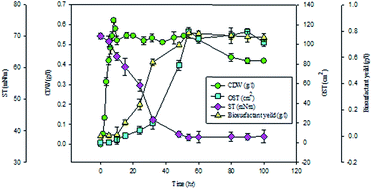
The kinetics of the growth and BS production by Bacillus tequilensis HK01 was studied in medium number 18. As shown in Fig. 1, HK01 grew very fast after inoculation and the cell dry weight reached to about 0.6 g l−1. The stationary phase continued for about 40 hours and then the growth curve reached to death phase after about 60 hours. BS production was initiated at stationary phase and reached to its maximum value of about 0.8 g l−1 after 50 hours. This observation is in contrast with some researches in which the BS production is growth associated and increases in the logarithmic phase of the growth.23,24 Area of clear zone (measured in OST) increased by increasing the BS yield. This is a reasonable result since the OST is directly related to the amount of BS in the culture.24 Surface tension (ST) decreased in a linear manner from 70 (mN m−1) to 38 mN m−1 in 48 hours. ST remained at a constant value of about 38 mN m−1 for remaining days. The minimum surface tension in comparable with other Bacillus species. The lipopeptide biosurfactant secreted by Aneurinibacillus thermoaerophilus reduced the ST of culture to 43 mN m−1. However, surfactin, the most famous lipopeptide from Bacillus subtilis, can reduce the ST to about 27.7 mN m.25 It should be noted that the interfacial tension (IFT) of the produced BS was also measured between water and hexadecane as 5.4 mN m−1.
 |
| | Fig. 1 Time course profile of biosurfactant production, cell growth, ST and OST of Bacillus tequilensis HK01 grown on sunflower oil as sole carbon source at 31 °C and 180 rpm. | |
Chemical characterization of biosurfactant
Primary characterization of the produced BS was done by thin layer chromatography technique. At first, it should be noted that the Rf value of the revealed spot was 0.62 which was near the Rf values reported for similar lipopeptides produced by Bacillus species.26,27 Presence of lipid moiety in the structure of the BS was proved by appearing of the yellow spot in the presence of iodine vapors. Treatment with ninhydrin reagent revealed the red spot, which showed the presence of peptides. These indicated that produced BS has a lipopeptide kind of structure. The FTIR and NMR spectroscopy were performed for further supplementary characterization.
Fig. 2 presents the infra-red spectrum of the produced BS. The observed IR pattern of this BS was very similar to IR spectrum of lipopeptide biosurfactants produced by Bacillus species.23,28 The IR pattern demonstrated the presence of amine and hydroxyl groups of protein in the BS structure. The –C
O amide I (1634.80 cm−1), and –NH/–C
O combination of the amide II band (1556 cm−1), was observed. Peaks in the region between 2850 cm−1 and 2950 cm−1 (−CH stretching mode of CH3 and CH2 groups in alkyl chains) were also detected. The weak bands in the region between 1270 cm−1 and 1370 cm−1 are the result of deformation and bending vibrations of –C–CH2 and –C–CH3 groups in the aliphatic chains.
 |
| | Fig. 2 FTIR spectrum of the produced biosurfactant by Bacillus tequilensis. | |
1H NMR and 13C NMR spectra of the produced BS can be seen in Fig. 3. 1H NMR analysis of the purified BS showed NH signals (δ 7.0–7.7) and corresponding CH signals (δ 4–5.2) for the α-amino acids of the peptide moiety along with the fatty acid functional group as a single methyl-related peak (δ 0.8–0.87), –(CH2)n– (δ 1.1–1.46), –C–OH (δ 2.25), and –CO–CH2–CH2– (δ 1.6 ppm). Lipid signals present in BS consisted of CH2 between δ 21.6 to 35.1, CH3 at δ 15.1, and ester and carboxylic groups signals at δ 180.1 in the 13C NMR spectrum was demonstrated. All these observations demonstrated the lipopeptide structure of the produced BS.
 |
| | Fig. 3 (a) 1H NMR and (b) 13C NMR spectra of the purified biosurfactant produced by Bacillus tequilensis. | |
Thermal properties and stability tests
Thermal stability of biosurfactants is an important feature for their applications in different industries such as food and pharmaceuticals.24 TG analysis in Fig. S2† shows that BS degradation was happened by two differentiated steps. An initial weight loss was attributed to loss of trapped moisture molecules in the structure of the BS between 40 and 146 °C. Releasing moisture during the BS heating showed that BS was not truly anhydrous. Losing weight was continued by a drastic weight loss at 248 °C that may be attributed to the decomposition of the unstable component in the BS structure. The stable part was decomposed over the temperature range from 248 to 641 °C.
The results of stability tests have been presented in Fig. S3.† As can be seen in Fig. S3(a),† the produced lipopeptide BS is thermo-stable at temperature range of −23 to 90 °C. As Fig. S3(b)† shows, the produced BS is more stable in neutral pH. However, the pH ranges of 5–8 were found to be the optimum levels for the BS activity. Various concentrations of NaCl (0–30% wt) were also used for examine the surface activity changes of the produced BS. As Fig. S3(c)† shows that optimum stability of BS is salt concentrations below 20% wt.
Thermodynamic characteristics of micellization
Tendency of surfactants to form aggregates in the bulk phase occurs at a concentration called the critical micelle concentration (CMC). CMC is often measured base on how the surface tension of BS solutions changes as a function of its concentration. However, it can be measured by other physicochemical properties such as density, viscosity and conductivity. In fact, by variation in BS concentration, these properties changes as well. Therefore CMC of lipopeptide BS can be determined with the changes of density, viscosity and conductivity as a function of its concentration. As can be seen in Fig. 4a–d, the inflection point is observed on the surface tension, density, viscosity and conductivity isotherm shapes. The CMC of the BS is determined from the break point in each curve. Therefore, the CMC of the lipopeptide BS was obtained on the basis of these isotherm shapes (surface tension, density, viscosity and conductivity) as 4.283 ± 0.09; 4.440 ± 0.11; 4.331 ± 0.15 and 4.512 ± 0.12 g l−1, respectively.
 |
| | Fig. 4 A plot of the (a) surface tension (γLV) of the aqueous solutions of lipopeptide vs. the logarithm of concentration. A plot of (b) the density (c) viscosity (η) (d) conductivity (k) of the aqueous solutions of lipopeptide vs. the concentration. | |
Surface excess concentration of the lipopeptide biosurfactant at water–air interface
The surface excess concentration Γ is the area-related concentration of a surfactant at or near the surface. For the ionic surfactant of the type AB electrolyte (AB ↔ A+ + B−) the Gibbs adsorption equation is used for surface excess concentration determination that follows as:2,29| |  | (1) |
where Γ is the Gibbs surface excess concentration of the ionic surfactant and C is the molar concentration of BS. T and R are referred to temperature and gas constant, respectively. For determination of molar concentration, the molecular weight of studied lipopeptide BS was considered 1050.7 as determined by Pathak et al.30 The term
is obtained from Fig. 4a. Finally, the maximal Gibbs surface excess concentration of the lipopeptide BS was determined from eqn (1) as 4.0833 × 10⁻³ (mol m−2).
Apparent molar volume of lipopeptide biosurfactant
The apparent molar volume was calculated from this equation:31| |  | (2) |
where Ms is the molecular weight of the BS, Cs is the concentration of the BS and d0 and d are the density of pure solvent and the BS solution, respectively. Fig. 5 shows the changes of apparent molar volume as a function of concentration. One break point can be seen on this figure that corresponds to the CMC of the produced BS.
 |
| | Fig. 5 Apparent molar volume (Vϕ) of the lipopeptide vs. the concentration. | |
Standard free energy of lipopeptide micellization
For the ionic surfactants (type AB) the Gibbs standard free energy of micellization (ΔG°mic) can be calculated by the Philips equation as the following form:2,29| |  | (3) |
where n is the number of surfactant ions that forms a micelle, p is the number of counter-ions bound to the micelle and
is calculated by the slope of linear part of the k vs. C curve and ω is the number of water's molecules in 1 dm3. Taking all these together, the ΔG°mic was determined −176.956 ± 3.1 kJ mol−1 from eqn (3) that shows tendency of lipopeptide to form micelle.
Optimization studies
One factor at a time method was used to optimize pH and temperature. For this purpose, medium number 18 was inoculated with 3% (v/v) of Bacillus tequilensis HK01 and cultured in different pH and temperature ranges. The results of this study showed that the lipopeptide BS production is affected strongly by the initial pH of culture medium. For example at pH levels below 4.5, no BS was produced. The overall results of this experiment (data not shown) showed that pH 6.5 led to the maximum lipopeptide production, so selected for further experiments. Growth of Bacillus tequilensis HK01 was examined in three temperature ranges of 31, 36 and 45 °C and optimum growth and BS production was observed at 31 °C.
Plackett–Burman design
The experiment was conducted in 12 runs to screen significant media components among eight ingredients i.e. sunflower oil, NaNO3, KH2PO4, NH4NO3, MgSO4·7H2O, CaCl2·2H2O, KCl and malt extract. The design matrix of Plackett–Burman can be observed in Table S2.† The result of statistical analysis of variance (ANOVA) has been represented in Table 1. It is obviously seen that among the eight factors studied, sunflower oil, NH4NO3, MgSO4·7H2O and malt extract are distinguished as significant components which affect the BS production. This is due to the low amounts of p-values, basically less than 0.05. The value of R2 for this experiment is 99.34% and the adj R2 is 97.56% which shows the appropriate fitness of regression model.
Table 1 Results of statistical analysis according to ANOVA for Plackett–Burman designa
| Source |
DF |
Seq SS |
Adj SS |
Adj MS |
F-value |
p-value |
|
R
2 = 99.34%; adj-R2 = 97.56%; pred-R2 = 89.37% SS sum of squares DF degree of freedom.
|
| Main effects |
8 |
3.27276 |
3.27276 |
0.40909 |
56.05 |
0.004 |
| Sunflower oil |
1 |
2.64235 |
2.64235 |
2.64235 |
362.01 |
0.000 |
| NaNO3 |
1 |
0.02924 |
0.02924 |
0.02924 |
4.01 |
0.139 |
| KH2PO4 |
1 |
0.03341 |
0.03341 |
0.03341 |
4.58 |
0.122 |
| NH4NO3 |
1 |
0.16059 |
0.16059 |
0.16059 |
22.00 |
0.018 |
| MgSO4·7H2O |
1 |
0.28799 |
0.28799 |
0.28799 |
39.46 |
0.008 |
| CaCl2·2H2O |
1 |
0.03191 |
0.03191 |
0.03191 |
4.37 |
0.128 |
| KCl |
1 |
0.01142 |
0.01142 |
0.01142 |
1.56 |
0.300 |
| Malt extract |
1 |
0.07584 |
0.07584 |
0.07584 |
10.39 |
0.048 |
| Residual error |
3 |
0.02190 |
0.02190 |
0.00730 |
|
|
| Total |
11 |
3.29466 |
|
|
|
|
Response surface methodology
RSM was applied for data analysis and determination of optimized concentrations of four screened components by Placket Burman design. The screened components are sunflower oil, NH4NO3, MgSO4·7H2O and malt extract. Central composite design matrix of RSM with experimental values of BS production is presented in Table S3.†Table 2 shows the analysis of variance (ANOVA) of the model along with the corresponding p-values and the parameter estimates for the lipopeptide BS production. The value of the correlation coefficient, R2 (97.19%), shows that the regression model provides a valid description of the experimental data. A reasonable agreement between predicted R2 (82.73%) and adjusted R2 (94.74%) values was observed. All these evaluations emphasize that the model can be used for the prediction of lipopeptide BS production within the given range of variables. The following regression equation, which is according to a second-order polynomial equation, shows the relationship between the produced lipopeptide (Y) by Bacillus tequilensis HK01 and the concentration of components:| | | Y = −0.025 − 0.006A + 0.278B − 1.18C + 0.237D + 0.004A × A + 0.026B × B + 0.506C × C − 0.046D × D − 0.012A × B + 0.05A × C + 0.009A × D − 0.202B × C − 0.12B × D + 0.40C × D | (4) |
A, B, C, D are the concentrations (g l−1) of sunflower oil, NH4NO3, MgSO4·7H2O and malt extract, respectively.
Table 2 Analysis of RSM model variance (ANOVA) for biosurfactant productiona
| Source |
DF |
Seq SS |
Adj SS |
Adj MS |
F-value |
p-value |
|
R
2 = 97.19%, predicted R2 = 82.73%, adjusted R2 = 94.74%.
|
| Regression |
14 |
3.022 |
3.022 |
0.215 |
39.57 |
0.000 |
| Linear |
4 |
1.959 |
1.959 |
0.489 |
89.78 |
0.000 |
|
A
|
1 |
1.628 |
1.628 |
1.628 |
298.43 |
0.000 |
|
B
|
1 |
0.043 |
0.043 |
0.043 |
8.02 |
0.012 |
|
C
|
1 |
0.059 |
0.059 |
0.059 |
10.86 |
0.005 |
|
D
|
1 |
0.228 |
0.228 |
0.228 |
41.81 |
0.000 |
| Square |
4 |
0.146 |
0.146 |
0.036 |
6.72 |
0.002 |
|
A × A |
1 |
0.092 |
0.031 |
0.031 |
5.81 |
0.028 |
|
B × B |
1 |
0.010 |
0.004 |
0.004 |
0.78 |
0.389 |
|
C × C |
1 |
0.031 |
0.039 |
0.039 |
7.28 |
0.016 |
|
D × D |
1 |
0.012 |
0.012 |
0.012 |
2.35 |
0.144 |
| Interaction |
6 |
0.916 |
0.916 |
0.152 |
28.00 |
0.000 |
|
A × B |
1 |
0.035 |
0.035 |
0.035 |
6.46 |
0.022 |
|
A × C |
1 |
0.106 |
0.106 |
0.106 |
19.57 |
0.000 |
|
A × D |
1 |
0.020 |
0.020 |
0.020 |
3.74 |
0.071 |
|
B × C |
1 |
0.104 |
0.104 |
0.104 |
19.15 |
0.000 |
|
B × D |
1 |
0.230 |
0.230 |
0.230 |
42.27 |
0.000 |
|
C × D |
1 |
0.418 |
0.418 |
0.418 |
76.79 |
0.000 |
| Residual error |
16 |
0.087 |
0.087 |
0.005 |
|
|
| Lack-of-fit |
10 |
0.075 |
0.075 |
0.007 |
3.72 |
0.610 |
| Pure error |
6 |
0.012 |
0.012 |
0.002 |
|
|
| Total |
30 |
3.109 |
|
|
|
|
According to Table 2, among mutual interaction between variables, the interactions between sunflower oil and NH4NO3, sunflower oil and MgSO4·7H2O, NH4NO3 and MgSO4·7H2O, NH4NO3 and malt extract as well as MgSO4·7H2O and malt extract are significant. The surface plots of mutual interaction between variables are illustrated in Fig. S4 of the ESI.†
By using the response optimizer option of the Minitab software, the optimum concentrations were obtained as: sunflower oil 5.8 g l−1, NH4NO3 3.1 g l−1, MgSO4·7H2O 0.18 g l−1 and malt extract 2.6 g l−1 were determined. Using these values, the maximum production of BS was predicted 1.76 g l−1.
Earlier, there was no report on the culture condition optimization by Bacillus tequilensis for BS production. Culture condition optimization is always one of the best ways for improvement in BS production. Wei et al.17 showed that optimization of metal ions (Mg2+, K+, Mn2+, Fe2+) for production of surfactin by Bacillus subtilis can boost the productivity for more than two times. Another study by Gua et al.19 proved the importance of the concentration of components including sucrose, ammonium chloride, ferrous sulphate and zinc sulphate in the medium. Response surface methodology (RSM) increased the lipopeptide yield to 1.712 g l−1. Similar results were obtained in other researches,20,21,23 showing the importance of culture condition optimization. In this work the production of lipopeptide BS under optimized condition improved 2.25 times compared to the non-optimized condition.
Conclusion
Among 140 different bacteria obtained from urban waste, Bacillus tequilensis HK01 screened and identified as an efficient BS producer. Lipopeptide type of BS was extracted from the bacterial culture and characterized physiochemically. Produced BS reduced the surface tension of water from 72 to about 38 mN m−1. Critical micelle concentration was determined by surface tension, density, viscosity and specific conductivity about 4.5 g l−1 and thermodynamic properties of BS micellization such as surface excess concentration of the BS at water–air interface, apparent molar volume of it and standard free energy of lipopeptide biosurfactant micellization were determined for the first time. The information reported in this section could be very applicable for the researchers who use biosurfactants in the thermodynamic studies. At the end of this report a comprehensive optimization study lead to 2.25 times improvement in BS production.
Experimental
Sampling and isolation of biosurfactant producing bacteria
Samples were collected from urban wastes of the Kahrizak site in the south of Tehran. The samples were inoculated in nutrient broth medium and incubated on rotary shaker (Kuhner, Germany) at 180 rpm for 2 days and in two different temperatures 30 and 45 °C. Serial dilutions of cultures were done followed by spreading on nutrient agar plates. Finally, single colonies were obtained and purified in another nutrient agar plates. The ability of purified colonies to produce BS were examined by oil spreading test and measurement of medium surface tension. For this purpose, the purified colonies were cultured in two different media one with sunflower oil and the other with glucose as a sole carbon sources. In this way, we can be sure that no BS producer bacteria are lost. The composition of these two media are (g l−1): (1) NH4NO3 3, MgSO4·7H2O 0.25, KH2PO4 0.25, yeast extract 1, and sunflower oil 20. (2) NH4NO3 4.5, MgSO4·7H2O 0.2, KH2PO4 0.25, Na2HPO4 5.6, Fe2SO4. 7H2O 0.083 and glucose 20.
Biochemical and molecular identification of isolated strain
Selected bacterial isolates were identified using 16S rRNA gene sequence analysis for molecular identification. DNA extraction was performed according to our previous work.32 Briefly, 2 ml bacterial culture was collected at the mid-exponential growth phase using Roche Kit (Germany) and run in triplicate through polymerase chain reaction (PCR). Three sets of primers: 27f (5′-AGAGTTTGATCCTGGCTCAG), 1492r (5′-TACGGTTACCTTGTTACGAC TT)33 and V3 and V6 primers were used to amplify the V3 and V6.34 The reaction was carried out in a 25 μl volume containing 1× PCR buffer, 1.5 mM MgSO4, 2 mM dNTP mixture, 1 μM of each primer, 1 μl of Pfu DNA polymerase (Fermentas, St. Leon-Rot, Germany) and 1 ng of template DNA. The PCR amplification conditions were a little different for these seven bacteria. However, generally performed like: initial denaturation at 95 °C for 5 min, followed by 25 cycles each of 94 °C for 1 min, 55 °C of annealing for 45 s, and a 45 s extension at 72 °C. The PCR products were sequenced on an ABI Prism 377 automatic sequencer (Applied Biosystems, CA, USA). Sequence homologies were examined using BLAST version 2.2.12 of the National Center for Biotechnology Information.35
Culture condition
The selected strain (Bacillus tequilensis HK01) was precultured in 8 g l−1 nutrient broth (Merck, Germany) at 180 rpm, 31 °C in a shaker incubator (Kuhner, Germany) for 16–18 h. Since the information on the culture media of this strain is scarce, different media were studied to see which one is better in terms of bacterial growth and BS production. These media will be presented in Table S1 (ESI†). After all, one medium was selected and the ingredients concentrations were optimized.
Extraction and purification of biosurfactant
Produced BS was separated from the culture broth using an acid precipitation followed by solvent extraction method, according to the previous work.24 Briefly, after removal of cells by centrifugation (10
000 × g, 4 °C, 15 min), the cell-free supernatant was acidified to pH 2 and kept overnight at 4 °C. The precipitated crude BS was then collected by high speed centrifugation (18
000 × g, 30 min, 4 °C). For partial purification of this precipitate, the crude product was extracted several times with ethyl acetate. Then the solvent was evaporated by vacuum evaporator (Thermo Electron Corporation, Heraeus vacutherm).
Purification of obtained BS was performed by preparative layer chromatography (PLC) (silica gel 60, 20 × 20 cm, Merck).24 Therefore, partial purified BS was dissolved in chloroform and placed in a line on the silica gel plate. The plate was then developed with the methanol/hexane (3
:
1). Among visualized spots which were observed under UV transilluminator, the surface active one was identified using oil spreading test (explained in the next section) and scratched. Then it was kept as a pure BS for further studies.
Physiochemical characteristics of the biosurfactant
Physical characterization
Oil spreading test.
Oil spreading test (OST) was performed according to the standard procedure.36 The area of the clear zone after dropping 10 μl of culture broth on the surface of the oil was considered as a response. All tests were performed at least 5 times and means were reported.
Surface and interfacial tension measurement.
Surface tension (ST) and interfacial tension (IFT) were measured using Data Physics Contact Angle system (OCA20, Germany) equipped with a camera using the method of pendent drop. The tensiometer was calibrated against double-distilled water. Before each measurement, the syringe was rinsed several times with double-distilled water and acetone. Interfacial tension was measured between water and hexadecane. Each experiment was performed at least five times and the means were reported.
Critical micelle concentration.
The CMC is a widely used index to evaluate surface activity. The produced BS was dissolved in distilled water, and the surface tension of the solution was measured with various concentrations of BS at 20 °C. CMC was measured from the breakpoint of surface tension versus BS concentration. Stabilization was allowed to occur until the standard deviation of five successive measurements was less than 0.9 mN m−1. Each result was the average of at least five determinations after stabilization.
Thermal properties.
The thermal gravimetric analysis (TGA) of the produced BS was performed with NETZSCH TG 209F1 Iris system (Germany). For this test 5.46 mg of the sample was loaded on a platinum pan and weight loss was measured in temperature range of 20 to 700 °C. The heating rate was set at 10 °C min−1. This process was done under nitrogen atmosphere.
Stability of the biosurfactant.
The effects of temperature, pH and salinity on the surface activity of the produced BS was determined. 15 mg ml−1 solution of the BS was prepared. In order to evaluate the stability of BS in different temperatures, solutions were put into the oven or refrigerator to keep the solution temperature in the range of −23 to 90 °C. The effect of various pH were studied with adjusting the BS solution at different pH of 2 to 10 using 2 N HCL or 2 N NaOH. Salinity effect was also investigated in the saline solutions with NaCl concentrations of 0–30% wt. The surface tension of all these media were determined after 24 h to see the changes in surface activity of the solution.37 At least five surface tension measurement was done and average of them was reported.
Chemical characterization
Thin layer chromatography.
Purified BS was dissolved in chloroform and 10 μl of this solution was put at the bottom of the TLC plate (silica gel 60, Germany). Methanol and hexane (3
:
1) were taken as solvent system. After development, one of the plates was exposed to iodine vapor to detect lipids as yellow spots. Another plate was sprayed with ninhydrin reagent (0.5 g ninhydrin in 100 ml anhydrous acetone) followed by heating at 110 °C for 15 min to detect peptides as red spots.38,39
Fourier transform infrared spectroscopy.
Fourier transform infrared spectroscopy (FTIR) can determine the chemical structure and components of the crude BS. For this test, 1 mg of crude BS was mixed with 100 mg of KBr and pressed to obtain a pellet. The FTIR spectrum was performed in the 400–4000 cm−1 on a FTIR system (PerkinElmer, USA), with the 0.01 cm−1 for wave number and 4 for resolution of spectrum.40
Nuclear magnetic resonance spectroscopy.
1H and 13C-nuclear magnetic resonance (NMR) spectra were measured with Bruker JNMA500 spectrometer (Germany) at 250 MHz and chloroform was used as a solvent.
Kinetics of the growth and biosurfactant production.
A 3% bacterial suspension from a seed culture medium was inoculated into the 2000 ml flasks containing 600 ml of medium number 18 (see Table S1†) and incubated at 31 °C, 180 rpm and the pH was adjusted to 6.5. To monitoring the kinetic parameters including growth rate, cell dry weight (CDW), surface tension (ST), BS concentration and surface activity of produced BS in terms of oil spreading test (OST), samples from liquid culture at certain times were aseptically retrieved. Bacterial cell growth was reported by measuring the optical density (OD) at 600 nm by UV-visible spectrophotometer (PerkinElmer, model Lambda25, USA) up to 100 h. In order to measure the cell dry weights, 10 ml of the culture broth was centrifuged at 7000 × g for 10 min and cell pellets were washed with distilled water twice and dried at 60 °C up to constant weight.
Thermodynamic properties of the biosurfactant micellization.
The aqueous solutions of lipopeptide BS were prepared by doubly distilled and deionized water which had 18 MΩ specific resistance. The concentration of lipopeptide BS was changed in the range of 0.002 to 50 g l−1. For determination of thermodynamic properties of BS, the equilibrium surface tension (γLV) of the aqueous solutions of BS was measured by Data Physics Contact Angle system (OCA20, Germany) at 20 °C, with the pendent drop method. At least five successive measurements were carried out and the average was reported.
Viscosity measurements of the aqueous solutions of the BS were done with the Anton Paar viscosimeter (AMVn) at 293 K for ten times and the means were reported.
The density of the aqueous solutions of the BS was measured with a U-tube densitometer (DMA 5000 Anton Paar) at the 293 K at three times then the results were averaged.
The specific conductivity (k) measurements of the aqueous solutions of BS were done with the Mettler Toledo conductometer at three times at 293 K.
All the above equipment were calibrated before using. All measurements were performed at constant temperature (293 K). In order to control the temperature in surface tension and conductivity tests, a water bath was used for more accuracy.
Critical micelle concentration of the lipopeptide BS was measured according to explanation in section physical characterization. Surface excess concentration of BS at water–air interface, apparent molar volume of BS and standard free energy of lipopeptide BS micellization were also determined using the equipment presented above.
Design of experiments.
Temperature and pH were optimized initially, with the method of one factor at a time. Three independent experiments were performed in which the temperatures were set to 31, 36 and 45 °C. In another five experiments (with optimized temperature) pH of the culture were adjusted to 7.5, 7, 6.5 and 6. Also, one medium was left without pH control. The optimized temperature and pH were used for further experiments.
Plackett–Burman design.
Plackett–Burman design as a two-factorial design was used for screening the significant medium components which can affect the production of the BS. In this screening process, the parameters are sunflower oil, NaNO3, KH2PO4, NH4NO3, MgSO4·7H2O, CaCl2·H2O, KCl and malt extract. Experimental ranges have been shown in Table 3. Minitab package version 16.0 software was used to design of experiment. Twelve runs were conducted and they were repeated twice. Effect of media components on production was determined by p-value.
Table 3 Experimental ranges and levels of the 8 factors tested in the Plackett–Burman design
| Factor |
Symbol |
Level (g l−1) |
| Low |
High |
| Sunflower oil |
A |
1 |
10 |
| NaNO3 |
B |
0.05 |
2.5 |
| KH2PO4 |
C |
0.2 |
2 |
| NH4NO3 |
D |
0.2 |
3 |
| MgSO4·7H2O |
E |
0.02 |
0.2 |
| CaCl2·2H2O |
F |
0.01 |
0.1 |
| KCl |
G |
0.2 |
2 |
| Malt extract |
H |
0.2 |
2 |
Response surface methodology (RSM).
After identifying the significant factors affecting BS production, RSM was employed to optimize the component concentrations that maximize lipopeptide BS production. Central composite design was used to determine the optimum levels of the variables using 31 experiments. The selected factors and their level are presented in Table 4. Minitab version 16.0 software was used for the regression analysis of the experimental data, estimation of the regression equation coefficient and plot the response surface graphs. The experimental result of RSM was fitted with the following second-order polynomial equation:| | | Y = β0 + β1 × A + β2 × B + β3 × C + β4 × D + β11A × A + β22B × B + β33C × C + β44D × D + β12A × B + β13A × C + β14A × D + β23B × C + β24B × D + β34C × D | (5) |
where Y is the predicted response, β0 is the offset term, β1, β2, β3 and β4 are linear coefficient, β11, β22, β33 and β44 are squared coefficients, β23, β24 and β34 are interaction coefficients. A, B, C and D are independent variables. F-factors and p-values determine the significance of the parameters. The quality of fitting the second-order polynomial model equation was expressed with the multiple correlation coefficient of determination (R2) and the adjusted R2.
Table 4 Experimental ranges and levels of the independent variable in the RSM
| Factor |
Symbol |
Level |
| −α |
−1 |
0 |
1 |
+α |
| Sunflower oil |
A |
1 |
2 |
6 |
10 |
11 |
| NH4NO3 |
B |
0.75 |
1 |
2 |
3 |
3.25 |
| MgSO4·7H2O |
C |
0.1 |
0.2 |
0.6 |
1 |
1.1 |
| Malt extract |
D |
0.75 |
1 |
2 |
3 |
3.25 |
Statistical analysis.
All data were analyzed using the SPSS 11.5 statistical analysis system. A one-way analysis of variance was used to determine whether a significant difference existed between the treated groups and controls. Data were expressed as mean ± standard deviation (SD) and differences were considered statistically significant if p < 0.05.
References
-
J. M. Rosen, Surfactants and Interfacial Phenomena, Wiley Inter-science, New York, NY, 3rd edn 2004 Search PubMed.
- D. Mańko, A. Zdziennicka and B. Jańczuk, Colloids Surf., B, 2014, 119, 22–29 CrossRef PubMed.
- L. Lawniczak, R. Marecik and L. Chrzanowski, Appl. Microbiol. Biotechnol., 2013, 97, 2327–2339 CrossRef CAS PubMed.
- R. Sen and T. Swaminathan, Appl. Microbiol. Biotechnol., 1997, 47, 358–363 CrossRef CAS.
- M. Abouseoud, R. Maachi, A. Amrane, S. Boudergua and A. Nabi, Desalination, 2008, 223, 143–151 CrossRef CAS PubMed.
- T. B. Lotfabad, M. Shourian, R. Roostaazad, A. R. Najafabadi, M. Adelzadeh and K. A. Noghabi, Colloids Surf., B, 2009, 69, 183–193 CrossRef CAS PubMed.
- C. Hazra, D. Kundu and A. Chaudhari, RSC Adv., 2015, 5, 2974–2982 RSC.
- J. D. Desai and I. M. Banat, Microbiol. Mol. Biol. Rev., 1997, 61, 47–64 CAS.
- M. L. Chen, J. Penfold, R. K. Thomas, T. J. P. Smyth, A. Perfumo, R. Marchant, I. M. Banat, P. Stevenson, A. Parry, I. Tucker and I. Grillo, Langmuir, 2010, 26, 18281–18292 CrossRef CAS PubMed.
- S. S. Helvaci, S. Peker and G. Özdemir, Colloids Surf., B, 2004, 35, 225–233 CrossRef CAS PubMed.
- J. Penfold, R. K. Thomas and S. Hsin-Hui, Soft Matter, 2012, 8, 578–591 RSC.
- T. Stipcevic, A. Piljac and G. Piljac, Burns, 2006, 32, 24–34 CrossRef PubMed.
- R. Makkar and S. Cameotra, Appl. Microbiol. Biotechnol., 2002, 58, 428–434 CrossRef CAS PubMed.
- M. O. Llori, C. J. Amobi and A. C. Odocha, Chemosphere, 2005, 61, 985–992 CrossRef PubMed.
- C. Hazra, D. Kundu, P. Ghosh, S. Joshi, N. Dandia and A. Chaudhari, J. Chem. Technol. Biotechnol., 2011, 86, 185–198 CrossRef CAS PubMed.
- H. Hajfarajollah, B. Mokhtarani, H. Mortaheb and A. Afaghi, J. Food Sci. Technol., 2014, 52, 3273–3282 Search PubMed.
- Y. H. Wei, C. C. Lai and J. S. Chang, Process Biochem., 2007, 42, 40–45 CrossRef CAS PubMed.
- S. Modiri, H. Sharafi, L. Alidoust, H. Hajfarajollah, O. Haghighi, A. Azarivand, Z. Zamanzadeh, H. Shahbani Zahiri, H. Vali and K. A. Noghabi, Microbiology, 2015, 161, 662–673 CrossRef PubMed.
- X. Gua, Z. Zhenga, H. Yu, J. Wang, F. Liang and R. Liu, Process Biochem., 2005, 40, 3196–3201 CrossRef PubMed.
- S. R. Mutalik, B. K. Vaidya, R. M. Joshi, K. M. Desai and S. N. Nene, Bioresour. Technol., 2008, 99, 7875–7880 CrossRef CAS PubMed.
- P. Manivasagan, P. Sivasankar, J. Venkatesan, K. Sivakumar and S. Kim, Bioprocess Biosyst. Eng., 2014, 37, 783–797 CrossRef CAS PubMed.
- A. K. Pradhan, N. Pradhan, G. Mall, H. T. Panda, L. B. Sukla, P. K. Panda and B. K. Mishra, Appl. Biochem. Biotechnol., 2013, 171, 1362–1375 CrossRef CAS PubMed.
- H. Sharafi, M. Abdoli, H. Hajfarajollah, N. Samie, L. Alidoust, H. Abbasi, J. Fooladi, H. S. Zahiri and K. A. Noghabi, Appl. Biochem. Biotechnol., 2014, 173, 1236–1249 CrossRef CAS PubMed.
- H. Hajfarajollah, B. Mokhtarani and K. A. Noghabi, Appl. Biochem. Biotechnol., 2014, 174, 2725–2740 CrossRef CAS PubMed.
- Q. Liu, J. Lin, W. Wang, H. Huang and S. Li, Biochem. Eng. J., 2015, 93, 31–37 CrossRef CAS PubMed.
- A. R. Najafia, M. R. Rahimpoura, A. H. Jahanmiri, R. Roostaazad, D. Arabian and Z. Ghobadi, Chem. Eng. J., 2010, 163, 188–194 CrossRef PubMed.
- F. A. Bezza and E. M. Chirwa, Biochem. Eng. J., 2015, 101, 168–178 CrossRef CAS PubMed.
- S. Joshi, C. Bharucha and A. J. Desai, Bioresour. Technol., 2008, 99, 4603–4608 CrossRef CAS PubMed.
- E. B. Olutas and M. Acımıs, J. Chem. Thermodyn., 2012, 47, 144–153 CrossRef PubMed.
- K. V. Pathak, A. Bose and H. Keharia, Int. J. Pept. Res. Ther., 2013, 20, 133–143 CrossRef.
- S. Solaimani and R. Sadeghi, Fluid Phase Equilib., 2014, 363, 106–116 CrossRef CAS PubMed.
- H. Abbasi, M. M. Hamedi, T. B. Lotfabad, H. S. Zahiri, H. Sharafi, F. Masoomi, A. M. Movahedi, A. Ortiz, M. Amanlou and K. A. Noghabi, J. Biosci. Bioeng., 2012, 113, 211–219 CrossRef CAS PubMed.
-
D. J. Lane, in Nucleic acid techniques in bacterial systematics, ed. E. Stackebrandt and M. Goodfellow, John Wiley and Sons, London, 1991, ch. 6, pp. 115–175 Search PubMed.
- S. Chakravorty, D. Helb, M. Burday, N. Connell and D. Alland, J. Microbiol. Methods, 2007, 69, 330–339 CrossRef CAS PubMed.
- S. F. Altschul, W. Gish, W. Miller, E. W. Myers and D. J. Lipman, J. Mol. Biol., 1990, 215, 403–410 CrossRef CAS.
- M. Morikawa, Y. Hirata and T. Imanaka, Biochim. Biophys. Acta, Mol. Cell Biol. Lipids, 2000, 1488, 211–218 CrossRef CAS.
- E. J. Gudina, J. A. Teixeira and L. R. Rodrigues, Colloids Surf., B, 2010, 76, 298–304 CrossRef CAS PubMed.
- E. J. Silva, N. M. P. Rocha e Silva, R. D. Rufino, J. M. Luna, R. O. Silva and L. A. Sarubbo, Colloids Surf., B, 2014, 117, 36–41 CrossRef CAS PubMed.
- W. Ismail, I. S. Al-Rowaihi, A. A. Al-Humam, R. Y. Hamza, A. M. El Nayal and M. Bououdina, Int. Biodeterior. Biodegrad., 2013, 84, 168–178 CrossRef CAS PubMed.
- F. A. Bezza and E. M. N. Chirwa, Biochem. Eng. J., 2015, 101, 168–178 CrossRef CAS PubMed.
Footnotes |
| † Electronic supplementary information (ESI) available. See DOI: 10.1039/c5ra17275f |
| ‡ Sanam Anvari and Hamidreza Hajfarajollah contributed equally to this work. |
|
| This journal is © The Royal Society of Chemistry 2015 |
Click here to see how this site uses Cookies. View our privacy policy here.