DOI:
10.1039/C5RA15497A
(Paper)
RSC Adv., 2015,
5, 82127-82137
Zeolitic imidazolate metal organic framework ZIF-8 with ultra-high adsorption capacity bound tetracycline in aqueous solution†
Received
3rd August 2015
, Accepted 21st September 2015
First published on 21st September 2015
Abstract
ZIF-8 nanoparticles were prepared with a convenient method at room temperature. The morphology and components of the ZIF-8 were characterized by scanning electron microscopy (SEM), powder X-ray diffraction spectroscopy (PXRD), thermogravimetric analysis (TGA), Fourier-transform infrared spectroscopy (FT-IR) and zeta potential analysis. The ZIF-8 nanoparticles were relatively stable under neutral and alkaline solutions, while their structure easily collapsed partially in the strong acidic aqueous solution. The adsorption kinetics and isotherms of ZIF-8 for tetracycline were evaluated in detail. The effects of key parameters such as pH, contact time, temperature and ionic strength on the adsorption of tetracycline were studied. The data on the adsorption of tetracycline on the ZIF-8 nanoparticles fitted well to the pseudo-second-order kinetics model, while the adsorption isotherm data can be explained respectively by the Langmuir isothermal model and the Freundlich isotherm model to varying degrees. The equilibrium quantity of tetracycline on ZIF-8 obtained in adsorption kinetic studies was 124.6 mg g−1 at 25 °C, while the value calculated by the Langmuir isotherm model was above 1000 mg g−1 at the same temperature. This implied that the adsorption capacity of ZIF-8 to tetracycline can be improved to a large extent. The analysis of the adsorption mechanism showed that electrostatic attraction and π–π stacking interaction both played crucial roles in the adsorption process. Regeneration experiments indicated that the used adsorbent still showed excellent applicability after four rounds of recycling.
1. Introduction
Tetracycline (TC) has been widely used to treat various human diseases, and as an additive to be applied in aquatic products and livestock feeds.1 However, TC is difficult to be fully degraded by organisms, and long-term exposure to TC can induce drug-resistance genes, reduce the body's immunity to various diseases, and even cause endocrine disorders in organisms.2,3 Additionally, previous works have shown that most of the ingested TC is excreted in urine or feces in the form of the original drug or metabolites.4–6 This means that a considerable number of TC molecules have been released into the natural water bodies, thereby contaminating the aquatic environment to some extent. Apparently, looking for effective ways to removal of TC has the great significance in theory and practice.
In recent years, several methods, such as advanced oxidation, electrochemistry, biodegradation and adsorption7–10 have been applied for the removal of TC from aqueous solutions. Among these methods, adsorption has become the most competitive method in removal of contaminants from water due to its simple, low-cost and mild operating conditions.11 Some adsorbents, for example carbon materials (graphene),12 minerals (montmorillonite)13 and polymers (molecularly imprinted polymer),4 have been used to adsorb TC from water and a good removal efficiency was exhibited. However, the poor adsorption selectivity and low adsorption capacity were the problems of these adsorbents. From the physico-chemical properties, TC is polar molecule which can easily be protonated/deprotonated at different pH values, resulting in ionic compounds with different valences and structures (Fig. 1(a) and (b)).14 Therefore, according to the different occurrence state of TC in the water environment, the study for more suitable materials to adsorb TC in aquatic environment is essential.
 |
| | Fig. 1 (a) Molecular structure of TC on a planar view. (b) Speciation of TC under different pH values. | |
Metal–organic frameworks (MOFs) belong to porous crystalline complexes, which mainly consist of various transition metal ions (or clusters) and the organic ligands.15 MOFs typically have ultrahigh porosity and enormous specific surface area. More importantly, the tailoring of the properties of such materials would be easily realized by the appropriate choice of raw materials.16 Such materials have been widely applied in the fields of gas separation/storage, chemical sensing, catalysis and adsorption.17,18 In MOFs, one important class is zeolitic imidazolate metal organic framework (ZIFs), which is composed of various imidazolate and inorganic metal ions (Zn or Co) by coordination bonding, and formed crystallized polyhedral pore materials with high porosity and stable structure in aqueous solutions.19–21 In addition, there are hydrophobic interior pores as well as some acid–base surface groups (carboxyl and/or amino groups) in the ZIF-8 structures.22 At present, ZIF-8 nanoparticle has been used to remove some pollutants in water and showed great potential.23,24
In this paper, the zeolitic imidazolate framework (ZIF-8) nanoparticle was used to remove tetracycline from aqueous solution in order to assess the feasibility of ZIF-8 as an adsorbent for treating contaminated water. Several experimental parameters (such as pH, contact time, temperature, and regeneration ability, etc.) were investigated in detail. And a plausible adsorption mechanism of TC adsorption over ZIF-8 in aqueous solution was proposed.
2. Experimental part
2.1. Materials
Zn(NO3)2·6H2O, 2-methylimidazole [C4H6N2, 99%], methanol, sodium hydroxide, calcium chloride, hydrochloric acid and sodium chloride were purchased from Jiang Tian Chemical Technology Co., Ltd (Tianjin, China). Tetracycline hydrochloride (C22H24N2O8·HCl, analytical standards) was purchased from Beijing Solarbio Technology Co., Ltd (Beijing, China). All reagents and chemicals were of analytical purity, and used directly without special treatment. Water used in the experiment was deionized water, and was purchased from a local supermarket.
2.2. Synthesis of ZIF-8 nanoparticle
ZIF-8 nanoparticle was synthesized according to the method previously reported in literatures.25,26 Specific method is as follows: 1.8 g of zinc nitrate hexahydrate (Zn(NO3)2·6H2O containing 6.05 mmol of zinc) and 3.96 g of 2-methylimidazole (48.23 mmol) were separately dissolved in 67.8 g of methanol. The two solutions were rapidly mixed into a glass beaker (300 mL); then a white powdery solid was obtained after stirring for one hour at room temperature. The solid product was centrifuged (4000 rpm, 15 min) and washed with MeOH twice (250 mL at a time) for purification. Finally, the resultant ZIF-8 powder was dried in a vacuum drying oven overnight at 80 °C, then stored in a desiccator and activated before use.
2.3. Batch adsorption studies
In the experiments, the container storing TC solution was wrapped with a layer of foil to inhibit photo-degradation which may occur.27 Before the adsorption experiment, the initial pH of the TC solutions (50 mg L−1, 50 mL) were adjusted in the range of 2.0–11.5 by adding 0.1 mol HCl or 0.1 mol NaOH in order to determine the effect of pH on the adsorption capacity. In the kinetic adsorption experiment, the exact amount of the adsorbent (15 mg) was added to a fixed pH solution of TC (50 mg L−1) and the containers containing the solutions were placed in a HZQ-QG thermostat shaker and vibrated for a period of time (1 min – 24 h) at different temperatures (10 °C, 25 °C and 40 °C). At a predetermined time, some liquid was drawn out from the solutions with a membrane filter (PES, hydrophobic, 0.45 μm). The residual TC concentrations in supernatant were measured and the amounts of absorbed TC at time t (qt, mg g−1) were calculated by the following equation:| |  | (1) |
where qt (mg g−1) is the instantaneous adsorption capacity. C0 and Ce (mg L−1) are initial and equilibrium concentrations of TC, respectively. V (L) is the volume of the solution and m (g) is the mass of sorbent.
The adsorption kinetics of the adsorption of TC on ZIF-8 was investigated with the linear form of pseudo-first-order model and pseudo-second-order model that are represented separately as follows:28,29
| |  | (2) |
| |  | (3) |
where
qe (mg g
−1) is the equilibrated adsorption capacity of TC,
k1 (h
−1) is the rate constant of the pseudo-first-order model, and
k2 (g mg
−1 h
−1) is the rate constant of the pseudo-second-order model.
For the adsorption isotherm tests, the initial concentration (C0) of TC solution was controlled in the range of 15–600 ppm (pH was adjusted to 5.0 ± 0.1) to assess the adsorption capacity of TC on ZIF-8 nanoparticle accurately, and the dose of ZIF-8 was 15 mg. The mixed system of TC and ZIF-8 was vibrated for 24 hours at different temperatures (10 °C, 25 °C and 40 °C) to reach adsorption equilibrium. Langmuir and Freundlich isotherm models are used to fit experimental data to assess the adsorption isotherm parameters, and the models were usually given in the form of equations as follows:30,31
| |  | (4) |
where
qmax is the theoretical maximum adsorption capacity,
KL is the Langmuir adsorption constant associated with binding energy,
KF is a constant that related to the adsorption capacity, and 1/
nF is the heterogeneous factor of adsorbent that is related to the surface heterogeneous. For the Langmuir isotherm, adsorption occurred in homogeneous surface with finite adsorption sites in the form of monolayer. Once an adsorption site is occupied, it could not be combined with other adsorbates. In this sense, Langmuir isotherm reflects the maximum adsorption capacity (
qmax). However, in the Freundlich isotherm model, it is considered that monolayer and multilayer adsorption can occur both in the adsorption process.
An Arrhenius equation (formula (6))32 was used to analyze the adsorption rate constant (for example, pseudo-second-order rate constant, k2) at different temperatures to determine the activation energy of TC adsorption on ZIF-8 nanoparticle:
| | ln![[thin space (1/6-em)]](https://www.rsc.org/images/entities/char_2009.gif) k2 = lnk − Ea/RT k2 = lnk − Ea/RT | (6) |
where
k (g mg
−1 h
−1) is the factor associated with temperature,
Ea (kJ mol
−1) is a parameter that related to the adsorption activation energy,
T (K) is the Kelvin temperature,
R (8.314 J mol
−1 K
−1) is the universal gas constant. The free energy change (Δ
G°), enthalpy change (Δ
H°) and entropy change (Δ
S°) can be calculated according to the adsorption isotherm data at different temperatures, so that the energy conversion mechanism of the adsorption process is identified. Δ
G°, Δ
H° and Δ
S° were calculated based on
eqn (7)–(9).
33| | | ΔG° = −RTlnKc | (7) |
| |  | (8) |
| |  | (9) |
where
Kc is the distribution coefficient. According to the above equation, Δ
H° and Δ
S° were obtained from the slope and intercept of ln
Kc against 1/
T.
2.4. Characterization and analysis methods
A Jasco FTIR-4100 spectrometer (ATR, maximum resolution: 0.9 cm−1) was used to measure IR spectra of the samples with KBr tablet method, and the scanning wavenumber range from 4000 to 650 cm−1. X-ray diffraction (XRD) patterns were acquired by a D2 Phaser diffractometer (Bruker, CuKα radiation) with the scanning interval from 5° to 40°, and the scan rate is 6° min−1. The SEM images of the samples were recorded on a Nova Nano SEM 450 field emission scanning electron microscope, and the accelerating voltage was 5 kV. The samples were dispersed in the silicon chip, then metal spraying for 45 seconds. The thermal stability of ZIF-8 were investigated with thermogravimetric analysis (TGA) by a Rigaku TG-8120 Analyzer which was conducted from 25 to 650 °C with a heating rate of 4 °C min−1. Nitrogen adsorption–desorption isotherms of ZIF-8 nanoparticles was conducted on a Surface Area and Porosity Analyzer (Micromeritics, Tristar II 3020) and the specific surface area of ZIF-8 nanoparticle was 1295.55 m2 g−1 which was obtained based on the Brunauer–Emmett–Teller (BET) method, and the average pore diameter and total pore volume were 4.591 nm and 1.487 cm3 g−1, respectively. The zeta potential of ZIF-8 was measured by a Zeta potential analyzer (Zetasizer Nano zs90) at different pH values. Zinc ion concentration in the solution was measured by an atomic absorption Spectrometer (Perkin-Elmer).
TC solution was obtained by dissolving tetracycline hydrochloride in deionized water, and the bulk solution of TC was diluted to the desired concentration (15–600 ppm) by deionized water. Concentration of TC was determined by HPLC (Agilent 1110, USA) with a Kramasil C18 (5 μm, 4.6 mm × 250 mm) column according to the method reported in literature.34 The mobile phase was 10 mmol L−1 oxalic acid–acetonitrile–methanol (67:22:11, v/v) at a flow rate of 1.0 mL min−1. Detector wavelength was 360 nm, and the injection volume was 10 μL.
3. Results and discussion
3.1. Material characterization
The SEM image of the synthesized ZIF-8 nanoparticle is shown in Fig. 2(a). It can be seen that ZIF-8 nanoparticle that has been dried exhibits a monodisperse state. Reportedly, the configuration of ZIF-8 nanoparticle can be transformed if the molar ratio of metal ions and ligands (2-methylimidazole) is changed.35 The higher molar ratio (for example, 1/2) may lead to the formation of rhombic dodecahedron crystals, while ZIFs can evolve into chamfered cube (also referred to truncated rhombic dodecahedron) when the molar ratio of metal ions and ligands is relatively low (for example, 1/4 or 1/8). Because the molar ratio is 1/8 in our study, the structure of ZIF-8 will belong to chamfered cube. Moreover, the anions that match with the metal ions can directly affect the types of chemical bonds in ZIFs. It can be expected that the resulting ZIFs are medium size (<1.0 μm) if the metal ions are nitrates.36 Since the metal salt used in this study is zinc nitrate, and the sizes of the ZIF-8 nanoparticles range from 0.1 to 1.0 μm (Fig. 2(a)), therefore, it can be believed that the chamfered cube structure means the establishment of ZIF-8 nanoparticles.
 |
| | Fig. 2 Characteristics of the as-synthesized ZIF-8: (a) SEM image; (b) FT-IR spectra of ZIF-8, ZIF-8 after adsorption and TC; (c) PXRD pattern at the ambient temperature, and (d) thermogravimetric (TG) curve of ZIF-8. | |
The FTIR spectra of ZIF-8 before and after adsorbing TC and the spectrum of TC are shown in Fig. 2(b). For the FTIR spectrum of ZIF-8 (upper line in Fig. 2(b)), the peaks were derived from the ligands of 2-methylimidazole.37 Some small peaks in the range of 2500–3000 cm−1 can be attributed to the stretching vibration of C–H, N–H and O–H in methyl, hydroxyl and amino groups.38 The absorption peaks at 1681, 1591 and 1849 cm−1 resulted respectively from the bending and stretching vibration of N–H and the stretching of C![[double bond, length as m-dash]](https://www.rsc.org/images/entities/char_e001.gif) N–H in imidazole ring.39 Some intense and fold absorption bands in the range of 1350–1500 cm−1 are related to the stretching vibration of imidazole ring.36 The adsorption peaks in 600–1500 cm−1 were assigned to the bending vibration mode of the imidazole ring.39 Besides, the Zn–N stretching mode appeared at 421 cm−1.40 For IR spectrum of TC, because TC is composed of four benzene rings and some C–N bonds, the bands at 1615, 1586 and 1373 cm−1 can be attributed to the stretching vibration of CC and C–C in aromatic rings and the absorption peak at 1172 cm−1 is characterized by C–N vibration.27,41 The peaks that occurred between 3000 to 3500 cm−1 may relate to the vibration of C–H, N–H, O–H bands in TC molecule, and the peaks at 720 and 940 cm−1 were connected with the stretching vibration of CC of TC.27,41 The FTIR spectra of ZIF-8 after adsorbing TC were different from the spectra of the original ZIF-8 and TC. Some new peaks appeared around at 940, 1373, 1586 cm−1. Meanwhile, the peaks in the range between 3000 to 3500 cm−1 weakened, and the discrepancies probably illustrated the interactions between ZIF-8 and TC. Therefore, it can be inferred that TC molecule does exit on the adsorbent surface.
N–H in imidazole ring.39 Some intense and fold absorption bands in the range of 1350–1500 cm−1 are related to the stretching vibration of imidazole ring.36 The adsorption peaks in 600–1500 cm−1 were assigned to the bending vibration mode of the imidazole ring.39 Besides, the Zn–N stretching mode appeared at 421 cm−1.40 For IR spectrum of TC, because TC is composed of four benzene rings and some C–N bonds, the bands at 1615, 1586 and 1373 cm−1 can be attributed to the stretching vibration of CC and C–C in aromatic rings and the absorption peak at 1172 cm−1 is characterized by C–N vibration.27,41 The peaks that occurred between 3000 to 3500 cm−1 may relate to the vibration of C–H, N–H, O–H bands in TC molecule, and the peaks at 720 and 940 cm−1 were connected with the stretching vibration of CC of TC.27,41 The FTIR spectra of ZIF-8 after adsorbing TC were different from the spectra of the original ZIF-8 and TC. Some new peaks appeared around at 940, 1373, 1586 cm−1. Meanwhile, the peaks in the range between 3000 to 3500 cm−1 weakened, and the discrepancies probably illustrated the interactions between ZIF-8 and TC. Therefore, it can be inferred that TC molecule does exit on the adsorbent surface.
Fig. 2(c) illustrates the X-ray diffraction pattern of ZIF-8 nanoparticles. The peak position and the typical diffraction peaks of ZIF-8 nanoparticles were indexed in the range of 5–40° to 7.3° (011), 10.3° (002), 12.7° (112), 14.7° (022), 16.4° (013), 18.0° (222), 24.6°(233) and 26.7°(134). The position and intensity of the diffraction peaks are consistent with those reported in literatures,25,42–44 which proves that ZIF-8 was synthesized successfully.
Fig. 2(d) shows the thermogravimetric (TG) analysis curve of ZIF-8 nanoparticles. It can be observed that a gentle and less weight loss happened from 100 to 300 °C. The reason may be the escaping of guest molecules (for example, methanol or 2-methylimidazole) and the gas molecules from the cavity. The major weight loss of ZIF-8 taking place in the range of 350–500 °C can be ascribed to the decomposition of 2-methyl imidazole ligand.
3.2. Adsorption selectivity of ZIF-8 nanoparticle
Generally, the adsorption capacities of MOFs to pollutants in water are not the same if the structures and components of the MOFs are different. MOFs can selectively adsorb contaminants and the reason may be the difference in structure of organic ligands or space of the metals (or clusters). In this case, the adsorption mechanism can be controlled in different (or several) ways, such as electrostatic interaction, acid–base interaction, hydrogen bonding, π–π stacking interaction, and hydrophobic interaction.45 In the adsorption experiments of single chemicals (10 mg L−1), in order to evaluate the mechanism for removal of TC, two phenolic pollutants (p-chlorophenol, p-nitro phenol) and a non-steroidal anti-inflammatory drug (metronidazole) were selected as reference substances to compare the adsorption capacity on ZIF-8 with TC. Meanwhile, powdered activated carbon (PAC) and multiwalled carbon nanotubes (MWCNTs) (their properties were provided in ESI†) were used as adsorbents for removal of TC in water to compare the absorbability with ZIF-8. And the relevant results are exhibited in Fig. 3(a) and (b).
 |
| | Fig. 3 (a) The comparison for the adsorption of ZIF-8 on p-chlorophenol, p-nitrophenol, metronidazole, and tetracycline (experimental condition: initial concentration = 10 mg L−1; adsorbent dose = 15 mg; solution volume = 50 mL; pH = 5.0 ± 0.1). (b) The comparison for the adsorption of TC on MWCNTs, PAC, ZIF-8 (experimental condition: initial concentration = 300 mg L−1; adsorbent dose = 15 mg; solution volume = 50 mL; pH = 5.0 ± 0.1). | |
As shown in Fig. 3(a), the removal of TC was almost up to 90% by ZIF-8 after 12 h of equilibrium sorption, whereas the removal of p-chlorophenol, p-nitrophenol and metronidazole by ZIF-8 was extremely low, surprisingly reaching the neglect degree. The reason for this phenomenon may relate to the electron-withdrawing functional groups on aromatic compounds. There are nitro groups on p-nitrophenol and metronidazole molecules, while a chlorine atom on the phenyl ring of the p-chlorophenol. Since the electron-withdrawing effect of the nitro group is greater than that of the chlorine atom, it makes the electron cloud density maximum in the benzene ring of 4-chlorophenol.
Furthermore, the conjugative effect with electron-withdrawing property between the nitro and benzene in p-nitrophenol is more sufficient than that between the nitro and imidazole ring in metronidazole (mobility of π electrons is higher in benzene ring than in imidazole ring). It results in the electron cloud density in the benzene ring less than in the imidazole ring. Since π–π stacking interaction can occur between imidazole ring of ZIF-8 framework and benzene ring in TC, according to the electron cloud density, the binding ability of ZIF-8 to three compounds follows the order of p-chlorophenol > metronidazole > p-nitrophenol. Additionally, the equilibrium adsorption capacity of ZIF-8 for TC with higher concentration (300 mg L−1) was 616.5 mg g−1, which was much larger than that of MWCNTs (187.7 mg g−1) and powdered activated carbon (245.4 mg g−1). In view of the selective binding ability and large absorption capacity of ZIF-8 for certain chemicals, ZIFs can be a new promising adsorbent for selective removal of pollutants from aquatic environment.
3.3. The effect of pH on adsorbate and adsorbent
The adsorption is closely related to the pH of the solution. For instance, TC molecule can present different ionic states by protonation/deprotonation at different pH values (Fig. 1), and then affect the adsorption performance of it in solution. In the experiment, it can be found that the solution pH value was gradually increased to 8.5, when ZIF-8 (15 mg) was added into deionized water (50 mL) and remained unchanged. For the alkaline behavior of ZIF-8 in aqueous solution, we speculated that it was related to the basic groups (such as imidazole ring, amino and hydroxy groups in ZIF-8). Hence, the batch adsorption experiments were conducted and the surface charges of ZIF-8 were measured at different pH values to test the effect of pH on adsorption behavior. The relevant results are shown in Fig. 4(a) and (b). At the same time, the leakage experiments in aqueous solution were also conducted to investigate the stability of ZIF-8 nanoparticles. For this purpose, ZIF-8 nanoparticles (15 mg) were dispersed respectively into TC solution and deionized water (blank) and the pH of tested solution was adjusted to the range of 2.0 to 12.0. After the ZIF-8 suspensions were shaken for 24 h at a fixed temperature, the zinc ion concentration in the suspension was measured immediately. The results are shown in Fig. 4(a). It can be seen that the leakage amount of zinc ions account for only 0.69% of the total amount of zinc ions in the formwork of ZIF-8, which means ZIF-8 is relatively stable in pH range of 5.0–12.0. However, when the pH of suspensions is less than 4.0, the leakage of zinc ions significantly increased (for example, 100% leakage was found at pH 2.0), which proved the instability of ZIF-8 in strong acidic conditions.
 |
| | Fig. 4 (a) Effect of solution pH on the amount of adsorbed TC with ZIF-8 (T = 25 °C, ZIF-8 = 15 mg, C0 = 50 mg L−1, contact time = 24 h); (b) the zeta potential of ZIF-8 at different pH values. | |
The analysis of the above phenomena shows that a large number of hydrated protons (H3O+) existing in the acidic aqueous solution (pH ≤ 4.0) attacked ZIF-8 framework structure and Zn2+ was exchanged with H+ ion, so that Zn2+ ions were released into the water (Fig. 4(a)). It indicated the disintegration of the ZIF-8 structure. The collapse of ZIF-8 structure resulted in very low adsorption of TC, and 2-methylimidazole released from ZIF-8 caused alkalescency (pH 8.5) in aqueous solution. Therefore, the released amount of Zn2+ declined sharply with the increase of pH when the pH was in the range of 2.0 to 4.0, corresponding to a sharp decreasing in the collapse phenomenon and TC adsorption substantial increasing. When the pH was in the range of 4.0 to 10.0, the amount of Zn2+ continued to decrease due to the decreasing of hydrated protons, which made the amount of adsorbed TC remain at a high level (qe = 135.1 mg g−1 at pH level of 7.0). If the pH > 10.0, TC molecules were easily to form lactone derivatives which was difficult to be bound with ZIF-8 and led to a rapid decrease in the equilibrium adsorption capacity.
In fact, the adsorption capacity can also be explained through the relationship between pH and zeta potential of adsorbent. The point of zero charge (pHzpc) for ZIF-8 is approximately at pH 9.8 (Fig. 4(b)), which is consistent with the data reported in the literature.46 The value of pHzpc implied that the surface charge of ZIF-8 nanoparticle was positive when solution pH was below 9.8, while it reversed from positive to negative when the pH was greater than 9.8. Specifically, when the solution pH was less than 3.3, TC was in TCH3+ form which was positively charged (Fig. 1(b)). Therefore, a strong electrostatic repulsion occurred between the surface of the ZIF-8 nanoparticles and TC molecules, which resulted in the low qe value of TC. When pH was in the range of 3.3–7.7, TC molecules were converted to TCH2± that was a neutral species, while the surface of ZIF-8 remained positive, which made the electrostatic attraction between them become weak and thus resulted in the low adsorption of TC. However, the qe values of TC on ZIF-8 remained at high level (Fig. 4(b)). The fact suggested that the factor controlling the adsorption of TC was not just electrostatic interaction, and there should be other modes of action that control the adsorption process (such as π–π stacking interaction). When solution pH changed from 7.7 to 9.8, there was mainly TCH− with negatively charged in the solution due to deprotonation of TC molecules, and the electrostatic attraction between TCH− and ZIF-8 became a principal factor in adsorption mechanism, which made the adsorption quantity still keep at a high level. Furthermore, when the pH was above 9.8, the surfaces of ZIF-8 were negatively charged, while TCH− transformed into TC2− with more negatively charged. The strong electrostatic repulsion between ZIF-8 and TC2− caused the sharp decrease of the qe value of TC. Considering the effect of pH on stability of TC and ZIF-8, the solution pH was adjusted to 5.0 ± 0.1 in subsequent experiments.
3.4. Adsorption kinetics
The adsorption kinetics of TC on ZIF-8 at different temperatures (10, 25 and 40 °C) was investigated, and the results are shown in Fig. 5(a). Comparing the adsorption results at the same initial concentration (50 mg L−1), the initial adsorption rate was found quite fast at the three temperatures and the amount of adsorbed TC was 60% of the equilibrium adsorption within one hour, then adsorption rate became gentler and reached adsorption equilibrium at about 8 h (see inset in Fig. 5(a)). Therefore, 24 h was selected as the time for the subsequent experiments to ensure that all samples could reach the absorption equilibrium. Meanwhile, the equilibration time tended to shorten as the temperature increased, which indicated that higher temperature enhanced the adsorption of TC. Moreover, the qe value was 125 mg g−1 at 10 °C, 137 mg g−1 at 25 °C and 141 mg g−1 40 °C, which also showed that higher temperature was favorable for adsorption. In other words, the adsorptive removal of TC by ZIF-8 nanoparticle was an endothermic reaction. Consequently, as a new absorbent material, ZIF-8 has good application prospects due to the fast adsorption rate, because the concentration of organic pollutants is ppm level in natural water bodies.
 |
| | Fig. 5 (a) The adsorption kinetics of TC on ZIF-8 (adsorbent dose = 15 mg; solution concentration = 50 mg L−1; temperature 10 °C, 25 °C and 40 °C); the inset shows the percentage of saturation vs. time. (b) Pseudo-second-order model of TC adsorbed onto ZIF-8. | |
To further analyze the mechanism of adsorption kinetics, the pseudo-first-order and pseudo-second-order kinetic models were used to describe the adsorption data. Fig. 5(b) showed the fitting results of pseudo-second-order dynamics, and the parameters are presented in Table 1. It can be seen that the pseudo-second-order model provided a better fit with high correlation coefficients (R2 > 0.99) to the observed data, and the calculated value of qe was in good agreement with the actual operation data. The reason was that the pseudo-first-order model only considered the solute concentration, yet the surface property of adsorbent and the solute concentration were both taken into account in the pseudo-second-order model. The value of k2 listed in Table 1, which increased with temperature, again illustrated that the adsorption of TC on ZIF-8 was an endothermic reaction.
Table 1 Kinetics model parameters for the adsorptive removal of TC using ZIF-8 nanoparticle
| TC 50 (mg L−1) |
Pseudo-first-order rate model |
Pseudo-second-order rate model |
|
q
e(expt.) (mg g−1) |
q
e(cal.) (mg g−1) |
K
1 (h−1) |
R
2
|
q
e(expt.) (mg g−1) |
q
e(cal.) (mg g−1) |
K
2 (g mg−1 h−1) |
R
2
|
| 10 °C |
124.60 |
83.15 |
0.3572 |
0.9594 |
124.60 |
127.55 |
0.0160 |
0.9981 |
| 25 °C |
136.70 |
95.13 |
0.5450 |
0.9761 |
136.70 |
139.08 |
0.0212 |
0.9996 |
| 40 °C |
140.54 |
102.05 |
0.7020 |
0.9713 |
140.54 |
142.86 |
0.0245 |
0.9997 |
3.5. Adsorption isotherms
The adsorption isotherms experiments were conducted at three fixed temperatures (10, 25 and 40 °C), and the results are shown in Fig. 6. It can be seen that the qe value was growing with the increasing of initial TC concentration, and the maximum adsorption capacity was achieved at 40 °C. It indicated that the environmental temperature was an important factor influencing the adsorption of TC on ZIF-8. More notable was that under the three temperatures (10, 25 and 40 °C), the values of qe were respectively 614.8, 930.1 and 1678.7 mg g−1, where the initial concentration of TC (C0) was 600 mg L−1. These results showed that ZIF-8 was an excellent adsorbent for removing TC, and the adsorption capacity had exceeded all other TC adsorptive materials reported.10 Meanwhile, it can also be seen in Fig. 6 that if initial TC concentration was low (such as 15 mg L−1), the equilibrium adsorption capacity was less affected by the temperature change. Therefore, it was concluded that temperature change had a little effect on removing lower concentration of TC in natural aquatic environments.
 |
| | Fig. 6 Adsorption isotherms of TC onto ZIF-8 at different temperatures (ZIF-8 = 15 mg, C0 = 15–600 mg L−1, contact time = 24 h). | |
The adsorption isotherms and the fitting curves by Langmuir and Freundlich models are shown in Fig. 6, and the fitting parameters are summarized in Table 2. It was found that Langmuir model provided a better fit to the adsorption data, with high correlation coefficient (R2 > 0.982). And the maximum sorption capacities (qmax) calculated by Langmuir model at the three temperatures (10, 25 and 40 °C) were respectively 669.63, 1044.33, 3758.35 mg g−1 (Table 2). Thus, the adsorption capacity of ZIF-8 nanoparticle on TC was equal to its weight, and the value could also be promoted by increasing temperature.
Table 2 Langmuir and Freundlich adsorption isotherms fitting parameters of tetracycline on ZIF-8
| Temperature |
Langmuir |
Freundlich |
|
q
max (mg g−1) |
K
L (L mg−1) |
R
2
|
K
F (mg g−1) |
n
|
R
2
|
| 10 °C |
669.63 |
0.0162 |
0.9822 |
51.73 |
2.41 |
0.9719 |
| 25 °C |
1044.43 |
0.0142 |
0.9867 |
75.20 |
2.27 |
0.9686 |
| 40 °C |
3758.35 |
0.0060 |
0.9984 |
90.18 |
1.35 |
0.9763 |
In the Freundlich model, the R2 was slightly lower than that of the Langmuir model (Table 2), which indicated that the accuracy of the Freundlich model was less than the Langmuir model. However, the influence of Freundlich model parameters on the adsorption was not being ignored. In Table 2, the Freundlich model constant n was greater than 1 at different experimental temperatures, therefore, it can be speculated that there was an affinity between TC and ZIF-8 nanoparticles, and the interaction between them was a chemical adsorption.
3.6. The activation energy and thermodynamics
The graph of lnk2versus 1/T was drawn based on Arrhenius equation (eqn (6)); the regression coefficient (R2) of the straight line was 0.9529, which suggested that the experimental data were fitted well by the Arrhenius equation. The activation energy Ea (152.00 kJ mol−1) and temperature independent factor k (1.42 g mg−1 h−1) can be obtained from the slope and intercept of the straight line. Furthermore, according to eqn (7)–(9), the graph of lnKcversus 1/T was also drawn. The thermodynamic parameters such as the enthalpy (ΔH°), the Gibbs free energy (ΔG°), and the entropy (ΔS°) were calculated and shown in Table 3. The value of ΔH° was positive, which indicated that the endothermic nature of the adsorption process and the negative ΔG° explained the spontaneity of the adsorption process. In addition, the value of ΔG° decreased with increasing temperature, which indicated that the adsorption process was more favorable at higher temperature. The positive value of ΔS° showed that the adsorption was a process of entropy increasing, which meant that there was high affinity between ZIF-8 and TC.
Table 3 The thermodynamic parameters of TC adsorbed onto the ZIF-8 under different temperatures
|
E
a (kJ mol−1) |
K (g mg−1 h−1) |
Temperature (°C) |
ΔG° (kJ mol−1) |
ΔH° (kJ mol−1) |
ΔS° (J mol−1 K−1) |
| 152.00 |
1.42 |
10 °C |
−21.20 |
231.50 |
97.38 |
| 25 °C |
−24.19 |
| 40 °C |
−25.93 |
3.7. The effect of ionic strength on the adsorption of TC
There are various kinds of soluble inorganic ions (e.g. Na+, Ca2+ and Cl−) with low concentration (mmol L−1) in natural water bodies. The ions can snatch the binding sites with other pollutants. In this study, in order to test the influence of ionic strength on the adsorption capacities, the adsorption experiments were conducted with the different amounts of NaCl and CaCl2, which were respectively added to the mixture of ZIF-8 and TC suspensions (10 mg L−1). The results are shown in Fig. 7. It can be seen that in the NaCl solutions where the concentration ranged from 10 to 100 mmol L−1, the variation of the qe values (from 30.7 to 27.8 mg g−1) was not obvious. However, when 100 mmol L−1 CaCl2 was added into the suspensions, the qe value decreased by more than 43% under identical experimental conditions. The reason for this phenomenon may be partly account for the ionic strength of Ca2+ which is greater than that of Na+, and the increase in ionic strength would offset the electrostatic interactions between ZIF-8 and TC, the π–π stacking bonding was weakened owing to the competitive adsorption happening in the presence of inorganic ions.
 |
| | Fig. 7 Ionic strength (calcium and sodium) effects on the adsorption of TC by ZIF-8 nanoparticle. | |
3.8. The regeneration of adsorbent
The reusability of an adsorbent is an important indicator for measuring the application potential. Therefore, the regenerative experiments were carried out. First of all, the used ZIF-8 nanoparticles were placed in a beaker containing methanol, magnetically stirred for 24 h to remove the adsorbed TC. And then the regenerated ZIF-8 nanoparticles were obtained by washing, filtration, drying, and used for further experiments. The experimental results are presented in Fig. 8. As can be seen, after four rounds of recycling, the regenerated ZIF-8 nanoparticles still maintained good ability for adsorbing TC (the qe values before and after adsorption were respectively 31.0 and 29.2 mg g−1, which showed only a slight decrease in adsorption capacity (5.8%)). According to the above results, it is believed that the ZIF-8 nanoparticles can be easily and directly regenerated and the adsorption capacity can maintain almost unchanged.
 |
| | Fig. 8 Reusability of ZIF-8 for the adsorptive removal of TC (C0: 10 mg L−1, adsorption time: 12 h). | |
3.9. Adsorption mechanism
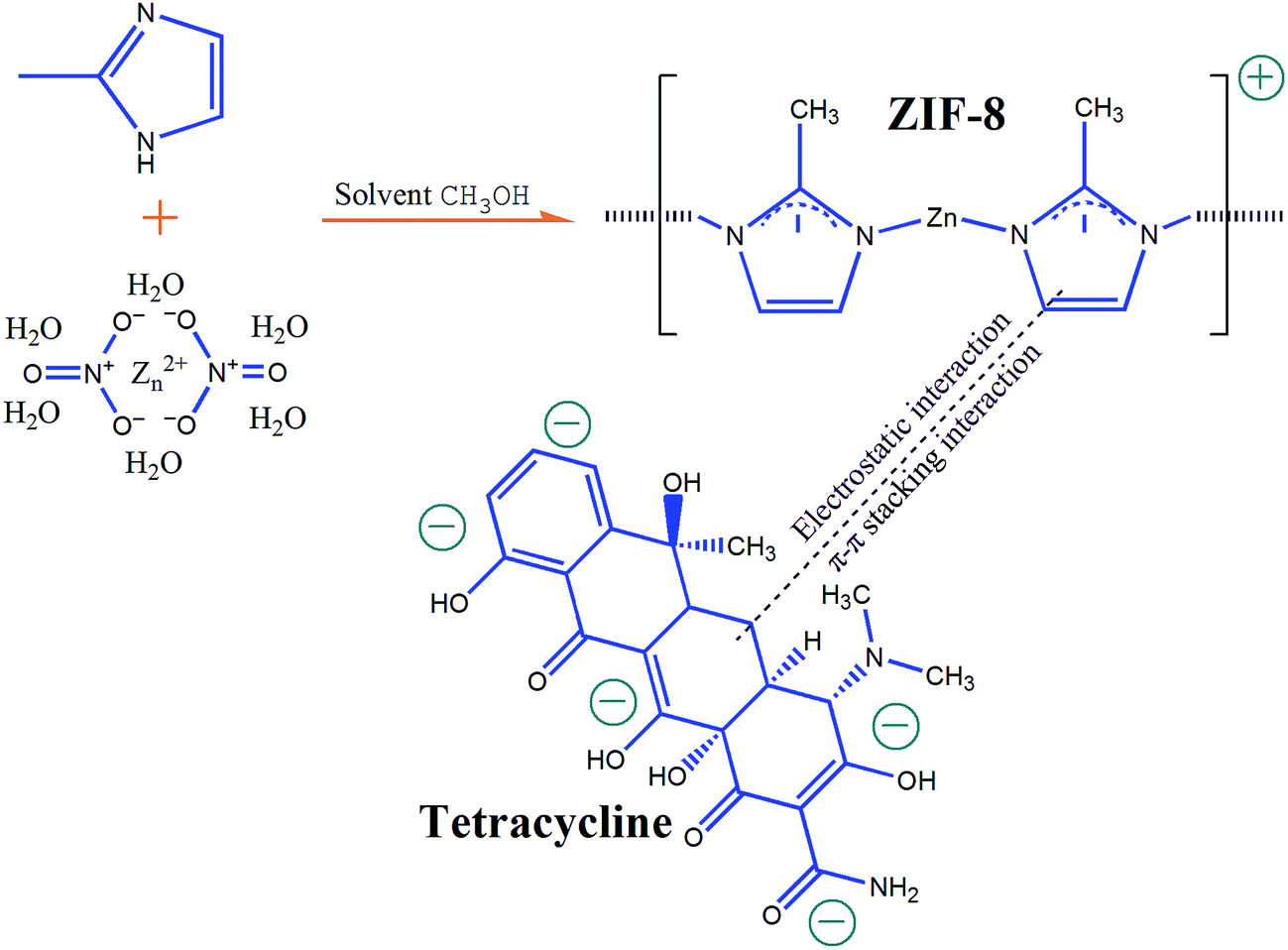
According to the experimental results, such as pH, kinetics, and isotherms as well as thermodynamic properties, it can be inferred that the electrostatic interaction between ZIF-8 and various forms of TC (TCH3+, TCH2±, TCH− and TC2−) was involved in the adsorption process. And the π–π stacking interaction should also be considered in this paper since aromatic rings can be found in both structures of ZIF-8 nanoparticles and TC molecules (ZIF-8 containing imidazole ring, and TC containing benzene). In the adsorption process, the instability of MOFs at pH < 3.3 caused the equilibrium adsorption capacity of TC was at a low level. When pH was in the range of 3.3–7.7, in addition to the weak electrostatic attraction between the positively charged ZIF-8 and electrically neutral TC molecules (TCH2±), there were π–π stacking interactions between ZIF-8 and TC which played a key role in controlling the equilibrium adsorption capacity. When pH was in the range of 7.7–9.8, the equilibrated adsorption capacity still remained at a comparatively high level, due to the superposition of electrostatic interaction and π–π stacking interaction. At pH > 9.8, strong electrostatic repulsion between adsorbent and adsorbate had become the major limiting factor for the adsorption of TC, which led to a sharply decrease of the qe value. Based on these studies, a plausible mechanism on the adsorptive removal of TC by ZIF-8 nanoparticles was proposed in Fig. 9.
 |
| | Fig. 9 A plausible mechanism for the adsorptive removal of tetracycline using ZIF-8 nanoparticle. | |
4. Conclusions
In this work, the prepared ZIF-8 nanoparticles were used as an adsorbent for the removal of tetracycline. Several primary experimental parameters (such as pH, contact time, temperature, and regeneration ability, etc.) were investigated in detail. Results showed that ZIF-8 had the adsorptive selectivity for various pollutants, and exhibited the efficient performance for removing TC at pH 5.0–10.0. Moreover, the removal capacity of ZIF-8 was largely influenced by the external environment factors, especially the temperature, under high TC concentrations. And the adsorption behaviors of tetracycline on ZIF-8 nanoparticles were mainly derived from electrostatic and π–π stacking interactions between the two materials. After desorption and regeneration, ZIF-8 nanoparticle still had a relatively complete pore structure, and maintained at a high adsorption capacity for removing TC in aqueous solution. These advantages make it possible to become one of the most effective and promising adsorbent materials in practical applications.
Acknowledgements
This work was supported by the National Natural Science Foundation of China (No. 50878138).
References
- A. C. Martins, O. Pezoti, A. L. Cazetta, K. C. Bedin, D. A. S. Yamazaki, G. F. G. Bandoch, T. Asefa, J. V. Visentainer and V. C. Almeida, Chem. Eng. J., 2015, 260, 291–299 CrossRef CAS PubMed
 .
.
- I. Chopra and M. Roberts, MMBR, Microbiol. Mol. Biol. Rev., 2001, 65, 232–260 CrossRef CAS PubMed .
- A. K. Sarmah, M. T. Meyer and A. B. Boxall, Chemosphere, 2006, 65, 725–759 CrossRef CAS PubMed .
- M. Sanchez-Polo, I. Velo-Gala, J. J. Lopez-Penalver and J. Rivera-Utrilla, Microporous Mesoporous Mater., 2015, 203, 32–40 CrossRef CAS PubMed .
- R. Abejon, M. de Cazes, M. P. Belleville and J. Sanchez-Marcano, Water Res., 2015, 73, 118–131 CrossRef CAS PubMed .
- N. Vragovic, D. Bazulic and B. Njari, Food Chem. Toxicol., 2011, 49, 352–355 CrossRef CAS PubMed .
- L. F. Yue, S. F. Wang, G. Q. Shan, W. Wu, L. W. Qiang and L. Y. Zhu, Appl. Catal., B, 2015, 176, 11–19 CrossRef PubMed .
- D. Belkheiri, F. Fourcade, F. Geneste, D. Floner, H. Ait-Amar and A. Amrane, Int. Biodeterior. Biodegrad., 2015, 103, 147–153 CrossRef CAS PubMed .
- M. Topal, Ecol. Eng., 2015, 79, 80–85 CrossRef PubMed .
- Y. Gao, Y. Li, L. Zhang, H. Huang, J. Hu, S. M. Shah and X. Su, J. Colloid Interface Sci., 2012, 368, 540–546 CrossRef CAS PubMed .
- O. G. Apul and T. Karanfil, Water Res., 2015, 68, 34–55 CrossRef CAS PubMed .
- J. G. Yu, L. Y. Yu, H. Yang, Q. Liu, X. H. Chen, X. Y. Jiang, X. Q. Chen and F. P. Jiao, Sci. Total Environ., 2015, 502, 70–79 CrossRef CAS PubMed .
- Y. P. Zhao, X. Y. Gu, S. X. Gao, J. J. Geng and X. R. Wang, Geoderma, 2012, 183, 12–18 CrossRef PubMed .
- M. E. Parolo, M. J. Avena, G. R. Pettinari and M. T. Baschini, J. Colloid Interface Sci., 2012, 368, 420–426 CrossRef CAS PubMed .
- H. Furukawa, K. E. Cordova, M. O'Keeffe and O. M. Yaghi, Science, 2013, 341, 1230444 CrossRef PubMed .
- J. L. C. Rowsell and O. M. Yaghi, Microporous Mesoporous Mater., 2004, 73, 3–14 CrossRef CAS PubMed .
- H. C. Zhou, J. R. Long and O. M. Yaghi, Chem. Rev., 2012, 112, 673–674 CrossRef CAS PubMed .
- S. Bhattacharjee, M. S. Jang, H. J. Kwon and W. S. Ahn, Catal. Surv. Asia, 2014, 18, 101–127 CrossRef CAS .
- N. T. Nguyen, H. Furukawa, F. Gandara, H. T. Nguyen, K. E. Cordova and O. M. Yaghi, Angew. Chem., 2014, 53, 10645–10648 CrossRef CAS PubMed .
- K. S. Park, Z. Ni, A. P. Cote, J. Y. Choi, R. Huang, F. J. Uribe-Romo, H. K. Chae, M. O'Keeffe and O. M. Yaghi, Proc. Natl. Acad. Sci. U. S. A., 2006, 103, 10186–10191 CrossRef CAS PubMed .
- H. Hayashi, A. P. Cote, H. Furukawa, M. O'Keeffe and O. M. Yaghi, Nat. Mater., 2007, 6, 501–506 CrossRef CAS PubMed .
- L. Q. Yu, C. X. Yang and X. P. Yan, J. Chromatogr. A, 2014, 1343, 188–194 CrossRef CAS PubMed .
- B. K. Jung, J. W. Jun, Z. Hasan and S. H. Jhung, Chem. Eng. J., 2015, 267, 9–15 CrossRef CAS PubMed .
- Y. Wang, S. Jin, Q. Wang, G. Lu, J. Jiang and D. Zhu, J. Chromatogr. A, 2013, 1291, 27–32 CrossRef CAS PubMed .
- S. R. Venna, J. B. Jasinski and M. A. Carreon, J. Am. Chem. Soc., 2010, 132, 18030–18033 CrossRef CAS PubMed .
- N. K. Demir, B. Topuz, L. Yilmaz and H. Kalipcilar, Microporous Mesoporous Mater., 2014, 198, 291–300 CrossRef PubMed .
- Z. Li, L. Schulz, C. Ackley and N. Fenske, J. Colloid Interface Sci., 2010, 351, 254–260 CrossRef CAS PubMed .
- Q. Chen, Q. Q. He, M. M. Lv, Y. L. Xu, H. B. Yang, X. T. Liu and F. Y. Wei, Appl. Surf. Sci., 2015, 327, 77–85 CrossRef CAS PubMed .
- M. Zhou, Y. N. Wu, J. Qiao, J. Zhang, A. McDonald, G. Li and F. Li, J. Colloid Interface Sci., 2013, 405, 157–163 CrossRef CAS PubMed .
- B. K. Jung, Z. Hasan and S. H. Jhung, Chem. Eng. J., 2013, 234, 99–105 CrossRef CAS PubMed .
- L. T. Xie, D. H. Liu, H. L. Huang, Q. Y. Yang and C. L. Zhong, Chem. Eng. J., 2014, 246, 142–149 CrossRef CAS PubMed .
- L. Cottet, C. A. P. Almeida, N. Naidek, M. F. Viante, M. C. Lopes and N. A. Debacher, Appl. Clay Sci., 2014, 95, 25–31 CrossRef CAS PubMed .
- J. Q. Jiang, C. X. Yang and X. P. Yan, ACS Appl. Mater. Interfaces, 2013, 5, 9837–9842 CAS .
- Z. Y. Zhang, H. C. Lan, H. J. Liu and J. H. Qu, Colloids Surf., A, 2015, 471, 133–138 CrossRef CAS PubMed .
- N. A. Khan, B. K. Jung, Z. Hasan and S. H. Jhung, J. Hazard. Mater., 2015, 282, 194–200 CrossRef CAS PubMed .
- B. Liu, M. Jian, R. Liu, J. Yao and X. Zhang, Colloids Surf., A, 2015, 481, 358–366 CrossRef CAS PubMed .
- X. Y. Li, X. Y. Gao, L. H. Ai and J. Jiang, Chem. Eng. J., 2015, 274, 238–246 CrossRef CAS PubMed .
- M. P. Jian, B. Liu, G. S. Zhang, R. P. Liu and X. W. Zhang, Colloids Surf., A, 2015, 465, 67–76 CrossRef CAS PubMed .
- J. Ethiraj, F. Bonino, C. Lamberti and S. Bordiga, Microporous Mesoporous Mater., 2015, 207, 90–94 CrossRef CAS PubMed .
- M. He, J. F. Yao, Q. Liu, K. Wang, F. Y. Chen and H. T. Wang, Microporous Mesoporous Mater., 2014, 184, 55–60 CrossRef CAS PubMed .
- Y. Zhao, F. Tong, X. Gu, C. Gu, X. Wang and Y. Zhang, Sci. Total Environ., 2014, 470–471, 19–25 CrossRef CAS PubMed .
- H. Chen, L. F. Wang, J. Yang and R. T. Yang, J. Phys. Chem. C, 2013, 117, 7565–7576 CAS .
- H. Bux, A. Feldhoff, J. Cravillon, M. Wiebcke, Y. S. Li and J. Caro, Chem. Mater., 2011, 23, 2262–2269 CrossRef CAS .
- A. F. Gross, E. Sherman and J. J. Vajo, Dalton Trans., 2012, 41, 5458–5460 RSC .
- Z. Hasan and S. H. Jhung, J. Hazard. Mater., 2015, 283, 329–339 CrossRef CAS PubMed .
- J. Li, Y. N. Wu, Z. H. Li, B. R. Zhang, M. Zhu, X. Hu, Y. M. Zhang and F. T. Li, J. Phys. Chem. C, 2014, 118, 27382–27387 CAS .
Footnote |
| † Electronic supplementary information (ESI) available: The properties of powdered activated carbon and MWCNTs were provided. See DOI: 10.1039/c5ra15497a |
|
| This journal is © The Royal Society of Chemistry 2015 |
Click here to see how this site uses Cookies. View our privacy policy here.