DOI:
10.1039/C5RA11635J
(Paper)
RSC Adv., 2015,
5, 78920-78926
Enhancement of the sensitivity of valacyclovir and acyclovir for their spectrofluorimetric determination in human plasma†
Received
17th June 2015
, Accepted 2nd September 2015
First published on 4th September 2015
Abstract
Two rapid, simple and highly sensitive spectrofluorimetric methods have been developed and validated for determination of valacyclovir hydrochloride (VAC) and acyclovir (ACV). The first method is based on measuring the intrinsic fluorescence of VAC or ACV in an aqueous acidic medium (pH 1.3) at 370 nm after excitation at 280 nm. The fluorescence intensity–concentration plots of VAC and ACV were rectilinear over the concentration ranges of 0.4–5.0 and 0.3–4.0 μg ml−1, respectively. The second method was based on the enhancement of the fluorescence intensity using sodium dodecyl sulfate (SDS) as a micellar system in an aqueous acidic medium (pH 1.3). This is the first attempt for enhancement of the sensitivity of these drugs by spectrofluorimetry. The addition of 2% w/v SDS, produced about 2.7 and 2.9 fold enhancements in the relative fluorescence intensity of VAC and ACV, respectively. The linear range for the second method was 0.2–2.5 and 0.1–1.25 μg ml−1, respectively. The proposed methods were successfully applied for determination of VAC and ACV in pharmaceutical preparations without interference from the common excipients. The high sensitivity of the micellar method permits its application for determination of ACV in human plasma with good percentage recovery.
1. Introduction
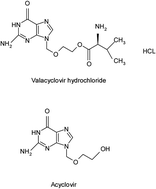
Valacyclovir hydrochloride is an L-valyl ester pro-drug of the antiviral drug acyclovir. The chemical names of valacyclovir hydrochloride (VAC) and acyclovir (ACV) are 2-[(2-amino-1,6-dihydro-6-oxo-9H-purin-9yl) methoxy] ethyl ester hydrochloride and (9-[(2-hydroxyethoxy) methyl] guanine), respectively (Fig. 1). ACV is an acyclic guanosine derivative with clinical activity against HSV-1, HSV-2 and against varicella-zoster virus.1 The oral bioavailability of acyclovir is higher after administration of VAC relative to ACV itself.1 Several analytical methods have been reported for determination of these drugs in bulk and different pharmaceutical formulations as well as biological fluids. These methods include spectrophotometric2–7 spectrofluorimetric,2,8–10 HPLC,11–22 TLC,10,23,24 capillary electrophoretic25–27 and electrochemical methods.28–30 It was noticed that the reported spectrophotometric methods for the determination of VAC and ACV have low sensitivity while the chromatographic methods require expensive instruments and consume large volumes of high purity organic solvents. Until now, few spectrofluorimetric methods have been reported for determination of VAC and ACV. Two of these methods2,9 that were used for ACV determination suffer from lack of selectivity as a result of its dependence on oxidation of the drug with cerium(IV) ion. The other spectrofluorimetric methods8,10 for VAC suffer from the lack of suitable sensitivity for the determination of the mentioned drug in human plasma. Low sensitivity and lack of selectivity of the previously published methods2,8–10,18–21 draw the attention to develop simple, rapid and highly sensitive spectrofluorimetric methods for determination of ACV in human plasma. This could be attained by enhancement of the intrinsic fluorescence of the studied drugs through adjustment of the pH of the solution and by addition of suitable surfactant.
 |
| | Fig. 1 Chemical structures of valacyclovir and acyclovir. | |
2. Experimental
2.1. Apparatus
A Perkin Elmer LS 45 luminescence spectrometer (United Kingdom) equipped with 150 watt xenon arc lamp and 1 cm quartz cell was used. Slit width for both monochromators were set at 10 nm. The spectrometer is connected to a PC computer loaded with the FL WINLAB™ software. Spectronic™ Genesys™ 2 PC ultraviolet/visible spectrophotometer (Milton Roy Co, USA) with matched 1 cm quartz cell was connected to PC loaded with Winspec™ application software, Laboratory centrifuge 4000c/s (Bremsen ECCO, Germany), MLW type thermostatically controlled water bath (Memmert GmbH, Schwabach, Germany) was used for heating purposes and Milwaukee SM 101 pH meter Portugal.
2.2. Material and chemicals
Valacyclovir hydrochloride was obtained as a gift from (Hikma Pharma, Cairo, Egypt). Acyclovir was obtained as a gift from (GlaxoSmithKline, Cairo, Egypt). The following dosage forms were purchased from local market; Valtovir® tablets (Hikma Pharma, Cairo, Egypt) labeled to contain 1110 mg VAC per tablet, Acyclovir® tablets (Global Napi pharmaceuticals, Cairo, Egypt) labeled to contain 400 mg ACV per tablet, Zovirax® suspension (GlaxoSmithKline, Cairo, Egypt) labeled to contain 400 mg per 5 ml, acyclovir cream (Misr Co. for Pharmaceutical Industries S.A.E., Cairo, Egypt), labeled to contain 5% of acyclovir and acyclovir vials (Mylan, S.A.S., France) labeled to contain 250 mg acyclovir per vial.
Sodium dodecyl sulphate (SDS) El-Nasr chemical Co., (Cairo, Egypt), was prepared as 2.0% w/v aqueous solution. Beta-cyclodextrin (β-CD) (Sigma, St. Louis, MO, USA), cetyl trimethyl ammonium bromide (CTAB, Danochemo a subsidiary of Ferrosan, manufacturing chemists, Copenhagen, Denmark), 4-chloro-7nitrobenzo-2-oxa-1,3-diazole NBD-Cl (Sigma Chemical Co., St. Louis, USA), acetonitrile (Merck, Germany) were obtained from their respective manufacturers. Tween-80, boric acid, methanol, acetone, dimethylformamide, sodium hydroxide, hydrochloric acid, phosphoric acid, citric acid, acetic acid, and sodium acetate were purchased from El-Nasr chemical Co., (Cairo, Egypt). All chemicals and reagents used were of analytical grade. The authors got the permission for using plasma sample of human volunteers from Minia Hospital (Minia, Egypt) according to institutional guidelines. In all cases, informed written consent was obtained from all participants. Human plasma samples were kept frozen at −20 °C until assay after gentle thawing.
2.3. Preparation of standard solutions
Into a 100 ml volumetric flask, 10 mg of drug (ACV or VAC) was carefully weighed and dissolved in 20 ml distilled water. The flask was sonicated for 10 min and completed to the volume with distilled water. The stock solution was further diluted with distilled water to obtain working solution of the cited drugs (10 μg ml−1).
2.4. General analytical procedure
Method I. Aliquot volumes of the working solution equivalent to 4–50 and 3–40 μg ml−1 for VAC and ACV, respectively, were transferred into series of 10 ml volumetric flasks then 0.5 ml of 1 M HCl was added. The contents of volumetric flasks were diluted to 10 ml with distilled water. The fluorescence intensity of the resulting solution was measured at 370 nm after excitation at 280 nm. Blank experiment was carried out simultaneously using the same procedure omitting the drug.
Method II. Into series of 10 ml volumetric flasks, an aliquot of the cited drugs equivalent to 2–25 and 1–12.5 μg ml−1 for VAC and ACV, respectively, 0.5 ml of 1 M HCl and 5 ml of 2% w/v SDS solution were mixed. The volume was completed to the mark with distilled water. The obtained concentrations were in the range of 0.2–2.5 and 0.1–1.25 μg ml−1 for VAC and ACV, respectively. The fluorescence intensity was measured at 370 nm after excitation at 280 nm. Blank experiment was carried out simultaneously following the same procedure omitting the drug.
2.5. Determination of the cited drugs in pharmaceutical preparations
2.5.1. Tablets. An accurate weight, of the mixed content of ten tablets, equivalent to 10 mg of VAC or ACV was transferred into a 100 ml calibrated volumetric flask. The solution was sonicated with 25 ml of distilled water for 30 min. The volume was completed with distilled water and filtered. The first portion of the filtrate was discarded and 1.0 ml of filtrate was diluted to 10 ml with the same solvent. Aliquot volume in the working concentration range of VAC or ACV was analyzed using the general analytical procedures.
2.5.2. Suspension. An accurate volume of Zovirax® suspension equivalent to 100 mg ACV was transferred into a 100 ml calibrated volumetric flask, dissolved in 25 ml of distilled water and completed to volume with the same solvent. 1.0 ml of the previous solution was diluted to 100 ml with the same solvent. Aliquot volume in the working concentration range of ACV was analyzed using the general analytical procedures.
2.5.3. Vials. An accurate weight of ACV vial powder equivalent to 10 mg of ACV was transferred into a 100 ml calibrated volumetric flask, dissolved in 25 ml of distilled water and completed to volume with the same solvent. 1.0 ml of the previous solution was diluted to 10 ml with the same solvent. Aliquot volume in the working concentration range of ACV was analyzed using the general analytical procedures.
2.5.4. Cream. An accurately weighed amount of the cream equivalent to 100 mg of ACV was shaken with equal volume of 10 ml of distilled water and chloroform. The mixture was then allowed to separate, and the clear aqueous layer was collected. The organic layer was washed two times each with 20 ml of distilled water. The aqueous solutions were quantitatively transferred to a 100 ml calibrated flask, and completed to volume with distilled water. The resulting solution was filtered, and the first portion of filtrate was discarded. The filtrate was further diluted with distilled water to obtain working solution of 10 μg ml−1. Aliquot volume in the working concentration range of ACV was analyzed using the general analytical procedures.
2.6. Procedures for spiked human plasma
Five ml of drug-free human blood sample was taken from healthy volunteers into a heparinized tube and centrifuged at 4000 rpm for 30 min. Into 10 ml stoppered tube, 1.0 ml of the drug free plasma (supernatant) was spiked with 1.0 ml of ACV solution containing 10–125 μg ml−1. Two ml of acetonitrile was added to precipitate protein and the resultant mixture was diluted to 10.0 ml with distilled water to achieve final concentration of 1.0–12.5 μg ml−1. The solution was centrifuged at 4000 rpm for about 20 min, and then the general procedure was followed on the obtained supernatant. A blank value was determined by treating the ACV-free blood sample in the same manner.
2.7. Procedures for human plasma
Acyclovir® 400 mg tablet was administrated orally by the healthy human volunteers. Five milliliters of blood sample was withdrawn by a calibrated heparinized syringe after 2.5 h, and centrifuged at 4000 rpm for 30 min. Into 10 ml stoppered calibrated tube, 2.0 ml of obtained plasma was treated with 2.0 ml acetonitrile, and the resultant mixture was centrifuged at 4000 rpm for 30 min. Three milliliters of protein-free supernatant was taken carefully, and then the general procedure was followed. This procedure was repeated three times to obtain intraday and interday assay.
3. Results and discussion
It was found that the aqueous acidic solution (pH 1.3) of VAC and ACV had an emission band at 370 nm after excitation at 280 nm. This intrinsic emission was utilized for the determination of the cited drugs in the first proposed method. The aim was to enhance the fluorescence intensity of these drugs by using surfactant to develop a new more sensitive methodology compared with the reported spectrofluorometric and some chromatographic methods for the analysis of the cited drugs in its pharmaceutical preparations and human plasma. The presence of a guanine or purine nucleus in the compound is not a guarantee for the fluorescence property of the compound. We tried to apply the proposed procedures to adefovir and zidovudine which have structural similarity with the studied drugs. Unfortunately the fluorescence intensity of these drugs was not detected and addition of SDS surfactant did not produce any enhancement.
The use of surfactants in various areas of analytical chemistry has attracted much interest in the last three decades. It has been used in separation science as a modifier of mobile and stationary phases.31 It is well known that the addition of a surfactant above its critical micellar concentration increases the fluorescence quantum yield of many fluorophores.32,33 Micellar catalysis has been used to enhance several chromogenic derivatization reactions by the simultaneous alteration of various physical properties of the solution and physicochemical properties of the reagents, intermediates and products.34 When a solute passes from an aqueous medium to a micellar medium, several properties (e.g. reactivity, solubility or spectroscopic characteristics) undergo important changes, increasing fluorescence intensity being the most outstanding and advantageous.35 These factors might increase the fluorescence quantum yield and enhance the fluorescence signals of guest molecules. Micellar media provide microenvironment around the studied drugs is quite different from that in aqueous solution. This can be attributed to restrictions imposed on the free rotational motions which are competitive with luminescent emission so diminish the probabilities of non-radiative processes and provide relatively high viscous microenvironments that can inhibit quenching by molecular oxygen.36 In this study different surfactants were used above its critical micellar concentration in order to enhance the intrinsic fluorescence intensity of the cited drugs.
3.1. Method optimization
The fluorescence spectra of VAC and ACV in aqueous acidic solutions and in presence of SDS as a fluorescence enhancer were illustrated in Fig. 2. Various conditions affecting the fluorescence intensity of the studied drugs were carefully studied and optimized.
 |
| | Fig. 2 Fluorescence spectra of 2 μg ml−1 of VAC (—) and 1 μg ml−1 of ACV (- - -) in; aqueous acidic solution (a and b) and 2% w/v SDS system (c and d), where (a and c) are the excitation spectra and (b and d) are the emission spectra. | |
Effect of different organized media. The fluorescence properties of VAC and ACV in various organized media were studied, using non-ionic surfactant (Tween-80) was prepared as 2% v/v, anionic surfactant (SDS) was prepared 2% w/v, cationic surfactant (CTAB) was prepared 2% w/v CTAB and macromolecules such as β-CD was prepared as 0.1% w/v. All surfactants were studied with different volumes with or without using buffer system with different incubation period from 5 to 60 min. It was observed that, CTAB and Tween-80 had no effect on the relative fluorescence intensity (RFI) of the cited drugs, while β-CD caused a slight increase in their RFI. On the other hand, SDS produced a considerable increase in the RFI of the cited drugs (Fig. 3). The fluorescence enhancement in the presence of SDS were about 2.7 and 2.9 fold for VAC and ACV, respectively compared with those in aqueous acidic solution. This could be attributed to the ability of VAC and ACV to form ion-pair associates with SDS. In the micellar phase, the ion pair complex could be formed through the interaction between negative sulfonyl group of SDS and the acidic proton of amino group in the guanine base of these drugs. Micelle binding enhanced the fluorescence intensity of the cited drugs by reducing the electrostatic attractions and collisions between drugs molecules.37
 |
| | Fig. 3 Effect of the type of organized media (β-CD, CTAB, Tween-80 and SDS) on RFI of 1 μg ml−1 ACV (■) and 2 μg ml−1 VAC (□). | |
Effect of the volume of SDS. The influence of SDS volume (2% w/v) on the RFI was studied (Fig. 4). It was found that increasing SDS volumes resulted in a corresponding increase in RFI up to 4 ml of SDS solution, after which no further increase in RFI was observed. Therefore, 5 ml of 2% w/v SDS solution was chosen as the optimum volume for the studied drugs.
 |
| | Fig. 4 Effect of the volume of SDS (2.0% w/v) on RFI of 1 μg ml−1ACV (-□-) and 2 μg ml−1 VAC (-■-). | |
Effect of pH, temperature and time. The effect of pH on the intrinsic fluorescence of ACV and VAC was studied using different buffers in the pH range of 1–10 using hydrochloric acid (pH 1.0–2.0), acetate buffer (pH 3.0–5.5) and Teorell and Stenhagen buffer (pH 6–10). It was found that, intrinsic fluorescence of both drugs was highly dependent on pH. The highest intensity was obtained in the pH range of 1.2–1.5. Higher or lower pH solution resulted in decrease the fluorescence intensity as shown in ESI Fig. 2.† The same result was obtained with micelle-enhanced fluorescence method. Therefore the optimum pH was 1.3 and adjusted by using 0.5 ml of 1.0 M hydrochloric acid solution. The temperature effect was studied in the range 40–80 °C in a thermostatically controlled water bath. It was observed that increasing the temperature resulted in a decrease in the RFI as shown in ESI Fig. 3.† This may be due to increasing the temperature lead to enhancement of the internal conversion process, promoting non radiative deactivation of the excited singlet state.38 Therefore, all experiments were performed at room temperature. Also the highest fluorescence intensity was developed immediately after mixing the solutions and remained unchanged for at least two hours as shown in ESI Fig. 4.†
Effect of diluting solvent. Different solvents were tried for dilution the studied drugs in presence or absence of SDS was investigated. These solvents were distilled water, methanol, ethanol, acetone and dimethylformamide (Fig. 5). Distilled water was the best solvent for dilution, as it gave the highest RFI and the lowest blank reading. On the other hand, methanol, ethanol or acetone produced a distinct and sharp decrease in the relative fluorescence intensities of the studied drugs in the presence of SDS. This effect is attributed to their denaturating effect on the micelles, where short-chain alcohols (methanol) are solubilized mainly in the aqueous phase and affect the micellization process by modifying the solvent properties. Addition of these alcohols also results in a reduction of the size of the micelles, but with a progressive breakdown of the surfactant aggregate at very high concentration.39 Dimethylformamide decreased the fluorescence intensities of the studied drugs, since they initiated an intersystem crossing process similar to the heavy atom effect.40
 |
| | Fig. 5 Effect of different diluting solvents on RFI of VAC (2 μg ml−1) and ACV (1 μg ml−1) in the absence and presence of 2% w/v SDS. | |
3.2. Validation of the proposed methods
The developed methods were validated according to ICH guidelines of the validation of analytical methods41 regarding linearity, limits of detection (LOD), limits of quantification (LOQ), accuracy, precision, robustness.
Linearity. Assessment of linearity of the proposed methods was performed by analyzing six to eight sets (three replicates for each concentration) for each studied drug. The relative fluorescence intensity was rectilinear over the concentration range of 0.4–5.0 and 0.3–4.0 μg ml−1 for VAC and ACV, respectively using the intrinsic fluorescence method in aqueous acidic solution. The linear ranges for the micelle-enhanced spectrofluorimetric method were 0.2–2.5 and 0.1–1.25 μg ml−1 for VAC and ACV, respectively. The correlation coefficients (r) were in the range from 0.9994 to 0.9996 indicating good linearity, as shown in Table 1.
Table 1 Analytical parameters for the analysis of VAC and ACV by the proposed spectrofluorimetric methods
| Parameters |
VAC |
ACV |
| Method I |
Method II |
Method I |
Method II |
| Linear range (μg ml−1) |
0.4–5.0 |
0.2–2.5 |
0.3–4.0 |
0.1–1.25 |
| Correlation coefficient (r) |
0.9995 |
0.9996 |
0.9994 |
0.9996 |
| Determination coefficient (r2) |
0.9989 |
0.9992 |
0.9989 |
0.9993 |
| Intercept ± SD |
5.6 ± 2.1 |
9.7 ± 3.6 |
24.6 ± 2.8 |
9.4 ± 2.6 |
| Slope ± SD |
63.7 ± 0.8 |
171.8 ± 2.4 |
102.8 ± 1.4 |
303.0 ± 3.7 |
| LOD (μg ml−1) |
0.109 |
0.068 |
0.091 |
0.028 |
| LOQ (μg ml−1) |
0.333 |
0.200 |
0.276 |
0.085 |
Quantification and detection limits. The limit of detection (LOD) was determined by evaluating the lowest concentration of the analyte that can be readily detected. The limit of quantitation (LOQ) was determined by establishing the lowest concentrations that can be measured according to the ICH Q2 (R1) recommendation.41 These limits were calculated using the formula; “LOD = 3.3σ/S and LOQ = 10σ/S”, where σ is the standard deviation of intercept and S is the slope of calibration graph.41 The low values of these parameters indicate good sensitivity of the proposed methods (Table 1).
Accuracy and precision. The accuracy of the suggested methods were checked by applying the standard addition technique, which was performed by adding known amounts of the studied compound to a previously analyzed concentration of the commercial product, Table 2. The intra-day precision of the proposed methods was evaluated by determination of three concentrations of the studied drugs in pure form on three successive occasions. The inter-day precision was also evaluated through replicate analysis at three concentrations levels on three successive days (ESI Table 1†). The calculated high percentage average recovery and low value of standard deviation in indicated the suitable accuracy and precision of the proposed methods.
Table 2 Recovery studies for determination of VAC and ACV using standard addition methoda
| Dosage form |
% added |
Method I |
Method II |
| Found (μg ml−1) |
% recovery ± S.D |
Found (μg ml−1) |
% recovery ± S.D |
| Taken concentration of VAC and ACV (0.5 μg ml−1). |
| Valtovir® tablets |
0% |
0.496 |
99.31 ± 1.68 |
0.496 |
99.20 ± 2.43 |
| 50% |
0.743 |
99.11 ± 2.03 |
0.730 |
97.33 ± 1.33 |
| 100% |
0.993 |
99.33 ± 1.52 |
0.980 |
98.06 ± 1.09 |
| 120% |
1.09 |
99.09 ± 0.91 |
1.073 |
97.57 ± 1.39 |
| Acyclovir® tablets |
0% |
0.505 |
101.13 ± 1.03 |
0.486 |
97.25 ± 1.11 |
| 50% |
0.733 |
97.77 ± 2.04 |
0.743 |
99.11 ± 1.54 |
| 100% |
0.986 |
98.66 ± 1.52 |
0.978 |
97.84 ± 1.78 |
| 120% |
1.083 |
98.48 ± 1.89 |
1.08 |
98.18 ± 2.41 |
| Zovirax® suspension |
0% |
0.491 |
98.20 ± 2.31 |
0.499 |
99.93 ± 2.11 |
| 50% |
0.746 |
99.55 ± 2.04 |
0.749 |
99.99 ± 1.33 |
| 100% |
1.006 |
100.66 ± 2.1 |
0.993 |
99.33 ± 1.53 |
| 120% |
1.083 |
98.48 ± 1.39 |
1.076 |
97.87 ± 1.89 |
| Aciclovir® vial |
0% |
0.481 |
96.20 ± 0.72 |
0.484 |
96.80 ± 2.80 |
| 50% |
0.744 |
99.28 ± 1.01 |
0.746 |
99.55 ± 2.03 |
| 100% |
1.006 |
100.62 ± 2.1 |
0.989 |
98.93 ± 1.11 |
| 120% |
1.08 |
98.18 ± 1.82 |
1.083 |
98.48 ± 1.91 |
| Acyclovir® cream |
0% |
0.503 |
100.66 ± 1.15 |
0.503 |
100.74 ± 1.09 |
| 50% |
0.753 |
100.39 ± 0.81 |
0.743 |
99.11 ± 1.54 |
| 100% |
1.016 |
101.66 ± 1.53 |
0.986 |
98.66 ± 1.15 |
| 120% |
1.086 |
98.78 ± 1.40 |
1.093 |
99.39 ± 1.05 |
Robustness. Robustness of the procedure was assessed by evaluating the influence of small variation in experimental variables (pH, volumes of SDS) on the analytical performance of the proposed methods. In these experiments, one experimental parameter was changed while the other parameters were kept unchanged, and the recovery percentage was calculated each time. The small variations in any of the studied variables did not significantly affect the results that indicate the reliability of the proposed method during routine work (ESI Table 2†).
3.3. Application to pharmaceutical preparations
Different dosage forms of ACV were subjected to the analysis by the proposed methods, as well as the reported method.4 In addition, VAC tablets were also subjected to the analysis by the proposed methods, as well as the reported method.10 The obtained results were statistically compared with each other. The mean percentage recoveries obtained by the proposed methods ranged from 97.85–99.96 ± 0.719–1.99% for both methods (Table 3). Comparing the results of the proposed and the reported methods at 95% confidence level with respect to t- and F-tests showed no significant differences between the calculated and theoretical values. This indicated the good accuracy and precision of the proposed methods in the analysis of these dosage forms.
Table 3 Application of the proposed and reported methods for the analysis of different pharmaceutical dosage forms containing VAC or ACVa
| Dosage forms |
% recovery ± SD |
| Method I |
Method II |
Reported method |
| The value is the mean of five determinations. The tabulated t- and F-values at 95% confidence limit are 2.78 and 6.39, respectively. |
| Valtovir® tablets 1110 mg VAC/tablet |
99.96 ± 1.99 t = 1.23, F = 1.30 |
99.41 ± 0.72 t = 1.071, F = 5.91 |
98.50 ± 1.75 |
| Ayclovir® tablets 400 mg ACV/tablet |
99.94 ± 0.99 t = 1.59, F = 1.21 |
99.67 ± 0.82 t = 1.24, F = 1.20 |
98.99 ± 0.90 |
| Zovirax® suspension 400 mg ACV/5 ml |
99.69 ± 0.78 t = 0.16, F = 1.83 |
99.47 ± 0.97 t = 0.12, F = 1.17 |
99.60 ± 1.05 |
| Aciclovir® vial 250 mg powder for injection |
99.75 ± 1.36 t = 0.50, F = 1.16 |
99.45 ± 1.39 t = 0.15, F = 1.21 |
99.33 ± 1.27 |
| Acyclovir® cream 5% ACV |
97.85 ± 0.84 t = 2.15, F = 1.13 |
99.90 ± 0.78 t = 1.86, F = 1.03 |
98.97 ± 0.80 |
3.4. Application to human plasma
The high sensitivity of the micellar proposed method permits the in vitro and in vivo determination of ACV in human plasma without interference from the components of plasma. To ensure that the plasma components such as tryptophan and purines containing compounds do not interfere with the proposed method, a blank experiment was carried out by the applying the same procedures on plasma sample free from the studied drug. It was found that plasma sample did not have any significant fluorescence intensity at the specified proposed method conditions (ESI Fig. 5†).
For in vitro study the concentration of ACV was computed from its responding regression equations. The obtained mean recovery value was 99.50 ± 1.45%.
For in vivo study; ACV is absorbed after its oral administration tablet (400 mg) producing a mean peak plasma concentration of 1.2 μg ml−1 in 2.5 h.42 The following equation43 was used in calculating the % recovery of the ACV in human plasma samples:
| % recoveryin vivo = deliveryin vivo × % recoveryin vitro/deliveryin vitro |
where; % recovery
in vivo is % recovery for drug in human sample, delivery
in vivo is concentration of the drug in human sample, % recovery
in vitro is % recovery for drug in spiked human sample and delivery
in vitro is the concentration of the drug in spiked human sample.
The calculated % recoveriesin vivo using the micellar enhanced fluorescence method in human plasma sample by intra and interday assay were 80.78 and 80.25% respectively, (Table 4). It can be seen that the proposed method have the suitable sensitivity for the analysis of the investigated ACV in human plasma.
Table 4 Application of the micellar enhanced fluorescence method for the determination of ACV in human plasma
| Assay |
Deliveryin vitro (μg ml−1) |
% recoveryin vitro |
Deliveryin vivo (μg ml−1) |
% recoveryin vivo ± S.Da |
| The value is the mean of three determinations. |
| Intra-day assay |
0.1770 |
98.33 |
0.143 |
80.78 ± 1.49 |
| Inter-day assay |
0.1769 |
98.27 |
0.142 |
80.25 ± 1.16 |
4. Conclusion
The present work represents the first spectrofluorimetric attempt to determine acyclovir in human plasma. In this work, simple and highly sensitive spectrofluorimetric methods were developed for determination of VAC and ACV in pure forms and different pharmaceutical formulations without any interference from common excipients. The proposed methods were rapid, less time-consuming and do not require the elaborate pre-treatment steps or derivatization. The high sensitivity of micellar method permits the analysis of ACV in human plasma. Therefore, the developed method is suitable for the analysis of investigated drugs in quality control and clinical laboratories.
References
- S. Sweetman, Martindale: The complete drug reference, Pharmaceutical Press, London, 36th edn, 2009, vol. 1, pp. 862–865 Search PubMed.
- M. M. Ayad, H. E. Abdellatef, M. M. El-Henawee and H. M. El-Sayed, Spectrochim. Acta, Part A, 2007, 66, 106–110 CrossRef PubMed.
- G. S. Babu, I. S. Babu, N. K. Kumar, N. Yugandhar and A. Ch, Asian J. Chem., 2007, 19, 1642–1644 CAS.
- U. S. Dongare, S. Z. Chemate, S. A. Jadhav and V. R. Pawar, Int. J. PharmTech Res., 2012, 4, 1840–1845 Search PubMed.
- M. K. S. El-Din, A. M. El-Brashy, Z. A. Sheribah and R. M. El-Gamal, J. AOAC Int., 2006, 89, 631–641 CAS.
- D. P. Reddy, B. Gurupadayya, Y. Manohara and V. V. Bhaskar, Asian J. Chem., 2007, 19, 2797–2800 CAS.
- D. Tarinc and A. Golcu, J. Anal. Chem., 2013, 68, 27–32 CrossRef CAS.
- S. Caglar, J. Anal. Chem., 2014, 69, 362–366 CrossRef CAS.
- I. A. Darwish, A. S. Khedr, H. F. Askal and R. M. Mahmoud, Rev. Bras. Farmacogn., 2005, 60, 555–562 CAS.
- S. M. Derayea, I. M. Mostafa and M. A. Omar, RSC Adv., 2014, 4, 42308–42315 RSC.
- S. A. Ahn and M. H. Hyun, Chirality, 2015, 27, 268–273 CrossRef CAS PubMed.
- K. A. Al-Amri, K. Mohsin and F. K. Alanazi, Arabian J. Chem., 2014 DOI:10.1016/j.arabjc.2014.08.024.
- R. I. Al-Bagary, A. A. El-Zaher, F. A. Morsy and M. M. Fouad, Anal. Chem. Insights, 2014, 9, 41–48 CAS.
- G. Holkar, M. Rokade, R. Yadav and V. Daphal, Int. J. Theor. Appl. Sci., 2012, 4, 56–65 CAS.
- A. Jadhav, D. Pathare and M. Shingare, J. Pharm. Biomed. Anal., 2007, 43, 1568–1572 CrossRef CAS PubMed.
- A. K. Maureen, J. Anal. Bioanal. Tech., 2012, 3 DOI:10.4172/2155-9872.1000139.
- A. Savaşer, C. K. Özkan, Y. Özkan, B. Uslu and S. A. Özkan, J. Liq. Chromatogr. Relat. Technol., 2003, 26, 1755–1767 CrossRef PubMed.
- M. Sharma, P. Nautiyal, S. Jain and D. Jain, J. AOAC Int., 2010, 93, 1462–1467 CAS.
- G. Silva, A. Caldeira, F. Damico, B. Takahashi, A. Silva-Cunha and S. Fialho, Pharmazie, 2013, 68, 235–239 CAS.
- H. K. Stulzer, M. P. Tagliari, F. S. Murakami, M. A. Silva and M. C. Laranjeira, J. Chromatogr. Sci., 2008, 46, 496–500 CAS.
- V. C. a. M. Ubale., Int. J. Anal., Pharm. Biomed. Sci., 2012, 1, 5–12 Search PubMed.
- M. Yadav, V. Upadhyay, P. Singhal, S. Goswami and P. S. Shrivastav, J. Chromatogr. B: Biomed. Sci. Appl., 2009, 877, 680–688 CrossRef CAS PubMed.
- P. M. Patil, S. B. Wankhede and P. D. Chaudhari, Bulletin of Faculty of Pharmacy, Cairo University, 2014, 52, pp. 245–257 Search PubMed.
- T. K. Sia, L. Wulandari and G. Indrayanto, J. Planar Chromatogr.--Mod. TLC, 2002, 15, 42–45 CrossRef CAS.
- K. M. Al Azzam, B. Saad, A. Makahleah, H. Y. Aboul-Enein and A. A. Elbashir, Biomed. Chromatogr., 2010, 24, 535–543 CAS.
- G.-l. Liang and Y. Lian, Chin. J. Pharm. Anal., 2007, 27, 599–602 CAS.
- H. C. Vo, P. A. Henning, D. T. Leung and S. L. Sacks, J. Chromatogr. B: Biomed. Sci. Appl., 2002, 772, 291–297 CrossRef CAS.
- L. Shaidarova, A. Gedmina, E. Zhaldak, I. Chelnokova and H. Budnikov, Pharm. Chem. J., 2015, 48, 747–752 CrossRef CAS.
- N. P. Shetti, S. J. Malode and S. T. Nandibewoor, Bioelectrochemistry, 2012, 88, 76–83 CrossRef CAS PubMed.
- B. Uslu, S. A. Özkan and Z. Şentürk, Anal. Chim. Acta, 2006, 555, 341–347 CrossRef CAS PubMed.
- W. L. Hinze and E. Pramauro, Crit. Rev. Anal. Chem., 1993, 24, 133–177 CrossRef CAS PubMed.
- W. L. Hinze, H. Singh, Y. Baba and N. G. Harvey, Trends Anal. Chem., 1984, 3, 193–199 CrossRef CAS.
- G. L. McLntire and J. G. Dorsey, Crit. Rev. Anal. Chem., 1990, 21, 257–278 CrossRef PubMed.
- J. S. Esteve-Romero, E. F. Simó-Alfonso, M. C. García-Alvarez-Coque and G. Ramis-Ramos, Trends Anal. Chem., 1995, 14, 29–37 CrossRef CAS.
- B. M. Aidin, M. Acar, M. Arik and Y. Onganer, Dyes Pigm., 2009, 81, 156–160 CrossRef PubMed.
- C. C. Wang, A. N. Masi and L. Ferń Andez, Talanta, 2008, 75, 135–140 CAS.
- N. A. Alarfaj and M. F. El-Tohamy, Luminescence, 2013, 28, 190–194 CrossRef CAS PubMed.
- D. A. Skoog, D. M. West, F. J. Holler and S. R. Crouch, Fundamentals of analytical chemistry, Saunders College Publishing, Philadelphia, 2004 Search PubMed.
- R. Leung and D. O. Shah, J. Colloid Interface Sci., 1986, 113, 484–499 CrossRef CAS.
- D. A. Skoog, F. J. Holler and S. R. Crouch, Principles of instrumental analysis, Thomson, Belmont, NV, 6th edn, 2007 Search PubMed.
- ICH Harmonized Tripartite Guideline, Validation of Analytical Procedures: Text and Methodology, Q2 (R1), Current Step 4 Version, Parent Guidelines on Methodology Dated November 6 1996, Incorporated in November, in International Conference on Harmonisation, Geneva, Switzerland, 2005, http://www.ich.org Search PubMed.
- A. C. Moffat, D. Osselton, B. Widdop and J. Watts, Clarke's Analysis of Drugs and Poisons, Pharmaceutical Press, London, 4th edn, 2011 Search PubMed.
- M. A. Omar, O. H. Abdelmageed and T. Z. Attia, Talanta, 2009, 77, 1394–1404 CrossRef CAS PubMed.
Footnote |
| † Electronic supplementary information (ESI) available. See DOI: 10.1039/c5ra11635j |
|
| This journal is © The Royal Society of Chemistry 2015 |
Click here to see how this site uses Cookies. View our privacy policy here.