
Visible-light-responsive t-Se nanorod photocatalysts: synthesis, properties, and mechanism

Ruofang Zhang a, Xike Tian *a, Longlong Ma a, Chao Yang a, Zhaoxin Zhou *a, Yanxin Wang b and Suhua Wang c
aFaculty of Material Science and Chemistry, China University of Geosciences, Wuhan 430074, P. R. China. E-mail: xktian@cug.edu.cn; zhaoxinzhou@cug.edu.cn; Fax: +86 27 67884574; Tel: +86 27 67884574
bSchool of Environmental Studies, China University of Geosciences, Wuhan 430074, P. R. China
cDepartment of Chemistry, University of Science & Technology of China, Hefei, Anhui 230026, P. R. China

Received 5th March 2015 , Accepted 28th April 2015

First published on 28th April 2015


Abstract

One-dimensional (1D) single-crystalline trigonal selenium nanorods (t-Se NRs) were prepared through a “solid–solution–solid” method by dispersing the prepared amorphous α-Se spheres in ethanol. The single crystal structure of the t-Se NRs could be excited under visible light, with a band gap of 1.56 eV. The t-Se NRs were found for the first time to display noticeable photocatalytic activity under visible light. In addition, the rate of photodegradation of methyl orange (MO) in the visible–Se NRs–H2O2 system (1.7 × 10⁻¹ min−1) is about 17 times greater than that in the visible–Se NRs–HCl system with equal pH (1.0 × 10⁻² min−1). Furthermore, we proposed a photocatalysis mechanism of the visible–Se NRs–H2O2 system based on electron paramagnetic resonance (EPR) characterization and studying the effect of different reactive species.

Introduction

Due to the wide application of visible light responsive photocatalysts in solar energy conversion, the search for visible light responsive photocatalysts has been an urgent endeavor worldwide. In addition to the overwhelming attention paid to compound photocatalysts, researchers have also begun to explore new efficient photocatalysts. Attention is now focused on the elemental semiconductors,1 such as crystalline silicon (Si),2,3 α-sulfur (S),6 selenium (Se),4 and red phosphorus (P).5

Among the elemental semiconductor photocatalysts, trigonal selenium is seen as a very important material, due to its good semiconducting behavior and an indirect band gap value of almost 1.8 eV, as well as unique physical properties such as a low melting point (about 490 K). Its other excellent attributes include catalytic activity for hydration and oxidation reactions, the anisotropy of its thermoconductivity, high photoconductivity, superconductivity, and high piezoelectric, thermoelectric and nonlinear optical responses, etc.7–9 Hence, the outlook for its application is promising in many fields, such as semiconductor solar cells, rectifiers, xerography, photocells, pigments, the glasses industry, in photographic exposure meters and as hard templates for the preparation of valuable semiconductor materials.8,10–14

There are several allotropic forms of selenium: three monoclinic forms, α-, β-, and γ-selenium with Se8 molecules, rhombohedral selenium with Se6 molecules, trigonal selenium (t-Se) with Sen molecules, and amorphous selenium. t-Se is one of the most thermodynamically stable and the densest form of selenium, and it can act as a semiconductor with electrical conductivity values between 10−6 to 10−5 Ω−1 cm−1 at room temperature.8,15,16 The structure of t-Se contains covalently bonded Se atoms which are arranged helically in infinite chains. The helical chains are trigonally bound together via the van der Waals force in a hexagonal lattice.17 As a result, one-dimensional (1D) t-Se is expected to have a growth tendency along the c-axis. There are several synthetic methods to form 1D Se nanostructures, for instance, by the sonochemical method,18–21 carbothermal chemical vapor deposition (CTCVD),23 chemical vapor deposition (CVD),22 free template hydrothermal methods,24–29 template-assisted methods, a liquid–liquid interface technique, biomolecule-assisted routes,30–33 and so on. In the past decade, efforts have been made to prepare selenium nanostructures for the further development of selenium.

It has been recently reported that elemental selenium prepared by selenium compound reduction in the liquid phase is usually in the α-Se phase. However, many factors such as temperature, light and ultrasound can affect the conversion of α-Se to t-Se. It remains a challenge to efficiently convert α-Se to t-Se under ambient conditions. Saunders studied the phase change from α-Se to t-Se or m-Se in different organic solvents a century ago.34 Recently, a number of studies by Younan Xia showed that ultrasound could significantly speed up the process of transforming α-Se to t-Se.35

In this work, we developed a quick and easy method to prepare mass and super-long single-crystalline t-Se nanorods (NRs) at room temperature, by transforming α-Se to t-Se through dispersion of prepared amorphous α-Se spheres in ethanol. The photocatalytic degradation of MO by t-Se NRs under visible light (λ > 420 nm) was investigated. In the process of catalytic degradation, we found that the addition of H2O2 to the system greatly increased the photocatalytic rate, and the photocatalytic rate also increased modestly with the increasing amount of H2O2.

Experimental

Chemicals

All chemicals were of analytical grade and used without further purification.

Characterization

The crystallographic structure of the samples was explored by X-ray diffraction (XRD, Rigaku D/Max-RB (Cu Kα, λ = 1.5418 Å)). The morphology and dimensions of the products were investigated by field emission scanning electron microscopy (FESEM, Hitachi S-4800), transmission electron microscopy (TEM) and selected area electron diffraction (SAED) using a JEOL 2000 EX apparatus, and high-resolution TEM (HRTEM) and energy-dispersive X-ray spectroscopy (EDS) using an FEI Company Tecnai G220 S-TWIN. The optical properties of the product were examined by UV/Vis diffuse reflectance spectrometry (DRS) using a PerkinElmer Lambda 35 UV/Vis spectrometer. UV/Vis absorption spectra were obtained using a PerkinElmer Lambda 35 UV/Vis spectrometer at 25 °C.

Synthesis of t-Se NRs

The synthesis of t-Se NRs was carried out by chemical reduction through a “solid–solution–solid” process. SeO2 (0.001 M) and ascorbic acid (0.002 M) were first dissolved separately in 10 mL of deionized water. Then the aqueous ascorbic acid solution was added slowly to the H2SeO3 aqueous solution, accompanied by a color change from colorless to orange and finally deep red. After the reaction was complete, the suspension was centrifuged for 10 min and the precipitate was then washed several times with distilled water. The precipitate was added to a small beaker containing 20 mL of ethanol and stirred for 1 h at room temperature. The suspension changed color from red to brown and finally to black upon ageing for 24 h. The black precipitate was collected and washed several times with distilled water and absolute ethanol. The sample was then dried in a vacuum at 60 °C for 24 h.

Evaluation of photocatalytic performance

The photocatalytic activity of t-Se NRs was evaluated in terms of the degradation of methyl orange (MO) upon visible irradiation, described below as the visible–Se NRs system. The photodegradation of MO was compared between the visible–Se NRs system and with the addition of different amounts of H2O2, described as the visible–Se NRs–H2O2 system. The light source used was a Xe lamp (PLS-SXE 300) with a 420 nm cut-off to produce visible light. In each experiment, 50 mg of the photocatalyst was dispersed in 80 mL aqueous solution containing a given concentration of MO. Prior to irradiation, the suspensions were magnetically stirred in the dark for 60 min, and then exposed to light irradiation. 5 mL of the suspension was sampled and centrifuged to remove the solid photocatalysts every 20 min. The variation in MO concentration was monitored using a UV/Vis spectrophotometer by observing the characteristic absorption bands of MO (generally 465 nm for MO).

Electron paramagnetic resonance (EPR) analysis

EPR experiments were carried out to determine the hydroxyl radical (˙OH) generation capability of the t-Se NRs. EPR spectra of two experimental systems were recorded at room temperature under visible light radiation using a Bruker A300-10/12 EPR spectrometer. The system used for the measurement, named the t-Se NRs system, was prepared by adding the spin-trapping reagent 5,5-dimethyl-1-pyroline-N-oxide (expressed as DMPO, 0.1 M) to a 5 mg mL−1 suspension of the nanomaterial. The suspension was then transferred to an EPR tube and the tube was illuminated with greater than 420 nm visible light for 3 min. After the illumination, the EPR measurement was performed immediately. The other system for measurement, called the t-Se NRs–H2O2 system, was prepared by the addition of 0.5 M H2O2 to the system before visible light illumination, with the experimental procedure kept as the same as for the t-Se NRs system.

Results and discussion

Structural investigation

The XRD pattern of the product matches well with the typical powder XRD pattern of t-Se, as shown in Fig. 1a. All the reflection peaks can be indexed to the trigonal phase of selenium (JCPDS card code 06-0362), whereas no diffraction peaks attributed to the precursor SeO2 or any other impurities were observed, indicating that the current process for the production of pure t-Se was completely successful. What’s more, all the observed peaks in the XRD pattern (Fig. 1a) can be indexed to the P3121 space group with the unit cell parameters a = 4.357 Å, c = 4.963 Å, α = β = 90°, γ = 120°, which are in agreement with both the standard (JCPDS card code no. 06-0362) and the published literature.7,19,36–38
image file: c5ra03895b-f1.tif
Fig. 1 (a) XRD pattern of t-Se NRs. (b) EDS of the pure composition of t-Se NRs. (c) TEM image and SAED of a t-Se NR (the corresponding electron diffraction pattern was obtained from the same Se nanorod, shown in the inset). (d) HRTEM image obtained from the edge of the individual t-Se NR sample in the top-left inset. The top-right inset in (d) is the fast Fourier transform (FFT) of the HRTEM image.

Chemical analysis using energy-dispersive X-ray spectroscopy (EDS) shows the pure composition of Se in Fig. 1b; the Cu and C signals are from the holey carbon film grids. The SAED (inset in Fig. 1c) is taken from a single t-Se NR, displaying the crystalline structure of t-Se. The bright diffraction spots can be indexed as (001), (100) and (101) of Se (JCPDS card no. 06-0362), respectively. The SAED results indicate that the growth of the nanorods is along the [001] direction, which is in agreement with the literature.19–21,56 Therefore, it can be proposed that the reduction of H2SeO3 by ascorbic acid occurred spontaneously to initially form amorphous elemental α-Se at room temperature, followed by the anisotropic crystal growth of t-Se in ethanol. The crystal seeds subsequently grew along a preferred direction to generate nanorods of relatively uniform dimensions.

A high-resolution TEM (HRTEM) image obtained from the edge of a t-Se NR is displayed in Fig. 1d, which gives rise to a d-spacing of about 0.19 nm, corresponding to the (200) planes of trigonal Se. It is observed that the nanorods grow anisotropically. This image also reveals that the t-Se NRs are single-crystalline. Moreover, the corresponding fast Fourier transformation (FFT) pattern (inset in Fig. 1d) emphasizes the single-crystal structure of the t-Se NRs.

Optical properties of t-Se NRs

Two factors are crucial in the photocatalytic process: the adsorption of target contaminant molecules and the intrinsic electronic properties of the photocatalyst, including the band-edge potential, the band gap, and the charge-carrier mobility.39 The UV/Vis diffuse reflectance spectrum (DRS) of the t-Se NRs is presented in Fig. 2a. It can be seen that the absorption stopping edge of the Se NRs exhibits strong absorption band in the long-wavelength region, and the broadened absorption of the t-Se NRs in the visible light region could cause an enhanced visible light photocatalytic activity. The band gap energies () of the samples were estimated from the DRS, as shown in Fig. 2b. The plot of the Kubelka–Munk function (F(R)) against the photon energy () shows that the estimated from the intercept of the tangent to the plot is 1.56 eV.
image file: c5ra03895b-f2.tif
Fig. 2 (a) Kubelka–Munk function (F(R)) of t-Se NRs; the inset in (a) is a photograph of the t-Se crystal powder. (b) Plot of the extraction of the root of the F(R) versus the photon energy ().

Growth mechanism

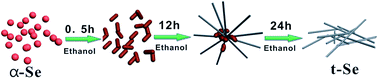
In order to examine the formation process of the t-Se NRs, the morphological evolution in ethanol at various ageing times was investigated. As displayed in Fig. 3a, red spherical Se particles about 200 nm in size first formed in the early stages of the reaction. Some particles then grew adjacent to each other to form worm-like particle aggregates. The particle aggregates and the individual particles subsequently grew out to form branched structures to evolve the 1D architecture (Fig. 3b and c). Continued longitudinal growth in these quasi-1D structures finally led to the formation of nanorods with uniform dimensions, as shown in Fig. 3d. These t-Se NRs had a typical diameter of about 100–200 nm, and a length from several microns to dozens of microns. On the basis of the above results, a growth mechanism for the Se NRs was proposed and is illustrated in Fig. 3e. The initial suspension, containing a mixture of α-Se colloids and t-Se nanocrystallites, was aged in ethanol at room temperature. Then the α-Se colloids could slowly dissolve into the solution phase and form worm-like aggregates, because of its higher free energy than t-Se. Subsequently, the worm-like aggregates could deposit onto the surfaces of the t-Se seeds and slowly grew, as single-crystalline t-Se NRs. In this solid–solution–solid transformation,40 the 1D morphology of the final product was determined by the highly anisotropic characteristics of the building blocks – that is, the linearity of the infinite, helical chains of Se atoms contained in the trigonal phase. Abdelouas et al.41 reported a synthetic method using cytochrome C as a reducing agent for Se nanowires, which were chain-like aggregates of nanoparticles of three monoclinic forms of Se, rather than single crystalline. In this study, uniform t-Se NRs have been obtained.
image file: c5ra03895b-f3.tif
Fig. 3 FESEM images of Se samples obtained at various ageing times in ethanol: (a) 5 min, (b) 0.5 h, (c) 12 h, (d) 24 h; the insets in (a)–(d) show photographs of the suspension liquids. (e) Schematic illustration of a growth mechanism for the formation of t-Se NRs via a solid–solution–solid pathway: reduction of selenious acid with ascorbic acid in an aqueous solution produces monodisperse spherical colloids of α-Se which are ∼200 nm in diameter; the α-Se colloids begin to aggregate after ageing for 0.5 h in ethanol; t-Se NRs grow from these aggregates after ageing for 2 h due to Rayleigh instability; finally, continued longitudinal growth in these 1D structures led to the formation of nanorods with uniform dimensions after ageing for 24 h.

Photocatalytic activities

Effect of H2O2 on the photodegradation of MO by t-Se NRs. Fig. 4a shows that the dye MO (at an initial concentration of 20 mg L−1) cannot be directly photodegraded in the presence of only H2O2 by visible light irradiation for 80 min. This is because the energy of visible light irradiation is too low to directly photolyze H2O2 to produce ˙OH. However, when the photodegradation experiments were conducted in the presence of t-Se NRs, the efficiency of the photodegradation greatly increased, indicating the production of a high yield of active species by the t-Se NRs (Fig. 4a). A H2O2 molecule cannot be split directly to generate ˙OH to degrade pollutants under the irradiation of visible light, therefore the photodecomposition of H2O2 in the presence of t-Se NRs under visible light irradiation might be due to catalysis by the t-Se NRs. In the process of t-Se NR photocatalysis, the photocatalytic rate increased moderately with the increase in the amount of H2O2 in the system. The photodegradation of MO by the visible–Se NRs–H2O2 system fits a pseudo-first order kinetic model, as described in eqn (1):
 
image file: c5ra03895b-t1.tif(1)
where C0 and C are the concentrations of MO (mg L−1) initially and at the reaction time t (min), respectively; K is the pseudo-first order reaction rate constant (min−1).

image file: c5ra03895b-f4.tif
Fig. 4 (a) The graph of the photocatalytic degradation of MO. (b) Photographs of the different systems after irradiation for different times. The table under the photographs shows the information about different systems in detail.

The amounts of H2O2 (30%) used were 0 mL, 1 mL, 2 mL and 5 mL, which resulted in photocatalytic rate constants of 2.0 × 10⁻² min−1, 0.93 × 10⁻¹ min−1, 1.16 × 10⁻¹ min−1 and 1.7 × 10⁻¹ min−1, respectively, as shown in Table 1. Fig. 4b shows photographs of the different systems after irradiation for different times. Solutions A and B retained their initial colour after irradiation for 80 min, which proved that H2O2 cannot be photolyzed to produce ˙OH and degrade MO under visible light. In solutions C and D the colour of the solution faded away gradually with increasing radiation time, which indicates that t-Se NRs could efficiently photodegrade MO under visible light. The image of solution E shows that the colour of the solution faded completely after irradiation for 20 min, which implies that H2O2 could greatly promote the photocatalytic rate of t-Se NRs under visible light.

Table 1 Photocatalytic degradation of MO using 0.625 g L−1 t-Se NRs as a catalyst. The reaction was carried out under visible light at room temperature; 30% H2O2 was added in amounts of 1 mL, 2 mL and 5 mL, and the initial concentration of MO was 20 mg L−1
Additive Duration time (min) Degradation (%) Kinetic constant, K (min−1)
Blank 80 0 0
5 mL H2O2 80 0 0
Se NRs 60 ∼70 2 × 10⁻²
Se NRs + 1 mL H2O2 20 ∼85 0.93 × 10⁻¹
Se NRs + 2 mL H2O2 20 ∼90 1.16 × 10⁻¹
Se NRs + 5 mL H2O2 20 ∼100 1.7 × 10⁻¹


In order to exclude the pH effects of the addition of H2O2 on the photodegradation of MO by t-Se NRs, we adjusted the pH of the MO solution before photocatalysis using with H2O2 and HCl, to achieve a pH level of 5.4, described as the visible–Se NRs–H2O2 system and the visible–Se NRs–HCl system, respectively. From Fig. 5, we can see that the rate constant (1.7 × 10⁻¹ min−1) of photocatalysis in the H2O2 system is about 17 times greater than that in the HCl system (1.0 × 10⁻² min−1) with equal pH. Therefore, we proved that it was the presence of H2O2 rather than the difference in pH that promoted the photocatalysis, and the introduction of H2O2 greatly accelerated the catalytic rate.


image file: c5ra03895b-f5.tif
Fig. 5 Comparison of the photodegradation of MO by different systems at the same pH.

The used t-Se NRs were characterized after the photocatalytic reaction in the visible–Se NRs–H2O2 systems, as shown in Fig. S1. Fig. S1a shows the XRD pattern of the used t-Se NRs. All the peaks can be readily indexed to crystalline trigonal selenium (t-Se) (JCPDS 06-0362), which implies that the photocatalytic process in the visible–Se NRs–H2O2 systems has no effect on the crystal structure of t-Se. Fig. S1b shows that the morphology of the used t-Se NRs retains the 1D nanorod structure. The results of XRD and SEM tests indicate that the presence of H2O2 in the visible–Se NRs–H2O2 systems did not affect the crystal structure and morphology of the t-Se NRs.

EPR study of photogenerated hydroxyl radicals (˙OH). EPR is an effective technical method for the identification of active radicals. Hydroxyl radicals play a primary role in most of the photocatalytic processes in aqueous solutions, so EPR and the spin-trapping technique were used to investigate the production of hydroxyl radicals. The EPR spectra obtained after visible light irradiation of DMPO with either t-Se NRs alone or with t-Se NRs + H2O2 were identical according to the peak locations and the characteristic 1[thin space (1/6-em)]:[thin space (1/6-em)]2[thin space (1/6-em)]:[thin space (1/6-em)]2[thin space (1/6-em)]:[thin space (1/6-em)]1 relative peak magnitudes associated with trapped ˙OH radicals in the form of DMPO–OH,42–47 as shown in Fig. 6. The presence of H2O2 in the reaction suspension had little effect on peak locations, but enhanced the peak magnitudes substantially. The result shows that the addition of H2O2 to the system increases the concentration of DMPO–OH, demonstrating higher rates of ˙OH radical generation with the addition of H2O2.
image file: c5ra03895b-f6.tif
Fig. 6 EPR spectra obtained upon visible light irradiation of DMPO with either Se NRs alone or with Se NRs + H2O2.
The mechanism of H2O2-promoted photocatalysis. In order to explain the mechanism of the H2O2-promoted visible light catalysis by t-Se NRs, we investigated the photodegradation mechanism of t-Se NRs under visible light by control experiments involving the scavenger agents isopropyl, triethanolamine, and p-benzoquinone. As shown in Fig. 7a, when 10 mM isopropyl, triethanolamine or p-benzoquinone was added to the visible–Se NRs systems, the photodegradation rate constant decreased. Isopropyl groups would effectively scavenge ˙OH, triethanolamine would effectively scavenge h+, and p-benzoquinone would effectively scavenge ˙O2, therefore, it was deduced that ˙OH, ˙O2 and h+ were the active species in the degradation of MO in the visible–Se NRs systems. Among the active species, ˙OH was the main active species for the degradation of MO in the visible–Se NRs system.
image file: c5ra03895b-f7.tif
Fig. 7 Degradation curve of MO in various systems: (a) visible–Se NRs systems, and (b) visible–Se NRs–H2O2 systems.

With the addition of 5 mL H2O2 (30%) to the visible–Se NRs system, the rate of photocatalytic degradation of MO increased rapidly. But when isopropyl was added to the visible–Se NRs–H2O2 system, isopropyl would effectively scavenge ˙OH with a high reaction rate constant.55 Thus, the presence of isopropyl significantly suppressed the degradation of MO, as shown in Fig. 7b. When p-benzoquinone was added to the visible–Se NRs–H2O2 system, p-benzoquinone slightly suppressed the degradation of MO. The reason for this is that some of the electrons in the conduction band of the t-Se NRs were captured by oxygen molecules to generate ˙O2 radicals, which then react with H+ and trigger a series of reactions to quickly generate ˙OH in acid solution. Therefore, it was deduced that ˙OH was the main active species for the degradation of MO in the visible–Se NRs–H2O2 system. In the visible–Se NRs–H2O2 system, ˙OH could be generated from the reduction of H2O2 by conduction-band electrons (eCB).

When the energy of incident light surpasses the band gap energy of the photocatalyst during the process of photocatalysis, electrons in the valence band will be activated into the conduction band (eCB), leaving holes in the valence band (hVB+). At pH = 5.4, the bottom of the conduction band ECB has been determined to be −0.5 V (vs. NHE) for t-Se.51,52 For t-Se, the ECB is more negative than the H2O2/˙OH redox potential, which is 0.87 V (vs. NHE). Thus, in the presence of Se NRs under visible light, H2O2 can be reduced to ˙OH by the eCB (eqn (2)).53–55 The results of the visible light catalytic degradation of MO in the visible–Se NRs–H2O2 system indicates higher rates of ˙OH radical generation, which is consistent with the results of the EPR study.

 
H2O2 + eCB → ˙OH + OH(2)

As shown in eqn (2), H2O2 can be reduced by eCB to yield the very active ˙OH, which may result in the degradation of MO. Comparing the decomposition of MO in the visible–Se NRs–H2O2 system and the visible–Se NRs–HCl system, it can be seen that the degradation of MO in the visible–SeNRs–H2O2 system is much faster than in the visible–Se NRs–HCl system. This indicates that H2O2 could be decomposed to generate the active species ˙OH, which is consistent with the results of the photocatalysis reaction in the presence of isopropyl scavenger agents. As discussed above, H2O2 could be reduced to ˙OH by photogenerated electrons, since the redox potential of H2O2/˙OH is 0.87 V (vs. NHE), which is consistent with the literature.55

When the t-Se NRs–H2O2 system is irradiated by visible light, the generation of ˙OH in the visible–SeNRs–H2O2 system is displayed in Scheme 1. The photons excite valence band electrons across the band gap into the conduction band, and some of the electrons in the conduction band react with oxygen molecules and hydrogen ions at the surface of the catalyst to generate ˙OH radicals.48,49 Some electrons are captured by H2O2 molecules and generate ˙OH radicals, which is consistent with the results discussed above. Furthermore, h+ in the valence band can also react with H2O molecules to generate ˙OH radicals.57 The azo bond in MO, which is rich in electrons, is attacked by the ˙OH radicals. This results in the cleavage of the azo bond in MO and causes decolorization of the dye solution.50 A schematic illustration of the photocatalysis mechanism of the visible–Se NRs–HCl system and the visible–Se NRs–H2O2 system is shown in Fig. S2. It shows the visible light catalytic mechanism of t-Se NRs, and the promotion of the photocatalytic mechanism by the addition of H2O2. This result shows that the prepared t-Se NRs could be promising for long-term use in photocatalysis.


image file: c5ra03895b-s1.tif
Scheme 1 The production process of ˙OH in the visible–Se NRs–H2O2 system.

Conclusions

In summary, we have successfully developed a facile chemical reduction approach for the preparation of single-crystalline t-Se NRs. t-Se NRs are found to have noticeable photocatalytic activity under visible light for the first time. The results of photocatalytic degradation of MO show that t-Se NRs possess good catalytic properties under visible light, which is due to their single-crystalline structure that can be excited under visible light with a band gap of 1.56 eV. In addition, higher rates of ˙OH radical generation in the visible–Se NRs–H2O2 system were demonstrated by studying the effects of different reactive species and by EPR characterization. Therefore, H2O2 can promote the photocatalytic efficiency of t-Se NRs under visible light. The rate constant of the photodegradation of MO in the visible–Se NRs–H2O2 system (1.7 × 10⁻¹ min−1) is about 17 times greater than that in the visible–Se NRs–HCl system (1.0 × 10⁻² min−1) with equal pH. There are three routes of ˙OH production in the visible–Se NRs–H2O2 system. When in the presence of hydrogen ions, eCB can be captured by oxygen molecules and H2O2 on the surface of the catalyst to generate ˙OH radicals. In addition, h+ in the valence band can also react with H2O molecules to generate ˙OH radicals. The mechanism by which H2O2 promotes the photocatalytic activity is the reduction of H2O2 to ˙OH by eCB from the t-Se NRs. This study could offer a feasible industrial route to design a high performance visible light photocatalytic system.

Acknowledgements

The authors would like to acknowledge financial support from the National Basic Research Program of China (973 Program, grant no. 2011CB933700) of the Ministry of Science and Technology of China, the National Natural Science Foundation of China (grant no. 51371162 and 51344007), the Fundamental Research Funds for the Central Universities, and the China Scholarship Council. Valuable suggestions from Prof. Abraham Clearfield at the Department of Chemistry, Texas A&M University are also greatly acknowledged.

Notes and references

  1. G. Liu, P. Niu and H. M. Cheng, ChemPhysChem, 2013, 14(5), 885–892 CrossRef CAS PubMed.
  2. Z. H. Kang, Y. Liu, C. H. A. Tsang, D. D. D. Ma, X. Fan, N. B. Wong and S. T. Lee, Adv. Mater., 2009, 21, 661–664 CrossRef CAS PubMed.
  3. Z. H. Kang, C. H. A. Tsang, N. B. Wong, Z. D. Zhang and S. T. Lee, J. Am. Chem. Soc., 2007, 129, 12090–12091 CrossRef CAS PubMed.
  4. Y. D. Chiou and Y. J. Hsu, Appl. Catal., B, 2011, 105, 211–219 CrossRef CAS PubMed.
  5. F. Wang, W. K. H. Ng, J. C. Yu, H. J. Zhu, C. H. Li, L. Zhang, Z. F. Liu and Q. Li, Appl. Catal., B, 2012, 111–112 Search PubMed.
  6. G. Liu, P. Niu, L. C. Yin and H. M. Cheng, J. Am. Chem. Soc., 2012, 134, 9070–9073 CrossRef CAS PubMed.
  7. B. Gates, Y. Wu, B. Cattle and Y. N. Xia, Adv. Funct. Mater., 2002, 12, 219–227 CrossRef CAS.
  8. Selenium, ed. R. A. Zingaro and W. C. Cooper, Litton Educational Publishing, New York, 1974, vol. 25, pp. 174–217 Search PubMed.
  9. L. I. Berger, Semiconductor Materials, CRC Press, Boca Raton, FL, 1997, vol. 86 Search PubMed.
  10. S. Y. Zhang, C. X. Fang, Y. P. Tian, K. R. Zhu, B. K. Jin, Y. H. Shen and J. X. Yang, Cryst. Growth Des., 2006, 6, 2809 CAS.
  11. X. C. Jiang, B. Mayer, T. Herricks and Y. N. Xia, Adv. Mater., 2003, 15, 1740 CrossRef CAS PubMed.
  12. B. Gates, Y. Y. Wu, Y. D. Yin, P. D. Yang and Y. N. Xia, J. Am. Chem. Soc., 2001, 123, 11500 CrossRef CAS.
  13. H. T. Li and P. J. Regensburger, J. Appl. Phys., 1963, 34, 1730–1734 CrossRef PubMed.
  14. J. A. Johnson, M. L. Saboungi, P. Thiyagarajan, R. Csencsits and D. Meisel, J. Phys. Chem. B, 1999, 103, 59–63 CrossRef CAS.
  15. N. N. Greenwood and A. Earnshaw, Chemistry of the Elements, Pergamon Press, Oxford, 1984, p. 888 Search PubMed.
  16. D. C. Yao and J. H. Yung, Appl. Catal., B, 2011, 105, 211–219 CrossRef PubMed.
  17. A. V. Hippel, J. Chem. Phys., 1948, 16, 372 CrossRef PubMed.
  18. B. Mayers and Y. Xia, Adv. Mater., 2002, 14, 1749–1752 CrossRef.
  19. X. Li, Y. Li, S. Li, W. Zhou, H. Chu, W. Chen, I. L. Li and Z. Tang, Cryst. Growth Des., 2005, 5, 911 CAS.
  20. L. Ren, H. Z. Zhang, P. H. Tan, Y. F. Chen, Z. S. Zhang, Y. Q. Chang, J. Xu, F. H. Yang and D. P. Yu, J. Phys. Chem. B, 2004, 108, 4627–4630 CrossRef CAS.
  21. L. B. Luo, X. B. Yang, F. X. Liang, J. S. Jie, Q. Li, Z. F. Zhu, C. Y. Wu, Y. Q. Yu and W. Li, CrystEngComm, 2012, 14, 1942–1947 RSC.
  22. X. B. Cao, Y. Xie, S. Zhang and F. Li, Adv. Mater., 2004, 16, 649 CrossRef CAS PubMed.
  23. H. Zhang, M. Zuo, S. Tan, G. Li, S. Zhang and J. Hou, J. Phys. Chem. B, 2005, 109, 10653 CrossRef CAS PubMed.
  24. G. Xi, K. Xiong, Q. Zhang, R. Zhang, H. Zhang and Y. Qian, Cryst. Growth Des., 2006, 6, 577 CAS.
  25. C. An, K. Tang, X. Liu and Y. Quian, Eur. J. Inorg. Chem., 2003, 3250 CrossRef CAS PubMed.
  26. Y. Ma, L. Qi, J. Ma and H. Cheng, Adv. Mater., 2004, 16, 1023 CrossRef CAS PubMed.
  27. M. Chen and L. Gao, Chem. Phys. Lett., 2006, 417, 132 CrossRef CAS PubMed.
  28. Q. Xie, J. Liu, J. Liang, W. Yu and Y. Quian, J. Nanosci. Nanotechnol., 2006, 6, 857 CrossRef CAS PubMed.
  29. Q. Xie, Z. Dai, W. Huang, W. Zhang, D. Ma, X. Hu and Y. Qian, Cryst. Growth Des., 2006, 6, 1514 CAS.
  30. N. Sudip, G. Sujit Kumar, S. Panigahi, T. Thundat and T. Pal, Langmuir, 2004, 20, 7880–7883 CrossRef PubMed.
  31. K. Mondal, P. Roy and K. S. Suneel, Cryst. Growth Des., 2008, 8, 1580–1584 CAS.
  32. Z. X. Chen, Y. H. Shen, A. J. Xie, J. M. Zhu, Z. F. Wu and H. Z. Huang, Cryst. Growth Des., 2009, 9, 1327–1333 CAS.
  33. Z. Y. Tang, Y. Wang, K. Sun and A. K. Nicholas, Adv. Mater., 2005, 17, 358–363 CrossRef CAS PubMed.
  34. A. P. Saunders, J. Phys. Chem., 1900, 4, 423–513 CrossRef CAS.
  35. B. Gates, B. Mayers, B. Cattle and Y. N. Xia, Adv. Funct. Mater., 2002, 12(3), 219 CrossRef CAS.
  36. H. Zhang, D. R. Yang, Y. J. Ji, X. G. Ma, J. Xu and D. L. Que, J. Phys. Chem. B, 2004, 108, 1179–1182 CrossRef CAS.
  37. X. Y. Liu, M. S. Mo, J. H. Zeng and Y. T. Qian, J. Cryst. Growth, 2003, 259, 144–148 CrossRef CAS PubMed.
  38. L. Liu, Q. Peng and Y. Li, Nano Res., 2008, 1(5), 403–411 CrossRef CAS.
  39. X. M. Tu, S. L. Luo, G. X. Chen and J. H. Li, Chem. - Eur. J., 2012, 18, 14359–14366 CrossRef CAS PubMed.
  40. H. F. Yan, Y. J. Xing, Q. L. Hang, D. P. Yu, Y. P. Wang, J. Xu, Z. H. Xi and S. Q. Feng, Chem. Phys. Lett., 2000, 323–324 Search PubMed.
  41. A. Abdelouas, W. L. Gong, W. Lutze, J. A. Shelnutt, R. Franco and I. Moura, Chem. Mater., 2000, 12, 1510–1512 CrossRef CAS.
  42. T. Uchino, H. Tokunaga, M. Ando and H. Utsumi, Toxicology, 2002, 16, 629–635 CAS.
  43. V. Krishna, D. Yanes and W. Imaram, et al. , Appl. Catal., B, 2008, 79(4), 376–381 CrossRef CAS PubMed.
  44. M. Y. Guo, A. M. C. Ng and F. Liu, et al. , Appl. Catal., B, 2011, 107(1–2), 150–157 CrossRef CAS PubMed.
  45. T. Wu, T. Lin and J. Zhao, et al. , Environ. Sci. Technol., 1999, 33(9), 1379–1387 CrossRef CAS.
  46. M. D. Hernández-Alonso, A. B. Hungría and A. Martínez-Arias, et al. , Appl. Catal., B, 2004, 50(3), 167–175 CrossRef PubMed.
  47. J. M. Coronado, A. Javier Maira and A. Martínez-Arias, et al. , J. Photochem. Photobiol., A, 2002, 150(1–3), 213–221 CrossRef CAS.
  48. J. C. Crittenden, Y. Zhang, D. W. Hand, D. L. Perram and E. G. Marchand, Water Environ. Res., 1996, 68, 270–278 CrossRef CAS.
  49. W. Kangwansupamonkon, W. Jitbunpot and S. Kiatkamjornwong, Polym. Degrad. Stab., 2010, 95, 1894–1902 CrossRef CAS PubMed.
  50. A. O. Soon, M. M. Ohm, N. H. Li and S. W. Yee, Environ. Sci. Pollut. Res., 2013, 20, 3405–3413 CrossRef PubMed.
  51. S. J. Fonash, Solar Cell Device Physics, Harcourt Brace Jovanovich, New York, 1981 Search PubMed.
  52. K. Tennakone, G. R. R. A. Kumara, I. R. M. Kottegoda, V. P. S. Perera and G. M. L. P. Aponsu, J. Phys. D: Appl. Phys., 1998, 31, 2326–2330 CrossRef CAS.
  53. P. Wardman, J. Phys. Chem. Ref. Data, 1989, 18, 1637 CrossRef CAS PubMed.
  54. T. Hirakawa and Y. Nosaka, Langmuir, 2002, 18(8), 3247–3254 CrossRef CAS.
  55. Y. X. Du, L. Zhao and Y. Y. Zhang, J. Hazard. Mater., 2014, 267, 55–61 CrossRef CAS PubMed.
  56. A. M. Qin, Z. Li, R. S. Yang and Y. D. Gu, Solid State Commun., 2008, 148, 145–147 CrossRef CAS PubMed.
  57. H. M. Yang, K. Zhan and R. Shi, J. Alloys Compd., 2006, 413, 302–306 CrossRef CAS PubMed.

Footnote

Electronic supplementary information (ESI) available. See DOI: 10.1039/c5ra03895b

This journal is © The Royal Society of Chemistry 2015
Click here to see how this site uses Cookies. View our privacy policy here.