DOI:
10.1039/C5RA03851K
(Paper)
RSC Adv., 2015,
5, 37377-37384
Fe3+-induced oxidation and coordination cross-linking in catechol–chitosan hydrogels under acidic pH conditions
Received
4th March 2015
, Accepted 17th April 2015
First published on 17th April 2015
Abstract
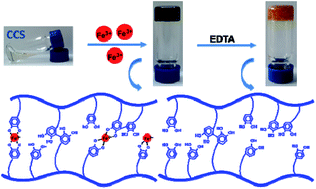
Mussel byssus is rich in Fe3+ and catechol-containing proteins; chemical interactions between these components vary widely with respect to changes in pH during byssal maturation. Previous studies have indicated the key role played by Fe3+–catechol interactions in regulating many attributes of biological materials, such as toughness, extensibility, and self-assembly. In this study, a platform based on a highly substituted catechol-modified chitosan (70%, CCS) was used to investigate the effect of pH on the reactions between Fe3+ and catechols. This study demonstrated that the Fe3+-induced CCS hydrogel is essentially a dual cross-linking system composed of covalent and coordination crosslinks, under acidic pH conditions. Variations in the Fe3+–catechol molar ratios could strongly affect the gelation time, physical properties, and UV-vis and Raman spectra. These changes represent different balance states between oxidation and coordination mechanisms in the hydrogel network. In addition, the system was subjected to optical microscopy and SEM in order to obtain a visual description of the dual-crosslinking mechanism.
1. Introduction
Mussel byssal threads are strong, resilient shock-absorbing biological materials composed of two distinct regions: a fibrous inner core and an outer cuticle. Previous research has revealed that the cuticle is rich in catechol-containing proteins and inorganic ions, especially Fe3+.1–4 The complex mechano-chemical interactions between Fe3+ and the catechols endow the cuticle with excellent mechanical performance, characterized by high hardness and extensibility, and self-healing properties. In addition, the cuticles demonstrate remarkable mechanical properties, which have been hypothesized to originate from both organic (covalent) and inorganic (metal coordination) bonds.1,5–8 Growing evidence points towards the considerable impact exerted by metal–biomolecule interactions on the properties of these materials.9–12 Although the mechanism of interaction between the metal and biomolecules could serve as a valuable reference to improve the mechanical properties of synthetic materials, these are yet to be substantially elucidated.
Several researchers have attempted the fabrication of synthetic materials inspired by mussel byssal threads, in order to elucidate the Fe3+–catechol interaction mechanisms.13,14 The coordination between Fe3+ and catechols is strongly dependent on the pH, and Fe3+ does not effect a significant covalent cross-linking via oxidation of catechols, in a pH-controlled catechol–Fe3+ cross-linking polymer.15 However, spectroscopic evidence has linked the presence of Fe3+ to catechol oxidation for decades.8,16,17 It has been reported that catechol-modified polyethylene glycol (PEG) polymers could be covalently cross-linked under acidic pH conditions in the presence of Fe3+.18,19 In addition, Fe3+–catechol gels equilibrated at pH 3 fit the description of Hookean elastic materials at low strains because of their purely covalent nature, with no coordination crosslinking formed under such acidic pH conditions.18–20 Therefore, the mechanism of interactions between Fe3+ and catechols must be extensively investigated.
Chitosan (CS), a natural, linear amino polysaccharide obtained by partial deacetylation of chitin, is considered to be a promising material in the pharmaceutical, chemical, and food industry because of its special chemical (reactive –OH and –NH2 groups) and biological (non-toxic, biodegradable, biocompatible) properties.21,22 In this study, we have synthesized a catechol-functionalized chitosan (CCS, with a high degree of substitution) inspired by mussel byssal threads in order to investigate the complex interactions between Fe3+ and catechols at acidic pH. The gelation time, rheological properties, the results of UV-vis and Raman spectroscopy, and the morphological characteristics were elucidated in order to characterize the crosslinking mechanism and the physical properties of the hydrogel systems.
2. Experimental section
2.1 Materials and reagents
Dopamine hydrochloride, chitosan (viscosity: 100–200 mPa s, deacetylation degree ∼ 95%), 3,4-dihydroxy benzaldehyde, sodium cyanoborohydride (NaBH3CN), ethylene diamine tetraacetic acid (EDTA) disodium salt dehydrate, ferric chloride hexahydrate, and sodium periodate (NaIO4) were purchased from Sigma-Aldrich (St. Louis, MO, USA). Other analytical grade chemicals were purchased from Sinopharm Chemical Reagent Co., Ltd. (Shanghai, China). All chemicals were used without further purification. Ultrapure water was obtained using a NANOpure Infinity® system (Barnstead-Thermolyne; Sigma-Aldrich). The degree of substitution of CS was calculated using 1H-nuclear magnetic resonance (1H-NMR, Bruker, Germany: AVANCE III 400).
2.2 Synthesis of catechol-modified chitosan (CCS)
CCS was synthesized by Bosch reduction of Schiff base, according to a previously reported method with modifications (Fig. 1a).21 Briefly, 0.1 g CS powder was dissolved in 20 mL 1% acetic acid solution. Five milliliter DMF, containing 0.3 g 3,4-dihydroxy benzaldehyde was added to this solution, and incubated at room temperature for 6.5 h. Ten milliliter H2O containing 0.3 g NaBH3CN was added to this mixture and incubated at room temperature for another 6.5 h. The product was precipitated by addition of 300 mL ethanol, washed several times with H2O and ethanol, dried in vacuum at room temperature for 3 hours, and stored under nitrogen at −20 °C. 1H-NMR of CCS was detected using the Bruker Avance III 400 1H-NMR spectrophotometer, using D2O containing 1% DCl as the solvent (Fig. 1b). The calculation formula used was as follows:
 |
| | Fig. 1 (a) Synthetic reaction of catechol–chitosan (CCS) and (b) 1H-NMR spectra of CS, CCS. | |
2.3 Fe3+-induced hydrogel formation
The CCS obtained as described in the previous section was used for all gel experiments. Stock solutions of FeCl3 (148 mM, 296 mM, 445 mM) and CCS (catechol concentration: 58 mM, 38 mM, 19 mM) were prepared in 5% acetic acid (v/v). A typical procedure for gel formation included the mixing of 500 μL of the appropriate CCS solution with 65 μL of the corresponding FeCl3 stock solution. Specifically, Fe3+–catechol ratios of 1
:
1, 1
:
2, and 1
:
3 were obtained by the addition of 65 μL of 148 mM FeCl3 solution into 500 μL of 19, 38, and 58 mM CCS, respectively. In order to initiate gelation in the solution with Fe3+–catechol ratios of 1
:
3, 2
:
3, and 3
:
3, 500 μL of the 58 mM CCS stock solution was mixed with 65 μL of the 148 mM, 296 mM, and 445 mM of FeCl3 stock solutions, respectively. This caused gelation and color development in the solutions, according to the Fe3+–catechol ratios. The gel was physically mixed until a homogenous color and physical state was established. The gelation time was calculated by the inversion method.
2.4 IO4−-induced hydrogels
The protocol described in the previous section for the preparation of Fe3+-induced hydrogels was followed for the preparation of IO4−-induced hydrogels, substituting FeCl3 with NaIO4.
2.5 Rheology of gels
The mechanical properties of the hydrogels were tested using a rheometer (ARES; TA Instruments, Newcastle, DE, USA) with parallel plate geometry (25 mm diameter rotating top plate) at 23 °C. All tests were performed immediately after transferring the gel sample onto the sample stage. The gels were tested for oscillatory shear (as a function of frequency) at 10% strain from 30 rad s−1 to 0.1 rad s−1, while measuring the storage modulus (G′) and loss modulus (G′′). Time tests were performed at 10% strain and 10 rad s−1. The sample dehydration during testing was negligible, as the typical test time was less than 15 minutes. Data points represented the average of tests performed on three separate gels.
2.6 UV-vis spectroscopy
Fe3+-induced catechol oxidation and coordination were monitored on a Hitachi U-5100 UV-vis spectrophotometer (Hitachi, Tokyo, Japan) using a quartz cuvette with a path length of 1 cm. All samples were initially blanked against 5% acetic acid. Solutions composed of different molar ratios of Fe3+ and catechol were obtained by mixing 50 μL stock solutions of CCS with 6.5 μL of the corresponding stock solutions of FeCl3 in 2 mL 5% acetic acid. The final solutions were thoroughly mixed before the final testing. Spectral changes in the 5% acetic acid solutions of 50 μL CCS (58 mM catechol) and 6.5 μL 148 mM FeCl3 (Fe3+–catechol ratio of 1
:
3) were observed upon increasing the pH using 1 M NaOH.
2.7 Resonance Raman spectroscopy
Resonance spectra were acquired using a Renishaw Raman InVia reflex microscope (Wotton-under-Edge, UK) equipped with an air-cooled charge-coupled device (CCD) camera. A Leica DMLM (Leica, Solms, Germany) camera, equipped with three objectives and a trinocular viewer that accommodated a video camera (allowing direct viewing of the sample), was attached to the spectrophotometer. The samples were excited at 514 nm with an argon ion laser (Modu-Laser LLC, Centerville, UT, USA). Laser power at a range of 10–30 mW was used for all measurements. The average of three spectra collected from different regions was taken for each sample. To facilitate clearer observation of the resonance peaks, the fluorescence background was subtracted.
2.8 Morphology of the hydrogels
The morphology of the hydrogels was observed through an optical microscope (DM2500; Leica), and the appropriate pictures taken using the attached digital camera. In order to elucidate the interior network morphology of the hydrogels, the freeze-dried hydrogels were observed using a JEOL JSM-6360 LV scanning electron microscope (JEOL, Peabody, MA, USA). All specimens were coated with a conductive layer of sputtered gold. All experiments were performed at 25 °C.
3. Results and discussion
3.1 Synthesis and characterization of the catechol-modified chitosan (CCS)
CCS, a catechol-containing linear polymer, was used in subsequent gel formation studies. Fig. 1a illustrated the synthesis route of CCS. CCS was synthesized by Bosch reduction of a Schiff base, obtained as a result of the reaction between chitosan (CS) and 3,4-dihydroxy benzaldehyde. The degree of substitution of CS was calculated based on the 1H-NMR spectrum (Fig. 1b) of CCS. Under these reaction conditions, the degree of substitution was determined to be 70%.
3.2 Hydrogel formation
The CCS (obtained as described in the Experimental procedures) was used for all gel experimentation. All gels were prepared by mixing Fe3+ or IO4− with CCS in a 5% acetic acid solution (pH ∼ 3) until a homogenous color and physical state were established. As seen in Fig. 2a, different molar ratios of Fe3+–catechol resulted in changes in the color, as well as physical changes, from a green fluid to a purple/black gel. A covalently cross-linked polymer hydrogel was prepared via the NaIO4-induced oxidation of CCS (Fig. 2b) for comparison.
 |
| | Fig. 2 Physical properties and gelation time of (a) Fe3+–CCS hydrogels and (b) IO4−–CCS hydrogels. | |
The impact of the molar quantities of catechols on the formation of Fe3+–CCS hydrogels was investigated. Solutions containing Fe3+ and catechol at a ratio of 1
:
1 (Fe3+, catechol: 17 mM) did not form any gels, possibly because of insufficient crosslinking. When the molar quantities of catechols increased, i.e., when the Fe3+–catechol ratio was increased from 1
:
2 to 1
:
3 in the solution, the gelation time decreased from 350 s to 40 s. This was also observed in the gelation time of IO4−-induced CCS hydrogels (IO4−–catechol ratio of 1
:
2, 210 s; 1
:
3, 100 s). These results suggest that the amount of crosslinking formed in the system was directly proportional to the number of catechols included in the system, because of the proximity to Fe3+ or IO4−, which facilitates the chemical interactions such as oxidation and coordination.
Subsequently, we studied the influence of the molar quantities of Fe3+ on the formation of Fe3+–CCS hydrogels. Generally, the presentation of greater molar quantities of Fe3+ would facilitate greater oxidation crosslinking under acidic pH conditions, thereby increasing the gelation rate.18 However, as seen in Fig. 2a, the gelation time was increased from 40 s to 550 s when the Fe3+–catechol stoichiometry ratio was increased from 1
:
3 to 3
:
3 (Fe3+, catechol: 51 mM). This change is contrary to the gelation time of IO4−-induced gels (the gelation time at an IO4−–catechol ratio of 1
:
3 was 100 s; 3
:
3 was 55 s, Fig. 2b). These results suggest that the Fe3+-induced CCS hydrogel was not an oxidation-dominated system under acidic pH conditions; it could probably be a dual system including both coordination and oxidation crosslinking. The presentation of equimolar quantities of Fe3+ in the system led to the formation of mono-catecholate species (from catechols), thereby preventing coordination-based crosslinking that must proceed via bis- and tris-catecholate motifs. The substantial increase in gelation time also suggested that the Fe3+-induced coordination crosslinking was more rapid compared to the oxidation crosslinking induced by its redox activity.
3.3 Hydrogel characterization
In order to elucidate the impact of the stoichiometry of the Fe3+–catechol ratio on the mechanical properties of the hydrogels, the prepared hydrogels were tested using a rheometer. The NaIO4-induced covalent crosslinking CCS hydrogels at IO4−–catechol ratios of 1
:
2 and 1
:
3 were compared (Fig. 3a). These gels exhibited typical features of elastic solids; G′ and G′′ displayed natural frequency-independent behavior and G′ ≫ G′′. These results were similar to those obtained for other catechol-modified polymer hydrogels formed by NaIO4-induced covalent crosslinking, which exhibited Hookean elastic properties under low strains.14,18,20
 |
| | Fig. 3 Rheological properties of IO4−–CCS hydrogels and Fe3+–CCS hydrogels at pH ∼ 3. Gel formation was studied as a function of frequency (left) and time (right). | |
The frequency sweep of Fe3+-induced CCS hydrogels (Fe3+–catechol molar ratio of 1
:
2 and 1
:
3) are displayed in Fig. 3b. The modulus of hydrogels formed at an Fe3+–catechol ratio of 1
:
3 was higher than that of gels formed at a ratio of 1
:
2, which was consistent with the higher crosslinking density. These results suggested that catechols bind Fe3+ in a bis-/tris-coordination type under insufficient Fe3+ conditions in the system, thereby increasing the degree of crosslinking. Fig. 3c demonstrates the frequency sweep of Fe3+-induced CCS hydrogels (Fe3+–catechol molar ratios of 1
:
3, 2
:
3, and 3
:
3). The gels were observed to become softer when greater quantities of Fe3+ were present in the system. This change could be a result of increased mono-Fe3+–catechol species formation, preventing the occurrence of coordination-based crosslinking (that occurs via the bis-/tris-coordination type). These results support our interpretation of the gelation time data. Specifically, all Fe3+-induced CCS hydrogels exhibited very special material properties. Neither hydrogels fit the descriptions of Hookean elastic or Maxwell viscoelasticity models.15,18,20 These results suggested that the covalent and coordination crosslinking mechanisms were not especially dominant in the formation of Fe3+-induced CCS hydrogels under acidic pH (pH ∼ 3) conditions. And due to the dual cross-linking system, the rheological property of the Fe3+-induced CCS hydrogel was worse than the one induced by IO4−. The presence of mechanically functional Fe3+–catechol coordination bonds endowed the hydrogels with new viscoelastic behavior that dissipate energy under applied force. In mussel byssus, these coordination bonds play an important role in transferring and mitigating loads between soft and hard tissues.1,18
Oscillatory time sweeps were performed to monitor the gelation process of IO4−–CCS hydrogels and Fe3+–CCS hydrogels. Fig. 3d demonstrates the time sweep profiles of G′ and G′′ for the IO4−–CCS hydrogels. Although initial time points indicated elastic properties (G′ > G′′), qualitative observations by inversion method showed gelation time around 210 s and 100 s (IO4−–catechol ratio of 1
:
2, 1
:
3). Within 300 s, the storage modulus of the hydrogels appeared to plateau (G′ and G′′ values at an IO4−–catechol ratio of 1
:
2 was 300 Pa, 20 Pa; 1
:
3 was 900 Pa, 80 Pa). This indicated that the hydrogel's structure has reached an equilibrium state. As seen in Fig. 3e, solutions containing Fe3+ and catechol at a ratio of 1
:
2 were tested. Initially, G′′ was higher than G′, which was expected since the mixtures were still in liquid state. As the solutions began to gel and a cross-linked network was formed, the storage modulus began to increase and the elastic properties of the hydrogel began to dominate. Consequently, there was a crossover point where G′ became larger than G′′. With the increasing of time, the hydrogel's mechanical properties constantly increased until a steady value was obtained near 350 s (G′: 20 Pa, G′′: 4 Pa). However, when the Fe3+–catechol ratio was increased from 1
:
2 to 1
:
3 in the solution, the gels formed rapidly and the crossover point of G′ and G′′ was not observed. Then the mixtures formed a stabilized gel at G′: 150 Pa and G′′: 23 Pa. Furthermore, with increased Fe3+ concentration the crossover point appeared again (Fig. 3f), indicating that the cross-linking rate was decreased. And the gels were observed to become softer when greater quantities of Fe3+ were present in the system (G′ and G′′ values at an Fe3+–catechol ratio of 1
:
3 was 150 Pa, 23 Pa; 2
:
3 was 6 Pa, 1 Pa; 3
:
3 was 2 Pa, 0.25 Pa).
A concentrated EDTA solution was used to study the stabilities of Fe3+-induced CCS hydrogels, in order to further elucidate the balance of covalent and coordination crosslinking in these hydrogels (Fig. 4). Compared to other catechol-modified hydrogels induced by NaIO4, no difference was observed in the constructed NaIO4-induced CCS hydrogels upon exposure to the EDTA solution; this was because the covalent gels were stable in EDTA.15,18
 |
| | Fig. 4 EDTA treatment of Fe3+- and IO4−-gels. A small piece of each gel was immersed in 150 mM EDTA in 1% acetic acid (pH 3.7). | |
However, the gels formed at a Fe3+–catechol ratio of 1
:
3 displayed significant changes in the color and physical properties. The dark gel with a smooth surface was converted to a pale yellow material with a rough and porous structure. This morphological change describes the disintegration of the coordination crosslinking network. Unlike the other coordination-dominated gel developed by Holten-Andersen et al.,15 this gel did not dissolve in the EDTA solution. When this Fe3+-gel was exposed to EDTA, the coordination crosslinking system was disrupted; because of its dual crosslinking mechanism, the covalently-crosslinked residues remained untouched.
3.4 UV-vis spectroscopy
The results of the UV-vis absorbance spectroscopy further demonstrated that Fe3+ induced both oxidative and coordinative behaviors in catechol under acidic pH conditions. Fig. 5a displays the UV-vis spectra of the IO4− and CCS mixture in 5% acetic acid. The addition of NaIO4 resulted in an immediate color change in the solution from colorless to yellow, the signature color of o-quinone (λmax = 400 nm).15–17
 |
| | Fig. 5 UV-vis absorbance of Fe3+/IO4−–CCS in 5% acetic acid solution. (a) Mixed spectra of IO4− and CCS (IO4−–catechol), and (b and c) Fe3+ and CCS (Fe3+–catechol). (d) Spectra obtained before and after EDTA treatment of the Fe3+–CCS solution (Fe3+–catechol ratio of 1 : 3). | |
As seen in Fig. 5b, the Fe3+–CCS mixture rapidly yielded a hybrid yellow-green color, which was demonstrated by two strong absorption peaks at ∼400 nm, and between ∼500 nm and ∼700 nm. These results suggest that Fe3+ could significantly induce the oxidation of catechol to quinone, as well as coordination with catechols (primarily a mixture of mono- and bis-catechol–Fe3+ complexes) in 5% acetic acid.15 Upon the addition of greater molar quantities of Fe3+ (Fig. 5c), a similar absorption spectrum was observed at 400 nm, compared to the spectrum obtained between ∼500 nm and ∼700 nm, but with higher growth. This result indicated that equimolar quantities of Fe3+ and catechol could induce greater oxidation; however, this did not significantly contribute to the coordination mechanism because of the increased formation of mono-catechol–Fe3+ motifs.
The addition of EDTA to chelate Fe3+ caused the yellow-green color to disappear immediately, resulting in a dominantly yellow-colored solution; the peak between ∼500 nm and ∼700 nm was also observed to disappear (Fig. 5d). This revealed that EDTA severed the coordination bond between Fe3+ and catechols; only the oxidation residues remained in the solution, caused by the redox activity of Fe3+.
3.5 Resonance Raman spectroscopy
Raman spectroscopy, performed with a visible (514 nm) laser, demonstrated the resonance Raman spectral characteristics of Fe3+–catechol coordination in the hydrogel network. As seen in Fig. 6, resonance peaks were not observed in the CCS spectra. On the other hand, clear spectral differences were observed between the other samples following the addition of Fe3+, especially in the 500–700 cm−1 region that represented the features of Fe–O bond vibrations.1,15 This region consisted of three major peaks that were transformed clearly according to the variations in the Fe3+–catechol ratios. Specifically, the peak at 531 cm−1 indicated the charge transfer (CT) interactions of the bidentate chelate. The hydrogels with a Fe3+–catechol ratio of 1
:
3 exhibited the highest CT peak intensity, compared to the hydrogels composed of other Fe3+–catechol ratios. The progression of the intensity of CT peaks suggested an increase in the bi-dentate complex formation, which was consistent with the transition from mono- to bis-/tris-catecholate species.15,23
 |
| | Fig. 6 Resonance Raman spectroscopy of CCS and Fe3+–CCS hydrogels. | |
3.6 Hydrogel morphology and structure
The morphology of the Fe3+-induced CCS hydrogels before and after EDTA treatment was observed using an optical microscope, and the results displayed in Fig. 7. The hydrogels generally displayed a smooth, uniform surface with no striations, prior to the EDTA treatment (Fig. 7a). However, an interesting pattern, resembling a spider-web network structure, was observed after EDTA addition (Fig. 7b). These special networks were composed of numerous tiny fibers that adhered and were crosslinked to each other. This morphological change depicted the disintegration of the Fe3+–catechol coordination crosslinking network following EDTA addition; as a result, only the oxidation crosslinking network induced by Fe3+ remained in the gel network. In comparison, the optical micrograph of the IO4−-induced CCS hydrogel (Fig. 7c) revealed a rough non-homogenous, heavily wrinkled surface. CCS is a highly substituted linear polysaccharide; therefore, any exposure to oxidants would easily induce crosslinking among the CCS molecules, thereby forming a thick, string-like structure. However, Fe3+-induced coordination crosslinking is slightly more full-scale. These results visually describe the dual crosslinking structure (coordination and oxidation) of the Fe3+–CCS hydrogel. The hypothetical mechanism has been illustrated in Scheme 1.
 |
| | Fig. 7 Optical micrographs of Fe3+–CCS hydrogel (a) before and (b) after EDTA treatment. (c) Optical micrographs of the IO4−–CCS hydrogel. Scale bars represent 20 μm. | |
 |
| | Scheme 1 The plausible mechanism by which crosslinking occurs in the Fe3+–CCS hydrogel (a) before and (b) after EDTA treatment; (c) mechanism of crosslinking in the IO4−–CCS hydrogel. | |
The structure of the interiors of these hydrogels was investigated by SEM analysis. As seen in Fig. 8a and d, the interior surface of the Fe3+-induced CCS hydrogels was very smooth. This is mainly because the particular structure of catechol-modified chitosan (CCS) and the dual crosslinking mechanism induced by Fe3+. In this work, a long-chain chitosan modified with highly substituted catechol units was used to design Fe3+–CCS hydrogel. With this particular structure, it was easy for CCS to entangle with each other. Furthermore, the addition of Fe3+ induced CCS intermolecular crosslinking by forming covalent (quinone–quinone) and coordination bonds (Fe3+–catechol). This leads to a relatively high cross-linking density. However, treatment with EDTA resulted in a lamellar structure with honeycomb-like pores (Fig. 8b and e). The 3-dimensional interior morphology of this hydrogel demonstrated a loose, spongy structure, with a large number of internal spaces and irregular linking bridges. On the other hand, the structure of IO4−-induced CCS hydrogels was relatively flat with rough surfaces (Fig. 8c and f). The structural differences among the three CCS hydrogels suggested that the addition of Fe3+ to the catechol–chitosan solutions induced oxidation and coordination, resulting in the formation of different crosslinking structures. This was accompanied with simultaneous interactions among the molecules of the gel structure.
 |
| | Fig. 8 SEM images of the Fe3+–CCS hydrogel (a and d) before and (b and e) after EDTA treatment; (c and f) SEM images of the IO4−–CCS hydrogel (scale bars: (a–c) 10 μm; (d–f) 1 μm). | |
3.7 pH influence on the Fe3+–catechol interactions
All the above analyses were conducted at an acidic pH (pH ∼ 3). Therefore, we attempted to determine the effect of pH on the interactions between Fe3+ and catechols. The Fe3+–catechol interactions are known to produce a signature color as a function of pH.15 In this study, when Fe3+ and catechol–chitosan (molar ratio 1
:
3) were combined at a pH of 2.3, 3.0, and 4.4, the solutions became yellow-green, light purple red, and deep purple red, respectively. In addition, there was a shift in the UV-vis absorption peak to ∼450–600 nm (Fig. 9a), which implied the presence of a mixture of bis- and tris-catechol–Fe3+ complexes within the solution. Generally, bis- and tris-catecholate motifs formation is believed to occur at neutral and alkaline pH, respectively.15 These results may have been obtained as a result of the particular structure of CCS (linear, high substitution degree of catechol), which facilitates the formation of bis- and tris-catechol–Fe3+ complexes even under acidic pH conditions. With the increase of pH, the absorption peak at ∼500–800 nm (coordination region) experienced a higher growth than the one at ∼400 nm (oxidation region). This result confirmed that the rise in pH positively affected the Fe3+–catechol coordination, but negatively affected catechol oxidation.15,18
 |
| | Fig. 9 (a) UV-vis spectra of Fe3+–CCS solution (Fe3+–catechol ratio 1 : 3) affected by pH increase (effected by titration with 1 M NaOH). (b) Frequency sweep of Fe3+–CCS hydrogels (Fe3+–catechol ratio 1 : 3) adjusted to pH 3, 6, and 12. | |
In addition, we attempted to elucidate the impact of pH on the mechanical properties of Fe3+–CCS hydrogels (Fig. 9b). Fe3+ and catechol–chitosan were combined at pH 3, 6, and 12; this resulted in a drastic change in the color and physical properties from a dark gel to a red clumpy material. The rheological properties are listed in Fig. 9b. The increase in pH gradually imparted a Maxwell-like behavior to the Fe3+–CCS hydrogel, indicated by the clear crossover in the frequency sweep at pH 12. This change in behavior indicated that the dual-crosslinking system (pH 3) is converted to a coordination-dominated system (pH 12), possibly in a tris-catecholate configuration.15,18
4. Conclusions
A natural, linear copolymer modified with highly substituted catechol units was used to design a novel, biologically inspired hydrogel in this study. A dual-crosslinking system composed of covalent and coordination interactions was observed at acidic pH. SEM and optical micrograph analyses were used to visually describe this crosslinking network. In addition, this dual crosslinking system was fortified with a greater number of coordination bonds upon regulation of the pH of the Fe3+–catechol-modified chitosan reaction. The results of this study indicated that the chemical structure of the hydrogel, in addition to the pH, composition, and processing method, is required to mimic the mussel byssal threads, highlighting the opportunities related to the design of novel mussel-inspired materials. Reasonable manipulation of these variables would afford access to a broad spectrum of physical properties reflecting the balance between covalent and coordination crosslinking in the hydrogel network.
Conflict of interest
The authors declare no competing financial interest.
Acknowledgements
This work was funded by the National Special Fund for the State Key Laboratory of Bioreactor Engineering (2060204), the National Natural Science Foundation of China (no. 21076079), the National major science and technology projects of China (no. 2012ZX09304009), and the Fundamental Research Funds for the Central Universities of China.
References
- M. J. Harrington, A. Masic, N. Holten-Andersen, J. H. Waite and P. Fratzl, Iron-clad fibers: a metal-based biological strategy for hard flexible coatings, Science, 2010, 328, 216–220 CrossRef CAS PubMed.
- J. H. Waite, Evidence for a repeating 3,4-dihydroxyphenylalanine- and hydroxyproline-containing decapeptide in the adhesive protein of the Mussel, Mytilus edulis L., J. Biol. Chem., 1983, 258, 2911–2915 CAS.
- S. W. Taylor, G. W. Luther and J. H. Waite, Polarographic and spectrophotometric investigation of iron(III) complexation to 3,4-dihydroxyphenylalanine-containing peptides and proteins from Mytilus edulis, Inorg. Chem., 1994, 33, 5819–5824 CrossRef CAS.
- J. H. Waite and M. L. Tanzer, Polyphenolic substance of Mytilus edulis: novel adhesive containing L-dopa and hydroxyproline, Science, 1981, 212, 1038–1040 CAS.
- J. H. Waite, Nature's underwater adhesive specialist, Int. J. Adhes. Adhes., 1987, 7, 9–14 CrossRef CAS.
- E. Vaccaro and J. H. Waite, Yield and post-yield behavior of mussel byssal thread:
a self-healing biomolecular material, Biomacromolecules, 2001, 2, 906–911 CrossRef CAS. - H. Zhao and J. H. Waite, Proteins in load-bearing junctions: the histidine-rich metal-binding protein of mussel byssus, Biochemistry, 2006, 45, 14223–14231 CrossRef CAS PubMed.
- M. J. Harrington and J. H. Waite, Holdfast heroics: comparing the molecular and mechanical properties of mytilus californianus byssal threads, J. Exp. Biol., 2007, 210, 4307–4318 CrossRef CAS PubMed.
- B. P. Lee, P. B. Messersmith, J. N. Israelachvili and J. H. Waite, Mussel-inspired adhesives and coatings, Annu. Rev. Mater. Res., 2011, 41, 99–132 CrossRef CAS PubMed.
- M. J. Harrington and J. H. Waite, pH-dependent locking of giant mesogens in fibers drawn from mussel byssal collagens, Biomacromolecules, 2008, 9, 1480–1486 CrossRef CAS PubMed.
- H. Zeng, D. S. Hwang, J. N. Israelachvili and J. H. Waite, Strong reversible Fe3+-mediated bridging between dopa-containing protein films in water, Proc. Natl. Acad. Sci. U. S. A., 2010, 107, 12850–12853 CrossRef CAS PubMed.
- J. J. Wilker, The iron-fortified adhesive system of marine mussels, Angew. Chem., Int. Ed., 2010, 49, 8076–8078 CrossRef CAS PubMed.
- M. Krogsgaard, M. A. Behrens, J. S. Pedersen and H. Birkedal, Self-healing mussel-inspired multi-pH-responsive hydrogels, Biomacromolecules, 2013, 14, 297–301 CrossRef CAS PubMed.
- C. E. Brubaker, H. Kissler, L. J. Wang, D. B. Kaufman and P. B. Messersmith, Biological performance of mussel-inspired adhesive in extrahepatic islet transplantation, Biomaterials, 2010, 31, 420–427 CrossRef CAS PubMed.
- N. Holten-Andersen, M. J. Harrington, H. Birkedal, B. P. Lee, P. B. Messersmith, K. Y. C. Lee and J. H. Waite, pH-induced metal–ligand cross-links inspired by mussel yield self-healing polymer networks with near-covalent elastic moduli, Proc. Natl. Acad. Sci. U. S. A., 2011, 108, 2651–2655 CrossRef CAS PubMed.
- E. Mentasi and E. Pelizzetti, Reactions between iron(III) and catechol (o-dihydroxybenzene). Part I. equilibria and kinetics of complex formation in aqueous acid solution, J. Chem. Soc., Dalton Trans., 1973, 23, 2605–2608 RSC.
- E. Mentasi, E. Pelizzetti and G. Saini, Reactions between iron(III) and catechol (o-dihydroxybenzene). Part II. equilibria and kinetics of the redox reaction in aqueous acid solution, J. Chem. Soc., Dalton Trans., 1973, 23, 2609–2614 RSC.
- D. G. Barrett, D. E. Fullenkamp, L. He, N. Holten-Andersen, K. Y. C. Lee and P. B. Messersmith, pH-based regulation of hydrogel mechanical properties through mussel-inspired chemistry and processing, Adv. Funct. Mater., 2013, 23, 1111–1119 CrossRef CAS PubMed.
- D. E. Fullenkamp, D. G. Barrett, D. R. Miller, J. W. Kurutz and P. B. Messersmith, pH-dependent cross-linking of catechols through oxidation via Fe3+ and potential implications for mussel adhesion, RSC Adv., 2014, 4, 25127–25134 RSC.
- B. P. Lee, J. L. Dalsin and P. B. Messersmith, Synthesis and gelation of dopa-modified poly(ethylene glycol) hydrogels, Biomacromolecules, 2001, 3, 1038–1047 CrossRef PubMed.
- J. Desbrieres, C. Martinez and M. Rinaudo, Hydrophobic derivatives of chitosan: characterization and rheological behaviour, Int. J. Biol. Macromol., 1996, 19, 21–28 CrossRef CAS.
- C. E. Orrego, N. Salgado, J. S. Valencia, G. I. Giraldo, O. H. Giraldo and C. A. Cardona, Novel chitosan membranes as support for lipases immobilization: characterization aspects, Carbohydr. Polym., 2010, 79, 9–16 CrossRef CAS PubMed.
- S. W. Taylor, D. B. Chase, M. H. Emptage, M. J. Nelson and J. H. Waite, Ferric ion complexes of a dopa-containing adhesive protein from Mytilus edulis, Inorg. Chem., 1996, 35, 7572–7577 CrossRef CAS.
|
| This journal is © The Royal Society of Chemistry 2015 |
Click here to see how this site uses Cookies. View our privacy policy here.