Lina Wana,
Yuanfu Deng*ab,
Chunxiang Yanga,
Hui Xub,
Xusong Qinb and
Guohua Chen*bc
aThe Key Laboratory of Fuel Cell Technology of Guangdong Province, School of Chemistry and Chemical Engineering, South China University of Technology, Guangzhou, 510640, China. E-mail: chyfdeng@scut.edu.cn
bCentre for Green Products and Processing Technologies, Guangzhou HKUST Fok Ying Tung Research Institute, Guangzhou 511458, China
cDepartment of Chemical and Biomolecular Engineering, The Hong Kong University of Science and Technology, Clear Water Bay, Kowloon, Hong Kong, China. E-mail: kechengh@ust.hk
First published on 4th March 2015
The LiNi0.5Mn1.5O4 (LNMO) spinel is an attractive cathode material for next generation lithium-ion batteries as it offers a high power capability with a discharge voltage of 4.7 V and a theoretical capacity of 147 mA h g−1. In this paper, porous LNMO microspheres/cubes, which are constructed with nanometer-sized primary particles with different Ni/Mn ratios, have been synthesized by a facile method that involves the use of MnCO3 microspheres/cubes as the self-supporting template. The effects of the morphology of the MnCO3 and the Ni/Mn ratio on the physicochemical and electrochemical properties of the as-synthesized LNMO materials were investigated in detail. Scanning electron microscopy (SEM) observation shows that the morphology of the porous MnCO3 has an important effect on the morphology and degree of dispersion of the obtained LNMO spinels, so as to the electrochemical performance. XPS and XRD results show that the Ni/Mn ratio has a significant impact on the Mn3+ content, phase purity (rock-salt phase) and crystallographic facet orientations of the LNMO-based cathode materials. In particular, the Mn3+ content, rock-salt phase and high-active (111) facet in the LNMO spinels were found to be adjusted by the Ni/Mn ratio. With the presence of a reasonable Mn3+ content, high-active facet, the absence of the impurity phase (rock-salt phase) as well as the large cationic disorder in the Cr-doping LNMO spinels, the rate performance and capacity retention of the product could be significantly improved. All these findings show the important roles of the synergic effects of the morphology and the composition on the improvement of the electrochemical performance of LNMO-based cathode materials.
With a high operating voltage around 4.7 V and a practical capacity (about 130 mA h g−1) comparable to that of LiCoO2 (∼140 mA h g−1) and LiFePO4 (∼160 mA h g−1), spinel LiNi0.5Mn1.5O4 (LNMO) provides a specific energy (∼610 Wh kg−1) higher than that of many commercialized compounds.5 The attractive feature, along with rapid Li+ ion transport via three-dimensional diffusion channels in the lattice6 and the relatively benign constituent elements, have made this material a good choice for the next generation of high-power batteries.4 However, the electrochemical performance of this high-voltage spinel cathode material is influenced by a variety of factors that depend on how it is synthesized and processed. The main factors include the cationic doping/ordering,7–22 morphology23–28 and crystal surface planes26,27,29–31 of the prepared LNMO-based cathode materials.
There are four main problems result in the capacity fade for LNMO material. The first one is the formation of a solid-electrolyte interphase (SEI) layer through undesired side reactions with the electrolyte under the high operating voltage.4 In addition, cationic ordering between the Mn4+ and Ni2+ ions in the crystal lattice is thought to decrease the electronic conductivity and has been shown to cause a large lattice parameter difference among the three cubic phases which formed during charge/discharge reactions.13,17,32 Capacity fade has also been attributed to the formation of a rock salt LixNi1−xO impurity phase during high-temperature synthesis, which introduces Mn3+ ions into the structure.6,13 The impact of Mn3+ defects has been thoroughly examined, but the results are controversial. Some believe that the existence of Mn3+ is helpful to stabilize the cycling performance and to improve the stability.18,21,30,33,34 The Mn3+ induces more Ni and Mn disordering with a higher proportion of Fd
m lattice, thus improves Li ion transport coefficiency and the electrical conductivity of LNMO. Others argue that Mn3+ ions have higher tendency to disproportionate by 2Mn3+ → Mn2+ + Mn4+.35 The Mn2+ ion can easily dissolve in electrolyte and is capable to electrochemically deposit at anode surface after passing through membrane, resulting in adverse influence for the cycling performance.36,37 An emerging finding is that the particle morphology (include the surface crystallographic planes) influences the electrochemical properties, especially the rate performance of the LNMO material.23–30 Many efforts have been made to optimize the performance of this LNMO spinel material and a great of advance has been achieved in recent years.4,5,38 However, the role of synthesis methods and conditions in the above parameters and electrochemical performance has not been fully established. Also, no papers have been reported on the effect of the surface crystallographic planes on the long cycle performance at high charge and discharge current density, as far as we know.
More recently, attention turned to preparation of the LNMO-based cathode materials with nanometer particle to enhance their cyclic performance, and especially the rate performance.28,31,39–43 Generally, the smaller the particles size is, the shorter the lithium ion diffusion distance and the electron transfer distance are, the better the rate capability is.33 The use of nanomaterials in electrode fabrication, on the other hand, has some disadvantages, such as high viscosity of slurry, low tap density, both of which result in low active materials coated and thus low volumetric energy density.44 These shortcomings of nano-scaled LNMO materials and their complicated synthesis routes hinder their industrial application on large scale, such as for PHEVs or EVs. To achieve both excellent rate capability and high volumetric energy density, it is desired that the micrometer particles composed of aggregated nano-sized particles can form three-dimensional channels for ion diffusion.45–47 In electrode processing, this kind of particles also leads to high loading and is able to better accommodate the volume change and to reduce the electrode tension upon cycling.
In this paper, we report a facile solid state method for preparing micrometer-sized porous LNMO spheres/cubes, which were constructed with nanometer-sized primary particles, aiming to obtain LNMO-based cathode materials with high specific capacity, high rate and durable cycle performance. The formation of porous LNMO cathode materials were achieved by using porous MnCO3 with different morphologies as the self-supporting template, into which eutectic molten lithium salt was inserted for reaction.48 The effect of the morphologies of the porous MnCO3 precursors as well the Ni/Mn ratio on the morphologies, phase structure, cationic disorder, crystallographic facet orientations, the Mn3+ content in the surface and the electrochemical performance of the as-prepared LNMO cathode materials have been investigated systematically and to choose the best LNMO cathode material with reasonable chemical composition and morphology.
:
0.62 in mol ratio) were dispersed in ethanol under continous stirring, the mixture was evaporated at 55 °C and ground manually for several minutes, then the obtained powder was sintered in air at 430 °C for 3 h and then at 800 °C for 20 h. Finally, the calcination product was cooled down to room temperature naturally to achieve the final sample. Specifically, sample of S-1.50,was used to represent the product obtained from the spherical MnCO3 precursors with 3.0 μm and Ni/Mn ratio of 0.5
:
1.50. Other LNMO-based samples were prepared by spherical MnCO3 precursor and manganese theoretical excess of −0.05 and 0.05 were tagged as S-1.45 and S-1.55, respectively. Other LNMO-based samples were prepared by cubic MnCO3 precursor and manganese theoretical excess of 0 and 0.05 were tagged as C-1.50 and C-1.55, respectively.
The LiNi0.45Mn1.5Cr0.05O4 (C-Cr) was prepared by the similar procedures for the preparation of C-1.55 sample except that additional Cr(NO3)3·6H2O was added into the precursors.
:
7, v/v) as the electrolyte. The cells were assembled in an argon-filled glove box. The assembled cells were cycled between 3.2 and 4.9 V at different rates using a Neware Battery Testing System (CT3008W). The specific capacity calculated based on mass of active material. The cyclic voltammetric (CV) tests were carried out on an Electrochemical Workstation (Autolab PGSTAT 101) at different scan rates in the range of 3.5–4.9 V vs. Li/Li+. The electrochemical impedance spectroscopy (EIS) data of the electrodes were acquired at the room temperature by a Versa-stat 3 electrochemical workstation (Princeton Applied Research) before cycling and also after a desired number of cycles, respectively, at a constant potential of approximately 4.7 V (vs. Li/Li+) in the frequency range from 100 kHz to 10 MHz by imposing an alternate current with an amplitude of 10 mV on the electrodes.
48 cathode materials. Because of the eutectic molten lithium salt has a higher ion diffusion rate and strong dissolving capability,25,50 the MnCO3 self-template with link of molten-salt route has an accelerated reaction rate and controllable sample morphologies. When using the obtained spherical MnCO3 with ∼3 μm as self-templates and precursors, the LNMO cathode materials with porous spherical shape in ∼3 μm (Fig. S2a–c†) were achieved. If the cubic MnCO3 as precursor, the LNMO-based samples with cubic structure in ∼3 μm (Fig. S3a–c†) were obtained. In order to check the microstructure of LNMO samples with different morphologies, Fig. 1 shows the high resolution SEM images of the S-1.55 and C-1.55 samples. Both of samples were composed of many nanometer-sized primary particles. However, the primary particles morphology of the two samples are some difference and the particle size of C-1.55 are bigger than those of S-1.55. This different morphology of the two samples may result the different crystal orientation, which is demonstrated by the following XRD patterns.
The chemical compositions of the obtained six LNMO-based samples are measured by ICP/AES method, and the obtained results are listed in Table 1. For each x value, the Ni/Mn ratio in the obtained samples is approximately the same as that of the corresponding raw materials. This means that the synthetic method for preparation of the LNMO-based spinels is reliable.
| Sample | Ni [mol] | Mn [mol] | Li [mol] | Cr [mol] |
|---|---|---|---|---|
| S-1.45 | 0.552 | 1.45 | 0.99 | 0 |
| S-1.50 | 0.503 | 1.50 | 1.01 | 0 |
| S-1.55 | 0.453 | 1.55 | 1.00 | 0 |
| C-1.50 | 0.505 | 1.50 | 0.99 | 0 |
| C-1.55 | 0.452 | 1.55 | 1.00 | 0 |
| C-Cr | 0.453 | 1.50 | 1.00 | 0.049 |
Fig. 2 shows the XRD patterns of the obtained six LNMO-based cathode materials. All of the samples display good crystallinity and all of the diffraction peaks can be indexed to cubic spinel structure with Fd
m space group. In addition, the LiNi0.5Mn1.5O4 (S-1.50 and C-1.50) and LiNi0.55Mn1.45O4 (S-1.45 samples) show some weak peaks at 2θ = 37.6°, 43.7°, and 63.5°, which could be attributed to the cation-rich rock salt phase impurities (LiyNi1−yO, ICSD no. 71422). It is worth noting that there is no obvious impurity phase observed for the LiNi0.45Mn1.55O4 (S-1.55 and C-1.55) and LiNi0.45Mn1.50Cr0.05O4 samples. This is an interesting observation as it suggests that the Ni/Mn ratio and Cr-substitution employed here can simply adjust the phase purity for LNMO-based spinels. The lattice parameters (a value/Å) for S-1.45, S-1.50 and S-1.55 were calculated (by the Jade 5.0 software) to be 8.1805, 8.1795 and 8.1830 (±5), respectively. The highest lattice parameters of S-1.55 may attributed to the highest Mn3+ content in this sample. Because the ionic radius of Mn3+ (0.645 Å) is larger than that of Mn4+ (0.53 Å). This result is consistent with the fact of the largest diffraction 2θ angle of (111) peak for S-1.50 spinel (as shown in Fig. 2, inserted). Similarly, the lattice parameter of C-1.55 (8.1825 (±5) Å) is larger than that of and C-1.50 (8.1803 (±5) Å). After 5% of the Ni is substituted with Cr, the lattice parameter 8.1805 (±5) Å is almost the same as C-1.5 (8.1803 Å), which is much smaller than that of C-1.55 sample (8.1825 Å). Pervious study result showed that substitution of 5% Ni by Cr induced more Mn4+ to be reduced to Mn3+ due to charge neutrality and increased the lattice parameter.18 However, our XRD results show that the lattice parameters of the C-1.5 and C-Cr are very close, which may be caused by the oxygen nonstoichiometry in C-1.5 sample, resulting in more high Mn3+ content in this sample. These results suggest that the experiment condition employed in this work, that is, the MnCO3 precursors with different morphologies, the different Ni/Mn ratio and Cr-substitution have important effect on the Mn3+ content in the LNMO-base spinels. These Mn3+ content adjustments have important role on the electrochemical performance of the spinel LNMO as a cathode material for LIBs as seen subsequently.
It is reported that the relative peak intensities reflect the relative exposure degree of surface orientations in the spinel structure.31,51,52 A detail comparison of the XRD patterns among the six samples, which are normalized by the (311) peak, is presented in Fig. 3. Comparing the three spherical LNMO samples with different Ni/Mn ratio, it is interesting to observe that the S-1.55 exhibits the strongest diffraction peak of (111) facet, which suggests that it possess the largest exposure of high-active crystal facet of (111) in the three samples.31 Between the S-1.55 and C-1.55 samples, when all of the peaks are normalized by the peak assigned to the (311) facet, the C-1.55 sample exhibits more intensified peak corresponding to the (111) facets. This observation suggests that the cubic LNMO shows stronger peak of (111) facet than the spherical LNMO with the same constitution.26,30,31 Among the three cubic samples (C-1.50, C-1.55 and C-Cr), the relative (111) facet peak intensity is very close. Based on the above-mentioned results, it may suggests that the exposure of high-active crystal facets can be adjusted by the morphology, Ni/Mn ratio and substitution of Ni by Cr of the LNMO samples. It is also expected that the more high-active facets will be beneficial for achieving good rate capability and excellent cycle stability for the LNMO-based samples.
To determine the degree of bulk cation ordering in the LNMO materials resulting from different precursors, FT-IR was employed. Infrared spectroscopy is a sensitive probe to the local structure of materials and has been demonstrated to be a useful tool to monitor the degree of Ni/Mn ordering in LNMO.6,53 Fig. 4 shows the FT-IR absorbance spectra for a series of the obtained LNMO-based materials. The obtained six samples display similar FT-IR spectra, which are in accordance with that reported for disordered (Fd
m) LNMO.53 The spectra of the disordered samples consist of five broad and ill-defined bands that can be mainly attributed to vibrations associated with Mn–O and Ni–O bonds.
To determine the surface oxidation state of Mn in the six LNMO-based spinels, the literature data for the binding energies of Mn3+ and Mn4+ are taken into account. It has been found that the binding energy for Mn4+ (642.7 eV) in MnO2 is higher than that of Mn3+ (612.1 eV) in Mn2O3.54 Fig. S4† and 5 respectively show the full XPS of Mn element and the detailed XPS fitting results of Mn3+ and Mn4+ on the surface of the six samples. The corresponding mole ratios of Mn3+/Mn4+ are listed in Table 2. Based on these fitting results, it is suggested that the Mn3+ content on the spinel surface is connected to the Mn/Ni mol ratio that used for the preparation of the LNMO-based materials. As shown in Table 2, the ratios of Mn3+/Mn4+ on the surfaces of all the samples are larger than those in their corresponding bulk materials (as calculated by the electrochemical discharge results voltage at ∼4.0 V). This observation might be caused by the easy loss of oxygen on the surface of the spinels during the preparation process, making much more oxygen deficiency sites at the surface. For the spherical LNMO-based samples with different composition, the ratio of Mn3+ to Mn4+ (Mn3+/Mn4+) increases with the decrease of the Ni/Mn ratio in the samples. This result is in good agreement with the XRD analysis predicted the enriched Mn3+ content in the S-1.55 sample. Among the S-1.55, C-1.55 and C-Cr samples, the Mn3+ content at the surface of the S-1.55 and C-1.55 is very close, but is much higher than that of the C-Cr sample. The above results demonstrate that the Ni/Mn ratio in the LNMO-based samples (not the morphology) mainly makes the Mn3+ content difference.
| Sample | Binding energy position (eV) | Cation distribution | |||
|---|---|---|---|---|---|
| Mn4+ | Mn3+ | Mn4+ (%) | Mn3+ (%) | Mn3+/Mn4+ | |
| S-1.45 | 642.7 | 642.1 | 0.117 | 0.883 | 0.13 |
| S-1.50 | 642.9 | 642.0 | 0.809 | 0.191 | 0.24 |
| S-1.55 | 642.7 | 642.1 | 0.713 | 0.287 | 0.40 |
| C-1.50 | 642.9 | 642.2 | 0.809 | 0.190 | 0.23 |
| C-1.55 | 642.8 | 642.2 | 0.717 | 0.283 | 0.39 |
| C-Cr | 642.9 | 642.2 | 0.768 | 0.232 | 0.30 |
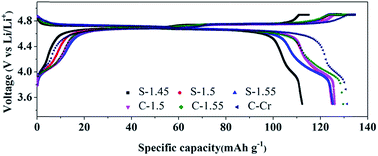
The electrochemical intercalation/deintercalation behaviors of the obtained six LNMO-based samples were examined through galvanostatic charge/discharge cycling using 2025 coin cells. The cells were charged at 0.5 C rate in the first two cycle without additional constant voltage modes and then charged at different current densities (0.5 to 10 C rate) with additional constant voltage modes. Fig. 6a shows the first charge/discharge curves of the six samples at the charge/discharge current of 0.5 C rate (1 C = 147 mA g−1), two separated charge plateaus, which were attributed to the Ni2+/Ni3+ and Ni3+/Ni4+, respectively, as well as a small plateau at ∼4.0 V (Mn3+/Mn4+) can be clearly observed for the obtained LNMO-based electrode, which confirms that the LNMO-based samples crystallized in the cation-disorder phase.22 As shown in Fig. 6b, the two-plateaus between 4.6 and 4.8 V are more pronounced and the gap between them is the largest in the six samples. This result confirms that the Cr-doping increases the cationic disorder.22,55 The S-1.45, S-1.50, S-1.55, C-1.50, C-1.55 and C-Cr shows a specific discharge capacity of 110.6, 118.5, 120.1, 118.7, 122.5, and 126.3 mA h g−1 with a columbic efficiency (CE) of 71.6, 73.7, 72.9, 70.0, 76.5 and 82.0%, respectively. The low CE in the first cycle of the LNMO-based cathodes is attributed to the decomposition of the electrolyte at high voltage.18 The highest CE of the C-Cr sample suggests that the most stable electrode/electrolyte interface. In addition, the large differences in the specific discharge capacities of these samples are related to their different microstructures and compositions. Because of the absence of rock-salt phase in the Mn-riched and Cr-substituted samples, these three samples display high specific capacity. Meanwhile, the capacity from the ∼4 V plateau in the Mn-riched samples (S-1.55 and C-1.55) are much higher than those in other four samples (S-1.45, S-1.5, C-1.5 and C-Cr). The length of the plateau in the 4 V region can be adopted to calculate the relative amount of residual Mn3+ content in the spinels. Detailed analysis was conducted to calculate the capacity percentage contribution from the Mn3+ plateau (4 V) for all the six samples, which are calculated from the discharge capacity of the 5th cycle (as shown in Fig. 6b), as displayed in Table 3. It is interesting to note that the capacity in the 4 V region of C-Cr is lower than that of C-1.5, although its higher Mn3+ content derivated from the XPS results. This observation suggests that Cr-doping in LNMO spinel may result in rich Mn3+ content in the surface. After about five cycles, the CE of all of the samples increased up to 97.0%.
![]() | ||
| Fig. 6 Charge/discharge curves and columbic efficiencies (CE) at the first and the fifth cycle of the six LNMO-based samples. | ||
| Sample | Discharge capacity (mA h g−1) | Amount of Mn3+ (%) | |
|---|---|---|---|
| 5 V region | 4 V region | ||
| S-1.45 | 103.2 | 9.1 | 6.2 |
| S-1.50 | 112.2 | 12.8 | 8.7 |
| S-1.55 | 106.1 | 17.2 | 11.7 |
| C-1.50 | 112.0 | 14.1 | 9.6 |
| C-1.55 | 112.8 | 16.8 | 11.4 |
| C-Cr | 124.6 | 11.0 | 7.5 |
Fig. 7 and S5† show the rate performance and the voltage profiles of the various LNMO-based samples under various current densities in half-cells, respectively. The S-1.45 sample displays the lowest discharge capacity at any discharge current density in the six samples. Over 85% of their original discharge capacities could be still retained even at 10 C rate for all of the six samples, moreover, even after high rate testing, the discharge capacities could still return. In addition, the discharge voltage plateaus of the various LNMO-based samples under 10 C rate are higher than 4.5 V (Fig. S5†). This is attributed to the intrinsically fast Li+ diffusion within the 3D spinel lattice.6 These observations suggest that the architecture of the porous LNMO-based samples are tolerant to various charge and discharge currents, a characteristic required for high power and high energy density applications. It is noted that both of S-1.5 and C-1.5 show quite similar discharge capacities at low rates (0.5 and 1.0 C), with differences less than 1.5 mA h g−1. However, when the discharge current densities are higher than 2 C rate, the specific discharge capacity of the C-1.50 sample is much higher than that of the S-1.5 sample. This suggests that the cubic LNMO spinel displays superior rate performance. Similar phenomenon was observed in the S-1.55 sample. The superior rate performance of C-1.50 and S-1.55 samples may be attributed to the stronger peak of (111) facet in C-1.50 and higher Mn3+ content in the surface of S-1.55 than those of S-1.50, respectively. In addition, both of the C-1.55 and C-Cr samples exhibit higher specific capacities and better rate performance, comparing to other four samples. This may be ascribed to the synergistic effect of the cubic morphology and high surface Mn3+ content of these two samples, in which the cubic morphology of the LNMO-based spinels results in their high-active (111) crystal facet and the high surface Mn3+ content increases their conductivity. In fact, as seen in Fig. 3b, the C-1.55 and C-Cr samples have similar relative peak intensity of (111) crystal plane, but Fig. 7 clearly demonstrates much higher specific discharge capacity of C-Cr sample at high current densities (5 and 10 C-rates). This observation may be attributed to its larger cationic disorder, which will increase its lithium ion diffusion coefficient and decrease the small charge-transfer resistance.
The cycling performance of the six as-prepared samples at 0.5 and 2 C rates were plotted in Fig. 8. As indicated in Fig. 8a, the six samples demonstrate good cycling performance at 25 °C at 0.5 C-rate with 81.3, 82.8, 83.5, 91.0, 92.8, and 91.1% of the highest capacity retained after 300 cycles for samples S-1.45, S-1.50, S-1.55, C-1.50, C-1.55, and C-Cr, respectively. When the samples were charged and discharged at 2 C-rate, similar cycle stability was observed. Specially, the specific discharge capacities are 109.3, 117.7, 120.4, 120, 122.4 and 127.8 mA h g−1 for S-1.45, S-1.50, S-1.55, C-1.50, C-1.55, and C-Cr, respectively, with the corresponding capacity retention (CR) ratios of 75.2, 85.3, 85.0, 90.0, 92.6, and 92.4% after 500 cycles. The CR capability of the six samples is acceptable, however, the three cubic samples display much better cycle stability than that of the three spherical sample. This result may ascribed to the high exposure of high-active (111) crystal facet of the cubic samples.26 Comparison of the cycle performance of the three cubic LNMO-based samples with different Ni/Mn ratio at different current densities (0.5 and 2 C-rates), no obvious difference was found, which may attributed to the similar (111) crystal plane intensity. In addition, the S-1.45 sample shows the worst cycle and rate performance at both 0.5 and 2 C rates, further demonstrating the high-active (111) crystal facet has very important effect on the cycle and rate performance of the LNMO-based material.
![]() | ||
| Fig. 8 Comparison of the capacity retention (CR) of the six LNMO-based samples at different charge/discharge current densities. | ||
Because both of the cubic C-1.55 and C-Cr samples display high specific discharge capacity at 0.5 and 2 C rate, we further investigate their cycle performance at high charge and discharge current density (5 C rate), and the corresponding results were displayed in Fig. 9. Although these two samples show similar cycle performance at 0.5 and 2 C rates, remarkable differences in terms of capacity and capacity retention were observed when they cycled at 5 C rate. The C-Cr sample displays excellent cycle performance with CR ratio of 91.2% after 1000 cycles. The good cycle performance at high charge and discharge current density could be ascribed to the synergistic effect of its porous structure, high exposure of high-active (111) crystal plane, large cationic disorder and reasonable Mn3+ content in the crystal surface. Generally, the capacity fade of LNMO is believed to originate from the instability of electrode and electrolyte under high voltage.14,18,56 The present Cr-doping sample has less surface Mn3+ content than that of the C-1.55 sample, which minimizes Mn disproportionative dissolution and Jahn–Teller structural distortion. On the other hand, the C-Cr sample has larger cationic disorder than that and C-1.55 sample, resulting in high rate performance due to low charge-transfer resistance and polarization loss.19 This is also demonstrated by the comparison of the discharge curves at different cycles of the C-Cr and C-1.55 samples (Fig. S6†). As shown in Fig. S6,† the mean discharge voltage plateau of the C-Cr sample is almost no decrease before 500 cycles and only drops from 4.61 in the 500th cycle to 4.57 V in the 1000th cycle, however, the mean discharge voltage of the C-1.55 sample drops from 4.62 in the 5th cycle to 4.55 V in the 1000th cycle.
![]() | ||
| Fig. 9 Comparison of the capacity retention (CR) of the C-1.55 and C-Cr samples at the charge and discharge current density of 5 C rate. | ||
In order to gain a better understanding of the factors leading to the different rate performance of the C-Cr and C-1.55 samples, a series of voltammetry measurements were obtained and the corresponding results were shown in Fig. 10 and S7,† respectively. As shown in Fig. 10a, the CV curves of the C-Cr electrodes show two obvious redox peaks at ∼4.7 V, even for the highest sweeping rate of 0.5 mV s−1. The two redox peaks are also well consistent with the observed two-plateau charge and discharge profiles (Fig. 6). In addition, the C-Cr electrode displays increasing peak current density (ip) and widening separation potential within each redox couple as the potential scanning rate (v) increases. Based on the previous results,24 the peak current density (ip) of the electrode for Li-ion diffusion can be estimated based on the following equation:
| ip = (2.69 × 10⁵)n3/2ADLi1/2v1/2C0Li |
| Scanning rate (mV s−1) | Potential values/V | |||||
|---|---|---|---|---|---|---|
| EO1 | EO2 | ER1 | ER2 | ΔE1 | ΔE2 | |
| a EO: anodic peak potential, ER: cathodic peak potential, ΔE: the separation between EO and ER. The subscript numbers 1 and 2 denote the redox couple at lower and higher potential, respectively. | ||||||
| 0.1 | 4.713 | 4.792 | 4.628 | 4.691 | 0.085 | 0.101 |
| 0.2 | 4.734 | 4.808 | 4.607 | 4.678 | 0.127 | 0.130 |
| 0.3 | 4.758 | 4.826 | 4.592 | 4.662 | 0.166 | 0.164 |
| 0.4 | 4.782 | 4.850 | 4.572 | 4.654 | 0.210 | 0.205 |
| 0.5 | 4.795 | 4.863 | 4.558 | 4.646 | 0.237 | 0.217 |
| DLi+ (10−11 cm2 s−1) | 5.90 | 6.00 | 4.33 | 6.35 | ||
EIS measurements are carried out to further understand the different electrochemical behaviors of the C-Cr and C-1.55 samples. Before cycling, both of the two samples only show one semicircle in the high- and medium-frequency regions and an inclined line in the low-frequency zone. Base on the fitting results, the C-Cr sample shows much smaller impedance than that of the C-1.55 sample (Fig. 11a), which suggested the lower ohmic resistance for C-Cr sample. After the charge and discharge processes, both of the samples consist of a depressed semicircle in the high frequency, a semicircle in the medium frequency and a straight line in the low frequency (Fig. 11b). The semicircle (Rsei) in the high frequency is ascribed to lithium ion diffusion through the solid electrolyte interface (SEI) after cycles, the semicircle in the high frequency can be usually assigned to the charge transfer impedance (Rct), and the line is designated to a Warburg-type element reflecting the solid sate diffusion of Li into the bulk of the active materials.9,30 when the electrodes were cycled for 500 cycles, the Rsei (3.285 Ω) and Rct (5.556 Ω) of the C-Cr sample are both lower than the Rsei (5.882 Ω) and Rct (6.047 Ω) of the C-1.55 sample, respectively. This result may suggest that the C-Cr sample can alleviate electrolyte decomposition at high voltage and prevent the thick SEI film, which might be another reason for the better cyclability of the C-Cr sample compared to that of the C-1.55 sample.
![]() | ||
| Fig. 11 Comparison of impedance spectra (Nyquist plots) of the C-Cr and C-1.55 electrodes in the discharged state after different cycles at 5 C-rate, (a) the fresh cells and (b) the 500th cycle. | ||
Footnote |
| † Electronic supplementary information (ESI) available: See DOI: 10.1039/c5ra03602j |
| This journal is © The Royal Society of Chemistry 2015 |