
ZnO@ZnS core/shell microrods with enhanced gas sensing properties

Wei Zhang, Shurong Wang*, Yanshuang Wang, Zhenyu Zhu, Xueling Gao, Jiedi Yang and Hong xin Zhang
Department of Chemistry, Tianjin Key Lab of Metal and Molecule-based Material Chemistry, Key Laboratory of Advanced Energy Materials Chemistry (MOE), Nankai University, Tianjin, 300071, China. E-mail: shrwang@nankai.edu.cn; Fax: +86-22-23502458; Tel: +86-22-23505896

Received 21st October 2014 , Accepted 2nd December 2014

First published on 3rd December 2014


Abstract

One-dimensional ZnO@ZnS core/shell microrods (MRs) were successfully synthesized by a facile two-step hydrothermal route, employing the low-cost inorganic salt Na2S as a sulfurizing agent. The sulfurizing time plays an important role in the growth of ZnS shells. The thickness of the ZnS shell could be adjusted by controlling the sulfurizing time. This facile surface sulfidation strategy might provide an opportunity for preparing other semiconductor metal oxide-sulfide core/shell nanostructures for a wide range of applications. For investigating the gas sensor application of the prepared ZnO@ZnS core/shell MRs, several common reductive volatile organic pollutants (VOPs) (n-butanol, ethanol, acetone, methanol and ether) were used as the probe gases for the gas sensing measurements. Due to the distinctively core/shell MR heterostructure and the heterojunction action between the ZnO core and the ZnS shell, the ZnO@ZnS core/shell MR sensor exhibited excellent gas sensing performance including high response, short response and recovery times, and good reproducibility to these VOPs, as well as much enhanced gas sensing performance compared with the bare ZnO MR sensor, demonstrating the potential application as gas sensors. It is believed that the current ZnO@ZnS core/shell MRs will also offer potential applications in other fields such as photocatalysis, electrical devices and optical devices.

Introduction

Gas sensors are now playing crucial roles due to their promising applications in many fields such as medical diagnosis, human health and safety, control of chemical processes, monitoring of environmental pollutants and prevention of hazardous gas leaks. With increasing attention being directed towards human health and environmental protection, great efforts have been devoted to developing fast, simple, inexpensive and reliable gas sensors for effectively detecting toxic or hazardous polluting gases including some volatile organic pollutants (VOPs).

Zinc oxide (ZnO), as an important n-type semiconductor with a wide band gap of 3.37 eV and a large exciton binding energy (60 meV), has gained extensive research interest for various applications such as chemical sensors, piezoelectric devices, ultraviolet (UV) lasers, solar cells, and photocatalysis.1–3 To date, to meet the demand for diverse applications, various novel ZnO micro-/nano-structures, including micro-/nano-rods,4,5 nanowires,6,7 nanotubes,8,9 nanobelts,10,11 nanosheet,12,13 three-dimensional hierarchically architectures14,15 and hollow micro-/nano-structures,16,17 have been synthesized. For gas sensor application, among the various ZnO micro-/nano-structures, one-dimensional (1D) ZnO micro-/nano-structures (micro-/nano-rods, nanowires, and nanotubes) have been found to be good candidates for gas sensing materials due to their large surface-to-volume ratio and unique electron transportation characteristics, and have attracted remarkable attention.4–9

Meanwhile, for further improving the gas sensing performances of 1D micro-/nano-structured gas sensors, many attempts have been made to synthesize micro-/nano-composites. It has been demonstrated that constructing core/shell micro-/nano-structured composites, such as α-Fe2O3@SnO2 core/shell nanorods,18 α-Fe2O3@ZnO core/shell nanorods,19 α-Fe2O3@ZnO core/shell nanospindles,20 TiO2@ZnO core/shell nanofibers,21 SnO2@ZnO core/shell nanofibers,22 CuO@SnO2 core/shell nanorods,23 and ZnO@ZnS core/shell nanorods,24 is an effective method for enhancing gas sensing performance.

Zinc sulfide (ZnS), another wide band gap (Eg = 3.67 eV) semiconductor,25 is a promising material for wide applications in photocatalysis, solar cells, sensors, lasers, flat panel displays, and photovoltaic devices.26,27 Very recently, there have been several reports about the fabrication and applications of 1D ZnO@ZnS core/shell heterostructures.24,28–31 For instance, Shen et al.24 and Liu et al.28 have fabricated ZnO@ZnS core/shell nanorods, with high optical and H2S gas sensing performances, and heterostructured ZnO@ZnS core/shell nanowire (NW) arrays for the dye-sensitized solar cells by a two-step approach, combining hydrothermal and liquid-phase chemical conversion process, using thioacetamide (TAA) as sulfurizing agent. Wang et al.29 investigated the photovoltaic effect of the ZnO@ZnS core/shell NW arrays, fabricated by a two-step synthesis route, namely, ZnO NW arrays were first synthesized by chemical vapor deposition (CVD) on an ITO substrate at 600 °C, and then the NW array served as a template for further ZnS coating by pulsed-laser deposition (PLD) at 500 °C. Hu et al.30 demonstrated a strategy for preparation of ZnO@ZnS core/shell nanorods, with high visible light photocatalytic activity, via microwave assisted in situ surface sulfidation (using TAA as sulfurizing agent) of ZnO nanorods, synthesized by a hydrothermal process. Jeong et al.31 reported the high electrical and optical properties of ZnO@ZnS core/shell NW devices, in which the ZnO NWs were first grown by thermal chemical vapor deposition (CVD), and the ZnO NW samples were then immersed in Na2S and Zn(NO3)2 solutions at 60 °C to prepare the ZnO@ZnS core/shell NWs. Although the fabrications of 1D ZnO@ZnS core/shell nanostructure have been achieved by using various methods, it is still a challenge and remains highly desirable to develop a simple and mild route for the synthesis of 1D ZnO@ZnS core/shell composite micro-/nano-structures.

Being motivated by the inspiring photocatalytic, gas sensing, electrical and optical properties, as well as the limited research on the coupling of 1D ZnO and ZnS nanostructures, herein, we reported a facile and mild two-step hydrothermal strategy for the synthesis 1D ZnO@ZnS core/shell microrods (MRs), using low-cost inorganic salt Na2S as sulfurizing agent. The results from gas sensing measurement demonstrated that the ZnO@ZnS core/shell composite MR sensor exhibited excellent gas sensing performances to several common reductive VOPs including n-butanol, ethanol, acetone, methanol and ether, as well as much enhanced gas sensing performances compared with the bare ZnO MR sensor. The current ZnO@ZnS core/shell composite MRs are also expected to provide other potential applications as photocatalytic, electrical and optical materials.

Experimental details

Materials

All reagents used were purchased from Guangfu Fine Chemical Research Institute (Tianjin, China). Except that zinc nitrate hexahydrate (Zn(NO3)2·6H2O) was of guaranteed grade, all of the other reagents were of analytical grade and were used without further purification. Distilled water was used throughout the experiments.

Synthesis of 1D ZnO MRs

Synthesis of ZnO MRs was implemented through a hexadecyltrimethylammonium chloride (CTAC) assisted hydrothermal process. 1.18 g of Zn(NO3)2·6H2O was dissolved in 6 mL of distilled water, and 4 mL of NH3·H2O (25%) was added drop-wise under stirring to form a clear solution A. 0.27 g of CTAC was dissolved in 30 mL of distilled water to form a clear solution B. The mixing solution of A and B was then transferred to 50 mL Teflon autoclave, and maintained at 170 °C for 8 h. Subsequently, the white products were collected by centrifugation and washed with distilled water and ethanol for several times, and then dried in an oven at 50 °C.

Synthesis of ZnO@ZnS core/shell MRs

In a typical procedure, 50 mg of the above prepared ZnO MRs were ultrasonically dispersed in 40 mL of sodium sulfide (Na2S) aqueous solutions with the concentration of 0.6 M. The suspension was then transferred into 50 mL Teflon autoclave, and maintained at 60 °C for 24 h. The yellow products were collected by centrifugation and washed with distilled water and ethanol for several times, and then dried in an oven at 50 °C.

Characterization

The morphology of products was characterized by means of scanning electron microscope (SEM, Shimadzu SS-550, 15 kV) and transmission electron microscope (TEM, Philips FEI Tecnai 20ST, 200 kV). The phase and composition of the products were determined by powder X-ray diffraction (XRD, Rigaku D/max-2500, Cu kα, λ = 1.5418 Å). The surface elemental composition and chemical state were observed by X-ray photoelectron spectroscopy (XPS, Kratos Axis Ultra DLD spectrometer, Al Kα X-ray monochromator).

Gas sensor fabrication and gas sensing property tests

For fabricating gas sensors based on the ZnO MR and ZnO@ZnS core/shell MRs, an appropriate amount of sample was mixed evenly with a couple of drops of distilled water to form slurry. Then the slurry was coated onto an alumina tube with a diameter of 1 mm and a length of 4 mm, which was positioned with two Au electrodes and four Pt wires on both end of the tube. A Ni–Cr alloy filament was put through the alumina tube and used as a heater by tuning the heating voltage. The alumina tube was then welded onto a six-probe pedestal to give the final gas sensor unit. The gas sensing tests were performed on a commercial WS-30A Gas sensing Measurement System (Weisheng Electronics Co., Ltd., Henan, China) at a relative humidity of about 30%, RL = 470 KΩ, Vc = 5 V, using air as the dilution and reference gas, and an operating temperature of 300 °C. Target gases were introduced into the testing chamber on WS-30A microsyringe. The sensor response to reducing gases is defined as the ratio Ra/Rg, where Ra is the sensor resistance in air and Rg is the sensor resistance in the mixed gas of the tested gas and air, respectively. Fig. S1 shows the working principle of the gas sensing measurement system.

Results and discussion

Preparation and characterization

ZnO@ZnS core/shell MRs were prepared by a two-step hydrothermal process. In the first hydrothermal process, soluble zinc complex ions, with the assistant of CTAC surfactants, can combine with each other and decompose into ZnO nuclei, which can self-assemble to form the rod-like ZnO microstructures along a preferred axis orientation. Then, the obtained ZnO MRs were used as precursors to prepare ZnO@ZnS core/shell MRs in the second hydrothermal process, as illustrated in Fig. 1. To begin with, S2− ions react with H2O to generate HS ions, which further hydrolyze to release H2S. After that, H2S readily reacts with ZnO particles in the surface region of the MRs to produce ZnS nanoparticles surrounding the ZnO core. As the sulfurizing time is increased, more and more ZnS nanoparticles are produced and piled up to form a uniform and dense ZnS shell, leading to the formation of ZnO@ZnS core/shell MRs. The thickness of ZnS shell can be adjusted from several nanometers to dozens of nanometers by controlling the sulfurizing time.
image file: c4ra12803f-f1.tif
Fig. 1 Schematic illustration of the formation process for the ZnO@ZnS core/shell MRs.

The morphologies of the as-prepared bare ZnO MRs and ZnO@ZnS core/shell MRs were first investigated by SEM, and the SEM images are shown in Fig. 2. Fig. 2a presents the overall rod-like microstructures of as-obtained ZnO products with a diameter of about 1–2 μm and a length of about 10–20 μm. The high magnification SEM image in Fig. 2b provides a clearer view of the ZnO MRs, revealing that the MRs possess a tapering end. Fig. 3c and d show the SEM images of the ZnO@ZnS core/shell MRs. It can be found from Fig. 3c that the rod-like morphology still remains after the surface of the ZnO MRs were sulfated. It is clear from the high magnification SEM in Fig. 3d that, after the sulfidization process, an obvious difference in the surface morphology of the ZnO@ZnS core/shell MRs and the bare ZnO MRs can be visualized from the image. The surfaces of the ZnO@ZnS core/shell MRs are much coarser than those of the bare ZnO MRs, displaying that some modification has been occurred on the surfaces of ZnO MRs due to the formation of ZnS layer. Importantly, the sensing reaction can be enhanced because of this rough surface structure, which can further increase the accessible surface area of the materials and the amount of surface active sites, thus greatly improving the gas sensing performances of the ZnO@ZnS core/shell MRs.


image file: c4ra12803f-f2.tif
Fig. 2 SEM images of (a and b) the bare ZnO MRs and (c and d) the ZnO@ZnS core/shell MRs.

image file: c4ra12803f-f3.tif
Fig. 3 TEM images of the as-prepared ZnO@ZnS core/shell MRs: (a) Low magnification TEM image; (b) high magnification TEM image; (c) HRTEM image of the edge of the shell; (d) the larged HRTEM from the rectangular region in (c).

Further morphology and structure characterizations of the as-prepared ZnO@ZnS core/shell MRs are examined using TEM and high-resolution TEM (HRTEM). Fig. 3a shows a representative low magnification TEM image about single MR. The apparent contrast between the black inner core and the bright outer shell indicates the existence of a coaxial 1D core/shell microstructure. From the high magnification TEM in Fig. 3b, it can be observed that the ZnS outer shell is composed of small sharp nanoparticles to form a ragged surface, which is consistent with the above SEM observation. A HRTEM image in the edge region of the outer shell of the ZnO@ZnS core/shell MRs is shown in Fig. 3(c and d). The clear visible regular lattice fringes indicate the highly crystalline structure of ZnS nanoparticle. The lattice spacing between the adjacent lattice planes is calculated to be 0.31 nm, corresponding to the (111) lattice plane of cubic ZnS, confirming the successful coating of ZnS shell on the surface of ZnO MRs. The existence of ZnS in this sample has also been verified by EDS element analysis as shown in Fig. S2.

XRD was employed to identify the crystalline structure of the samples. Fig. 4 represents the XRD patterns of the bare ZnO MRs and ZnO@ZnS core/shell MRs. For bare ZnO MRs, all the diffraction peaks centered at 31.9, 34.6, 36.1, 47.7, 56.7, 63.0, 66.5, 67.9, 69.1, 72.6 and 77.0 well correspond to (100), (002), (101), (102), (110), (103), (200), (112), (201), (004) and (202) lattice planes with the hexagonal wurtzite ZnO structure with lattice constants of a = 3.25 Å and c = 5.21 Å (space group: P63/mc, JCPDS no. 36-1451), indicating that the as-prepared ZnO MRs are of high quality and purity. Pattern from the ZnO@ZnS core/shell MRs obviously consists of two sets of diffraction peaks. The main diffraction peaks are readily indexed to the hexagonal wurtzite ZnO structure. A new widened peak appears at 2θ of 28.6°, which is indexed to the (311) plane of the cubic phase ZnS (space group: F[4 with combining macron]3m, JCPDS no. 05-0566, a = 5.406 Å), suggesting a layer of ZnS formed on the ZnO MRs.


image file: c4ra12803f-f4.tif
Fig. 4 XRD patterns of bare ZnO MRs and ZnO@ZnS core/shell MRs.

In order to investigate the surface elemental composition of the ZnO@ZnS core/shell MRs and further confirm the formation of the ZnS shell on the surface of ZnO MRs, XPS analysis was performed and the results are shown in Fig. 5. The binding energies obtained in the XPS analysis were corrected for specimen charging by referencing the C 1s line to 284.6 eV. The wide spectrum in Fig. 5a demonstrates that the product is composed of Zn, S and O. Fig. 5b shows the high-resolution XPS spectra of Zn 2p. The doublets with the binding energy of Zn 2p3/2 located at 1021.5 eV and that of Zn 2p1/2 located at 1044.3 eV indicate a normal oxidation valence state of Zn2+.3,4 The peak at 531.5 eV can be readily ascribed to the lattice oxygen O2− species in the ZnO/ZnS structure32 (Fig. 5c). The asymmetric S 2p peak in Fig. 5d can be fitted into two peaks located at 161.2 and 162.4 eV, corresponding to S 2p3/2 and S 2p1/2, respectively, which are related to S2− in ZnS,28 suggesting that ZnS was successfully synthesized through the hydrothermal sulfidation process in our experiments. Therefore, the XPS spectra confirm that the surface of ZnO MRs is etched and converted into ZnS, resulting in the formation of the ZnO@ZnS core/shell heterostructures.


image file: c4ra12803f-f5.tif
Fig. 5 XPS spectra of the ZnO@ZnS core/shell MRs: (a) wide spectrum; (b) Zn 2p; (c) O 1s; (d) S 2p.

In this contribution, we also investigate the influences of the sulfurizing time on the morphology of ZnO@ZnS heterostructures. It is found that the sulfurizing time play an important role in the growth of ZnS shell. Fig. S3 gives SEM images of ZnO@ZnS heterostructures sulfurized for different time. From these images, it can be seen that the sulfidation process does not affect the morphology of the ZnO@ZnS heterostructures which still remain a 1D rod-like microstructure. However, it is also clear that, with the increase of sulifizing time, the surface of the ZnO@ZnS MRs becomes rougher and the thickness of ZnS shell exerts a sign of increase, which implies that sufficient sulfurizing time can guarantee effective interaction between ZnO and S2−, and thus prompts the growth of ZnS shell. From the XRD patterns of the ZnO@ZnS heterostructures sulfurized for different times (Fig. S4), the enhancement of the intensity of ZnS diffraction peak (111) also further confirms that the mass fraction of ZnS increases gradually with the sulfurizing time.

Gas sensing properties

To illustrate the potential application of the as-synthesized ZnO@ZnS core/shell MRs in gas senor, we have investigated their gas sensing properties for detecting several common VOPs including n-butanol, ethanol, acetone, methanol and ether.

The operating temperature is an important issue in evaluating the performance of the sensor. Thus, the optimum operating temperature was first determined by measuring the response of the sensor to 100 ppm of n-butanol in the temperature range of 220–380 °C. The relationship between the different operating temperature and the sensor response is shown in Fig. S5. It can be seen that the responses of the sensor vary with the operating temperature. At the operating temperature lower than 300 °C, the response gradually rises with the increase of the operating temperature, and the response reaches the maximum value at 300 °C. However, above 300 °C, the response decreases as increasing the operating temperature. Hence, 300 °C has been selected as the optimum operating temperature for the following gas sensing tests.

Fig. 6(a–e) plot the dynamic response–recovery curves of the sensor based on the as-synthesized ZnO@ZnS core/shell MRs exposed to the five VOP gases with different concentrations in the sequence of 5, 10, 20, 50, 100, 200 and 500 ppm. It can be clearly observed that the output signal voltage (Vout) of the ZnO@ZnS core/shell MR sensor increases abruptly on the injection of these reducing VOP gases, and then it decreases dramatically and recovers to the initial value after these gases are released and air is introduced, indicating the n-type semiconductor characteristic of the ZnO@ZnS core/shell MR based sensor. It is also obvious from these figures that the response amplitudes of the sensor increase with the increase of the tested gas concentration, and the sensor exhibits a perceived Vout signal change even exposed to as low concentration as 5 ppm of VOP gases. Response and recovery times are important parameters to evaluate the gas sensing performance of a sensor. Generally, the response time and recovery time are defined as the time for the sensor to reach 90% of its maximum response and to fall to 10% of its maximum response, respectively. It can also be seen from these figures that the ZnO@ZnS core/shell MR based sensor presents quick response/recovery characteristics to the VOP gases with the response and recovery times of several seconds. Take 100 ppm of various VOP gases for examples, the response and recovery times are 4 and 2 s to n-butanol, 2 and 3 s to ethanol, 4 and 2 s to acetone, 3 and 5 s to methanol, and 5 and 3 s to ether, respectively. Such short response and recovery times can meet the remand of practical application of a gas sensor, and are convenient when the sensor is required to continuously detect these VOP gases. Fig. 6f exhibits the corresponding responses of the ZnO@ZnS core/shell MR sensor versus the various gas concentrations (10–500 ppm). It can be found that the ZnO@ZnS core/shell MR sensor shows high response to these VOP gases, and the responses to all the tested gases increase with increasing the gas concentration from 5 to 500 ppm, with the highest response of 48.5 to 500 ppm of n-butanol, 17.5 to 500 ppm of ethanol, 11.0 to 500 ppm of acetone, 9.6 to 500 ppm of methanol, and 5.6 to 500 ppm of ether.


image file: c4ra12803f-f6.tif
Fig. 6 Dynamic response–recovery curves of the sensor based on the ZnO@ZnS core/shell MRs to different concentrations of VOP gases: (a) n-butanol; (b) ethanol; (c) acetone; (d) methanol; (e) ether. (f) The corresponding responses.

To consider the practical application of the fabricated ZnO@ZnS core/shell MR sensor, we investigated the reproducibility of the gas sensor. Fig. 7 presents four response–recovery characteristic cycle curves of the ZnO@ZnS core/shell MR sensor to 100 ppm of various VOP gases. It is observed from these figures that the gas in and out response–recovery curves for the sensor could be repeated several times without major changes, implying the good reproducibility of the ZnO@ZnS core/shell MR sensor. Additionally, to further evaluate the reproducibility, we conducted again six response–recovery cycle tests of the ZnO@ZnS core/shell MR sensor to 100 ppm of n-butanol about one hour testing period, as shown in Fig. S6. It can be seen that the ZnO@ZnS core/shell MR sensor still shows good reproducibility.


image file: c4ra12803f-f7.tif
Fig. 7 Reproducibility of the ZnO@ZnS core/shell MR based sensor on successive 100 ppm of VOP gases: (a) n-butanol; (b) ethanol; (c) acetone; (d) methanol; (e) ether.

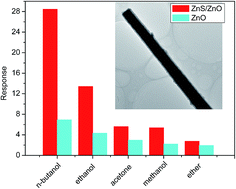
The response comparison between the bare ZnO MR and the ZnO@ZnS core/shell MR based sensor is displayed in Fig. 8. It can be seen that the ZnO@ZnS core/shell MR based sensor exhibits significantly enhanced response to all the five tested VOP gases compared with the bare ZnO MR sensor. The response is increased as 4.1 times to n-butanol, 3.1 times to ethanol, 1.9 times to acetone, 2.4 times to methanol and 1.4 times to ether, respectively. The above gas sensing measurement results demonstrate that the prepared ZnO@ZnS core/shell MRs are promising candidate materials for gas sensor applications.


image file: c4ra12803f-f8.tif
Fig. 8 Response comparison of the sensors based on the bare ZnO MRs and the ZnO@ZnS core/shell MRs towards 100 ppm of various VOP gases.

Gas sensing mechanism

The electron depletion theory has been widely used to interpret the gas sensing mechanism of the ZnO based gas sensors.33,34 At a proper operating temperature, when the ZnO based sensor is exposed to air, the oxygen molecules in air adsorb on the surface of ZnO and trap electrons from the conduction band of ZnO to form the adsorbed negatively charged oxygen ion species such as O2−, O and O2. Consequently, electron depletion layers are formed in the surface region of ZnO, causing the conductance to decrease. When the ZnO based sensor is exposed to a reducing gas such as n-butanol and ethanol, these gas molecules will react with the surface adsorbed oxygen ion species, releasing the trapped electrons back to the conduction band of ZnO, and thus the conductance of ZnO increases. If the conductance variation is obvious, the sensor can be used to detect these gases, and the sensor sensitivity can be improved by enhancing its conductance variation. For the ZnO@ZnS core/shell heterostructure based sensor, the conductance variation can be significantly enhanced compared with the bare ZnO. Firstly, similar to ZnO, the adsorption/desorption process of oxygen can also occur on the surfaces of ZnS nanostructures due to n-type semiconductor characteristics of ZnS.35 The atmospheric oxygen molecules can trap electrons from the conduction bands of both ZnO core and ZnS shell, so two electron depletion layers are formed in the surface regions of both ZnO core and ZnS shell. Besides, a heterojunction with a potential barrier will form at the interface between the ZnO core and ZnS shell due to their different band gaps and work functions.36 The conduction band of ZnS locates at higher potential than ZnO and thus the electrons in the conduction band of ZnS will transfer to the conduction band of ZnO37 until their Fermi levels equalize, as illustrated in Fig. 9a. At the equilibrium state, an additional electron depletion layer will be generated in the vicinity region of the ZnO/ZnS interfaces, which will play an important role in the sensing reactions. The formation of the heterojunctions results in the interfacial charge separation and the increase of free electron density, and the dissociation of molecular oxygen easily occurs by capturing these free electrons. Thus, a higher electric resistance in air is expected in ZnO@ZnS core/shell MRs than the bare ZnO MRs. As schematically shown in Fig. 9b, when the ZnO@ZnS core/shell MR sensor is exposed to reducing VOP gases, these reducing gases can react with the adsorbed oxygen species, and the trapped electrons can be release back to the conduction band of both ZnO core and ZnS shell, which narrows the electron depletion layer and decreases the resistance of the ZnO@ZnS core/shell MR sensor, resulting in a much increased conductance variation as compared to that of the bare ZnO MRs. As a result, the ZnO@ZnS core/shell MR sensor shows significantly enhanced gas sensing performances. Furthermore, compared with conventional nanomaterial, the unique 1D rod-like microstructure can provide a higher surface-to-volume ratio and better electron mobility, which leads to more surface active sites available for the sensing reactions between adsorbed oxygen ion species and tested gas molecules, thus further improving the gas sensing performance. Therefore, it should be believed that the distinctively core/shell heterostructures, the heterojunction action between the ZnO core and ZnS shell, and unique 1D rod-like morphology should be primarily responsible for the excellent gas sensing performances of the 1D ZnO@ZnS core/shell MR based sensor.
image file: c4ra12803f-f9.tif
Fig. 9 (a) Energy band structure and (b) gas sensing mechanism of the ZnO@ZnS core/shell MR sensor.

Conclusions

In summary, ZnO@ZnS core/shell MRs have been successfully synthesized by a facile two-step hydrothermal process. ZnO MRs were first synthesized by a 170 °C hydrothermal process with the assistant of CTAC surfactants, and then used as precursors to prepare ZnO@ZnS core/shell MRs in the 60 °C low-temperature hydrothermal process using low cost inorganic salt Na2S as a sulfirizing agent. The sulfurizing time play an important role in the growth of ZnS shell. The thickness of ZnS shell can be adjusted by controlling the sulfurizing time. It is believed that the facile surface sulfidation strategy might provide an opportunity for preparing other semiconductor core/shell nanostructures of other metal oxide and sulfide for a wide range of applications. The excellent gas sensing performances, including high response, short response and recovery times, and good reproducibility to several common reductive VOP gases (n-butanol, ethanol, acetone, methanol and ether), as well as much enhanced gas sensing performances compared with the bare ZnO MR sensor, demonstrated the potential application of the ZnO@ZnS core/shell composite MRs in gas sensor. The improved conductance variation, resulted from the distinctively core/shell MR heterostructure and the heterojunction action between the ZnO core and ZnS shell, should be primarily responsible for the excellent gas sensing performances of the 1D ZnO@ZnS core/shell MR based sensor. The current ZnO@ZnS core/shell MRs have also possible applications in the fields of photocatalysis, electronics and optics.

Acknowledgements

The authors gratefully acknowledge the financial support from National Natural Science Foundation of China (no. 21171099), the Applied Basic Research Programs of the Science and Technology Commission Foundation of Tianjin (no. 14JCZDJC37100), MOE Innovation Team (IRT13022) of China, NFFTBS (J1103306), and 111 Project (B12015).

Notes and references

  1. M. H. Huang, S. Mao, H. Feick, J. Q. Yan, Y. Y. Wu, H. Kind, E. Weber, R. Russo and P. D. Yang, Science, 2001, 292, 1897–1899 CrossRef CAS PubMed.
  2. O. D. Jayakumar, N. Manoj, V. Sudarsan, C. G. S. Pillai and A. K. Tyagi, CrystEngComm, 2011, 13, 2187–2190 RSC.
  3. X. H. Liu, J. Zhang, L. W. Wang, T. L. Yang, X. Z. Guo, S. H. Wu and S. R. Wang, J. Mater. Chem., 2011, 21, 349–356 RSC.
  4. X. H. Liu, J. Zhang, X. Z. Guo, S. H. Wu and S. R. Wang, Nanoscale, 2010, 2, 1178–1184 RSC.
  5. L. W. Wang, Y. F. Kang, X. H. Liu, S. M. Zhang, W. P. Huang and S. R. Wang, Sens. Actuators, B, 2012, 162, 237–243 CrossRef CAS PubMed.
  6. S. K. Youn, N. Ramgir, C. Y. Wang, K. Subannajui, V. Cimalla and M. Zacharias, J. Phys. Chem. C, 2010, 114, 10092–10100 CAS.
  7. L. W. Wang, S. R. Wang, M. J. Xu, X. J. Hu, H. X. Zhang, Y. S. Wang and W. P. Huang, Phys. Chem. Chem. Phys., 2013, 15, 17179–17186 RSC.
  8. Y. B. Pyun, J. Yi, D. H. Lee, K. S. Son, G. C. Liu, D. K. Yi, U. Paik and W. Il Park, J. Mater. Chem., 2010, 20, 5136–5140 RSC.
  9. J. B Han, F. R. Fan, C. Xu, S. S. Lin, M. Wei, X. Duan and Z. L. Wang, Nanotechnology, 2010, 21, 405203 CrossRef PubMed.
  10. Y. Yang, J. J. Qi, Q. L. Liao, H. F. Li, Y. S. Wang, L. D. Tang and Y. Zhang, Nanotechnology, 2009, 20, 125201 CrossRef PubMed.
  11. E. S. Jang, J. H. Won, Y. W. Kim, Z. Cheng and J. H. Choy, J. Solid State Chem., 2010, 183, 1835–1840 CrossRef CAS PubMed.
  12. F. Xu, M. Dai, Y. N. Lu and L. T. Sun, J. Phys. Chem. C, 2010, 114, 2776–2782 CAS.
  13. L. W. Wang, S. R. Wang, H. X. Zhang, Y. S. Wang, J. D. Yang and W. P. Huang, New J. Chem., 2014, 38, 2530–2537 RSC.
  14. J. Zhang, S. R. Wang, M. J. Xu, Y. Wang, B. L. Zhu, S. M. Zhang, W. P. Huang and S. H. Wu, Cryst. Growth Des., 2009, 9, 3532–3537 CAS.
  15. J. Jiang, F. Gu, W. Shao, L. L. Gai, C. Z. Li and G. J. Huang, CrystEngComm, 2011, 13, 4861–4865 RSC.
  16. J. Zhang, S. R. Wang, Y. Wang, M. J. Xu, H. J. Xia, S. M. Zhang, W. P. Huang, X. Z. Guo and S. H. Wu, Sens. Actuators, B, 2009, 139, 411–417 CrossRef CAS PubMed.
  17. Q. P. Luo, X. Y. Yu, B. X. Lei, H. Y. Chen, D. B. Kuang and C. Y. Su, J. Phys. Chem. C, 2012, 116, 8111–8117 CAS.
  18. Y. J. Chen, C. L. Zhu, L. J. Wang, P. Gao, M. S. Cao and X. L. Shi, Nanotechnology, 2009, 20, 045502 CrossRef PubMed.
  19. S. F. Si, C. H. Li, X. Wang, Q. Peng and Y. D. Li, Sens. Actuators, B, 2006, 119, 52–56 CrossRef CAS PubMed.
  20. J. Zhang, X. H. Liu, L. W. Wang, T. L. Yang, X. Z. Guo, S. H. Wu, S. R. Wang and S. M. Zhang, Nanotechnology, 2011, 22, 185501 CrossRef PubMed.
  21. J. Y. Park, S. W. Choi, J. W. Lee, C. Lee and S. S. Kim, J. Am. Ceram. Soc., 2009, 92, 2551–2554 CrossRef CAS PubMed.
  22. S. W. Choi, J. Y. Park and S. S. Kim, Nanotechnology, 2009, 20, 465603 CrossRef PubMed.
  23. X. Y. Xue, L. L. Xing, Y. J. Chen, S. L. Shi, Y. G. Wang and T. H. Wang, J. Phys. Chem. C, 2008, 112, 12157–12160 CAS.
  24. X. M. Shuai and W. Z. Shen, J. Phys. Chem. C, 2011, 115, 6415–6422 CAS.
  25. X. Huang, M. Wang, L. D. Shao, M. G. Willinger, C. S. Lee and X. M. Meng, J. Phys. Chem. Lett., 2013, 4, 740–744 CrossRef CAS.
  26. J. S. Hu, L. L. Ren, Y. G. Guo, H. P. Liang, A. M. Cao, L. J. Wan and C. L. Bai, Angew. Chem., Int. Ed., 2005, 44, 1269–1273 CrossRef CAS PubMed.
  27. Z. Q. Wang, X. D. Liu, J. F. Gong, H. B. Huang, S. L. Gu and S. G. Yang, Cryst. Growth Des., 2008, 8, 3911–3913 CAS.
  28. L. Z. Liu, Y. Q. Chen, T. B. Guo, Y. Q. Zhu, Y. Su, C. Jia, M. Q. Wei and Y. F. Cheng, ACS Appl. Mater. Interfaces, 2012, 4, 17–23 CAS.
  29. K. Wang, J. J. Chen, Z. M. Zeng, J. Tarr, W. L. Zhou, Y. Zhang, Y. F. Yan, C. S. Jiang, J. Pern and A. Mascarenhas, Appl. Phys. Lett., 2010, 96, 123105 CrossRef PubMed.
  30. Y. Hu, H. H. Qian, Y. Liu, G. H. Du, F. M. Zhang, L. B. Wang and X. Hu, CrystEngComm, 2011, 13, 3438–3443 RSC.
  31. S. Jeong, M. Choe, J. W. Kang, M. W. Kim, W. G. Jung, Y. C. Leem, J. Chun, B. J. Kim and S. J. Park, ACS Appl. Mater. Interfaces, 2014, 6, 6170–6176 CAS.
  32. M. Ahmad, X. X. Yan and J. J. Zhu, J. Phys. Chem. C, 2011, 115, 1831–1837 CAS.
  33. H. Windischmann and P. J. Mark, J. Electrochem. Soc., 1979, 126, 627–633 CrossRef CAS PubMed.
  34. Q. Wan, Q. H. Li, Y. J. Chen, T. H. Wang, H. X. Le, J. P. Li and C. L. Lin, Appl. Phys. Lett., 2004, 84, 3654–3656 CrossRef CAS PubMed.
  35. Z. G. Chen, J. Zou, G. Liu, H. F. Lu, F. Li, G. Q. Lu and H. M. Cheng, Nanotechnology, 2008, 19, 055710 CrossRef PubMed.
  36. Y. Yang, S. Xue, S. Liu, J. Huang and J. Shen, Appl. Phys. Lett., 1996, 69, 377–379 CrossRef CAS PubMed.
  37. Y. M. Sung, K. Noh, W. C. Kwak and T. G. Kim, Sens. Actuators, B, 2012, 161, 453–459 CrossRef CAS PubMed.

Footnote

Electronic supplementary information (ESI) available. See DOI: 10.1039/c4ra12803f

This journal is © The Royal Society of Chemistry 2015
Click here to see how this site uses Cookies. View our privacy policy here.