
DOI:
10.1039/C4RA13060J
(Paper)
RSC Adv., 2015,
5, 2630-2639
Preparation of an EDOT-based polymer: optoelectronic properties and electrochromic device application
Received
24th October 2014
, Accepted 28th November 2014
First published on 28th November 2014
Abstract
Here we present the synthesis, characterization and electropolymerization of a new EDOT-based monomer; 5,10-dihydrobenzo[f]thieno[3,4-b][1,4]dioxocine (DTD). Electrochemical polymerization of DTD was performed potentiostatically by using dichloromethane (DCM) as solvent and tetrabutylammonium hexafluorophosphate (TBPF6) as supporting electrolyte. Homopolymer [P(DTD)] films and copolymer [P(DTD-co-TPA)] films of DTD prepared by using 4-(2,5-di(thiophen-2-yl)-1H-pyrrole-1-yl)butane-1-amine (TPA) were characterized via CV and UV-vis spectroscopy. Spectroelectrochemical analysis of P(DTD) revealed electronic transitions at 585 nm (π–π* transition) with an electronic band gap of 1.69 eV. Electrochromic studies revealed that P(DTD) has competitive properties to EDOT. Furthermore, a dual-type complementary colored polymer electrochromic device based on P(DTD) and P(TPA) was constructed in sandwich configuration. Spectroelectrochemical studies revealed that the oxidized state of the device shows a blue color whereas it is yellow in the reduced state. The maximum contrast (Δ%T) and switching time of the device were measured as 25.5% and 0.5 s for 385 nm and 21% and 1.0 s for 550 nm.
1. Introduction
Conducting polymers (CPs) constitute an important class of material with alternating single and double carbon–carbon bonds along their polymeric chains and they possess the properties of both organic polymers and inorganic semiconductors. They are also termed as synthetic metals or intrinsically electroactive conjugated polymers.1–5 The discovery of the high electrical conductivity in doped polyacetylene has stimulated an enormous amount of work towards the elucidation of the electronic properties of conjugated organic polymers.6–10 Further studies revealed that they have appreciably fast charge–discharge kinetics, suitable morphology and fast doping–undoping processes. Especially thiophene-based organic conducting polymers continue to fascinate many scientists due to their potential applications in the development and construction of new advanced materials such as sensors, photovoltaic devices, rechargeable batteries, supercapacitors, artificial muscles and electrochromic devices.11–17 It is important to point out that in designing and producing these devices, maintaining the structural regularity and stability are crucial. For instance, polythiophene (PTh) shows good conductivity and high stability in its oxidized form but suffers from structural defects arising from β-couplings, resulting in conjugation breaks. Blocking of the 3- and 4-positions, forces polymerization through the 2- and 5-positions, leading a linear polymer chain with no α–β coupling with fewer structural defects than most heterocyclics. The result yields in changes in the polymer's absorption characteristics and ultimately its color in its neutral form. During the oxidation process to form charge carriers, new electronic states are introduced into the polymers which exhibit absorptions at lower energies with a concomitant loss of absorption due to the neutral polymer. As such, these materials exhibit electrochromism during redox switching. Among these thiophene-based compounds; 3,4-ethylenedioxythiophene (EDOT) has accepted as one of the most successful materials from both fundamental and practical perspective. It possesses several advantageous properties when compared to other polythiophene derivates: it combines a low oxidation potential and moderate band gap with good stability in its oxidized state. Since the discovery of high conductivity in iodine-doped polyacetylene, many interesting conducting polymers have been developed. Of these, polythiophenes have been most studied as electronic materials, with poly(3,4-ethylenedioxythiophene) (PEDOT) being the most successful commercially used conducting polymer.18
In the term of conducting polymers estimated to be used as electrochromic materials; importance of long term stability, switching times, contrast ratios, coloration efficiency, electrochromic memory are obvious. Hence, it is pivotal to improve new electrochromic materials possessing the capability of derivatization, in addition to the ascendant properties of EDOT. For this purpose, synthesis and characterization of 5,10-dihydrobenzo[f]thieno[3,4-b][1,4]dioxocine (DTD) were rendered adequately. Electrochemical polymerization of the synthesized DTD was also carried out. In order to substantiate the copolymer studies; electrochemical studies with 4-(2,5-di(thiophen-2-yl)-1H-pyrrole-1-yl)butane-1-amine (TPA) were performed in detail. Since there are substantial numbers of studies on copolymerization of EDOT and thienyl pyrrole derivatives, we choose TPA as comonomer for a proper comparison. Besides these studies, by using TPA, we configured out a high quality device in ITO|P(DTD)||Gel Electrolyte||P(TPA)|ITO configuration and we investigated the properties of this device.
2. Experimental
2.1 Materials
Quinoline (Merck) was dried over anhydrous Na2SO4, filtered and subsequently distilled under reduced pressure from zinc dust. Flask containing distilled quinoline was covered by aluminium foil to protect the solvent from light and stored in refrigerator at about 5 °C. N,N-Dimethylformamide (DMF) (Sigma-Aldrich) was dried over 4A molecular sieves and freshly distilled under vacuum prior to use. Anhydrous potassium carbonate was pre-dried in an oven at 150 °C for 3 to 4 hours. Other dry solvents were stored over a suitable drying agent (usually 4A molecular sieves) under oxygen-free nitrogen. All of the other solvents, reagents and catalyzers used in this study; acetone (ACS reagent, ≥99.5%, Sigma-Aldrich), acetonitrile (Sigma-Aldrich), aluminium chloride (Merck), benzoyl peroxide (Sigma-Aldrich), N-bromosuccinimide (Sigma-Aldrich), 1,4-diaminobutane (Sigma-Aldrich), carbon tetrachloride (Fluka), copper chromite (Sigma-Aldrich), dichloromethane (DCM) (Sigma-Aldrich), diethyl ether (Sigma-Aldrich), diethyl oxalate (Sigma-Aldrich), ethyl chloroacetate (Sigma-Aldrich), ethanol (absolute, Sigma-Aldrich), hydrochloric acid (ACS reagent, 37%, Sigma-Aldrich), lithium perchlorate (Sigma-Aldrich), methanol (ACS reagent, ≥99.8%, Sigma-Aldrich), potassium carbonate (anhydrous, Fluka), potassium hydroxide (ACS reagent, 85%, Sigma-Aldrich), propionic acid (Sigma-Aldrich), sodium (Sigma-Aldrich), propylene carbonate (PC) (Sigma-Aldrich), poly(methylmetacrylate) (PMMA) (Sigma-Aldrich), sodium bicarbonate (Sigma-Aldrich), sodium sulfate (Sigma-Aldrich), sodium sulfide nonahydrate (ACS reagent, ≥99.5%, Sigma-Aldrich), succinyl chloride (Sigma-Aldrich), tetrabutylammonium hexafluorophosphate (TBPF6) (Sigma Aldrich), thiophene (Sigma-Aldrich), toluene (Sigma-Aldrich), o-xylene (Sigma-Aldrich) were used as received from their indicated commercial suppliers without any further purification.
2.2 Equipment
The FT-IR spectra were acquired on a Perkin-Elmer Spectrum 100 Series FT-IR spectrometer. Measurements were collected in KBr pellets or in ATR mode using the average of 15 scans. The mass spectral analysis were performed with an Agilent Technologies 6890N Network GC System and Agilent Technologies 5975B VL MSD Mass Spectrometer operating at an ionization potential (EI) of 70 eV. 1H-NMR and 13C-NMR spectra were recorded at room temperature on a Varian-Mercury 400 MHz high performance digital Fourier Transform (FT)-NMR Spectrometer (Mercury-400BB) and CDCl3 was used as solvent. The 1H-NMR chemical shifts were reported as δ values in parts per million (ppm) relative to tetramethylsilane (TMS, δ: 0) as internal standard. The 13C-NMR chemical shifts were also reported as δ values in ppm downfield from TMS. Melting points (up to 350 °C, uncorrected) were obtained on an Electrothermal Programmable Melting Point Apparatus (IA9300). Thin layer chromatography (TLC) was used to track the progress of the experiments steadily. For this purpose, aluminum sheets (Merck, 20 × 20, Silica Gel 60 F254) were utilized. Purification of the desired products from common impurities – including byproducts, unreacted starting materials – was performed by column chromatography technique. Hence silica gel (SiO2) (Merck, Silica Gel 60, 0.063–0.200 mm, 70–230 mesh ASTM) was selected as the column stationary phase.
In order to pursue electrochemical synthesis and performing cyclic voltammetry studies, an Ivium potentiostat/galvanostat was used in all electrochemical measurements. The spectra were collected with a Diode Array UV-vis spectrophotometer (Agilent 8453) with a PC interface. Spectrophotometer was used to conduct the spectroelectrochemical experiments of both polymer and electrochromic device. The indium tin oxide (ITO) coated glass plates of thickness of 0.7 mm with resistance of 8–12 Ω sq−1 were purchased from Delta Technologies Limited, USA, and used as such for spectroelectrochemical studies. All electrochemical experiments were carried out in a one-component cell. The polymer films were deposited on ITO plates electrochemically using ITO-coated plate as working electrode, a Pt counter electrode and pseudo reference electrodes (calibrated against Fc/Fc+ (0.3 V)).
2.3 Synthesis of 5,10-dihydrobenzo[f]thieno[3,4-b][1,4]dioxocine (DTD)
The target monomer DTD was prepared through the synthetic route shown in Scheme 1. The detailed synthetic procedures and related spectral data are reported below.
 |
| | Scheme 1 Synthetic route to the monomer DTD, conditions: (i) Na2S·9H2O, acetone, rt, 24 h, 80%; (ii) 1, NaOEt (freshly prepared from Na(s) and EtOH (abs.) under N2 atmosphere), EtOH, 0 °C, diethyl oxalate, 24 h, then treated with HCl (pH: 2), 77%; (iii) NBS, CCl4, reflux, 6 h, 65% (iv) K2CO3, DMF, reflux, 7 h, 87%; (vi) KOH, EtOH, 6 h, 92%; (vii) quinoline, Cu2Cr2O5 (cat.), 180 °C, 8 h, 50%. | |
2.3.1 Diethyl-2,2′-thiodiacetate (1). This compound was synthesized according to a similar procedure developed by Kumar.13 For this purpose, into a 250 mL round-bottomed flask containing a stirring bar and fitted with a reflux condenser, ethyl chloroacetate (36.60 g, 31.96 mL, d: 1.15 g mL−1, 300 mmol) was dissolved in anhydrous acetone (100 mL) and the solution was stirred at room temperature for a period of time (∼15 minutes). Crystalline sodium sulphide (Na2S·9H2O) was added (36.00 g, 150 mmol) slowly and the mixture was stirred at 55–60 °C using an oil bath. The heating process was terminated after the observation of the NaCl precipitation on the wall of the reaction flask. Then, the heterogeneous mixture was stirred at 25 °C for 24 hours. The progress of the reaction was monitored by TLC (hexane–ethyl acetate, 2
:
1, v/v). After completion of the reaction, NaCl was filtered off under suction using a fritted glass funnel and washed thoroughly with cold acetone. After the removal of the solvent, the crude product was purified by vacuum distillation to yield 24.75 g (80%) of diethyl-2,2′-thiodiacetate as slightly yellow liquid (observed b.p.: 140–145 °C/10–15 mmHg, lit b.p.: 150 °C/18 mmHg).1H-NMR (400 MHz, CDCl3) δH/ppm: 1.20 (t, J = 8.8 Hz, 6H, ester –CH3), 3.30 (s, 4H, S–CH2), 4.15 (q, J = 8.8 Hz, 4H, ester –CH2).
MS (EI) m/z (%) calcd for C8H14O4S: 206.1; found: 206.1 (M+, 33), 160 (100), 133 (53), 115 (7), 105 (54), 88 (15), 77 (49), 60 (21), 45 (14), 29 (25).
IR (KBr), νmax/cm−1: 2984, 2939, 2909 (w, aliphatic C–H), 1732 (s, ester C
O stretching), 1447, 1367, 1276 (ester, C–O–C asymmetric stretching), 1154–1029 (ester, C–O–C symmetric stretching).
2.3.2 Diethyl-3,4-dihydroxythiophene-2,5-dicarboxylate (2). To a round-bottomed flask containing a stirring bar and connected to a reflux condenser and a pressure-equalizing dropping funnel, clean sodium metal (0.57 g, 24.7 mmol) and 20 mL of absolute ethanol were added attentively. The whole reaction steps were performed under nitrogen atmosphere. After the evolution of hydrogen gas was observed to decrease, the reaction mixture was hold in an ice-water bath and a mixture of 2,2′-thiodiacetate (1) (2.00 g, 9.7 mmol) and diethyl oxalate (1.42 g, 1.32 mL, d: 1.08 g mL−1, 9.9 mmol) were added dropwise over 1 hour. Presently, color of the mixture became yellow-green and then stirred for an additional 24 hours at room temperature. Formation of a solid yellow chunk was observed. The mixture was poured in an ice-water mixture bath and the solution was acidified to pH: 2 by adding hydrochloric acid solution. Primarily, the solution became like a milky liquid and then the formation of the crude product has occurred. The solids were separated from the solution by filtration and purified by recrystallization from methanol to yield 1.94 g (77%) of diethyl-3,4-dihydroxythiophene-2,5-dicarboxylate as yellow solid (observed m.p: 132–134 °C, lit m.p: 134.5 °C).1H-NMR (400 MHz, CDCl3) δH/ppm: 1.20 (t, J = 7.3 Hz, 6H, ester –CH3), 4.30 (q, J = 7.4 Hz, 4H, ester –CH2), 9.40 (s, 2H, –OH).
MS (EI) m/z (%) calcd. for C10H12O6S: 260.0; found: 260.0 (M+, 38), 214 (100), 187 (14), 168 (61), 146 (9), 118 (7), 100 (35), 85 (7), 69 (8), 57 (2), 45 (9), 29 (8.5).
IR (ATR), νmax/cm−1: 3324 (s, O–H stretching), 2982–2874 (w, aliphatic C–H stretching), 1670 (s, ester C
O stretching), 1405, 1373 (m, aliphatic C–H bending), 1309 (m, ester C–O–C asymmetric stretching), 1170, 1150 (s, ester C–O–C symmetric stretching), 1082, 1015, 885, 767, 683.
Elemental analysis: anal. calcd for C10H12O6S (260.0): C 46.15, H 4.65, S 12.32; found: C 45.80, H 4.26, S 12.03.
2.3.3 1,2-Bis(bromomethyl)benzene (3). This procedure was developed according to a previously described pathway.19 For this purpose, into a round-bottomed flask, o-xylene (5.80 g, 54.0 mmol) and N-bromosuccinimide (NBS) (20.00 g, 112.3 mmol) were dissolved in 25 mL of carbon tetrachloride. A half amount of benzoyl peroxide (0.01 g, 0.04 mmol) used as free radical initiator was added to the reaction medium and started to reflux under moderate stirring. After 20 minutes, the other half of benzoyl peroxide (0.01 g, 0.04 mmol) was added and the mixture was refluxed for an additional 6 hours. The reaction was monitored via TLC analysis (DCM). The flask content allowed cooling down to room temperature. Thereafter, succinimide solids precipitated during the reaction was separated from the solution under suction by using a Buchner funnel. The excess of carbon tetrachloride was removed by distillation. The crude mixture was chilled in the refrigerator overnight, and the precipitate product was filtered out. A white solid was obtained after recrystallization of the crude product from diethyl ether to yield 9.26 g (65%) of 1,2-bis(bromomethyl)benzene (observed m.p: 97 °C, lit m.p: 99 °C).MS (EI) m/z (%) calcd for C8H8Br2: 264.0; found: 264.0 (M+, 11), 183.1 (97), 104.2 (100), 78.2 (19).
IR (ATR), νmax/cm−1: 3052–3021 (w, aromatic, C–H stretching), 2965 (w, aliphatic C–H stretching), 1489 (m, aliphatic C–H bending), 768 (s, aromatic C–H bending).
2.3.4 Diethyl-5,10-dihydrobenzo[f]thieno[3,4-b][1,4]dioxocine-1,3-dicarboxylate (4). In a 100 mL round-bottomed flask, diethyl-3,4-dihydroxythiophene-2,5-dicarboxylate (2) (0.75 g, 2.9 mmol) was dissolved in 15 mL anhydrous DMF under inert (nitrogen) atmosphere. Dry K2CO3 (1.38 g, 10.0 mmol) and 1,2-bis(bromomethyl)benzene (0.76 g, 2.9 mmol) were added to the solution and the mixture was heated at 100 °C for 7 hours. After completion of the reaction, the mixture was poured into 100 mL ice-water. The precipitated crude product was filtered off, washed with 25 mL water once, and with 25 mL 0.1 N potassium hydroxide solution twice. Recrystallization was performed from dichloromethane to yield 0.94 g (87%) of diethyl-5,10-dihydrobenzo[f]thieno[3,4-b][1,4]dioxocine-1,3-dicarboxylate as yellow solid (observed m.p: 146–148 °C, lit m.p: 147–148 °C).1H-NMR (400 MHz, CDCl3) δH/ppm: 1.35 (t, 6H, J = 6.8 Hz), 4.30 (q, 4H, J = 7.2 Hz), 5.60 (s, 4H), 7.30 (m, 4H).
MS (EI) m/z (%) calcd. for C18H18O6S: 362.0; found: 362.0 (M+, 75), 317 (23), 248 (28), 217 (20), 189 (29), 175 (21), 161 (13), 135 (18), 118 (7), 104 (100), 78 (36), 29 (13).
IR (ATR), νmax/cm−1: 2981–2909 (w, aliphatic C–H stretching), 1725, 1709 (s, ester C
O stretching), 1557, 1487 (s, aliphatic C–H bending), 1372–1242 (s, ester C–O–C asymmetric and symmetric stretching), 1059 (s, ether C–O symmetric stretching), 846, 765.
Elemental analysis: anal. calcd For C18H18O6S (362.0): C 59.66, H 5.01, S 8.85; found: C 58.81, H 4.76, S 8.12.
2.3.5 5,10-Dihydrobenzo[f]thieno[3,4-b][1,4]dioxocine-1,3-dicarboxylic acid (5). Diethyl-5,10-dihydrobenzo[f]thieno[3,4-b][1,4]dioxocine-1,3-dicarboxylate (4) (1.00 g, 2.8 mmol) and 15 mL ethanol were put into a round bottomed flask fitted with a reflux condenser. After the addition of KOH (85%, 0.54 g, 9.9 mmol) and 1 mL distilled water, the mixture was refluxed in hot water bath for 6 hours. After termination of the reaction, the excess of ethanol was removed by distillation. Unreacted ester was removed by extraction with ether and then the residue was mixed with crushed ice. The cooled water phase was acidified with concentrated HCl (pH: 2). The resulting crude product was separated by filtration to yield 0.79 g (92%) of 5,10-dihydrobenzo[f]thieno[3,4-b][1,4]dioxocine-1,3-dicarboxylic acid as slightly yellow powder (observed m.p: 250 °C).IR (ATR), νmax/cm−1: 3400–2500 (O–H stretching), 2976–2918 (w, aliphatic C–H stretching), 1672 (s, carboxylic acid C
O stretching), 1489 (m, aliphatic C–H asymmetric bending), 1453 (m, aliphatic C–H symmetric bending), 1279 (s, C–O asymmetric stretching), 1039 (m, C–O symmetric stretching).
2.3.6 5,10-Dihydrobenzo[f]thieno[3,4-b][1,4]dioxocine (6). The dicarboxylic acid derivative; 5,10-dihydrobenzo[f]thieno[3,4-b][1,4]dioxocine-1,3-dicarboxylic acid (5) (0.35 g, 1.6 mmol) was dissolved in 5 mL freshly distilled quinoline and catalytic amount of copper chromite (0.10 g, 0.32 mmol) was added to the reaction medium. The homogeneous dark brown solution was stirred under a nitrogen flow in a preheated oil bath at 180 °C for 8 hours. The flask content allowed to cool down to room temperature, and mixed with ice-water and concentrated hydrochloric acid solution. This process was repeated several times in order to remove excess quinoline completely. Organic phase was extracted then with ethyl acetate, washed with brine and water. Solvent was removed under reduced pressure after drying the organic layer over anhydrous sodium sulfate. The crude product was purified by column chromatography (SiO2, hexane–ethyl acetate, 3
:
1, v/v) to give 5,10-dihydrobenzo[f]thieno[3,4-b][1,4]dioxocine as light yellow solid (0.175 g) in 50% yield (observed m.p: 81 °C, lit m.p: 80–83 °C). At the end of the reaction and structure of DTD was characterized.1H-NMR (400 MHz, CDCl3) δH/ppm: 5.35 (s, 4H), 6.50 (s, 2H), 7.19–7.30 (m, 4H, aromatic).
MS (EI) m/z (%) calcd for C12H10O2S: 218.0; found: 218.0 (M+, 80), 173 (24), 162 (17), 145 (17), 129 (21), 117 (89), 104 (100), 91 (11), 78 (42) (Fig. 1).
 |
| | Fig. 1 1H-NMR spectrum of DTD. | |
IR (ATR), νmax/cm−1: 3057–3032 (w, aromatic C–H stretching), 2934–2878 (w, aliphatic C–H stretching), 1373 (s, C–H symmetric bending), 1180, 1170, 1136 (w, C–O symmetric stretching).
Elemental analysis: anal. calcd for C12H10O2S (218.0): C 66.03, H 4.62, S 14.69; found: C 65.40, H 4.03, S 13.96.
2.4 Synthesis of 4-(2,5-di(thiophen-2-yl)-1H-pyrrol-1-yl)butane-1-amine (TPA)
The TPA monomer; 4-(2,5-di(thiophen-2-yl)-1H-pyrrole-1-yl)butane-1-amine was synthesized from the reaction of 1,4-di(2-thienyl)-1,4-butanedione and butane-1,4-diamine in the presence of catalytic amounts of propionic acid according to the reported procedure.20
1H-NMR (400 MHz, CDCl3) δH/ppm: 7.2 (d; 2H), 6.95 (dd; 2H), 6.9(dd; 2H), 6.25 (s, 2H), 3.95 (t; 2H), 1.5 (m; 4H), 1.30 (m; 4H).
2.5 Cyclic voltammetry (CV)
In order to assay the electroactivity of the polymers and to accomplish the oxidation/reduction behaviors of DTD, TPA and DTD-co-TPA; voltammetric measurements were carried out using the potentiostat with a conventional three electrode cell made from a quartz cuvette cell. An Ivium potentiostat/galvanostat interfaced with a personal computer was used in all electrochemical measurements. Additionally, a blanket of nitrogen was maintained above the solution during the experiment and a background voltammogram was run to ensure that no impurity was present before the addition of substrate. Spectroelectrochemical measurements were carried out in a three-electrode quartz cell. The spectra were collected with a Diode Array UV-vis spectrophotometer (Agilent 8453) with a PC interface. Solvent (DCM) and supporting electrolyte (TBPF6) couples were used during the electrochemical studies.
2.6 Electrochemical polymerization of DTD and DTD-co-TPA
Electrochemical polymerization of DTD, TPA and DTD-co-TPA were performed by sweeping the potential between −0.5 to 1.5 V, −0.5 to 1.5 V and −0.3 to 1.5 V, respectively, with scan rate of 250 mV s−1 in a 0.05 M TBPF6–DCM electrolyte–solvent couple system (Scheme 2). The working and counter electrodes were ITO and Pt wire, respectively, and the reference electrode was Ag/Ag+. P(DTD), P(TPA) and P(DTD-co-TPA) films were washed with DCM in order to remove excess of TBPF6 and unreacted monomer after the potentiodynamic electrochemical polymerization. Similar method was used to synthesize the polymer on an ITO coated glass plate.
 |
| | Scheme 2 Electrochemical synthesis route for P(DTD) and P(TPA). | |
2.7 Spectroelectrochemistry
Spectroelectrochemical analyses of the polymers were carried out to understand the band structure of the product. For spectroelectrochemical studies, the DTD, TPA and DTD-co-TPA film were deposited potentiostatically at 1.5 V in (0.05 M) TBPF6–DCM solvent–electrolyte couple on indium tin oxide-coated glass slide (ITO). UV-vis spectra of the film were recorded at various potentials in (0.05 M) TBPF6–DCM.
2.8 Switching
A square wave potential step method coupled with optical spectroscopy was used to investigate the switching times and contrast of the polymers. In this double potential step experiment, the potential was set to an initial potential (where the conducting polymer was in one of its extreme states) for 5 s and stepped to a second potential for another 5 s, before being switched back to the initial potential. During the experiment the percent transmittance (%T) and switching times at λmax of the polymer were measured using a UV-Vis spectrophotometer.
2.9 Preparation of the gel electrolyte
The gel electrolyte was prepared by using TBPF6
:
ACN
:
PMMA
:
PC in the ratio of 3
:
70
:
7
:20 by weight. After dissolving TBPF6 in ACN, PMMA was added into the solution. In order to dissolve PMMA, vigorous stirring and heating are required. Propylene carbonate (PC), as a plasticizer, was added to the reaction medium when all of the PMMA was completely dissolved. The mixture was stirred and heated until the highly conducting transparent gel was obtained.
2.10 Construction of electrochromic device
In this research, copolymer of DTD was utilized as the cathodically and TPA as the anodically coloring electrochromic materials. DTD copolymer was deposited on ITO-coated glass substrate via constant potential electrolysis in 0.05 M TBPF6–DCM supporting electrolyte–solvent couple at +1.5 V. The TPA coated electrode was prepared at +1.5 V in 0.05 M TBPF6–DCM the same electrolyte–solvent couple.
Chronocoulometry was employed to match the redox charges of the two complimentary polymer films to maintain a balanced number of redox sites for switching. Electrochromic devices (ECDs) were prepared by arranging two electrochromic polymer films -one film is in oxidized, the other is in neutral state-by facing each other in sandwich form and gel electrolyte was spread on the polymer-coated sides of the electrodes under atmospheric conditions.
3. Results and discussion
3.1 Electrochemical properties of polymers
3.1.1 Cyclic voltammetry studies of DTD and DTD-co-TPA. Cyclic voltammograms of the monomers were gathered in a solvent–supporting electrolyte system (DCM–TBPF6) at room temperature and 0.01 M solution of DTD and TPA were polymerized by repeated potential scanning (250 mV s−1) between −0.5 and +1.5 V. In order to get information about the electroactivity of the copolymer, we arranged CV studies in the medium of TPA. For this purpose, 1.25 mL DTD (0.001 M) and 1.25 mL TPA (0.001 M) were introduced into the single compartment standard electrolysis cell. TBPF6 was utilized as the supporting electrolyte. The cyclic voltammetry study of copolymer was carried out between −0.3 V and 1.5 V. In all CV records, an increase in the peak intensities was observed upon sequential cycles which imply the formation of an electroactive polymer film on the working electrode surface. As we compared the voltammograms of homopolymer and copolymer; the reduction and oxidation potentials of DTD, TPA and DTD-co-TPA were determined as 0.01–0.45 V; 0.17–1.2 V; and 0.43–1.25 V, respectively. The observation of reduction and oxidation potentials with different values proved us the formation of copolymer. At the same time, observation of DTD-co-TPA's onset potential value at a different region showed occurrence of the copolymer as well. However, images of cyclic voltammograms and redox potential values of P(DTD), P(TPA) and P(DTD-co-TPA) which were taken in the same solvent environments were different from each other as depicted in Fig. 2. In order to determine the spectroelectrochemical and optical properties of the P(DTD), P(TPA) and P(DTD-co-TPA) with the evaluation of cyclic voltammograms; we decided to continue our studies by using DCM as solvent and TBPF6 as supporting electrolyte.
 |
| | Fig. 2 Cyclic Voltammograms of (a) P(DTD), (b) P(TPA) and (c) P(DTD-co-TPA) in DCM containing 0.05 M TBPF6 at 250 mV s−1 scan rate. | |
3.1.2 Scan rate dependence of the peak currents. P(DTD) and P(DTD-co-TPA) films were prepared using constant potential electrolysis. Cyclic voltammograms of prepared homopolymer and copolymer films with different scanning rates were taken and anodic/cathodic changes of the peak heights were also examined. Fig. 3 shows cyclic voltammograms of P(DTD) and P(DTD-co-TPA) at different scan rates in DCM. With the increase of scan speed it was determined that anodic and cathodic current peak values were changed linearly. The scan rates for the anodic and cathodic peak currents show a linear dependence (anodic and cathodic least squares fit of R = 0.999, R = 0.998; R = 0.999, R = 0.999, respectively) as a function of the scan rate as illustrated in Fig. 3 for P(DTD) and P(DTD-co-TPA). This demonstrates that the electrochemical processes are not diffusion controlled.
 |
| | Fig. 3 Redox behaviors of (a) P(DTD) and (b) P(DTD-co-TPA) at different scan rates in 0.05 M TBPF6–DCM. | |
3.1.3 Stability. Electrochromic stability is frequently related with electrochemical stability since the degradation of the active redox couple results in the loss of electrochromic contrast and therefore the achievement of the electrochromic material. Cyclic voltammetry technique was functioning as an important appliance to inspect the long term stability of the conducting polymers. To interpret the stability of the polymers, the potential was swept repeatedly between −0.5 and +1.5 V for P(DTD) and between −0.5 and 1.5 V for P(DTD-co-TPA) with a scan rate of 250 mV s−1. As shown in Fig. 4, after 1000 cycles a decrement about 24.6% and 9.2% for P(DTD) and P(DTD-co-TPA) was detected, respectively. In the proportion of this result, the stability of the formed copolymer was detected to be much higher than the homopolymer.
 |
| | Fig. 4 Stability tests of (a) P(DTD) and (b) P(DTD-co-TPA) via cyclic voltammetry with a scan rate of 250 mV s−1 0.05 M TBPF6–DCM. | |
3.2 Electrochromic properties of the P(DTD) and P(DTD-co-TPA)
3.2.1. In situ polymerization of P(DTD). Electropolymerization is a standard oxidative method for preparing electrically conducting conjugated polymers. Smooth, polymeric films can be efficiently electrosynthesized onto conducting substrates where their resultant electrical and optical properties can be probed easily by several electrochemical and coupled in situ techniques.We investigated the in situ electrochemical polymerization by UV-vis spectrophotometer under 1.5 V at TBPF6–DCM at every 10 s time interval (Fig. 5).
 |
| | Fig. 5 In situ electrochemical polymerization of DTD. | |
It can be concluded from Fig. 6 that there is a linear increase in absorbance with time until a certain time (0–40 s). After this time, linearity continues with the square root of the time due to polymerization rate becomes controlled by diffusion because of the consumption of monomer at the electrode double layer (Fig. 6).
 |
| | Fig. 6 Absorbance recorded at different wavelengths during the polymerization. Inserted figure represents absorbance changes recorded with the square root of the time at different wavelengths (between 40 and 100 s.). | |
3.2.2 Spectroelectrochemistry of the P(DTD) and P(DTD-co-TPA). Spectroelectrochemistry is a technique that examines the changes in optical properties of conducting polymers upon voltage change. It also provides useful data about the electronic structure of the polymer such as band gap (Eg) and the intergap states that appear upon doping. In order to detect the spectroelectrochemical and optical properties of the P(DTD) and P(DTD-co-TPA) with the appraisal of the cyclic voltammograms; we used DCM as solvent and TBPF6 as supporting electrolyte. P(DTD) was coated on ITO and spectral changes were explored by UV-vis spectrometer in a monomer-free 0.05 M TBPF6 in DCM via incrementally increasing applied potential between −0.7 V and +0.7 V. While between −0.7 V and 0.0 V; P(DTD) film was dark blue, with a higher potential (0.0 V and +0.7 V interval) appliance it became transparent (Fig. 7a). Following to the applied voltage, decrease in the intensity of the π–π* transition wavelength (λmax) and formation of charge carrier bands were determined. As seen in Fig. 7a π–π* transition wavelengths (λmax) of P(DTD) were determined as 585 nm. The onset energy for the π–π* transition (electronic band gap) was found to be 1.69 eV.
 |
| | Fig. 7 Spectroelectrochemical graphics of (a) P(DTD) and (b) P(DTD-co-TPA) 0.1 M TBPF6 in DCM. | |
In order to interpret the spectroelectrochemical properties of the copolymer P(DTD-co-TPA), films were deposited onto ITO-coated glass plates in same solvent medium between −0.5 and 0.9 V via potentiodynamic method. The λmax value for the π–π* transitions in the neutral state of copolymer was found to be 485 nm, revealing light orange color which was all significantly different than pure P(TPA) and P(DTD). The electronic band gap defined as the onset energy for the π–π* transition was found to be 1.78 eV. Upon increase in the applied voltage, the formation of a new absorption band at 900 nm was observed due to the evolution of charge carriers (Fig. 7b).
At the eventual state of this study, the color change of the homopolymer was observed in two different colors between dark blue and transparent. On the other hand, we detected 4 different colors of copolymer and with this outcome, a multichromic conducting polymer has been prepared.
3.2.3 Electrochromic switching. Electrochromic switching studies were performed to test the ability of a polymer to switch rapidly and the ability to exhibit striking color change. The experiments which were carried out by spectroelectrochemistry showed the ability of P(DTD) and P(DTD-co-TPA) to switch between its neutral and doped states with a change in transmittance at a fixed wavelength. Throughout the experiments, the percent transmittance (%ΔT) at the wavelength of maximum contrast was measured by utilizing UV-vis spectrophotometer.For P(DTD) maximum contrast (%ΔT) and switching time were measured from Fig. 8 as 43.4% and 2.5 s for 585 nm and 1.5 s and 62.5% for 1000 nm in DCM by adjusting the potential between −0.7 V and 0.7 V with a residence time of 5 s. The switching studies were executed for the gathered copolymer. For this execution, −0.5 V to 0.9 V were applied to P(DTD-co-TPA) film with 5 seconds intervals in order to calculate the maximum contrast and switching time values for copolymer. The maximum optical contrasts (ΔT%) and switching time for P(DTD-co-TPA) film were measured as 12% and 3 s for 480 nm and 29% and 3.5 s for 900 nm by step the potential between −0.5 V and 0.9 V (Fig. 8b).
 |
| | Fig. 8 Potential–time, absorbance–time, current density–time graphics for (a) P(DTD) and (b) P(DTD-co-TPA) in DCM–TBPF6. | |
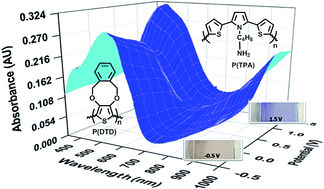
3.2.4 Spectroelectrochemistry of electrochromic device (ECD). While constructing the electrochromic device, the anodically coloring polymer film P(TPA) was fully reduced and the cathodically coloring polymer P(DTD) was fully oxidized. Upon application of a voltage, one of the polymer films is oxidized, whereas the other is neutralized, resulting in a color change. Spectroelectrochemistry experiments were performed to investigate the changes of the electronic transitions of the ECD, with the increase of the applied potential. Fig. 9 represents the absorption spectrum of the ECD, recorded by application of different voltages between −0.5 V and 1.5 V. At −0.5 V the polymer layer was in its neutral state, where the absorption at 385 nm was due to π–π* transition of the polymer. At this potential, DTD was in oxidized state showing no pronounced absorption at the UV-Vis region of the spectrum, thus the color of the device was yellow. As the applied potential was increased the polymer layer started to get oxidized and a decrease in the intensity of the absorption was observed. Meanwhile, DTD layer was in its reduced state, which was followed by the appearance of the new absorption at 585 nm and dominated the color of the device was blue. A comparison of the optical properties of P(DTD)/P(TPA) device with other PEDOT/thienyl pyrrole devices in literature are given in Table 1.
 |
| | Fig. 9 Spectroelectrochemical spectrum of the device as applied potentials between −0.5 and +1.5 V. | |
Table 1 Optical properties of PEDOT/thienyl pyrrole devices in the literature
| Structure |
λmax (nm) |
%ΔT |
Switching time (s) |
References |
| P(SNSNO2)/PEDOT device |
400 |
6 |
— |
21 |
| 600 |
30 |
— |
| P(PTP)/PEDOT device |
386 |
13 |
2.1 |
22 |
| 606 |
— |
— |
| P(DTTP)/PEDOT device |
431 |
— |
— |
23 |
| 617 |
29 |
1.5 |
| P(TPBA)/PEDOT device |
575 |
25 |
1.3 |
20 |
| 615 |
20 |
0.8 |
| P(FPTP)/PEDOT device |
445 |
— |
— |
24 |
| 615 |
19.4 |
1.4 |
| P(DTD)/P(TPA) device |
385 |
25.5 |
0.5 |
This work |
| 550 |
21 |
1.0 |
3.2.5 Switching of ECDs
To investigate switching characteristics of the ECD's the transmission and the response time at the maximum contrast wavelength was monitored during repeated redox stepping experiments. For the device, maximum contrast (%ΔT) and switching time were measured from Fig. 10 as 25.5% and 0.5 s for 385 nm and 21% and 1.0 s for 550 nm by stepping potential between −0.5 V and +1.5 V with a residence time of 5 s.
 |
| | Fig. 10 Potential–time and absorbance–time at 385 and 550 nm for P(DTD-co-TPA) between −0.5 V and 1.5 V. | |
3.2.6 Stability of ECDs. Cyclic voltammetry is employed by monitoring current changes to figure out the long-term stability for devices. Cyclic voltammetry studies showed that the electrochromic devices operated stably with applied voltage of −0.3 V and 2.2 V with 250 mV s−1 scan rate under atmospheric conditions. P(DTD-co-TPA) device could be repeatedly switched up to 500 cycles. We determined that the device had good redox stability (Fig. 11).
 |
| | Fig. 11 Cyclic Voltammograms of the device as a function of repeated scans at 250 mV s−1: after 1st cycle, after 500 cycles. | |
4. Conclusions
Within the scope of these studies; synthesis, characterization, electropolymerization and polymer properties of two different types of thiophene-based monomers; 5,10-dihydrobenzo[f]thieno[3,4-b][1,4]dioxocine (DTD) and 4-(2,5-di(thiophen-2-yl)-1H-pyrrole-1-yl)butane-1-amine (TPA) have been investigated. Regarding to the condensation reaction of 2,3-bis(bromomethyl)quinoxaline and diethyl-5,10-dihydrobenzo[f]thieno[3,4-b][1,4]dioxocine-1,3-dicarboxylate with concomitant hydrolysis and decarboxylation steps gave the desired monomer DTD. When optical and electrochemical properties of electrochemically synthesized DTD were investigated, it was found that it possesses similar characteristics of EDOT. The incorporation of TPA into the conjugated DTD backbone unit via copolymerization results in different emission colors. Optical and electrochemical properties of the copolymer were investigated. We also successfully established the utilization of dual-type complementary colored polymer electrochromic devices using P(DTD)/P(TPA) in sandwich configuration. The switching ability and spectroelectrochemical properties of the electrochromic device were investigated by UV-vis spectrophotometry and cyclic voltammetry. This device exhibits moderate switching voltages (1.5 to 2.3 V) and low switching times (1.7 s) with a good switching stability.
Acknowledgements
One of the researchers (Metin Ak) gratefully thanks to the Scientific and Technological Research Council of Turkey (TUBITAK; project number: 111T074) and PAUBAP (2011FBE74). Mustafa Güllü and Gülbin Kurtay also wish to acknowledge here with the grants received from TÜBİTAK (TBAG/110T071) and AU-BAP (14H0430002).
Notes and references
- A. M. Coclite, R. M. Howden, D. C. Borrelli, C. D. Petruczok, R. Yang, J. L. Yagüe, A. Ugur, N. Chen, S. Lee, W. J. Jo, A. Liu, X. Wang and K. K. Gleason, Adv. Mater., 2013, 25, 5392–5423 CrossRef CAS PubMed.
- J. Janata and M. Josowicz, Nat. Mater., 2003, 2, 19–24 CrossRef CAS PubMed.
- C. L. Gaupp, K. Zong, P. Schottland, B. C. Thompson, C. A. Thomas and J. R. Reynolds, Macromolecules, 2000, 33, 1132–1133 CrossRef CAS.
- A. Czerwinski, D. D. Cunningham, A. Amer, J. R. Schrader, C. Van Pham, H. Zimmer, H. B. Mark and S. Pons, J. Electrochem. Soc., 1987, 134, 1158–1164 CrossRef CAS PubMed.
- T. K. Das and S. Prusty, Polym.–Plast. Technol. Eng., 2012, 51, 1487–1500 CrossRef CAS.
- D. Caras-Quintero and P. Bäuerle, Chem. Commun., 2002, 2690–2691 RSC.
- K.-Y. Jen, L. W. Shacklette and R. Elsenbaumer, Synth. Met., 1987, 22, 179–183 CrossRef CAS.
- L. Groenendaal, F. Jonas, D. Freitag, H. Pielartzik and J. R. Reynolds, Adv. Mater., 2000, 12, 481–494 CrossRef CAS.
- J. Heinze, Top. Curr. Chem., 1990, 152, 1–47 CrossRef CAS.
- K. Kaneto, K. Yoshino and Y. Inuishi, Jpn. J. Appl. Phys., 1982, 21, L567 CrossRef.
- A. Kaynak and R. Foitzik, Res. J. Text. Apparel, 2010, 14, 45–52 CAS.
- F. Von Kieseritzky, F. Allared, E. Dahlstedt and J. Hellberg, Tetrahedron Lett., 2004, 45, 6049–6050 CrossRef CAS PubMed.
- A. Kumar, D. M. Welsh, M. C. Morvant, F. Piroux, K. A. Abboud and J. R. Reynolds, Chem. Mater., 1998, 10, 896–902 CrossRef CAS.
- D. Kumar and R. C. Sharma, Eur. Polym. J., 1998, 34, 1053–1060 CrossRef CAS.
- M. Ak, M. S. Ak, G. Kurtay, M. Güllü and L. Toppare, Solid State Sci., 2010, 12, 1199–1204 CrossRef CAS PubMed.
- L. Groenendaal, G. Zotti, P. H. Aubert, S. M. Waybright and J. R. Reynolds, Adv. Mater., 2003, 15, 855–879 CrossRef CAS.
- T. Soganci, D. O. Demirkol, M. Ak and S. Timur, RSC Adv., 2014, 4, 46357–46362 RSC.
- A. Patra, M. Bendikov and S. Chand, Acc. Chem. Res., 2014, 47, 1465–1474 CrossRef CAS PubMed.
- H. Dauben and L. L. McCoy, J. Am. Chem. Soc., 1959, 91, 4863–4873 CrossRef.
- İ. Yağmur, M. Ak and A. Bayrakçeken, Smart Mater. Struct., 2013, 22, 115022 CrossRef.
- S. Varis, M. Ak, C. Tanyeli, I. M. Akhmedov and L. Toppare, Eur. Polym. J., 2006, 42, 2352–2360 CrossRef CAS PubMed.
- S. Tarkuc, E. Sahmetlioglu, C. Tanyeli, I. M. Akhmedov and L. Toppare, Electrochim. Acta, 2006, 51, 5412–5419 CrossRef CAS PubMed.
- B. Yigitsoy, S. Varis, C. Tanyeli, I. M. Akhmedov and L. Toppare, Thin Solid Films, 2007, 515, 3898–3904 CrossRef CAS PubMed.
- A. Arslan, Ö. Türkarslan, C. Tanyeli, İ. M. Akhmedov and L. Toppare, Mater. Chem. Phys., 2007, 104, 410–416 CrossRef CAS PubMed.
|
| This journal is © The Royal Society of Chemistry 2015 |
Click here to see how this site uses Cookies. View our privacy policy here.