
DOI:
10.1039/C4RA11491D
(Paper)
RSC Adv., 2014,
4, 62446-62452
One-pot synthesis of photoluminescent carbon nanodots by carbonization of cyclodextrin and their application in Ag+ detection†
Received
30th September 2014
, Accepted 12th November 2014
First published on 13th November 2014
Abstract
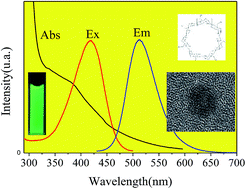
A simple one-pot approach is developed for the preparation of carbon nanodots (C-dots) by low temperature hydrothermal carbonization of cyclodextrin in a hydrochloric acid aqueous solution. The cyclodextrin-based C-dots have a narrow size distribution and show a high fluorescence quantum yield. The C-dots possess excitation-independent downconversion and upconversion photoluminescent (PL) properties, and have a strong green luminescent emission with a maximal peak at 510 nm when they are excited at 420 nm. Besides, the PL properties of the C-dots have a non-obvious change in a wide range of pH values of 5–11. The fluorescence lifetime of the C-dots is about 2.5 ns. Moreover, the obtained C-dots are able to reduce Ag+ ions to elemental silver (Ag0) on their surface under sunlight, leading the PL intensity to be linearly changed with the Ag+ concentration, which can serve as an effective fluorescent probe for the detection of Ag+ in an aqueous solution.
Introduction
As a rising star in the carbon family, fluorescent carbon-based nano-materials have been widely researched because of their exceptional properties, such as low toxicity, stable aqueous dispersion, good biocompatibility, excellent chemical stability and outstanding resistance to photobleaching.1–5 These superior properties make fluorescent carbon-based materials ideal candidates for toxic metal-based quantum dots and organic dyes for many useful applications, such as medical diagnosis,6,7 drug delivery,8 cell imaging,9–12 catalysis,13 sensing,14 and optoelectronic materials.15 So far, a number of carbon-based materials, including fullerenes,16 nanodiamonds,17 carbon nanotubes,18 fluorescent graphene,19–22 carbonized materials,23,24 and carbon nanodots (C-dots),25–29 have been reported. However, among all of above-mentioned carbon materials, C-dots have drawn the greatest research interest in recent years owing to their strong fluorescence and adjustable parameters since they were first reported in 2004.30 Nowadays, numbers of techniques have been used for preparation of photoluminescent C-dots, such as laser ablation of toluene31 and graphite,32 plasma beam treatment of eggs,33 nitric acid reflux treatment of candle soot,34 stripping of graphite by electrochemical oxidation,35 pyrolysis of carbohydrates in microwave,36–38 ultrasound-assisted pyrolysis of glucose,39 and hydrothermal decomposition of proper molecular precursors with high temperature and pressure.40–43 However, all of the above-mentioned methods always involved harsh reaction conditions, expensive equipment, long reaction period or low yield. Therefore, exploring a simple way for large scale preparation of C-dots is still a challenge. Preparation of C-dots and carbon spheres through hydrothermal carbonization of carbohydrates in sealed reactor have already been widely reported.40,41,43,44 For such reaction, 5-hydroxymethyl-2-furaldehyde (HMF) is a very important intermediate to form aromatic clusters, and finally form C-dots or carbon spheres. Generally, HMF can only be formed under high temperature and pressure in hydrothermal process. However, high temperature and pressure would cause HMF and carbohydrates decompose to organic acids (acetic, lactic, propenoic, levulinic, and formic acids) easily,44 which maybe result to a low yield of C-dots. Nevertheless, carbohydrates can convert to HMF at low temperature and normal pressure under concentrated hydrochloric condition. And as we know, HMF could easily dehydrate for further polymerization to form carbides (C-dots and carbon spheres) in strongly acidic and low temperature conditions. So, it is possible to prepare C-dots just by hydrothermal carbonization of carbohydrates in hydrochloric acid aqueous solution at low temperature and normal pressure.
Herein, we successfully prepared C-dots using different types of cyclodextrins as carbohydrates by treatment with concentrated hydrochloric acid at low temperature. The synthesized C-dots had a narrow size distribution, showing special excitation-independent downconversion and interesting excitation-independent upconversion photoluminescent (PL) properties in aqueous solutions. Moreover, when put the mixed aqueous solution of C-dots and AgNO3 under sunlight, the Ag+ could be reduced to Ag0 in a short time, without any additional reducing agent or other special reaction conditions (Fig. 1). It is widely believed that oxygen-containing functionalities (carboxylic, carbonyl, and phenolic groups) are necessary for anchoring of metal nanoparticles on the carbon supports.45 Therefore, most of the formed silver nanoparticles (Ag0) were anchored on the surface of the C-dots due to plenty oxygen-containing functionalities on their surface. Furthermore, the silver nanoparticle caused an obvious PL intensity change of C-dots, which correlated closely with the concentrations of Ag+. This property makes the C-dots have potential applications in the detection of Ag+ in aqueous medium.
 |
| | Fig. 1 Schematic representation of synthesis of C-dots from cyclodextrin and the reduction of Ag+ to Ag0 by C-dots under sunlight. | |
Experimental
Chemicals
Cyclodextrins (α, β, and γ) were purchased from Aladin Ltd. (Shanghai, China). Hydrochloric acid was obtained from Guangzhou Chemical Factory (China). All of the chemicals were used as received without further purification. The water used in all experiments was purified by deionization and filtration with a Millipore purification apparatus to a resistivity higher than 18.0 MΩ cm.
Synthesis of C-dots
In a typical experiment, a mixture of cyclodextrin (2 g), hydrochloric acid (15 mL, 36–38 wt%) and deionized water (15 mL) was added to a 150 mL conical flask, sealed with a plastic wrap. The mixture was treated ultrasonically for 10–15 min. Then the flask was put in an oven at 70 °C for 4 h. After the reaction completed, the flake was cooled down naturally. A brown or dark solution was obtained, which implied the formation of the C-dots. The aqueous solution was got rid of most water and hydrochloric acid by a rotary evaporation at 60 °C, while the pH value was adjusted to 7–8 with Na2CO3 (2.5 mol L−1). The concentrated solution was centrifuged at 15
000 rpm for 20 min to separate big particles. The supernatant was further dialyzed in a dialysis bag (retained molecular weight: 500 Da) for 24 h to purify the C-dots. Finally, the as-prepared C-dots aqueous solution was got rid of most water by a rotary evaporation at 60 °C, and then freeze-dried for use.
Detection of Ag+
Ag+ aqueous solutions of different concentrations were mixed with C-dots (100 mg mL−1). The mixtures were set under sunlight for 30 min to ensure that Ag+ was reduced to Ag0 completely. Then the mixtures were subjected to PL measurement.
Characterization
The particle diameter and morphologies were characterized by transmission electron microscope (TEM, JEOL JEM-2100F) with an accelerating voltage of 200 kV. Drops of chloroform solutions of C-dots were placed on a copper grid and dried at room temperature. The composition of the product was inferred from X-ray photoelectron spectroscopy (XPS), by using a Kratos Axis ULTRA X-ray photoelectron spectrometer with Al Kα X-rays as the excitation source. Fourier transform infrared (FT-IR) spectra were measured on a German Vector-33 IR instrument in the range of 400–4000 cm−1. The UV-Vis spectroscopy was carried out on Hitachi U-3010 UV-Vis spectrophotometer (Japan). The photoluminescence spectra were collected on a Perkin Elmer LS 55 fluorescence spectrometer from 200–900 nm. The X-ray diffraction (XRD) pattern of C-dots was obtained using an X'pert PRO diffractometer (40 kV and 40 mA) equipped with a Cu Kα radiation (wavelength 0.154 nm) at room temperature. The diffractogram was obtained in the range from 0° to 90° at scanning speed of 10° min−1. The particle size distribution of C-dots was measured by Malvern Mastersizer 2000S. Fluorescence decay was measured based on the leica SP5 FLIM system using a 405 nm laser as the excitation source. The absolute quantum yield (QY) of the C-dots was measured by using a fluoro SENS 90 Zolix instrument with the excitation at 420 nm and emission at 510 nm.
Results and discussion
Synthesis of C-dots with different carbohydrates and temperatures
Different carbohydrates, including cyclodextrin, glucose, sucrose and citrate, were used to prepare C-dots under hydrochloric acid of about 18.5 wt% at 70 °C for 4 h. The product yield and quantum yield of different carbohydrates are listed in Table S1.† The result showed that C-dots could be prepared successfully from cyclodextrin, glucose and sucrose. However, citrate did not form C-dots even prolonged the reaction time to 12 h or elevated the reaction temperature to 90 °C. That was maybe because citrate could not form HMF under the conditions, and in that case, citrate could formed C-dots only in high temperature and pressure condition.29 Cyclodextrin was one of the best choices for preparation of C-dots in views of high product yield and quantum yield. Here, temperature had a great effect on the yield of C-dots (Table S2,† take β-cyclodextrin for example). As shown in Fig. S1,† no obviously color change happened in the reaction solution after 4 h at 50 °C, which meant nearly no C-dots was formed within 4 h at temperature lower than 50 °C. C-dots can be obtained within 4 h at temperature higher than 60 °C. However, the reaction solution turned black when the temperature was higher than 80 °C (Fig. S1†), indicating there were plenty carbon spheres formed (Fig. S2†), and led to the decrease in yield and quantum yield of C-dots. That was because the dehydration reaction happened very slowly at the temperature lower than 50 °C, 4 h was not enough for β-cyclodextrin to formed C-dots. While the dehydration reaction became very fast at temperature higher than 80 °C, and the high temperature provided enough energy for the formed C-dots to further dehydrated and gathered to formed carbon spheres, leading to a decreased yield of C-dots. The yields of C-dots were optimal when the reaction temperature was 70 °C.
Structural of the C-dots
Transmission electron microscopy (TEM) images of C-dots (Fig. 2(a) and S3(a, b)†) demonstrated that all C-dots synthesized from α, β, γ-cyclodextrins were well dispersed and appeared as spherical particles in narrow distributions of 2.5 ± 0.8 nm, as shown in Fig. 2(b) and S3(c, d†). The high-resolution TEM image of the C-dots did not show any clear lattice fringes, indicating that the C-dots synthesized under our experiment conditions had a rather amorphous structure. The XRD pattern showed a broad peak of all α, β, and γ C-dots located at 18.5 (Fig. S4†), suggesting a very disordered structure of C-dots, further confirmed the TEM experiment result. The surface composition and element analysis of the C-dots were characterized by XPS. The XPS measurement result showed that there were two elements, C and O (Fig. 3(a–c)). The deconvolution of the C1s spectrum of the C-dots indicated presence of three types of carbon bonds: sp2C
C (284.6 eV), C–O (286.5 eV) and C
O (288.1 eV) (Fig. 3(e–f)). This result showed that there were abundant oxygen groups in the surface of the C-dots.
 |
| | Fig. 2 (a) TEM image and (b) size histogram (counting 100 particles at least) of C-dots synthesized from β-cyclodextrin. The inset in a: high-resolution TEM image of C-dots. | |
 |
| | Fig. 3 (a–c) XPS and (d–f) C1s spectra of C-dots synthesized from α (a and d), β (b and e) and γ (c and f)-cyclodextrins. | |
The FT-IR spectra had been used to gain further structural insights about the prepared C-dots (Fig. S5†). The FTIR peaks at 3416, 2926 and 1643 cm−1 were attributed to the stretching vibrations of O–H, C–H and C
O, implying the existence of large numbers of residual hydroxyl groups; the peaks at 1418 and 1028 cm−1 implied the existence of a large amount of C–O groups on the surface of C-dots. The bands in the 850–765 cm−1 region attributed to the out-of-plane bending vibrations of the aromatic C–H, confirming the presence of aromatic rings.
Optical properties of the C-dots
It has been proofed that the photoluminescence of C-dots is induced by energy trapping, which results from the defect sites on the surface of C-dots.46 Abundant of functional groups, e.g., carboxyl acids, epoxy and hydroxyl groups, can introduce different defects on the surface of C-dots, acting as the excitation energy traps and leading to the diverse photoluminescence properties. That means if there are more functional groups on the surface of C-dots, their PL properties maybe better. C-dots synthesized in this experiment conditions contained large number of functional groups and a loose structure, which had been proofed by TEM, XRD and FT-IR spectra. Those large number of functional groups and loose structure could introduced a lot of defects on the C-dots, leading a high fluorescence quantum yield (9.7%, 13.5% and 10.6% of the C-dots synthesized from α, β, and γ-cyclodextrins, respectively) even without any passivation.
The as-prepared C-dots have exhibited distinct green luminescence under UV irradiation (the insets in Fig. 4(a–c)), indicating that the C-dots possessed excellent aqueous solution dispersible and optical properties. When the C-dots were excited at 420 nm, the maximum emission peak at 510 nm was observed (Fig. 4(a–c)). However, unlike most of reported C-dots, emission wavelength red-shift along with the excitation wavelength.25,27–29,36–43 Here, when the excitation wavelength was changed from 360 nm to 460 nm, the emission wavelength showed nearly no shift (Fig. 4(e–f)). Usually, the excitation-dependent FL properties of C-dots reflect a unevenness distribution of the particles sizes and surface states of the sample.47 Therefore, the excitation-independent FL property suggested that the C-dots had a uniform morphology (TEM images indicated that the size of the C-dots was uniform, ranging from 1.7 to 3.3 nm) and surface states.
 |
| | Fig. 4 (a–c) Absorbance, excitation and emission spectra, and (d–f) excitation-independent emission spectra of C-dots synthesized from α (a and d), β (b and e) and γ (c and f)-cyclodextrins. The insets in (a–c): photographs taken under 365 nm UV light. | |
The fluorescence lifetimes of the C-dots were measured by time-correlated single photon counting, with excitation wavelengths of 405 nm (Fig. S6†). The result showed the lifetime of C-dots was 2.5 ± 0.3 ns, indicating an outstanding resistance to photobleaching. Besides, the stability of the as-prepared C-dots was further investigated with different pH values. The result revealed that the PL of the C-dots intensities decreased in an aqueous solution of high or low pH, but still remained strong and only changed a littler in a wide range of pH values of 5–11 (Fig. 5(a–c)). This result may be consequence of the chemical structure of the C-dots. As we know, the emission control of the surface state/molecule state was strongly affected by surrounding conditions.48 When pH values were too low/high, the surface state/molecule states of C-dots were strongly influenced by the interaction between their surface reactive oxygen groups and high concentration of hydrogen ions/hydroxide ions, leading the PL intensity weaker. All the results revealed that the obtained C-dots had a stable PL property, which were suitable for practical applications.
 |
| | Fig. 5 (a–c) Fluorescence spectra of C-dots (0.5 mg mL−1) synthesized from α, β and γ-cyclodextrins excited at 420 nm at different pH values, respectively. | |
Significantly, in addition to excitation-independent downconversion PL property, the as-prepared C-dots also showed clear excitation-independent upconversion PL properties. As manifested in Fig. 6(a–c), the PL spectra of C-dots excited by NIR-light with the upconverted emissions located at ca. 510 nm, and the PL spectra were almost unchanged with the excitation wavelength red shift (from 700 to 900 nm). As reported in the previous research on C-dots, the upconversion PL properties of C-dots should be attributed to the multiphoton active process, in which the simultaneous absorption of two or more photons leads to the emission of light at a shorter wave length than the excitation wavelength (anti-Stokes type emission).49 These results demonstrated the potential of the C-dots in cell imaging with two-photon luminescence microscopy,50 and for full use of the visible spectrum of sun-light, combining with the wide band gap photocatalysts.
 |
| | Fig. 6 (a–c) Upconverted excitation-independent emission spectra of C-dots synthesized from α, β and γ-cyclodextrins, respectively. | |
Reduction and detection of Ag+ with C-dots
Herein, we were surprised to found that the obtained C-dots could quickly reduce Ag+ to Ag0 in sunlight. That was maybe results from the special upconversion PL properties of the C-dots. When placing the mixed solution of AgNO3 and C-dots under sunlight, the electrons could be excited from C-dots. Some of those excited electrons arrive at the surface of C-dots and combined with the Ag+ that absorbed on C-dots surface, reducing the Ag+ to Ag0 (Fig. 1).
To confirmed this, a concentration of AgNO3 (200 μM) was added to C-dots aqueous solution (200 mg L−1). After 30 min under sunlight the transparent solution changed to red-brown, while no obviously change was observed even after keep the mixed solution in the dark for 12 h (Fig. S7†), proofing that some kind of reaction did occur when put C-dots and AgNO3 mixed solution under sunlight. The UV-vis of the mixed solution (after under sunlight for 30 min) showed an obviously adsorption band at 448 nm that attributed to the characteristic surface plasmon absorption of Ag0, while no absorption was observed for the control experiment where no Ag0 were formed in the absence of sunlight (Fig. 7), demonstrating that the obtained C-dots could reduce the Ag+ to Ag0 in sunlight.
 |
| | Fig. 7 UV-vis spectra of aqueous solution of AgNO3 (200 μM) and C-dots (200 mg L−1): (a) in dark for 12 h, (b) under sunlight for 30 min. | |
As the PL property of C-dots was attributed to radiative combination of electrons and holes confined on their surface. When Ag+ was reduced to Ag0 on C-dots surface, the surface states of C-dots would be changed, leading the PL property changed. We added different concentrations of Ag+ to C-dots (100 mg L−1) aqueous solution, and found that the PL intensity of C-dots changed obviously after 30 min under sunlight (Fig. S8†). Fig. S8† illustrated that when the concentration of Ag+ was lower than 25 μM, the PL intensity increased along the increase of the concentration of Ag+. However, when the concentration of Ag+ was too high (more than 50 μM), the PL intensity of C-dots decreased obviously rather than increased. That was maybe because only very small Ag0 particle formed on the surface of the C-dots when the concentration of Ag+ was lower than 25 μM. The surface plasmon resonance effect of those formed small Ag nanoparticles allows significant radiative combination and additional light absorption, which could enhance the radiative emission, strengthen the PL intensity of C-dots. In this situation, the PL intensity of C-dots increased along the concentration of Ag+ (Ag0) increased. On the contrary, C-dots were absorbed and gathered on the surface of Ag0, because the Ag0 was grown much bigger than C-dots when the concentration of Ag+ was higher than 50 μM. In that case, the fluorescence of C-dots occurred aggregation quenching, leading the PL intensity decreased (Fig. S9†). To confirm this, the particle size of AgNO3 and C-dots mixed solution had been measured after 30 min under sunlight, in the presence of different concentrations of Ag+ (Fig. S10(a–f)†). The result showed that the average particle size of mixed solution was grown because the Ag+ had been reduced to Ag0 on the surface of C-dots. The average particle size was kept lower than 15 nm when the concentration of Ag+ was lower than 25 μM, meaning the Ag0 formed on the surface of C-dots was only several nanometers. With increasing the concentration of Ag+ to 50 μM or 500 μM, the average size of particles in mixed solution was increase to 28 nm and 110 nm, respectively, indicating the Ag0 had grown much bigger than C-dots, and in this case, C-dots were adsorb and aggregate on the surface of Ag0.
For the sensitivity study, different concentrations of Ag+ in the range of 0–25 μM were investigated. As showed in Fig. 8(a and b), PL intensity was change regularly along the concentration of Ag+, and complied with the Stern–Volmer equation:26 F/F0 − 1 = Ksvc. Where Ksv is the Stern–Volmer quenching constant, c is the concentration of Ag+. F0 and F are PL intensities of the C-dots at 510 nm in the absence and presence of Ag+, respectively. The Stern–Volmer plot showed there was a linear relationship between the PL intensity and Ag+ over the concentration range of 0.5–25 μM (R2 = 0.996).
 |
| | Fig. 8 (a) Representative FL emission spectra of aqueous solutions of C-dots (100 mg L−1) and AgNO3 with different concentrations (0–25 μM) after 30 min under sunlight. (b) The relationship between F/F0 − 1 and Ag+ concentration (n = 3). F and F0 are the FL intensities of C-dots at 510 nm excited at 420 nm in the presence and absence of Ag+, respectively. | |
To assess the selectivity of the C-dots for Ag+ recognition, PL intensity of the mixed aqueous solution of C-dots (100 mg L−1) with different ionic species, such as 10 μM of Ag+, Cu2+, Fe3+, Fe2+, Mn2+, Zn2+, Cr3+, Co2+, Pb2+, Ni2+, Cd2+, K+, Na+, Al3+ and Hg2+ had been measured after 30 min in sunlight. The results in Fig. 9 showed that the PL intensity of C-dots was increase obviously after addition of Ag+ but almost unchanged after addition of other ions, demonstrating that our C-dots were highly selective for Ag+ detection.
 |
| | Fig. 9 F/F0 − 1 of aqueous solutions of C-dots (100 mg L−1) with different metal ions (10 μM). | |
In addition, we believe that the obtained C-dots were perfect templates and reducing agents for in situ synthesis of nano-silver in aqueous solution, which may further expand the application of the obtained C-dots.
Conclusions
In summary, the low temperature hydrothermal carbonization of cyclodextrins in hydrochloric acid aqueous solution had been demonstrated to be an easy, economic and effective strategy for producing C-dots. The synthesized C-dots from cyclodextrins exhibited narrow size distribution, stable and excitation-independent downconversion PL properties in aqueous solutions. Moreover, the interesting upconversion PL properties made the obtained C-dots could reduce Ag+ to Ag0 under sunlight, which caused the PL intensity of C-dots linear changed with the concentration of Ag+, enlarging the application potential of the C-dots for Ag+ detection.
Acknowledgements
We gratefully acknowledge the financial support by the National Natural Basic Research Program of China (973 Program, 2012CB821500), the National Natural Science Foundation of China (21274046 and 21474032) and the Natural Science Foundation of Guangdong Province (S2012020011057).
Notes and references
- H. Li, Z. Kang, Y. Liu and S. T. Lee, J. Mater. Chem., 2012, 22, 24230–24253 RSC.
- J. H. Shen, Y. H. Zhu, X. L. Yang and C. Z. Li, Chem. Commun., 2012, 48, 3686–3699 RSC.
- A. B. Bourlinos, A. Stassinopoulos, D. Anglos, R. Zboril, M. Karakassides and E. P. Giannelis, Small, 2008, 4, 455–458 CrossRef CAS PubMed.
- L. Cao, M. J. Meziani, S. Sahu and Y. P. Sun, Acc. Chem. Res., 2013, 46, 171–180 CrossRef CAS PubMed.
- S. N. Baker and G. A. Baker, Angew. Chem., Int. Ed., 2010, 49, 6726–6744 CrossRef CAS PubMed.
- W. B. Shi, Q. L. Wang, Y. J. Long, Z. L. Cheng, S. H. Chen, H. Z. Zheng and Y. M. Huang, Chem. Commun., 2011, 47, 6695–6697 RSC.
- X. H. Wang, K. G. Qu, B. L. Xu, J. S. Ren and X. G. Qu, Nano Res., 2011, 4, 908–920 CrossRef CAS PubMed.
- C. J. Liu, P. Zhang, X. Y. Zhai, F. Tian, W. C. Li, J. H. Yang, Y. Liu, H. B. Wang, W. Wang and W. G. Liu, Biomaterials, 2012, 33, 3604–3613 CrossRef CAS PubMed.
- X. Y. Zhang, S. Q. Wang, M. Y. Liu, B. Yang, L. Feng, Y. Ji, L. Tao and Y. Wei, Phys. Chem. Chem. Phys., 2013, 15, 19013–19018 RSC.
- F. Wang, Z. Xie, H. Zhang, C. Y. Liu and Y. G. Zhang, Adv. Funct. Mater., 2011, 21, 1027–1031 CrossRef CAS.
- A. Sachdev, I. Mataia and P. Gopinath, RSC Adv., 2014, 4, 20915–20921 RSC.
- H. Q. Tao, K. Yang, Z. Ma, J. M. Wan, Y. J. Zhang, Z. H. Kang and Z. Liu, Small, 2012, 8, 281–290 CrossRef CAS PubMed.
- H. C. Zhang, H. Huang, H. Ming, H. T. Li, L. L. Zhang, Y. Liu and Z. H. Kang, J. Mater. Chem., 2012, 22, 10501–10506 RSC.
- L. Zhou, Y. H. Lin, Z. Z. Huang, J. S. Ren and X. G. Qu, Chem. Commun., 2012, 48, 1147–1149 RSC.
- H. Chang, Z. Sun, Q. Yuan, F. Ding, X. Tao, F. Yan and Z. J. Zheng, Adv. Mater., 2010, 22, 4872–4876 CrossRef CAS PubMed.
- J. H. Bang and P. V. Kamat, ACS Nano, 2011, 5, 9421–9427 CrossRef CAS PubMed.
- A. Krueger, Adv. Mater., 2008, 20, 2445–2449 CrossRef CAS.
- K. Welsher, Z. Liu, S. P. Sherlock, J. T. Robinson, Z. Chen, D. Daranciang and H. Dai, Nat. Nanotechnol., 2009, 4, 773–780 CrossRef CAS PubMed.
- S. Zhu, S. Tang, J. Zhang and B. Yang, Chem. Commun., 2012, 48, 4527–4539 RSC.
- R. Yan, H. Wu, Q. Zheng, J. Y. Wang, J. L. Huang, K. J. Ding, Q. G. Guo and J. Z. Wang, RSC Adv., 2014, 4, 23097–23106 RSC.
- S. Zhu, J. Zhang, X. Liu, B. Li, X. Wang, S. Tang, Q. Meng, Y. Li, C. Shi, R. Hu and B. Yang, RSC Adv., 2012, 2, 2717–2720 RSC.
- X. Y. Gu, Y. Ning, Y. Yang and C. Y. Wang, RSC Adv., 2014, 4, 3211–3218 RSC.
- Y. Yang, Z. Tong, T. Ngai and C. Y. Wang, ACS Appl. Mater. Interfaces, 2014, 6, 6351–6360 CAS.
- Y. Yang, Y. H. Deng, Z. Tong and C. Y. Wang, J. Mater. Chem. A, 2014, 2, 9994–9999 CAS.
- Z. Li, B. Z. He and J. C. Huang, Chem. Commun., 2013, 49, 8078–8080 RSC.
- T. T. Lai, E. H. Zheng, L. X. Chen, X. Y. Wang, L. C. Kong, C. P. You, Y. M. Ruan and X. X. Weng, Nanoscale, 2013, 5, 8015–8021 RSC.
- Y. B. Song, S. J. Zhua and B. Yang, RSC Adv., 2014, 4, 27184–27200 RSC.
- X. F. Hou, F. Zeng, F. K. Du and S. Z. Wu, Nanotechnol., 2013, 24, 335502 CrossRef CAS PubMed.
- S. J. Zhu, Q. N. Meng, L. Wang, J. H. Zhang, Y. B. Song, H. Jin, K. Zhang, H. C. Sun, H. Y. Wang and B. Yang, Angew. Chem., Int. Ed., 2013, 52, 3953–3957 CrossRef CAS PubMed.
- X. Xu, R. Ray, Y. Gu, H. J. Ploehn, L. Gearheart, K. Raker and W. A. Scrivens, J. Am. Chem. Soc., 2004, 126, 12736–12737 CrossRef CAS PubMed.
- S. K. Yang, H. B. Zeng, H. P. Zhao, H. W. Zhang and W. P. Cai, J. Mater. Chem., 2011, 21, 4432–4436 RSC.
- S. L. Hu, K. Y. Niu, J. Sun, J. Yang, N. Q. Zhao and X. W. Du, J. Mater. Chem., 2009, 19, 484–488 RSC.
- J. Wang, C. F. Wang and S. Chen, Angew. Chem., Int. Ed., 2012, 51, 9297–9301 CrossRef CAS PubMed.
- H. P. Liu, T. Ye and C. D. Mao, Angew. Chem., Int. Ed., 2007, 46, 6473–6475 CrossRef CAS PubMed.
- J. Lu, J. X. Yang, J. Z. Wang, A. Lim, S. Wang and K. P. Loh, ACS Nano, 2009, 3, 2367–2375 CrossRef CAS PubMed.
- X. F. Hu, L. Cheng, N. Wang, L. Sun, W. Wang and W. G. Liu, RSC Adv., 2014, 4, 18818–18826 RSC.
- X. H. Wang, K. G. Qu, B. L. Xu, J. S. Rena and X. G. Qu, J. Mater. Chem., 2011, 21, 2445–2450 RSC.
- X. Y. Zhai, P. Zhang, C. J. Liu, T. Bai, W. C. Li, L. M. Dai and W. G. Liu, Chem. Commun., 2012, 48, 7955–7957 RSC.
- H. T. Li, X. D. He, Y. Liu, H. Huang, S. Y. Lian, S. T. Lee and Z. H. Kang, Carbon, 2011, 49, 605–609 CrossRef CAS PubMed.
- Y. H. Yang, J. H. Cui, M. T. Zheng, C. F. Hu, S. Z. Tan, Y. Xiao, Q. Yang and Y. L. Liu, Chem. Commun., 2012, 48, 380–382 RSC.
- Z. C. Yang, X. Li and J. Wang, Carbon, 2011, 49, 5207–5212 CrossRef CAS PubMed.
- S. Liu, J. Q. Tian, L. Wang, Y. W. Zhang, X. Y. Qin, Y. L. Luo, A. M. Asiri, A. O. Al-Youbi and X. P. Sun, Adv. Mater., 2012, 24, 2037–2041 CrossRef CAS PubMed.
- S. Sahu, B. Behera, T. K. Maiti and S. Mohapatra, Chem. Commun., 2012, 48, 8835–8837 RSC.
- M. Sevilla and A. B. Fuertes, Carbon, 2009, 47, 2281–2289 CrossRef CAS PubMed.
- G. G. Wildgoose, C. E. Banks and R. G. Compton, Small, 2006, 2, 182–193 CrossRef CAS PubMed.
- L. Bao, Z. L. Zhang, Z. Q. Tian, Z. Li, L. Cui, L. Yi, Q. B. Ping and P. D. Wen, Adv. Mater., 2011, 23, 5801–5806 CrossRef CAS PubMed.
- J. C. G. Esteves da Silva and H. M. R. Goncalves, TrAC, Trends Anal. Chem., 2011, 30, 1327–1336 CrossRef CAS PubMed.
- X. Zhai, P. Zhang, C. Liu, T. Bai, W. Li, L. Dai and W. Liu, Chem. Commun., 2012, 48, 7955–7957 RSC.
- M. Haase and H. Schäfer, Angew. Chem., Int. Ed., 2011, 50, 5808–5829 CrossRef CAS PubMed.
- L. Cao, X. Wang, J. M. Mohammed, F. S. Lu, H. F. Wang, P. J. G. Luo, Y. Lin, B. A. Harruff, L. M. Veca, D. Murray, S. Y. Xie and Y. P. Sun, J. Am. Chem. Soc., 2007, 129, 11318–11319 CrossRef CAS PubMed.
Footnote |
| † Electronic supplementary information (ESI) available. See DOI: 10.1039/c4ra11491d |
|
| This journal is © The Royal Society of Chemistry 2014 |
Click here to see how this site uses Cookies. View our privacy policy here.