
Electrocatalytic degradation of 2,4-dichlorophenol using a Pd/graphene gas-diffusion electrode

Qin Shia, Hui Wang*a, Shaolei Liua and Zhaoyong Bian*b
aCollege of Environmental Science and Engineering, Beijing Forestry University, Beijing 100083, PR China. E-mail: wanghui@bjfu.edu.cn
bCollege of Water Sciences, Beijing Normal University, Beijing 100875, PR China. E-mail: bian@bnu.edu.cn

Received 26th August 2014 , Accepted 17th October 2014

First published on 17th October 2014


Abstract

Palladium-modified graphene gas-diffusion cathodes were prepared using Pd/graphene catalysts and characterized using cyclic voltammetry, scanning electron microscopy, transmission electron microscopy, X-ray diffraction, Raman spectroscopy and Fourier transform infrared spectrometry. The Pd particles were amorphous and had an average size of 5.4 nm, and were highly dispersed in the graphene. A diaphragm electrolysis system sequentially fed with H2 and air over the gas-diffusion cathodes was constructed, and applied to the degradation of 2,4-dichlorophenol (2,4-DCP). When the Pd/graphene gas-diffusion cathode was fed with hydrogen, reductive dechlorination of 2,4-DCP took place, whereas acceleration of two-electron reduction of O2 to H2O2 proceeded in air. Dechlorination of 2,4-DCP reached approximately 96.4% after 60 min, while its removal efficiency and its removal in terms of total organic carbon (TOC) reached approximately 100% and 90.5%, respectively, after 120 min. By analysis of the electrolysis products by HPLC and IC, a reaction pathway has been proposed for the degradation of 2,4-DCP.

1. Introduction

Chlorophenols are important reactants in the production of industrial products such as paper, medicines, and wood preservatives.1–5 The wastewater generated in the production and use of chlorophenolic compounds is eventually released into the environment as a serious pollutant.6–9 2,4-DCP is resistant to degradation and is present in wastewater from the production of pesticides, fuel and plasticizers, and it is listed in both the US and China as a pollutant requiring priority control. However, chlorophenols are difficult to degrade, making them long-term residents in water and soil, and leading to ultimate arrival in the bodies of both humans and animals. Methods for breaking down and removing these materials have become a major research topic in recent years.

Electrochemical methods are often employed for degrading chlorophenolic compounds, since they require simple equipment that is easy to operate.10,11 While the catalytic electrode exhibits good degradation at low chlorophenolic concentrations, it requires a long reaction time to achieve satisfactory chlorophenol removal. In addition, the direct electrochemical oxidation and reduction of chlorophenols may itself produce toxic chloride-containing products, in which case the electrolytic solutions may exhibit a higher level of toxicity than the parent solutions.

In the search for satisfactory electrochemical elimination of chlorophenols, palladium (Pd) has attracted attention due to its good catalytic performance in hydrodechlorination.12–17 To maximize the activity of Pd at low concentrations, highly reactive Pd nanostructures are loaded on to the surface of an inexpensive nanomaterial of high surface areas and good electrical conductivity. This type of system maximizes the availability of the nanoscale electrocatalytic surface for electron transfer, at the same time improving the transport of reactants to the electrocatalyst. Although activated carbon (AC)18–22 and carbon nanotubes (CNTs)23 are good carriers, they do not exhibit particularly good hydrogenation or dechlorination performance.

Graphene is a carbon-based material comprising sp2-bonded atoms forming a single-layer hexagonal lattice structure.24–27 As a novel two-dimensional nanoscale form of carbon,28 graphene combines good electrical conductivity and chemical stability, and is arranged in a large number of surface folds with a high surface area.29,30 Compared to AC and CNTs, graphene is an ideal material for reinforcing nanocomposites, due to its outstanding properties and abundant precursors.31 A number of methods have been developed to produce graphene sheet.32–35 Most of these require high temperatures and lengthy processing times. The chemical reduction of exfoliated graphite oxide (GO) using reagents such as formaldehyde36,37 offers a promising approach for the efficient production of chemically converted graphene (CCG) sheets on a large scale. The present paper describes solution-based methods for preparing Pd-modified graphene nanosheets. Both the GO reduction and the in situ deposition of Pd nanoparticle are accomplished in a one-step process.

The catalytic oxidation and reduction of 2,4-dichlorophenol (2,4-DCP) on a Pd/graphene gas-diffusion electrode was investigated. The Pd/graphene catalyst suitable for use in a gas-diffusion electrode was first characterized by Raman spectroscopy, Fourier-transform infrared spectrometry (FTIR), X-ray photoelectron spectroscopy (XPS), X-ray diffraction (XRD), transmission electron microscopy (TEM), scanning electron microscopy (SEM), and cyclic voltammetry (CV). 2,4-DCP was degraded using a diaphragm electrolysis system containing a Ti/IrO2/RuO2 anode, a Pd/graphene gas-diffusion cathode and a synthetic organic membrane. After reductive dechlorination to remove the chlorine atoms of 2,4-DCP from the aromatic structure, non-chlorinated intermediates were collected in the cathodic compartment. Then, in both anodic and cathodic compartments, oxidization and degradation of these intermediates took place. Finally, the major intermediates of 2,4-DCP degradation were identified using chromatography and a reaction pathway was proposed.

2. Experimental

2.1 Preparation of the Pd/graphene catalyst

Formation of the Pd/graphene catalyst involved three steps: (i) oxidation of the graphite to pre-oxidized graphite, (ii) further oxidation of the pre-oxidized graphite to obtain GO, and (iii) the one-step formaldehyde reduction and dispersion of the Pd2+–GO to produce the Pd/graphene catalyst.

GO was prepared from natural graphite flakes (99.99%, 325 mesh, Qingdao Zhongtian Company, Qingdao, China) based on a modification of the Hummers method.38,39 Graphite powder (2 g) was added to a solution of concentrated H2SO4 (30 mL), K2S2O8 (2 g), and P2O5 (2 g) at 80 °C. The mixture was stirred at this temperature 6 h before allowing it to cool to 25 °C. The mixture was then carefully diluted with distilled water, filtered, and washed on the filter until the pH of the rinse was neutral. The pre-oxidized graphite was dried overnight in air at room temperature.

The pre-oxidized graphite (1 g) was placed in cold concentrated H2SO4 (25 mL) at 0 °C. KMnO4 (6 g) was added gradually with stirring and cooled to keep the temperature below 20 °C; the mixture was then stirred for 2 h, following which the solution was heated to 35 °C for 30 min and distilled water (50 mL) added. After a further 15 min the reaction was terminated by adding a large excess of distilled water (250 mL), followed by 30% H2O2 solution (4.25 mL), which changed the color of the mixture to bright yellow. The mixture was filtered and washed with a 1[thin space (1/6-em)]:[thin space (1/6-em)]10 solution of concentrated hydrochloric acid (500 mL) to remove any metal ions. The product was filtered, centrifuged and washed with water until the wash-water was below pH 5. Finally, the suspension of GO was dried in a vacuum oven at 60 °C for 48 h.

Pd/graphene catalysts were prepared by a formaldehyde reduction method. PdCl2 was dissolved in concentrated hydrochloric acid and 15 mL of deionized water added. A solution of GO was added dropwise to the PdCl2 solution at 80 °C with vigorous stirring. The mixture was maintained a further 2 h at 80 °C, and then cooled to 40 °C. A 36% solution of formaldehyde was added with vigorous stirring, the solution heated to 80 °C and the pH adjusted to 8–9 using 30% NaOH solution. The Pd/graphene catalyst loaded with 1.0 wt% Pd was finally filtered off and washed six times with distilled water.

2.2 Procedure

The preparation of Pd/graphene gas-diffusion cathodes followed the procedure reported previously.40 The electrolysis was performed in a 100 mL diaphragm electrolytic device containing a gas-diffusion cathode (16 cm2) and a Ti/IrO2/RuO2 anode (16 cm2). The electricity came from a DC laboratory power supply provided with a voltage monitor. The original concentration of 2,4-DCP was 100 mg L−1, the supporting electrolyte (Na2SO4) concentration was 0.03 mol L−1, the initial pH 7.0, and the current density 50 mA cm−2. The gas compartment was fed with hydrogen (or air) at 25 mL s−1 over 0–60 min.

2.3 Analytical methods

Raman spectra were collected on an inVia-Reflex Raman spectroscope equipped with a 514.5 nm laser source (British Renishaw). FTIR was used to identify the change in the functional groups on the catalyst. The sample powder was ground with KBr and pressed into a pellet. A Nicolet 2550 spectrometer was used to follow the formaldehyde reduction of GO, the spectra being determined over an optical range of 500–4000 cm−1 as the average of eight scans at 4 cm−1 resolution. The Pd/graphene catalyst was characterized using XRD with an X'Pert PRO MPD X-ray diffractometer using Cu-Kα radiation and a Ni filter. An S-4800 SEM was used to study the surface morphology. The morphological and size distribution characteristics of the Pd particles were determined by TEM (JEM-2010F TEM microscope) at 200 kV.

The cyclic voltammetry characteristics were studied using a potentiostat galvanostat (EG&G Model 273A) using a standard three-electrode system, comprising an Ag/AgCl electrode as reference electrode; a Pt wire as counter-electrode, and the Pd/graphene catalyst-modified electrode as working electrode.

High-performance liquid chromatography (HPLC, Shimadzu, Japan) was used to determine 2,4-DCP and its stable electrolysis products by comparison of their retention times to standard compounds. The samples (20 μL) were passed through 0.45 μm PTFE filters before injection into the HPLC. A Znertisl ODS-SP C18 column (250 × 4.6 mm, 5 μm) was used to carry out the separation at 30 °C and a flow rate of 1.0 mL min−1. The determination of aromatic compounds was conducted using a HPLC UV-detector at 280 nm, and containing methanol/water (v/v) 80/20 as mobile phase. Determination of carboxylic acids was similarly performed using HPLC with the UV-detector set at 210 nm and containing methanol/KH2PO4 (v/v) 25/75 as mobile phase, adjusted to pH 2.1 with H3PO4.

Ion chromatography (ICS-3000, Dionex, America) was used to assess the concentration of small carboxylic acids and chloride ions in the electrolyte by comparison with standard compounds. The samples were filtered as above and separated in the AS-11 column at 30 °C and a flow rate of 1.2 mL min−1. The mobile phase was 5% NaOH in 95% deionized water during the first 6 min; the percentage of NaOH was increased to 12% during the period 6–41 min, reduced to 5% after 41 min and maintained at 5% for the remaining 42–50 min.

Determination of total organic carbon (TOC) was carried out using an Elementar High TOC analyzer.

3. Results and discussion

3.1 Characterization of the Pd/graphene catalyst

A typical Raman spectrum of carbonaceous materials has two characteristic bands, the G band at approximately 1580 cm−1, attributed to sp2-bonded carbon atoms in a hexagonal lattice, and the D band at approximately 1350 cm−1, caused by vibrations of sp3 carbon atoms as a result of defects and disorder.41 As shown in Fig. 1, the Raman spectrum of pristine graphite has a weak D band at 1357 cm−1, a strong G band at 1578 cm−1, and a medium 2D band at 2716 cm−1. The intensity ratio of the D- and G-band peaks is a measure of the quality of the graphitic structure, since this ratio approaches zero in highly ordered, pyrolysed graphite.42 The Raman spectrum of natural graphite gave a low D/G intensity ratio (0.04). A broadened G-band peak and an enlarged D-band peak with a high D/G intensity ratio (1.06) were observed for GO samples, due to the high level of disorder in the graphene nanosheets resulting from oxidation. However, the D/G ratio for the Pd/graphene catalyst was 0.95, indicating that new, more numerous and smaller graphitic domains had been produced when the Pd/graphene formed.41 In addition, there was a significant change in the 2D band of the Pd/graphene, which was weaker and broadened than in bulk graphite, confirming the presence of defects in the Pd/graphene caused by the rapid reduction process.43 These structural deficiencies might possibly increase the catalytic activity of the Pd/graphene catalyst.
image file: c4ra09253h-f1.tif
Fig. 1 Raman spectra of the graphite, GO, and Pd/graphene catalysts.

Fig. 2 shows the FTIR spectra of GO, and the graphite and Pd/graphene catalysts. The spectra indicate that various oxygen-containing functional groups had been removed from the graphite oxide plane by formaldehyde reduction. The GO spectrum contained resonances for O–H due to broad coupling of v(O–H) at 3200 cm−1 (carboxylic acid), O–H (v(carboxyl)) at 1363 cm−1, the O–H stretching mode of intercalated water at 3392 cm−1,44 and the C[double bond, length as m-dash]O of the carboxylic acid and carbonyl moieties (v(carbonyl)) at 1734 cm−1, C–O (v(epoxy or alkoxy)) at 1055 cm−1, and C[double bond, length as m-dash]C at 1618 cm−1 from the skeletal vibrations of unoxidized graphitic domains or as a contribution from the stretching deformation of intercalated water.


image file: c4ra09253h-f2.tif
Fig. 2 FTIR patterns for the graphite, GO, and Pd/graphene catalysts.

After chemical reduction of the Pd/graphene, the C[double bond, length as m-dash]O vibration band, the broad O–H (1363 cm−1), and the C–O stretching bands became weaker, considerably so in the case of carboxyl groups, similar to the original graphite, and one peak still occurred at 1618 cm−1, again similar to graphite. This confirmed that highly regular pure graphene had been generated by formaldehyde reduction.

The XRD patterns of the materials prepared are illustrated in Fig. 3. The initial graphite powder gave a typical sharp diffraction peak at 2θ = 26.5° with the corresponding d-spacing calculated as 3.4 Å. The GO sample exhibited no diffraction peaks due to graphite, but a new broad peak at 2θ = 12.1° with a calculated d-spacing of 7.3 Å. Following oxidation the interlayer distance was significantly expanded, attributed to the formation of hydroxyl, epoxy and carboxyl groups.45,46 However, the peak in the XRD pattern of the Pd/graphene at 2θ = 12.1° disappeared and a new peak appeared at 2θ = 39.7° due to the Pd planes (111). This indicated that the GO sheets had been completely reduced, and Pd particles were loaded on the graphene support with 2.3 Å d-spacing.


image file: c4ra09253h-f3.tif
Fig. 3 X-ray diffraction patterns of (a) the graphite, (b) GO, and (c) Pd/graphene catalysts.

When the graphene was formed, the d-spacing decreased significantly due to the removal of functional oxygen groups. The XRD peaks exhibited features of face-centered cubic crystalline Pd, corresponding to the (111), (220), and (311) planes (2θ = 39.7°, 67.6°, and 80.7°), respectively. The size of the palladium nanoparticles in Pd/graphene was approximately 5.4 nm, calculated from the Pd (111) diffraction line using the Scherrer equation.47 The palladium nanoparticles were thus well distributed on the graphene support.

The state of catalytic metal particles and the surface properties of the supporting materials were key factors influencing the performance of the metal-loaded catalyst. Fig. 4 shows SEM patterns of the graphite, GO and Pd/graphene catalysts. The graphite consisted of large stacks (Fig. 4(a)), while GO was exfoliated to form thin wrinkled flakes (Fig. 4(b)). In the Pd/graphene catalysts (Fig. 4(c)), the Pd nanoparticles appeared as discrete bright dots homogeneously distributed on the folded silk-like graphene surface. During the reduction process, Pd was primarily loaded in the folds, with agglomerated Pd at the top; most Pd particles were small and were spread towards the edge of the folds.


image file: c4ra09253h-f4.tif
Fig. 4 SEM images of (a) graphite, (b) GO, and (c) Pd/graphene catalysts.

The morphology and structure of the Pd/graphene catalysts was characterized by TEM, as shown in Fig. 5. The Pd nanoparticles were uniform in size and well dispersed and had average particle size of 6.1 ± 0.3 nm, consistent with the XRD results. The epoxy and hydroxyl groups of GO in the Pd/graphene catalysts contributed to the small size and high degree of dispersion of Pd nanoparticles on the graphene. These surface groups fixed the Pd precursor and prevented its aggregation, assisting dispersion of the Pd nanoparticles on GO.48


image file: c4ra09253h-f5.tif
Fig. 5 (a) TEM images and (b) particle size of the Pd/graphene catalysts.

Fig. 6 shows a cyclic voltammogram of the Pd/graphene catalyst electrode surface under nitrogen, air or oxygen in a Na2SO4 electrolyte (0.03 mol L−1), maintaining the pH at 12.8 with NaOH solution. A strong reductive peak appeared at −0.50 V in the oxygen-saturated alkaline solution, due to two-electron reduction of O2 to peroxide anions (HO2). This reductive peak disappeared when the oxygen feed was replaced by nitrogen under similar conditions. In addition, the reductive peak intensity increased as the potential became negative with increased sweep rates (v). The correlation coefficient of the peak current intensity with the sweep rate was 0.803, indicating that an irreversible homogeneous chemical reaction had occurred, as shown in Fig. 7. Based on the calculated linear dependence of the peak current ip on v1/2 (R2 = 0.988) (inset in Fig. 7), the reduction was diffusion-controlled.


image file: c4ra09253h-f6.tif
Fig. 6 CV curves for the Pd/graphene catalyst electrode in 0.03 mol L−1 Na2SO4 solution (pH = 12.8), fed with nitrogen, air or oxygen, at 100 mV s−1.

image file: c4ra09253h-f7.tif
Fig. 7 Cyclic voltammograms of the Pd/graphene catalyst electrode in 0.03 mol L−1 Na2SO4 solution (pH = 12.8, fed with oxygen) at 100–1000 mV s−1.

3.2 Removal and dechlorination of 2,4-DCP

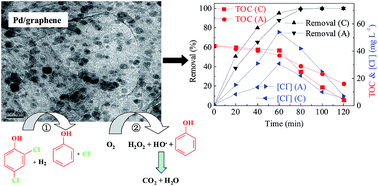
Fig. 8 shows the percentage removal of 2,4-DCP and variations in the TOC within the anodic and cathodic chambers at various times of electrolysis when feeding with hydrogen and air in the Pd/graphene gas-diffusion electrode system.
image file: c4ra09253h-f8.tif
Fig. 8 Removal of 2,4-DCP at various TOC and [Cl] in the cathodic and anodic chambers, and the electrolysis time under a feed of hydrogen or air using the Pd/graphene gas-diffusion electrode system.

The percentage removal of 2,4-DCP using the Pd/graphene gas diffusion electrode fed with hydrogen in the cathodic chamber increased during the first 60 min. Pd was an excellent catalyst for hydrogenolysis, and the existence of Pd in the graphene nanoparticles was effective in accelerating dechlorination. Consequently, after 80 min the degradation percentage of 2,4-DCP approached 100%. On the other hand, during the first 60 min, the TOC degradation percentage in the cathodic chamber improved slightly. Feeding air in place of hydrogen, after 60 min the TOC degradation percentage in the cathodic chamber had increased significantly, reaching 90.5% at 120 min (Fig. 8).

It was suggested that during the first 60 min there was no further oxidation of non-chloride products to form CO2 and H2O in the cathodic chamber; in addition, this chamber did not form H2O2 by electrochemical reduction of dissolved oxygen in the hydrogen feed. After 60 min, the two-electron reduction of O2 was catalyzed with the help of the Pd/graphene gas-diffusion electrode to form H2O2 and HO2, and these species were transformed into HO˙ and O2 in air.40 The Pd/graphene catalyst of the gas-diffusion electrode system accelerated the two-electron reduction of O2 to H2O2 in the air feed, in accordance with the cyclic voltammetry data (Fig. 6).

The change in 2,4-DCP degradation percentage in the anodic and cathodic chambers was reflected in the Pd/graphene gas-diffusion electrode systems (shown in Fig. 8). In this case the percentage degradation of TOC and 2,4-DCP in the anodic chamber was no higher than that in the cathodic chamber, however. There was again difficulty in achieving total mineralization during anodic oxidation due to the small amount of MOx(OH˙) or MOx+1 on the surface of the anode, although the removal of 2,4-DCP could be attributed to their oxidant action.49–51 The oxidizing ability of H2O2, HO˙ and O2˙, produced in the electrolyte by the electro-reduction of O2 on the Pd/graphene gas-diffusion cathode, was however still strong and was able to degrade organic molecules to smaller units, even to H2O and CO2. In consequence 2,4-DCP was mineralized better in the cathodic chamber than in the anodic chamber.

Due to its chlorine functional groups, 2,4-DCP is both toxic and non-biodegradable. To assess the removal of its chlorine functional groups during the degradation process, the chloride ion concentration in the reaction solution was followed using ion chromatography. Fig. 8 shows the variations in chloride ion concentration in the anodic and cathodic chambers with electrolysis time, while feeding hydrogen or air into the Pd/graphene gas-diffusion electrode system. The change in chloride ion concentration in the anodic and cathodic chambers was similar to the Pd/graphene gas-diffusion electrode system. As observed in Fig. 8, as the reaction time increased, the chloride ion concentration in the aqueous solution also gradually increased, reaching 30.8 mg L−1 and 54.0 mg L−1 in the cathodic and anodic chambers, respectively, after 60 min, at which point the degree of dechlorination of 2,4-DCP was 96.4%, demonstrating that the chlorine atoms on the aromatic ring had mostly been removed to form chloride ions. However, the chloride ion concentration in the anodic chamber was higher than in the cathodic chamber, probably because the chloride ions in the cathodic chamber were able to diffuse into the anodic chamber through the terylene membrane, as a result of electrostatic repulsion by the cathode due to their negative charge.

After increased electrolysis, the chloride ion concentration decreased in both chambers. Chlorine gas released on the anode could be attributed to oxidation of chloride ions, and it also was reported during the use of BDD anodes to electrolyze chloroprene.52 Hydrogen gas was fed into the Pd/graphene gas-diffusion electrode system after the first 60 min, giving hydrodechlorination of 2,4-DCP, but little mineralization. The C–Cl bond was broken and –Cl was replaced by an active hydrogen species to generate Cl. TOC removal was therefore slow during the first 60 min while the Cl first increased. After 60 min, feeding air in place of hydrogen gas, the Pd/graphene gas-diffusion electrode catalyzed the two-electron reduction of O2 to H2O2 and HO2, and the H2O2 and HO2 were then converted to HO˙ and O2˙. With mineralization, TOC removal was rapid and Cl was immediately driven off as Cl2, accounting for the observed decrease in Cl concentration.

In these experiments HOCl could not be determined, and the results obtained were different to those published earlier.53,54 Actually, in the electrolysis processes, HOCl will react with and oxidize organic compounds to form other toxic intermediates. Hence, in the design of an electrolytic system for wastewater treatment, HOCl should be avoided as far as possible. In the cathodic chamber, the zero-valency Pd could promote hydrogenolysis to replace the chlorine atom in a chlorinated organic compound with a hydrogen atom. In the anodic chamber, the C–Cl bond on the benzene ring was broken by HO˙ due to its extremely strong oxidation capacity during electro-catalytic processes. Subsequently, the chlorine substituent became a free chloride ion, and the toxicity of 2,4-DCP was accordingly reduced, improving its biodegradability.

3.3 Identification of intermediates and their evolution

In view of the classical 2,4-DCP reduction and oxidation scheme proposed in previous studies,55,56 an exhaustive analysis of intermediates in the Pd/graphene gas-diffusion electrode system was performed using HPLC and IC. The TOC was also used to evaluate the total organic material in the reaction samples. A comparison of the measured TOC values (by TOC analyzer) and the bound carbon values calculated from the concentration of the 2,4-DCP and the intermediates (CDCP+Int) is presented in Fig. 9(a) and 10(a). As expected, the CDCP+Int values were slightly lower than the measured TOC values; however, the discrepancy was only 6%, indicating that the main reaction intermediates had been detected. Fig. 9 and 10 summarize the changes in the concentration of all the aromatic intermediates and carboxylic acids present during the degradation of 2,4-DCP by the Pd/graphene gas-diffusion electrode system.
image file: c4ra09253h-f9.tif
Fig. 9 Changes in the concentration of 2,4-DCP and main intermediates in the cathodic chamber during the degradation of 2,4-DCP using the Pd/graphene gas-diffusion electrode system.

image file: c4ra09253h-f10.tif
Fig. 10 Changes in the concentration of 2,4-DCP and the main products in the anodic chamber during the degradation of 2,4-DCP using the Pd/graphene gas-diffusion electrode system.

In the cathodic chamber, 2,4-DCP was initially reduced to form 2- and 4-chlorophenol (2- and 4-CP) before conversion to phenol itself (0–60 min) under hydrogen gas in the Pd/graphene gas-diffusion electrode system. The generation and further catalytic reduction of 2-CP and 4-CP are shown in Fig. 9(a). The concentration 2-CP and 4-CP initially increased, followed by a slow decrease. Although 2-CP was reduced to phenol more easily than was 4-CP during further catalytic reduction processes, the concentration of 4-CP was lower than that of 2-CP, meaning that the reactivity of Cl in the 4-position in 2,4-DCP was greater than that in the 2-position. The peak concentrations of 2-CP and 4-CP at 40 min were 26.8 and 16.1 mg L−1, respectively. The phenol content increased to a maximum of 45.0 mg L−1 at 60 min, whereas the concentration of 2,4-DCP decreased rapidly. After 100 min, the concentration of phenol was low, and 2,4-DCP, 2-CP and 4-CP could not be detected.

As indicated in Fig. 9(b) and (c), the concentration of aromatic intermediates (hydroquinone and benzoquinone) slowly increased initially over 40 min, before peaking at about 80 min, and decreasing to zero after 120 min. Maleic and fumaric, and succinic, acrylic and oxalic acids were gradually formed, reaching peak values at approximately 100 min, before then decreasing. Malonic, acetic and formic acids also gradually formed and were still present in solution after 120 min.

As shown in Fig. 10, HPLC and IC analysis of the anodic chamber indicated the maximum concentrations of the main intermediate products at different times, and then their subsequent decrease. By 120 min most of the intermediate products had been converted to CO2 and H2O. Analyzing the concentration history of these intermediates relative to time revealed the trends typical of a consecutive-parallel reaction pathway. After considering the experimental results analyzed above, a reaction pathway for 2,4-DCP degradation can be proposed, illustrated in Fig. 11.


image file: c4ra09253h-f11.tif
Fig. 11 Proposed degradation pathway for 2,4-DCP in the Pd/graphene gas-diffusion electrode system.

In the cathodic chamber there were two possible degradation pathways for 2,4-DCP in aqueous solution, involving reductive dechlorination and oxidative hydroxylation reactions, presented in Fig. 11(a). Briefly, one –Cl was replaced by an active hydrogen species to generate 2- and 4-CP, which were subsequently dechlorinated to phenol, the main product under reductive conditions. The phenol then underwent hydroxylation to form hydroquinone, and further oxidation yielded benzoquinone. In the anodic chamber, and according to the hydroxyl radical-based oxidation mechanism accepted by many researchers,49,57 a detailed analysis of the intermediate products revealed that the oxidation was initiated by aromatic hydroxylation by hydroxyl radicals generated on the surface of the Ti/IrO2/RuO2 anode (Fig. 11(b)). Hydroxyl radicals added to 2,4-DCP generated 4-chlorohydroquinone and 2-chlorocatechol, due to the fact that the addition of the hydroxyl radicals took place most favorably in the para- and ortho-positions of the aromatic ring. This process occurred before the dechlorination event that formed hydroquinone and catechol, which were later oxidized further to benzoquinone.

As illustrated in Fig. 11(c), the hydroxyl groups broke the aromaticity and ring structure of the benzoquinone, generating simple acids, such as maleic, fumaric, and succinic acids. In the classical reaction scheme,58 maleic, fumaric, and succinic acid decompose to form acrylic and oxalic acids. Acrylic acid is formed by the decarboxylation of maleic acid and is an intermediate in the pathway toward malonic and acetic acids. Acrylic acid was detected, and the subsequent oxidation products (malonic and acetic acids) were also obtained. However, oxalic and formic acids might have come exclusively from maleic acid. Finally, acetic and formic acids could be oxidized directly to CO2 and H2O.

Since the current efficiency was low during the practical work, it was unnecessary to mineralize 2,4-DCP to CO2. Maintaining the degradation of 2,4-DCP to biodegradable aliphatic carboxylic acids was more valuable and attractive, since these products could subsequently be treated using conventional, and more economical, biological treatments.

4. Conclusions

Preparation and investigation of a new Pd/graphene gas-diffusion cathode has been conducted for the electro-catalytic dechlorination and mineralization of 2,4-DCP in aqueous solution. Palladium particles in the Pd/graphene catalyst averaging 5.4 nm in size had an amorphous structure and were shown to be highly dispersed in the graphene. In the Pd/graphene gas-diffusion electrode system, sequentially fed with hydrogen gas or air, the degree of dechlorination of 2,4-DCP reached approximately 96.4% after 60 min. The average removal efficiency of 2,4-DCP in the context of TOC reached approximately 100% and 90.5%, respectively, after 120 min. The Pd/graphene gas-diffusion cathode was able to catalyze the reductive dechlorination of 2,4-DCP in hydrogen, and accelerated the two-electron reduction of O2 to H2O2 in air. The degree of mineralization of organic compounds in the cathodic chamber was greater than that in the anodic chamber, since it was the cathodic chamber in which H2O2 and HO˙ were generated, and in which reductive dechlorination took place. The HPLC and IC data identified the major products of 2,4-DCP dechlorination by means of the Pd/graphene gas-diffusion electrode system. The efficiency of degradation of the chlorinated phenol was improved by combining the reduction and oxidation processes.

Acknowledgements

This study was supported by the Beijing Higher Education Young Elite Teacher Project (no. YETP0773), the National Natural Science Foundation of China (no. 51278053 and 21373032), and the Beijing Natural Science Foundation (no. 8122031).

References

  1. J. Rivera-Utrilla, M. Sánchez-Polo, M. M. Abdel Daiem and R. Ocampo-Pérez, Appl. Catal., B, 2012, 126, 100–107 CrossRef CAS.
  2. L. J. Xu and J. L. Wang, Appl. Catal., B, 2012, 123–124, 117–126 CrossRef CAS.
  3. J. L. Rodríguez, M. A. Valenzuela, T. Poznyak, L. Lartundo and I. Chairez, J. Hazard. Mater., 2013, 262, 472–481 CrossRef PubMed.
  4. H. Q. Jiang, Q. Y. Wang, S. Y. Zang, J. S. Li and Q. F. Wang, J. Hazard. Mater., 2013, 261, 44–54 CrossRef CAS PubMed.
  5. J. Liu, J. Y. Wu, C. L. Kang, F. Peng, H. F. Liu, T. Yang, L. Shi and H. L. Wang, J. Hazard. Mater., 2013, 261, 500–511 CrossRef CAS PubMed.
  6. B. Palanisamy, C. M. Babu, B. Sundaravel, S. Anandan and V. Murugesan, J. Hazard. Mater., 2013, 252–253, 233–242 CrossRef CAS PubMed.
  7. P. D. Leo, M. D. R. Pizzigallo, V. Ancona, F. D. Benedetto, E. Mesto, E. Schingaro and G. Ventruti, J. Hazard. Mater., 2013, 244–245, 303–310 CrossRef PubMed.
  8. J. Xu, J. Tang, S. A. Baig, X. S. Lv and X. H. Xu, J. Hazard. Mater., 2013, 244–245, 628–636 CrossRef CAS PubMed.
  9. Q. Wen, T. Yang, S. Y. Wang, Y. Chen, L. J. Cong and Y. J. Qu, J. Hazard. Mater., 2013, 244–245, 743–749 CrossRef CAS PubMed.
  10. H. Y. Zhao, Y. J. Wang, Y. B. Wang, T. C. Cao and G. H. Zhao, Appl. Catal., B, 2012, 125, 120–127 CrossRef CAS.
  11. X. P. Zhu and B. E. Logan, J. Hazard. Mater., 2013, 252–253, 198–203 CrossRef CAS PubMed.
  12. F. Matei, D. Ciuparu, C. Jiménez-Borja, F. Dorado, J. L. Valverde and S. Brosda, Appl. Catal., B, 2012, 127, 18–27 CrossRef CAS.
  13. S. J. Li, Y. L. Fang, C. D. Romanczuk, Z. H. Jin, T. L. Li and M. S. Wong, Appl. Catal., B, 2012, 125, 95–102 CrossRef CAS.
  14. R. Navon, S. Eldad, K. Mackenzie and F. D. Kopinke, Appl. Catal., B, 2012, 119–120, 241–247 CrossRef CAS.
  15. L. Calvo, A. F. Mohedano, J. A. Casas, M. A. Gilarranz and J. J. Rodríguez, Ind. Eng. Chem. Res., 2005, 44, 6661–6667 CrossRef CAS.
  16. G. Yuan and M. A. Keane, Appl. Catal., B, 2004, 52, 301–314 CrossRef CAS.
  17. L. Calvo, M. A. Gilarranz, J. A. Casas, A. F. Mohedano and J. J. Rodríguez, Appl. Catal., B, 2008, 78, 259–266 CrossRef CAS.
  18. M. Martin-Martinez, L. M. Gómez-Sainero, M. A. Alvarez-Montero, J. Bedia and J. J. Rodriguez, Appl. Catal., B, 2013, 132–133, 256–265 CrossRef CAS.
  19. H. Wang and J. L. Wang, Appl. Catal., B, 2007, 77, 58–65 CrossRef CAS.
  20. S. C. Shekar, J. K. Murthy, P. K. Kao and K. S. R. Rao, Appl. Catal., A, 2004, 271, 95–101 CrossRef.
  21. G. Yuan and M. A. Keane, J. Catal., 2004, 225, 510–522 CrossRef CAS.
  22. P. P. Cellier, J. F. Spindler, M. Taillefer and H. Cristau, Tetrahedron Lett., 2003, 44, 7191–7195 CrossRef CAS.
  23. Q. W. Li, H. Yan, Y. Cheng, J. Zhang and Z. F. Liu, J. Mater. Chem., 2002, 12, 1179–1183 RSC.
  24. X. G. Fu, Y. R. Liu, X. P. Cao, J. T. Jin, Q. Liu and J. Y. Zhang, Appl. Catal., B, 2013, 130–131, 143–151 CrossRef CAS.
  25. E. Antolini, Appl. Catal., B, 2012, 123–124, 52–68 CrossRef CAS.
  26. K. Gotoh, K. Kawabata, E. Fujii, K. Morishige, T. Kinumoto, Y. Miyazaki and H. Ishida, Carbon, 2009, 47, 2112–2142 CrossRef.
  27. K. X. Li, J. J. Xiong, T. Chen, L. S. Yan, Y. H. Dai, D. Y. Song, Y. Lv and Z. X. Zeng, J. Hazard. Mater., 2013, 244–245, 19–28 CrossRef PubMed.
  28. J. Zhong, N. David, L. Wei, K. Carter and M. T. James, Chem. Mater., 2010, 22, 5695–5699 CrossRef.
  29. X. F. Xia, W. Lei, Q. L. Hao, W. J. Wang and X. Wang, Electrochim. Acta, 2013, 99, 253–261 CrossRef CAS.
  30. K. T. Chan, J. B. Neaton and M. L. Cohen, Phys. Rev. B: Condens. Matter Mater. Phys., 2008, 77, 235430–235441 CrossRef.
  31. P. G. Ren, D. X. Yan, X. Ji, T. Chen and Z. M. Li, Nanotechnology, 2011, 22, 1–8 Search PubMed.
  32. A. Barras, M. R. Das, R. R. Devarapalli, M. V. Shelke, S. Cordier, S. Szunerits and R. Boukherroub, Appl. Catal., B, 2013, 130–131, 270–276 CrossRef CAS.
  33. K. S. Novoselov, A. K. Geim, S. V. Morozov, D. Jiang, Y. Zhang, S. V. Dubonos, I. V. Grigorieva and A. A. Firsov, Science, 2004, 306, 666–669 CrossRef CAS PubMed.
  34. Z. S. Wu, W. C. Ren, L. B. Gao, B. L. Liu, C. B. Jiang and H. M. Cheng, Carbon, 2009, 47, 493–499 CrossRef CAS.
  35. M. Zhou, Y. L. Wang, Y. M. Zhai, J. F. Zhai, W. Ren, F. Wang and S. J. Dong, Chem.–Eur. J., 2009, 15, 6116–6120 CrossRef CAS PubMed.
  36. H. Wang, Z. Y. Bian, G. Lu, L. Pang, Z. P. Zeng and D. Z. Sun, Appl. Catal., B, 2012, 125, 449–456 CrossRef CAS.
  37. X. Z. Tang, Z. W. Cao, H. B. Zhang, J. Liu and Z. Z. Yu, Chem. Commun., 2011, 47, 3084–3086 RSC.
  38. N. I. Kovtyukhova, P. J. Ollivier, B. R. Martin, T. E. Mallouk, S. A. Chizhik, E. V. Buzaneva and A. D. Gorchinskiy, Chem. Mater., 1999, 11, 771–778 CrossRef CAS.
  39. W. Hummers and R. Offeman, J. Am. Chem. Soc., 1958, 80, 1339 CrossRef CAS.
  40. H. Wang and J. L. Wang, Appl. Catal., B, 2009, 89, 111–117 CrossRef CAS.
  41. H. K. He and C. Gao, Sci. China: Chem., 2011, 54, 397–404 CrossRef CAS.
  42. A. R. Siamaki, A. R. S. Khder, V. Abdelsayed, M. S. El-Shall and B. F. Gupton, J. Catal., 2011, 279, 1–11 CrossRef CAS.
  43. H. L. Guo, X. F. Wang, Q. Y. Qian, F. B. Wang and X. H. Xia, ACS Nano, 2009, 3, 2653–2659 CrossRef CAS PubMed.
  44. H. K. Jeong, Y. P. Lee, R. J. Lahaye, M. H. Park, K. H. An, I. J. Kim, C. W. Yang, C. Y. Park, R. S. Ruoff and Y. H. Lee, J. Am. Chem. Soc., 2008, 130, 1362–1366 CrossRef CAS PubMed.
  45. S. Park and R. S. Ruoff, Nat. Nanotechnol., 2009, 4, 217–224 CrossRef CAS PubMed.
  46. S. Bong, S. Uhm, Y. R. Kim, J. Lee and H. Kim, Electrocatalysis, 2010, 1, 139–143 CrossRef CAS.
  47. J. Prabhuram, T. S. Zhao, Z. K. Tang, R. Chen and Z. X. Liang, J. Phys. Chem. B, 2006, 110, 5245–5252 CrossRef CAS PubMed.
  48. R. Kou, Y. Shao, D. Wang, M. H. Engelhard, J. H. Kwak, J. Wang, V. V. Viswanathan, C. Wang, Y. Lin, Y. Wang, I. A. Aksay and J. Liu, Electrochem. Commun., 2009, 11, 954–957 CrossRef CAS.
  49. P. Canizares, J. A. Domingues, M. A. Rodrigo, J. Villasenor and J. Rogdriguez, Ind. Eng. Chem. Res., 1999, 38, 3779–3785 CrossRef CAS.
  50. J. D. Rodgers, W. Jedral and N. J. Bunce, Environ. Sci. Technol., 1999, 33, 1453–1457 CrossRef CAS.
  51. J. F. Niu, D. Maharana, J. L. Xu, Z. Chai and Y. P. Bao, J. Environ. Sci., 2013, 25, 1424–1430 CrossRef CAS.
  52. I. Sirés, J. A. Garrido, R. M. Rodríguez, E. Brillas, N. Oturan and M. A. Oturan, Appl. Catal., B, 2007, 72, 382–394 CrossRef.
  53. U. D. Patel and S. Suresh, Sep. Purif. Technol., 2008, 61, 115–122 CrossRef CAS.
  54. J. F. Niu, Y. P. Bao, Y. Li and Z. Chai, Chemosphere, 2013, 92, 1571–1577 CrossRef CAS PubMed.
  55. Z. R. Sun, X. F. Wei, Y. B. Han, S. Tong and X. Hu, J. Hazard. Mater., 2013, 244–245, 287–294 CrossRef CAS PubMed.
  56. Y. Yasman, V. Bulatov, I. Rabin, M. Binetti and I. Schechter, Ultrason. Sonochem., 2006, 13, 271–277 CrossRef CAS PubMed.
  57. Y. Wang, Z. Y. Shen, Y. Li and J. F. Niu, Chemosphere, 2010, 79, 987–996 CrossRef CAS PubMed.
  58. A. Eftaxias, J. Font, A. Fortuny, J. Giralt, A. Fabregat and F. Stüber, Appl. Catal., B, 2001, 33, 175–190 CrossRef CAS.

This journal is © The Royal Society of Chemistry 2014
Click here to see how this site uses Cookies. View our privacy policy here.