DOI:
10.1039/C4RA03745F
(Paper)
RSC Adv., 2014,
4, 24719-24728
High-molecular-weight polar acrylate block copolymers as high-performance dismantlable adhesive materials in response to photoirradiation and postbaking
Received
24th April 2014
, Accepted 12th May 2014
First published on 14th May 2014
Abstract
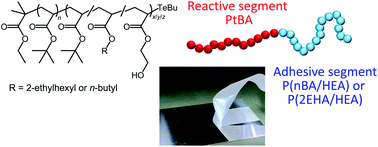
We synthesized high-molecular-weight acrylate block copolymers as high-performance dismantlable adhesives consisting of a poly(tert-butyl acrylate) (PtBA) sequence as the reactive segment and a random copolymer sequence of n-butyl acrylate (nBA) or 2-ethylhexyl acrylate (2EHA) with 2-hydroxyethyl acrylate (HEA) as the adhesive segment, using an organotellurium-mediated living radical polymerization (TERP). The adhesion strength of PtBA/P2EHA and PtBA/PnBA block copolymers containing polar HEA repeating units in their soft segments was sufficiently high for use as a pressure-sensitive adhesive. A quick change in the adhesion properties was observed in response to the dual external stimuli of photoirradiation and postbaking during the dismantling process. We discuss the adhesion strength and failure mode as a function of the HEA content, the sequence structure of the copolymers, and the external stimulus conditions.
Introduction
Reactive and stimuli-responsive polymers with specific functions are used in various fields.1–6 Dismantlable adhesion using functional polymers7–13 is a practical application of green sustainable materials and technologies for recycling, rework, and repair systems that save resources, materials, and energy during the manufacturing of industrial and commercial products. Examples include induction heating using hot-melt polymers,14 formation using heat-expansive microcapsules,15,16 and UV- and heat-responsible adhesives.17–22 Reliable adhesive strength during use and on-demand easy debonding are both required for dismantlable adhesion systems. We previously reported a dismantlable system using degradable polymers, containing scissible peroxy bonds in the main chain of linear polymers or at the cross-linking points of polymer gels.23–26 A drastic change in the adhesion properties was observed for these peroxide-containing polymers in response to either heat or UV irradiation but it was difficult to simultaneously achieve both stability during use and on-demand quick debonding. Therefore, we proposed a new adhesion system using acrylate block copolymers consisting of a reactive polymer segment and an adhesive polymer segment, which were prepared by living radical polymerization techniques.27–29 The block copolymers were composed of a poly(tert-butyl acrylate) (PtBA) sequence as the reactive polymer segment and another polyacrylate sequence with a low glass transition temperature (Tg), such as poly(n-butyl acrylate) (PnBA) and poly(2-ethylhexyl acrylate) (P2EHA), as the adhesive polymer segment. The former sequence was readily transformed into a poly(acrylic acid) sequence in response to the dual external stimuli of photoirradiation and postbaking in the presence of a photoacid generator,30–34 while no change occurred in the polymer structures in response to a single stimulus of either photoirradiation or heating. Most polymer materials practically used as pressure-sensitive adhesives include a functional side group, such as the 2-hydroxyethyl acrylate (HEA) repeating unit, which function as the reactive site in the presence of a cross-linker and thereby increases the adhesive strength, suppresses any undesirable deformation at a high temperature, and controls the failure characteristics for the practical use of adhesive tapes.35 The organotellurium-mediated living radical polymerization (TERP) method is one of the most useful methods for the production of high-molecular-weight polyacrylates with unprotected functional side groups.36–43 In this study, we prepared block copolymers using the TERP method to evaluate the adhesion properties of high-molecular-weight acrylate block copolymers containing polar HEA repeating units. We investigated the adhesion properties of the obtained copolymers as pressure-sensitive adhesive materials under various conditions as well as their failure characteristics during the dismantling process as a function of the HEA repeating unit content, the sequence structures, and the photoirradiation and heating conditions as the external stimuli.
Experimental
General procedure
The NMR spectra were recorded using a Bruker AV300 spectrometer using chloroform-d as the solvent. The FT-IR spectra were recorded using a JASCO FT/IR 430 spectrometer. The number- and weight-average molecular weights (Mn and Mw, respectively) and polydispersity (Mw/Mn) were determined by size exclusion chromatography (SEC) using tetrahydrofuran as the eluent using a Tosoh CCPD RE-8020 system, which was calibrated with polystyrene standards. The differential scanning calorimetric (DSC) analysis was performed using a Seiko EXSTAR6200 at a heating rate of 20 °C min−1. The atomic force microscopy (AFM) images were obtained using a NanoScope IIIa system (Digital Instruments/Veeco) with a cantilever (OMCLAC240TS-C2, Olympus, spring constant of 2 N m−1, and resonant frequency of 70 kHz) in the height and phase modes. The samples for the AFM measurements were prepared on a release paper, which was coated with a solution of adhesive polymer in acetone (15 wt%) to a thickness of 200 μm and then dried overnight at room temperature under reduced pressure.
Materials
The acrylate monomers, tert-butyl acrylate (tBA), n-butyl acrylate (nBA), 2-ethylhexyl acrylate (2EHA), and HEA, were purchased from Tokyo Chemical Industry Co., Ltd, Tokyo, or Wako Pure Chemicals Co., Ltd, Osaka, and distilled before use. 2,2′-Azobis(4-methoxy-2,4-dimethylvaleronitrile) (AMVN) was purchased from Wako Pure Chemicals Co., Ltd, Osaka, and recrystallized using methanol. The commercially available N-hydroxynaphthalimide triflate (NIT, 99%, Sigma-Aldrich Co.) was used as received. All the solvents were distilled before use. Ethyl 2-(n-butyltellanyl)-2-methylpropionate was synthesized according to the method reported in the literature.39
Polymerization
A typical procedure for TERP using an organomonotelluride chain transfer agent for the synthesis of block copolymers is as follows. To a 10 mL glass tube, tBA (1.71 g) and AMVN (0.93 mg) in 3.4 g of ethyl acetate were added, and the solution was stirred under a flow of argon at 0 °C for 30 min, followed by the addition of ethyl 2-(n-butyltellanyl)-2-methylpropionate (3.4 μL) using a syringe. The polymerization was performed at 50 °C for 2 h. The conversion, Mn, and Mw/Mn values of the precursor PtBA were determined to be 75.9%, 9.32 × 10⁴ and 1.30, respectively, after the first-stage polymerization. The block copolymerization was performed at 50 °C for 4 h with the addition of 2EHA (5.66 g) and HEA (0.23 g). The copolymer was separated using a methanol–water mixture (90/10 in volume ratio) as the precipitant. The total conversion of tBA was 86.7%. The conversions of 2EHA and HEA were 45.8 and 52.2%, respectively. The Mn and Mw/Mn values of the resulting block copolymer, PtBA-b-P(tBA-co-2EHA-co-HEA), were 2.58 × 10⁵ and 1.49, respectively. The other block copolymers, PtBA-b-P(tBA-co-2EHA) and PtBA-b-P(tBA-co-nBA-co-HEA), and the random copolymers, P(tBA-co-2EHA-co-HEA) and P(tBA-co-nBA-co-HEA), were similarly synthesized.
Adhesion properties
The adhesion test was performed according to a standard test method for the peel adhesion of a pressure-sensitive tape (ASTM D3330) using a Tokyo Testing Machine (TTM) universal testing machine, LSC-1/30, with a 1 kN (maximum) load cell. The 180° peel test was performed at the peel rates of 30 and 300 mm min−1. A poly(ethylene terephthalate) (PET) film (50 μm thickness) was coated with solutions of adhesive polymers (15 wt%) and 0.4 mol% of NIT as the photoacid generator for the tert-butyl group of the polymers in toluene to a thickness of 200 μm using a film applicator and then dried overnight under reduced pressure at room temperature. A 2 cm wide strip of the PET film coated with the adhesive polymers was placed on a stainless steel plate (SUS430, 50 mm × 150 mm × 0.5 mm) and then pressed using a 2 kg hand roller. The 180° peel test was performed after the specimen was allowed to stand for over 30 min at a determined temperature. For UV irradiation, the test piece was placed at a distance of 10 cm from the UV source (Toshiba SHL-100UVQ-2) at room temperature. For thermal treatment, the test piece was placed in a preheated oven, and then naturally cooled to room temperature after removing from the oven. The average value of three measurements for the peel test was recorded. For the 90° peel creep test, a poly(methyl methacrylate) plate was used as the substrate with an applied weight of 100 g to an adhesion area of 10 mm (width) × 50 mm (length). The holding time until the breakdown of the test piece was recorded.
Results and discussion
Synthesis of copolymers
Block copolymers consisting of the reactive PtBA segment and the adhesive P2EHA or PnBA segments were synthesized by the TERP method using an organomonotelluride compound as the chain transfer agent. Scheme 1 shows the reactions used for the synthesis of the block copolymers in the absence and presence of HEA. The polymerization results are shown in Table 1. The second monomers were added to the polymerization solution after the first polymerization step of tBA without isolating the obtained PtBA precursor. As a result, the soft segment of the block copolymers consisted of random copolymer sequences of several monomers, including a small amount of residual tBA. Similarly, the random copolymers were synthesized by a one-step polymerization procedure (Scheme 1 and Table 1).
 |
| | Scheme 1 Synthesis of block and random copolymers by TERP method. | |
Table 1 Results for the preparation of block and random copolymers by TERPa
| Code |
For precursor PtBA synthesis |
For block or random copolymer syntheses |
| tBAb |
Time (h) |
Conv. (%) |
Mn,th/104 |
Mn/104 |
Mw/Mn |
2EHA/nBA/HEAb |
Time (h) |
Conv. (%) |
Mn,th/105 |
Mn/105 |
Mw/Mn |
| tBA/2EHA/nBA/HEA |
| Polymerization conditions: tBA/solvent = 1/1 by weight in ethyl acetate at 50 °C. The monomer amounts indicate molar ratios relative to the organomonotelluride, [telluride]/[AMVN] = 1/0.2. The polymerization of tBA was performed for 2–2.5 h during the first stage, followed by the addition of nBA, 2EHA, and HEA (monomers/solvent = 1/1 by weight). The theoretical number-average molecular weight (Mn,th) was calculated based on monomer conversions. Molar ratio to the monotelluride. |
| Block copolymer synthesis |
| 2EHA-B0-I |
400 |
2 |
91.3 |
4.71 |
4.47 |
1.24 |
1200/—/— |
7 |
94.6/60.0/—/— |
1.81 |
1.60 |
1.31 |
| 2EHA-B0-II |
1000 |
2 |
83.7 |
10.8 |
7.89 |
1.22 |
1700/—/— |
8 |
95.0/72.3/—/— |
3.49 |
2.11 |
1.43 |
| 2EHA-B0-III |
1000 |
2 |
87.0 |
11.2 |
9.75 |
1.24 |
1000/—/— |
8 |
95.7/71.5/—/— |
2.55 |
1.53 |
1.26 |
| 2EHA-B32 |
220 |
2 |
49.6 |
1.43 |
1.57 |
1.21 |
2680/—/890 |
6 |
62.2/42.4/—/58.2 |
2.87 |
2.53 |
1.56 |
| 2EHA-B19 |
820 |
2 |
79.3 |
10.2 |
7.38 |
1.28 |
1750/—/500 |
7 |
82.0/49.0/—/58.0 |
2.78 |
2.65 |
1.74 |
| 2EHA-B10 |
830 |
2 |
72.5 |
7.74 |
6.18 |
1.26 |
1960/—/340 |
6 |
81.2/33.7/—/42.3 |
2.25 |
1.40 |
1.40 |
| 2EHA-B8 |
920 |
2.5 |
67.7 |
8.02 |
7.37 |
1.28 |
2180/—/280 |
4 |
84.5/45.3/—/50.3 |
2.98 |
2.04 |
1.49 |
| 2EHA-B4 |
890 |
2 |
75.9 |
8.69 |
9.32 |
1.30 |
2050/—/130 |
4 |
86.7/45.8/—/52.2 |
2.80 |
2.58 |
1.49 |
| nBA-B15 |
530 |
2 |
78.7 |
5.37 |
7.38 |
1.26 |
2350/—/510 |
3 |
89.5/42.2/—/48.5 |
2.17 |
2.66 |
2.14 |
| nBA-B4 |
620 |
2 |
74.1 |
5.92 |
6.86 |
1.32 |
2420/—/110 |
12 |
89.5/59.8/—/62.0 |
2.65 |
2.39 |
1.48 |
| |
| Random copolymer synthesis |
| 2EHA-R19 |
tBA/2EHA/nBA/HEA = 970/1100/—/420 |
2 |
76.8/73.4/—/80.6 |
2.84 |
2.86 |
2.03 |
| 2EHA-R4 |
tBA/2EHA/nBA/HEA = 1100/1210/—/100 |
2 |
77.8/74.7/—/72.8 |
2.86 |
2.35 |
1.37 |
| nBA-R14 |
tBA/2EHA/nBA/HEA = 950/—/1560/360 |
4 |
76.7/—/75.8/78.8 |
2.78 |
2.53 |
1.88 |
| nBA-R4 |
tBA/2EHA/nBA/HEA = 740/—/129 070 |
5 |
90.8/—/90.0/90.3 |
2.42 |
2.77 |
1.67 |
The high-molecular-weight block copolymers with a well-controlled molecular weight distribution were produced in the absence of HEA (the 2EHA-B0s, Mn = 1.5–2.1 × 10⁵, Mw/Mn = 1.26–1.43). The block copolymers with a high Mw value were similarly produced during the copolymerization in the presence of HEA (2EHA-B32 to 2EHA-B4, Mn = 1.4–2.7 × 10⁵). The Mw/Mn values increased when the block copolymers had high HEA content and a high molecular weight, as shown in the SEC curves in Fig. 1. Similar results were also observed for random copolymerizations in the presence of HEA. This effect was because of the frequent chain transfer to the HEA repeating units under the conditions that provided high-molecular-weight block copolymers with a high content of HEA repeating units because of the free radical propagation mechanism.
 |
| | Fig. 1 SEC traces of the precursor PtBA (dotted curves) and the block copolymers (solid curves) for the synthesis of (a) 2EHA-B19, (b) 2EHA-B4, (c) nBA-B15, and (d) nBA-B4. | |
In this study, the weight fractions of each component of the copolymers were optimized by considering the entire hardness of the copolymers as adhesives at room temperature conditions. The sequence structure, the Mw and Mw/Mn values, the weight fractions of each component, and the Tg values are summarized in Table 2. The DSC measurement confirmed that the Tg values were observed in the ranges of −67 to −53 °C and −46 to −39 °C for the block segments containing 2EHA and nBA, respectively, and 42−43 °C as a constant value for the PtBA segment. In the case of 2EHA-B32, the PtBA segment was too short to exhibit a Tg in the DSC trace. In contrast, intermediate and single Tg values for the random copolymers were observed in the temperature range of −34 to −21 °C. Copolymers with Mw values greater than 105, optimized comonomer compositions, and controlled block sequences were favourably used as adhesive materials in this study.
Table 2 Structure and characterization of high molecular weight block and random copolymers used in this study
| Abbreviation |
Polymer structurea |
Mw/105 |
Mw/Mn |
Weight fraction (wt%) |
Tgb (°C) |
| tBA/2EHA/nBA/HEA |
| The subscripts denote the molar fraction of each monomer unit. Determined by DSC. Not determined. |
| 2EHA-B0-I |
PtBA35.9-b-P(tBA1.3-co-2EHA62.8) |
2.10 |
1.31 |
29.2/70.8/—/— |
−67, 42 |
| 2EHA-B0-II |
PtBA39.4-b-P(tBA3.6-co-2EHA57.0) |
3.02 |
1.43 |
34.4/65.6/—/— |
c |
| 2EHA-B0-III |
PtBA51.0-b-P(tBA7.3-co-2EHA41.7) |
1.93 |
1.26 |
49.3/50.7/—/— |
c |
| 2EHA-B32 |
PtBA3.3-b-P(tBA1.5-co-2EHA63.2-co-HEA32.0) |
3.95 |
1.56 |
3.9/72.9/—/23.3 |
−54 |
| 2EHA-B19 |
PtBA33.4-b-P(tBA1.1-co-2EHA47.0-co-HEA18.5) |
4.62 |
1.74 |
29.0/56.9/—/14.1 |
−53, 42 |
| 2EHA-B10 |
PtBA40.7-b-P(tBA4.9-co-2EHA44.5-co-HEA9.9) |
1.40 |
1.40 |
38.5/54.0/—/7.6 |
c |
| 2EHA-B8 |
PtBA28.1-b-P(tBA8.3-co-2EHA55.3-co-HEA8.3) |
3.03 |
1.82 |
31.9/61.5/—/6.6 |
c |
| 2EHA-B4 |
PtBA37.8-b-P(tBA5.4-co-2EHA52.5-co-HEA4.3) |
3.83 |
1.49 |
35.2/61.6/—/3.2 |
−61, 43 |
| nBA-B15 |
PtBA28.7-b-P(tBA4.0-co-nBA52.3-co-HEA14.9) |
5.70 |
2.14 |
33.2/—/53.1/13.7 |
−39, 43 |
| nBA-B4 |
PtBA24.1-b-P(tBA5.0-co-nBA67.0-co-HEA3.9) |
3.54 |
1.48 |
29.2/—/67.2/3.6 |
−46, 43 |
| 2EHA-R19 |
P(tBA38.7-co-2EHA42.1-co-HEA19.2) |
5.80 |
2.03 |
33.2/51.9/—/14.9 |
−31 |
| 2EHA-R4 |
P(tBA47.8-co-2EHA48.4-co-HEA3.7) |
3.21 |
1.37 |
39.6/57.6/—/2.8 |
−34 |
| nBA-R14 |
P(tBA33.1-co-nBA53.0-co-HEA13.9) |
4.75 |
1.88 |
33.5/—/53.7/12.8 |
−21 |
| nBA-R4 |
P(tBA35.5-co-nBA60.8-co-HEA3.7) |
4.63 |
1.67 |
35.6/—/61.1/3.4 |
−25 |
Adhesion properties of 2EHA block copolymers
The adhesive properties were first investigated using the 2EHA block copolymers, containing no HEA units with different composition ratios for the hard and soft segments. Because 2EHA-B0-III with the highest tBA content was too hard to exhibit the required adhesion properties, we carried out the 180° peel tests using the other two samples. The photoirradiation and heating conditions used as the external stimuli for dismantling, i.e., 1 h UV irradiation and 1 h postbaking at 100 °C, were selected because they were sufficient for inducing the quantitative transformation of the tBA repeating units into the acid form based on the previously reported results.27–29 The adhesion strength of 2EHA-B0-I was 0.31 N/20 mm, which is much lower than that of commercial adhesion tapes. The weak coagulation force of the adhesive polymers resulted in cohesive failure, as shown in Table 3. As the tBA content increased, the average adhesion strength increased to ca. 1 N/20 mm (2EHA-B0-II), which was still insufficient for application as an adhesive tape. The molecular weight of the 2EHA block copolymers was high enough (Mw > 105) for using as an adhesive polymer, and the Tg value of the soft segment was as low as −67 °C. Nevertheless, the cohesive force of these polymers was very low. After photoirradiation and heating, a drastic change in the adhesion strength was not observed, although the chemical transformation of the tert-butyl group into the acid was confirmed after the application of dual stimuli. Thus, the required adhesive property was not obtained by controlling the sequence ratio of the block copolymer segments.
Table 3 Peel strength values of acrylate block copolymers used as dismantlable adhesives in the presence of NIT as the photoacid generator under various conditionsa
| Adhesive |
Sequence structure |
Stimuli conditionsb |
Peel strength (N/20 mm) |
Relative value |
Failure mode |
| NIT (0.4 mol% relative to tBA units or 0.3 wt% to the polymer) was used as the photoacid generator. Tape width, 20 mm; peel rate, 30 mm min−1; peel temperature, 23 °C. (A) Before irradiation and heating; (B) after heating at 100 °C for 1 h; (C) after UV irradiation for 1 h; (D) after UV irradiation for 1 h and postbaking at 100 °C for 1 h; (E) after preheating at 100 °C for 1 h and the subsequent UV irradiation for 1 h followed by postbaking at 100 °C for 1 h. |
| 2EHA-B0-I |
PtBA35.9-b-P(tBA1.3-co-2EHA62.8) |
A |
0.31 |
1 |
Cohesive |
| D |
0.36 |
1.15 |
Cohesive |
| 2EHA-B0-II |
PtBA39.4-b-P(tBA3.6-co-2EHA57.0) |
A |
1.26 |
1 |
Cohesive |
| D |
0.79 |
0.62 |
Cohesive |
| 2EHA-B32 |
PtBA3.3-b-P(tBA1.5-co-2EHA63.2-co-HEA32.0) |
A |
5.6 ± 0.7 |
1 |
SUS-interfacial |
| D |
0.16 ± 0.08 |
0.03 |
PET-interfacial |
| 2EHA-B19 |
PtBA33.4-b-P(tBA1.1-co-2EHA47.0-co-HEA18.5) |
A |
9.2 ± 1.2 |
1 |
SUS-interfacial |
| B |
18.0 ± 1.2 |
1.96 |
Cohesive |
| C |
12.9 ± 0.5 |
1.40 |
SUS-interfacial |
| D |
∼0 |
∼0 |
PET-interfacial |
| E |
∼0 |
∼0 |
PET-interfacial |
| 2EHA-B10 |
PtBA40.7-b-P(tBA4.9-co-2EHA44.5-co-HEA9.9) |
A |
2.4 ± 1.2 |
1 |
SUS-interfacial |
| D |
∼0 |
∼0 |
PET-interfacial |
| 2EHA-B8 |
PtBA28.1-b-P(tBA8.3-co-2EHA55.3-co-HEA8.3) |
A |
8.3 |
1 |
SUS-interfacial |
| B |
11.9 |
1.43 |
Cohesive |
| C |
9.6 |
1.15 |
SUS-interfacial |
| D |
0.09 |
0.01 |
Cohesive |
| 2EHA-B4 |
PtBA37.8-b-P(tBA5.4-co-2EHA52.5-co-HEA4.3) |
A |
6.0 ± 0.3 |
1 |
SUS-interfacial |
| B |
7.0 ± 1.2 |
1.17 |
Cohesive |
| C |
8.9 ± 0.8 |
1.47 |
SUS-interfacial |
| D |
0.35 ± 0.19 |
0.06 |
Cohesive |
| nBA-B15 |
PtBA28.7-b-P(tBA4.0-co-nBA52.3-co-HEA14.9) |
A |
7.6 ± 2.5 |
1 |
SUS-interfacial |
| B |
17.2 ± 0.8 |
2.25 |
SUS-interfacial |
| C |
12.2 ± 1.0 |
1.59 |
SUS-interfacial |
| D |
∼0 |
∼0 |
PET-interfacial |
| E |
∼0 |
∼0 |
PET-interfacial |
| nBA-B4 |
PtBA24.1-b-P(tBA5.0-co-nBA67.0-co-HEA3.9) |
A |
9.0 ± 0.9 |
1 |
SUS-interfacial |
| B |
18.5 ± 0.3 |
2.06 |
Cohesive |
| C |
10.3 ± 0.2 |
1.15 |
SUS-interfacial |
| D |
0.07 ± 0.02 |
0.01 |
PET-interfacial |
| 2EHA-R14 |
P(tBA38.7-co-2EHA42.1-co-HEA19.2) |
A |
9.1 |
1 |
SUS-interfacial |
| B |
12.2 |
1.34 |
Cohesive |
| C |
12.4 |
1.36 |
SUS-interfacial |
| D |
Stick slip |
— |
— |
| 2EHA-R4 |
P(tBA47.8-co-2EHA48.4-co-HEA3.7) |
A |
9.2 |
1 |
SUS-interfacial |
| B |
14.2 |
1.54 |
Cohesive |
| C |
7.8 |
0.85 |
SUS-interfacial |
| D |
Stick slip |
— |
— |
| nBA-R14 |
P(tBA33.1-co-nBA53.0-co-HEA13.9) |
A |
6.5 ± 1.6 |
1 |
SUS-interfacial |
| B |
15.7 ± 2.6 |
2.39 |
Cohesive |
| C |
8.4 ± 0.4 |
1.28 |
SUS-interfacial |
| D |
Stick slip |
— |
— |
| E |
Stick slip |
— |
— |
| nBA-R4 |
P(tBA35.5-co-nBA60.8-co-HEA3.7) |
A |
6.9 ± 0.7 |
1 |
SUS-interfacial |
| B |
16.9 ± 3.7 |
2.43 |
Cohesive |
| C |
7.8 ± 0.3 |
1.13 |
SUS-interfacial |
| D |
Stick slip |
— |
— |
Next, the adhesive properties of the block copolymers containing the polar HEA repeating unit in the soft segment were investigated. The contents of the HEA unit were 4.3–32.0 mol%, which corresponded to 3.2–23.3 wt% for the 2EHA block copolymers, as shown in Table 2. The results of the 180° peel test for 2EHA-B19 and 2EHA-B4, which contained 18.5 and 4.3 mol% of the HEA units, respectively, are shown in Fig. 2(a) and (b). The adhesive properties and failure modes for the 2EHA block copolymers with different HEA contents are summarized in Table 3. The adhesion strength of the tapes prepared using the block copolymers, containing the HEA units was much higher than that of the copolymers without HEA units. The failure mode was interfacial at an interface between the polymers and a stainless steel (SUS) plate. The introduction of the HEA units was expected to increase both the cohesive force and interface interactions. The cohesive force was in fact greater than the adhesive forces at the interfaces, leading to the selective interfacial failure mode during the peeling test.
 |
| | Fig. 2 Representative peel strength–displacement curves of (a) 2EHA-B19, (b) 2EHA-B4, (c) nBA-B15, (d) nBA-B4, (e) nBA-B15 and (f) nBA-R14 with 0.4 mol% of NIT. Stimuli conditions: (A) before irradiation and heating; (B) after heating at 100 °C for 1 h; (C) after UV irradiation for 1 h; (D) after UV irradiation for 1 h and postbaking at 100 °C for 1 h; and (E) after preheating at 100 °C for 1 h and the subsequent UV irradiation for 1 h followed by postbaking at 100 °C for 1 h. Tape width, 20 mm; peel rate, 30 mm min−1. | |
After heating the 2EHA-B19 adhesive tape at 100 °C for 1 h (condition (B) in Fig. 2), the adhesion strength at room temperature increased to twice that of before heating and the failure mode changed became cohesive. The failure mode depends on the magnitude and balance between the cohesive force of the adhesive polymer and the interfacial adhesive force between the adhesive polymer and the adherend. The smallest force determines the entire failure mode of the adhesive system. An increase in the adhesion strength observed during the heating of the 2EHA-B19 system was due to an increase in the intermolecular interactions between the SUS surface and the hydroxyl group of the HEA repeat units. As a result, the adhesion strength depended on the polymer cohesive force due to the higher adhesive force at the interface. The adhesion strength slightly increased and interfacial failure was observed at the polymer–SUS interface after photoirradiation without postbaking (condition (C) in Fig. 2) due to partial cross-linking.
The adhesion strength significantly decreased after photoirradiation and postbaking because of a change in the structure of the PtBA segment (condition (D) in Fig. 2). The failure mode was interfacial failure at the PET side except in the case of polymers with low HEA contents, which exhibited cohesive failure. This result indicates a significant increase in the cohesive forces of the adhesives with a high HEA content. During the dismantling process by dual external stimuli, isobutene gas evolution and partial polymer cross-linking were observed. Fig. 3(a) shows the changes in the IR spectra of the polymer adhesives before and after photoirradiation and heating. These spectra reveal that no change occurred after either photoirradiation or heating, while a complete disappearance of the peak characteristic of the tert-butyl group at 846 cm−1 occurred after both photoirradiation and postbaking. The intensity of the peak due to the methyl group observed at 1170 cm−1 also decreased in the spectrum recorded after photoirradiation and postbaking. These results confirm that the quantitative transformation of the tBA repeating unit into carboxylic acid under the conditions of a 1 h photoirradiation and subsequent heating at 100 °C for 1 h.
 |
| | Fig. 3 (a) IR spectra and (b) DSC traces of 2EHA-B19 with 0.4 mol% NIT before and after each treatment by external stimuli. Stimulus conditions: (A) before UV irradiation and heating; (B) after heating at 100 °C for 1 h; (C) after UV irradiation for 1 h; (D) after UV irradiation for 1 h and postbaking at 100 °C for 1 h. | |
In the DSC traces of the polymers before and after the applied stimuli under similar conditions [Fig. 3(b)], the transition due to the Tg of the PtBA segment at 43 °C disappeared and a new transition was observed at 119 °C after photoirradiation and postbaking. No change was observed in the Tg values of the soft segment at −53 °C after either photoirradiation or heating. A slight increase in the Tg value was observed after photoirradiation and postbaking because of the conversion of the small amount of tert-butyl groups into acid, which were included in the soft segment (1.1 mol%, see Table 2).
Adhesion properties of nBA block copolymers
Next, we investigated the adhesion properties of the nBA block copolymers in comparison with those containing the 2EHA block to clarify the role of the soft segment. The results are shown in Table 3 and Fig. 2(c) and (d). The strength values and the SUS-interfacial failure mode of the nBA block copolymers were similar to those of the 2EHA block copolymers. The strength values of nBA-B4 and nBA-B15 after heating increased to twice those of the original. The failure mode of nBA-B4 changed from interfacial to cohesive failure during heating, while no change in the failure mode was observed for nBA-B15. This result suggested that the adhesive force at the SUS-interface increased to a value higher than the cohesive force during the heating of nBA-B4. The Tg value of the PnBA segment were determined to be −52 °C by DSC, which is higher than that of the P2EHA segment at −70 °C. The cohesive force of the nBA segment as the soft segment of the block copolymers was greater than that of the 2EHA segment even at room temperature.
In order to investigate the stability of adhesive materials against heat conditions before and during use, we examined the effect of preheating on the dismantling process. As shown in Fig. 2(e) and (f), the peel strength was determined for samples that were preheated at 100 °C for 1 h, then photoirradiated for 1 h, followed by postbaking at 100 °C for 1 h (condition (E) in Fig. 2). The equivalent dismantlability was achieved after photoirradiation and postbaking independent of the preheating process. This result suggests that no deterioration in the adhesive properties of materials was observed after heating at 100 °C for 1 h when they were stored in the dark. This also indicates the importance of the order of applied stimuli; i.e., a postbaking process after photoirradiation is uniquely appropriate for efficient dismantling. In other words, these adhesive materials are tolerant to a change in the thermal conditions during use because they maintain their adhesive strength until they are photoirradiated before heating.
Effects of polymer sequence structures
We also compared the adhesion properties of the systems using the block and random copolymers. The adhesive strength and failure modes of random copolymers were similar to those of the corresponding block copolymers without any stimulus. However, the decrease in adhesion strength was insufficient for random copolymers following the dual stimuli of photoirradiation and postbaking (Table 3). Furthermore, the relative strength of nBA-B15 and nBA-R14 after postbaking at 100 °C for different durations is shown in Fig. 4, which indicates that heating for 10 min was sufficient for nBA-B15 to decrease the adhesion strength to less than 20% of the original value prior to photoirradiation and postbaking. For random copolymers, longer heating was required to decrease their adhesion strength and a greater standard deviation was observed [Fig. 4(b)]. The stick-slip peeling behaviour was observed for adhesive tapes prepared using random copolymers after photoirradiation and postbaking [Table 3 and Fig. 2(f)]. Thus, block copolymers exhibited superior properties as dismantling adhesive materials because of the spontaneous peeling with a shorter postbaking period. The production of foam was observed on the entire adherent layers in the case of the random copolymers due to the evolution of isobutene gas. In contrast, isobutene gas only evolved at the interfaces between the adherent and the substrate in the case of block copolymers by visual comparison.
 |
| | Fig. 4 Relative peel strength of (a) nBA-B15 and (b) nBA-R14 after UV irradiation for 1 h and postbaking at 100 °C for 0 to 30 min. | |
The 180° peel strength values were determined at different temperatures and the results are summarized in Table 4. The data in Table 4 were determined at a peel rate of 300 mm min−1. The strength values were higher than those determined at 30 mm min−1, as shown in Table 3, because the viscoelastic properties of the pressure-sensitive adhesive materials significantly depend on the peel rate. For all the copolymers, the adhesion strength values at 0 and 70 °C were lower than those observed at 23 °C because in this study, the composition ratios of the repeating monomer units were optimized based on the adhesive properties of copolymers at room temperature. The relative strength values were 0.2–0.4 at 0 °C for the 2EHA-containing copolymers, while they were lower than 0.1 for the nBA copolymers. This result indicates the high performance of the 2EHA copolymers at a lower temperature. The nBA-containing soft segments became harder at a low temperature, resulting in a decrease in the adhesion force at an interface between the adhesives and the SUS adherent. The results of the 90° peel creep test performed using a poly(methyl methacrylate) plate with an applied weight of 100 g at 23 °C demonstrated that nBA-B15 and 2EHA-B19 maintained the highest holding powers; i.e., the peel creep distances were less than 50 mm after 3 h, while the block and random copolymers containing less than 4 wt% HEA were readily broken down within 10 min under similar conditions. This effect was due to the difference in the interfacial adhesive and cohesive forces for copolymers with different content of the polar HEA repeating units. The nBA block copolymers exhibited superior properties compared to the 2EHA block copolymers in the peel creep experiments. The random copolymers showed a greater creep distance than the corresponding block copolymers.
Table 4 Effects of polymer sequence and temperature on the adhesion properties of the copolymers
| Adhesive polymer |
180° peel strengtha (N/20 mm) |
| 70 °C |
23 °C |
0 °C |
| Tape width, 20 mm; peel rate, 300 mm min−1. Values in parentheses indicate the relative peel strength determined at 70 and 0 °C versus 23 °C. Values in brackets indicate the results at a peel rate of 30 mm min−1 (see Table 3). Not determined. |
| 2EHA-B19 |
6.8 (0.59) |
11.5 [9.2]b |
2.0 (0.17) |
| 2EHA-B4 |
0.8 (0.10) |
8.0 [6.0]b |
3.1 (0.39) |
| nBA-B15 |
c |
9.3 [7.6]b |
0.10 (0.01) |
| nBA-B4 |
c |
8.7 [9.0]b |
0.20 (0.02) |
| 2EHA-R19 |
2.0 (0.23) |
8.6 [9.1]b |
2.0 (0.23) |
| 2EHA-R4 |
0.1 (0.01) |
9.0 [9.2]b |
1.6 (0.18) |
| nBA-R14 |
4.8 (0.69) |
7.0 [6.5]b |
0.32 (0.05) |
| nBA-R4 |
0.6 (0.07) |
8.1 [6.9]b |
0.65 (0.08) |
Dismantling mechanism
A change in the surface morphology of the adhesive polymers during the dismantling process after the applied dual stimuli of photoirradiation and postbaking was investigated by AFM. In the phase and height images of block copolymers, microphase separated structures were observed, whereas no domain structure was observed for random copolymers before and after the change in the conditions. The phase images of nBA-15B surfaces before and after postbaking are shown in Fig. 5. The areas observed as dark images with a small delay in the phase images correspond to the PtBA domain with a high Tg value. No drastic change was observed in the phase-separated domains during the postbaking but the contrast became clearer as a function of postbaking time. The fraction of the dark domains slightly increased after longer postbaking times. This effect was due to a transformation in the chemical structure of the PtBA segment into the poly(acrylic acid) segment, which had a higher Tg value and a polar side group. The IR spectral change in nBA-15B, as shown in Fig. 5(b), supports the gradual transformation of the tert-butyl ester into the carboxylic acid, which is similar to the results obtained for 2EHA-B19 in Fig. 3(b).
 |
| | Fig. 5 (a) AFM phase images and (b) IR spectra of nBA-15B with 0.4 mol% NIT before and after UV irradiation and the subsequent heating at 100 °C for 5–30 min. | |
A drastic decrease in the adhesion strength is due to a change in the side group from the tert-butyl ester to the carboxylic acid, which causes a decrease in the adhesion area at the interface from the evolution of isobutene gas. Another possible reason is a decrease in the interfacial closeness between the adherent and the substrates due to an increase in the elasticity of the adhesive polymers. The latter can be induced by both an increase in the Tg value [Fig. 3(b)], due to the side group transformation, and the formation of a partially cross-linking structure by transesterification. The gel formation was confirmed by a solubility test on the adhesive materials recovered after photoirradiation and postbaking. The change in the adhesive properties during the dismantling process was more obvious for the block copolymers than for the random copolymers. This was probably because the physical properties changed in the entire adhesive layer of the random copolymers during the photoirradiation and postbaking, and consequently, the evolved isobutene gas was trapped in an adhesive layer, resulting in the formation of a high number of bubbles in the layers, as shown in the schematic illustration in Fig. 6. In contrast, the soft segment domain of the block copolymers maintained their low Tg values during the side-chain transformation of the hard segment of the block copolymers, and the evolved isobutene readily diffused through the soft domain and reached the interfaces of the substrates. The magnitude of the changes in the Tg values and the elasticity of the hard segment of the block copolymer was much greater than that of the random copolymers.
 |
| | Fig. 6 Illustration of the cross-sections of adhesive specimens in block copolymer adhesives. | |
Conclusions
We demonstrated that the adhesive properties of dismantlable adhesion materials consisting of acrylate block copolymers were significantly modified by the introduction of polar HEA repeating units into the tBA/2EHA and tBA/nBA block copolymers, which were successfully produced by the TERP method. The obtained block copolymer exhibited excellent adhesive properties as dismantlable adhesion materials; i.e., high adhesion strength values and thermal stability during use as adhesive tapes and quick and spontaneous dismantling in response to the dual external stimuli consisting of photoirradiation and postbaking. We also revealed the superior dismantling properties of block copolymers during the quick debonding process using a short postbaking time. The double-locked adhesion systems, which selectively respond to only the dual stimuli of photoirradiation and postbaking, will also be applied to various fields related to green sustainable technologies to save resources, materials, and energy.
Notes and references
- P. Schattling, F. D. Jochum and P. Theato, Polym. Chem., 2014, 5, 25–36 RSC.
- G. L. Fiore, S. J. Rowan and C. Weder, Chem. Soc. Rev., 2013, 42, 7278–7288 RSC.
- X.-Z. Yan, F. Wang, B. Aheng and F.-H. Huang, Chem. Soc. Rev., 2012, 41, 6042–6065 RSC.
- B.-W. Xin and J.-C. Hao, Chem. Soc. Rev., 2010, 39, 769–782 RSC.
- D. Roy, J. N. Cambre and B. S. Sumerlin, Prog. Polym. Sci., 2010, 35, 278–301 CrossRef CAS PubMed.
- F. Lui and M. W. Urban, Prog. Polym. Sci., 2010, 35, 3–23 CrossRef PubMed.
- S. Yang, J.-S. Chen, H. Körner, T. Breiner and C. K. Ober, Chem. Mater., 1998, 10, 1475–1482 CrossRef CAS.
- M. Shirai, S. Morishita, H. Okamura and M. Tsunooka, Chem. Mater., 2002, 14, 334–340 CrossRef CAS.
- A. J. Baldan, J. Mater. Sci., 2004, 39, 1–49 CrossRef CAS.
- L. J. Wang, H. Y. Li and C. P. Wong, J. Polym. Sci., Part A: Polym. Chem., 2000, 38, 3771–3782 CrossRef CAS.
- J.-S. Chen, C. K. Ober and M. D. Poliks, Polymer, 2002, 43, 131–139 CrossRef CAS.
- L. González, F. Ferrando, X. Ramis, J. M. Salla, A. Mantecón and A. Serra, Prog. Org. Coat., 2009, 65, 175–181 CrossRef PubMed.
- A. R. Hutchinson, P. H. Winfield and R. H. McCurdy, Adv. Eng. Mater., 2010, 12, 646–652 CrossRef.
- T. Sekine, H. Tomita, S. Obata and Y. Saito, Electr. Eng. Jpn., 2009, 168, 32–39 CrossRef.
- Y. Nishiyama, N. Uto, C. Sato and H. Sakurai, Int. J. Adhes. Adhes., 2003, 23, 377–382 CrossRef CAS.
- H. Ishikawa, K. Seto, S. Shimotuma, N. Kishi and C. Sato, Int. J. Adhes. Adhes., 2005, 25, 193–199 CrossRef CAS PubMed.
- K. Ogino, J.-S. Chen and C. K. Ober, Chem. Mater., 1998, 10, 3833–3838 CrossRef CAS.
- J. Malik and S. J. Clarson, Int. J. Adhes. Adhes., 2002, 22, 283–289 CrossRef CAS.
- M. Shirai, Prog. Org. Coat., 2007, 58, 158–165 CrossRef CAS PubMed.
- T. Ozawa, S. Ishikawa, Y. Kano and T. Kasemura, J. Adhes., 2000, 72, 1–16 CrossRef CAS.
- K. Ebe, H. Seno and K. Horigome, J. Appl. Polym. Sci., 2003, 90, 436–441 CrossRef CAS.
- S.-W. Lee, J.-W. Park, Y.-H. Lee, H.-J. Kim, M. Rafailovich and J. Sokolov, J. Adhes. Sci. Technol., 2012, 26, 1629–1643 CAS.
- E. Sato, H. Tamura and A. Matsumoto, ACS Appl. Mater. Interfaces, 2010, 2, 2594–2601 CAS.
- E. Sato, T. Hagihara and A. Matsumoto, ACS Appl. Mater. Interfaces, 2012, 4, 2057–2064 CAS.
- A. Mihashi, H. Tamura, E. Sato and A. Matsumoto, Prog. Org. Coat., 2010, 67, 85–91 CrossRef CAS PubMed.
- E. Sato and A. Matsumoto, Chem. Rec., 2009, 9, 247–257 CrossRef CAS PubMed.
- T. Inui, E. Sato and A. Matsumoto, ACS Appl. Mater. Interfaces, 2012, 4, 2124–2132 CAS.
- K. Yamanishi, E. Sato and A. Matsumoto, J. Photopolym. Sci. Technol., 2013, 26, 239–244 CrossRef CAS.
- T. Inui, K. Yamanishi, E. Sato and A. Matsumoto, Macromolecules, 2013, 46, 8111–8120 CrossRef CAS.
- H. Ito, Adv. Polym. Sci., 2005, 172, 37–245 CrossRef CAS.
- F. Ortica, J. C. Scaiano, G. Pohlers, J. F. Cameron and A. Zampini, Chem. Mater., 2000, 12, 414–420 CrossRef CAS.
- H. Okamura, K. Sakai, M. Tsunooka, M. Shirai, T. Fujiki, S. Kawasaki and M. Yamada, J. Photopolym. Sci. Technol., 2003, 16, 87–90 CrossRef CAS.
- J.-P. Malval, S. Suzuki, F. Morlet-Savary, X. Allomas, J.-P. Fonassier, S. Takahara and T. Yamaoka, J. Phys. Chem. A, 2008, 112, 3879–3885 CrossRef CAS PubMed.
- H. Okamura and M. Shirai, Trends Photochem. Photobio., 2013, 15, 51–61 Search PubMed.
- A. I. Everaerts and L. M. Clemens, in Adhesion Science and Engineering 2, Surfaces, Chemistry & Applications, ed. M. Chaudhury and A. V. Pocius, Elsevier, Amsterdam, 2002, ch. 11, pp. 465–534 Search PubMed.
- S. Yamago, J. Polym. Sci., Part A: Polym. Chem., 2006, 44, 1–12 CrossRef CAS.
- S. Yamago, Chem. Rev., 2009, 109, 5051–5068 CrossRef CAS PubMed.
- S. Yamago and Y. Nakamura, in Polymer Science: A Comprehensive Reference, Vol. 3, Chain Polymerization of Vinyl Monomers, ed.-in-chief K. Matyjaszewski and M. Möller, ed. G. W. Coates and M. Sawamoto, Elsevier, Amsterdom, 2012, pp. 227–248 Search PubMed.
- S. Yamago, K. Iida and J. Yoshida, J. Am. Chem. Soc., 2002, 124, 2874–2875 CrossRef CAS PubMed.
- S. Yusa, S. Yamago, M. Sugahara, S. Morikawa, T. Yamamoto and Y. Morishima, Macromolecules, 2007, 40, 5907–5915 CrossRef CAS.
- E. Kayahara, S. Yamago, Y. Kwak, A. Goto and T. Fukuda, Macromolecules, 2008, 41, 527–529 CrossRef CAS.
- M. Okubo, Y. Sugihara, Y. Kitayama, Y. Kagawa and H. Minami, Macromolecules, 2009, 42, 1979–1986 CrossRef CAS.
- Y. Nakamura, T. Arima, S. Tomita and S. Yamago, J. Am. Chem. Soc., 2012, 134, 5536–5539 CrossRef CAS PubMed.
|
| This journal is © The Royal Society of Chemistry 2014 |
Click here to see how this site uses Cookies. View our privacy policy here.