Temperature identification on two 3D Mn(II) metal–organic frameworks: syntheses, adsorption and magnetism

Jian-Qiang Liu*a, Jian Wu*b, Jun Wangc, Lu Luc, Carole Daiguebonned, Guillaume Calvezd, Olivier Guillou*d, Hiroshi Sakiyamae, Ng Seik Wengf and Matthias Zeller*g
aGuangdong Medical College, School of Pharmacy, Dongguan, 523808, P. R. China. E-mail: Jianqiangliu2010@126.com; Fax: +86-769-22896547; Tel: +86-769-22896547
bGuangxi Key Laboratory of Chemistry and Engineering of Forest Products, Guangxi University for Nationalities, College of Chemistry and Chemical Engineering, Nanning, Guangxi 530006, China. E-mail: wujian2007gx@126.com
cInstitute of Functionalized Materials, Sichuan University of Science & Engineering, Zigong 643000, P. R. China
dINSA, UMR 6226 “Institut des Sciences Chimiques de Rennes”, F-35708 Rennes, France
eDepartment of Material and Biological Chemistry, Faculty of Science, Yamagata University, Kojirakawa, Yamagata 990-8560, Japan
fDepartment of Chemistry University of Malaya, 50603 Kuala Lumpur, Malaysia
gYoungstown State University, One University Plaza, Youngstown, Ohio 44555-3663, USA

Received 25th March 2014 , Accepted 6th April 2014

First published on 7th April 2014


Abstract

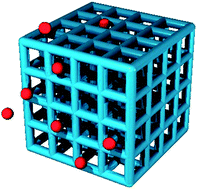
Two new 3-D NaCl-type frameworks of [AmineH+][Mn(HCOO)3] (AmineH+ = N(CH3)4+ for 1 and AmineH+ = NH4+ for 2) have been synthesized at different temperatures. The N(CH3)4+ cation was generated in situ by the decomposition of a large number of DMF molecules. The potential porosity of the coordination framework of 1 has been estimated using a computational method based on Connolly's algorithm, indicating that compound 1 presents a kinetic radius greater than 1.61 Å. Because unremovable guest cations are clogged in the channels, 1 presents no significant adsorption for CO2 gas upon desolvation by long-duration thermal activation. In addition, the magnetic behavior of the two compounds was explored.

Introduction

The design and synthesis of porous metal–organic frameworks (MOFs) are now of great interest due to the significance of discovering new topology and molecular magnetic materials.1–3 In this field, a significant body of work on the construction of coordination polymers based on the formate ligand has already been reported. A good example is the MOFs with a general formula cation@M(HCOO)3 (cation = alkylammonium), where M = divalent metal ion. Those MOFs undergo a ferroelectric (or antiferroelectric) phase transition in the temperature range of 160–185 K, depending on the M(II) involved. They also exhibit a canted antiferromagnetic ordering at low temperatures (Tc = 8–36 K).4–10 Thus, this cation@M(HCOO)3 family represents a new class of multiferroics. However, all the alkylammonium cations are deliberately introduced and taken as templates in the construction of materials. Sometimes these effects may restrain the building blocks to form the desired assemblies.11

Very recently, it has been found that the anionic formates and dimethylammonium cations are the hydrolysis products of DMF, which is used as one of the co-solvents. Dimethylformamide is not stable in the presence of strong bases or strong acids and is easily hydrolyzed affording formic acid and dimethylamine, particularly at elevated temperatures.12–15 Moreover, Su et al. pointed out that dimethylamines were often found as a by-product of reactions realized in DMF solvent that contain a small amount of water.12a To investigate how the presence of alkylammonium influences the course of the reaction, we pre-defined the temperature effect, the ratio of coligand, and the organic solvents to explore the system. Herein, we report two new 3-D NaCl-type frameworks of [AmineH+][Mn(HCOO)3] (AmineH+ = N(CH3)4+ for 1 and AmineH+ = NH4+ for 2). Our study shows that the change in temperature could influence the subtle variables that lead to the resulting structures; particularly, a temperature-driven C–N bond cleavage of DMF molecules can control the assembly of the resulting metal–organic coordination polymers. In addition, the magnetism and absorption behaviors are explored.

Experimental

Materials and method

All reagents were purchased from commercial sources and used as received. IR spectra were recorded with a Perkin-Elmer Spectrum One spectrometer in the region 4000–400 cm−1 using KBr pellets. TGA were carried out with a Metter-Toledo TA 50 under dry dinitrogen flux (60 mL min−1) at a heating rate of 5 °C min−1. X-ray powder diffraction (XRPD) data were recorded on a Rigaku RU200 diffractometer at 60 kV, 300 mA for Cu Kα radiation (λ = 1.5406 Å), with a scan speed of 2 °C min−1 and a step size of 0.013° in 2θ. Magnetic susceptibility data of the powder sample restrained in parafilm were measured on an Oxford Maglab 2000 magnetic measurement system in the temperature range 300–1.8 K and at a field of 1 kOe. The gas sorption isotherm was measured with ASAP 2020 M adsorption equipment.

X-ray crystallography

Single crystal X-ray diffraction analyses of the two compounds were carried out on a Bruker SMART APEX II CCD diffractometer equipped with a graphite monochromated MoKα radiation (λ = 0.71073 Å) by using the ϕ/ω scan technique at room temperature. The intensities were corrected for Lorentz and polarization effects, as well as for empirical absorption based on multi-scan techniques; all structures were solved by direct methods and refined by full-matrix least-squares fitting on F2 by SHELX-97.16 Absorption corrections were applied by using the multi-scan program SADABS.17 The hydrogen atoms of the organic ligands were placed in the calculated positions and refined using a riding model on the attached atoms with isotropic thermal parameters 1.2 times those of their carrier atoms. Ammonium H atoms were located in a difference Fourier map, and their positions and isotropic displacement parameters were refined. Table 1 shows the crystallographic data of 1–2. Selected bond distances and bond angles are listed in Table 2.
Table 1 The crystallographic data of 1–2
Complex 1 2
Empirical formula C7H15MnNO6 C3H7MnNO6
Formula mass 264.14 208.04
Crystal system Orthorhombic cubic
Space group Pnma Im[3 with combining macron]
a [Å] 8.9042(11) 12.331
b [Å] 12.7757(16) 12.331
c [Å] 9.2004(11) 12.331
α [°] 90 90
β [°] 90 90
γ [°] 90 90
V3] 1046.61(11) 1874.93(11)
Z 4 8
dcalcd [g cm−3] 1.676 1.474
M [mm−1] 1.271 1.397
F(000) 548 840
Reflections collected 5963 1659
R(int) 0.0193 0.0105
R1, wR2 [I > 2σ(I)] 0.0217, 0.0655 0.0556, 0.1743
R1, wR2 (all data) 0.0234, 0.0668 0.0606, 0.2017


Table 2 Selected bond distances (Å) and angles (°) in 1–2
1
Mn1–O1#1 2.2178(8) Mn1–O2#1 2.1992(7)
Mn1–O3#1 2.2074(7) O1–Mn1–O1 180
O1–Mn1–O2 90.15(3) O2–Mn1–O2 180
O2–Mn1–O3 91.91(3) O3–Mn1–O3 180
Symmetric code: (i)x + 1, −y, −z + 1

2
Mn1–O1#1 2.190(3) O1–Mn1–O1 180
Symmetric code: (i)x + 1/2, −y + 1/2, −z + 1/2


Synthesis of these complexes

[N(CH3)4][Mn(HCOO)3] (1). A mixture of Mn(OAc)·4H2O (0.5 mmol), 4-iodobenzoic acid (0.75 mmol), triethylamine (0.04 mL), DMF (10 mL), and CH3OH (10 mL) was stirred for 30 min in air. The resulting solution was kept at 160 °C for 72 h in an oven then cooled to 25 °C. The resulting crystals were filtered off, washed with water and dried in air. C7H15MnNO6 (Mw = 264.14 g mol−1). Calcd: C, 31.83%; H, 5.72%; N, 5.30%. Found C, 31.61%; H, 5.64%; N, 5.33%. IR (KBr, cm−1): 3020(m); 2843(m); 1604(vs); 1480(m); 1395(vs); 1355(s); 950(s); 759(m).
[NH4][Mn(HCOO)3] (2). A mixture of Mn(OAc)·4H2O (1.5 mmol), NH3·H2O (0.04 mL), DMF (10 mL), CH3OH (10 mL) was stirred for 30 min in air. The resulting solution was kept at 140 °C for 72 h in an oven, and then cooled down to 25 °C. The resulting crystals were filtered off, washed with water and dried in air. C3H7MnNO6 (Mw = 208.04 g mol−1). Calcd: C, 17.32%; H, 3.39%; N, 6.73%. Found C, 17.02%; H, 3.22%; N, 6.81%. IR (KBr, cm−1): 3014(m); 2830(m); 1602(m); 1389(s); 951(m); 766(m).

Results and discussion

Synthesis of 1 and 2

In a previous report,12a it has been proven that the DMF molecule is easily decomposed and that this decomposition is significantly related to the reaction temperature. In the present reaction system of 1, the anionic formates and tetramethylammonium cations are of the hydrolysis products of the DMF used as one of the co-solvents. We propose the possible mechanism for this reactive system (see Scheme 1). From that mechanism, CH3OH may play an important role in generating the tetramethylammonium cation.
image file: c4ra02609h-s1.tif
Scheme 1 Possible mechanism of DMF decomposition in this work.

In order to investigate the effect of the molar ratio of Mn(OAc)2 to 4-iodobenzoic acid in the formation of 1, the reaction mixtures in four different molar ratios, 1[thin space (1/6-em)]:[thin space (1/6-em)]1, 1.5[thin space (1/6-em)]:[thin space (1/6-em)]1, 1[thin space (1/6-em)]:[thin space (1/6-em)]1.5, and 2[thin space (1/6-em)]:[thin space (1/6-em)]1 (metal-to-ligand), were heated in pure DMF at three different temperatures (120, 140, and 160 °C) for three days. The title complex 1 was obtained under the molar ratios of 1[thin space (1/6-em)]:[thin space (1/6-em)]1 and 1.5[thin space (1/6-em)]:[thin space (1/6-em)]1 at 160 °C. 1 cannot be prepared under other conditions, and only colorless powders were obtained. They are all characterized by XRPD (Fig. S1). It should be pointed out that triethylamine has no influence on the resulting product. We can get the same product if the triethylamine is absent from the reaction system.

Keeping similar conditions except the use of DMSO, THF, and CH3CN as solvents in the place of DMF or CH3OH, the title compound cannot be obtained. From Scheme 1, CH3OH is used as a medium and has a critical role in the formation of the N(CH3)4+ cation. Thus, CH3OH is useful and is a co-solvent in the syntheses of the title compounds. These results indicate that the use of THF or CH3CN as a solvent is not an appropriate choice for the synthesis of 1. Therefore, under similar reaction conditions, solvents such as ethanol, acetonitrile, and DMSO are not easily decomposed.

In order to investigate the role of 4-iodobenzoic acid in the decomposition process of DMF, manganese acetate was dissolved in a mixture of DMF (10 mL), CH3OH (10 mL), and triethylamine (0.04 mL) and heated at 160 °C resulting in the formation of solid material 1. This result indicates that the ligand 4-iodobenzoic acid does not play an important role in the decomposition of DMF at the elevated temperatures and pressures.

Keeping all other conditions unchanged, using 140 °C as the temperature and introducing NH3·H2O into the system, a new compound 2 was obtained. NH4+ was generated from the reactive process. Herein, we explored the M(II)–HCOOH system and constructed some new products, as concluded in Chart 1.


image file: c4ra02609h-c1.tif
Chart 1 Assembly of compounds controlled by the temperature and solvents.

The IR spectra of the two compounds are simple and similar to each other, including the characteristic IR bands for HCOO– groups. All of the bands are coincident with those previously reported.18 The frequencies of the symmetric and antisymmetric carboxylate modes of the formate ion in the two compounds are not affected by the changes of the frameworks for the different cations. Therefore, it indicates that these local modes depend solely on the local geometry of the OCO unit and not by its surroundings.

Structural description of 1 and 2

Complexes 1 and 2 have similar frameworks; the minor difference is the disparate cations (the alkylammonium cation for 1 and the ammonium cation for 2) that are occupied at the channels of the compounds. Thus, the main structure of 1 will be described in detail herein (Fig. S2). The XPS spectrum results (638.5 eV Mn(II) character) indicate that Mn(II) could be present in the coordination polymer of 1 (Fig. S3). The structural feature for 1 is an anionic NaCl-framework of [MnII(HCOO)3], which is very similar to a reported MOF.12 The structure is similar to MnO, Prussian Blue, AMII(dca)3, and the recently reported Mn (formate)3,12 but it is very different from the common non-zeotype topological nets (such as sql, kag, nbo, lvt, cds, qtz, dia, lon, and pts).1e For the two compounds, the range of the size of the charge-balancing cation is mainly due to the apparent breathing nature of the framework brought by the change of the Mn–O–C angles, increasing from averaged values of 135.5° in 1 and 128.3° in 2, and accompanied by a considerably smaller change in the O–C–O angles. As a result, the volume per two [AmineH][Mn(HCOO)3] (the unit cell for 1 and 2 at room temperature) decreases with the increasing size of the cation, viz.: 1046.6(2) Å3 for 1 ((CH3)4N+) and 1874.93(11) Å3 for 2 (NH4+), with a volume change up to 79%. This phenomenon is very different from the reported examples.12 The cavity volumes, calculated by PLATON, is about 43.5% for 1 and 38.9% for 2. The range of Mn⋯Mn distances is 6.2–6.4 Å, spanned by the HCOO bridge (Fig. 1).
image file: c4ra02609h-f1.tif
Fig. 1 View of 3D framework showing different channels in 1 and 2.

Each Mn(II) ion, located at an inversion center, is connected to its six nearest neighbors by six bridging formate ligands in an antianti mode (Fig. 2); thus, the Mn(II) ion has an ideal octahedral coordination geometry with Mn–O distances in the range of 2.1987(8)–2.2071(8) Å. From a topological point of view, this 3D framework can be considered as a classical NaCl-type network (Fig. 3). The protonated (CH3)4N+/NH4+ cations are located in the cavities of the NaCl-type frameworks. Their N/C–H groups form both convenient N–H⋯O and weak hydrogen C–H⋯O bonds to the oxygen atoms of the frameworks. Similar molecular geometries of the framework and the charge counter-balanced cations are shown in Fig. 4.


image file: c4ra02609h-f2.tif
Fig. 2 Framework perspective of 1 showing the 3D connection.

image file: c4ra02609h-f3.tif
Fig. 3 Framework perspective of 1 showing NaCl-type topology.

image file: c4ra02609h-f4.tif
Fig. 4 View of different motifs containing diverse cation in this work and documented report.

The structure of 1 is unchanged, except for a slight contraction of approximately 0.52%, when the temperature is lowered from 375 to 100 K. In each case, there is only one crystallographically independent Mn site (see ESI for cif).

Thermogravimetric and IR analyses

The IR spectra of the two polymers are similar, with characteristic IR bands for protonated amine cations and HCOO– groups, these bands being coincident with those previously reported. As shown in Fig. S4, the frequencies of the symmetric and antisymmetric carboxylate vibration modes of the formate ion in the present two compounds are not affected by the changes of the framework for the different cations.

The TG curves of 1 and 2 showed a weight loss of 20.9% and 7.9% from 35 to 195 °C corresponding to the release of the cation guest molecules (calculated 28.1% and 8.6%), respectively (Fig. S5). The removal of the cation guest molecules leads to the protonation of the framework, thus becoming unstable. Consequently, another abrupt weight loss is followed by the departure of formate ligands up to 370 °C.

Gas sorption property

From Fig. 5a, it is strange that the CO2 sorption amount rises gradually from P/P0 = 0 to 1.0. This is not a typical Type I isotherm behavior for the microporous materials but similar to Type II or Type III isotherms as defined by the IUPAC classification. Usually, this strange sorption feature can be attributed to two reasons: first, 1 is an anionic framework and those channels may be blocked by the large, unremovable N(CH3)4+ cations; second, the interaction between CO2 molecules and the anionic framework is very weak.
image file: c4ra02609h-f5.tif
Fig. 5 (a) Gas sorption isotherms at 195 K in 1 (left) and (b) porosity profile. The yellow sphere symbolizes the biggest guest molecule that can be hosted (1.61 Å) (right).

The computational method, based on Connolly's algorithm has already been described and successfully used elsewhere.19 It allows the porosity profile of a material to be designed on the basis of its crystal structure.19 This compound crystallizes in the orthorhombic system and presents considerably large square cross section channels that spread along the b, a + c, and ac directions. As can be seen in Fig. 5b, these channels cannot host guest molecules that present a kinetic radius greater than 1.61 Å. The kinetic radius of CO2 is a slightly larger (1.65 Å), and that could explain why CO2 adsorption is so difficult to realize. The potential porosities have been calculated for He and H2 (kinetic radii of 1.30 Å and 1.45 Å, respectively)19c to be 3200 m2 g−1 and 3190 m2 g−1, respectively.19 Further studies are needed to completely understand the sorption behavior of the anionic framework.

Magnetic properties

The study of the magnetic properties reveals that 1 and 2 present antiferromagnetic interactions (Fig. 6). The χmT value for 1 was 3.03 cm3 K mol−1 at 300 K, and this is smaller than the spin-only value (4.38 cm3 K mol−1) for the S = 5/2 state, which indicates the presence of dominant ferromagnetic exchange interactions within 1 and suggests a very large ground-state spin (S) value.20 When decreasing the temperature, χmT decreases gradually and reaches a minimum (1.49 cm3 K mol−1) at 2 K. On analyzing the data above 5 K based on Lines' simple-cubic-lattice equation, the following values of the parameters were obtained: J = −0.14 cm−1, g = 1.67 cm−1, and TIP = 0 cm3 mol−1. The obtained g value was too small, so assuming the local tilt (α°),21 the following values of the parameters were obtained: J = −0.14 cm−1, g = 2.00 cm−1, α = 34°, and TIP = 0 cm3 mol−1.
image file: c4ra02609h-f6.tif
Fig. 6 (a) χmT versus T for 1, and (b) χmT versus T for 2. Solid lines represent fits to the data.

Although it is difficult to separate the effect of antiferromagnetic interaction from the effect of zero-field splitting, the antiferromagnetic interaction is weak (−J < 1 cm−1) at any rate in this system. The antiferromagnetic interaction of this complex appears to be smaller than that of the Mn complex.22 Three-dimensional lattice framework is somewhat distorted in this complex, and four types of orientations are found for manganese ions; the angles between the orientations are 8–40°. The lattice appears to be much distorted compared with the Mn–formate complex.22 Long-range ordering was not observed for this system, but was observed for the Mn complex.21

The χmT value was 3.13 cm3 K mol−1 at 300 K in 2, and this is smaller than the spin-only value (4.38 cm3 K mol−1) for the S = 5/2 state, which indicates the presence of dominant ferromagnetic exchange interactions within 2 and suggests a very large ground-state spin (S) value. When decreasing the temperature, χmT decreases gradually and reaches a minimum (2.53 cm3 K mol−1) at 45 K, but χmT increases abruptly to show a maximum (2.73 cm3 K mol−1) at 39 K, then decreases to a minimum (0.21 cm3 K mol−1) at 2 K. On analyzing the data above 50 K based on Lines' simple-cubic-lattice equation, the following values of the parameters were obtained: J = −0.56 cm−1, g = 1.73 cm−1, and TIP = 0 cm3 mol−1. The obtained g value was too small, so assuming the local tilt (α°), the following values of the parameters were obtained: J = −0.52 cm−1, g = 1.99 cm−1, α = 30°, and TIP = 0 cm3 mol−1. In the crystal, the Mn–O axis tilts by 25.7° in the Mn8 cubic lattice, and the angle is approximately in good agreement with the obtained α angle (30°).21

Up to now, several series of metal–formate frameworks containing alkylammonium and ammoniums have been reported, and their structures and magnetic properties are summarized in Table S1. The crystallized materials usually display spin-canted AF or WF features. The 3D frameworks of the same type of metal are quite similar because of the similar M⋯M coupling strength through antianti formate linkages and the same neighbors around each metal ion, although the framework topologies and structural details are different.

Conclusions

In summary, we have successfully synthesized two new porous anionic frameworks constructed at different temperature conditions. The results indicate that the organoammonium ion does not have a dramatic influence on the frameworks. Both of them show magnetic behavior due to their similar M⋯M coupling strength through antianti formate linkages. We hope that the synthetic methods described herein will further facilitate the exploration of new types of multifunctional materials with interesting properties, including the combination of porosity and magnetism.

Acknowledgements

This work was partially supported by grants from the National Natural Science Foundation of China (21201044), Natural Science Foundation of Guangdong Province (S2012040007835), Training plan of Guangdong Province outstanding young teachers in Higher Education Institutions (Grant No. YQ2013084), Foundation for Distinguished Young Talents in Higher Education of Guangdong Province (LYM11069), Technologies R & D program of Zhanjiang (2011C3108013 and 2012C3106016).

References

  1. (a) H. Li, M. Eddaoudi, M. O'Keeffe and O. M. Yaghi, Nature, 1999, 402, 276 CrossRef CAS; (b) X. B. Zhao, B. Xiao, A. J. Fletcher, T. K. M. homas, D. Bradshaw and M. J. Rosseinsky, Science, 2004, 306, 1012 CrossRef CAS; (c) M. Kurmoo, Chem. Soc. Rev., 2009, 38, 1353 RSC; (d) L. M. Toma, C. Ruiz Perez, J. Pasan, W. Wernsdorfer, F. Lloret and M. Julve, J. Am. Chem. Soc., 2012, 134, 15265 CrossRef CAS; (e) D. S. Li, Y. P. Wu, J. Zhao, J. Zhang and J. Y. Lu, Coord. Chem. Rev., 2014, 1, 1 CrossRef; (f) D. S. Li, Z. J. Zhao, Y. P. Wu, B. Liu, B. Liang, Z. Kun and M. Du, Inorg. Chem., 2013, 52, 8091 CrossRef CAS; (g) D. S. Li, P. Zhang, J. Zhao, Z. F. , Fang, M. Du, K. Zou and Y. Q. Mu, Cryst. Growth Des., 2012, 12, 1697 CrossRef CAS.
  2. W. Mori, S. Takamizawam, C. N. Kato, T. Ohmura and T. Sato, Microporous Mesoporous Mater., 2004, 73, 150 CrossRef.
  3. (a) V. A. Blatov, L. Carlucci, G. Ciani and D. M. Proserpio, CrystEngComm, 2004, 6, 377 RSC; (b) R. LaDuca, M. Laskoski and J. Zubieta, J. Chem. Soc., Dalton Trans., 1999, 3467 Search PubMed.
  4. Y. Q. Zheng, J. L. Lin and Z. P. Kong, Inorg. Chem., 2004, 43, 2509 Search PubMed.
  5. (a) X. F. Wang, Y. B. Zhang, X. N. Chen and X. M. Chen, CrystEngComm, 2008, 10, 753 RSC; (b) W. Wang, L. Q. Yan, J. Z. Cong, Y. L. Zhao, F. Wang, S. P. Shen, T. Zou, D. Zhang, S. G. Wang, X. F. Han and Y. Sun, Sci. Rep., 2013, 3, 1 Search PubMed.
  6. (a) G. C. Xu, W. Zhang, X. M. Ma, Y. H. Chen, L. Zhang, H. L. Cai, Z. M. Wang, R. G. Xiong and S. Gao, J. Am. Chem. Soc., 2011, 133, 14948 CrossRef CAS; (b) Z. M. Wang, X. Y. Zhang, S. R. Batten, M. Kurmoo and S. Gao, Inorg. Chem., 2007, 46, 8439 CrossRef CAS.
  7. (a) Z. M. Wang, B. Zhang, K. Inoue, H. Fujiwara, T. Otauka, H. Kobayashi and M. Kurmoo, Inorg. Chem., 2007, 46, 437 CrossRef CAS; (b) A. Cornia, A. Caneschi, P. Dapporto, A. C. Fabretti, D. Gatteschi, W. Malavasi, C. Sangregorio and R. Sessoli, Angew. Chem., Int. Ed., 1999, 38, 1780 CrossRef CAS.
  8. (a) P. Jain, V. Ramachandran, R. J. Clark, H. D. Zhou, B. H. Toby, N. S. Dalal, H. W. Kroto and A. K. Cheetham, J. Am. Chem. Soc., 2009, 131, 13625 CrossRef CAS; (b) P. Jain, N. S. Dalal, B. H. Toby, H. W. Kroto and A. K. Cheetham, J. Am. Chem. Soc., 2008, 130, 10450 CrossRef CAS; (c) M. Sanchez-Andujar, S. Presedo, S. Yáñez-Vilar, S. Castro-García, J. Shamir and M. A. Señarís-Rodríguez, Inorg. Chem., 2010, 49, 1510 CrossRef CAS.
  9. (a) Z. M. Wang, B. Zhang, T. Otsuka, K. Inoue, H. Kobayashi and M. Kurmoo, Dalton Trans., 2004, 2209 RSC; (b) X. Y. Wang, L. Gan, S. W. Zhang and S. Gao, Inorg. Chem., 2004, 43, 4615 CrossRef CAS.
  10. For example: (a) A. Stroppa, P. Jain, P. Barone, M. Marsman, J. M. Perez-Mato, A. K. Cheetham, H. W. Kroto and S. Picozzi, Angew. Chem., Int. Ed., 2011, 50, 5847 CrossRef CAS; (b) K. L. Hu, M. Kurmoo, Z. M. Wang and S. Gao, Chem.–Eur. J., 2009, 15, 12050 CrossRef CAS; (c) G. C. Xu, X. M. Ma, L. Zhang, Z. M. Wang and S. Gao, J. Am. Chem. Soc., 2010, 132, 9588 CrossRef CAS; (d) Y. H. Chen, B.Sc. thesis, Peking University, 2008; (e) G. C. Xu, X. M. Ma, L. Zhang, Z. M. Wang and S. Gao, presented at the 12th International Conference on Molecule-based Magnetism, Beijing, China, October 2010 Search PubMed; (f) R. Samantaray, R. J. Clark, E. S. Choi, H. Zhou and N. S. Dalal, J. Am. Chem. Soc., 2011, 133, 3792 CrossRef CAS; (g) P. Szklarz, M. Chanski, K. Slepokura and T. Lis, Chem. Mater., 2011, 23, 1082 CrossRef CAS; (h) D. W. Fu, W. Zhang, H. L. Cai, Y. Zhang, J. Z. Ge, R. G. Xiong, S. D. Huang and T. Nakamura, Angew. Chem., Int. Ed., 2011, 50, 11947 CrossRef CAS; (i) B. Liu, R. Shang, K. L. Hu, Z. M. Wang and S. Gao, Inorg. Chem., 2012, 51, 13363 CrossRef CAS; (j) M. Viertelhaus, H. Henke, C. E. Anson and A. K. Powell, Eur. J. Inorg. Chem., 2003, 2283 CrossRef CAS; (k) Z. M. Wang, B. Zhang, H. Fujiwara, H. Kobayashi and M. Kurmoo, Chem. Commun., 2004, 416 RSC; (l) Z. M. Duan, Z. M. Wang and S. Gao, Dalton Trans., 2011, 40, 4465 RSC.
  11. (a) H. B. Cui, Z. M. Wang, K. Takahashi, Y. Okano, H. Kobayashi and A. Kobayashi, J. Am. Chem. Soc., 2006, 128, 15074 CrossRef CAS; (b) D. N. Dybtsev, H. Chun, S. H. Yoon, D. Kim and K. Kim, J. Am. Chem. Soc., 2004, 126, 32 CrossRef CAS; (c) M. Kurmoo, C. Estournès, Y. Oka, H. Kumagai and K. Inoue, Inorg. Chem., 2005, 44, 217 CrossRef CAS.
  12. (a) X. R. Hao, X. L. Wang, Z. M. Su, K. Z. Shao, Y. H. Zhao, Y. Q. Lan and M. Fu, Dalton Trans., 2009, 8562 RSC; (b) M. L. Qin, D. H. Lee and G. J. Park, Korean Chem. Soc., 2009, 52, 73 Search PubMed; (c) C. Y. Han, M. M. Liu and Q. Q. Dang, Acta Crystallogr., Sect. E: Struct. Rep. Online, 2013, 69, m541 CAS.
  13. (a) H. F. Clausen, R. D. Poulsen, A. D. Bond, M.-A. S. Chevallier and B. B. Iversen, J. Soild State Chem., 2005, 178, 3342 CrossRef CAS; (b) C. Livage, C. Egger and G. Férey, Chem. Mater., 2001, 13, 410 CrossRef CAS.
  14. (a) Y. Q. Wang, R. Cao, W. H. Bi, X. Li, D. Q. Yuan and S. F. Sun, Microporous Mesoporous Mater., 2006, 91, 215 CrossRef CAS; (b) Z. M. Wang, B. Zhang, M. Kurmoo, M. A. Green, H. Fujiwara, T. Otsuka and H. Kobayashi, Inorg. Chem., 2005, 44, 1239 Search PubMed.
  15. (a) A. Rossin, G. Giambastiani, M. Peruzzini and R. Sessoli, Inorg. Chem., 2012, 51, 6962 CrossRef CAS; (b) C. Zhou, Y. Li, J. Guo and P. J. Yang, J. Sturct. Chem., 2006, 47, 768 CrossRef CAS; (c) X. M. Lin, H. C. Fang, Z. Y. Zhou, L. Chen, J. W. Zhao, S. Z. Zhu and Y. P. Cai, CrystEngComm, 2009, 11, 847 RSC; (d) J. A. Rood, B. C. Noll and K. W. Henderson, Inorg. Chem., 2006, 45, 5521 CrossRef CAS; (e) B. Z. Yuan, D. Y. Ma, X. Wang, Z. Li, Y. W. Li, H. M. Liu and D. H. He, Chem. Commun., 2012, 48, 1135 RSC.
  16. G. M. Sheldrick, SHELXL-97: program for structure determination and Refinement, University of Göttingen, Göttingen, 1997 Search PubMed.
  17. G. M. Sheldrick, SADABS 2.05, University of Göttingen, Germany, 2002 Search PubMed.
  18. (a) M. Viertelhaus, H. Henke, C. E. Anson and A. K. Powell, Eur. J. Inorg. Chem., 2003, 2283 CrossRef CAS; (b) D. Stoilova and V. J. Koleva, J. Mol. Struct., 2000, 553, 131 CrossRef CAS; (c) K. Nakamoto, Infrared and Raman Spectra of Inorganic and Coordination Compounds, Wiley, New York, 1986 Search PubMed.
  19. (a) M. L. Connolly, Science, 1983, 221, 709 CAS; (b) C. Daiguebonne, N. Kerbellec, K. Bernot, Y. Gérault, A. Deluzet and O. Guillou, Inorg. Chem., 2006, 45, 539 CrossRef; (c) Y. Qiu, H. Deng, S. Yang, J. Mou, C. Daiguebonne, N. Kerbellec, O. Guillou and S. R. Batten, Inorg. Chem., 2009, 48, 3976 CrossRef CAS; (d) N. Rosi, J. Kim, M. Eddaoudi, B. Chen, M. O'Keeffe and O. M. Yaghi, J. Am. Chem. Soc., 2005, 127, 1504 CrossRef CAS.
  20. F. Rouquerol, J. Rouquerol and K. Sing, Adsorption by Powders and Porous Solids, Academic Press, London, 1999 Search PubMed.
  21. M. E. Lines, J. Phys. Chem. Solids, 1970, 31, 101 CrossRef CAS.
  22. M. Y. Li, M. Kurmoo, Z. M. Wang and S. Gao, Chem.–Asian J., 2011, 6, 3084 CrossRef CAS.

Footnote

Electronic supplementary information (ESI) available. CCDC 975365–975366. For ESI and crystallographic data in CIF or other electronic format see DOI: 10.1039/c4ra02609h

This journal is © The Royal Society of Chemistry 2014
Click here to see how this site uses Cookies. View our privacy policy here.