DOI:
10.1039/C4RA00729H
(Paper)
RSC Adv., 2014,
4, 15558-15568
A light harvesting mononuclear manganese(II) complex: synthesis, characterization, DFT and TDDFT calculations and photophysical profile†
Received
24th January 2014
, Accepted 10th March 2014
First published on 14th March 2014
Abstract
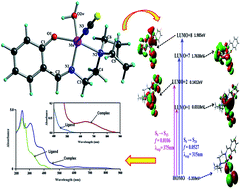
A new manganese(II) [MnII(DEMP)(NCS)(H2O)] (DEMP = Schiff base derived from salicylaldehyde and 2-diethylaminoethylamine) complex has been synthesized and characterized by ESI-mass, IR, UV-vis, 1H and 13C NMR, EPR and thermogravimetric analysis. The structure of the complex has been optimized by DFT and TDDFT calculations. The complex has been found to exhibit strong fluorescence emission in different solvents of various polarities which is characterized by longer lifetimes in more polar solvents, accompanied by a reasonably good quantum yield. The complex is capable of absorbing light ranging from 200–850 nm. Thus, the molecule contains light harvesting components that can harvest the entire range of sunlight falling on earth.
Introduction
Manganese is an important metal in biological systems. It is essential for all forms of life. It accumulates in mitochondria where it is essentially required. Manganese plays an obligatory role in many cellular processes including lipid, protein and carbohydrate metabolism and is used as a cofactor by a diverse array of enzymes.1,2 The element is an essential trace mineral for all known living organisms. Manganese (Mn) is required for the growth and survival of most, if not all, living organisms. Until recently, relatively little was known about how bacteria take up trace nutrients such as manganese, nickel, copper and zinc, or how they regulate intracellular levels of these metal ions in response to availability and demand. Several metalloenzymes of manganese are known, such as arginase, pyruvate carboxylase and superoxide dismutase. Manganese enzymes are essential particularly in the detoxification of superoxide free radicals in micro-organisms3–9 and decomposition of O2− radical, using superoxide dismutase. For years together, it has been known that oxygen evolving photosynthetic organisms have a requirement for manganese.10,11 Depletion of manganese in plants or algae by withholding it from the growth medium leads to the loss of O2 evolution capability.12 Various experiments point to a site on the donor side of photosystem II as the location for the manganese.13–16 To date, it has not been possible to detect directly the Mn-containing entity that is responsible for mediating O2 evolution. It can be concluded that, the most primordial example of biological importance of manganese, is the photo-induced oxidation of water to molecular oxygen in photosystem II (PS II) of green plants.17–22 Manganese is believed to be an essential component, in this regard. The photo-activation of manganese complexes is now of interest not only for modelling of PS II, but also for the development of new photo active-materials.23–31 The photosynthetic manganese catalyzed reaction in PS II is solely dependent on the light harvesting process. Nature has deployed a number of pigments to harvest the entire range of sunlight falling on earth. Artificial photosynthesis is an area of active research which, as an integral part, requires light harvesting components. So, scientists are active to explore the possibility of developing artificial light harvesting compounds.32–38 The effective light harvesting compounds should have the ability to absorb light of a wide range of wavelengths to be as close as possible to the natural photosynthetic light harvesting pigments. In the present project, attempt has been made to develop a light harvesting mononuclear manganese complex. The complex has been synthesized and characterized spectroscopically. The structure of the complex has been optimized with theoretical DFT calculations and detailed photophysical properties have been examined for its exploitation as a possible light harvesting agent as it is capable of harvesting light of the entire visible region i.e. the entire region of the sunlight falling on earth.
Results and discussion
Characterization of the ligand
ESI-mass spectra of the ligand. The ESI-mass spectra of the ligand show a peak of the protonated product of the ligand at 221.16 with 100% abundance (S3(b)†).Therefore the ligand can be formulated as C13H20N2O.
IR characterization of the ligand. The free Schiff base shows the characteristic azomethine (νC
N) and OH group frequencies at around 1621 cm−1 and 3418 cm−1 respectively.
1H NMR spectra of the ligand. The signals recorded at 7.46–6.78 ppm in the ligand spectrum are due to the presence of four aromatic protons in DEMP while the signal at 8.61 appears for the presence of the –OH group in aromatic ring of the ligand.
Characterization of the complex
ESI-mass spectra of the complex. The ESI-mass spectra of the complex show the mass of the complex added with a sodium at 373.11 with maximum abundance (S4†).
Thermogravimetric analysis. The presence of the coordinated water in the complex is characterized by a mass loss above 120 °C. The ∼35% mass loss occurred up to 225 °C is a combined effect of the elimination of coordinated water, SCN and a part of the Schiff base.39Therefore the molecular formula of the compound is MnC14H22N3O2S.
IR characterization of the complex. Some important infrared absorption frequencies of the ligand and metal complex are analysed. The azomethine and OH group frequencies of free Schiff base shifts towards the lower frequency region in the spectra of the complex at around 1618 cm−1 due to involvement of the N atom of the –C
N– group40–43 in coordination, whereas the νOH band shifts to 3172 cm−1 suggesting the engagement of this group in coordination with the metal centre. The band at 3386 cm−1 in the complex arises due to the vibration of metal oxygen bond of the axially coordinated water molecule (νMn(1)–O(2)). The bands at 1598.8, 983.85, 1095.93 cm−1 are due to νMn–N(11), νMn–N(14) and νMn–O(3) vibrations respectively of the coordinated Schiff base (S2†). Infrared bands due to NCS groups, νCN 2054 cm−1, νCS 800 cm−1 are consistent with terminally N-bonded NCS groups in the complex.44,45
1H NMR spectra of complex. The signal observed at 8.61 ppm in the DEMP ligand has disappeared in the complex, as a result of the deprotonation of the –OH group during coordination. The multiple proton signals appearing at 7.46–6.78 ppm in DEMP, due to the presence of the aromatic protons are shifted to 7.40–6.33 ppm in the complex. The above 1H NMR spectral results clearly indicates that the ligand DEMP is coordinated with the metal in the present complex.
Magnetic moment. The room temperature (298 K) magnetic moment of the complex is found to be 5.88 B.M. which indicates the presence of Mn(II) centre in the complex.46
EPR spectroscopy. The EPR spectrum of complex [MnII (DEMP)(NCS)(H2O)] was recorded in the solid state at room temperature. A single EPR line is observed (Fig. 1), which reveals the presence of a strong signal in the g = 1.95 region. Such one-line spectrum devoid of any hyperfine structure suggests unequivocally the mononuclear nature of the complex.47
 |
| | Fig. 1 EPR spectra of complex at 298 K. (freq. = 9445.141 MHz, power = 0.9908 mW, sweep time = 4.00 min.) | |
UV-vis spectrophotometric study. The electronic spectrum of the ligand, shows band at 253 nm (ε = 6015 M−1 cm−1) attributed to benzene π → π* transition, and the band at 312 nm (ε = 2108 M−1 cm−1) is assigned to the imino n → π* transition. The broad peak at around 375 nm (ε = 2728 M−1 cm−1) in the complex is assignable to the ligand to metal charge transfer transition. Another peak at 251 nm (ε = 7300 M−1 cm−1)43–45 arises due to the intraligand charge transfer transition (Fig. 2a). The very important aspect of this work is the appearance of a continuous absorption of the metal complex ranging from 200 nm to 850 nm in methanol solution (Fig. 2a). This absorption allows the metal complex to cover almost entirely the sunlight falling on earth. To understand the effect of the polarity of the medium, the absorption spectra of ligand and its complex were recorded in acetonitrile, DMF, MeOH, DMSO, chloroform, DCM, THF (Fig. 2b and c). The spectra show a continuous decrease of intensity as well as red shift with decreasing polarity of the solvents (Table 1). In presence of polar solvent molecules, the electronic transition in case of the ligand being so rapid with increasing polarity of the solvent molecules, that the spectral transition has become more feasible due to lower energy gap, i.e. there occurs bathochromic or red shift in ligand with the higher polarity of the solvents.
 |
| | Fig. 2 Electronic spectra in methanol at 6.45 × 10⁻⁴ M of both ligand and complex (a) and the amplified visible absorption of the methanolic solutions of ligand and the complex (inset). Absorbance spectra of 10−4 (M) ligand (b) and metal complex (c) in various solvents. | |
Table 1 Absorption λmax (nm) of complex and ligand in different solvents
| Solvent |
Complex λmax (nm) 10−4 (M) |
Ligand λmax (nm) 10−4 (M) |
| DMSO |
263 |
258 |
| DMF |
269 |
266 |
| Acetonitrile |
288 |
254 |
| MeOH |
254 |
253 |
| Acetone |
325 |
333 |
| DCM |
299 |
259 |
| THF |
289 |
269 |
| CHCl3 |
305 |
256 |
Optimization of molecular geometry and electronic structure. DFT study has been proved to be an important tool to obtain better insights into the geometry, electronic structure, and optical properties of these systems. The geometry of both the ligand and the metal complex has been optimized by using Density Functional Theory (DFT). The optimized geometry of HL (DEMP) and its Mn2+ complex is shown in Fig. 3a and b respectively. Both HL and Mn2+ complex had C1 point group. For both the ligand and complex, we are able to optimize only the ground state geometries. Main optimized geometrical parameters of the complex are listed in Table 2 and the optimized structure of DEMP and complex are given in Fig. 3. The geometry of the penta-coordinated metal centre can be measured by the Addison parameter (τ), which is 0.1512, 0.1991, 0.0969 in 6-31G, 6-311G and 6-31++G(d,p) under B3LYP respectively for complex, [τ = (α − β)/60, where α and β are the two largest ligand–metal–ligand angles of the coordination sphere], suggesting a slightly distorted square pyramidal geometry (τ = 0 for a perfect square pyramid and τ = 1 for a perfect trigonal bipyramid). Hence, the modelled geometry possess a distorted square pyramidal arrangement around the Mn(II) centre. A comparison of the results of the theoretical calculations undertaken by different basis sets ([6-31G, 6-311G and 6-31++G(d,p)] under B3LYP) show that the variations in structural parameters are negligibly small (Fig. 3 and Table 2). The calculated IR stretching frequencies of the complex are compared with experimental findings (Table S2†). Hence, all the DFT calculations unequivocally support the structure of the Mn compound. In complex all calculated Mn–N distances occur in the range 2.005–2.428 Å and Mn–O distances are in the range 2.083–2.259 Å. On complexation, some C–N and C–O bond lengths are changed with respect to that in free ligand and Table 3 describes the change in bond lengths in complex compared to free ligand.
 |
| | Fig. 3 Optimized geometry of (a) ligand (DEMP) and (b) complex Mn(DEMP)(NCS)(H2O). | |
Table 2 Selected optimized geometrical parameters for the complex in the ground state calculated at B3LYP levels
| Bond length (Å) |
6-31G |
6-311G |
6-31++G |
| Mn–N1 |
2.150 |
2.162 |
2.151 |
| Mn–N2 |
2.408 |
2.387 |
2.428 |
| Mn–N3 |
2.007 |
2.012 |
2.005 |
| Mn–O1 |
2.088 |
2.089 |
2.083 |
| Mn–O2w |
2.231 |
2.226 |
2.259 |
| |
| Bond angles (°) |
| N1–Mn–N2 |
78.223 |
78.258 |
77.893 |
| N2–Mn–N3 |
101.560 |
96.239 |
101.489 |
| N3–Mn–O2w |
103.002 |
99.275 |
102.249 |
| O1–Mn–O2w |
69.379 |
70.533 |
69.910 |
| O1–Mn–N1 |
83.508 |
83.530 |
83.861 |
| O1–Mn–N2 |
141.408 |
150.703 |
140.391 |
| N1–Mn–N3 |
124.351 |
138.712 |
122.928 |
| N2–Mn–O2w |
98.996 |
100.157 |
99.077 |
| O1–Mn–N3 |
116.775 |
112.477 |
117.893 |
| N1–Mn–O2w |
132.336 |
122.010 |
134.574 |
Table 3 Change in bond lengths in the complex compared to free ligand in the ground state calculated at B3LYP/6-31G levels
| Bond lengths (Å) |
| |
Free ligand (DEMP) |
Complex |
| O1–C1 |
1.388 |
1.330 |
| N1–C2 |
1.277 |
1.307 |
| N1–C3 |
1.480 |
1.472 |
| N2–C4 |
1.479 |
1.492 |
| N2–C5 |
1.491 |
1.509 |
| N2–C6 |
1.481 |
1.501 |
In case of DEMP at ground state, the electron density at HOMO−2, LUMO and LUMO+1 orbitals mainly resides on the benzene moiety while a considerable contribution comes from 2-diethylaminoethylamine moiety along with the contribution of benzene moiety in HOMO−1 and HOMO orbitals. The energy difference between HOMO and LUMO is 4.34 eV of ligand (DEMP) (Fig. 5). In case of the complex all the LUMO+2, LUMO+7and LUMO+8 orbitals are mainly originating from ligand π and π* orbital contributions while the HOMO and LUMO+1 orbitals arise from the contribution of metal d orbitals along with ligand π orbital. The energy difference between HOMO and LUMO is 3.48 eV in the complex (Fig. 5). These compositions are useful in understanding the nature of transition as well as the absorption spectra of both the ligand and complex (vide infra).
The ligand shows two absorption bands at 310 and 253 nm in methanolic solution at room temperature and both have ILCT character. This assignment was supported by TDDFT calculations. These two absorption bands can be assigned to the S0 → S1 and S0 → S6 (Fig. 6) transitions. The absorption energies along with their oscillator strengths, the main configurations and their assignments were calculated using TDDFT method and the related data are given in Table 4.
Table 4 Selected parameters for the vertical excitation (UV-vis absorptions) of DEMP; electronic excitation energies (eV) and oscillator strengths (f), configurations of the low-lying excited states of DEMP; calculation of the S0–S1 energy gaps based on optimized ground-state geometries (UV-vis absorption) (CH3OH used as solvent)
| Electronic transition |
Composition |
Excitation energy |
Oscillator strength (f) |
CI |
Assign |
λtheo (nm) |
λexp (nm) |
| S0 → S1 |
HOMO−2 → LUMO |
3.9974 eV (310 nm) |
0.1413 |
0.32108 |
ILCT |
310 |
312 |
| HOMO → LUMO |
0.62216 |
ILCT |
| S0 → S6 |
HOMO−2 → LUMO+1 |
4.8968 eV (253 nm) |
0.0851 |
4.8968 |
ILCT |
253 |
253 |
| HOMO−1 → LUMO + 1 |
0.25357 |
ILCT |
The complex shows two absorption bands at 375 and 315 nm in methanolic solution at room temperature. The absorptions calculated from TDDFT show bands at 379 and 333 nm for the complex (Fig. 4). This calculated value is in excellent agreement with the experimental results. These two absorption bands can be assigned to the S0 → S15 and S0 → S20 (Fig. 7) transitions, respectively and both the transitions originate from an admixture of MLCT and ILCT transitions (Table 5).
 |
| | Fig. 4 Frontier molecular orbitals involved in the UV-vis absorption of the metal complex calculated by TDDFT. | |
Table 5 Main calculated optical transition for the complex with composition in terms of molecular orbital contribution of the transition, vertical excitation energies, and oscillator strength in methanol
| Electronic transition |
Composition |
Excitation energy |
Oscillator strength (f) |
CI |
Transition assigned |
λtheo (nm) |
λexp (nm) |
| S0 → S15 |
HOMO−2 → LUMO+5 |
3.2691 eV (379 nm) |
0.0106 |
−0.11382 |
ILCT |
379 |
375 |
| HOMO−3 → LUMO+5 |
−0.14107 |
ILCT |
| HOMO → LUMO+2 |
0.89978 |
MLCT/ILCT |
| HOMO → LUMO+1 |
−0.14828 |
MLCT/ILCT |
| S0 → S20 |
HOMO → LUMO+7 |
3.7183 eV (333 nm) |
0.0527 |
−0.23910 |
MLCT/ILCT |
333 |
315 |
| HOMO → LUMO+8 |
0.95162 |
MLCT/ILCT |
Photophysical activity of the complex. The main focus of the study is the development of the light harvesting metal based compound. The light harvesting property is characterized by the photophysical profile of any photophore. So, the photophysical profile of the [MnII(DEMP)(NCS)(H2O)] compound has been investigated by fluorescence spectroscopy. The emission spectra of both the ligand and the complex were studied in varied solution concentrations and at different solvent polarity (Fig. 5–7).
 |
| | Fig. 5 Frontier molecular orbital of complex as well as ligand optimized. | |
 |
| | Fig. 6 Frontier molecular orbitals involved in the UV-vis absorption of ligand (DEMP). | |
 |
| | Fig. 7 Frontier molecular orbitals involved in the UV-vis absorption of metal complex. | |
The fluorescence emission spectra of 10−4, 10−5 and 10−6 M ligand solutions of 2-[(2-diethylamino ethylimino)-methyl]-phenol impart different fluorescence intensities (S1(a)†) with same shape of spectra, and the effect of the polarity of solvent on the ligand also show similar patterns, except for THF, in which the emission spectrum does not split but show almost one sharp emission, with the highest fluorescence intensity (Fig. 8a).
 |
| | Fig. 8 Fluorescence spectra for 10−5 M ligand (a) and complex (b) excitation at 280 nm. | |
The lowest polarity of the solvent may be the reason for this behaviour, therefore, the change in emission of the ligand might have occurred because of some sort of structural change in THF which dictates such behaviour. Hence, it can be concluded that the shape of the emission spectra depend neither on the concentration of the solutions, nor on the polarity of solvent. The emission spectra of solutions of the manganese(II) complex of 10−4, 10−5 and 10−6 M also exhibit same pattern as in the case of free ligand, when excited at 280 nm (S1(b)†). The complex has been found to exhibit strong fluorescence emission in different solvents of various polarities, compared to free Schiff base (Fig. 9a and b), which may be due to increased structural rigidity and for the enhanced metal–ligand interaction48,49 in the complex. The complex [MnII (DEMP) (NCS) (H2O)] exhibits efficient fluorescence emission with good quantum yield of Φf = 0.022 which was only 0.007 in free Schiff base. The quantum yields were determined using the equation:50
where
Qx and
Qs are the quantum yield of the experimental substance and quantum yield of the standard respectively,
Fx,
Fs are the fluorescence area of the substance and the standard,
As and
Ax are the absorbance of the substance and the standard and
ηx,
ηs are the refractive indices of the substance and the standard respectively. The complex molecule is capable of harvesting the entire range of solar radiation falling on earth, and can absorb light of a wide range of wavelengths to be as close as possible to the natural photosynthetic light harvesting pigments. Hence, the present complex is having the potentiality of being used as an integral part of the artificial photosynthetic apparatus whereby it can serve a substitute for the natural photosynthetic light harvesting pigment.
 |
| | Fig. 9 (a) Emission spectra of ligand and complex at room temperature (λex = 280 nm) in DMSO (10−5 M). (b) Relative intensities of ligand and complex with respect to polarity of the solvents. | |
From the lifetime measurements51 of both the ligand and the complex, it is also evident that the complex has shorter lifetime of fluorescence decay than the ligand and the lifetime increases with increasing polarity of the solvents (Fig. 10 and Table 6, a and b) both for the complex as well as for the ligand. Ligand exhibits higher lifetime in more polar solvents than the complex, so either there is a possibility of the involvement of the ligand in different excited state reactions like internal conversion and inter system crossings or the more polar excited state of the ligand get more stabilized in polar solvents and reside longer, exhibiting higher lifetime.
 |
| | Fig. 10 Fluorescence lifetime spectra for (a) ligand and (b) complex in various solvents for 10−5 M at 280 nm excitation wavelength. | |
Table 6 (a) Lifetime values of fluorescence decay for the ligand in 10−5 M at λex = 280 nm. (b) Lifetime values of fluorescence decay for the complex in 10−5 M at λex = 280 nm
| (a) |
| Solvents |
Lifetime (ns) |
Amplitude |
| τ1 |
τ2 |
A1 |
A2 |
χ2 |
| DMSO |
1.98 |
7.69 |
0.902 |
0.098 |
1.069 |
| DMF |
2.00 |
12.0 |
0.738 |
0.262 |
1.066 |
| Acetonitrile |
2.11 |
5.00 |
0.823 |
0.176 |
1.046 |
| MeOH |
1.654 |
2.530 |
0.7247 |
0.2753 |
1.13 |
| DCM |
0.93 |
6.94 |
0.834 |
0.166 |
1.105 |
| THF |
0.11 |
2.00 |
0.974 |
0.026 |
1.006 |
| Chloroform |
0.12 |
1.0 |
0.997 |
0.003 |
1.066 |
| (b) |
| Solvents |
Lifetime (ns) |
Amplitude |
| τ1 |
τ2 |
A1 |
A2 |
χ2 |
| DMSO |
5.248 |
— |
1.303 |
— |
1.212 |
| DMF |
1.061 |
3.124 |
0.930 |
0.068 |
1.209 |
| Acetonitrile |
2.199 |
5.72 |
0.950 |
0.141 |
1.103 |
| MeOH |
0.0758 |
1.764 |
0.980 |
0.011 |
1.028 |
| DCM |
0.435 |
2.692 |
0.950 |
0.050 |
1.125 |
| THF |
0.142 |
1.177 |
0.990 |
0.012 |
0.873 |
| Chloroform |
0.131 |
1.209 |
0.980 |
0.017 |
1.029 |
To observe the solvent effect, we calculated the Stokes shifts (Table 7.) and plotted them against the polarity of the solvents (Fig. 11). The Stokes' shift is seen to increase in most of the cases with an increase in the polarity of the solvent, which may be interpreted in accordance with an assumption that the complex exists in a less polar structure in less polar solvents and shows more polarity in higher polar solvents.52
Table 7 Stokes shift in nm for the complex and the ligand (DEMP) in 10−4 M, 10−5 M and 10−6 M solutions of various polar solvents
| Solvents |
Complex 10−4 M (nm) |
Ligand 10−4 M (nm) |
Complex 10−5 M (nm) |
Ligand 10−4 M (nm) |
Complex 10−6 M (nm) |
Ligand 10−6 M (nm) |
| DMSO |
130 |
49 |
124 |
83 |
78 |
82 |
| DMF |
141 |
68 |
115 |
71 |
65 |
69 |
| Acetonitrile |
41 |
147 |
30 |
82 |
101 |
82 |
| MeOH |
157 |
49 |
55 |
48 |
46 |
48 |
| Acetone |
84 |
53 |
87 |
63 |
71 |
69 |
| DCM |
37 |
258 |
37 |
83 |
30 |
77 |
| THF |
37 |
44 |
21 |
40 |
21 |
69 |
| Chloroform |
27 |
185 |
22 |
84 |
27 |
80 |
 |
| | Fig. 11 Stokes shift in (a) 10−4 M, (b) 10−5 M and (c) 10−6 M solutions of ligand (DEMP) and complex at different polarity of solvents. | |
Experimental
Materials
Salicylaldehyde, 2-diethylaminoethylamine, and hydroxylamine hydrochloride were obtained from Merck (India). Potassium permanganate was procured from Rankem and ammonium thiocyanate was obtained from SRL India. Solvents were purified by standard procedures,53 wherever necessary.
Physical measurements
The IR spectra were taken as KBr discs at room temperature on a Perkin Elmer RFX-I IR spectrophotometer. UV-vis spectra (200–800 nm) were recorded at room temperature with a Perkin Elmer Lambda 25 UV-vis spectrometer against appropriate reagent blank. EPR spectra were obtained on a JEOL-JES FA200 ESR spectrometer in solid state at 298 K. Magnetic susceptibility measurements were made using a Magway MSB MKI Magnetic susceptibility balance (Sherwood Scientific Ltd, Cambridge, England) at 298 K. Data were corrected for diamagnetic contributions using Pascal's constants. TGA study was done by Perkin Elmer-Pyris Diamond TG/DTA instrument. NMR spectral measurements were carried out in CDCl3 solution at ambient temperature. The chemical shift was referenced to tetramethylsilane (TMS) from Bruker 300 MHz NMR spectrometer and the mass spectral analyses were done in methanol solvent from Waters Xevo® G2 QTof.
Synthesis of [MnII(DEMP)(NCS)(H2O)]
Synthesis of Schiff base (DEMP). A 5 ml methanolic solution of salicylaldehyde (5 mmol) and 2-diethylaminoethylamine (5 mmol) were refluxed with continuous stirring for one and half hours. An orange solution was produced, from which the orange solid was obtained (Fig. 12), after drying at 4 °C. Yield: 77%. IR (KBr, cm−1): 1621 [ν(C
N)], 1542 [ν(C–O)], 3418 [ν(O–H)]. UV-vis in MeOH [λmax nm (ε M−1 cm−1): 253 nm (6015), 275 (5147), 312 (2108), 405 (302)]. ESI-MS (+) in MeOH: m/z (relative intensity) 221.16 [M+, 100] (S3†). 1H NMR (300 MHz, CDCl3, δ ppm): 7.46–6.78 (4H, m, aromatic protons), 8.61 (1H, s, from Ph-OH). 13C NMR (75 MHz, CDCl3, δ ppm): 170.28, 161.33, 136.97, 133.45, 132.13, 117.62, 117.0, 77.43, 76.58, 50.67, 30.87.
 |
| | Fig. 12 2-((2-(Diethylamino)ethylimino)methyl)phenol (DEMP). | |
Synthesis of complex. To 3 ml aqueous solution of potassium permanganate (5 mM, 0.79 g), 2 ml aqueous solution of NH2OH·HCl (25 mmol, 1.74 g) was added and stirred for 45 minutes. Then, ammonium thiocyanate (25 mmol, 1.90 g) solution was added dropwise and stirred for another 30 minutes. Thereafter, 2 ml methanolic solution of 5 mmol DEMP ligand was added to the resultant solution with continuous stirring for 1 hour (Scheme 1).
 |
| | Scheme 1 | |
The resulting solution on standing at room temperature produced brown micro-crystalline solid after 15 days. Yield: 76%. IR (KBr, cm−1): 1618.91[ν(C
N)], 2054.34 [ν(CNS)], 800.33 [ν(CS)], 3386.87 [ν(Mn–O)]. ESI-MS (+) in MeCN: m/z (relative intensity) 373.11 [M+ + Na]. UV-vis in DCM [λmax nm (ε M−1 cm−1): 298 (7583), 254 (14742), 632 (3529)] (S4†). 1H NMR (300 MHz, CDCl3, δ ppm): 7.40–6.33 (4H, m, aromatic protons). 13C NMR (75 MHz, CDCl3, δ ppm): 206.948, 131.34, 130.79, 119.6, 116.78, 116.30, 77.61, 77.46, 30.91. The compound is soluble in organic solvents like methanol, acetonitrile, chloroform, acetone, N,N-dimethyl formamide (DMF), dimethyl sulfoxide (DMSO) and tetrahydrofuran (THF) and behaves like a non-electrolyte. Despite multiple attempts, diffractable grade suitable single crystals could not be obtained.
Computational details
Ground state electronic structure calculations in methanol solution of both the ligand and complex have been carried out using DFT54 method associated with the conductor-like polarisable continuum model (CPCM).55–57 Becke's hybrid function58 with the Lee–Yang–Parr (LYP) correlation function59 was used through the study. The geometry of the ligand and complex was fully optimized without any symmetry constraints. On the basis of the optimized ground state geometry, the absorption spectral properties in methanol (CH3OH) media were calculated by time-dependent density functional theory (TDDFT)60–62 approach associated with the conductor-like polarisable continuum model (CPCM).55–57 We computed the lowest 20 singlet–singlet transition and results of the TD calculations were qualitatively very similar. The TDDFT approach had been demonstrated to be reliable for calculating spectral properties of many transition metal complexes.63–66 Due to the presence of electronic correlation in the TDDFT (B3LYP) method it can yield more accurate electronic excitation energies. Hence TDDFT had been shown to provide a reasonable spectral feature for our complex of investigation.
We have run the Gaussian for geometry optimization of complex in ground state with three different basis sets namely 6-31G, 6-311G and 6-31++G(d,p) under B3LYP. For Mn atom, we used 6-31G + G(d,p), 6-311G+ G(d,p), 6-31+ +G(d,p), for H atoms we put 6-31G, 6-311G, 6-31G basis set; for C, N and O atoms we employed 6-31G, 6-311G, 6-31G and for S atom we adopt 6-31G + G(d,p), 6-311G + G(d,p), 6-31++G(d,p) as basis set under B3LYP and compared the results, which did not show any significant change in geometrical parameters. We have used 6-31G/B3LYP basis set for ligand optimization in ground state. All the calculations were performed with the Gaussian 09W software package.67 GaussSum 2.1 program68 was used to calculate the molecular orbital contributions from groups or atoms.
Fluorescence spectral study
The fluorescence spectra were measured on Elico SL 174 spectrofluorimeter following standard methods69,70 using the excitation wavelength of 280 nm and the emission was recorded from 280 nm to 900 nm. The fluorescence intensities of the ligand and the complex were monitored in different solvents like tetrahydrofuran (THF), N,N-dimethylformamide (DMF), dimethylsulfoxde (DMSO), dichloromethane (DCM), chloroform (CHCl3), acetone, acetonitrile and methanol as a function of concentration (10−4, 10−5, and 10−6 M) to observe the effects of the polarity on the photophysical activity of the complex and the ligand. The lifetimes were measured on Horiba Jobin Yvon single photon counter instrument.
Conclusions
A new [MnII(DEMP)(NCS)(H2O)] complex has been designed and synthesized with the aim of developing a new light harvesting agent. The ability of the metal complex to absorb light over a wide region, from 200 nm to 850 nm, allows it to cover almost entirely the range of the sunlight falling on earth. The longer life times and strong fluorescence make the complex a suitable candidate for the development of new light harvesting device as well as a photoactive material.
Acknowledgements
DG is thankful to UGC-BSR for providing JRF. Authors are thankful to UGC, New Delhi for financial support in the form of Major Research Project [Sanction no. F. no. 39-706/2010(SR)] to KKM. Financial support from DST FIST for the EPR equipment to the Department of Chemistry, Jadavpur University is also acknowledged.
References
- C. Andreini, I. Bertini, G. Cavallaro, G. L. Holliday and J. M. Thornton, JBIC, J. Biol. Inorg. Chem., 2008, 13, 1205–1218 CrossRef CAS PubMed.
- J. Roth, S. Ponzoni and M. Aschner, Chapter 6 Manganese Homeostasis and Transport, in Metallomics and the Cell, ed. L. Banci, Metal Ions in Life Sciences 12, Springer, 2013 Search PubMed.
- W. F. Beyer, Jr and I. Fridovich, Biochemistry, 1985, 24, 6460–6467 CrossRef.
- S. Kamarajugadda, Q. Cai, H. Chen, S. Nayak, J. Zhu, M. He, Y. Jin, Y. Zhang, L. Ai, S. S. Martin, M. Tan and J. Lu, Cell Death Dis., 2013, 4, 504 CrossRef PubMed.
- S. Leitch, M. Feng, S. Muend, L. T. Braiterman, A. L. Hubbard and R. Rao, BioMetals, 2011, 24, 159–170 CrossRef CAS PubMed.
- Z. Liu, S. Li, Y. Cai, A. Wang, Q. He, C. Zheng, T. Zhao, X. Ding and X. Zhou, Free Radical Biol. Med., 2012, 53, 44–50 CrossRef CAS PubMed.
- R. M. Fronko, J. E. Penner-Hahn and C. J. Bender, J. Am. Chem. Soc., 1988, 110, 7554–7555 CrossRef CAS.
- A. R. Cyr, K. E. Brown, M. L. McCormick, M. C. Coleman, A. J. Case, G. S. Watts, B. W. Futscher, D. R. Spitz and F. E. Domann, Redox Biology, 2013, 1, 172–177 CrossRef CAS PubMed.
- A. Ramachandran, M. Lebofsky, S. A. Weinman and H. Jaeschke, Toxicol. Appl. Pharmacol., 2011, 251, 226–233 CrossRef CAS PubMed.
- R. Radmer and G. Cheniae, Primary Processes of Photosynthesis, in Topics Photosynth., ed. J. Barber, Elsevier, Amsterdam, New York, 1977, pp. 303–348 Search PubMed.
- S. Shcolnick and N. Keren, Plant Physiol., 2006, 141, 805–810 CrossRef CAS PubMed.
- B. A. Diner and P. Joliot, Encycl. Plant Physiol., New Ser., 1977, 5, 187–205 CAS.
- A. Pirson, Nutritional and metabolic studies on physiological Fontinalis and chlorella, Zeils. bot., 1937, 31, 193–267 CAS.
- E. Kessler, W. Arthur and J. E. Brugger, Arch. Biochem. Biophys., 1957, 71, 326–335 CrossRef CAS PubMed.
- Y. Umena, K. Kawakami, J. R. Shen and N. Kamiya, Nature, 2011, 473, 55–60 CrossRef CAS PubMed.
- A. Grundmeier and H. Dau, Biochim. Biophys. Acta, 2012, 1817, 88–105 CrossRef CAS PubMed.
- G. M. Cheniae and I. F. Martin, Biochim. Biophys. Acta, 1970, 197, 219–239 CrossRef CAS.
- M. M. Najafpour, J. Photochem. Photobiol., B, 2011, 104, 111–117 CrossRef CAS PubMed.
- J. S. Kanady, E. Y. Tsui, M. W. Day and T. Agapie, Science, 2011, 333, 733–736 CrossRef CAS PubMed.
- G. Christou, Acc. Chem. Res., 1989, 22, 328–335 CrossRef CAS.
- R. J. Debus, Biochim. Biophys. Acta, 1992, 1102, 269–390 CrossRef CAS.
- G. Renger, Topics in Photosynthesis, the Photosystems: Structure, Function and Molecular Biology, ed. J. Barber, Elsevier, Amsterdam, 1992, p. 45 Search PubMed.
- T. M. Bicker and D. F. Ghanotakis, Oxygenic Photosynthesis: The Light Reactions, ed. D. R. Ort and C. F. Yocum, Kluwer Academic, Dordrecht, 1996, p. 113 Search PubMed.
- A. Harriman, Coord. Chem. Rev., 1979, 28, 147–175 CrossRef CAS.
- K. Sauer and V. K. Yachandra, Biochim. Biophys. Acta, 2004, 1655, 140–148 CrossRef CAS PubMed.
- H. Isobe, M. Shoji, K. Koizumi, Y. Kitagawa, S. Yamanaka, S. Kuramitsu and K. Yamaguchi, Polyhedron, 2005, 24, 2767–2777 CrossRef CAS.
- K. Yamaguchi, S. Yamanaka, H. Isobe, M. Shoji, K. Koizumi, Y. Kitagawa, T. Kawakami and M. Okumura, Polyhedron, 2007, 26, 2216–2224 CrossRef CAS.
- P. Kurz, G. Berggren, M. F. Anderlund and S. Styring, Dalton Trans., 2007, 38, 4258–4261 RSC.
- K. Wieghardt, Angew. Chem., Int. Ed. Engl., 1989, 28, 1153–1172 CrossRef.
- M. M. Najafpour, T. Ehrenberg, M. Wiechen and P. Kurz, Angew. Chem., Int. Ed., 2010, 49, 2233–2237 CrossRef CAS PubMed.
- A. K. Poulsen, A. Rompel and C. J. McKenzie, Angew. Chem., Int. Ed., 2005, 44, 6916–6920 CrossRef CAS PubMed.
- V. L. Pecoraro, M. J. Baldwin and A. Gelasco, Chem. Rev., 1994, 94, 807–826 CrossRef CAS.
- L. Sun, L. Hammarström, B. Åkermark and S. Styring, Chem. Soc. Rev., 2001, 30, 36–49 RSC.
- A. Magnuson, M. Anderlund, O. Johansson, P. Lindblad, R. Lomoth, T. Polivka, S. Ott, K. Stensjö, S. Styring, V. Sundström and L. Hammarström, Acc. Chem. Res., 2009, 42, 1899–1909 CrossRef CAS PubMed.
- M. Yagi and K. Narita, J. Am. Chem. Soc., 2004, 126, 8084–8085 CrossRef CAS PubMed.
- M. Hakala, I. Tuominen, M. Keranen, T. Tyystjarvi and E. Tyystjarvi, Biochim. Biophys. Acta, 2005, 1706, 68–80 CrossRef CAS PubMed.
- R. Brimblecombe, A. Koo, G. C. Dismukes, G. F. Swiegers and L. Spiccia, J. Am. Chem. Soc., 2010, 132, 2892–2894 CrossRef CAS PubMed.
- R. Croce and H. van Amerongen, J. Photochem. Photobiol., B, 2011, 104, 142–153 CrossRef CAS PubMed.
- S. Belaid, A. Landreau, S. Djebbar, O. Benali-Baitich, G. Bouet and J.-P. Bouchara, J. Inorg. Biochem., 2008, 102, 63–69 CrossRef CAS PubMed.
- G. H. Jeffery, J. Bassett, J. Mendham and R. C. Denny Addison, Vogel's Text Book of Quantitative Chemical Analysis, Wesley Longman Limited, UK, 5th edn, 1989 Search PubMed.
- R. Biswas, M. G. B. Drew, C. Estarellas, A. Frontera and A. Ghosh, Eur. J. Inorg. Chem., 2011, 2011, 2558–2566 CrossRef.
- S. Naiya, M. G. B. Drew, C. Diaz, J. Ribas and A. Ghosh, Eur. J. Inorg. Chem., 2011, 2011, 4993–4999 CrossRef CAS.
- M. J. Frisch, Gaussian 09, Revision B.01, Gaussian, Inc., Wallingford CT, 2010 Search PubMed.
- J. Delaunay and R. P. Hugel, Inorg. Chem., 1986, 25, 3957–3961 CrossRef CAS.
- R. J. H. Clark and C. S. Williams, Spectrochim. Acta, 1966, 22, 1081–1090 CrossRef CAS.
- B. Mabad, P. Cassoux, J. P. Tuchagues and D. N. Hendrickson, Inorg. Chem., 1986, 25, 1420–1431 CrossRef CAS.
- C. Hureau, E. Anxolabèhère-Mallart, M. Nierlich, F. Gonnet, E. Rivière and G. Blondin, Eur. J. Inorg. Chem., 2002, 2710–2719 CrossRef CAS.
- L. Prodi, F. Bolletta, M. Montalti and N. Zaccheroni, Coord. Chem. Rev., 2000, 205, 59–83 CrossRef CAS.
- L. A. Cabell, M. D. Best, J. J. Lavigne, S. E. Schneider, D. M. Perreault, M.-K. Monahan and E. V. Anslyn, J. Chem. Soc., Perkin Trans. 2, 2001, 315–323 RSC.
- S. F. Forgues and D. Lavabre, J. Chem. Educ., 1999, 76, 1260–1264 CrossRef.
- M. Sarkar, S. S. Paul and K. K. Mukherjea, J. Lumin., 2013, 142, 220–230 CrossRef CAS.
- A. K. Satpati, S. Senthilkumar, M. Kumbhakar, S. Nath, D. K. Maity and H. Pal, Photochem. Photobiol., 2005, 81, 270–278 CrossRef CAS PubMed.
- S. Mukherjee, J. A. Stullb, J. Yanoc, T. C. Stamatatosa, K. Pringouria, T. A. Stichb, K. A. Abbouda, R. David Brittb, V. K. Yachandrac and G. Christoua, Proc. Natl. Acad. Sci. U. S. A., 2012, 109, 2257–2262 CrossRef CAS PubMed.
- R. G. Parr and W. Yang, Density Functional Theory of Atoms and Molecules, Oxford University Press, Oxford, 1989 Search PubMed.
- V. Barone and M. Cossi, J. Phys. Chem. A, 1998, 102, 1995–2001 CrossRef CAS.
- M. Cossi and V. Barone, J. Chem. Phys., 2001, 115, 4708–4717 CrossRef CAS.
- M. Cossi, N. Rega, G. Scalmani and V. Barone, J. Comput. Chem., 2003, 24, 669–681 CrossRef CAS PubMed.
- A. D. Becke, J. Chem. Phys., 1993, 98, 5648–5652 CrossRef CAS.
- C. Lee, W. Yang and R. G. Parr, Phys. Rev. B: Condens. Matter Mater. Phys., 1988, 37, 785–789 CrossRef CAS.
- M. E. Casida, C. Jamorski, K. C. Casida and D. R. Salahub, J. Chem. Phys., 1998, 108, 4439–4449 CrossRef CAS.
- R. E. Stratmann, G. E. Scuseria and M. J. Frisch, J. Chem. Phys., 1998, 109, 8218–8224 CrossRef CAS.
- R. Bauernschmitt and R. Ahlrichs, Chem. Phys. Lett., 1996, 256, 454–464 CrossRef CAS.
- T. Liu, H.-X. Zhang and B.-H. Xia, J. Phys. Chem. A, 2007, 111, 8724–8730 CrossRef CAS PubMed.
- X. P. Zhou, H.-X. Zhang, Q.-J. Pan, B.-H. Xia and A.-C. Tang, J. Phys. Chem. A, 2005, 109, 8809–8818 CrossRef CAS PubMed.
- X. P. Zhou, A.-M. Ren and J.-K. Feng, J. Organomet. Chem., 2005, 690, 338–347 CrossRef CAS.
- A. Albertino, C. Garino, S. Ghiani, R. Gobetto, C. Nervi, L. Salassa, E. Rosenverg, A. Sharmin, G. Viscardi, R. Buscaino, G. Cross and M. Milanesio, J. Organomet. Chem., 2007, 692, 1377–1391 CrossRef CAS.
- M. J. Frisch, G. W. Trucks, H. B. Schlegel, G. E. Scuseria, M. A. Robb, J. R. Cheeseman, G. Scalmani, V. Barone, B. Mennucci, G. A. Petersson, H. Nakatsuji, M. Caricato, X. Li, H. P. Hratchian, A. F. Izmaylov, J. Bloino, G. Zheng, J. L. Sonnenberg, M. Hada, M. Ehara, K. Toyota, R. Fukuda, J. Hasegawa, M. Ishida, T. Nakajima, Y. Honda, O. Kitao, H. Nakai, T. Vreven, J. A. Montgomery, Jr, J. E. Peralta, F. Ogliaro, M. Bearpark, J. J. Heyd, E. Brothers, K. N. Kudin, V. N. Staroverov, R. Kobayashi, J. Normand, K. Raghavachari, A. Rendell, J. C. Burant, S. S. Iyengar, J. Tomasi, M. Cossi, N. Rega, J. M. Millam, M. Klene, J. E. Knox, J. B. Cross, V. Bakken, C. Adamo, J. Jaramillo, R. Gomperts, R. E. Stratmann, O. Yazyev, A. J. Austin, R. Cammi, C. Pomelli, J. W. Ochterski, R. L. Martin, K. Morokuma, V. G. Zakrzewski, G. A. Voth, P. Salvador, J. J. Dannenberg, S. Dapprich, A. D. Daniels, Ö. Farkas, J. B. Foresman, J. V. Ortiz, J. Cioslowski and D. J. Fox, Gaussian 09, (Revision A.1), Gaussian, Inc., Wallingford, CT, 2009 Search PubMed.
- N. M. O'Boyle, A. L. Tenderholt and K. M. Langner, J. Comput. Chem., 2008, 29, 839–845 CrossRef PubMed.
- S. S. Paul, M. Selim, A. Saha and K. K. Mukherjea, Dalton Trans., 2014, 43, 2835–2848 RSC.
- S. Patra, S. Chatterjee, T. K. Si and K. K. Mukherjea, Dalton Trans., 2013, 42, 13425–13435 RSC.
Footnote |
| † Electronic supplementary information (ESI) available. See DOI: 10.1039/c4ra00729h |
|
| This journal is © The Royal Society of Chemistry 2014 |
Click here to see how this site uses Cookies. View our privacy policy here.