
Application of ANFIS model to optimise the photocatalytic degradation of chlorhexidine digluconate
Santanu Sarkara,
Ratul Chowdhurya,
Ranjana Dasa,
Sudip Chakrabortya,
Heechul Choib and
Chiranjib Bhattacharjee*a
aDepartment of Chemical Engineering, Jadavpur University, Kolkata, India. E-mail: c.bhatta@gmail.com; cbhattacharyya@chemical.jdvu.ac.in; Fax: +91 33 2414 6203; Tel: +91 98364 02118
bSchool of Environmental Science and Engineering, Gwangju Institute of Science and Technology, Gwangju, Korea
First published on 26th March 2014
Abstract
The degradation of chlorhexidine digluconate (CHD) has been investigated using TiO2 suspension under UV irradiation with variation of pH, catalyst loading and substrate concentration within the range of 4.0–10.5, 0.1–0.4 g L−1 and 0.5–1.5 g L−1, respectively. The molecules of CHD have been adsorbed on TiO2 nano particles and degraded under UV irradiation. The influence of reaction parameters has been studied and reasons behind those have been correspondingly established. The molecular weights of by-products have been identified after photocatalytic degradation using mass spectroscopy. During the optimization of the process parameters, subtractive clustering fuzzy inference system has been employed to generate the optimum fuzzy rule base sets. A stable estimation technique has been attained by applying hybrid learning algorithm. Moreover, the performance and accuracy of the developed model has been tested using distinct test data set randomly selected from the experimental domain. The effects of different inherent parameters of subtractive clustering have also been studied and among them only squash factor is found to be the most important one for the present study. ANFIS has thus proved to be a congenial tool for the optimization of process parameters of the photocatalytic reaction discussed here.
1 Introduction
In the present scenario pharmaceutical waste is one of the major threats to our environment1–3 that adversely affects the aquatic life with considerable changes in the ecosystem.4–6 Pharmaceutical waste is entering the environment with or without any modification of parent compounds after their intake and excretion by living bodies.7 Pharmaceutical compounds such as antibiotics, steroids and hormones are being disposed in water bodies globally.2–4 However, several groups of researchers have proven that different pharmaceutical compounds, mainly antibiotics, can neither be removed during wastewater treatment nor be biodegraded in the environment due to their antibacterial properties.8,9Advanced oxidation processes (AOPs) have been adopted by several groups of researchers to mineralise different wastes before their discharge. Heterogeneous photocatalysis has now become a promising technique to eliminate organic and inorganic substances from waste streams in the presence of semiconductor oxides such as TiO2, MnO2 etc.10 Efficiency of this process has become well established in several research publications.11–14 Photocatalytic oxidation process depends on several process parameters like initial substrate concentration, catalyst loading, pH of the solution matrix, UV intensity etc. So, assessment of the process efficiency necessitates optimisation of the process conditions. For chemical reactions with multiple process variables, detection of optimum conditions is tedious with experimental data; however, availability of several optimization techniques has made it easier.11–15 The mentioned research groups have used response surface methodology (RSM) to optimize initial substrate concentration, catalyst loading and pH of the medium during photocatalytic degradation of pharmaceutical drugs and has found good agreement between experimental data with theoretical prediction.16 However, artificial neural network (ANN) is more advantageous than RSM considering the fact that ANN does not require any specified fitting function and it is very efficient to approximate all non-linear equations of different order. ANN approach has now been attempted by several research groups for optimisation of the chemical processes with multiple process variables with minimised error conditions.17 ANN is a computer programme based predictive model to simulate a system with the working principle of the human brain. It has the ability to make a system virtually stable and can be applied to establish the non linear relationship between process controlling parameters. The estimated outputs of the system using ANN were quite appreciable as the model was trained using experimental data. In 2008, Calza et al.18 adopted ANN and checked the predictability of the model. According to them the percentage error between the predictive and experimental values was very low. In general, the accuracy level of the ANN is far better than RSM as before prediction it is trained with experimental data.17 Basically, ANN can describe a non linear system through mapping between reasons and responses. Moreover, it is a simple simulation tool, and cannot be utilized to optimize the process parameters for a larger range of those parameters without the help of experimental data. Thus, such mechanistic approaches make the system more complicated. Very recently, to enhance the applicability and the performance of ANN, fuzzy logic was incorporated with it and it was called an artificial neuro-fuzzy inference system (ANFIS). The main advantage of the ANFIS is that it approximates the non linear system by setting IF-THEN rules19 and thus it is considered as a universal approximator.20 Moreover, in the research article by Sen et al.35 using ANN and KBHNN (knowledge based hybrid neural networks) on membrane filtration systems, they have reported that the final principle of working of the system was entirely dependent on the assumptions taken into account while formulating the problem. Again Sen et al.36 has reported that ANN needed rigorous theoretical modeling which has been avoided to make things simpler, but in the present study no assumptions have been incorporated as ANFIS has its learning algorithm suited better to analyze unknown dynamics.
The present study is focusing on the photocatalytic degradation of chlorhexidine digluconate (CHD) using TiO2 suspension and optimization of the process parameters using ANFIS. CHD, a class of antimicrobial drugs is used along with regular tooth brushing/flossing to treat gingivitis and to decrease the formation of mouth sores. It is also used in topical antiseptics and disinfectants as a preservative. In addition chlorhexidine is used as a pharmaceutical preservative.21,22 Although, it may cause damage or create irritation to the skin and eye on direct contact.23 Since it directly enters the environment after use, the gradual growth in its concentration is observed and thus it hampers aquatic life.24 Moreover, it has an adverse effect on aquatic and sewage microorganisms.24 Therefore, it is recommended that it should not enter directly to any type of water resources.23 To control the hostile effect of CHD as a pollutant, the present experimental study is undertaken to establish proper methodology for photocatalysis of CHD, and thereafter development of a suitable ANFIS structure for the process optimization.
2 Experimental
2.1 Materials
Titanium dioxide nano particles of particle size <25 nm and specific surface area 45–55 m2 g−1 were procured from Sigma Aldrich Co., US (Cat no. 637254), and 20% CHD solution in water was purchased from Sigma Aldrich Co., US. Deionised water was used to prepare the simulated solution matrix and water has been collected from Sartorius arium® pro VF water system which was supplied by Sartorius Stedim, Germany.2.2 Irradiation procedures
The photocatalytic degradation was carried out under artificial UV source in a quartz reactor in the batch mode where continuous stirring was introduced using a magnetic stirrer. UV-A lamp with maximum wavelength of 365 nm was used as a source of irradiation and its intensity was varied using controller. To ensure the uniform intensity inside the UV chamber, all walls of the chamber were covered with reflection plate. The details of experimental work has already been described by the same research group.34Before the start of the reaction a continuous stirring was provided in the presence of TiO2 only in the reaction broth for thirty minutes to form a homogeneous suspension of nano particles. Then the reactor was placed under UV irradiation with the addition of CHD. At certain intervals samples had been collected and the nano particles were separated from the reaction mixture using cold centrifuge. The supernatant fluid was analyzed to measure the remaining CHD concentration after photocatalytic oxidation. The initial substrate concentration, catalyst loading and pH of the solution matrix had been chosen as process parameter, and the rate of degradation of CHD was observed with variation of one of them when the others were kept constant. Though intensity of UV source was varied, it was not chosen as the variable parameter to reduce the complexity in optimization process. Trial degradation procedure ensured that maximum removal of antibiotic was possible within one hour irradiation time and UV intensity of 80 μW cm−2. The effect of intensity of UV irradiation has already been investigated by Das et al.34
The removal of percentage of CHD was calculated using the following equation.
 | (1) |
2.3 Analytical method
The variation of CHD concentration during the photocatalytic reaction was measured from its characteristic absorption band at 275 nm using Varian Cary 50Bio UV spectrophotometer (part no. EL07113760). The change of concentration of CHD was determined at mentioned wavelength based on the linear dependency between the concentration of CHD and the absorption at 275 nm; the straight line fit between these two parameters was found to have R2 value of 0.99150, indicating good fit and the corresponding standard curve has been shown in the Fig. 1. The measured concentrations were validated through HPLC analysis using Zorbax SB-phenyl column. The optimum separation was obtained in the HPLC using the mixed solvent of methanol and water (60![[thin space (1/6-em)]](https://www.rsc.org/images/entities/char_2009.gif) :40), operating at a flow rate of 1 mL min−1.
:40), operating at a flow rate of 1 mL min−1.
 | ||
| Fig. 1 Standard curve to measure CHD concentration using UV-vis spectrophotometer. | ||
After the photocatalytic degradation, the molecular weights of the by-products were identified using mass spectroscopy of Quadrupole-TOF Micromass spectrometer (Waters Co., USA). The details of the mass spectroscopy and the HPLC chromatogram of depredated by-products have already been published by the same research group.34
The pH of the reaction medium during the experiment was measured with Sartorius AG Gottingen (PT-10P18602675) pH Meter.
3 Theoretical developments
3.1 Architecture of ANFIS
ANFIS is a special type of artificial neural network based on Takagi–Sugeno fuzzy inference system. It was first proposed by Jang et al.20 and thus implementation of fuzzy logic made it more acceptable than normal ANN simulation by the research fraternities. A schematic representation of ANFIS architecture is shown in Fig. 2. It is basically modified feed forward back propagated ANN, where parameters are calculated forward and premise parameters are calculated backward. | ||
| Fig. 2 Architecture of a simple two rule Sugeno type ANFIS. | ||
A two rules based Sugeno type ANFIS can be written using the following equations.
| If x is A1 and y is B1 then f1 = p1x + q1y + r1 | (2) |
| If x is A2 and y is B2 then f2 = p2x + q2y + r2 | (3) |
The forward pass and backward pass are required to train the network. The forward pass propagates the input vector through the network layer by layer. In the backward pass, the error is sent back through the network in a similar manner to back propagation. In the layer 1 the output of the each node is calculated using eqn (4) and (5). O1,i(X) is the membership for x and y.
| O1,i = μAi(x), for i = 1, 2 | (4) |
| O1,i = μBi−2(y), for i = 3, 4 | (5) |
In layer 2 every nodes are fixed and t-Norm is used to ‘AND’ the membership grades. That can be explained with the help of eqn (6).
| O2,i = wi = μAi(x)μBi(y), i = 1, 2 | (6) |
Next, layer 3 contains fixed nodes which calculate the ratio of the firing strengths of the rules and can be represented as below.
 | (7) |
The nodes of layer 4 are adaptive in nature and it calculates the consequent of the parameters of ANFIS architecture i.e. On,i (where n = 4 and i = 1, 2,...), and can be written as eqn (8). The output of the system is calculated though single node of the layer 5 and that can be mathematically represented as eqn (9).
O4,i = ![[w with combining macron]](https://www.rsc.org/images/entities/i_char_0077_0304.gif) ifi = i(pix + qiy + ri) ifi = i(pix + qiy + ri)
| (8) |
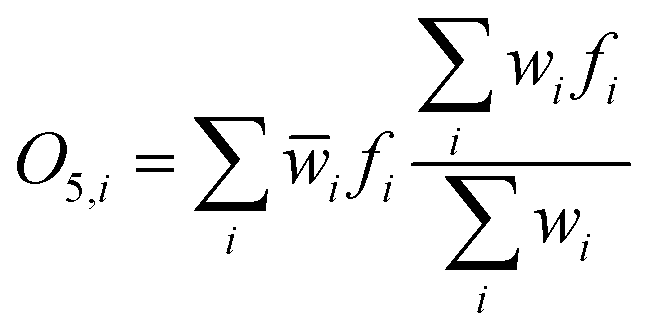 | (9) |
Therefore the input vector is fed to the network through layer by layer and ANFIS learns the premise and consequent parameters for the membership functions and the rules. It includes both the advantages of ANN and fuzzy-logic model as well as eliminating some disadvantages during their lonely use. Moreover, the ambiguity of ANFIS is less than ANN. The training and convergence of ANFIS is faster compared to ANN based model.20 Overall, optimization of any process with minimum error is possible using the mentioned computational simulation method.
In the present study the initial CHD concentration, TiO2 loading and pH of the reaction medium had been selected as input parameters of ANFIS, and removal percentage of CHD was the corresponding output due to photocatalytic oxidation. For the present study, three types of values for initial concentration of CHDG, three types of TiO2 values and three types of pH values were chosen from the experimental data. Therefore, it would have A1, A2 and A3 for CHD initial concentration, B1, B2 and B3 for TiO2 and C1, C2 and C3 for pH values. Hence, the ANFIS architecture was schemed as described above.
Finally, it has been clarified that concentration of CHD is a model variable as well as being a part of the training data since, while training the system, the model had been fed with input parameter data and also the output data (concentration of CHD) so that when any unknown set of input data is entered, it would generate the CHD concentration as the simulated output. This would help to get the CHD concentration without performing the real experiment.
3.2 Application of ANFIS to predict the removal percentage of CHD from aqueous medium
In the last section it is observed that the formulation and setting of rules for ANFIS structure is a bit complicated compared to ANN. In the present study, the removal percentage of CHD with variation of different process parameters was chosen for input of the ANFIS. Basically, the rate of photocatalytic oxidation of CHD varies with the alteration of process parameters and higher degradation rate means higher removal percentage. To achieve the goal of the present study, optimization was done using ANFIS.In the present context, the ANFIS Editor graphical user interface (GUI) is inbuilt in Fuzzy Logic Toolbox within the framework of MATLAB®V7.8.0 (R2009a) (The MathWorks, Inc., USA, R14) software, which was used for modelling and simulation purposes. The optimized sets of rules were generated using grid partition and subtractive clustering method, which contains eight different types of membership functions. Several numbers of rules may be produced by the system, and it is very much essential to optimize them either manually or automatically. It is assumed that each data point is a potential cluster centre in the subtractive clustering, which calculates the probability of each data point to be converted into a potential cluster centre, considering the availability of data points surrounding to it. The point with the highest potential is to be considered as the first cluster centre and calculate the potentials of other data points by subtracting the amount of potential as a function of its distance from the first cluster centre. Thereafter, the highest potential point is identified among the remaining point as the second cluster centre. Again the potentials of other data points with respect to the previous one should be revised. This process continues until the potential of the last centre should be less than the first one, thus almost all the data points come under consideration. The four principle parameters under consideration for subtractive clustering method are: Range of Influence, Accept Ratio, Reject Ratio and Squash Factor. Out of these, squash factor is the most significant as it helps in controlling the cluster size under consideration which indirectly affects the % error associated in ANFIS training of a given system.
4 Results and discussion
4.1 Dependency of photocatalysis of CHD on process parameters
The heterogeneous photocatalysis depends on several process parameters; those have already been mentioned earlier. The range of variation of influencing parameters has been decided from the trial experimental runs. From the experimental result, the effects of different operating parameters on degradation of CHD were assessed, which has been described in the subsequent sections. | ||
| Fig. 3 Effect of initial concentration of CHD on removal when TiO2 concentration and pH are constant. | ||
Overall, initial concentration of the substrate is a controlling parameter of the AOP and lower initial concentration should be maintained to achieve better degradation. Fig. 3 also demonstrates the effects of catalyst loading and pH on CHD conversion, which have been discussed in more detail in subsequent sections.
 | ||
| Fig. 4 Effect of TiO2 concentration on removal of CHD when initial concentration of CHD and pH are constant. | ||
Therefore, a proper ratio of catalyst to substrate should be maintained during photocatalytic degradation. Effects of initial substrate concentration and pH have also been demonstrated in Fig. 4; the explanation for the former has been given in a previous section and the effect of pH has been discussed in the following section.
 | ||
| Fig. 5 Effect of pH on removal of CHD when initial concentration of CHD and TiO2 concentration are constant. | ||
4.2 ANFIS training and prediction
The ANFIS system was trained using sub-clustering technique and the number of epochs was set to 30. The characteristic features of ANFIS as used in the formulation include epoch number set to 30 which has not been set arbitrarily. The training was performed using the input data set and epochs represent the number of iterations for which the input data were mapped such that the in silico system now mimics the experimental set up. From Fig. 6 it can be observed that it takes less than 5 iterations (epochs) to train the system properly with minimal error of 1.243 × 10⁻⁷. | ||
| Fig. 6 The value of epochs and training error for ANFIS in MATLAB. | ||
After training the system with nearly 70% of the existing data set, we tried to simulate the remaining 30% data with minimum error (tolerance kept to 3% deviation). Our main challenge was to select the correct set of 70% data which would be able to mimic the system dynamics as good as possible so that the remaining 30% can be simulated without much error. This 70% data has to be selected using a heuristic method with a view to incorporate output values of both higher and lower magnitudes from the existing data set. Furthermore, 70% of the entire data set of 108 data points (all were experimental data) was used for training the system in silico. 70% of the entire data set was chosen as the training set as it had been seen that taking less data than that could not characterize the in silico system well enough hence the training error was quite high. At the same time, taking more data than the 70% data set as chosen would be all redundant as it would use up more computational memory and yet not improve the system training further. So 70% was in a way an optimal training set. The trained set is shown in Fig. 7.
 | ||
| Fig. 7 Training data set for ANFIS in MATLAB. | ||
Using only higher values to train the fis (fuzzy inference system) would necessarily incorporate a lot of error in predicting the lower range values and vice versa. Fig. 8 shows the prediction accuracy achieved in our case and that the % error (2.694) laid below the set tolerance limit of 3%.
 | ||
| Fig. 8 Prediction accuracy of ANFIS training using MATLAB. | ||
Once the system has been tested to have replicated the “testing data” within tolerance limit, it can be used effectively as a dry-lab alternative of the experiment itself and hence can be used for further use with actually performing the experiment in wet-lab. However, it should be kept in mind that for successful prediction of an output corresponding to a given set of inputs, the input parameters should lie within the respective ranges as set within the ANFIS system.
We have shown a variation of ANFIS training error with increasing squash factor values ranging from 0.01 to 3 in Fig. 9. Our objective was to keep the % error below 3% (tolerance), so while increasing the squash factor values it was found that over the range 1 to 1.25 (encircled in Fig. 9) the error % was minimum (2.694%). So we chose the value of squash factor as 1.25 as a higher squash factor creates a bigger cluster which conforms to our objective of analysis.
 | ||
| Fig. 9 Variation of % error in ANFIS training with squash factor. | ||
4.3 Identification of the optimum condition
ANFIS can be used to identify the optimum combination of input parameter magnitudes that would yield the best possible output. This becomes a very significant part of our work as the wet-lab experiment is carried out only for some discrete input values, which may or may not contain the optimum combination. In this case it does not, the actual optima will get overlooked from the results table. However, when we use ANFIS, it is possible to locate the actual optima. In our case we found that the maximum degradation of CHD obtained from the wet-lab data was seen to be 68.1428%, however, ANFIS predicted value suggests that the optimum degradation possible by the system is 83.8% precisely when the input parameters assume the following magnitudes: pH 7.8, TiO2 0.253 g L−1, initial CHD concentration 0.5 g L−1 (Fig. 10). | ||
| Fig. 10 Optimum condition achieved using ANFIS using MATLAB. | ||
This very applicability makes the ANFIS network all the more robust in its performance and serves as a suitable and more effective tool to predict the optimum conditions for a given multi-parameter reaction, than performing the experiment itself all over again.
4.4 Experimental validation of ANFIS prediction
A set of experimental runs was performed maintaining optimum parametric conditions obtained from ANFIS (mentioned in Section 4.3). From the experimental analysis it can been observed that up to 75.6% of CHD was possible under such optimal conditions. All the experimental analyses were made in triplicate to ascertain the reproducibility of the experiment. Therefore, the accuracy of the predictive model was near 90%. Accuracy of ANFIS can be always increased by performing measurements on all those parameters which can have an effect (however small) on the output and feeding them as training data set—which then would produce a more near-to-real in silico model and thus the predicted output will be more accurate. The minimum error of the predictive model may be attributed to manual errors of experimental procedure.The principal advantage of ANFIS over other approaches is that we just have to measure an influencing parameter and feed it to train the network to find its influence on the output; it need not have to provide its kinetics. Thus it saves a lot of computational load by avoiding complex differential equations which would otherwise have existed in the case of kinetic models. Hence ANFIS converges faster even for high degrees of non linearity.
5 Conclusions
The experimental study shows the appreciable percentage removal of CHD from pharmaceutical waste water using advanced photocatalytic oxidation process. Three main influencing process parameters which have been earlier mentioned have been optimized using ANFIS. The accuracy of the developed model has been tested by setting a minimum error percentage of three only. The model predicted value was almost the same as the experimental value. There is no need to define the photocatalytic reaction system and mathematical formulation to predict the stable values in ANFIS model. Thus, the applicability of such a type of model is very simple. Moreover, within the range of training data range the experimental data can also be obtained from the developed model without performing tedious experimental work. That is also one of the value additions to this predictive model.Overall the present research article has been a portrait of the fate of heterogeneous photocatalysis of pharmaceutical waste water treatment and process optimization through ANFIS. The details of architecture of ANFIS have also been studied here.
Acknowledgements
The work reported in this article is part of an Indo-Korean project (vide sanction letter no. INT/Korea/P-11 dated August 23, 2011), funded in India by the Department of Science and Technology (Government of India). The project involves collaboration between Gwangju Institute of Science and Technology (GIST), Gwangju, Korea, and Jadavpur University, Kolkata, India. Accordingly, the contributions of DST (India) are gratefully acknowledged.Notes and references
- M. Carballa, F. Omil, J. M. Lema, M. Llompart, C. Garcia-Jares, I. Rodriguez, M. Gomez and T. Ternes, Water Res., 2004, 38, 2918–2926 CrossRef CAS PubMed.
- R. Hirsch, T. A. Ternes, K. Haberer, A. Mehlich, F. Ballwanz and K. L. Kratz, J. Chromatogr. A., 1998, 815, 213–223 CrossRef CAS.
- T. A. Ternes, Water Res., 1998, 32, 3245–3260 CrossRef CAS.
- K. A. Kidd, P. J. Blanchfield, K. H. Mills, V. P. Palace, R. E. Evans, J. M. Lazorchak and R. W. Flick, Proc. Natl. Acad. Sci. U. S. A., 2007, 104, 8897–8901 CrossRef CAS PubMed.
- R. Lange, T. H. Hutchinson, C. P. Croudac, F. Siegmund, H. Schweinfurth, P. Hampe, G. H. Panter and J. P. Sumpter, Environ. Toxicol. Chem., 2001, 20, 1216–1227 CrossRef CAS.
- J. L. Oaks, M. Gilbert, M. Z. Virani, R. T. Watson, C. U. Meteyer, B. A. Rideout, H. L. Shivaprasad, S. Ahmed, M. J. Chaudhry, M. Arshad, S. Mahmood, A. Ali and A. A. Khan, Nature, 2004, 427, 630–633 CrossRef CAS PubMed.
- B. Halling-Sørensen, S. Nors Nielsen, P. F. Lanszky, F. Ingerslev, H. C. Holten Lützhaft and S. E. Jørgensen, Chemosphere, 1998, 36, 357–393 CrossRef.
- C. G. Daughton and T. A. Ternes, Environ. Health Perspect., 1999, 107, 907 CrossRef CAS.
- C. Zwiener and F. H. Frimmel, Water Res., 2000, 34(6), 1881–1885 CrossRef CAS.
- M. Klavarioti, D. Mantzavinos and D. Kassinos, Environ. Int., 2009, 35, 402–417 CrossRef CAS PubMed.
- P. Calza, V. A. Sakkas, C. Medana, C. Baiocchi, A. Dimou, E. Pelizzetti and T. Albanis, Appl. Catal., B, 2006, 67, 197–205 CrossRef CAS PubMed.
- V. A. Sakkas, P. Calza, C. Medana, A. E. Villioti, C. Baiocchi, E. Pelizzetti and T. Albanis, Appl. Catal., B, 2007, 77, 135–144 CrossRef CAS PubMed.
- J. Zhang, D. Fu, Y. Xu and C. Liu, J. Environ. Sci., 2010, 22(8), 1281–1289 CrossRef CAS.
- T. An, J. An, H. Yang, G. Li, H. Feng and X. Nie, J. Hazard. Mater., 2011, 197, 229–236 CrossRef CAS PubMed.
- A. L. Giraldo, G. A. Penũela, R. A. Torres-Palma, N. J. Pino, R. A. Palominos and H. D. Mansilla, Water Res., 2010, 44, 5158–5167 CrossRef CAS PubMed.
- K. J. Rao, C. H. Kim and S. K. Rhee, Process Biochem., 2000, 35, 639–647 CrossRef CAS.
- T. Gulati, M. Chakrabarti, A. Singh, M. Duvuuri and R. Banerjee, Food Technol. Biotechnol., 2010, 48(1), 11–18 CAS.
- P. Calza, V. A. Sakkas, A. Villioti, C. Massolino, V. Boti, E. Pelizzetti and T. Albanis, Appl. Catal., B, 2008, 84, 379–388 CrossRef CAS PubMed.
- N. Nedjah and L. D. M. Mourelle, Studies in Fuzziness and Soft Computing: Fuzzy System and Engineering, Springer Verlag, Berlin Heidelberg, Germany, 2005 Search PubMed.
- S. R. Jang, C. T. Sun and E. Mizutani, Neuro-Fuzzy and Soft Computing: A Computational Approach to Learning and Machine Intelligence, Prentice Hall Inc., USA, 1997 Search PubMed.
- S. S. Block, Disinfection, Sterilization, and Preservation, Lea & Febiger, Philadelphia, 5th edn, 2000 Search PubMed.
- S. W. Frantz, K. A. Haines, C. G. Azar, J. I. Ward, S. M. Hornant and R. B. Roberts, J. Hosp. Infect., 1997, 37, 157–l64 CrossRef CAS.
- M. Ash and I. Ash, Handbook of Preservatives, Synapse Info Resources Inc., New York, 2004 Search PubMed.
- http://jr.chemwatch.net/chemgold3/msds.exe?mode=SAP%26cwno=40174%26msdsformat, accessed on 29 June 2011.
- L. Yang, L. E. Yu and M. B. Ray, Water Res., 2008, 42, 3480–3488 CrossRef CAS PubMed.
- M. Chen and W. Chu, J. Hazard. Mater., 2012, 219–220, 183–189 CrossRef CAS PubMed.
- L. Rizzo, S. Mericb, D. Kassinosc, M. Guidab, F. Russob and V. Belgiornoa, Water Res., 2009, 43, 979–988 CrossRef CAS PubMed.
- R. Mohammadi, B. Massoumi and M. Rabani, Int. J. Photoenergy, 2012, 2012, 514856, DOI:10.1155/2012/514856.
- D. Nasuhoglu, A. Rodayan, D. Berk and V. Yargeau, Chem. Eng. J., 2012, 189–190, 41–48 CrossRef CAS PubMed.
- L. Hu, P. M. Flanders, P. L. Miller and T. J. Strathmann, Water Res., 2007, 41, 2612–2626 CrossRef CAS PubMed.
- E. Hapeshi, A. Achilleos, M. I. Vasquez, C. Michael, N. P. Xekoukoulotakis, D. Mantzavinos and D. Kassinos, Water Res., 2010, 44, 1737–1746 CrossRef CAS PubMed.
- N. P. Xekoukoulotakis, C. Drosou, C. Brebou, E. Chatzisymeon, E. Hapeshi, D. Fatta-Kassinos and D. Mantzavinos, Catal. Today, 2011, 161, 163–168 CrossRef CAS PubMed.
- K. Yetilmezsoy, M. Fingas and B. Fieldhouse, Colloids Surf., A, 2011, 389, 50–62 CrossRef CAS PubMed.
- R. Das, S. Sarkar, S. Chakraborty, H. Choi and C. Bhattacharjee, Ind. Eng. Chem. Res., 2014, 53(8), 3012–3020 CrossRef CAS.
- D. Sen, A. Roy, A. Bhattacharya, D. Banerjee and C. Bhattacharjee, Desalination, 2011, 273(1), 168–178 CrossRef CAS PubMed.
- C. Bhattacharjee, D. Sen, P. Sarkar, S. Datta and P. K. Bhattacharya, Desalin. Water Treat., 2009, 2, 174–188 Search PubMed.
| This journal is © The Royal Society of Chemistry 2014 |