


 PLATFORM UPDATE:


Recovery of metallic iron from the loaded organic phase after solvent extraction by precipitation–stripping with hydrogen gas
 *ab
and
Koen
Binnemans
a
*ab
and
Koen
Binnemans
a
Abstract
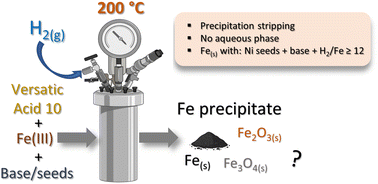
Removal of iron from pregnant leach solutions (PLS) is a critical yet challenging step in hydrometallurgical processing prior to the recovery of valuable metals. Conventional iron removal by precipitation of ferric compounds such as goethite or jarosite generates large amounts of solid waste. Solvent extraction (SX) offers an alternative route, enabling subsequent recovery of iron as a marketable product. In this study, an innovative SX-based iron removal process was investigated. Ferric iron was first extracted from aqueous solution into an organic phase containing the carboxylic acid extractant Versatic Acid 10 (VA10). The loaded organic phase (5–16 g Fe per L) was then subjected to direct reduction using hydrogen gas to precipitate iron. The precipitation–stripping rate was enhanced by adding a base (Mg(OH)2 or NH3) at 200 °C and H2 pressures up to 10 bar, with reaction times of 2 to 16 hours. The effect of different seeding materials (Ni, C and Fe) on iron precipitation was examined. Formation of metallic iron particles was observed only with Ni seeds, a high H2/Fe molar ratio (≥12), and the addition of either Mg(OH)2 or NH3. Under comparable conditions, precipitation yields with Ni seeds were up to 16 times higher than with carbon seeds. VA10 degradation was lower with Mg(OH)2 than with NH3. At lower H2/Fe molar ratios, regardless of seed type or base addition, only iron oxides (magnetite and hematite) were formed, demonstrating the need for an excess of hydrogen gas well above stoichiometric requirements.
 Please wait while we load your content...


