


 PLATFORM UPDATE:


The pH-dependence of copper(ii/i) reduction potentials in variants of P. aeruginosa azurin with surface histidine variations

Abstract
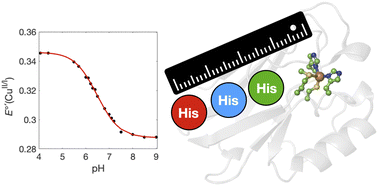
Proteins that mediate redox transformations almost always display a degree of pH dependence in their reduction potentials. It is appreciated that surface charges can influence the physical properties of embedded sites. Less clear is the role that the distance between pH-sensitive (titratable) surface sites and embedded metal ions plays in regulating redox reactions. Here, we explore how the distance between pH-sensitive histidine sites and the copper ion in Pseudomonas aeruginosa azurin influences the pH dependence of the Cu(II)/Cu(I) reduction potential. Pourbaix diagrams were constructed for six azurin variants and effective pKa values for the oxidized and reduced forms of the proteins were determined. While the reduction potentials are mostly insensitive to the locations of the histidine amino acid substitutions, the effective pKa values do change. There is little correlation with the histidine-copper distance, and a more significant correlation with the histidine–histidine distance. The results support that redox-dependent protonation of amino acid sites is coupled to both the long-range electrostatic interactions of embedded cofactors and to other ionisable amino acid residues.
 Please wait while we load your content...


