


A noble-metal-free Ni12P5/g-C3N4 composite for efficient photocatalytic hydrogen evolution under visible-light irradiation
 *a
*a
Abstract
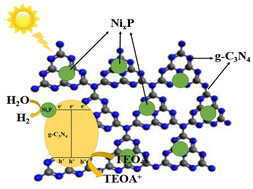
Transition metal phosphides serve as efficient cocatalysts for the photocatalytic water splitting process to produce hydrogen. However, the conventional preparation methods for these phosphides are often harsh and complex. Therefore, developing simple and efficient methods for preparing phosphides is crucial. In this study, a Ni12P5/g-C3N4 composite photocatalyst was successfully synthesized using a two-step low-temperature phosphidation method. The Ni and P in NixP nanoparticles act as proton adsorption sites, which can accelerate the photocatalytic hydrogen evolution reaction. Additionally, phosphorus with its high electronegativity serves as electron aggregation sites to capture electrons, thereby facilitating the charge dissociation and transfer processes of photogenerated carriers. Consequently, this photocatalyst shows highly effective hydrogen generation activity when exposed to visible light irradiation, demonstrating a 215-fold enhancement in the hydrogen evolution rate compared to unmodified g-C3N4 while maintaining outstanding durability. This study has important reference value for the development of high-performance and highly stable transition metal phosphide photocatalysts.
 Please wait while we load your content...


