


 PLATFORM UPDATE:


Light-assisted electrocatalytic PMS activation system based on a Co3O4–SnO2/NF cathode for efficient degradation of tetracycline over wide ranging pH conditions

Abstract
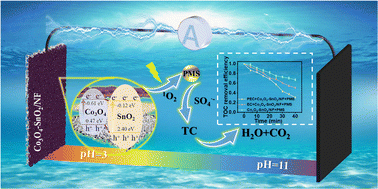
The combination of photoelectrocatalysis and persulfate-based advanced oxidation processes (AOPs) offers a promising strategy for in situ ROS generation in environmental remediation. In this study, a light-assisted electrocatalytic system using Co3O4–SnO2/NF as the cathode was developed. Applying a low current suppressed the recombination of photogenerated charges, facilitating continuous hole (h+) generation to activate PMS and produce ROS, enabling efficient degradation of tetracycline (TC). Under optimized conditions, the system exhibited excellent pH tolerance, maintaining a high degradation efficiency (92–100%) across a wide pH range from 3 to 11, significantly outperforming traditional Fenton-like systems (limited to acidic conditions). Furthermore, the incorporation of light irradiation increased the TOC removal rate of TC by 20% compared to the single electrocatalytic activation system. It enhanced the TOC removal rate, highlighting the importance of external light radiation during the mineralization of TC. Quenching and EPR analysis confirmed that 1O2, SO4·−, and h+ were the dominant ROS. Their efficient production was attributed to the Co3O4–SnO2 heterojunction, which promoted charge separation and accelerated electron transfer in the Co redox cycle. This research has significant importance in the field of light-assisted electrocatalytic activation of PMS to enhance the generation of ROS for efficient pollutant degradation.
 Please wait while we load your content...


