


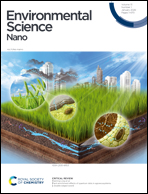
Synergistic integration of nanoscale zero-valent Iron and biological treatment for environmental remediation: mechanisms, system configurations, and performance optimization

Abstract
In this review, we explore recent advances in coupling nanoscale zero valent iron (nZVI) with biological treatments for environmental remediation, emphasizing mechanisms, system configurations (direct vs. indirect contact), microbial interactions, and key factors that govern performance. We first provide an overview of the current literature pertaining to nZVI- and or biological-mediated reductive treatment of organic/inorganic pollutants and compare the pros and cons of individual treatment methods. We emphasize the need for combined processes and explore the mechanisms driving hybrid systems, examining various system configurations. We then conduct a comprehensive evaluation of microbial–nZVI interactions and the environmental/material parameters, paired with engineering control strategies for enhanced performance. We also highlight the influential parameters that affect treatment efficiency, providing a critical analysis of the factors that can either enhance or impede the remediation process. In summary, we prioritize practical optimization, risk considerations, and pathways for scaling from laboratory to field applications, offering guidance for future research and practical applications.

- This article is part of the themed collection: REV articles from Environmental Science: Nano
 Please wait while we load your content...


