


 PLATFORM UPDATE:


Compartmentalized structure reconstruction in metal–organic frameworks (MOFs) for efficient oxygen evolution reaction
 *a
*a
Abstract
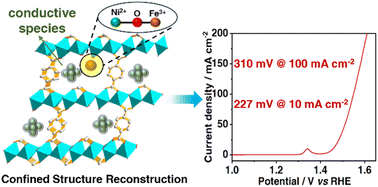
Structural evolution of hydroxide or oxyhydroxides is key to efficient oxygen evolution reaction (OER), but the controllable regulation of such structure reconstruction remains challenging. Herein, we report that simultaneously encapsulating Ni2+–O–Fe3+ units and conductive Ni@C species inside the mesopores of metal–organic frameworks (MOFs) can effectively promote the structure reconstruction toward efficient OER. Multivariate MOF Ni-BA is constructed by mixing two ligands with distinct thermal stability. After careful thermal treatment, the thermally labile ligand is selectively carbonized to create mesopores with confined Ni@C and coordinatively unsaturated Ni sites (defect sites) in the inner walls. Further adsorption of Fe3+ at the defect sites leads to the formation of Ni2+–O–Fe3+ units inside the pores. The synergistic compartmentalization of Ni2+–O–Fe3+ units and conductive Ni@C species inside the nanospace creates bi-functional nanoreactors to promote the structural evolution of active NiOOH and accelerate multielectron transfer. As a result, the optimized catalyst delivers an excellent OER performance with small overpotentials of 227 mV and 310 mV at current densities of 10 mA cm−2 and 100 mA cm−2, respectively, outperforming most of the MOF-based OER electrocatalysts.
- This article is part of the themed collection: Advances in Sustainable Catalysis: from Materials to Energy and Environmental Applications
 Please wait while we load your content...


