


 PLATFORM UPDATE:


The role of cytosine modification symmetry in mammalian epigenome regulation

Abstract
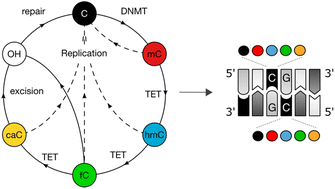
5-Methylcytosine (mC) is a key regulatory element of mammalian genomes, and plays important roles in development and disease. mC is predominantly written onto CpG dyads by DNA methyltransferases, and can be further oxidized by ten-eleven translocation dioxygenases (TETs) to 5-hydroxymethyl-, 5-formyl-, and 5-carboxylcytosine. This process results in different symmetric and asymmetric combinations of cytosine forms across the two strands of CpGs, each of which represents a unique physicochemical signature in the major groove of DNA. A comprehensive understanding of the individual functions of oxidized mC modifications can therefore only be achieved by considering both strands of CpG dyads. Here, we provide a brief overview of the current state of knowledge on the sequencing and mapping of individual CpG dyad states, their influence on the intrinsic properties of DNA, and their interactions with chromatin proteins.
 Please wait while we load your content...


