


 PLATFORM UPDATE:


Development of multifunctional magnetic core–shell manganese TiO2 photocatalysts for sustainable wastewater treatment: synergistic dye mineralization, antibacterial activity, and molecular docking insights
 *d
and
Nadia
Riaz
*a
*d
and
Nadia
Riaz
*a
Abstract
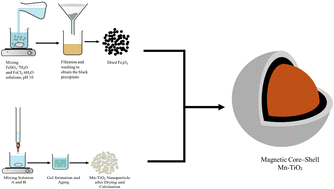
Photocatalytic oxidation using titanium dioxide (TiO2) is a well-established and sustainable technology for addressing various water treatment challenges, particularly the persistent issue of textile wastewater. This study explores the synthesis and optimization of manganese-incorporated magnetic Fe3O4/TiO2 (FeMnT) photocatalysts with enhanced photodegradation performance under visible light irradiation. The FeMnT photocatalysts were synthesized using a two-step process involving sol–gel assisted wet impregnation followed by calcination at temperatures ranging from 300 °C to 500 °C, exhibiting improved absorption in visible light, effective charge separation, and excellent photocatalytic breakdown of RY145 dye, along with easy magnetic recovery. The optimized photocatalyst, 0.75 FeMnT-300, demonstrated the highest degrading efficiency of all the produced nanocomposites, achieving 89.5% in just 60 minutes. Its enhanced structural properties, ideal photocatalyst dosage (1 g L−1), and superior adsorption–desorption equilibrium at pH 6 contribute to its high efficiency. Because of the improved light penetration and more active catalytic sites, the dye removal efficiency was also noticeably greater at lower dye concentrations (e.g., 10 mg L−1). At the calcination temperatures for both 0.75 FeMnT-3 and 0.75FeMnT-5, 100% log reduction for S. aureus and E. coli was observed under visible light with an optimal dosage of 1 mg mL−1 as the minimum bactericidal concentration (MBC), signifying efficient bacterial control. Fe3O4's magnetic properties enabled rapid nanoparticle recovery, ensuring reusability and cost-effectiveness. The molecular docking studies revealed that the photocatalyst binds strongly to the active site of β-lactamase through multiple hydrogen, ionic, and metallic interactions with key catalytic residues, displaying a highly promising binding energy (−12.70 kcal mol−1) that supports its strong bactericidal activity. Photoluminescence analysis indicated effective charge separation due to reduced emission intensity, while VSM measurements confirmed soft ferromagnetic behavior and adequate magnetization for recovery. These factors enhanced the photocatalytic performance of the optimized 0.75 FeMnT-3 photocatalysts. The strong relationship between dye discoloration and mineralization shows effective photocatalytic degradation, implying complete oxidative breakdown to give ˙OH as the main ROS species rather than partial fragmentation of the dye molecule. These findings highlight the potential of FeMnT nanocomposites for efficient and sustainable wastewater treatment applications.
 Please wait while we load your content...


