


 PLATFORM UPDATE:


Design of a fiberglass-coated thin-film solid-phase microextraction patch for eco-friendly and efficient detection of carbofuran pesticides in bananas

Abstract
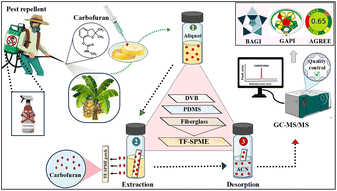
Carbofuran is a well-known insecticide that is widely used in farming practices to improve crop quality and shelf life. Due to its potential pesticidal activity, it is widely used in banana cultivation to protect the crop from various pests and fungal diseases. However, excessive use of this pesticide may lead to accumulation in banana fruits and subsequent transfer to the human body through the consumption of contaminated products. To quickly quantify the carbofuran in bananas, a fiberglass-based thin-film solid-phase microextraction (TF-SPME) patch was developed utilizing polydimethylsiloxane and divinylbenzene polymer particles. The results confirmed the efficiency of laboratory-designed TF-SPME analytical tools for capturing carbofuran residue at trace levels. In this study, the linear range covered 100–2000 ng mL−1. The limits of detection (LOD) for this method were estimated to be 0.016 mg kg−1 when quantified using gas chromatography-triple quadrupole mass spectrometry (GC-MS/MS). The determination coefficient (r2) for this study was found to be above 0.99. Furthermore, this work aligns with the core principles of Green Analytical Chemistry (GAC), minimising solvent use and waste generation. Therefore, this technique is an eco-friendly alternative to traditional microextraction methods, facilitating high extraction efficiency with minimal waste generation, making it suitable for the pre-concentration of pesticide residues from fruit matrices.
 Please wait while we load your content...


