


 PLATFORM UPDATE:


Multifunctional porous bio-polyurethane/biomass composites for concurrent removal of oil and heavy metal ions
 *a
*a
Abstract
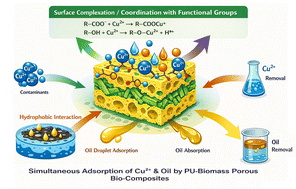
The coexistence of heavy metal ions and oil in wastewater remains a major challenge for conventional treatment processes. In this study, mesoporous bio-based sorbents were fabricated by incorporating oxalic acid-treated lignocellulosic biomass (corn stover and coconut fiber) into a vegetable oil-derived polyurethane matrix. The resulting polyurethane–biomass composites exhibited dual-functionality, enabling the simultaneous adsorption of Cu2+ ions and oil from aqueous solutions. Structural characterization revealed an open-cell porous architecture and heterogeneous surface chemistry containing both polar functional groups (–OH, –COOH) and hydrophobic domains. Batch adsorption experiments demonstrated high oil uptake (up to 15.9 g g−1 for PU–CF sorbent after 180 minute adsorption) and Cu2+ adsorption capacity (up to 173.3 mg g−1 for PU–CF sorbent after 90 minute adsorption), markedly outperforming neat polyurethane and raw biomass. Adsorption equilibrium for Cu2+ was achieved within 90 min, while oil adsorption increased steadily with contact time. The enhanced performance is attributed to synergistic effects between biomass-derived metal-binding sites and the hydrophobic polyurethane network, which promotes oil absorption via capillary and van der Waals interactions. These results highlight the potential of bio-based polyurethane–biomass composites as sustainable and efficient sorbents for single-step treatment of wastewater containing mixed organic and inorganic contaminants.
 Please wait while we load your content...


