


 PLATFORM UPDATE:


Reclaiming multi-contaminated soil: melatonin alleviates cadmium and microplastic toxicity to restore rice growth and yield

Abstract
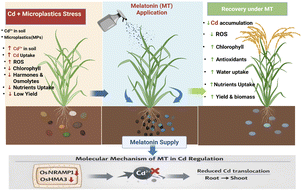
The increasing presence of cadmium (Cd) and microplastics (MPs) in agricultural soils is a serious challenge to crop productivity and human health. Melatonin (MT) is a vital protectant that mitigates abiotic stresses, and it has shown promising results in mitigating Cd toxicity. Its specific role in mitigating the combined stress of Cd and MPs remains unexplored, which distinguishes our study from recent studies on single stressors. This study investigated the roles of MT in modulating plant physiological function, cadmium uptake and soil properties to increase rice resilience to combined Cd and MP stress. The study included different treatments: control (soil without Cd and MPs), Cd-polluted soil (30 mg kg−1), MP-contaminated soil (1%), Cd + MPs, control (soil without Cd and MPs) + MT, Cd + MT, MPs + MT, and Cd + MPs + MT. The results demonstrated that Cd + MP toxicity reduced rice yield and aboveground biomass production by 25.39% and 64.74%, respectively. The presence of MPs exacerbated Cd uptake and led to a significant increase in oxidative stress, reduced chlorophyll synthesis, osmolyte and hormone synthesis, and nutrient uptake, leading to poor yield. Melatonin treatment increased rice yield and aboveground biomass by increasing antioxidant activity, chlorophyll synthesis, water uptake, gibberellic acid, indole-3-acetic acid synthesis, and the expression of genes associated with antioxidants. A key mechanism is that MT downregulates the expression of Cd transport genes (OsNRAMP1 and OsHMA3), leading to a decrease in Cd accumulation in roots and shoots (24.93% and 41%, respectively). Furthermore, MT improved plant nutritional status by increasing nitrogen (N: 71%), phosphorus (P: 34.17%), potassium (K: 38.76%), calcium (K: 82.12%) and magnesium (Mg: 27.83%) accumulation in plant tissues. These findings suggest that applying MT alleviates Cd and MP toxicity, making it a promising strategy for reclaiming multicontaminated soils.
 Please wait while we load your content...


