


 PLATFORM UPDATE:


Organoselenium-based Schiff bases and amidic acid derivatives as promising anticancer agents targeting breast cancer by downregulating BCL-2: design, synthesis, and biological evaluation

Abstract
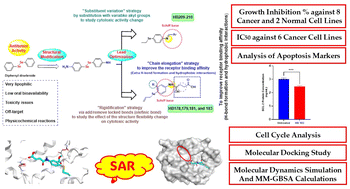
This study reports the biological evaluation of novel Schiff base-tethered organoselenium (OSe) compounds as potential anticancer agents. New derivatives (HB178, HB179, HB181, HB183, HB208, HB209, and HB210) were synthesized and screened for cytotoxicity against eight cancer cell lines (including HN9, FaDu, MCF7, A375, HEPG2, HuH7, A549, and HCT116) and two normal cell lines (OEC and HSF). Among them, HB183, HB209, and HB210 exhibited the most potent growth inhibition (GI) activity, with average values of 78.25%, 76.34%, and 79.14%, respectively—surpassing the reference drug doxorubicin (61.89%). HB183 demonstrated the strongest cytotoxic effects, with IC50 values of 9.72 µM (MCF7), 13.28 µM (HCT116), 13.50 µM (A549), and 31.28 µM (HEPG2), significantly outperforming doxorubicin across multiple cell lines. Importantly, HB183 showed selective cytotoxicity with lower GI% values against normal OEC (53.90%) and HSF (42.27%) cells. Mechanistic investigations revealed that HB183 upregulated key pro-apoptotic proteins—BAX (1.39-fold), caspase-3 (1.18-fold), caspase-7 (1.20-fold), and caspase-9 (1.45-fold)—while downregulating anti-apoptotic markers such as BCL-2 (1.22-fold), MMP2 (1.15-fold), and MMP9 (1.30-fold). Furthermore, flow cytometry analysis indicated that HB183 induced cell cycle arrest at the pre-G1 phase in MCF7 cells, increasing the population from 94.32% to 98.84%. Molecular docking, molecular dynamics simulation (for 500 ns), and MM-GBSA calculations for the lead analogue (HB183) towards the BCL-2 target, as a crucial one in the pathway of apoptosis induction, were performed to support the mechanistic investigation. These findings suggest that HB183 is a promising lead for further development as a selective and potent anticancer agent, particularly in the treatment of breast cancer.
 Please wait while we load your content...


