


 PLATFORM UPDATE:


Construction of ZnS/CdS/Ti3+-TiO2 heterojunction: synergistic enhancement of visible light harvesting and photocathodic protection performance
 *ab
*ab
Abstract
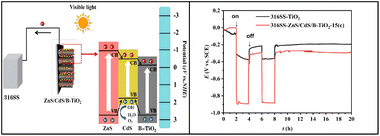
Marine corrosion poses a critical threat to the safety of offshore oil and gas facilities. To address the intrinsic drawbacks of pristine TiO2, ZnS/CdS/Ti3+-TiO2 nanotube composites were rationally fabricated via a synergistic strategy combining electrochemical anodization and successive ionic layer adsorption and reaction (SILAR) techniques. Structural and optical characterization confirmed that the as-synthesized composites feature a well-constructed cascade band alignment, which efficiently mitigates the recombination of photogenerated electron–hole pairs. Accordingly, the optimized photoanode delivered a high photocurrent density of 279 µA cm−2. When coupled with 316 stainless steel (316 SS), the composite exhibited a pronounced photo-induced potential of −0.89 V (vs. SCE), achieving a remarkable performance enhancement over pristine TiO2. This enhanced photocathodic protection originates from the synergistic interplay between Ti3+ self-doping and the ZnS/CdS heterojunction: Ti3+ self-doping introduces abundant electron donors to enhance the electrical conductivity of the composite, whereas the ZnS/CdS heterojunction broadens the visible-light absorption range and accelerates the separation and directional migration of photogenerated charge carriers.
 Please wait while we load your content...


